In March 2026, BYD submitted its first-ever official sales report to Naamsa — and the numbers are genuinely stunning.
BYD Auto, which officially launched in Mzansi in mid-2023, registered a total of 589 units in South Africa in March 2026.
That puts the Chinese brand at number 21 overall in the market standings, sitting just two units behind Mercedes-Benz. Honda moved 348, Mitsubishi 241, Mazda 209. BYD outsold all three combined — in its first month of official reporting — less than three years after arriving in a market those brands have worked for decades to build.
This isn’t a blip. This isn’t hype.
BYD’s March sales numbers proved there is appetite for cheaper EVs in South Africa.
And if you understand why that 589 figure happened, you understand where the entire SA automotive market is heading.
BYD South Africa shared its sales figures to Naamsa for the first time since it arrived on local shores in 2023, registering a total of 589 units for March 2026 — impressive as an NEV brand, considering a more established brand like Mercedes-Benz sold a total of 595 units in the same period.
Let that land. A brand that didn’t exist in SA less than three years ago is breathing down the neck of one of the world’s most storied luxury marques.
The Headline Number: 589 Units and What They Represent
South Africa’s new vehicle sales set a new record of almost 60,000 units sold in March, with an offset of 58,060.
In that month, 15 models recorded sales of more than 1,000 units, with BYD posting figures for the first time.
Context matters here. BYD didn’t just show up and squeak into the rankings — it immediately staked a position ahead of brands with well-established dealer networks, decades of brand awareness, and loyal customer bases built up over generations of South African motorists.
Here’s the breakdown of BYD’s March 2026 sales by model:
| Model | Type | Units Sold | % of BYD Total | Starting Price |
|---|---|---|---|---|
| Dolphin Surf | BEV | 239 | 40.6% | R341,900 |
| Sealion 6 | PHEV | 130 | 22.1% | — |
| Shark 6 | PHEV bakkie | 94 | 15.9% | — |
| Sealion 5 | PHEV | 72 | 12.2% | R499,900 |
| Atto 3 / Seal / Sealion 7 / Dolphin | BEV | 54 | 9.2% | from R699,900 |
All local sales for the month came via the dealer channel.
No fleet dumps. No grey-market volumes. Real retail sales, through dealers, to real South African buyers.
The Dolphin Surf Effect: Affordability Was Always the Barrier
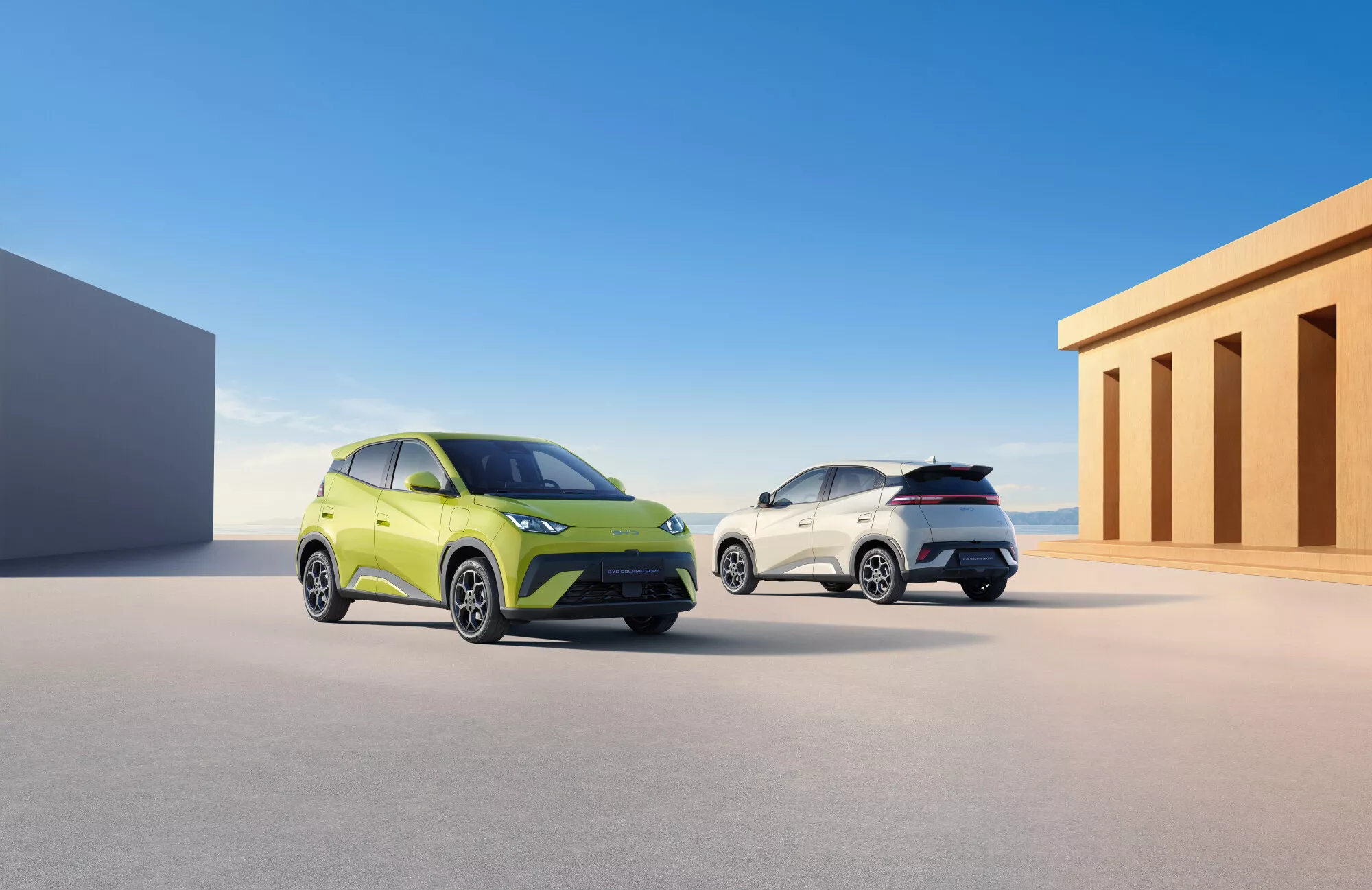
In March 2026, the first month BYD reported its sales, the Dolphin Surf sold 239 units to become the country’s best-selling battery-electric vehicle by a wide margin.
Forty percent of BYD’s entire monthly volume in a single model. And there’s a dead-simple reason for it.
At R341,900, the Surf is the cheapest EV in the country, so it’s not surprising to see that affordability has been the biggest hurdle to EV adoption up till now.
For years, the entry point to electric motoring in SA was R539,000 or higher — cars aimed squarely at early adopters with deep pockets and strong opinions about their carbon footprint.
EV adoption in South Africa had been slow despite a growing number of battery-powered models arriving in recent years, with early offerings largely aimed at affluent early adopters, while high import duties and a lack of affordable entry-level options kept volumes low, according to BusinessTech’s automotive coverage.
The Dolphin Surf changed that equation almost overnight.
At R341,900 for the entry-level Comfort variant, the Dolphin Surf is significantly cheaper than other EVs and competes directly with petrol-powered compact cars such as the Volkswagen Polo Vivo, Suzuki Fronx and Toyota Urban Cruiser.
That’s not just an EV value proposition anymore — that’s a mass-market conversation. Want to know how much you’d actually save running a Dolphin Surf versus your current petrol car? Calculate your savings here.
The specs are worth knowing.
The Dolphin Surf is available in two variants: a Comfort at R341,900 and a Dynamic at R389,900. Both use BYD’s Blade Battery — the Comfort with a 30 kWh pack offering 232 km of WLTP range, the Dynamic stepping up to 38.8 kWh and 295 km.
It supports DC charging at up to 40 kW, allowing the battery to recharge from 30% to 80% in around 30 minutes.
For the urban commuter doing 30–50 km a day, those numbers are entirely sufficient.
239 Dolphin Surf units in a single month. SA’s second-best-selling BEV in March — the BYD Atto 3 — managed just 28 units. The price gap tells the whole story.
How Much Could You Save With an EV?
Use our free calculator to compare your current fuel costs with EV charging costs.
The PHEV Surprise: Range Anxiety is Real, and BYD Knows It
Here’s something the headline numbers obscure: BYD isn’t just winning on EVs. It’s winning on PHEVs too — and that’s arguably even more revealing about the SA market.
BYD’s PHEVs are also quite popular, with the second-best-seller being the Sealion 6 with 130 units, followed by the Shark with 94 units, and the Sealion 5 with 72.
Add those up: 296 PHEV units, which is more than 50% of BYD’s total March tally.
While BYD is known for pure electric vehicles, its “dual-mode” PHEV technology is proving particularly popular with local buyers looking for long-distance range security.
This makes perfect sense in the SA context. We’re a country where the N1 to Cape Town is a 1,400 km haul from Joburg, where public charging infrastructure is still sparse outside the major metros, and where load-shedding has trained an entire generation of consumers to be deeply suspicious of anything that relies exclusively on electricity. A PHEV gives you the EV running costs for your daily commute and the petrol safety net for everything else. SA buyers aren’t stupid — they’re pragmatic.
The Shark 6 bakkie deserves special mention.
BYD has finally posted sales figures for the first time, confirming 94 Shark sales in March.
A PHEV bakkie — historically the spiritual home of the South African motorist — shifting 94 units in a single month is something the legacy brands who dominate that segment should be watching very carefully.
Legacy Brands, Less Than Three Years of Competition, and a Reality Check
Honda has been in South Africa since 1971. Mitsubishi longer. Mazda launched its first local operations decades ago. These brands have built up service networks, trained mechanics, sold millions of cars, and earned deep loyalty from South African families. BYD arrived in mid-2023.
And yet,
in its first month of official reporting, BYD has effectively disrupted the local hierarchy, ranking 21st overall.
Honda: 348 units. Mitsubishi: 241. Mazda: 209. BYD: 589. The maths is blunt.
The context matters too.
Naamsa figures show 1,088 BEVs were sold across all of 2025, up from only 92 units in 2020 — but those figures exclude brands such as BYD, Geely and Dongfeng, which did not report to Naamsa.
The real market was bigger than we thought. Now that BYD is reporting, we’re seeing the actual picture — and it’s transforming how South Africa’s EV market looks on paper.
In total, Naamsa recorded 389 EVs sold in South Africa in March, which is a new monthly record for local full-electric sales, with BYD contributing 293 fully electric car sales (239 Dolphin Surf units plus 54 units across Atto 3, Seal, Sealion 7, and standard Dolphin models).
A new monthly record. In March 2026. That’s not a trend — it’s a market shift happening in real time.
If you’re running a BYD and need a home charger installed to make the most of your purchase, get a free installation quote here — join the 589 South Africans who drove a BYD off a showroom floor in March alone.
The Running Cost Argument: Numbers That Are Hard to Ignore
Beyond the sales story, there’s a compelling financial case playing out for every Dolphin Surf buyer.
Driving on electricity in this class of car costs roughly 50 cents per kilometre for daily commuting, compared to a petrol hatchback averaging R1.80 to R2.20 per km at current fuel prices. Over 15,000 km a year, that is a saving of roughly R20,000 to R25,000 annually just in fuel.
That’s meaningful money. Not “green premium” money. Actual, tangible savings that show up in your bank account every month. And that calculation looks even better for buyers who can pair their Dolphin Surf with home solar — charging essentially for free during the day while the panels are producing.
The Dolphin Surf starts paying back its small premium over an ICE equivalent relatively quickly for anyone with home charging.
Both cars come with a 7 kW home wallbox charger and an eight-year/200,000 km battery warranty
— so BYD is literally handing buyers the charging hardware they need. But getting it properly installed on your home’s electrical system is where we come in. Get a free home charger installation quote from our network.
Ready to Install a Home Charger?
Get a free, no-obligation quote for professional EV charger installation in South Africa.
Infrastructure: BYD Isn’t Just Selling Cars
The sales story is only half of what BYD is building in South Africa.
BYD has advanced its South African expansion plans and now has roughly 35 dealerships operating as of early 2026, according to Cars.co.za, with reports indicating it plans to expand its network further to 60–70 dealerships by the end of 2026.
And then there’s the charging network.
BYD will build a nationwide network of super high-speed vehicle charging stations in South Africa — a fact disclosed by BYD executive vice president Stella Li in an interview with TechCentral in Johannesburg.
Li said: “By the end of next year, we will have 200 or 300 Flash charging stations in South Africa.”
Installation of the charging stations will begin in April or May 2026 at BYD dealerships, but will soon be expanded to strategic locations along the country’s motorways.
Think about what that means practically. Every motorway braai stop between Joburg and Durban, eventually with a BYD Flash charger capable of delivering 400 km of range in approximately five minutes.
The solar option will enable BYD to build infrastructure outside major urban centres
— meaning this isn’t just a Sandton-and-Constantia play. It’s a national rollout.
In the meantime, you can check our live EV charging map to find public charging stations near you right now.
What’s Next: The Geely E2 Changes the Game Again
Just when the Dolphin Surf had planted its flag as SA’s cheapest EV, a challenger arrived.
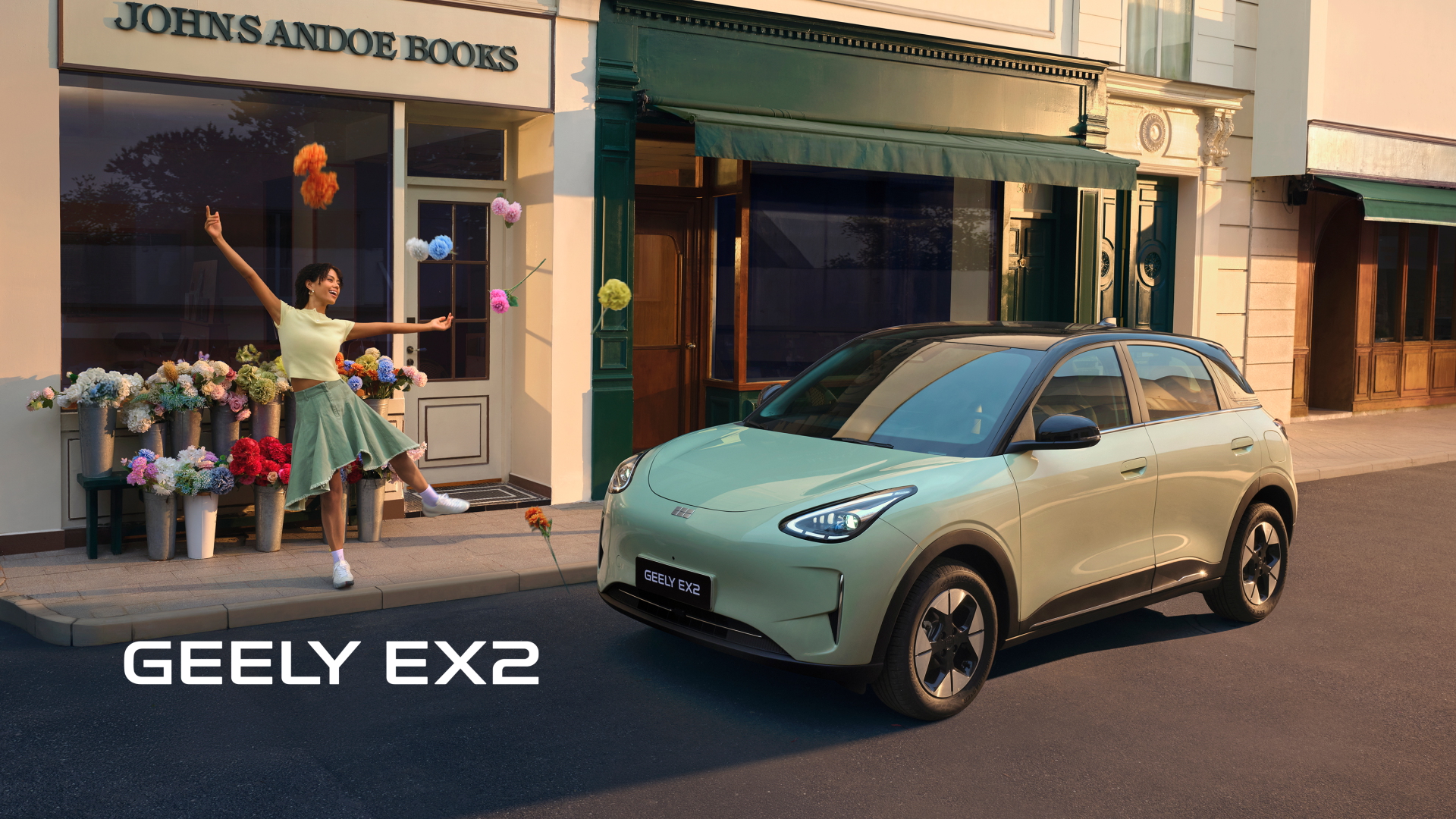
The Geely E2 has officially taken the title of South Africa’s most affordable electric vehicle with a starting price of R339,900, undercutting the BYD Dolphin Surf by R2,000. The E2 — known as the EX2 in some countries and the Xingyuan in China, where it was that nation’s best-selling vehicle overall in 2025 — has officially arrived in South Africa.
And here’s the thing:
Geely holds a strategic advantage in this duel, as the entry-level E2 offers a larger battery and roughly 100 km more range than the base Dolphin Surf for a nearly identical price.
The E2 comes with a
39.4 kWh lithium-iron phosphate battery pack, which can receive up to 70 kW at a DC fast-charging facility
, and
provides an operating range of up to 325 km (WLTP) when fully charged.
At R339,900 for the base Aspire, it’s also
a significant 210 mm longer than the Dolphin Surf, with an extra 150 mm between its axles.
This is genuinely good news for South African car buyers. Competition at the entry-level EV price point is exactly what the market needed. Will the Geely E2 dethrone the Dolphin Surf in April’s sales figures? Quite possibly. But either way, what we’re seeing is a sub-R350,000 EV segment that simply didn’t exist twelve months ago. That’s the real win.
There may soon be three new EV models priced under R400,000 in the local market, which is a significant shift in a market dominated by expensive, premium EVs until very recently.
Chery is reportedly also bringing a sub-R400k EV to market. The floodgates are open.
Find Charging Stations Near You
Explore our live map of EV charging stations across South Africa — updated in real time.
What This Means for SA’s EV Tipping Point
Let’s talk about trajectory.
NEV sales breached the 1% mark for the first time, comprising 1.45% of the total new vehicle market in 2023 compared to 0.88% in 2022.
By Q1 2025,
NEV sales came in at 3,487 units, up 14% compared with Q1 2024 — approximately 2.4% of the total new-vehicle market.
And that’s before BYD and Geely started reporting their numbers to Naamsa.
Add BYD’s full volume into the official tallies, add Geely, add Dongfeng — and that 2.4% figure moves meaningfully higher.
Year-to-date NEV sales by November 2025 had already surpassed the full-year total recorded in 2024, underscoring the accelerating pace at which South African consumers are beginning to embrace electrified mobility.
The direction is unmistakable. And every BYD or Geely sold means another South African motorist who needs a home charger, who benefits from a well-placed public charging network, and who starts telling their colleagues over lunch that their fuel bill has essentially disappeared. Word of mouth in this country works fast — faster than any marketing budget.
According to Winstone Jordaan, director of charging network GridCars, the cost of running an EV is roughly two-thirds that of a petrol vehicle — and fuel price hikes in April, with further increases expected in May, have added to the appeal of EV ownership, as reported by Moneyweb.
Rising fuel prices are doing BYD’s marketing for them.
The Home Charger Angle: 589 Sales = 589 Potential Installs
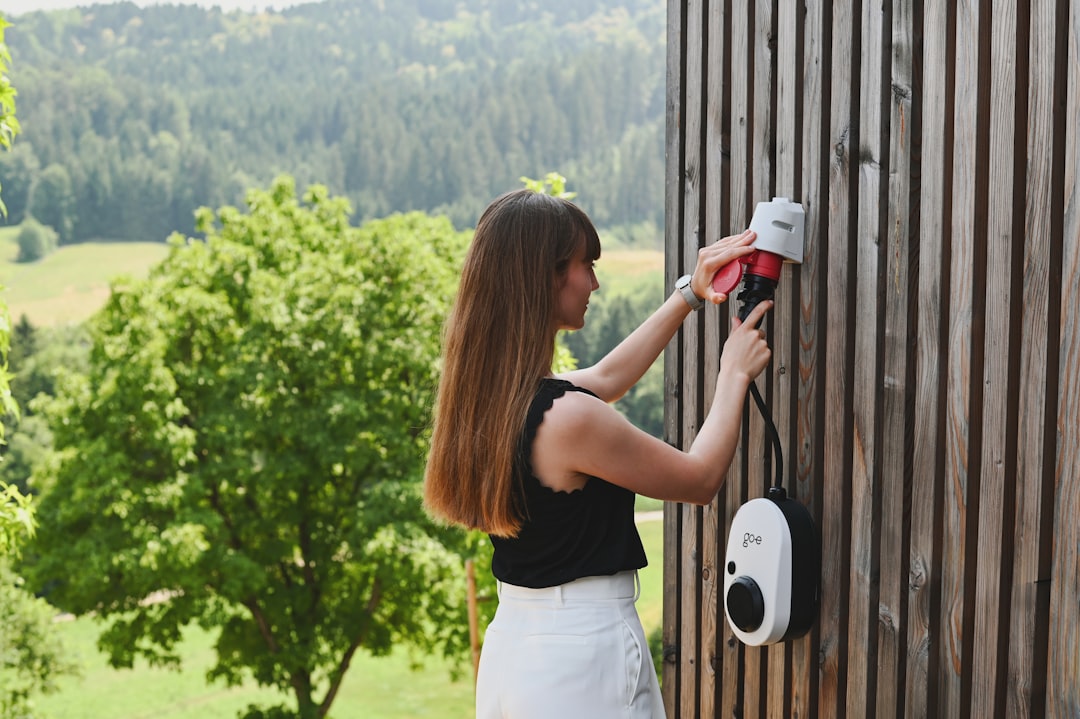
Here’s the practical reality that often gets lost in the market analysis: every single one of those 589 BYD buyers in March is a potential home charger customer. The Dolphin Surf comes with a 7 kW wallbox included in the purchase price — but that box needs to be installed by a qualified electrician, connected to your DB board, and set up correctly for overnight charging.
Get that right, and you’re charging your car every night for roughly 50 cents per kilometre. Get it wrong — or skip the home charger entirely and rely on public DC charging — and you lose most of the convenience advantage that makes EV ownership genuinely appealing for daily use. Get a free quote for home charger installation from our network of certified installers across South Africa.
And when you’re away from home, find charging stations near you on our live map — updated in real time across the country.
FAQ
Why is BYD outselling established brands like Honda, Mitsubishi, and Mazda in South Africa?
BYD’s combination of competitive pricing (especially the Dolphin Surf at R341,900), a broad model range spanning pure EVs and PHEVs, and aggressive dealership expansion has driven rapid growth.
In its first month of official Naamsa reporting, BYD effectively disrupted the local hierarchy, ranking 21st overall.
Legacy brands have not responded with comparably priced or diverse electrified offerings at the lower end of the market.
What is the difference between the BYD Dolphin Surf and the regular BYD Dolphin?
Whereas pricing for the Dolphin begins at R539,900, the entry price for the Dolphin Surf starts well under R400,000.
The Dolphin Surf is a smaller city car —
roughly the same size as a MINI Cooper at 3,925 mm in length
— with a 30 kWh or 38.8 kWh battery, while the standard Dolphin is a larger, more premium hatchback. The Surf is squarely aimed at urban commuters; the Dolphin targets buyers who want more range and a bigger, better-equipped car.
Do all BYD buyers need to install a home charger?
Not strictly required, but highly recommended.
Both Dolphin Surf variants come with a 7 kW home wallbox charger
included in the price, but this needs professional installation by a qualified electrician. Home charging is far more convenient and cost-effective than relying solely on public DC charging for daily top-ups. Get a free home charger installation quote here.
Is the Geely E2 a real threat to BYD Dolphin Surf’s dominance?
Absolutely.
Prices for the Geely E2 start at R339,900, making it the cheapest electric vehicle in the country, undercutting the R341,900 BYD Dolphin Surf by R2,000.
The E2 is also physically larger and offers more range on the base variant. Whether brand awareness and BYD’s established dealer network can hold off the Geely challenge will become clear in Q2 2026 sales figures. Either way, South African EV buyers win.
What does BYD’s March 2026 performance mean for SA’s overall EV adoption timeline?
It’s accelerating the timeline significantly.
In total, 389 EVs were sold in South Africa in March — a new monthly record for local full-electric sales.
With BYD now officially reporting, Geely entering the market, and Chery reportedly planning a sub-R400k EV, the sub-R400,000 BEV segment is becoming a genuine category rather than a niche. Combined with rising fuel prices and BYD’s planned rollout of up to 300 fast-charging stations nationally by end-2026, the conditions for mainstream EV adoption are converging faster than most analysts predicted.
Continue Reading