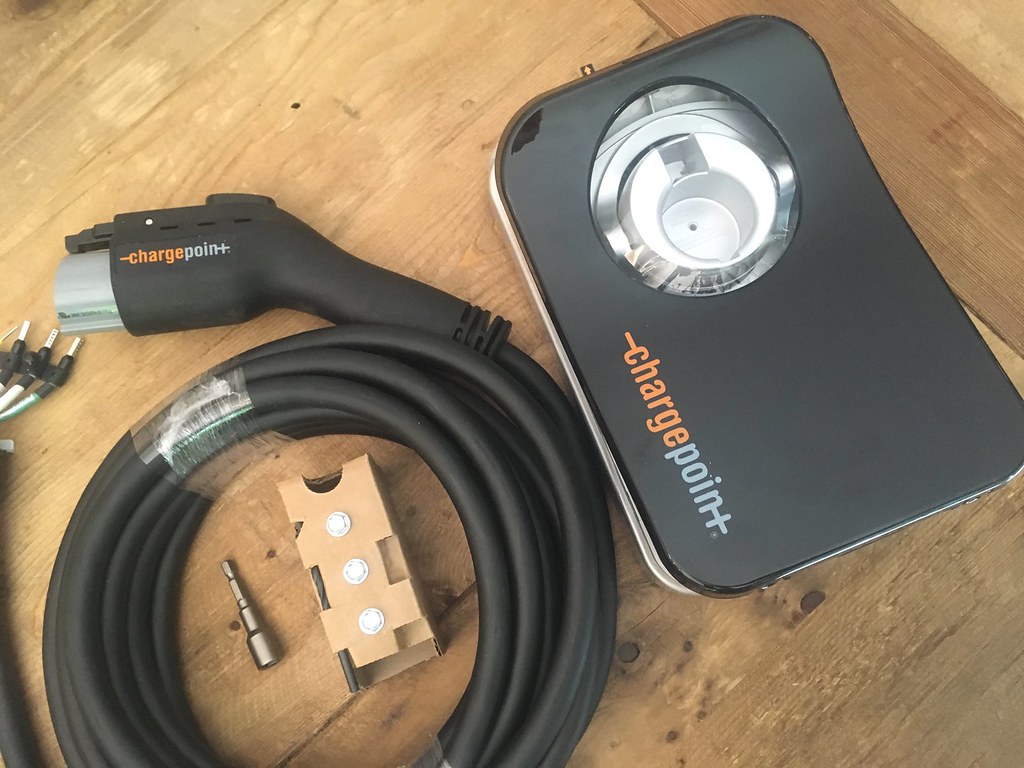
Yes, you can install an EV home charger in a South African body corporate or sectional title complex in 2026 — but it requires navigating a specific legal process under the Sectional Titles Schemes Management Act (STSMA) 8 of 2011, getting trustee approval, proving electrical capacity, and sub-metering your usage. Do that correctly, and you’ll be charging at home every night at R0.95–R1.10 per kilometre versus R1.60–R1.80 per kilometre at public AC stations — a saving of around R10,000–R15,000 annually for a typical 25,000 km/year commuter. That’s a fraction of what public chargers cost over the vehicle’s lifetime. Skip a step, and your application goes nowhere.
If you live in Sandton, Rosebank, Waterfall, Century City, Umhlanga, or Menlyn — you’re in good company. More Cape Town complexes are approving EV charging as demand increases, with Atlantic Seaboard, Century City, and V&A Waterfront complexes leading adoption. The same trend is accelerating in Johannesburg’s northern suburbs. According to Statistics South Africa, the country has an estimated 1.9 million sectional title properties registered nationwide — and a growing number of their owners are arriving home in an EV and wondering why they can’t just plug in.
The honest answer is that they can. The legal framework exists. The technical solutions are proven. As electric vehicles become increasingly common on South African roads, installing EV charging infrastructure in a multi-unit scheme requires planning, approval, and an understanding of different technical and administrative options. This guide covers all of it — from the exact wording of the Act to the three-sentence pitch that gets hesitant trustees to say yes.
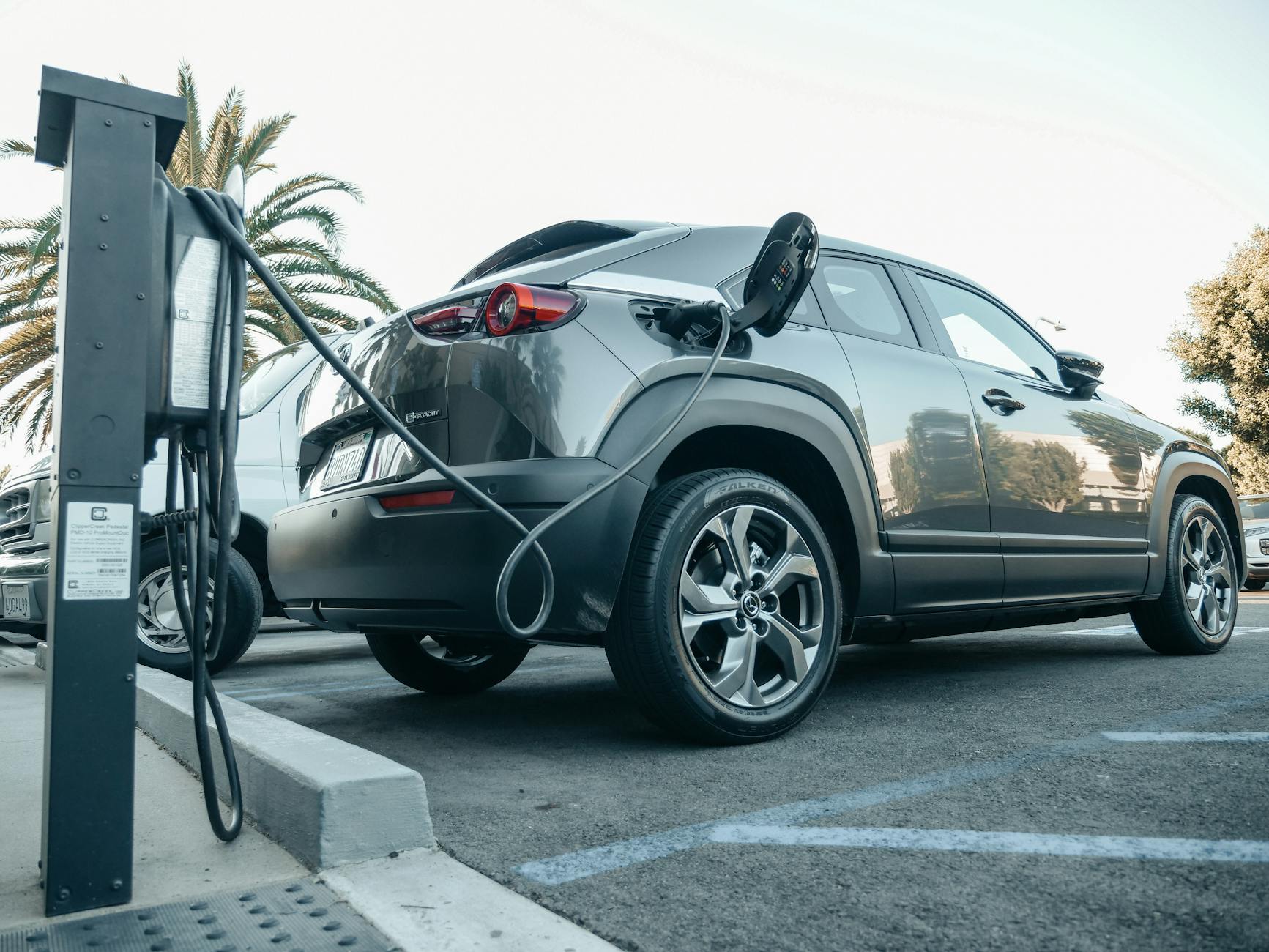
The Legal Framework: What the STSMA Actually Says
The Sectional Titles Schemes Management Act 8 of 2011 (STSMA) governs how sectional title schemes operate in South Africa. This Act, as well as the Sectional Titles Schemes Management Regulations 2016, became effective on 7 October 2016. It is the primary legal instrument controlling what you can and cannot do as a unit owner — including installing electrical infrastructure like an EV charger.
Here’s the key thing most EV owners miss: the law does not prohibit EV charger installations. It regulates the process. You need a trustee resolution under Section 5 of the Sectional Titles Act, proof of electrical capacity from the complex’s master electrical plan, and the body corporate’s approved Conduct Rules amendment if the charger is within common property. That’s it. Meet those requirements and you’re entitled to proceed.
Body corporates must enforce sectional title rules fairly. Owners can dispute unreasonable rules or penalties that violate the Sectional Titles Schemes Management Act. If trustees refuse your application without giving specific technical reasons — insufficient electrical capacity, genuine safety concern, legitimate Conduct Rule conflict — that refusal can be challenged. If no resolution is reached, owners can escalate the matter to the Community Schemes Ombud Service (CSOS), which handles disputes related to sectional title schemes. The CSOS route is slow and nobody wants to go there. But knowing you have that card is useful.

What the body corporate legitimately controls: where the charger is mounted, which qualified electrician does the work, how cables are routed (they cannot damage common property), and whether the complex has sufficient electrical capacity. A common misconception is that trustees have the authority to make unilateral decisions, but the Prescribed Management Rules (PMRs) require them to act with transparency and consult with body corporate members before making significant decisions.
Owners will need to comply with any architectural guidelines, conduct rules, and electrical or safety requirements set out in the MOI, as well as any applicable municipal or national electrical standards. On the technical side, a compliant EV home charger installation in South Africa must meet SANS 10142-1 (the national wiring code) and, as of the 2025 code updates, Part 1 Annex N specifically covering EV charging infrastructure. Your installer must know this. Many generalist electricians do not.
Step-by-Step: The Trustee Approval Process
Step 1: Pre-Application Research (Week 1)
Before you write a single word to your managing agent, do your homework. The first step is to understand the scheme’s electrical capacity and layout. Request this from your managing agent — it’s your right as an owner. Also request a copy of the complex’s Conduct Rules and check whether any EV charging provisions already exist. Newer Sandton and Century City developments are starting to include them from day one.
Then ask around. If one unit in your complex has already installed a charger, your job is dramatically simpler — you follow the established precedent. If you’re first, you’re setting that precedent, which takes more effort but benefits every EV owner who comes after you. Both positions are winnable.
Step 2: Get a Professional Site Assessment and Quote (Week 2)
If you’re living in a townhouse, apartment block, or any form of shared housing, you’ll likely need additional approvals before installing a charger. Even in standalone homes, municipalities often require permits for major electrical work — particularly when the main distribution board is affected. A professional installer does this paperwork as part of the job.
Get a free professional quote for body corporate EV charger installation before you submit anything to trustees. The quote itself becomes your application documentation. It should include the charger model and technical specifications, a sub-meter installation plan, a cable routing diagram from your DB board to the parking bay, and a load calculation showing your 7 kW charger will not overload the complex supply. Without that load calculation, expect trustees to send you away.
Timeline clarity: the electrical installation itself (from quote acceptance to Certificate of Compliance issuance) typically takes 7–14 days once approved and work commences. However, body corporate approval adds 2–6 weeks depending on trustee meeting schedules and application completeness. Total timeline from initial submission to charging: 3–8 weeks for straightforward installations, longer if your application requires revisions or additional documentation. Plan accordingly. Don’t buy the car, sign the lease, and then start this process — begin it the moment you’re serious about going electric.
Step 3: Submit Your Formal Application to Trustees
Your application package needs to answer every trustee concern before they get the chance to raise it. Submit the following as a single, professionally presented document:
- A clear cover letter explaining exactly what you want, emphasising zero cost to the complex (sub-meter means you pay), no impact on other owners’ electricity bills, professional installation with a CoC, and the property value argument
- The electrician’s written quote and technical specs
- A charger mounting location diagram showing exactly where on the parking bay wall
- A load calculation proving the installation fits within available capacity
- Your Certificate of Compliance commitment — the installer provides this upon completion
- Proof of insurance covering both your vehicle and the installation
- A signed indemnity offer — you cover all costs, the complex carries no liability
Don’t submit this on a Tuesday afternoon by WhatsApp. Email it formally to both the managing agent and the trustees. Keep copies. If you need a starting point, our complete home charger guide covers the compliance requirements your documentation must reference.
Step 4: The Trustee Meeting and Decision (2–4 Weeks)
Trustees typically meet monthly. Your application goes on the agenda. Trustees are elected from among the unit owners to act in the best interests of the sectional title scheme. Their responsibilities include drafting and approving budgets and overseeing maintenance of common property. They are also responsible for handling disputes among owners and ensuring conflicts are resolved fairly. Remember: they are volunteers. Your EV charger is item seven on a twelve-item agenda, between the broken lift and the pool pump. Be patient.
Common trustee concerns and your pre-prepared answers:
- “Will this cost the complex money?” — No. Sub-meter means the unit owner pays via their own municipal bill. Zero impact on common supply or complex levies.
- “What if our electrical capacity is insufficient?” — The load calculation report (submitted with your application) proves the charger fits within available spare capacity.
- “What if ten other owners want chargers?” — Your approval sets the precedent and the policy. Other owners follow the same process. You’re actually simplifying future applications by being first.
- “Is it safe?” — The installation must meet SANS 10142-1 and Part 1 Annex N specifically covering EV charging infrastructure. The CoC confirms compliance. This is the same legal standard as any other electrical installation in South Africa.
If the application is refused, request specific written technical reasons. The STSMA allows the body corporate to enforce rules through warnings, penalties, or legal action if necessary. The CSOS was established for unresolved disputes and has the ability to enforce rulings. Vague refusals — “we don’t allow it,” “it sets a precedent,” “the committee isn’t comfortable” — are not valid technical or legal grounds. Push back, politely, in writing.
How Much Could You Save With an EV?
Use our free calculator to compare your current fuel costs with EV charging costs.
Technical Installation Options: Which One Fits Your Complex?
Option 1: Sub-Metered From Your Unit DB Board (Recommended)
This is the gold standard for body corporate approvals, and for good reason. Your electrician runs a dedicated cable from your unit’s distribution board to your parking bay. A sub-meter sits in line and records exactly how many kWh flow to your charger. That consumption appears on your own Eskom or municipal bill. Not on the complex’s account. Not on your neighbour’s account. Yours.
This requires a dedicated circuit from the distribution board with a Type A or Type B earth-leakage unit rated for DC residual currents (generic household earth leakage is not compliant for EV charging), and a correctly rated cable — typically 6 mm² for 32 A single-phase runs under 25 m, stepping up for longer cable runs or three-phase.
Typical cost for this setup: R12,000–R22,000 all-in for a 7 kW wallbox, sub-meter, and cable run up to 30 metres. Most South African residential properties are on single-phase 60–80 amp supplies, which caps your charger at around 7 kW (roughly 30 km of range per hour). Larger estates and newer sectional-title developments — and most of Gauteng’s upper-middle suburbs — have three-phase, which unlocks 11 kW and 22 kW chargers.
Option 2: Body Corporate Supply With Reimbursement Meter
If your parking bay is on the opposite side of the complex from your unit — say, a 50-metre run that would cost R8,000 in cable alone — an alternative is tapping into the common electrical supply in the parking area, with a dedicated sub-meter that you read monthly and reimburse the body corporate accordingly. It works. Trustees generally dislike it because it creates ongoing admin and monthly invoicing. But for awkward parking configurations, it’s legitimate and approvable.
Option 3: Shared Charging Hub (Large Complexes, Future Trend)
This is where the market is heading in premium estates. The body corporate installs two to four chargers as common property in dedicated bays. EV owners access them via RFID card or app and pay per kWh through a billing platform. A special resolution requires at least 75% of the total votes in favour (per Section 5 of the STSMA and Prescribed Management Rule 71) — so this approach needs buy-in from the broader community, which is easier when there are already eight or ten EV owners in the complex. Complexes in Waterfall, Sandton, and Century City are beginning to operate on this model. It’s the most elegant long-term solution for the complex’s property value too.
What It Actually Costs: A Realistic 2026 Breakdown
Here’s what you should budget for a standard sub-metered installation in a South African body corporate complex in 2026:
| Item | Low Estimate | High Estimate |
|---|---|---|
| 7 kW wallbox charger (Type 2, smart) | R6,000 | R9,000 |
| Sub-meter installation | R2,500 | R4,000 |
| Cable run (15–30 m from DB to bay) | R3,000 | R6,000 |
| DB board upgrade (if needed) | R2,000 | R4,000 |
| Certificate of Compliance | R800 | R1,500 |
| Total (typical range) | R14,300 | R24,500 |
Most installations in Johannesburg and Cape Town complexes land between R16,000 and R20,000 once everything is included. These prices reflect installed quotes tracked across Gauteng, the Western Cape, and KZN through March 2026, and include CoC issuance and a 2-year workmanship warranty.
Add-ons that some complexes may require: a formal load report from a consulting engineer (R3,000–R6,000, but sets precedent for the whole complex), conduit trenching if cables must go underground (R2,000–R5,000 per 10 m), and an admin fee from the managing agent (R500–R2,000, complex-dependent). On the ongoing cost side, according to Eskom’s published tariff schedules, the 2025/2026 tariff increase pushed the average residential unit price to roughly R3.40–R4.20 per kWh (including VAT) across most municipal indirect customers. Public AC charging runs at R5.88/kWh, while DC fast charging ranges from R7.00–R8.12/kWh. Home charging in your complex bay is significantly cheaper than either.
To model your exact numbers using Cape Town, Johannesburg, or Eskom tariffs, use the EV savings calculator — it’ll show you the annual rand difference between home charging and petrol within about two minutes.
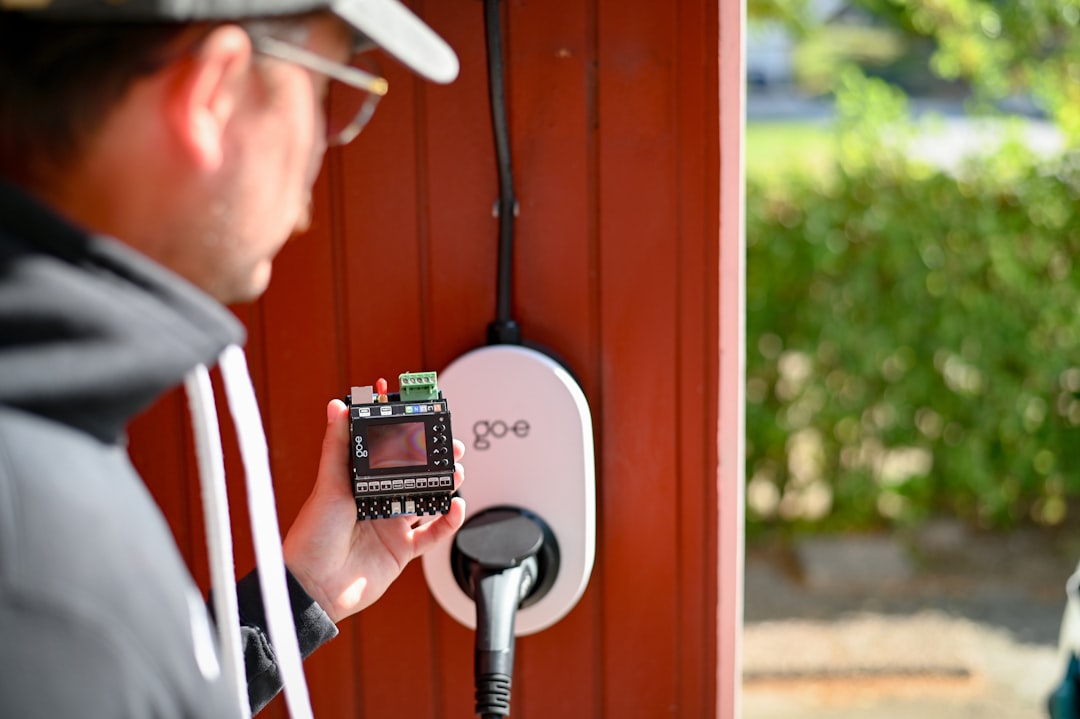
How to Present Your Application So It Actually Gets Approved
Here’s the thing that most people miss: the quality of your application determines whether you get approved at the first trustee meeting or spend six months in a bureaucratic loop. Trustees who’ve never seen an EV charger application don’t know what to make of a vague email saying “I’d like to install a charger in my parking bay.” They defer, request more information, and forget about it.
A professional application package — think of it the same way you’d think of a planning submission — answers every concern before it’s raised.
Frame it as a property value play. Premium estates without EV charging are starting to look dated. Century City apartments with charging infrastructure command a premium. Waterfall estate agents are already listing “EV charger ready” as a selling feature. Trustees understand property value — use that language.
Make it explicitly zero-cost to the complex. Say it in the first paragraph of your cover letter and repeat it twice. Sub-metered installation means you pay 100% of your electricity usage via your own municipal bill. Zero impact on complex levies. Zero admin burden. The body corporate does not touch a cent.
Bring precedent. With limited public charging options, home charging has become the go-to solution for many electric vehicle owners. Dozens of South African complexes have already navigated this. If you can name one in your area that’s approved installations — even if it’s just from a conversation with another EV owner at the braai — put it in the application. Trustees are much more comfortable approving something that someone else has already approved successfully.
Offer to create the policy. This is the move that turns trustees from cautious gatekeepers into genuine supporters. Tell them you’re willing to work with the complex to draft a formal EV Charger Installation Policy that future owners can use without a bespoke application each time. You do the work, they get a cleaner process forever. Hard to say no to that.

Ready to Install a Home Charger?
Get a free, no-obligation quote for professional EV charger installation in South Africa.
Real-World Case Studies from SA Complexes
Century City, Cape Town — Apartment Owner, 2023
Owner submitted a complete technical pack from a professional installer. Trustees approved at the first meeting — two weeks from submission to green light. Sub-metered 7 kW charger installed for R17,500. The complex has since approved six more installations using the same precedent and is now drafting a formal EV Charger Policy for its Conduct Rules. First-mover advantage in action.
Sandton Gated Estate, Johannesburg — 120-Unit Complex, 2024
The first EV owner in the estate. Trustees were initially hesitant — genuine electrical capacity concern in an older complex. Owner hired a consulting engineer to produce a load report showing the complex had significant spare capacity, and that a 7 kW charger represented less than 2% of that available headroom. Approved after the second trustee meeting. Total cost: R19,200, including a R4,500 engineer’s report. Four more units subsequently requested installations — and because the load report already existed, none of them had to pay for their own. The first owner absorbed that cost for the entire complex.
Umhlanga, Durban — 2-Bed Apartment, 2025
Parking bay was 45 metres from the unit — a cable run that would have cost more than the charger itself. Owner negotiated a different solution: a shared charging hub in two visitor bays, funded jointly by the body corporate (R30,000 upfront, recovered via a once-off R150 per-unit special levy). Eight EV owners now share the system, paying per kWh via app. The body corporate carries the infrastructure; residents pay for usage. Elegant, scalable, and the model most large urban complexes will eventually move towards.
What About Load-Shedding? The Backup Power Angle
With limited public charging options and frequent power outages, home charging has become the go-to solution for many EV owners. But load-shedding does complicate the picture in complex environments. Regular load-shedding can interrupt charging cycles, so adding a battery backup or inverter can boost consistency and convenience.
If your complex already has solar and battery backup — increasingly common after Eskom’s reliability crisis — check whether the backup supply can handle your charger circuit. Many 7 kW chargers can be throttled down to 3.5 kW or even 1.8 kW via their companion apps, which makes running them off an inverter during load-shedding genuinely feasible. Smart chargers like the Wallbox Pulsar Plus and Easee Home offer this granular control. It’s worth mentioning in your trustee application if the complex has backup power: it’s one more objection pre-answered.
Don’t yet have a sense of where public chargers are concentrated near your complex for the days your home setup isn’t available? Check the live charging map to see what public infrastructure sits within reach — as of late 2025, according to MyBroadband’s EV charging infrastructure tracking, there are around 600 public charging stations in South Africa, with most located in Gauteng, Western Cape, and KwaZulu-Natal.
Find Charging Stations Near You
Explore our live map of EV charging stations across South Africa — updated in real time.
The Financial Case: Why All of This Is Worth the Admin
Let’s be honest about the motive here. The body corporate application process is a pain. The trustee meetings are slow. The documentation is tedious. But the payback arithmetic is compelling enough that you should push through it regardless.
Take a typical Sandton commuter doing 25,000 km per year in a mid-size EV. Public AC charging in South Africa runs at R5.88/kWh, which works out to roughly R1.60–R1.80 per kilometre in a typical EV. Home charging on a Johannesburg municipal tariff drops that to around R0.95–R1.10 per km. At 25,000 km per year, that’s a saving of around R10,000–R15,000 annually just from switching from public charging to home charging. Your R17,000–R20,000 installation pays back in under two years.
That’s before accounting for overnight off-peak tariffs, which many municipalities and Eskom offer where charging overnight or during off-peak periods comes at a reduced rate, making night-time charging a smart and budget-friendly option for EV owners. Over a five-year ownership period, home charging saves R50,000–R75,000 compared to relying exclusively on public AC charging — and dramatically more compared to petrol.
Home EV charging in a South African body corporate complex, done correctly with sub-metering and a professional installation, returns its installation cost in under two years and saves R10,000–R15,000 per year for every year after that.
Conclusion: The Process Is Real, But So Is the Reward
Installing an EV charger in a South African body corporate or sectional title complex in 2026 is no longer experimental — it is becoming routine in progressive estates across Sandton, Century City, Umhlanga, and Waterfall. Home charging is one of the biggest conveniences of owning an electric vehicle. Charging at your residence can be significantly cheaper than relying solely on public charging stations, and it means your car is ready to go each morning without detours.
The legal framework under the STSMA supports you. The technical solutions — sub-metering, dedicated circuits, smart wallboxes — are proven and SANS 10142-1 compliant. The Community Schemes Ombud Service was established for unresolved disputes and has the ability to enforce rulings, providing a structured mediation and adjudication process as a cost-effective alternative to litigation. You have legal recourse if trustees act unreasonably. Use it if needed, but a well-prepared application rarely reaches that point.
Your job is to present a professional, zero-cost-to-complex application that answers trustee concerns before they ask. Sub-metering is the key. A Certificate of Compliance is non-negotiable. And patience through the trustee process is simply the price of admission. Ready to start? Get a free body corporate installation quote and receive a site assessment report that doubles as your application documentation.
FAQ
Can a body corporate legally refuse an EV charger installation request in South Africa?
Not without valid grounds. Body corporates must enforce sectional title rules fairly, and owners can dispute unreasonable rules or penalties that violate the Sectional Titles Schemes Management Act. A body corporate can refuse on legitimate safety or electrical capacity grounds, but a blanket refusal without specific technical reasons is challengeable. If the refusal is vague, request written reasons and escalate to the CSOS if necessary. Present a professional application with a load calculation and sub-meter plan, and most trustees will find it very difficult to refuse.
How long does trustee approval typically take in South Africa?
Body corporate approvals typically add 2–6 weeks to the overall installation timeline. Trustees usually meet monthly, so your application goes onto the next scheduled agenda. A complete, well-prepared application typically gets approved at the first meeting. An incomplete application — one that doesn’t include a load calculation or sub-meter plan — gets deferred, adding another month. Once approved, the electrical installation itself (from quote acceptance to Certificate of Compliance issuance) typically takes 7–14 days. Total timeline from initial submission to charging: 3–8 weeks for straightforward installations. Submit a complete pack from day one.
What if my parking bay is 50m from my unit — is installation still possible?
Yes, but the cable run cost increases significantly at that distance, and you may need to consider alternative approaches. Cable sizing steps up for longer cable runs or three-phase. At 50 metres, options include: a thicker cable run (expensive but clean), tapping into common supply with a reimbursement sub-meter, or negotiating a shared charging hub with the body corporate. The Umhlanga case study above is a real example of how a 45-metre run was solved through a shared hub rather than a dedicated line.
Do I need to pay for other owners’ charger installations if they request them later?
No. Each owner bears the full cost of their own installation. If you commission a load report or engineer’s assessment as part of your application, subsequent owners may be able to use that existing report (reducing their costs), but you are under no legal obligation to share costs. Some complexes formalise a cost-sharing arrangement for shared infrastructure like a charging hub — but only with owner consent and a formal body corporate resolution.
What happens to the charger if I sell my unit?
The charger is a fixture attached to the property and typically transfers with the sale. In practice, you can either include it in the sale (increasing the property’s appeal and value — EV charging infrastructure is a genuine selling point in 2026) or remove it and restore the wall, depending on your sale agreement. Make sure your Certificate of Compliance is in order before transfer — the CoC issued by a registered electrician is legally required, and without it, your home insurance can reject claims for electrical fires, and you cannot legally transfer the property.
Can I install a charger as a tenant, not an owner?
This is more complex. The body corporate cannot hold a tenant directly accountable — there is no legal relationship between the tenant and the body corporate. There is, however, a relationship between the owner and the body corporate. An owner is directly responsible for making sure that tenants follow the conduct rules. As a tenant, you need your landlord’s written permission first, then the landlord (as unit owner) must submit the application to trustees. Get everything in writing — especially agreement on who owns the charger at end of lease.
Continue Reading