
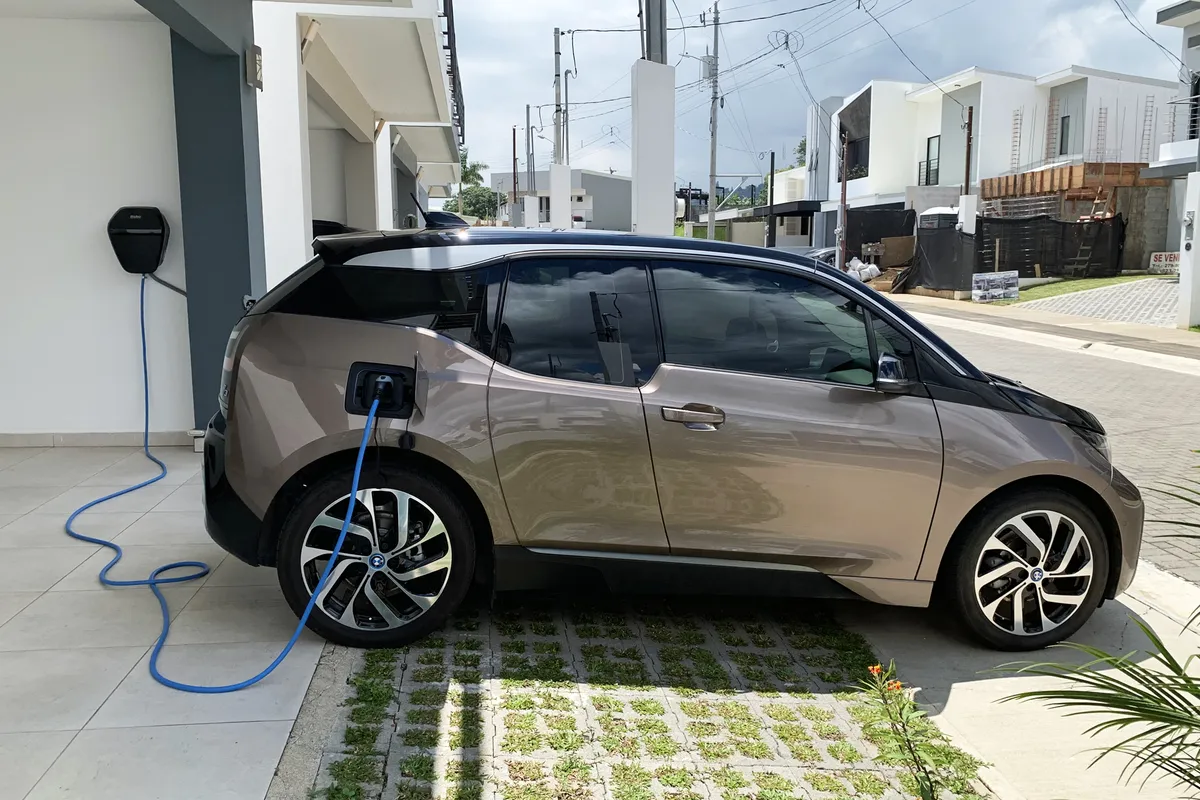
A 7 kW home wallbox costs R14,000–R26,000 installed in South Africa in 2025 — and it pays for itself in 10–18 months if you’re charging overnight on Eskom’s Homeflex off-peak rate of R1.45–R2.25 per kWh. That’s five times cheaper than petrol at R25 per litre, and the reason most EV owners who install a wallbox never go back to public charging for daily use.
Published: December 2025 | ChargePoint SA Energy & Mobility Desk
Installing an EV home charger in South Africa in 2025 is no longer an experimental move — it’s a mainstream decision, and one that pays back faster than most owners expect. With petrol prices hovering above R25 per litre, Eskom’s new Homeflex time-of-use tariff making overnight charging cheaper than ever, and the EV market growing rapidly, the economics have shifted decisively.
This is the 2025 guide to choosing, installing, and paying for an EV home charger in South Africa. It covers every charger tier (3-pin, 7 kW, 11 kW, 22 kW), the real installed prices we’re seeing in Johannesburg, Cape Town, Durban, and Pretoria, and the legal and electrical requirements most articles skip. If you’re deciding between charging at home and relying on public chargers, this is the article that settles it.
How EV Home Chargers Actually Work in a South African Home
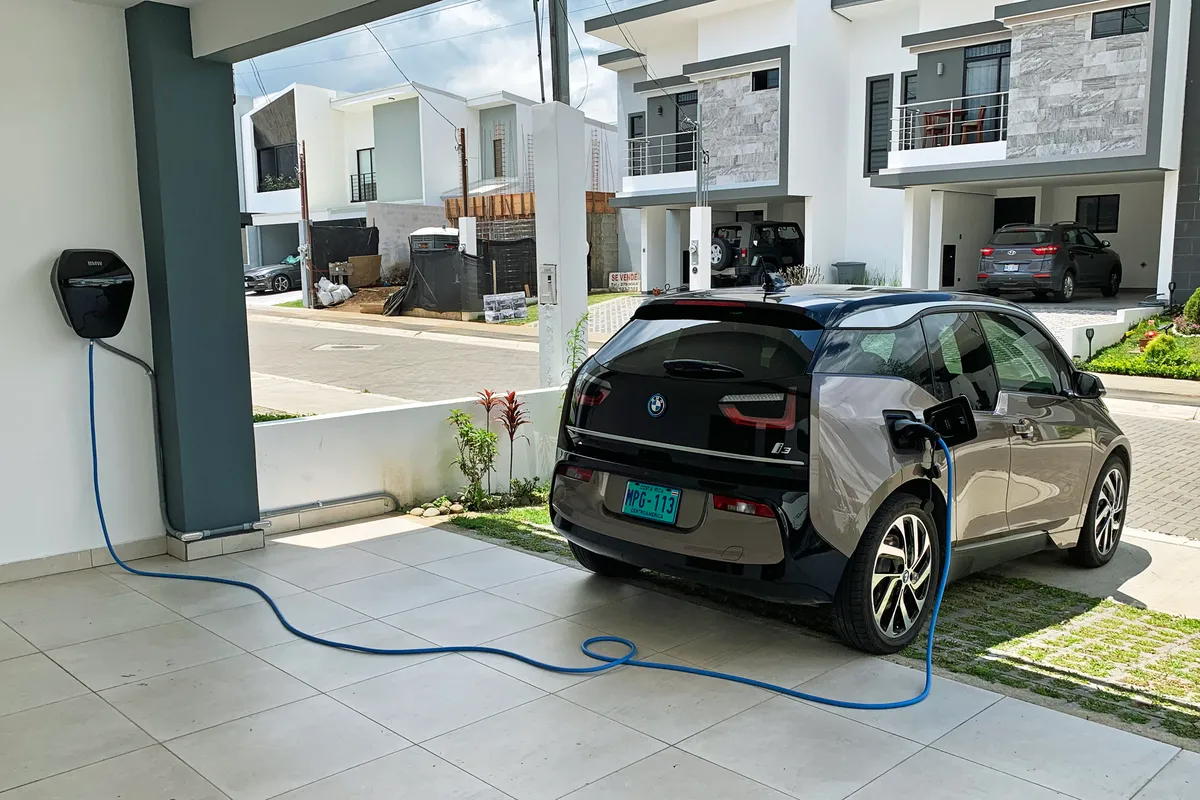
An EV home charger — technically called an EVSE (Electric Vehicle Supply Equipment) — is not a “battery” or a power source. It’s a safety-controlled switch between your home’s distribution board and your car’s battery. It negotiates voltage, current, and a continuous earth-leakage check with the vehicle, then delivers AC power that the car’s onboard charger converts to DC to top up the battery.
Three variables determine how fast your home charger can refuel your EV: your home’s incoming supply (single-phase or three-phase), the charger’s rated output in kilowatts, and your car’s onboard AC charging acceptance. A BYD Atto 3, for example, accepts 7 kW AC — plug it into a 22 kW wallbox and it will still only pull 7 kW. Spec-matching the charger to the vehicle matters; over-buying wastes R10,000+.
Single-phase vs three-phase: the first decision
About 70% of South African residential properties are on single-phase 60–80 amp supplies, which caps your charger at around 7 kW (roughly 30 km of range per hour). Larger estates and newer sectional-title developments — and most of Gauteng’s upper-middle suburbs — have three-phase, which unlocks 11 kW and 22 kW chargers. If you’re unsure, your DB board or your last Eskom/municipal bill will say. An electrician can confirm in under five minutes.
The Four Charger Tiers (and What Each Actually Costs in 2025)
Level 1 — 3-pin plug (1.8–2.3 kW)
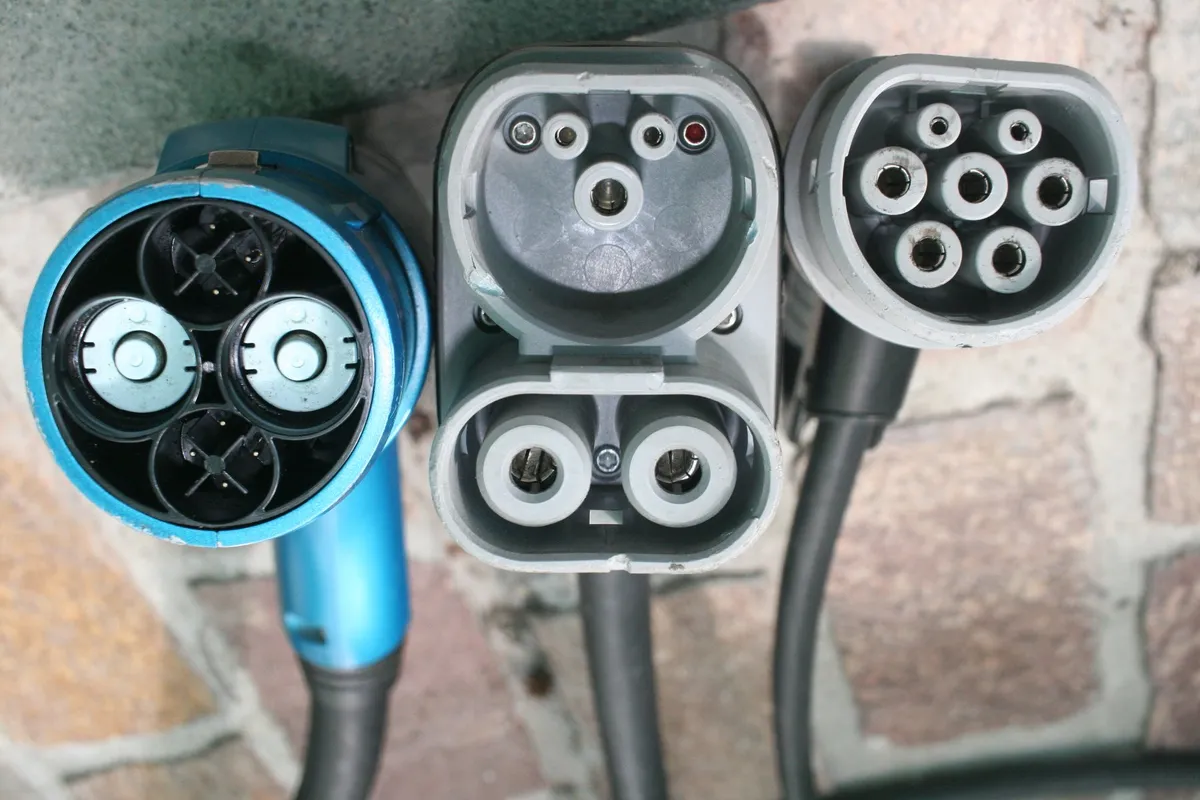
The cable that ships with your car. Adds roughly 10–15 km of range per hour — so a full overnight charge of a 50 kWh battery takes 18–22 hours. Usable only as a backup or for PHEVs with small batteries. Equipment cost: R2,500–R4,500 for a quality portable EVSE. Does not require an electrician, but does require a dedicated 16 A circuit if you plan to use it nightly — standard household plug points are not designed for 2 kW sustained loads for 8–10 hours and routinely overheat.
Level 2 — 7 kW wallbox (single-phase, 32 A)
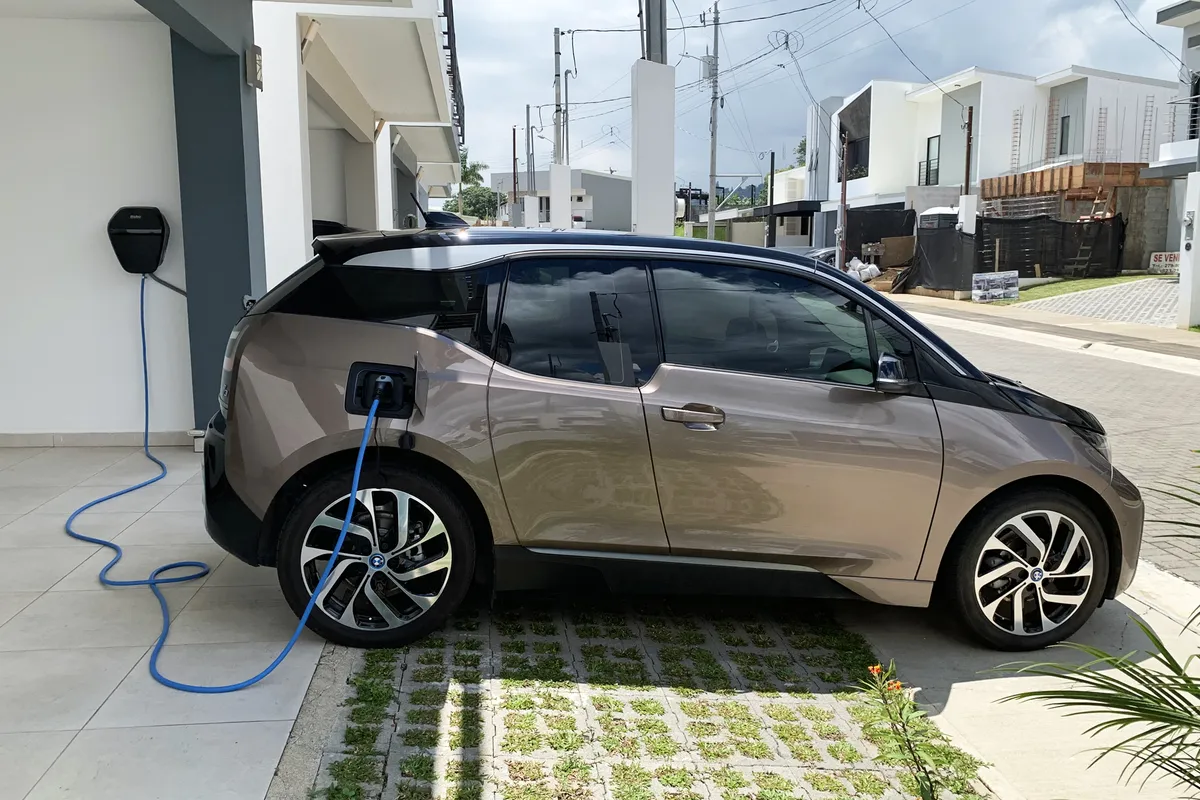
The sweet spot for 85% of South African EV owners. Adds 30–40 km per hour; fully charges a mid-size battery overnight. Works on any standard single-phase home supply. Equipment cost: the ChargePointSA CP-AC7-CP, a well-specced tethered Type 2 wall charger, is R7 400. Installation: R3,500–R9,500 depending on cable distance to the DB and whether the board needs a new breaker or surge protection. Typical all-in: R14,000–R26,000.
Level 2 — 11 kW wallbox (three-phase, 16 A per phase)
Requires a three-phase supply. Adds roughly 55–65 km of range per hour. Practical for homes with two EVs or drivers who do 300+ km per day. Equipment cost: R14,000–R22,000. Installation is slightly more complex because the cabling must be balanced across all three phases. Typical all-in: R19,000–R30,000.
Level 2 — 22 kW wallbox (three-phase, 32 A per phase)
The ceiling of what you can fit as a “home” charger. Adds 110 km of range per hour — fully fills most EVs in 2.5 hours. Only worth it if your car can accept 22 kW AC (Renault Zoe, some Audi e-tron, BMW i4 M50, Tesla Model 3 LR with optional upgrade) and you have three-phase. Equipment: R17,000–R30,000. Installation: R6,000–R12,000, often needs a DB upgrade or dedicated sub-circuit. Typical all-in: R24,000–R40,000.
These prices reflect installed quotes ChargePoint SA has tracked across Gauteng, the Western Cape, and KZN through November 2025. They include CoC (Certificate of Compliance) issuance and 2-year workmanship warranty.
Ready to Install Your EV Home Charger?
Get a certified ChargePoint SA installation with CoC, 2-year workmanship warranty, and free site assessment. We cover Johannesburg, Cape Town, Durban, Pretoria, and the Garden Route.
Electricity Costs: What 2025 Tariffs Mean for Your Cents-per-Kilometre
Eskom’s 2025/2026 tariff increase pushed the average residential unit price to roughly R3.40–R4.20 per kWh (including VAT) across most municipal indirect customers, with Eskom-direct Homepower customers around R2.92/kWh off-peak on Homeflex. The new Homeflex time-of-use tariff, which is compulsory for customers with rooftop solar feeding back to the grid, charges dramatically different rates by time-of-day:
| Homeflex period | Low-demand season | High-demand (Jun–Aug) |
|---|---|---|
| Peak (07:00–10:00, 18:00–20:00) | ~R3.85/kWh | ~R11.80/kWh |
| Standard | ~R2.85/kWh | ~R4.30/kWh |
| Off-peak (22:00–06:00) | ~R1.45/kWh | ~R2.25/kWh |
Translated to a real EV: a BYD Atto 3 (60 kWh battery, ~18 kWh/100 km) charged overnight off-peak on Homeflex costs roughly R26 per 100 km. The same 100 km in a petrol Hyundai Creta 1.5 costs R134 at R25/litre. That’s an 80% reduction — and the reason a smart charger with a scheduled off-peak charging window is almost always worth the R1,500–R3,000 premium over a dumb one.
Installation Requirements: The Legal and Electrical Side
A compliant EV home charger installation in South Africa must meet SANS 10142-1 (the national wiring code) and, as of the 2025 code updates, Part 1 Annex N specifically covering EV charging infrastructure. That means:
- Dedicated circuit from the distribution board with a Type A or Type B earth-leakage unit rated for DC residual currents (generic household earth leakage is not compliant for EV charging).
- Correctly rated cable — typically 6 mm² for 32 A single-phase runs under 25 m, stepping up for longer cable runs or three-phase.
- Surge protection device on the dedicated circuit (SANS 10142 Annex N strongly recommends, insurers increasingly require).
- Certificate of Compliance (CoC) issued by a registered electrician. Without this, your home insurance can reject claims for electrical fires, and you cannot legally transfer the property.
- Body corporate approval for sectional title or complex installations — typically a trustee resolution and sometimes an EIA report if the complex is over 20 years old.
A professional ChargePoint SA installation typically runs four to eight hours on-site for a single-phase 7 kW wallbox and one full day for a three-phase install. The full process from quote to CoC is usually 7–14 days, with body-corporate approvals adding 2–6 weeks for complex installations.
Solar + EV Charging: The Combination That Changes the Math
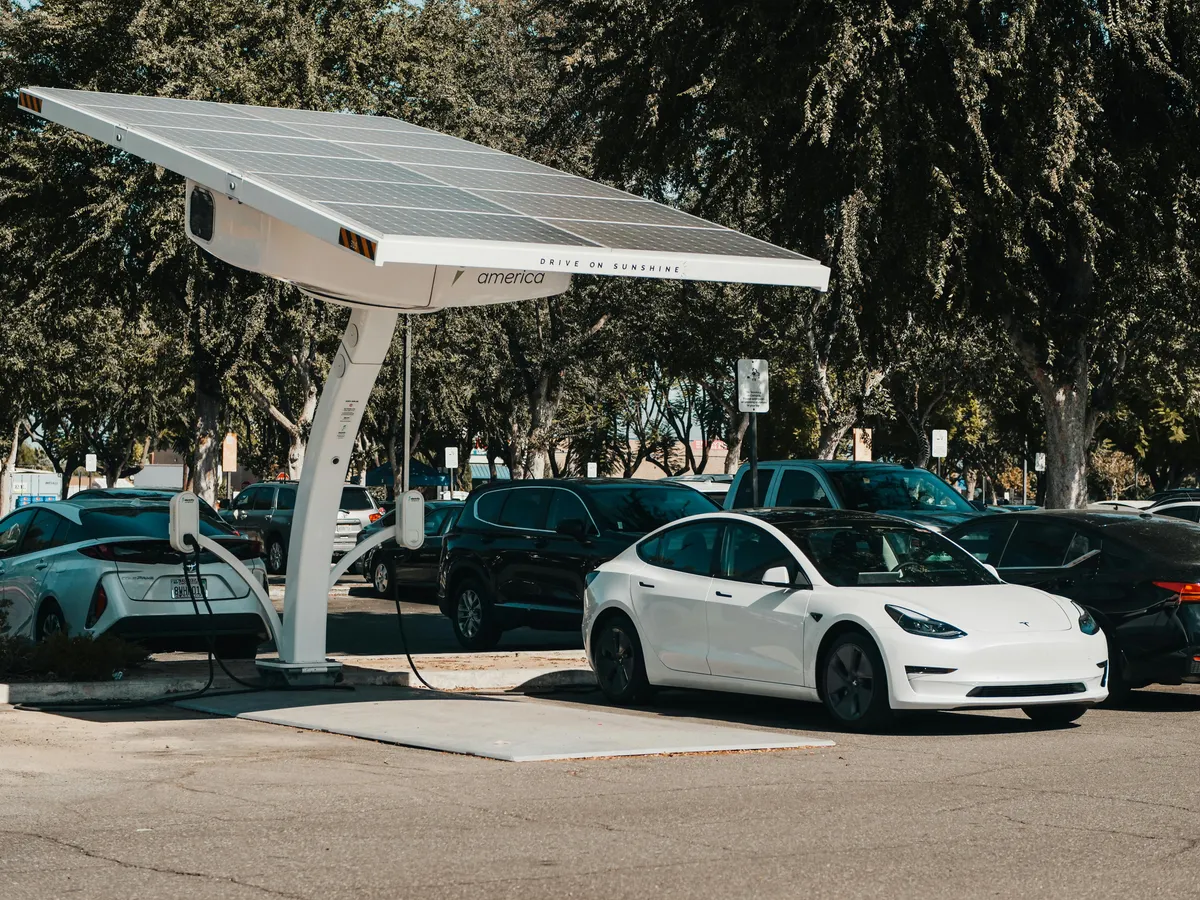
For South African homes with rooftop solar, pairing it with a solar-aware EV charger is one of the highest-ROI moves in home energy. Some chargers on the market can dynamically throttle their output to only consume solar surplus, meaning your car charges from genuinely free electricity during daylight hours.
Three financial paths open up once solar and an EV charger are on the same property:
- Pure surplus charging: charger draws only the solar your home isn’t using. Ideal if you have a larger array (8 kW+). A typical Gauteng home with a 10 kWp system can push 25–35 kWh/day into an EV for free, which covers ~130 km daily at no grid cost.
- Hybrid (solar + off-peak grid): solar during the day, top-up overnight at Homeflex off-peak rates. Covers the gap on cloudy days.
- Vehicle-to-home (V2H): available on BYD Atto 3/Dolphin, MG ZS EV, Ford Ranger PHEV and a handful of others from 2025 onwards. Your car becomes a 60 kWh battery that can back-feed the house during load-shedding. Still requires a bidirectional charger (R45,000–R80,000 installed).
The payback period on the charger itself — ignoring solar — is typically 18 to 30 months for a commuter driving 1,800 km/month. Add solar and the payback drops to under a year in many cases.
Choosing the Right Charger: A Decision Framework
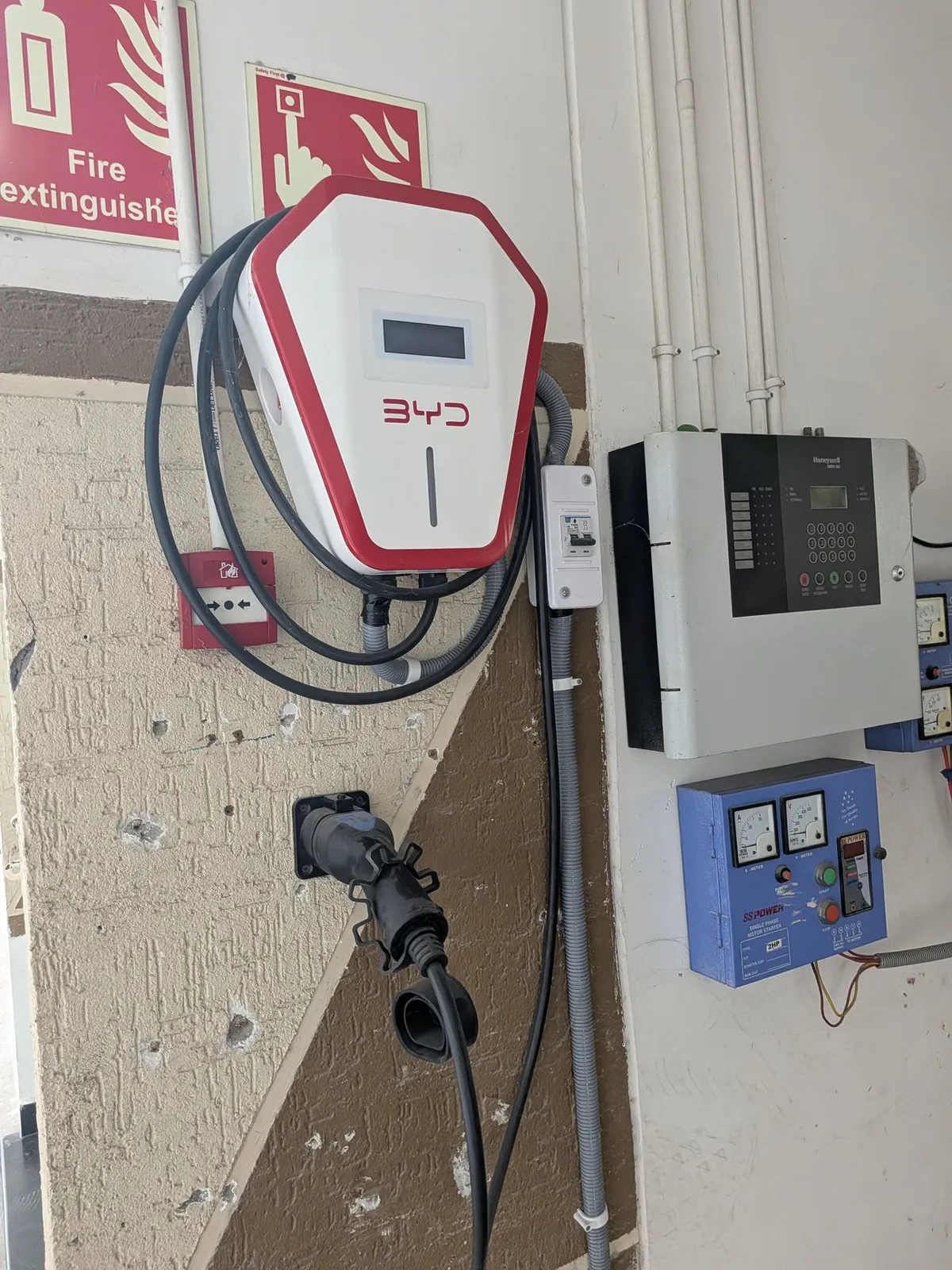
Instead of starting with brand, start with the answers to five questions. Your installer should work through this with you:
- Which EV do you drive (or plan to buy in the next 2 years)? Match your charger to the highest AC rate your household’s EV fleet can accept. A 7 kW wallbox on a BYD is perfect; a 22 kW on a Nissan Leaf (which peaks at 6.6 kW) is wasted money.
- Is your supply single- or three-phase? Determines whether 11/22 kW is even possible.
- Do you have rooftop solar now, or plan to in 2 years? If yes, ask us about scheduling options on our CP-AC7-CP or CP-AC22-CP — our installers can advise on the best setup for your solar system.
- How many EVs will be on this supply? For two EVs on one circuit, dynamic load balancing is non-negotiable — it prevents tripping your main breaker when both cars plug in at 18:30.
- Do you plan to schedule off-peak charging? Any smart Wi-Fi-enabled charger handles this; generic “plug-in and go” boxes don’t.
Return on Investment: The Numbers That Matter
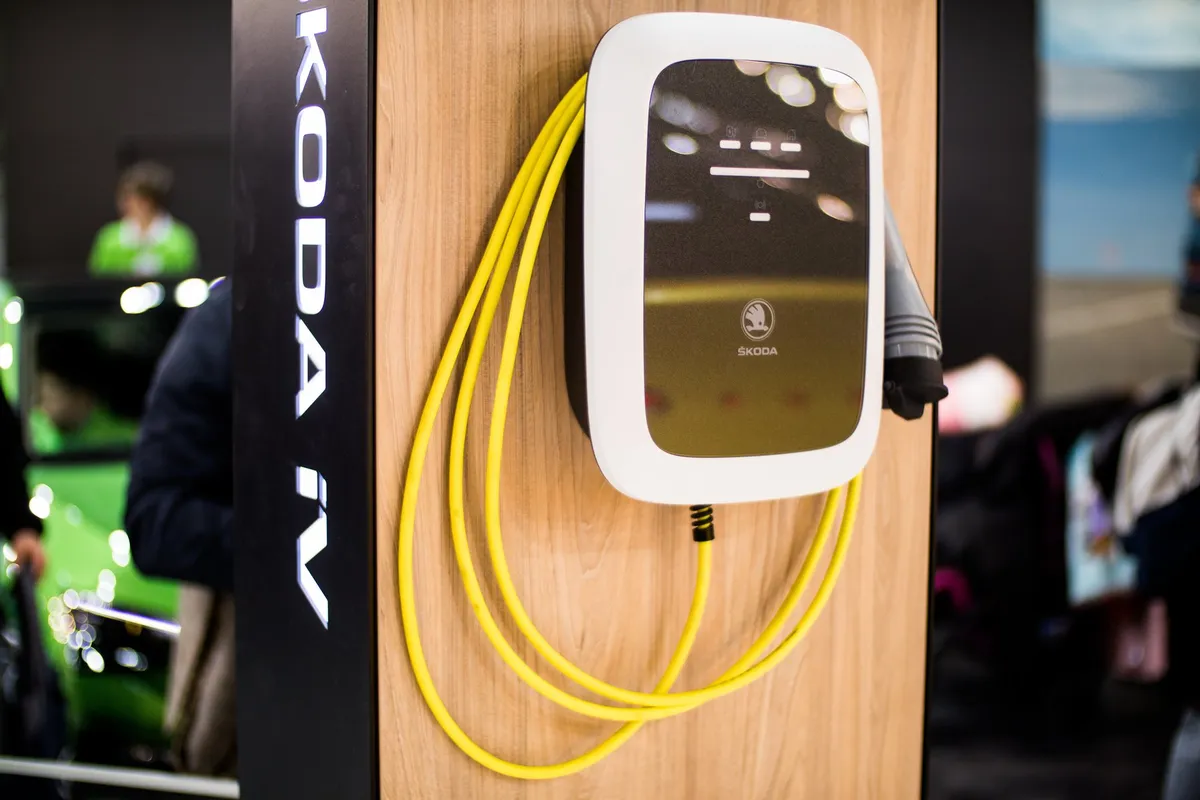
Here’s what a representative upgrade looks like for a Gauteng family switching from a 1.5L petrol crossover to a BYD Atto 3, charging at home on Homeflex off-peak:
| Line item | Annual cost (petrol) | Annual cost (EV home charge) |
|---|---|---|
| Fuel/electricity (20,000 km/yr) | R26,800 | R5,200 |
| Scheduled services | R4,200 | R1,400 |
| Brake pads / wear items | R2,600 | R900 |
| Total running cost/year | R33,600 | R7,500 |
Annual saving: R26,100. A R22,000 home charger installation pays for itself in roughly 10 months. Over a 7-year ownership horizon, cumulative saving lands north of R180,000 before you count depreciation or residual-value differences.
Get Your Exact Installation Price
Every home is different — cable run, distribution board, and charger choice all move the number. Tell us about yours and we’ll send a fixed-price installation quote, with no surprises on the day.
Curious about running-cost savings too? Try the EV savings calculator →
Johannesburg, Cape Town, Durban: Does Your City Change the Numbers?
Municipal electricity rates vary, and so do installation realities. Here’s how the three metros stack up for 2025:
- Johannesburg (City Power): residential flat rate ~R3.80/kWh, no time-of-use option yet for domestic customers. Installation costs run slightly higher because Gauteng has the deepest pool of EV-certified electricians and they price accordingly. City Power’s new Booysens charging station is the first municipal public charger in the country, but it doesn’t change the economics of home charging.
- Cape Town: residential ~R3.45/kWh on the basic tariff, with optional Home Power Plus time-of-use offering off-peak around R2.10/kWh. The City of Cape Town has published installation guidance specifically for EV chargers since late 2024.
- Durban (eThekwini): residential ~R3.20/kWh, the lowest of the three metros, but no formal TOU option yet. Humidity and salt air near the coast push surge protection and enclosure ratings up — specify IP54 minimum for any outdoor install.
- Pretoria (Tshwane): mixed Eskom and Tshwane supply zones. Eskom-supplied customers can move to Homeflex; Tshwane-supplied ones pay a flat ~R3.55/kWh.
For a deeper city-by-city breakdown, see our installation guides for Johannesburg, Cape Town, Durban, and Pretoria.
Find Public Charging Stations Near You
See every public charger in South Africa in real time — availability, speed, and pricing across all major networks.
FAQ
How much does a typical EV home charger cost to install in South Africa in 2025?
The most common configuration — a 7 kW Type 2 wallbox on a single-phase supply — costs R14,000 to R26,000 fully installed including the CoC. Premium smart chargers with solar integration sit at the top of that range; basic dumb chargers at the bottom. Three-phase 11 kW and 22 kW installations run R19,000–R40,000.
Do I really need a wallbox, or can I just use the cable that came with my EV?
For occasional charging (a few times a month), the 3-pin portable EVSE works. For daily charging it’s a genuine fire and electrical-compliance risk. Standard South African household socket outlets are rated for intermittent 10 A loads, not continuous 10 A draw for 8+ hours. Dedicated EV wallboxes handle that load safely and charge 3–4× faster. The insurance implications alone usually justify the wallbox.
Will load-shedding affect my home charging?
Yes — your charger delivers no power when the grid is down. The workaround is a solar + battery hybrid system that continues to run the charger during an outage. ChargePoint SA integrates solar-aware EV chargers with Sunsynk, Deye, and Victron inverters so your car charges from the battery’s surplus during a power cut without draining reserves needed for your lights and fridge. For more on this scenario, see our load-shedding and EV charging guide.
Can I install an EV charger in a sectional title unit or complex?
Yes, but you need a trustee resolution under Section 5 of the Sectional Titles Act, a proof of electrical capacity from the complex’s master electrical plan, and the body corporate’s approved Conduct Rules amendment if the charger is within common property. Our body corporate EV charging guide walks through this process step by step.
Do I need a three-phase supply to charge an EV at home?
No. A standard single-phase South African home supply handles a 7 kW charger comfortably, which is the fastest AC rate most EVs sold in SA can actually use. Three-phase is only necessary if you want 11 kW or 22 kW and your car accepts that rate.
Which smart charger is best for pairing with rooftop solar?
The Zappi 2.1 (made by myenergi in the UK) is the market reference for solar-dynamic charging — it was designed specifically to modulate output based on live solar surplus. The Wallbox Pulsar Plus and Easee Home do this via their companion apps and hybrid inverter integration. The Growatt chargers are the most price-competitive option if your solar inverter is also a Growatt.
Is the CoC really necessary?
Legally yes, and practically yes. Without a valid Electrical Certificate of Compliance covering the EV circuit, home insurance policies routinely reject claims for electrical fires or damage. You also cannot transfer ownership of the property (the CoC is a condition of sale). Reputable installers include the CoC in every quote.
Can ChargePoint SA install a home charger that works with Eskom’s Homeflex tariff?
Yes — all smart chargers we supply can be programmed to charge only during Homeflex off-peak windows. For customers with solar feeding back to the grid, our installation includes ensuring the setup is fully Homeflex-compliant, including the required export meter integration. Request a quote for your specific setup.
Getting Started
The hardest part of switching to an EV in South Africa in 2025 isn’t the car — it’s making sure your home is ready to fuel it. A correctly specified, professionally installed home charger turns your EV from “dependent on public infrastructure” into a genuine daily-driver advantage: cheaper per kilometre, quieter, and fully refuelled every single morning.
ChargePoint SA installs certified home chargers across Johannesburg, Pretoria, Cape Town, Durban, and the Garden Route, with CoC issued on every installation and a 2-year workmanship warranty. Whether you’re planning a first EV purchase or adding a second charger for a two-EV household, get a free site assessment and quote — or, if you’re weighing it up, estimate your running-cost savings first.
Sources and further reading: Eskom Tariffs and Charges Booklet 2025–2026 (eskom.co.za); SANS 10142-1 (2025 update), Annex N on EV charging infrastructure; National Energy Regulator of South Africa (NERSA) 2026 residential tariff determinations; AA South Africa monthly fuel price tracker (December 2025).