
Volvo EX30 vs Mazda CX-30: The Premium Compact SUV Showdown
The Volvo EX30 vs Mazda CX-30 comparison represents a pivotal decision for South African compact SUV buyers in 2026: pay R835,500 for the country’s best-selling electric vehicle, or R539,800 for a proven petrol alternative? The R295,700 price gap is substantial, but running costs tell a different story over five years of ownership.
The Volvo EX30 claimed the title of South Africa’s best-selling EV in 2024 with 406 units sold, maintaining that lead through Q1 2025. Meanwhile, the Mazda CX-30 continues to dominate its petrol segment with proven reliability and lower upfront cost. Both vehicles target the same premium compact SUV buyer — the question is whether electric propulsion justifies the premium.
Purchase Price and Specifications
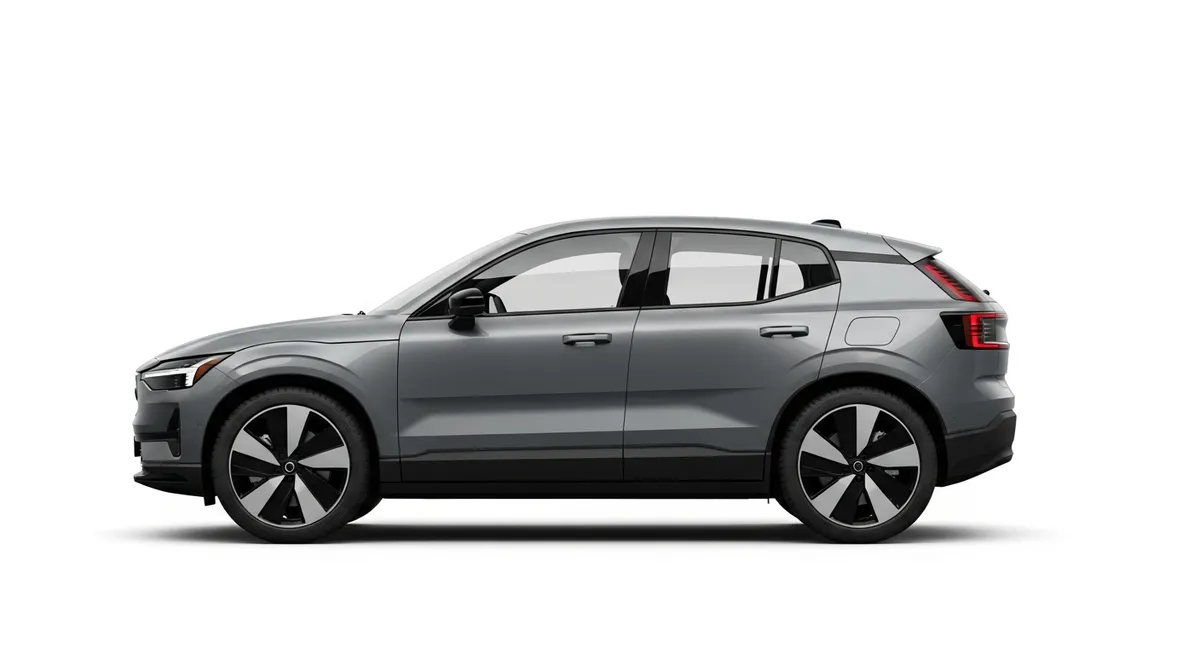
The Volvo EX30 enters the South African market at R835,500 for the Single Motor variant, delivering 344 km of WLTP-rated range from its 15.5 kWh/100km efficiency rating. DC fast charging capability allows 10-80% charging in 26 minutes at 175 kW stations, addressing range anxiety for long-distance travel.
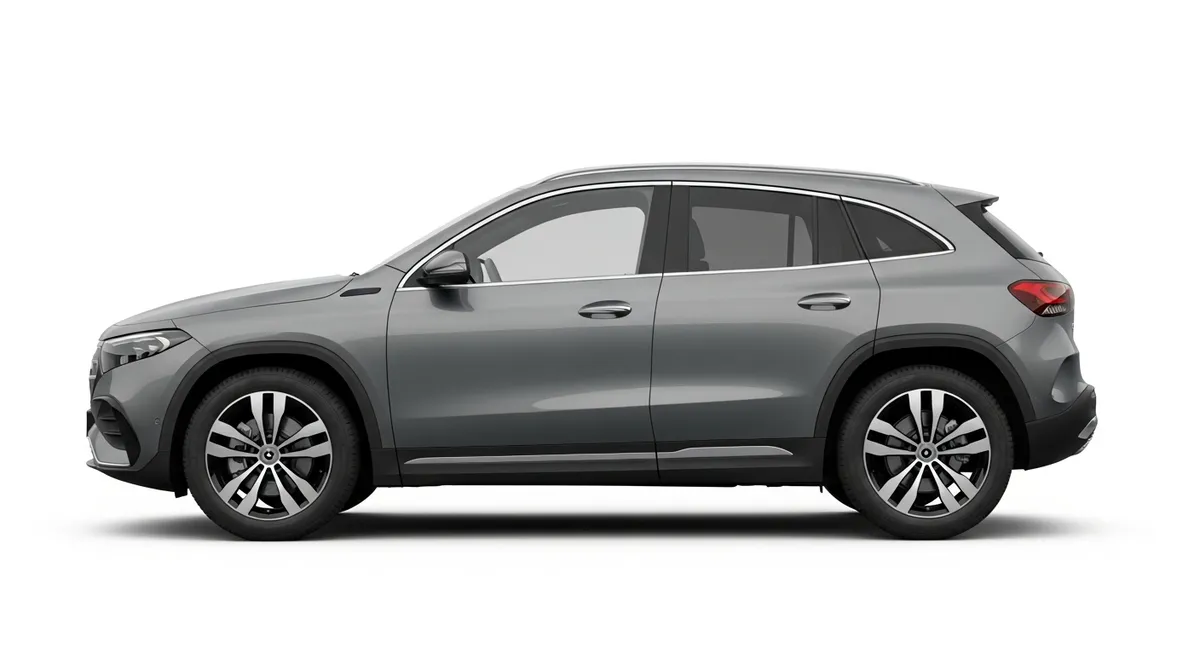
The Mazda CX-30 starts at R539,800 with a 2.0-litre petrol engine producing 121 kW and 213 Nm of torque. Mazda includes a three-year unlimited kilometre warranty and service plan, reducing early ownership costs. The CX-30’s conventional powertrain requires no charging infrastructure investment and benefits from South Africa’s established petrol station network.
| Specification | Volvo EX30 | Mazda CX-30 |
|---|---|---|
| Purchase Price | R835,500 | R539,800 |
| Range/Tank | 344 km (WLTP) | ~650 km (51L tank) |
| Efficiency | 15.5 kWh/100km | ~7.8 L/100km (combined) |
| Power Output | 200 kW (Single Motor) | 121 kW |
| Fast Charging | 10-80% in 26 min (175kW) | 5 min petrol fill |
| Warranty | 5-year/100,000 km | 3-year unlimited km |
Five-Year Total Cost of Ownership Analysis
Total cost of ownership reveals whether the Volvo EX30’s R295,700 premium can be recovered through lower running costs. We’ve modelled 25,000 km annual driving (125,000 km over five years) using current Cape Town electricity rates of R3.18/kWh for standard residential charging and petrol at R24.50 per litre.
Energy Costs: Electricity vs Petrol
The Volvo EX30’s 15.5 kWh/100km efficiency translates to R49.29 per 100 km when charging at home on Cape Town’s standard residential tariff (R3.18/kWh). Over 125,000 km, total electricity cost reaches R61,613.
The Mazda CX-30’s 7.8 L/100km combined consumption costs R191.10 per 100 km at R24.50/litre. Over the same 125,000 km distance, petrol expenditure totals R238,875 — a R177,262 premium over the EX30’s electricity costs.
Public charging adds cost for EV owners without home charging access. GridCars charges R5.88/kWh for AC charging and R7.35/kWh for DC fast charging as of August 2025. At DC rates, the EX30’s cost rises to R113.93 per 100 km (R142,406 over 125,000 km), still R96,469 below petrol costs but eroding the advantage significantly.
Maintenance and Service Costs
Electric vehicles eliminate oil changes, transmission services, exhaust system maintenance, and spark plug replacements. The Volvo EX30 requires primarily brake fluid changes, tyre rotations, and cabin air filter replacements. Estimated five-year maintenance: R15,000.
The Mazda CX-30 includes a three-year service plan covering the first 45,000 km, after which owners face standard petrol engine maintenance. Estimated five-year total including post-warranty services: R35,000.
Maintenance savings favour the EX30 by R20,000 over five years, though this advantage diminishes if battery degradation requires replacement (unlikely within five years under normal use).
Insurance and Depreciation
Insurance premiums for the Volvo EX30 run approximately 15-20% higher than the Mazda CX-30 due to higher replacement value and specialised repair requirements. Estimated five-year insurance difference: R18,000 additional for the EV.
Depreciation remains the largest cost component for both vehicles. The Mazda CX-30 benefits from established resale values, typically retaining 45-50% of purchase price after five years (R242,910-R269,900 residual value). The Volvo EX30’s resale market is less proven, with early EVs showing 40-45% retention (R334,200-R375,975 residual value). The EX30’s higher absolute residual value partially offsets its steeper initial depreciation in rand terms.
Total Cost of Ownership Comparison Table
| Cost Category (5 years) | Volvo EX30 | Mazda CX-30 | Difference |
|---|---|---|---|
| Purchase Price | R835,500 | R539,800 | +R295,700 |
| Energy (125,000 km) | R61,613 | R238,875 | -R177,262 |
| Maintenance | R15,000 | R35,000 | -R20,000 |
| Insurance | R78,000 | R60,000 | +R18,000 |
| Total Spent | R990,113 | R873,675 | +R116,438 |
| Residual Value (45%) | -R375,975 | -R242,910 | -R133,065 |
| Net 5-Year Cost | R614,138 | R630,765 | -R16,627 |
Assumptions: 25,000 km/year, home charging at R3.18/kWh, petrol at R24.50/L, 45% residual value for both vehicles. Insurance estimates based on comprehensive cover for 35-year-old driver in Cape Town metro.
Charging Infrastructure Considerations
South Africa’s public charging network has expanded to approximately 600 stations as of early 2026, concentrated in Gauteng, Western Cape, and KwaZulu-Natal. GridCars operates 445 sites with 650+ chargers and 1,200+ connectors as of January 2026, while Rubicon manages 103 public stations and 20 dealership locations as of February 2026.
The Volvo EX30’s 175 kW DC fast-charging capability allows 10-80% charging in 26 minutes at compatible stations, though most public infrastructure offers 50-60 kW speeds. BYD plans to install 200-300 ultra-fast ‘flash charging’ stations (up to 1,000 kW) by end of 2026, starting at dealerships before expanding to motorways.
Home charging remains the most economical option for EV owners. Installing a dedicated wall charger costs R15,000-R25,000, but Cape Town’s residential electricity rate of R3.18/kWh delivers the lowest per-kilometre cost. Load-shedding has become less frequent in 2025-2026, though backup power solutions add R30,000-R80,000 for buyers requiring guaranteed charging access.
Real-World Ownership Scenarios
Urban Commuter (15,000 km/year)
For buyers driving primarily within city limits with home charging access, the Volvo EX30 delivers immediate savings. Lower annual energy costs (R37,968 vs R143,325 for petrol) and minimal maintenance create a five-year net cost advantage of approximately R75,000 over the Mazda CX-30, even accounting for the higher purchase price.
Long-Distance Driver (35,000 km/year)
Higher annual mileage amplifies the EV’s running cost advantage. At 35,000 km annually (175,000 km over five years), the Volvo EX30’s electricity costs reach R86,258 versus R334,425 for petrol — a R248,167 saving that significantly reduces the initial price premium. The EX30’s 344 km range requires charging stops on longer trips, but fast-charging infrastructure along major routes (N1, N3) makes this manageable.
No Home Charging Access
Buyers relying exclusively on public DC fast charging face significantly higher costs. At R7.35/kWh (GridCars DC rate), the EX30’s energy cost rises to R159,368 over 125,000 km — still R79,507 below petrol, but the reduced savings extend the break-even point beyond five years when combined with higher insurance and uncertain resale values.
Environmental and Practical Considerations
The Volvo EX30 produces zero tailpipe emissions, though South Africa’s coal-heavy electricity grid (approximately 80% fossil fuels) means upstream emissions remain significant. Life-cycle analysis suggests EVs achieve carbon parity with petrol vehicles around 60,000-80,000 km in South Africa’s current energy mix, with increasing renewable energy penetration improving this equation over time.
Practical advantages for the Mazda CX-30 include five-minute refuelling, no range anxiety, and no dependence on charging infrastructure or load-shedding schedules. The petrol SUV suits buyers who frequently travel to rural areas with limited charging access or who cannot install home charging equipment.
The Volvo EX30 offers instant torque delivery, quieter operation, and lower centre of gravity from battery placement. Advanced driver assistance systems and over-the-air software updates provide technology advantages, though the Mazda counters with proven reliability and simpler ownership experience.
The Verdict: Is the R295k Premium Worth It?
The Volvo EX30 vs Mazda CX-30 comparison reveals near-parity in five-year total cost of ownership for typical drivers (25,000 km/year with home charging). The EX30’s R295,700 higher purchase price is substantially offset by R177,262 in fuel savings and R20,000 in maintenance savings, with higher residual value closing the gap to just R16,627 over five years — less than R280 per month.
The Volvo EX30 makes financial sense for:
- Buyers with home charging access and predictable daily driving patterns
- High-mileage drivers (30,000+ km/year) who maximise fuel savings
- Urban commuters who rarely exceed 300 km daily range
- Environmentally conscious buyers willing to pay a small premium for lower emissions
The Mazda CX-30 remains the better choice for:
- Buyers without home charging access or reliable electricity supply
- Frequent long-distance travellers to areas with limited charging infrastructure
- Budget-conscious buyers who cannot absorb the R295k upfront premium
- Drivers prioritising simplicity and established resale values
South Africa’s EV market is maturing rapidly, with charging infrastructure expanding and electricity costs remaining stable relative to volatile petrol prices. The Volvo EX30’s position as the country’s best-selling EV demonstrates growing buyer confidence, but the Mazda CX-30’s lower entry price and operational simplicity ensure petrol remains competitive in the premium compact SUV segment through 2026.
Ready to explore your options? Get a personalised EV ownership cost estimate based on your driving patterns and charging access, or compare the latest pricing on both vehicles at authorised dealers nationwide.