

South Africa sold 389 EVs in March 2026 alone—a new national record—and with diesel crossing R30/l, Bloemfontein drivers are finally doing the maths on home charging. The Free State interior remains one of the country’s most problematic corridors for public charging coverage, making a wallbox installation not a luxury but the foundation of practical EV ownership in the region.
As u/Dan6erbond2 put it on r/electricvehicles: “I want to get this off my chest since I often see this and other EV communities recommend against buying one if you don’t have home/work charging like it’s some kind of global rule… We specifically bought an EV with relatively short range (410km WLTP) because most of our driving is in the city, maybe 10-20km per day… we go shopping, swimming, dance classes, etc. as part of our routine, many of them have public charging, some even free.”
That perspective holds water in cities with dense public charging networks. But in Bloemfontein? The Free State’s charging infrastructure is still sparse in 2026, making home installation the most practical path for most EV owners.
Why install an EV charger in Bloemfontein?
Bloemfontein sits at the geographic heart of South Africa, but it’s on the edge of the country’s EV charging map. The Free State interior between Bloemfontein and neighbouring provinces remains one of the most problematic corridors for public charging coverage in 2026. GridCars and Rubicon have concentrated their networks in Gauteng, the Western Cape, and KwaZulu-Natal—leaving Free State drivers with few destination charging options.
That geography matters. Bloemfontein’s urban footprint is relatively compact, but the city serves as a hub for regional travel. If you’re driving to Kimberley (160 km), Maseru (140 km), or even Johannesburg (400 km), you can’t rely on a dense public charging network the way Cape Town or Joburg drivers can. Home charging isn’t a luxury here—it’s the foundation of practical EV ownership.

Bloemfontein’s EV landscape in 2026
The arrival of sub-R400,000 Chinese EVs—including the BYD Dolphin Surf at R339,900—has changed the conversation. Where EV ownership was once the domain of premium buyers importing Teslas and Audi e-trons, Bloemfontein’s middle-class families are now doing the maths on a Dolphin versus a Toyota Corolla Cross. With diesel above R30/l and petrol not far behind, the fuel savings alone justify the installation cost within 10–18 months for most households.
Bloemfontein’s climate is another factor. The city sees over 300 days of sunshine annually, making it ideal for solar pairing—a critical consideration given the Free State’s exposure to load-shedding. A 5 kW rooftop array can generate enough daytime power to charge an EV battery during off-peak hours when stored in a home battery, or charge directly during the day if you’re working from home.
What does it cost to charge an EV in Bloemfontein?
Bloemfontein’s municipal electricity tariff sits at R3.15/kWh as of 2026. That’s higher than Eskom’s Homeflex off-peak rate (R1.45–R2.25/kWh), which isn’t available to Mangaung Metro customers, but still dramatically cheaper than petrol or diesel.
| Vehicle type | Energy per 100 km | Bloemfontein tariff | Cost per 100 km | Cost for 1,500 km/month |
|---|---|---|---|---|
| Petrol sedan (7 L/100 km) | 7 litres @ R24/L | — | R168 | R2,520 |
| Diesel SUV (6 L/100 km) | 6 litres @ R30/L | — | R180 | R2,700 |
| BYD Atto 3 (15 kWh/100 km) | 15 kWh | R3.15/kWh | R47.25 | R709 |
| BYD Dolphin (13 kWh/100 km) | 13 kWh | R3.15/kWh | R40.95 | R614 |
A typical Bloemfontein household driving 1,500 km per month saves R1,800–R2,100 monthly by switching from petrol to electric. That’s R21,600–R25,200 annually—enough to pay off a R20,000 charger installation in under 12 months.
What about public charging costs?
Public DC fast charging in South Africa costs R7.00–R7.35 per kWh as of August 2025, with AC charging at R5.88/kWh. That’s more than double Bloemfontein’s municipal rate. If you rely exclusively on public charging, your cost per 100 km jumps to R91–R110 for a BYD Atto 3—still cheaper than petrol, but the savings shrink considerably. Home charging at R3.15/kWh is the economic sweet spot.
The Bloemfontein installation process: what to expect
Installing an EV charger in Bloemfontein follows the same national standards as the rest of South Africa, governed by SANS 10142-1 (Low-voltage installations). Here’s the step-by-step process:

1. Site assessment
A qualified electrician visits your property to evaluate your distribution board (DB board), existing electrical load, and the proposed charger location. Key checks include:
- Available amperage on your main breaker (most Bloemfontein homes have 60 A or 80 A single-phase supply)
- Distance from the DB board to the parking area (longer cable runs increase cost)
- Condition of the earth leakage protection and main earth stake
- Whether your supply is single-phase or three-phase (rare in residential Bloemfontein, common in smallholdings)
2. DB board upgrade (if required)
A 7 kW charger draws approximately 30 A on a single-phase supply. If your DB board is already running close to capacity—common in older Bloemfontein suburbs like Westdene or Fichardtpark—you may need a board upgrade or a dedicated sub-board for the charger. Budget an additional R3,000–R8,000 for this work.
3. Charger installation
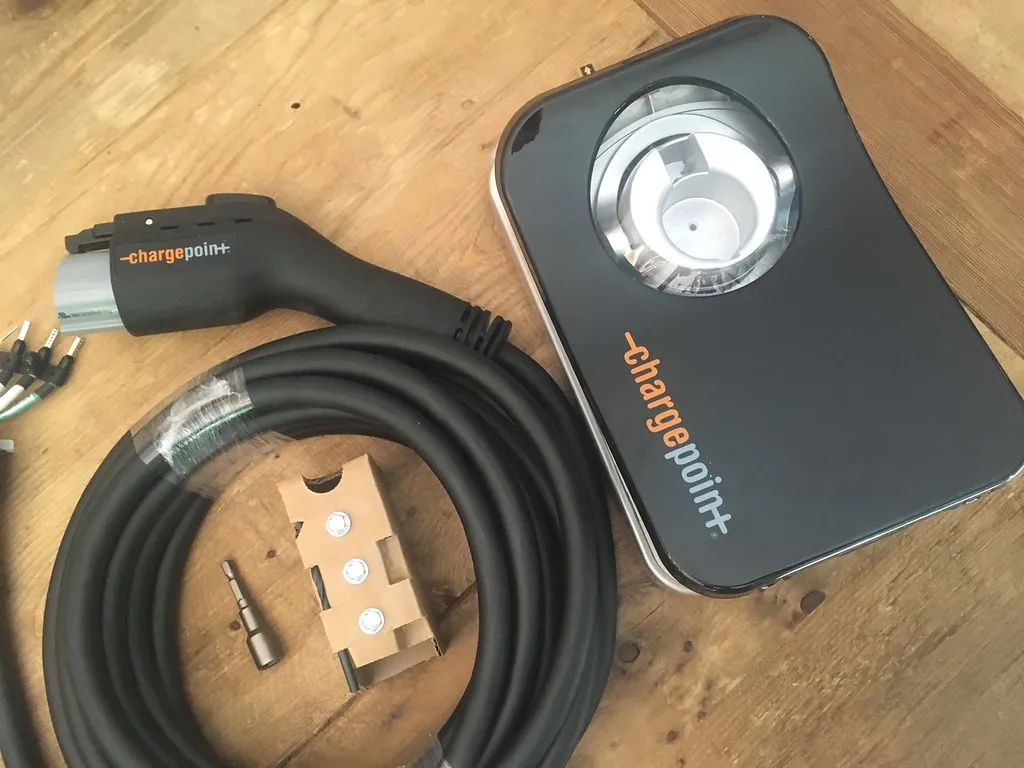
The electrician mounts the wallbox (typically on a garage wall or carport pillar), runs armoured cable from the DB board, and connects the charger to a dedicated circuit breaker. Installation time: 4–8 hours for a straightforward job, longer if trenching is required to reach an outdoor carport.
4. Certificate of Compliance (CoC)
All electrical work in South Africa requires a CoC issued by a registered electrician. This certificate confirms the installation meets SANS 10142-1 standards and is safe to operate. Cost: R500–R1,500. Keep this document—you’ll need it if you sell the property or make an insurance claim.
5. Commissioning and testing
The installer tests the charger with your vehicle, verifies earth leakage protection, and walks you through the controls. Most modern wallboxes include smartphone apps for scheduling overnight charging or monitoring energy use.
Typical pricing in Bloemfontein: what you’ll pay
Based on 2026 national averages, here’s what Bloemfontein homeowners can expect:
| Item | Cost range (ZAR) |
|---|---|
| 7 kW AC wallbox (hardware only) | R8,000–R18,000 |
| Installation labour + materials | R5,000–R15,000 |
| Certificate of Compliance | R500–R1,500 |
| Total (standard installation) | R12,000–R25,000 |
| DB board upgrade (if required) | +R3,000–R8,000 |
| Trenching for outdoor carport (per metre) | +R150–R300/m |
Bloemfontein pricing tends to track the lower end of the national range due to lower labour costs compared to Johannesburg or Cape Town. Expect to pay R14,000–R18,000 for a turnkey installation in most cases.
Single-phase vs three-phase: what’s common in Bloemfontein?
The vast majority of Bloemfontein homes—particularly in established suburbs like Universitas, Bayswater, and Arboretum—have single-phase electricity supply. Three-phase is typically found only in smallholdings, industrial properties, or newer estates where it was specified during construction.
Why it matters
Single-phase supply limits you to a maximum 7 kW charger (32 A breaker). That delivers 30–40 km of range per hour—enough to fully charge a BYD Atto 3 (60 kWh battery) in 8–9 hours overnight. For most Bloemfontein drivers doing 50–100 km daily, that’s perfectly adequate.
Three-phase supply allows 11 kW or 22 kW chargers, which cut charging time to 3–5 hours for a full battery. Unless you’re running a guesthouse, a fleet, or driving 300+ km daily, the extra cost of upgrading to three-phase (R15,000–R40,000) isn’t justified.
Load-shedding and solar pairing in Bloemfontein
Bloemfontein experienced Stage 4 and Stage 6 load-shedding during the 2023–2024 energy crisis. While load-shedding has eased considerably in 2026, Free State residents remain vulnerable to grid instability. Pairing your EV charger with solar and battery storage future-proofs your investment.

How it works
A 5 kW rooftop solar array generates approximately 25–30 kWh per day in Bloemfontein’s high-sunshine climate. If you charge your EV during the day (working from home or retired), you can draw directly from solar, paying R0/kWh for your fuel. If you charge at night, a 10 kWh home battery stores enough daytime solar to add 60–70 km of range to your EV.
The economics are compelling: a 5 kW solar system + 10 kWh battery costs R120,000–R180,000 installed. Combined with EV charging savings, payback drops to 4–6 years, after which you’re driving on free sunshine.
Load-shedding without solar
If solar isn’t in the budget yet, schedule your EV charging for overnight hours (22:00–06:00) when load-shedding is least likely. Most wallboxes include timers or app-based scheduling. You’ll still pay the municipal R3.15/kWh rate, but you’ll avoid the frustration of a dead battery during Stage 4.
Public charging options in Bloemfontein
As of early 2026, Bloemfontein has limited public charging infrastructure compared to Gauteng or the Western Cape. GridCars operates a handful of AC chargers at shopping centres, while Shell Recharge has one DC fast charger at the N1/N8 intersection near Brandwag.
Here’s what’s available:
- GridCars network: Approximately 3–5 AC chargers (7 kW) at Mimosa Mall and Loch Logan Waterfront. Cost: R5.88/kWh. Charging time: 4–6 hours for a 60 kWh battery.
- Shell Recharge: One 50 kW DC fast charger near Brandwag. Cost: R7.00–R7.35/kWh. Charging time: 60–90 minutes for 10–80%.
- Hotel and guesthouse chargers: A few Bloemfontein guesthouses offer 3.6 kW chargers for overnight guests, often free or at a nominal fee.
The broader picture: South Africa has approximately 600 public charging stations by early 2026, with most located in Gauteng, Western Cape, and KwaZulu-Natal. The Free State interior remains a gap, though CHARGE (Zero Carbon Charge) is building a network of 120 solar-powered stations spaced 150 km apart along national corridors, which will improve N1 and N6 coverage by late 2026.
Common mistakes Bloemfontein homeowners make
1. Choosing the cheapest charger without checking compatibility
Not all wallboxes work with all EVs. Some Chinese-market EVs require specific communication protocols. Always verify compatibility with your vehicle before purchasing hardware.
2. Skipping the CoC to save R1,000
Using an unregistered electrician or skipping the Certificate of Compliance voids your home insurance and creates a liability risk. If the charger causes a fire and you can’t produce a CoC, your insurer won’t pay out.
3. Installing a 3.6 kW “granny charger” as a permanent solution
The portable 3.6 kW charger that comes with most EVs is designed for emergency use, not daily charging. It takes 16–18 hours to charge a 60 kWh battery and puts sustained load on a household plug not designed for it. Spend the R12,000 on a proper wallbox.
4. Underestimating cable run distance
If your DB board is on the opposite side of the house from your carport, you’re looking at 20–30 metres of armoured cable at R80–R150/m. That’s an extra R2,000–R4,500. Factor it into your quote.
5. Ignoring future load growth
If you’re planning to add solar, a pool pump, or a second EV in the next 3–5 years, install a larger DB board now. Upgrading twice costs more than doing it right the first time.
FAQ
Do I need permission from Mangaung Metro to install an EV charger?
No municipal approval is required for a standard residential EV charger installation. You do need a Certificate of Compliance from a registered electrician, which serves as proof the work meets national wiring standards.
Can I install a charger if I’m renting?
You’ll need written permission from your landlord. Some landlords are open to it if you cover the cost and leave the charger in place when you move (it adds property value). Get the agreement in writing before proceeding.
How long does installation take?
A straightforward installation takes 4–8 hours. If a DB board upgrade or trenching is required, expect 1–2 days. Lead time to schedule the work varies—2–4 weeks is typical in Bloemfontein as of 2026.
Will an EV charger increase my municipal rates valuation?
Fixed electrical installations can be considered improvements for rates purposes, but in practice, a wallbox charger is unlikely to trigger a revaluation unless you’re also adding solar, a pool, or other major upgrades simultaneously. Consult a local property attorney if concerned.
Can I charge my EV from a normal plug?
Yes, using the portable “granny charger” that comes with the car. It draws 10–12 A from a standard 15 A wall socket and delivers about 10 km of range per hour. Fine for topping up 50 km overnight, inadequate for daily 100+ km driving. As u/walkaboutdavid put it on r/electricvehicles: “I’ve found EVs just a joy to drive: the instant torque, smooth engine, lack of transmission shifts, low centre of gravity… I really feel like it is a far better driving experience than a ICE vehicle.” To enjoy that experience without range anxiety, install a proper wallbox.
What happens if I move house?
The charger stays with the property unless you negotiate otherwise with the buyer. Most estate agents report that homes with EV chargers sell faster and at a slight premium (R10,000–R20,000) in 2026, as buyers recognise the value of the installed infrastructure.
Ready to charge smarter in Bloemfontein?
Installing an EV charger in Bloemfontein isn’t just about convenience—it’s about making EV ownership practical in a region where public charging infrastructure is still catching up. At R3.15/kWh, you’ll save R1,800–R2,100 monthly compared to petrol, paying off your R12,000–R25,000 installation in under a year.
Get a free Bloemfontein site assessment from ChargePoint SA. We’ll evaluate your DB board, recommend the right charger for your vehicle and driving patterns, and provide a fixed-price quote including the Certificate of Compliance. No surprises, no hidden costs—just clean, affordable charging at home.

Image credits
“ChargePoint EV Full” by earthandmain (CC BY-SA 2.0, via flickr) · “Setting JuiceBox Install” by earthandmain (CC BY-SA 2.0, via flickr) · “ChargePoint Home Charger Installed” by ken fields (CC BY-SA 2.0, via flickr) · “ChargePoint Home Charger Out Of Box” by artisanalpv (CC BY-SA 2.0, via flickr) · “Electric car charger” by Janitors (CC BY 2.0, via flickr)