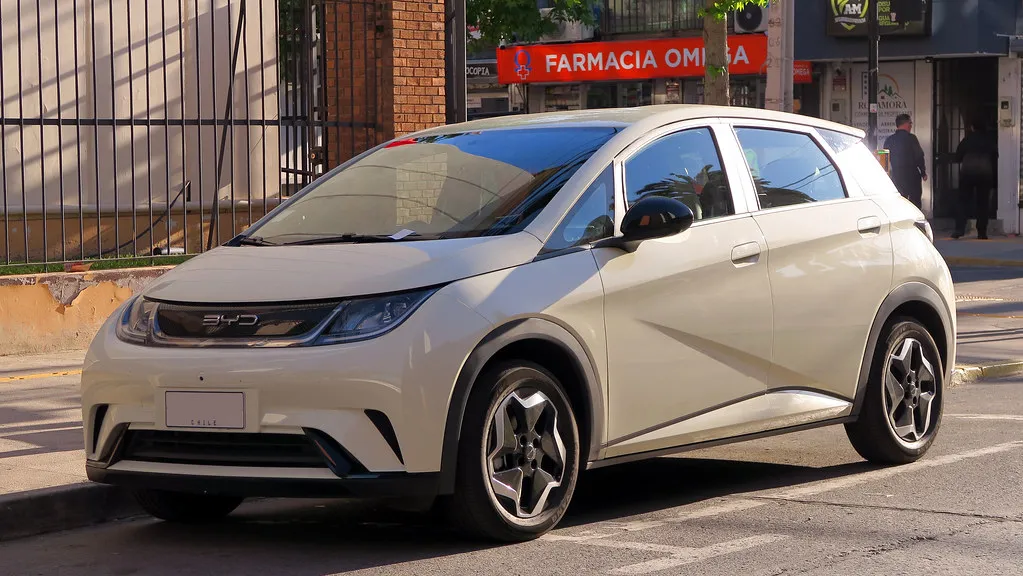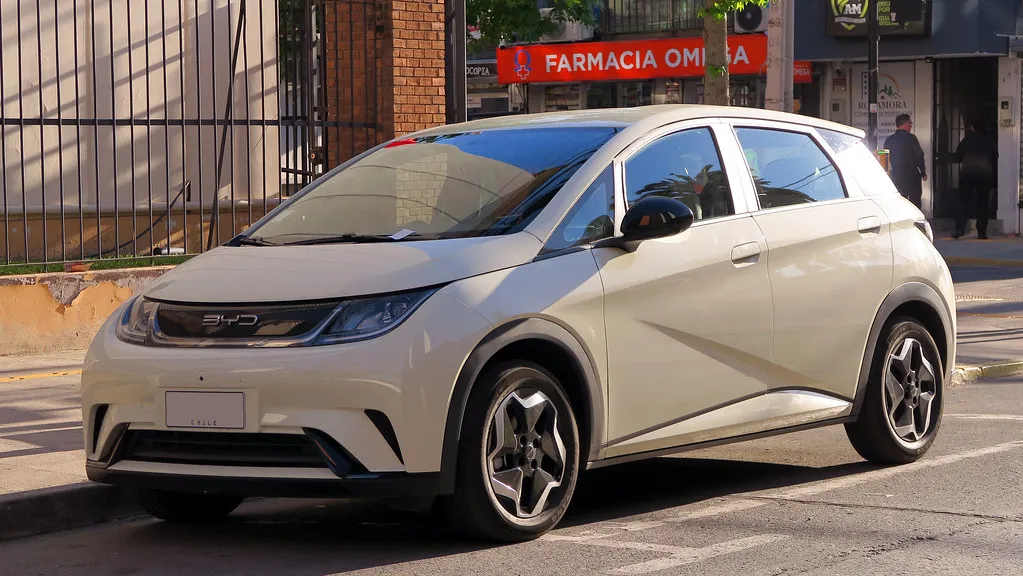

Bolt and fleet operator YugoRide will deploy 500 electric vehicles across Cape Town by December 2026, using Dongfeng Box hatchbacks (R459,000–R519,000) and Dongfeng 007 sedans with 530 km WLTP range. The service went live in May 2026, following Uber’s Q4 2025 launch of Uber Go Electric, and positions Bolt to capitalise on diesel prices above R30/litre—a direct result of the Iran conflict—that are making EVs economically compelling for high-mileage fleet operators. Johannesburg is earmarked as the next expansion city.

“South Africa is one of Bolt’s most important markets globally, and the launch of our EV category reflects our long-term confidence in the country’s mobility future,” Bolt stated in the official announcement. YugoRide, the fleet partner handling vehicle procurement and charging logistics, framed the collaboration as infrastructure-first: “We recognised that if South Africa’s transition to electric mobility was going to succeed, it required more than just vehicles—it required infrastructure, operational support, and the right strategic partners.”
Background: Why ride-hailing is going electric now
South Africa’s new electric vehicle (NEV) sales jumped 65% in 2023 to 7,746 units, then surged another 82.7% in Q1 2024, according to Imotonews.co.za. Urban areas now host approximately 350 public chargers, and the EV-to-charger ratio of 1:7 beats the global 1:10 benchmark. Yet adoption has been constrained by high upfront costs, range anxiety, and load-shedding—until 2026, when three forces converged.
First, fuel prices. Diesel breached R30 per litre in early 2026 due to the Iran conflict, making the operating cost of internal-combustion fleets untenable. TechCentral reported that Volvo’s battery-electric web traffic rose 60% between February and March 2026, while BYD sold 589 units in March and 705 in April—monthly records for the brand.
Second, policy. President Ramaphosa signed a 150% tax deduction for EV and hydrogen vehicle production into law on 24 December 2024, effective 1 March 2026. The incentive unlocked R964 million in government support and prompted BMW to invest R4.2 billion in its Rosslyn plant’s electrification, while Toyota announced it would launch battery-electric vehicles from 2026 after selling 13,604 hybrids in 2024—double the 2023 figure.
Third, infrastructure. BYD committed to building 200–300 Flash charging stations (1 MW capacity) by end-2026, starting at dealerships in April/May then expanding to highways. Zero Carbon Charge (CHARGE) is rolling out 120 solar-powered stations for passenger vehicles and another 120 for trucks, spaced roughly 150 km apart along the N3 and N12 corridors. GridCars operates over 450 public AC and DC sites, while Rubicon added 11 new Eastern Cape stations—nine of them DC fast chargers—between January and February 2026 through a partnership with the Automotive Industry Development Centre.
The Bolt–YugoRide fleet: what’s under the bonnet
YugoRide selected two Dongfeng models for the Cape Town rollout. The Dongfeng Box is a compact hatchback priced from R459,000 (E1 330 variant with a 32.6 kWh battery and 330 km CLTC range) to R519,000 (E3 430 variant with a 43.9 kWh battery and 310 km WLTP range). The Dongfeng 007 sedan offers 58.4 kWh or 73.5 kWh batteries, delivering 530 km WLTP range in the larger pack and 200 kW rear-wheel-drive or 400 kW all-wheel-drive configurations. The 007 supports 200 kW peak charging, refilling from 30% to 80% in 16 minutes—critical for drivers covering 200+ km per shift.

| Model | Battery (kWh) | Range (km, WLTP) | Peak charging (kW) | Price (ZAR) |
|---|---|---|---|---|
| Dongfeng Box E2 430 | 43.9 | 310 | — | R469,000–R499,000 |
| Dongfeng 007 (large battery) | 73.5 | 530 | 200 | TBC |
| BYD Atto 3 Extended | 60.48 | 420 | 80–88 | R783,900 |
For context, the BYD Atto 3 Extended Range—South Africa’s best-selling EV in 2024—costs R783,900 for 420 km WLTP range and an 80–88 kW peak charge rate. Dongfeng’s pricing undercuts BYD by R264,900 to R324,900, a margin that matters when you’re scaling to 500 vehicles.
Stakeholder reactions: government, automakers, and drivers
Government and policy
The Department of Trade, Industry and Competition’s 150% tax deduction has been the single biggest catalyst. Southern African Times reported that three Chinese automakers are in non-disclosure agreements with the National Association of Automobile Manufacturers of South Africa (NAAMSA), signalling imminent local assembly. The policy also addresses the existential threat posed by the EU and UK banning internal-combustion imports by 2035—a move that jeopardises South Africa’s R400 billion–plus export revenue from vehicle manufacturing.
Automakers and charging operators
BYD’s megawatt-scale Flash network will nearly triple its dealer footprint to 30–35 stores by end-2026, aiming for 100% geographic coverage. GridCars welcomed a new investor in January 2026 and now connects drivers to 445 sites with 650 chargers and more than 1,200 connectors via the Charge Pocket app. Rubicon’s network grew to 103 public stations and 20 dealership sites by February 2026, with plans to add 77 more (11 DC, 66 AC) by end-FY2027. Cape Town’s Golden Arrow Bus Services operates 30 high-speed charging stations (150–240 kW) at the Arrowgate Depot for 68 electric buses, expanding to 50 units by end-2025 to support 120 buses.
Drivers and consumers
Reddit user u/Liberal-Cluck, a high-mileage EV driver in rural Virginia, captured the infrastructure imperative: “I do A LOT of driving… For now I only have a level one charger which gets around 5 miles of range per hour plugged in. I do plan on getting a level 2 in the future… My first week with the car honestly kind of sucked.” The sentiment underscores why YugoRide’s “infrastructure, operational support, and the right strategic partners” model is non-negotiable for ride-hailing, where drivers clock 200–300 km per day. On the upside, u/Stetofire celebrated the home-charging dividend: “Charging at home has been amazing. I have access to a 50A receptacle, so I never even have to plan too far ahead when Level 2 charging is an option… the realization that it might be months before I end up at a gas station again is wild.”

What this means for SA EV buyers
Bolt’s 500-vehicle commitment is a demand signal that validates three investment decisions for private EV buyers:
- Home charging infrastructure. If ride-hailing operators are building depot charging, private buyers should prioritise a 7.4 kW or 11 kW wall-box installation. A 60 kWh battery refills overnight on 7.4 kW (roughly 8 hours from 20% to 100%), eliminating range anxiety for daily commutes under 100 km.
- Public fast-charging access. BYD’s 1 MW Flash network and CHARGE’s solar hubs mean that by end-2026, the N1, N2, N3, and N12 corridors will support long-distance EV travel. Buyers no longer need to restrict purchases to urban-only use cases.
- Total cost of ownership. At R30/L diesel and R2.50/kWh municipal electricity, a Dongfeng 007 (530 km WLTP, ~14 kWh/100 km) costs R0.35/km to fuel, versus R2.14/km for a 7 L/100 km diesel sedan. Over 200,000 km—typical ride-hailing lifecycle—the EV saves R358,000 in fuel alone, erasing the R264,900 price premium over a comparable ICE vehicle.
The ride-hailing use case is the most punishing test of EV economics: high daily mileage, unpredictable routes, minimal downtime tolerance. If Bolt and YugoRide can make it pencil with 500 vehicles by December, the business case for private buyers—who drive 15,000–20,000 km/year and charge at home—is bulletproof.
What’s next: Johannesburg, policy, and the 2027 outlook
Bolt has flagged Johannesburg as the next expansion city, though no timeline was disclosed. The Next Web noted that Gauteng’s charging infrastructure is denser than the Western Cape’s, but load-shedding frequency is higher—YugoRide will need to replicate Cape Town’s depot-charging model with solar backup or battery storage to derisk operations.
Three policy and market developments bear watching through 2027:
- NAAMSA’s Chinese OEM announcements. If the three undisclosed manufacturers commit to local assembly under the 150% tax deduction, expect Dongfeng, BYD, and possibly GWM or Chery to open plants by 2028, driving prices down 10–15% through tariff savings.
- BYD’s Flash network rollout. The 200–300 station target by end-2026 is ambitious. Delivery will determine whether range anxiety persists or evaporates for buyers outside metro areas.
- Uber vs Bolt fleet scale. Uber launched Uber Go Electric in Q4 2025 via Valternative Energy. If Uber scales faster than Bolt’s 500-vehicle target, it could corner driver supply and force Bolt to raise driver incentives—or accelerate its own rollout.
The European Union and United Kingdom’s 2035 ICE import ban looms large. South Africa exported R201 billion worth of vehicles to Europe in 2023, and Southern African Times warned that failure to pivot to EV production risks “the collapse of a R400 billion+ industry.” Bolt’s Cape Town launch is a microcosm of that pivot—proof that the infrastructure, policy, and fleet economics are aligning in real time.
Ready to charge smarter?
Whether you’re an EV buyer inspired by Bolt’s 500-vehicle bet or a fleet operator eyeing your own transition, home and depot charging infrastructure is the foundation. ChargePoint SA designs, installs, and maintains AC and DC charging solutions across South Africa—from 7.4 kW residential wall-boxes to 150 kW commercial fast chargers. We work with municipal electricity, solar-plus-battery systems, and load-shedding mitigation so your EV is ready when you are.
Get a free site assessment and quote—let’s build the charging infrastructure that makes your electric future possible.
Image credits
“Dark Days Ahead: Eskom Rolling Blackouts and Loadshedding” by Axel Bührmann (CC BY 2.0, via flickr) · “Eskom – they’re rolling blackouts, dammit” by Axel Bührmann (CC BY 2.0, via flickr) · “Eskom en Eksdom” by Axel Bührmann (CC BY 2.0, via flickr)