
Polokwane Municipality supplies electricity at R3.10 per kilowatt-hour for residential customers as of 2026—one of the more affordable rates among SA metros—and that single number changes the economics of EV ownership in Limpopo’s capital. Charging a 60 kWh battery from 20% to 80% costs just R112, delivering roughly 200 km of range for less than a third of what petrol would cost. But if you do want the convenience of overnight charging at home, this guide walks you through every Rand, every regulation, and every real-world consideration for a safe, compliant install in 2026.

Why install an EV charger in Polokwane?
Polokwane’s compact urban footprint makes it ideal EV territory. Most residents drive 15–30 km daily—errands to Mall of the North, the CBD, or Bendor—well within the range of even entry-level EVs like the BYD Dolphin Surf (389 km WLTP, R339,900). The city’s subtropical climate means no winter range anxiety: batteries perform well year-round, and you’ll rarely need cabin heating that drains charge.
Housing stock matters, too. Polokwane’s suburban homes—Bendor, Fauna Park, Welgelegen—typically have garages or carports with direct access to the distribution board, simplifying installation. And with CHARGE planning solar-powered stations along the N1 through Polokwane and BYD targeting 200–300 megawatt chargers by end of 2026, the public network is catching up—but home charging still offers unbeatable convenience and cost savings.
The numbers tell the story. With Polokwane’s municipal tariff at R3.10/kWh, charging a 60 kWh battery from 20% to 80% (a typical top-up) costs just R112. That same 36 kWh of energy moves a modern EV roughly 200 km—equivalent range from a petrol car would burn 15–18 litres at R24/litre, costing R360–R432. Over a year of 15,000 km driving, home charging saves R12,000–R18,000 compared to petrol.
Understanding Polokwane’s electricity tariff and what it means for charging
Polokwane Municipality supplies electricity at R3.10 per kilowatt-hour for residential customers as of 2026—one of the more affordable rates among SA metros. (For context, Johannesburg’s City Power charges upwards of R3.50/kWh on similar consumption bands, and Eskom’s direct-customer tariffs rose 12.74% in April 2025, with another 8.76% increase coming in FY2026/27.)
Here’s what that R3.10/kWh means in practice:
| Battery size | Charge session (20% → 80%) | Energy used | Cost at R3.10/kWh | Typical range added |
|---|---|---|---|---|
| 40 kWh (e.g. Nissan Leaf) | 24 kWh | 24 kWh | R74.40 | ~130 km |
| 60 kWh (e.g. BYD Atto 3) | 36 kWh | 36 kWh | R111.60 | ~200 km |
| 82 kWh (e.g. Volvo XC40 Recharge) | 49.2 kWh | 49.2 kWh | R152.52 | ~270 km |
Charging overnight (off-peak, if your municipality offers time-of-use tariffs—check with Polokwane’s revenue department) can shave another 10–20% off those figures. Public DC fast charging, by comparison, costs R7.00–R7.35/kWh as of August 2025—more than double municipal rates—so home charging pays for itself quickly if you drive regularly.
The installation process: what actually happens
A compliant EV charger installation in Polokwane follows a strict sequence mandated by SANS 10142-1 (the South African wiring code) and enforced by the Department of Employment and Labour. Here’s the step-by-step:
1. Site assessment
A qualified electrician inspects your distribution board (DB board), measures the distance from the board to your parking bay, checks your municipal supply type (single-phase or three-phase), and confirms your earth-leakage protection meets current standards. They’ll also verify that your existing breaker capacity can handle the additional load—a 7.4 kW charger draws roughly 32 amps continuously, so older homes may need a board upgrade.

2. DB board upgrade (if needed)
If your board lacks a spare way (circuit slot) or the main breaker is undersized, the electrician will install a dedicated 40 A breaker with Type B RCD (residual current device) protection. This isolates the charger circuit from your home’s other loads, preventing nuisance tripping and ensuring safety.
3. Cable run and conduit
The electrician runs 6 mm² copper cable (minimum) from the DB board to the charger location, enclosed in PVC conduit if surface-mounted or buried if trenching through the garden. Polokwane’s summer storms make proper weatherproofing critical—conduit joints must be sealed, and outdoor cable glands rated IP65 or higher.
4. Charger mounting and commissioning
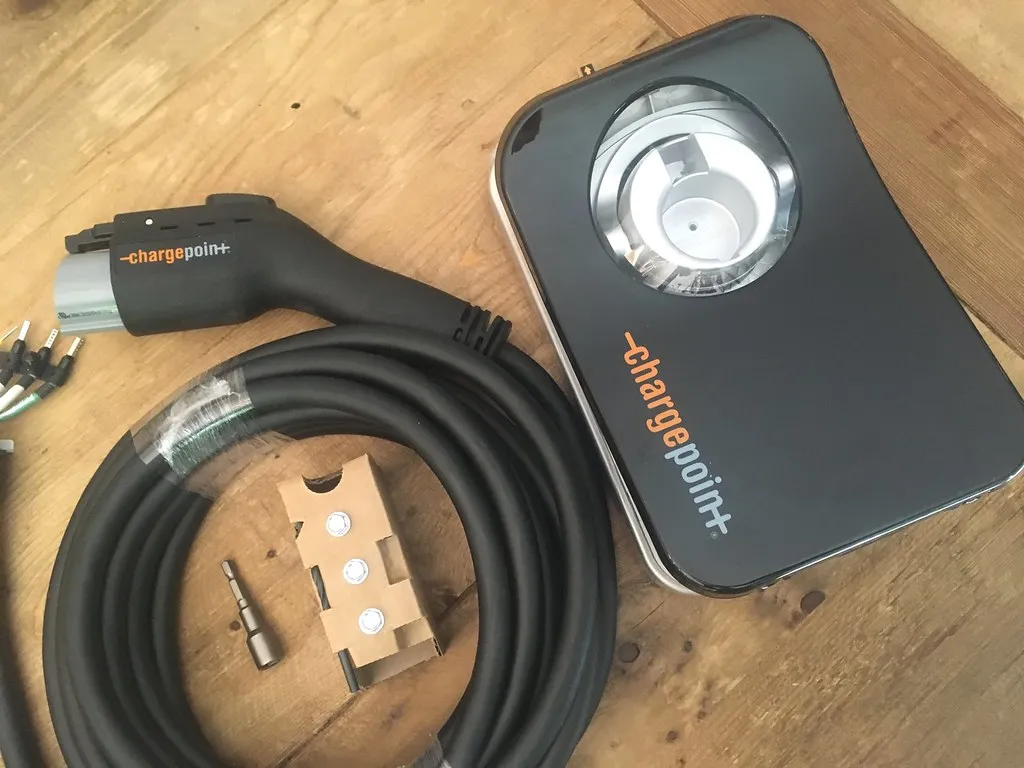
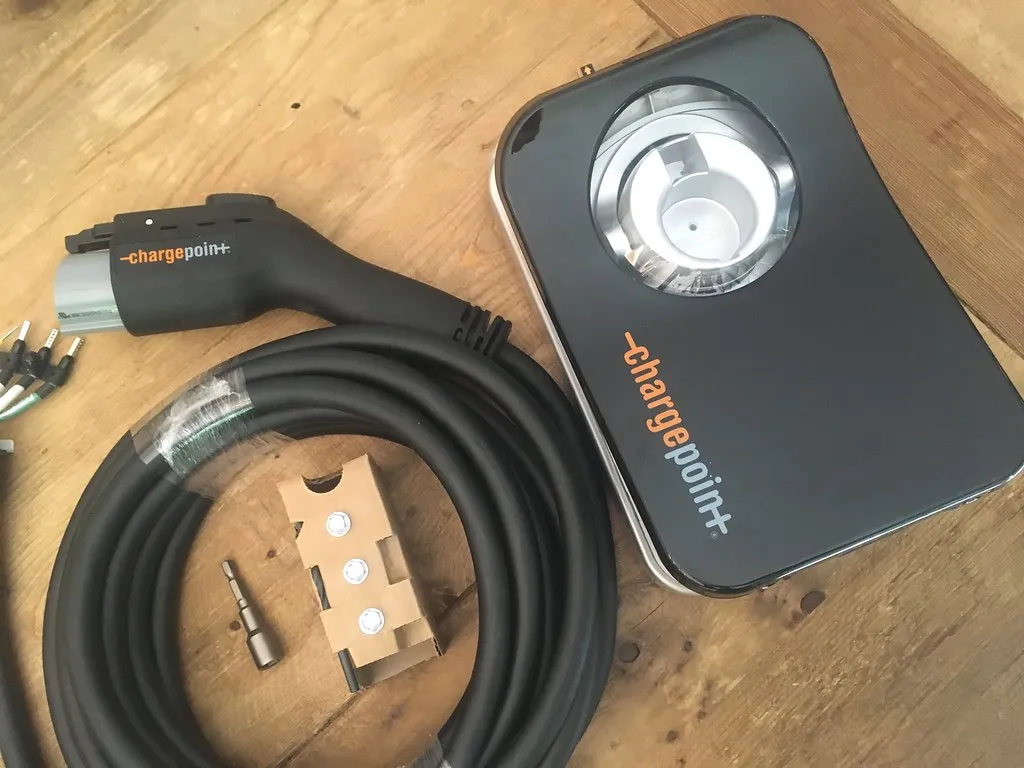
The wall-mounted charger (typically a 7.4 kW Type 2 unit for single-phase homes) is bolted to a brick or concrete wall, connected to the cable, and tested. The electrician verifies earth continuity, insulation resistance, and RCD trip time, then configures any smart features (Wi-Fi connectivity, load management) via the charger’s app.
5. Certificate of Compliance (CoC)
Once testing is complete, the electrician issues a CoC—a legal document confirming the installation meets SANS 10142-1. You’ll need this for insurance claims and property sales. The CoC is registered with your local authority (Polokwane Municipality) and costs R500–R800 as part of the installation package.

What you’ll pay: typical pricing in Polokwane (2026)
Installation costs vary with cable run length, board condition, and charger brand, but here’s the realistic range for Polokwane in 2026:
| Component | Cost (ZAR) | Notes |
|---|---|---|
| 7.4 kW Type 2 charger (single-phase) | R7 400 | ChargePointSA CP-AC7-CP |
| Electrical labour (4–6 hours) | R3,000–R5,000 | Includes cable run up to 15 m, breaker install, testing |
| Materials (cable, conduit, breaker, RCD) | R1,500–R3,000 | 6 mm² cable ~R80/m; 40 A breaker + RCD ~R800 |
| DB board upgrade (if needed) | R2,000–R4,000 | Only if existing board lacks capacity or is non-compliant |
| Certificate of Compliance | R500–R800 | Mandatory; registered with municipality |
| Total (standard install) | R12,000–R18,000 | Single-phase, no major upgrades, <15 m cable run |
| Total (complex install) | R18,000–R25,000 | Three-phase upgrade, >20 m cable run, board replacement |
Three-phase installations (for 11 kW or 22 kW chargers) add R5,000–R10,000 due to heavier cabling, larger breakers, and the need to balance loads across phases. Most Polokwane homes have single-phase supply, so unless you’re driving a high-end EV with a large battery (e.g. BMW iX, Mercedes EQS), a 7.4 kW charger is perfectly adequate—it’ll fully charge a 60 kWh battery in 8–9 hours overnight.
Single-phase vs three-phase: which supply does Polokwane have, and does it matter?
The vast majority of residential properties in Polokwane—suburban homes in Bendor, Fauna Park, Sterpark, and the older CBD neighbourhoods—receive single-phase 230V supply from the municipality. This is standard across South Africa for homes built before the 2000s and most modern developments unless explicitly upgraded.
Single-phase (230V, 60–80 A main breaker): Supports a 7.4 kW charger (32 A continuous draw). Charges a 60 kWh battery from empty in ~8 hours. Perfectly adequate for overnight charging and daily driving under 200 km.
Three-phase (400V, 3 × 60–80 A per phase): Supports 11 kW (16 A per phase) or 22 kW (32 A per phase) chargers. Charges the same 60 kWh battery in 5.5 hours (11 kW) or 3 hours (22 kW). Useful if you drive 300+ km daily or need rapid turnaround between trips.
Upgrading from single-phase to three-phase involves applying to Polokwane Municipality, paying a connection fee (R8,000–R15,000), and potentially upgrading the street transformer if your neighbourhood lacks three-phase reticulation. Most EV owners find this overkill unless they’re running a business (e.g. Uber, shuttle service) or own multiple EVs.
One practical middle ground: install a 7.4 kW charger now on single-phase, and if you later upgrade to three-phase for other reasons (workshop, pool pump, solar inverter), swap the charger for an 11 kW unit. The cable run and breaker will need upsizing, but the mounting and CoC process remain the same.
Load-shedding and solar pairing: Polokwane-specific considerations
Polokwane has experienced Stage 2–4 load-shedding intermittently since 2023, though Eskom’s improved performance in 2025–2026 has reduced frequency. Still, relying solely on municipal supply means your EV may sit uncharged during evening outages when you’d normally plug in after work.
The most robust solution: pair your charger with a battery-backed solar system. A typical Polokwane home charging setup looks like this:
- 5 kW hybrid inverter (e.g. Sunsynk, Deye, GoodWe): R12,000–R18,000
- 5–10 kWh lithium battery (e.g. Hubble, Pylontech): R35,000–R70,000
- 3–5 kW solar array (8–12 panels): R25,000–R40,000
- Installation and CoC: R8,000–R12,000
- Total: R80,000–R140,000
This system charges your EV from solar during the day (when you’re at work and the car is parked at home) and from the battery during evening load-shedding. A 5 kWh battery won’t fully charge a 60 kWh EV, but it’ll add 20–30 km of range per outage—enough to cover tomorrow’s errands. And under Eskom’s new Homeflex tariff, you can export excess solar to the grid for credits, offsetting your night-time charging costs.
A simpler, cheaper option: install a manual changeover switch (R2,000–R3,000) that lets you charge from a petrol generator during outages. Not as elegant, but it works if load-shedding is rare and you already own a generator.
Public charging in Polokwane: do you even need a home charger?
As u/Dan6erbond2’s Reddit post suggests, home charging isn’t mandatory if your routine includes stops at places with public chargers. Polokwane’s public network as of April 2026 includes:
- GridCars: AC chargers at Mall of the North, Cycad Centre, and select hotels. GridCars operates over 450 stations nationally, with Polokwane coverage expanding.
- CHARGE (Zero Carbon Charge): Planning solar-powered DC fast chargers along the N1 through Polokwane as part of a 120-station rollout, with 60 stations expected by end of 2026.
- BYD dealership chargers: BYD’s megawatt charging network will include Polokwane dealerships, offering 10–80% charges in under 20 minutes for compatible vehicles.
However, Limpopo outside Polokwane remains a coverage gap, so if you frequently drive to Tzaneen, Phalaborwa, or the Kruger area, home charging becomes more critical. And public DC fast charging at R7.00–R7.35/kWh is more than double home rates—fine for occasional top-ups, expensive for daily use.

Common mistakes Polokwane homeowners make
After dozens of installations across Limpopo, we’ve seen these pitfalls repeatedly:
1. Skipping the site assessment
Ordering a charger online before an electrician inspects your DB board is a gamble. If your board needs upgrading or your cable run exceeds 20 m, that “bargain” R6,000 charger becomes a R20,000 project once you factor in the extra work.
2. Undersizing the charger for future needs
A 3.7 kW “granny charger” (plugs into a standard 16 A socket) might suffice for a 40 kWh Nissan Leaf today, but if you upgrade to an 82 kWh Volvo XC40 in two years, you’ll be charging for 22 hours per full cycle. Spend the extra R3,000 now for a 7.4 kW unit—it future-proofs the install.
3. Ignoring cable theft risk
Polokwane’s suburban crime stats are lower than Gauteng metros, but copper theft still happens. Mount your charger inside the garage if possible, or fit a lockable Type 2 cable holster. Some installers offer steel conduit for exposed outdoor runs—worth the R1,500 premium.
4. Choosing the cheapest electrician without checking credentials
SANS 10142-1 compliance isn’t optional. An unregistered “electrician” might charge R8,000 for an install, but without a valid CoC, your home insurance is void if the charger causes a fire. Always verify the electrician is registered with the Department of Employment and Labour and carries professional indemnity insurance.
5. Not planning for solar from day one
Even if you can’t afford a full solar + battery system now, ask your installer to run 10 mm² cable (instead of 6 mm²) and install a 50 A breaker (instead of 40 A). This costs an extra R800–R1,200 but means you won’t need to re-cable when you add solar in 2027.
FAQ
Can I charge my EV from a normal 3-pin plug?
Yes, using the “granny cable” that comes with most EVs. It draws 10–12 amps (2.3 kW) from a standard 16 A socket and adds roughly 12–15 km of range per hour. Fine for overnight top-ups if you drive under 100 km daily, but painfully slow for larger batteries. And prolonged use can overheat older sockets—check your plug face for scorch marks after a few sessions.
Do I need permission from Polokwane Municipality to install a charger?
No pre-approval is required for a standard residential installation under 20 kW. The electrician registers your CoC with the municipality post-install, and that’s your compliance proof. If you’re installing a commercial charger (e.g. for a guest house or B&B), you may need a zoning clearance—check with the municipality’s building control department.
How long does installation take?
A straightforward single-phase install (existing board has capacity, cable run under 15 m) takes 4–6 hours. If the board needs upgrading or you’re trenching through a garden, allow a full day. Three-phase installs or solar integration can stretch to 2–3 days.
Will my electricity bill double?
Not even close. A typical Polokwane household uses 600–900 kWh/month (R1,860–R2,790 at R3.10/kWh). Driving 1,500 km/month in an EV (15 kWh/100 km efficiency) adds 225 kWh, or roughly R697. That’s a 25–35% increase, offset entirely by the R2,000–R3,000 you’d have spent on petrol for the same distance.
Can I charge during load-shedding without a battery?
Not from the municipal grid—your charger will be offline like everything else. Your options: install a battery system (see the solar pairing section above), use a generator with a manual changeover switch, or rely on public DC fast chargers during outages. CHARGE’s solar stations will remain operational during load-shedding since they’re off-grid.
What if I’m renting?
You’ll need written permission from your landlord to install a fixed charger. Some landlords agree if you cover the cost and leave the charger behind when you move (it adds property value). Alternatively, use a portable 3.7 kW unit that plugs into an existing socket—no permanent wiring, no CoC needed, and you take it with you. Brands like Juicebooster and NRGkick offer portable units for R8,000–R12,000.
Ready to charge smarter in Polokwane?
But only if the install is done right. A compliant, future-proofed setup—sized for your actual usage, wired to SANS 10142-1, and backed by a registered CoC—protects your investment and keeps your family safe. Cutting corners to save R2,000 today can cost you R50,000 in repairs (or worse) tomorrow.
Get a free Polokwane site assessment from ChargePoint SA. We’ll inspect your DB board, measure your cable run, explain your options (single-phase, three-phase, solar pairing), and deliver a fixed-price quote with no hidden extras. Our installations come with a 2-year workmanship warranty, full CoC registration, and ongoing support if you ever need to troubleshoot your charger or upgrade your system.
Polokwane’s EV future is charging up—literally. Let’s get your home ready.

Image credits
“ChargePoint EV Full” by earthandmain (CC BY-SA 2.0, via flickr) · “Setting JuiceBox Install” by earthandmain (CC BY-SA 2.0, via flickr) · “ChargePoint Home Charger Installed” by ken fields (CC BY-SA 2.0, via flickr) · “ChargePoint Home Charger Out Of Box” by artisanalpv (CC BY-SA 2.0, via flickr) · “Electric car charger” by Janitors (CC BY 2.0, via flickr)