
Bolt has confirmed plans to deploy 500 electric vehicles in Cape Town by December 2026, partnering with Chinese automaker Dongfeng Motor and local fleet operator YugoRide. The move directly challenges Uber’s existing 280-vehicle electric fleet, which launched in Johannesburg last November. For the thousands of Uber drivers already working Cape Town’s streets, the question is simple: should you make the switch?

What happened: Bolt’s electric offensive
On 18 May 2026, Bolt confirmed a partnership with Dongfeng Motor to bring electric ride-hailing to South Africa. The company will deploy Dongfeng Box hatchbacks and 007 sedans through YugoRide, its local fleet partner. Cape Town gets first dibs—500 vehicles by year-end—with Johannesburg next in line.
The timing isn’t coincidental. Bolt already controls over 50% of South Africa’s ride-hailing market after a $180 million investment, and Uber’s electric push has been gaining traction. Uber launched Uber Go Electric in November 2025 with 70 Henrey Minicar EVs in Johannesburg, scaling to 350 vehicles by January 2026. Bolt’s 500-unit Cape Town plan is a clear escalation.
The fleet rental model
Uber’s existing programme offers a template for what drivers might expect. Through partner Valternative Energy, Uber drivers rent EVs for R4,000 per week—R2,200 for the vehicle, R1,800 for charging access. This removes the upfront purchase barrier (a BYD Dolphin Surf, South Africa’s cheapest EV, still costs R339,900 for the Comfort trim). Bolt hasn’t disclosed its rental terms yet, but the model will likely be similar.
The economics: what it costs to run an EV ride-hailing car
For drivers weighing the switch, the maths comes down to three buckets: rental fees, charging costs, and maintenance savings.
| Cost category | Petrol vehicle (est.) | EV (Uber model) |
|---|---|---|
| Weekly vehicle cost | R2,500–R3,500 (rental/finance) | R2,200 (rental) |
| Weekly fuel/charging | R2,000–R3,000 (petrol @ R24/L) | R1,800 (bundled charging) |
| Oil changes/servicing | R500–R800/month | R0–R200/month |
| Total weekly outlay | R4,500–R6,500 | R4,000 |
The bundled charging fee is the wild card. Uber’s R1,800/week assumes drivers use Valternative’s dedicated fleet hubs. If you rely on public infrastructure, the sums shift. Public DC charging costs R7.00–R7.35/kWh (Rubicon and GridCars networks, respectively), and NERSA approved an 8.76% tariff hike for Eskom direct customers from April 2026. Municipal customers face a 9.01% increase from July.
Real-world charging: what drivers say
Reddit’s EV communities offer a ground-level view. As u/Stetofire put it on r/electricvehicles: “Charging at home has been amazing… the realization that it might be months before I end up at a gas station again is wild.” But home charging isn’t an option for many Cape Town drivers who rent or live in complexes without dedicated parking.
For high-mileage users, the adjustment can be jarring. u/Liberal-Cluck on r/electricvehicles described the first week: “I do A LOT of driving… For now I only have a level one charger which gets around 5 miles of range per hour plugged in.” Uber drivers logging 200–300 km daily will need reliable access to fast charging—Cape Town’s 45–50 public charging locations are mostly 7kW AC stations, which can take hours to replenish a depleted battery.

Infrastructure: is Cape Town ready?
The short answer: it’s getting there, but gaps remain.
Dedicated fleet hubs
The most promising development for ride-hailing drivers is the rise of fleet-specific charging. WattSpot (a joint venture between Aeversa and Valternative) recorded 18,884 charging sessions across three Gauteng sites between December 2025 and February 2026, dispensing 205,845 kWh. The company plans to roll out 200+ charge points nationally by 2027, explicitly targeting commercial fleets like Uber and Bolt.
Meanwhile, Zero Carbon Charge opened two solar-powered stations on the Johannesburg–Durban N3 route in May 2026, backed by R100 million from the Development Bank of Southern Africa. Each site can charge eight vehicles simultaneously, addressing grid-reliability concerns that plague Eskom-dependent infrastructure.
Public networks: patchy but expanding
GridCars operates over 450 public AC and DC charging stations across South Africa, connecting drivers to 445 sites with more than 1,200 connectors via the Charge Pocket app. Rubicon’s network stood at 103 public stations and 20 dealership sites as of February 2026, adding 11 new Eastern Cape locations (nine with DC fast charging) through a partnership with the Automotive Industry Development Centre.
BYD announced plans for 200–300 megawatt-level Flash stations (up to 1 MW) across South Africa, with construction starting April/May 2026. Initially targeting dealerships, the network will expand to national highways to cover 100% of the country.

What this means for SA EV buyers—and Uber drivers
If you’re an Uber driver in Cape Town, here’s the practical breakdown:
The case for switching:
- Lower running costs. Even with the R1,800 weekly charging fee, you’re likely saving R500–R2,500/week versus petrol. Maintenance costs drop to near-zero (no oil changes, fewer brake replacements thanks to regenerative braking).
- Performance edge. As u/Stetofire noted: “It feels like I bought a sports car. The electric engine has insane torque!” Responsive acceleration matters when you’re navigating peak-hour traffic or merging onto the M3.
- Future-proofing. With Bolt, Uber, and government backing (the 150% tax deduction for EV manufacturing kicks in March 2026, and R1 billion earmarked for local production by 2035), the EV ride-hailing segment will only grow.
The case for caution:
- Charging access. If you don’t live near a WattSpot hub or can’t charge at home, you’re reliant on Cape Town’s limited public DC network. Figures vary—consult the GridCars or Rubicon apps for real-time availability—but downtime waiting for a charger eats into earnings.
- Range anxiety on long trips. u/PseudorandomUser57 on r/evcharging warned: “‘One-tank trips’ to specific target destinations, on a tight schedule… are perhaps the least feasible / pleasant trips in an EV.” If you regularly run airport-to-Stellenbosch or similar routes, plan your charging stops carefully.
- Upfront learning curve. The first few weeks can be rough. u/chilidoggo on r/electricvehicles advises: “If you can charge at home… you 100% should make one of those cars an EV.” But if you can’t, the convenience factor drops.
Stakeholder reactions: who’s backing the shift?
Government: The Department of Trade, Industry and Competition rolled out the 150% manufacturing tax deduction, but no consumer purchase incentives have been announced. The focus is production, not subsidising buyers.
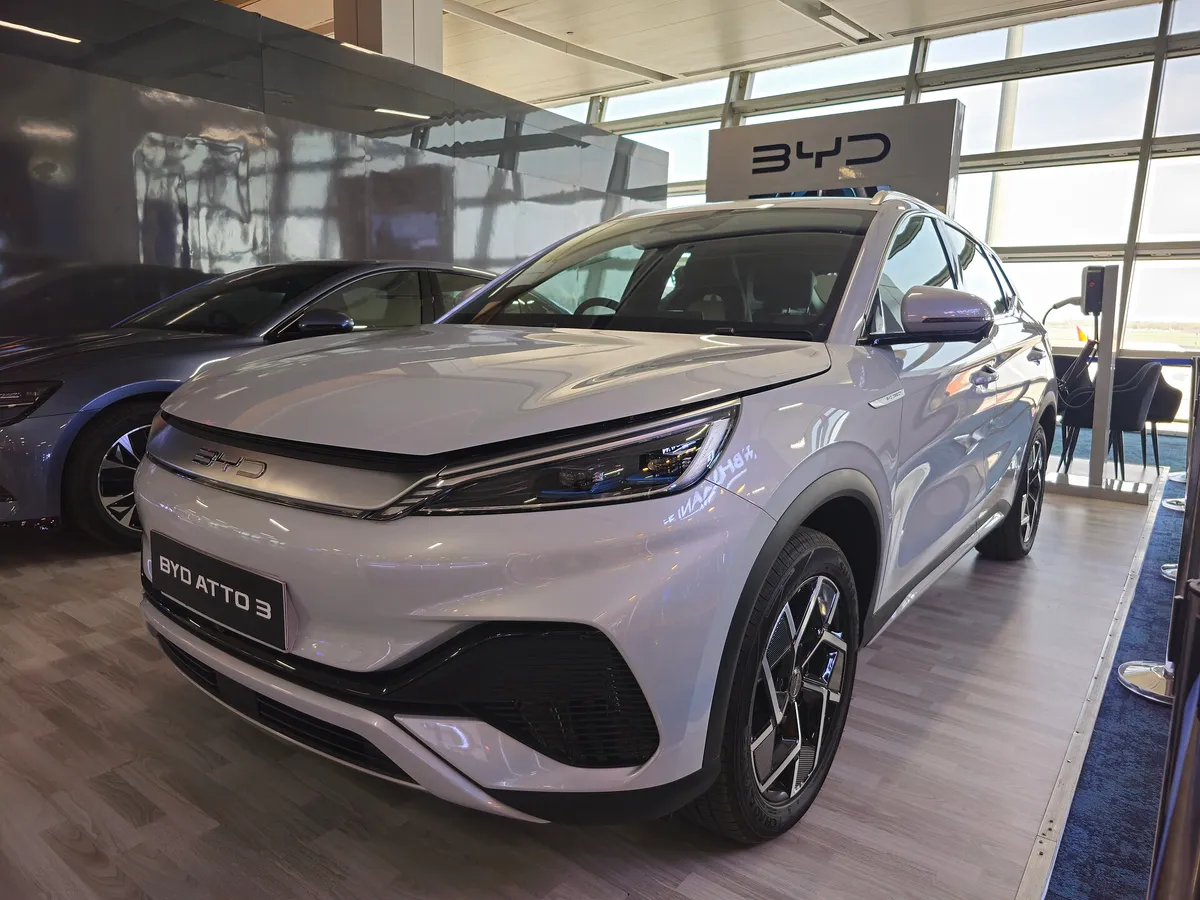
Automakers: BYD’s megawatt charging rollout and Dongfeng’s Bolt partnership signal confidence in SA’s EV market. BYD states: “Every driver in South Africa deserves a vehicle that not only fulfills their transportation needs but also surpasses their expectations.” The Atto 3 Extended Range (60.48 kWh, 420 km WLTP) costs R835,000—out of reach for most drivers, but fleet models bypass that barrier.
Installers: ChargePoint SA and competitors are fielding enquiries from drivers who want home chargers. If you own a property with off-street parking, a 7.4kW wall-box can replenish a BYD Dolphin Surf (30 kWh Comfort / 38.8 kWh Dynamic) overnight, giving you 232–295 km WLTP range by morning.
What’s next: what to watch in the coming months
- Bolt’s rental terms. YugoRide hasn’t published pricing yet. If Bolt undercuts Uber’s R4,000/week, expect a driver exodus.
- WattSpot’s Cape Town expansion. The fleet-charging operator has focused on Gauteng so far. A Cape Town hub would be transformative for Bolt and Uber drivers.
- BYD Flash station rollout. Construction starts April/May 2026. Track dealership locations via BYD’s SA site to see if one lands near your usual routes.
- NERSA tariff reviews. The 8.76% increase hit in April 2026. Another hike in 2027 could erode the cost advantage of bundled charging deals.
Ready to charge smarter?
Whether you’re a ride-hailing driver weighing Bolt’s EV offer or an SA buyer curious about the BYD Dolphin Surf, one thing is certain: home or depot charging changes the game. If you own a property and want to future-proof your setup, get a free site assessment from ChargePoint SA. We’ll spec the right charger for your vehicle and electrical supply—no surprises, no overselling, just the kit you need to leave home with a full battery every morning.
For drivers without home-charging access, the maths still pencil—but you’ll need a fleet operator (Bolt, Uber, YugoRide) with dedicated hubs nearby. Track the WattSpot and BYD rollouts, and don’t hesitate to ask your fleet partner where their charging infrastructure sits before you sign.
Image credits
“Dark Days Ahead: Eskom Rolling Blackouts and Loadshedding” by Axel Bührmann (CC BY 2.0, via flickr) · “Eskom – they’re rolling blackouts, dammit” by Axel Bührmann (CC BY 2.0, via flickr) · “Green Machine” by jurvetson (CC BY 2.0, via flickr)