
.jpg)
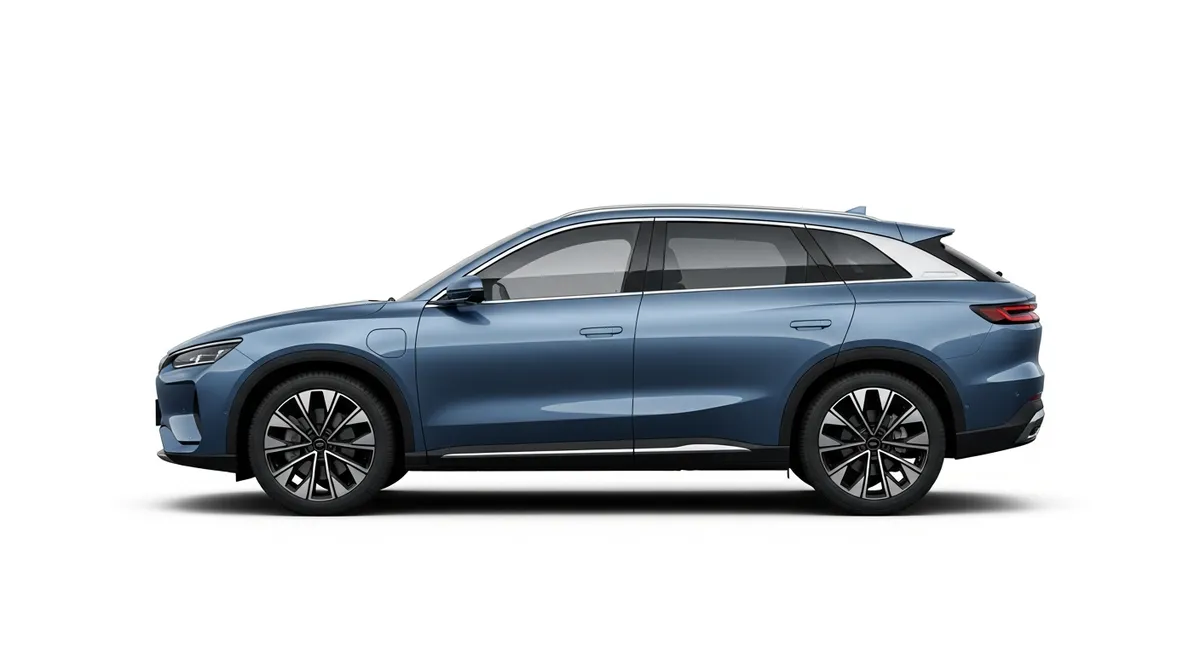
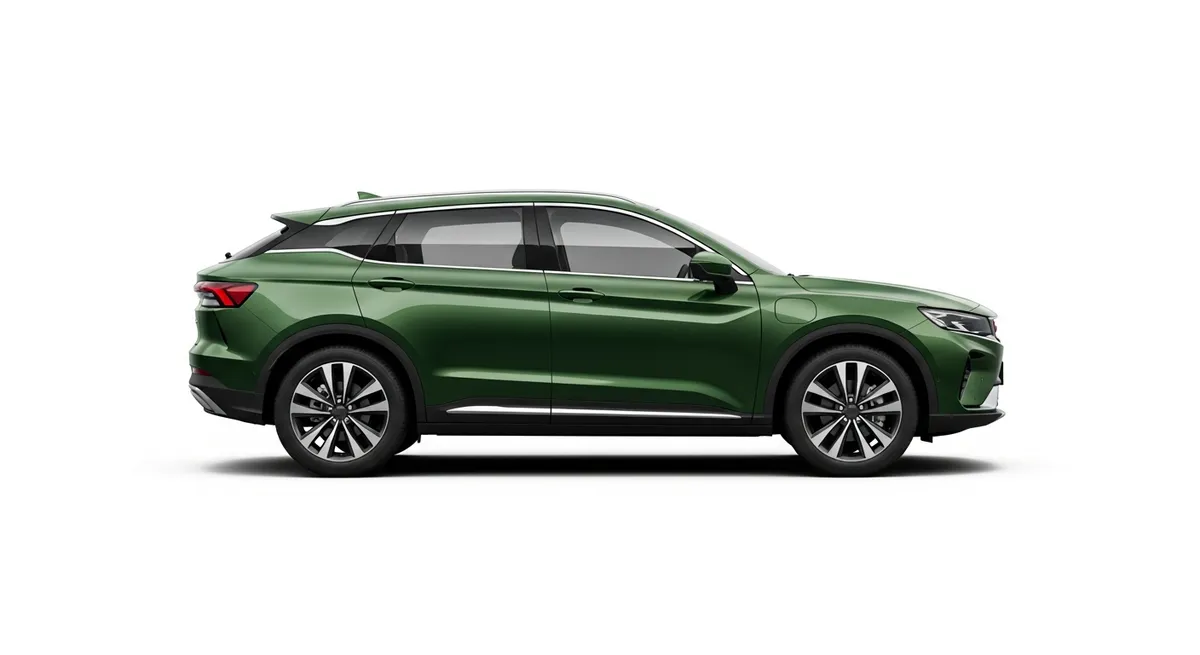
The Geely E5 Apex Plus landed in South African showrooms in May 2026 at R788,888 — a R249,088 premium over the Mazda CX-30’s R539,800 entry price. That’s a 46% upfront gap, but the electric crossover saves roughly R2,005 per month in fuel costs if you charge at home and drive 1,500 km monthly. Whether cheaper electricity and lower maintenance can close that quarter-million-rand gap over five years depends entirely on your annual mileage and charging habits.
We’ve crunched the numbers using real-world Eskom tariffs, May 2026 petrol prices, and OEM-verified specs to give you a factual, SA-native cost comparison. No guesswork — just the data you need to decide whether going electric makes financial sense for your driving patterns, or whether the CX-30’s proven petrol efficiency still wins.
Price showdown: what you pay at the dealership
The Geely E5 Apex Plus — the electric crossover that just launched in May 2026 — lists at R788,888 for the flagship configuration with the larger 68.39 kWh battery. The Mazda CX-30 2.0 Active Auto starts at R539,800 (May 2026 pricing). That’s a R249,088 premium for the EV — roughly 46% more cash upfront.
| Model | Variant | Price (ZAR) | Warranty | Service Plan |
|---|---|---|---|---|
| Geely E5 | Apex Plus (flagship) | R788,888 | 6-year/150,000 km vehicle + 8-year/200,000 km battery | 6-year/120,000 km |
| Mazda CX-30 | 2.0 Active Auto | R539,800 | 5-year/unlimited km | 5-year/unlimited km |
| Mazda CX-30 | 2.0 Dynamic Edition | R588,100 | 5-year/unlimited km | 5-year/unlimited km |
The E5’s warranty package is objectively stronger: six years on the vehicle versus Mazda’s five, and a dedicated eight-year/200,000 km battery warranty that covers degradation below 70% capacity. Mazda counters with unlimited-kilometre coverage — valuable if you’re a high-mileage driver who racks up 30,000+ km/year on long-haul routes.

Range, efficiency, and real-world driving
Geely E5 Apex Plus: 450 km WLTP, 15.2 kWh/100 km
The Geely E5 Apex Plus packs a 68.39 kWh battery good for 450 km on the WLTP cycle with a consumption figure of approximately 15.2 kWh/100 km (calculated from battery capacity and range). In SA driving — think stop-start Joburg traffic, 120 km/h highway cruising, and the occasional Drakensberg pass — expect real-world range closer to 370–400 km in summer, dropping to 340–370 km in Highveld winter (cold batteries reduce efficiency by 10–15%).
Power delivery is brisk: 160 kW peak output and 320 Nm torque launch the E5 from 0–100 km/h in 6.9 seconds. That’s Tesla-quick off the line, though the CX-30’s 121 kW petrol engine feels more linear and predictable for drivers used to naturally aspirated power.
Mazda CX-30: 600+ km range, 6.6 L/100 km claimed
The CX-30’s 2.0-litre petrol four-pot produces 121 kW and 213 Nm, mated to a six-speed automatic. Mazda claims 6.6 L/100 km combined, though real-world figures in SA conditions (95 RON unleaded, altitude-adjusted fuelling, aircon running) typically land around 7.5–8.5 L/100 km. With a 51-litre tank, you’re looking at 600–680 km range between fill-ups — nearly 50% more than the E5’s single-charge capability.
That range advantage matters if you regularly drive Durban–Johannesburg (570 km), Cape Town–George (420 km), or any route where public charging infrastructure is sparse. As of early 2026, South Africa has roughly 650 public EV chargers across 445 sites — up 122% since 2022, but still patchy in the Free State interior and Limpopo outside Polokwane.

Running costs: electricity vs petrol at 1,500 km/month
Here’s where the EV math starts to look compelling. We’ll use May 2026 pricing: R23.36/L for 95 unleaded petrol (inland price) and R3.50/kWh for home electricity (blended Eskom/municipal rate post-NERSA’s 8.76% April 2026 increase). Public DC charging runs R7.00–R7.35/kWh, so we’ll calculate both scenarios.
Geely E5 Apex Plus monthly cost (1,500 km)
- Home charging: 1,500 km ÷ 100 × 15.2 kWh = 228 kWh/month × R3.50 = R798/month
- Public DC charging: 228 kWh × R7.00 = R1,596/month
Mazda CX-30 monthly cost (1,500 km)
- Real-world 8.0 L/100 km: 1,500 km ÷ 100 × 8.0 L = 120 L/month × R23.36 = R2,803.20/month
- Best-case 6.6 L/100 km: 99 L × R23.36 = R2,312.64/month
Monthly savings (home charging): R2,803 − R798 = R2,005/month in the EV’s favour, or R24,060/year. Even if you rely entirely on public DC charging, you still save R1,207/month (R14,484/year) versus the CX-30’s real-world petrol consumption.
| Scenario | Geely E5 (home) | Geely E5 (public DC) | Mazda CX-30 (petrol) |
|---|---|---|---|
| Monthly fuel cost (1,500 km) | R798 | R1,596 | R2,803 |
| Annual fuel cost (18,000 km) | R9,576 | R19,152 | R33,638 |
| 5-year fuel cost (90,000 km) | R47,880 | R95,760 | R168,192 |
Charging at home: 7.4 kW vs 11 kW vs 22 kW — which suits the E5?
The Geely E5 supports 11 kW AC charging via Type 2 connector and 100 kW DC fast charging (CCS2). That means you need at least an 11 kW wallbox to max out the car’s onboard charger — anything less and you’re leaving charging speed on the table.
Charging time comparison (68.39 kWh battery, 10–100%)
| Charger type | Power (kW) | Time to full (10–100%) | Overnight range added (8 hours) |
|---|---|---|---|
| Standard 3-pin plug | 2.3 kW | ~30 hours | ~120 km |
| 7.4 kW wallbox | 7.4 kW | ~9.2 hours | ~390 km (near-full charge) |
| 11 kW wallbox | 11 kW | ~6.2 hours | 450 km (full charge in 7 hrs) |
| 22 kW wallbox | 22 kW | ~6.2 hours* | 450 km (car limits to 11 kW) |
| 100 kW DC (public) | 100 kW | 30–80% in 20 min | N/A (public only) |
*The E5 cannot accept more than 11 kW AC, so a 22 kW charger offers no speed benefit — save your money and install an 11 kW unit. For most SA households on single-phase supply, an 11 kW charger is the sweet spot: you’ll fully replenish the battery overnight (6–7 hours) and wake up to 450 km range every morning.
Installation cost for an 11 kW wallbox runs R18,000–R28,000 depending on your existing electrical setup, cable run length, and whether you need a dedicated circuit breaker or supply upgrade. ChargePoint SA offers free site assessments to scope the work and quote accurately.

5-year total cost of ownership
Now the big picture. We’ll model 90,000 km over five years (18,000 km/year — slightly above SA’s 15,000 km average but realistic for a primary family vehicle). Assumptions: home charging at R3.50/kWh, petrol at R23.36/L (no inflation adjustment — conservative), one battery replacement for the CX-30 (R2,800), two sets of tyres each (R8,000/set), and routine servicing.
| Cost category | Geely E5 Apex Plus | Mazda CX-30 2.0 Active |
|---|---|---|
| Purchase price | R788,888 | R539,800 |
| 5-year fuel cost | R47,880 | R168,192 |
| Servicing (5 years) | R0 (plan included) | R0 (plan included) |
| Tyres (2 sets) | R16,000 | R16,000 |
| 12V battery replacement | R2,200 | R2,800 |
| Brake pads/discs | R3,500 (regen braking = less wear) | R7,500 |
| Home charger install | R23,000 (11 kW wallbox) | R0 |
| 5-year total | R881,468 | R734,292 |
Verdict: Over five years and 90,000 km, the Geely E5 Apex Plus is now R147,176 more expensive to own than the Mazda CX-30 — the larger R249k upfront gap overwhelms the fuel savings. The break-even point sits around 195,000–210,000 km (roughly 10–11 years at 18,000 km/year). Extend the timeline to ten years (180,000 km) and the E5 pulls roughly even thanks to cumulative fuel savings of R240,000+ and lower brake wear.
If you drive more than 25,000 km/year, the EV wins sooner — break-even drops to 8–9 years. If you drive under 15,000 km/year, the CX-30’s lower purchase price keeps it cheaper for 12+ years, making the petrol crossover the smarter financial choice for most buyers.
Load-shedding, solar pairing, and infrastructure reality
Can you charge during load-shedding?
Yes — if you plan ahead. Most EV owners charge overnight (22:00–06:00), when Eskom schedules Stage 2–4 load-shedding windows less frequently. A 68 kWh battery takes 6.2 hours on an 11 kW charger, so you’ll typically complete a full charge between shedding blocks. If your municipal supply is interrupted mid-charge, the car simply pauses and resumes when power returns — no harm done.
For guaranteed uptime, pair your wallbox with a 5 kWh home battery (R60,000–R80,000 installed) or a small solar array. A 3 kW solar system (6–8 panels, R55,000–R75,000) can trickle-charge the E5 at ~2.5 kW during the day, adding 60–80 km range over eight hours of sun — enough to cover most daily commutes without touching the grid.
Public charging: better, but still patchy
South Africa’s public charging network grew 122% between 2022 and 2025, reaching roughly 650 chargers across 445 sites by early 2026. GridCars operates 445 sites (60% of national capacity), while Rubicon added 103 public stations and 20 dealership chargers as of February 2026. In May 2026, CHARGE launched South Africa’s first off-grid solar-powered EV hubs on the N3 corridor (Reitz and Colenso-Winterton), backed by R100 million from the Development Bank of Southern Africa.
The catch: route gaps remain brutal. The N1 between Beaufort West and Three Sisters (roughly 300 km), the N2 between East London and Durban, and most of the Free State interior still lack reliable fast-charging coverage. If your driving pattern includes those corridors weekly, the CX-30’s 680 km petrol range is a safer bet until BYD’s planned 200–300 megawatt Flash stations go live in late 2026.
Service network: Geely vs Mazda
Mazda has 58 dealerships nationwide as of 2026 — deep coverage in metros, decent presence in secondary cities (Nelspruit, George, Kimberley). Geely entered SA in May 2026 with 15 initial dealers, concentrated in Gauteng, Western Cape, and KZN. The brand plans to expand to 25–30 outlets by end-2026, but if you’re in Upington or Tzaneen, you’ll be driving 200+ km for warranty work.
EV servicing is simpler (no oil changes, fewer moving parts), but battery diagnostics and high-voltage repairs require specialised training. Geely’s 8-year/200,000 km battery warranty is strong on paper — execution will depend on technician skill and parts availability as the fleet ages.
The honest verdict: who should buy which?
Buy the Geely E5 Apex Plus if you…
- Drive 25,000+ km/year, mostly within 400 km of home (daily commutes, school runs, weekend trips to Hartbeespoort or the Midlands) — high mileage is essential to justify the R249k premium.
- Have off-street parking and can install an 11 kW home charger — this is non-negotiable for hassle-free ownership.
- Live in Gauteng, Western Cape, or KZN where public charging and Geely dealers are densest.
- Plan to keep the car 10+ years to fully amortise the upfront premium and maximise fuel savings — shorter ownership makes the CX-30 cheaper.
- Value instant torque, whisper-quiet cabins, and the environmental benefits of zero tailpipe emissions.
Stick with the Mazda CX-30 if you…
- Regularly drive 500+ km routes (Jo’burg–Durban, Cape Town–PE) where public charging is sparse or unreliable.
- Rent or live in a complex without dedicated parking — you can’t charge an EV on street parking or a shared bay.
- Drive under 20,000 km/year — the fuel savings won’t justify the R249k price gap within a reasonable ownership window (10+ years).
- Prefer proven resale values and a mature dealer network — Mazda’s 58 outlets beat Geely’s 15, and petrol CX-30s will hold value better in SA’s nascent EV market.
- Need a car today and can’t wait 2–4 weeks for EV stock (Geely’s import lead times are longer than Mazda’s local inventory).
- Want the lowest 5-year total cost of ownership — the CX-30 is R147k cheaper over five years for typical driving patterns.
Ready to charge smarter?
If the Geely E5’s cost math works for your driving profile, the next step is confirming your home can support an 11 kW charger. ChargePoint SA offers free site assessments across Gauteng, Western Cape, and KZN — we’ll check your electrical panel, measure cable runs, and quote the full installation cost with zero obligation.
Book your assessment in under 60 seconds: chargepointsa.co.za/get-a-quote. Whether you choose the E5, the CX-30, or any other EV, we’ll make sure your charging setup is safe, fast, and future-proof.
Image credits
“Geely Galaxy E5” by Wikimedia Commons contributor, CC BY-SA 4.0 · “2024 Geely Galaxy E5 front view” by Wikimedia Commons contributor, CC BY-SA 4.0 · “Geely Galaxy E5” by Wikimedia Commons contributor, CC BY-SA 4.0 · “2019 Mazda CX-30” by Wikimedia Commons contributor, CC BY-SA 4.0