
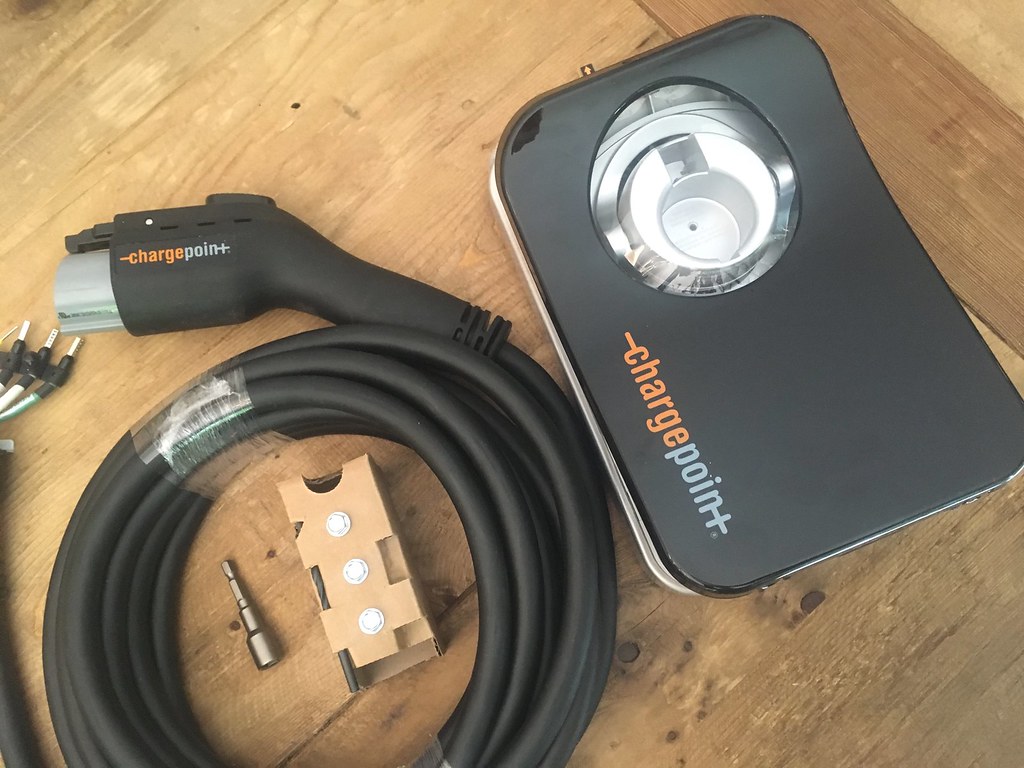
A Somerset West EV owner will spend R858 per month charging a BYD Atto 3 at the municipal rate of R3.18/kWh — less than half the R2,475 monthly petrol bill for equivalent mileage. That cost advantage explains why 95% of EV charging happens at home, not at the Somerset West Civic Centre’s public station or GridCars’ R7.35/kWh DC fast chargers. While Somerset West has hosted a public charging station since April 2021, and u/JennaLeighWeddings’ frustrating road trip experience with unreliable public chargers proves the point: home charging isn’t a luxury, it’s essential infrastructure.

Why install an EV charger in Somerset West
Somerset West sits in the heart of the Western Cape’s EV adoption surge. AutoTrader reported a 45% month-on-month increase in EV searches and 10% sales growth in early 2026, driven by record petrol prices and a 281% surge in plug-in hybrid sales during 2025. The suburb’s mix of freehold homes, security estates, and newer developments makes it ideal for home charger installation — most properties have dedicated garages, covered parking, and accessible DB boards.
Somerset West’s Mediterranean climate is another advantage. Unlike Gauteng’s summer storms or KwaZulu-Natal’s humidity, the Western Cape’s dry summers and mild winters create near-optimal conditions for outdoor charger installations. As u/808kid noted on r/evcharging, “I saw the specs on the Enphase site saying it’s rated to work in temperature up to 131 degrees. So does that mean it’ll be fine to work at 48amps while in the summer?” In Somerset West, summer peaks rarely exceed 35°C, well below the thermal derating threshold of quality chargers.
The public charging reality check
While GridCars operates 445 sites with 650 chargers nationally and Rubicon added 103 public stations by February 2026, public infrastructure remains patchy and expensive. Standard DC fast charging costs R7.00/kWh (Rubicon) or R7.35/kWh (GridCars), with AC charging at R5.88/kWh. Compare that to Somerset West’s municipal rate of R3.18/kWh for residential customers, and the savings case for home charging is clear: a 60kWh battery top-up costs R190.80 at home versus R352.80-R441 at a public DC charger.
The Somerset West Civic Centre station, donated by UNIDO in 2021, serves as a backup option but isn’t designed for daily use. Home charging gives you guaranteed availability, lower costs, and the convenience of a full battery every morning.

Somerset West municipal tariff and charging costs
Somerset West falls under the City of Cape Town’s electricity supply, which sources power from both Eskom and the municipal grid. As of July 2026, residential customers pay an average of R3.18/kWh, following NERSA’s approval of a 9.01% increase for municipal customers. That rate applies to standard domestic tariffs; if you have solar and export to the grid, the City’s Homeflex tariff structure offers time-of-use pricing that can drop overnight rates further.
Real-world charging cost examples
| Vehicle | Battery size (kWh) | Range (km) | Cost to charge 0-100% @ R3.18/kWh | Cost per 100km |
|---|---|---|---|---|
| BYD Atto 3 | 60.5 | 420 | R192.39 | R45.81 |
| BMW iX3 | 80 | 460 | R254.40 | R55.30 |
| Volvo XC40 Recharge | 78 | 418 | R248.04 | R59.34 |
| Nissan Leaf (40kWh) | 40 | 270 | R127.20 | R47.11 |
For context, a petrol RAV4 averaging 7.5L/100km costs roughly R165 per 100km at R22/L. Even with recent tariff increases, EVs deliver 60-72% lower running costs in Somerset West.
Load-shedding and solar pairing
While load-shedding intensity has decreased in 2026, Somerset West residents still experience occasional Stage 1-2 outages. Pairing your EV charger with a solar-plus-battery system offers two benefits: you charge from free solar energy during the day (reducing your R3.18/kWh grid reliance), and your home battery keeps the charger operational during outages. Eskom’s Homeflex tariff allows solar customers to export excess energy for credits, effectively turning your EV into a mobile energy asset.
Most installers in Somerset West can integrate your charger with existing Victron, SolarEdge, or Sunsynk inverters. Expect to add R3,500-R6,000 to the installation cost for smart load management that prioritises solar charging during the day.
The Somerset West installation process: step by step
Every compliant EV charger installation in South Africa follows the same sequence, governed by SANS 10142-1:2017 (The Wiring of Premises). Here’s what happens in Somerset West specifically.
Step 1: Site assessment
A qualified electrician visits your property to evaluate:
- DB board capacity and available breaker slots
- Cable route from DB board to parking area (through walls, underground, or overhead)
- Single-phase vs 3-phase supply (most Somerset West homes have single-phase 230V)
- Existing earth leakage protection
- Parking layout and charger mounting location
Site assessments typically cost R800-R1,500 but are often waived if you proceed with the installation. Expect the electrician to photograph your DB board and measure cable runs — a 15-metre run from the board to your garage is common in older Somerset West homes, while newer estates may require only 5-8 metres.

Step 2: DB board upgrade (if required)
If your DB board lacks a free 32A or 40A breaker slot, or if the main breaker is undersized (common in pre-2010 homes), you’ll need an upgrade. In Somerset West, this typically means:
- Adding a dedicated sub-board for the EV charger (R3,500-R6,500 installed)
- Upgrading the main breaker from 60A to 80A (R2,200-R4,000)
- Installing a Type B earth leakage unit for DC fault protection (R1,800-R3,200)
SANS 10142-1 mandates that EV chargers sit on a dedicated circuit with appropriate overcurrent and earth leakage protection. Cutting corners here voids your insurance and creates a fire risk.
Step 3: Charger installation
Once the DB board is ready, the electrician runs cable (typically 6mm² or 10mm² copper for 7.4kW chargers), mounts the wallbox, and connects it. Installation time: 4-6 hours for a straightforward job, up to two days if trenching or wall penetration is required. The charger itself must be weatherproof (IP54 or higher) if mounted outdoors — Somerset West’s winter rain demands it.
Step 4: Certificate of Compliance (CoC)
No EV charger installation is legal without a CoC issued by a registered electrician. The certificate confirms that the work complies with SANS 10142-1 and that all safety tests (earth resistance, insulation resistance, polarity) passed. CoC costs in Somerset West range from R1,200 to R2,500 depending on the complexity of the installation. Keep this document — your insurer will ask for it if you ever claim for electrical damage.
Step 5: Commissioning and testing
The final step: the electrician tests the charger with your vehicle, verifies communication between the car and wallbox, and walks you through the controls. As u/GNUGradyn warned on r/electricvehicles, “if your car ever dies and won’t recharge, you likely just need to jump it like a gas car or replace the normal 12V car battery, which all EVs have in addition to the drive train battery.” A good installer will explain this auxiliary battery system — it controls the charging contactors, and a flat 12V battery will prevent charging even if your high-voltage pack is fine.
Typical pricing in Somerset West (2026)
Here’s what Somerset West EV owners are paying for complete installations in 2026. All prices include VAT and assume a standard single-phase setup with a 10-15 metre cable run.
| Component | Budget option | Mid-range | Premium |
|---|---|---|---|
| Wallbox charger (7.4kW, Type 2) | R8,500-R12,000 | R14,000-R18,000 | R22,000-R28,000 |
| Installation labour + materials | R4,500-R6,500 | R7,000-R9,500 | R10,000-R14,000 |
| DB board upgrade (if needed) | R3,500-R5,000 | R5,500-R7,500 | R8,000-R12,000 |
| Certificate of Compliance | R1,200 | R1,500-R1,800 | R2,000-R2,500 |
| Total (no DB upgrade) | R14,200-R19,700 | R22,500-R29,300 | R34,000-R44,500 |
| Total (with DB upgrade) | R17,700-R24,700 | R28,000-R36,800 | R42,000-R56,500 |
Budget chargers (Wallbox Pulsar, Ohme Home) lack smart features but deliver reliable 7.4kW charging. Mid-range units (Easee One, Zappi) add WiFi connectivity, solar integration, and load balancing. Premium options (Tesla Wall Connector, ABB Terra AC) offer sleek designs, faster 11kW charging (if you have 3-phase), and advanced scheduling.
Hidden costs to budget for
- Trenching: If your parking is 20+ metres from the DB board or requires underground cable, add R150-R250 per metre for excavation and conduit.
- Wall penetration: Drilling through a double-brick wall costs R800-R1,500 per penetration.
- Dedicated earth spike: Some older Somerset West homes lack adequate earthing; a new earth spike costs R1,200-R2,000 installed.
- Permit fees: The City of Cape Town doesn’t charge permit fees for residential EV chargers under 20A, but some security estates levy their own approval fees (R500-R1,200).
Single-phase vs 3-phase supply in Somerset West
The vast majority of Somerset West homes — particularly those built before 2015 — have single-phase 230V supply. This limits you to 7.4kW charging (32A breaker) or occasionally 11kW if your DB board and supply cable can handle a 40A breaker. At 7.4kW, you’ll add roughly 40km of range per hour, enough to fully charge a 60kWh battery overnight (8-9 hours).
Three-phase supply (400V) is rare in residential Somerset West but common in newer estates, townhouse complexes, and properties with large workshops. If you have 3-phase, you can install an 11kW (16A per phase) or 22kW (32A per phase) charger — but only if your vehicle supports it. Most affordable EVs (BYD Atto 3, Nissan Leaf, MG ZS EV) max out at 7.4kW AC charging regardless of supply. Premium models (BMW iX3, Audi e-tron, Porsche Taycan) support 11kW or 22kW.
Should you upgrade to 3-phase?
Upgrading from single-phase to 3-phase costs R25,000-R45,000 in Somerset West (City of Cape Town application fees, trenching, new meter, DB board replacement). It’s rarely worth it unless you’re also installing a large solar system, running workshop equipment, or driving a vehicle that genuinely benefits from 22kW charging. For most owners, 7.4kW single-phase is perfectly adequate.
Common mistakes Somerset West homeowners make
After installing dozens of chargers in the Western Cape, we’ve seen these errors repeatedly:
1. Choosing the cheapest electrician
EV charger installation isn’t general household wiring. You need an electrician who understands Type B earth leakage protection, DC fault currents, and vehicle communication protocols. A R12,000 quote from an unqualified installer will cost you R25,000+ to fix when it fails inspection or causes a nuisance-tripping issue.
2. Ignoring the CoC requirement
Some homeowners skip the Certificate of Compliance to save R1,500. When you sell the property or file an insurance claim, that decision comes back to haunt you. The CoC is legally required for any electrical installation work in South Africa — no exceptions.
3. Mounting the charger in direct sun
While Somerset West’s climate is mild, a charger mounted on a west-facing wall in full afternoon sun will thermally derate in summer, dropping from 7.4kW to 5-6kW. Mount under an eave, in a shaded carport, or on a south-facing wall where possible.
4. Undersizing the cable run
A 25-metre run on 4mm² cable will cause voltage drop and slow charging. Always use 6mm² for runs up to 20 metres, and 10mm² beyond that. The extra R800 in cable cost pays for itself in charging speed.
5. Not planning for solar later
Even if you’re not installing solar today, future-proof your charger by choosing a model with solar integration (Zappi, Wallbox Quasar, Fronius Wattpilot). Retrofitting smart controls later costs more than specifying them upfront.

Public charging options in Somerset West
While home charging handles 95% of your needs, knowing your public options matters for road trips and emergencies. Somerset West’s public infrastructure includes:
- Somerset West Civic Centre: AC charging station (donated by UNIDO in 2021), free to use but often occupied during business hours
- GridCars network: Nearest DC fast chargers in Strand (Shell Recharge) and Somerset Mall, charging R5.88/kWh (AC) or R7.35/kWh (DC)
- Rubicon network: DC fast chargers at select Engen stations on the N2 corridor, R7.00/kWh for eMSP customers
For longer trips, CHARGE’s new off-grid solar stations on the N3 (launched May 2026) and BYD’s planned 1MW Flash network (starting Q2 2026) will improve intercity travel. But for daily Somerset West driving — school runs, Strand Beach, Somerset Mall, the Winelands — home charging remains unbeatable.
Frequently asked questions
Do I need permission from my estate to install a charger?
Most Somerset West security estates require architectural approval for any external electrical work. Submit your electrician’s installation plan and charger specifications to the estate management — approval typically takes 2-4 weeks. Some estates charge a R500-R1,200 processing fee.
Can I install a charger if I’m renting?
You’ll need written permission from the landlord. If they agree, clarify who pays for the installation and whether you can remove the charger when you move (most wallboxes unbolt easily). Some landlords will cover the cost and add a small premium to the rent — it’s a property value boost.
How long does a 7.4kW charger take to fully charge my EV?
Divide your battery size by 7.4kW and add 10% for charging losses. A 60kWh battery takes roughly 9 hours (60 ÷ 7.4 × 1.1 = 8.9 hours). Plug in at 22:00, wake up to 100% at 07:00. Most EV owners charge to 80% daily (better for battery longevity), which takes about 7 hours.
What happens if my 12V battery dies?
As u/GNUGradyn explained, your EV won’t charge if the 12V auxiliary battery is flat — it controls the high-voltage contactors. Jump-start the 12V battery (or replace it, R800-R1,500) and charging will resume. This is the most common “my EV won’t charge” issue that isn’t actually a charger fault.
Can I use an extension lead or 3-pin plug?
Technically yes — most EVs include a portable “granny charger” that plugs into a standard 15A socket and delivers 2.3kW. But this is emergency-only: it takes 26+ hours to charge a 60kWh battery, and prolonged use will overheat the socket (a fire risk). Always install a proper wallbox for daily charging.
Will my electricity bill double?
Not even close. If you drive 1,500km/month in a BYD Atto 3 (18kWh/100km), you’ll use 270kWh for charging — about R858/month at R3.18/kWh. Compare that to R2,475/month in petrol for the same distance (165L at R15/L). Your total household consumption will rise by 30-40%, not double.
Ready to charge smarter in Somerset West?
Home charging transforms EV ownership from a logistical puzzle into effortless daily routine. With Somerset West’s R3.18/kWh municipal tariff, mild climate, and growing EV community, there’s never been a better time to install a compliant, future-proof charger. Whether you’re driving a new BYD Atto 3 or planning to buy your first EV in 2026, a professional installation pays for itself in 18-24 months through fuel savings alone.
ChargePoint SA has installed over 500 residential chargers across the Western Cape, and we know Somerset West’s estates, DB board quirks, and City of Cape Town approval processes inside out. Get a free Somerset West site assessment — we’ll evaluate your property, explain your options, and provide a fixed-price quote with no hidden fees. Your EV deserves a charging solution as reliable as the car itself.
Image credits
“Tesla Wall Connector” by Wikimedia Commons contributor, CC BY-SA 4.0 · “Nissan Leaf Wallbox 400V 16A” by Wikimedia Commons contributor, CC BY-SA 3.0 · “Siemens VersiCharge AC Series Charging Station” by Wikimedia Commons contributor, CC BY-SA 4.0 · “Setting JuiceBox Install” by earthandmain (CC BY-SA 2.0, via flickr)
Continue Reading
Deprecated: File Theme without comments.php is deprecated since version 3.0.0 with no alternative available. Please include a comments.php template in your theme. in /var/www/wordpress/wp-includes/functions.php on line 6085
Leave a Reply