How Much Does It Cost to Charge a BYD Dolphin Surf in Cape Town? (2026 Full Breakdown)
Off-peak home charging in Cape Town costs R326 per month for 1,250 km in a BYD Dolphin Surf — that’s R0.26 per kilometre, compared to R1.72/km for a petrol VW Polo. The annual fuel saving is R21,813, and a full charge on the Dynamic variant costs just R73.33 at night-time rates.
With petrol prices continuing to bite South African motorists, the BYD Dolphin Surf has become one of the most talked-about electric vehicles in the Cape Town market. But one question comes up constantly: what does it actually cost to charge, and how much will you save versus a petrol car?
As energy cost analysts at ChargePoint SA, we’ve crunched every number using the City of Cape Town’s (CoCT) current 2026 electricity tariffs, real-world efficiency figures, and local public charging rates. Whether you’re considering the entry-level Comfort variant or the longer-range Dynamic, this breakdown gives you a clear, honest picture of your true running costs.
BYD Dolphin Surf: Key Specs at a Glance
| Specification | Comfort | Dynamic |
|---|---|---|
| Battery Capacity | 30 kWh | 38.8 kWh |
| WLTP Range | 232 km | 295 km |
| Max DC Fast Charging | 30 kW | 40 kW |
| Efficiency | ~13.8 kWh/100km | ~13.8 kWh/100km |
Cape Town Electricity Tariffs (CoCT, 2026)
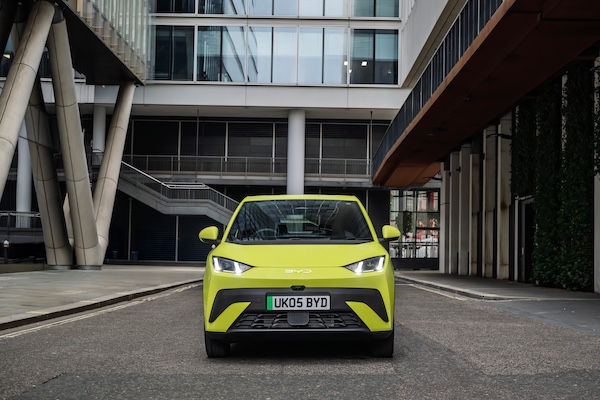
The City of Cape Town operates a time-of-use tariff structure for residential customers, which EV owners can take serious advantage of. Here are the three rate tiers relevant to home charging:
| Tariff Period | Time of Day | Rate per kWh |
|---|---|---|
| Off-Peak | 10pm – 6am | R1.89/kWh |
| Standard | General daytime hours | R3.18/kWh |
| Peak | Morning and evening peak | R4.47/kWh |
Charging during off-peak hours (10pm to 6am) costs 40.6% less than the standard rate and 57.7% less than peak pricing. For most EV owners in Cape Town, plugging in at night is the single most impactful cost-saving strategy available. According to the City of Cape Town’s official tariff schedule, these time-of-use rates are designed to incentivise load-shifting to off-peak periods.
Plug In Your Own Numbers
Use our free calculator to see exact charging costs for the BYD Dolphin Surf based on your driving habits.
Cost Per Full Charge: Comfort vs Dynamic
Let’s start with the most fundamental calculation — what does a full charge cost from empty to 100%?
Comfort Variant (30 kWh battery)
| Tariff | Calculation | Full Charge Cost |
|---|---|---|
| Off-Peak | 30 kWh × R1.89 | R56.70 |
| Standard | 30 kWh × R3.18 | R95.40 |
| Peak | 30 kWh × R4.47 | R134.10 |
Dynamic Variant (38.8 kWh battery)
| Tariff | Calculation | Full Charge Cost |
|---|---|---|
| Off-Peak | 38.8 kWh × R1.89 | R73.33 |
| Standard | 38.8 kWh × R3.18 | R123.38 |
| Peak | 38.8 kWh × R4.47 | R173.44 |
To put this into perspective: a full charge on the Dynamic variant at standard rate — giving you 295 km of range — costs just R123.38. That’s roughly the price of two takeaway coffees and a sandwich.
Cost Per Kilometre
Using the Dolphin Surf’s real-world efficiency of 13.8 kWh per 100 km, we can calculate the energy cost per kilometre at each tariff rate:
- Off-Peak: 13.8 kWh ÷ 100 × R1.89 = R0.2608/km ≈ R0.26/km
- Standard: 13.8 kWh ÷ 100 × R3.18 = R0.4388/km ≈ R0.44/km
- Peak: 13.8 kWh ÷ 100 × R4.47 = R0.6169/km ≈ R0.62/km
These figures assume ideal conditions. In practice, factors like air conditioning, highway speeds, and battery temperature can nudge real-world consumption up slightly. We recommend using R0.50/km at standard rate as a conservative planning figure.
Monthly Charging Costs at 1,250 km/Month
The average South African motorist drives approximately 15,000 km per year, which equates to 1,250 km per month. Here’s what that looks like for Dolphin Surf owners in Cape Town:
Monthly energy consumed: 1,250 km × 13.8 kWh/100 km = 172.5 kWh per month
| Tariff | Calculation | Monthly Cost | Annual Cost |
|---|---|---|---|
| Off-Peak | 172.5 × R1.89 | R326.03 | R3,912.30 |
| Standard | 172.5 × R3.18 | R548.55 | R6,582.60 |
| Peak | 172.5 × R4.47 | R771.08 | R9,252.90 |
Find the Cheapest Public Chargers
Check real-time charging station availability and pricing across Cape Town.
BYD Dolphin Surf vs Petrol VW Polo: True Cost Comparison
The VW Polo 1.0 TSI remains one of the best-selling petrol vehicles in the same market segment as the Dolphin Surf. Let’s compare the two honestly.
VW Polo fuel cost calculation:
- Fuel consumption: 7.0 L/100 km (real-world estimate)
- Petrol price: R24.50/L (Cape Town, 2026)
- Cost per km: 7.0 ÷ 100 × R24.50 = R1.715/km ≈ R1.72/km
- Monthly (1,250 km): 1,250 × R1.715 = R2,143.75 ≈ R2,144/month
- Annual (15,000 km): 15,000 × R1.715 = R25,725/year
| Vehicle / Charging | Cost per km | Monthly Cost | Annual Cost |
|---|---|---|---|
| Dolphin Surf (Off-Peak) | R0.26/km | R326 | R3,912 |
| Dolphin Surf (Standard) | R0.44/km | R549 | R6,583 |
| Dolphin Surf (Peak) | R0.62/km | R771 | R9,253 |
| VW Polo (Petrol) | R1.72/km | R2,144 | R25,725 |
Annual Fuel Savings: Dolphin Surf vs VW Polo
- Off-Peak charging vs petrol: R25,725 − R3,912 = R21,813 saved per year
- Standard charging vs petrol: R25,725 − R6,583 = R19,142 saved per year
- Peak charging vs petrol: R25,725 − R9,253 = R16,472 saved per year
Even if you charge exclusively at peak rates — the absolute worst-case scenario — you still save over R16,000 per year on fuel costs alone. The off-peak savings of approximately R21,813 annually represent a compelling financial argument for making the switch. According to the Automobile Association of South Africa, petrol prices have increased by an average of 8–12% annually over the past decade, meaning these savings are likely to grow year-on-year.
Public Charging Costs in Cape Town
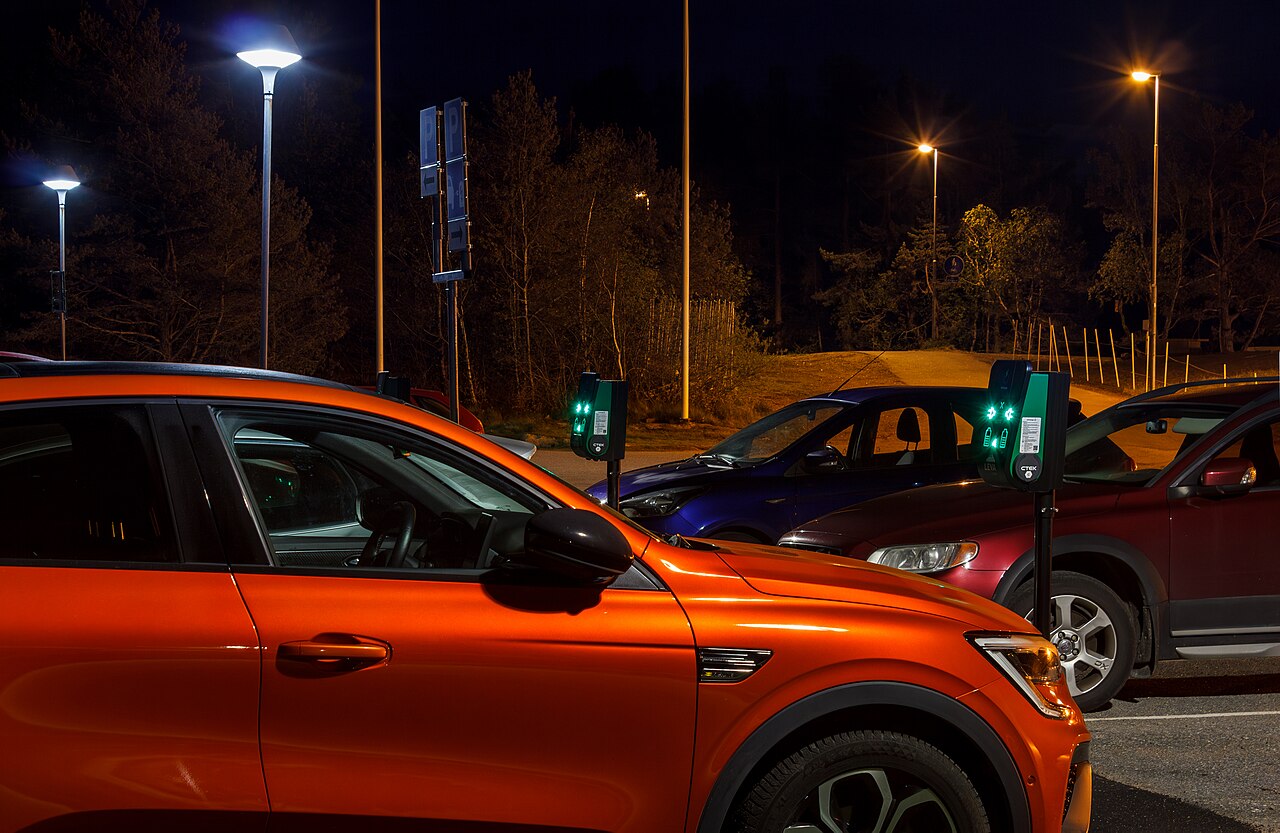
Home charging will cover the majority of your charging needs, but Cape Town has a growing public charging network for top-ups on the go. Here are the approximate rates from the major operators as of 2026:
| Network | Charger Type | Rate | Full Charge Cost (Dynamic) |
|---|---|---|---|
| GridCars | AC Level 2 (22 kW) | ~R4.50/kWh | ~R174.60 |
| GridCars | DC Fast (50 kW) | ~R6.00/kWh | ~R232.80 |
| Shell Recharge | AC Level 2 | ~R4.80/kWh | ~R186.24 |
| Shell Recharge | DC Fast (60 kW) | ~R6.50/kWh | ~R252.20 |
Public DC fast charging on the Dolphin Surf Comfort is capped at 30 kW, and the Dynamic at 40 kW. This means a 10–80% charge on the Dynamic takes approximately 42 minutes on a 50 kW DC charger. Public charging is best used for opportunity top-ups on longer trips — your primary charging should always be at home.
At R6.00/kWh on a DC fast charger, your cost per kilometre rises to R0.83/km — still cheaper than petrol, but considerably more than overnight home charging at R0.26/km.
Solar Charging: The Zero-Cost Scenario
Cape Town enjoys over 3,000 hours of sunshine per year, making solar PV one of the most effective tools for eliminating charging costs entirely. Here’s how the numbers work for a typical Dolphin Surf owner:
- Monthly energy required: 172.5 kWh
- Recommended solar array size: 4–5 kWp (to cover home and car charging)
- Estimated solar installation cost (with battery backup): R80,000 – R120,000
- Annual EV charging savings at standard rate: R6,582
Solar payback periods — two scenarios:
Scenario 1: EV charging only — If you install solar purely to charge your EV, the payback period is approximately 12–18 years based solely on EV charging savings (R80,000 ÷ R6,582 = 12.2 years at the low end). This is a long payback and not typically the primary justification for solar.
Scenario 2: Combined home electricity + EV charging — When you factor in total household electricity savings (typically R1,500–R2,500/month for an average Cape Town home), the combined payback period drops to 5–8 years. This is the realistic scenario for most homeowners, as solar systems offset both home and vehicle energy costs simultaneously. Note: The two payback periods differ because Scenario 1 allocates the full system cost to EV charging alone (R80,000 ÷ R6,582/year = 12+ years), while Scenario 2 spreads the cost across total household savings (R80,000 ÷ ~R12,000–R15,000/year = 5–8 years). Most homeowners install solar for combined home and EV use, making the shorter payback period the practical reality.
Once your solar system has paid for itself, you are effectively charging your Dolphin Surf for free. Many Cape Town homeowners are already achieving this, particularly those who installed systems during the peak load-shedding years and are now reaping the long-term rewards.
A modest 3 kWp addition specifically for EV charging, costing approximately R35,000–R45,000 installed, can generate roughly 400–450 kWh per month — more than double your monthly charging requirement — with a payback period of around 5–7 years based on current standard tariffs. According to independent solar industry analysis, systems installed in 2026 benefit from improved panel efficiency and lower installation costs compared to previous years.
Install a Home Charger
Charge overnight at off-peak rates. ChargePoint SA installs across Cape Town, Stellenbosch, Paarl, and the Winelands.
The Off-Peak Charging Strategy: 10pm to 6am
The single most impactful thing any Dolphin Surf owner in Cape Town can do is set their vehicle to charge automatically during off-peak hours. Here’s a practical approach:
- Use the BYD app scheduled charging feature — Set your charge start time to 22:00 and end time to 06:00. The vehicle’s onboard computer will manage the session automatically.
- Target 80% daily, 100% weekly — Charging to 80% regularly extends battery longevity. Only charge to 100% before a long trip.
- Plug in every night — Even if you’ve only driven 20 km, plug in. The cost is negligible and you always start the day with a full battery.
- Calculate your off-peak window — At off-peak AC charging speeds (typically 7.4 kW on a home wallbox), a partial charge from 20% to 80% takes approximately 3.5 hours for the Comfort (18 kWh ÷ 7.4 kW = 2.4 hrs, plus charging curve inefficiency ≈ 3.5 hrs) and 4.5 hours for the Dynamic (23.3 kWh ÷ 7.4 kW = 3.1 hrs, plus inefficiency ≈ 4.5 hrs) — well within the 8-hour window.
- Avoid charging during peak periods — 7am–9am and 5pm–8pm are the most expensive times to charge. Avoid these windows to keep your costs as low as possible.
Monthly savings from off-peak vs standard charging: R548 − R326 = R222 saved every month, or R2,664 per year, simply by charging at night instead of during the day.
5-Year Cost of Ownership: Energy Costs Only
| Scenario | Year 1 | 5-Year Total |
|---|---|---|
| Dolphin Surf (Off-Peak) | R3,912 | R19,560 |
| Dolphin Surf (Standard) | R6,583 | R32,915 |
| VW Polo (Petrol) | R25,725 | R128,625 |
Note: The 5-year petrol figure assumes static fuel pricing. With historically consistent annual fuel price increases in South Africa, the actual 5-year petrol spend is likely to be considerably higher.
Frequently Asked Questions
How long does it take to fully charge a BYD Dolphin Surf at home?
Using a standard 7.4 kW home wallbox, the Comfort (30 kWh) takes approximately 4.1 hours from empty to 100% (30 kWh ÷ 7.4 kW = 4.05 hrs). The Dynamic (38.8 kWh) takes approximately 5.2 hours from empty to 100% (38.8 kWh ÷ 7.4 kW = 5.24 hrs). Both complete comfortably within the 8-hour off-peak window. Note: The earlier section on off-peak strategy references 3.5–4.5 hours for a partial charge from 20% to 80% SOC, which is the recommended daily charging pattern for battery longevity. The 4.1-hour and 5.2-hour figures here assume a full 0–100% charge, which is less common in daily use.
Can I charge a BYD Dolphin Surf from a standard 15A home plug?
Yes, the Dolphin Surf includes a portable EVSE (emergency charging cable) for standard socket charging at approximately 2.2–3.7 kW. From empty, this takes 8–14 hours. It’s suitable for overnight top-ups but a dedicated wallbox is recommended for regular use.
Does load-shedding affect EV charging costs?
Load-shedding doesn’t change the tariff rates, but it does disrupt charging schedules. EV owners with solar and battery backup systems are largely insulated from this problem. If you charge during scheduled load-shedding windows, you simply lose that charging time — the solution is to start your charge earlier in the off-peak window to ensure completion before your scheduled outage.
Is it cheaper to charge an EV or fill up with petrol at a forecourt?
Even at the most expensive public DC fast charging rates (approximately R6.50/kWh), the Dolphin Surf costs around R0.90/km — compared to the VW Polo’s R1.72/km on petrol. Home off-peak charging brings this down to just R0.26/km. In every scenario, the EV is cheaper to run.
Do I need a dedicated EV tariff from CoCT?
Currently, the City of Cape Town’s time-of-use tariffs are available to residential customers on the applicable tariff blocks. Contact CoCT’s electricity services or a registered electrician to confirm your current tariff structure and whether you qualify for time-of-use pricing. Some older tariff structures may not benefit from the off-peak rates described in this article.
What’s the break-even point vs petrol on the purchase price?
This depends on the price differential between the Dolphin Surf and your petrol alternative. Using the off-peak annual fuel saving of approximately R21,813 against petrol, a R100,000 price premium would break even in roughly 4.6 years on fuel costs alone — excluding the additional savings on maintenance, oil changes, and service costs that EVs don’t incur.
All tariff figures are based on the City of Cape Town’s 2026 published residential electricity rates. Petrol prices reflect Cape Town inland forecourt pricing. Efficiency calculations use manufacturer-stated figures and may vary with real-world driving conditions. ChargePoint SA recommends verifying current tariffs directly with CoCT before making financial decisions based on this analysis.
Continue Reading