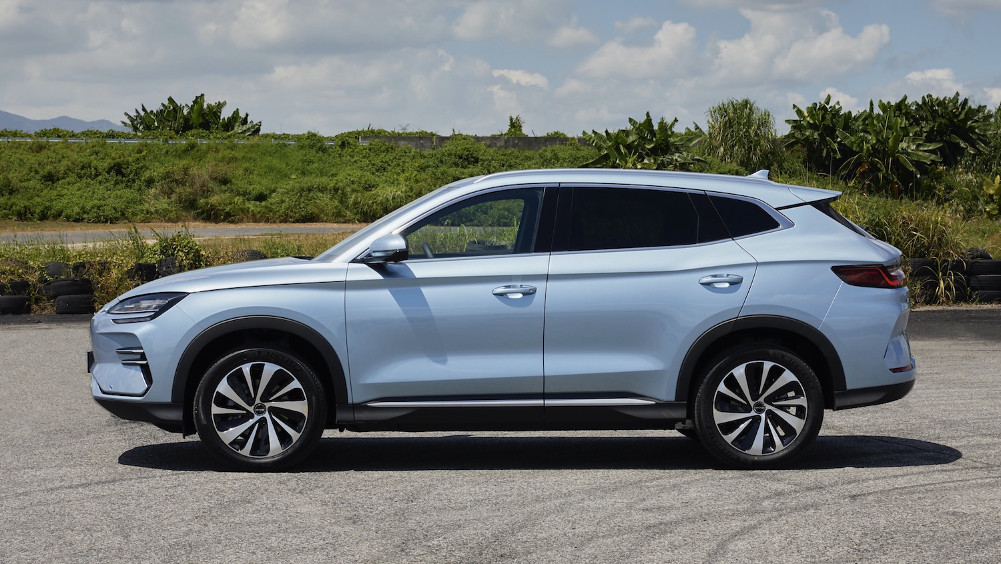
The Mercedes EQA 250 costs R1,179,400 in South Africa — R268,360 more than the petrol GLA 200 at R911,040. That’s a 29% premium for the electric version of what is essentially the same H247-platform compact SUV. But with Eskom tariffs climbing, load-shedding in retreat, and petrol hovering near R24/litre in 2026, the five-year ownership maths has shifted. We’ve crunched the numbers using real SA electricity rates, official fuel consumption figures, and current pricing to answer one question: which Mercedes compact SUV costs less to own over five years in South Africa?
Price Comparison: What You’ll Pay in 2026
Here’s what these two Mercedes models cost new in South Africa as of April 2026, according to cars.co.za pricing data:
| Model | Variant | Price (ZAR) | Warranty | Service Plan |
|---|---|---|---|---|
| Mercedes EQA | 250 Progressive | R1,179,400 | 5yr/100,000km + 8yr/160,000km battery | 5yr/100,000km (included) |
| Mercedes EQA | 250 AMG Line | R1,232,400 | 5yr/100,000km + 8yr/160,000km battery | 5yr/100,000km (included) |
| Mercedes GLA | 200 (petrol) | R911,040 | 5yr/100,000km | Not included (add ~R35,000) |
| Mercedes GLA | 200 Night Edition | R972,387 | 5yr/100,000km | 5yr/100,000km (included) |
| Mercedes GLA | 200d Progressive (diesel) | R978,980 | 5yr/100,000km | Not included |
The base EQA 250 Progressive sits R268,360 above the base GLA 200 petrol. That’s nearly the price of a used Toyota Corolla. But notice the EQA includes a 5-year/100,000km service plan and an 8-year/160,000km battery warranty — the GLA 200 base model doesn’t include the service plan, which typically costs around R35,000 if purchased separately. Factor that in, and the real gap narrows to ~R233,360.
The GLA 200 Night Edition launched in January 2026 at R972,387 with a service plan included — that’s the fairest like-for-like comparison to the EQA 250 Progressive. Now the gap is R207,013. Still significant, but not insurmountable when you consider running costs over five years.
Range, Efficiency and Real-World Performance
Mercedes EQA 250: Electric Efficiency
The EQA 250 packs a 66.5kWh usable battery that delivers 429km WLTP range — roughly 380-400km in real-world SA driving conditions (highway speeds, aircon, occasional spirited acceleration). Power comes from a single front-mounted motor producing 140kW and 375Nm, enough for 0-100km/h in 8.6 seconds. Not sports-car quick, but brisk for a compact SUV.
Official consumption: 17.7-18 kWh/100km according to TopAuto’s SA specification data. In practice, expect 18-20 kWh/100km if you’re heavy on the throttle or doing mostly highway work at 120 km/h. City driving — where EVs shine — can drop that to 15-16 kWh/100km thanks to regenerative braking.
Charging: The EQA supports 100kW DC fast charging, taking the battery from 10% to 80% in roughly 30 minutes at a capable station. At home on AC, it accepts up to 11kW — that’s a full charge (10-100%) in about 6 hours. A 7.4kW home charger takes closer to 9 hours, while a standard 3.7kW wall box needs 18+ hours. For most SA homeowners doing 1,500 km/month, an overnight 7.4kW or 11kW charge two or three times a week is plenty.
Mercedes GLA 200: Petrol Practicality
The GLA 200 runs a turbocharged 1.3-litre four-cylinder petrol engine making 120kW and 250Nm. It’s shared with Renault (part of the Renault-Nissan alliance tech-sharing deal), which some badge snobs grumble about, but it’s proven reliable. Official fuel consumption: 7.3 l/100km combined cycle, per cars.co.za specs.
Real-world? Expect 8-9 l/100km in mixed driving, closer to 10-11 l/100km if you’re stuck in Joburg traffic or doing mountain passes. The 50-litre fuel tank gives you roughly 550-650km range between fill-ups — better than the EQA’s 400km real-world range, and you can refuel in 5 minutes at any of South Africa’s ~4,800 petrol stations.
Running Costs: Electricity vs Petrol in 2026
Here’s where the EQA starts clawing back that R268,360 price premium. Assume 1,500 km per month — a typical SA suburban commute (home to office, weekend trips to the coast, monthly Gauteng-to-Durban run).
Mercedes EQA 250 Monthly Electricity Cost
At 18 kWh/100km efficiency, 1,500 km requires 270 kWh per month. Real-world charging isn’t 100% efficient — factor in 10-15% charging losses (heat dissipation, battery management overhead), and you’ll actually draw closer to 300 kWh from the grid to put 270 kWh into the battery.
Electricity cost depends on where and when you charge:
- Home charging (Cape Town municipal tariff): R1.80-R3.20/kWh depending on time-of-use. Use R2.50/kWh as a blended average post the 9.01% municipal tariff increase from July 2026. Cost including charging losses: 300 kWh × R2.50 = R750/month.
- Public DC fast charging: R7.00-R8.24/kWh. At R7.50/kWh average, cost: 300 kWh × R7.50 = R2,250/month. Ouch — triple home charging.
For most EQA owners doing primarily home charging with occasional public top-ups (one or two DC fast-charge sessions per month for road trips), a realistic monthly cost lands at R900/month, or R0.60/km — matching the EV24.africa estimate of R0.60-R0.80/km for mixed home and public charging.
Mercedes GLA 200 Monthly Petrol Cost
At 8.5 l/100km real-world consumption, 1,500 km requires 127.5 litres per month. Petrol price (April 2026): approximately R24.00/litre inland, R23.50/litre coastal. Use R24.00.
Cost: 127.5 litres × R24.00 = R3,060/month.
Cost per km: R3,060 ÷ 1,500 km = R2.04/km.
The Savings Math
Monthly saving (EQA realistic charging vs GLA petrol): R3,060 – R900 = R2,160/month.
Annual saving: R2,160 × 12 = R25,920/year.
Over 5 years: R25,920 × 5 = R129,600.
That’s without accounting for petrol price increases (historically 5-8% per year) or the fact that EV electricity costs rise slower than petrol. If petrol climbs to R28/litre by 2028 (entirely plausible), the EQA’s 5-year fuel saving jumps to ~R180,000.
| Cost Category | Mercedes EQA 250 | Mercedes GLA 200 | Difference |
|---|---|---|---|
| Purchase Price | R1,179,400 | R972,387 (Night Edition) | +R207,013 (EQA) |
| Service Plan (5yr) | Included | Included | R0 |
| Fuel/Energy (5yr, 90,000km) | R54,000 (elec) | R183,600 (petrol) | -R129,600 (EQA saves) |
| Maintenance (5yr) | R0 (plan covers) | R0 (plan covers) | R0 |
| Tyres (1 set @ 60k km) | R8,000 | R8,000 | R0 |
| 5-Year Total | R1,241,400 | R1,163,987 | +R77,413 (EQA costs more) |
After 5 years and 90,000 km, the EQA still costs R77,413 more to own — but you’ve closed a R207,013 gap by nearly two-thirds. Push the timeline to 7-8 years (the EQA’s battery warranty period), and the EQA pulls ahead on total cost of ownership, assuming you keep charging at home.
Charging at Home: 7.4kW vs 11kW vs 22kW — What the EQA Needs
The Mercedes EQA 250 supports up to 11kW AC charging. That’s your sweet spot for home installation. Here’s what each charging speed means in practice:
- 3.7kW (standard wall box): 18+ hours for a full charge (10-100%). Fine if you’re doing 50-80 km/day and can leave it plugged in overnight. Cheapest install (~R8,000-R12,000).
- 7.4kW (single-phase): 9 hours for a full charge. Ideal for most SA homes on single-phase supply. Handles 150-200 km/day easily with overnight charging. Install cost: R15,000-R25,000 depending on distance from DB board.
- 11kW (three-phase): 6 hours for a full charge. Requires three-phase power (common in newer estates, less so in older suburbs). Best if you’re doing 200+ km/day or want flexibility to charge quickly between trips. Install cost: R20,000-R35,000.
- 22kW (three-phase): The EQA can’t use it — its onboard charger maxes out at 11kW. Save your money.
For the EQA, we recommend a 7.4kW charger if you’re on single-phase, or an 11kW charger if you’ve got three-phase. Both handle daily driving comfortably. If you’re adding solar later, a 22kW-capable charger makes sense for future-proofing other EVs, but it won’t speed up the EQA.
SA-Specific Considerations: Load-Shedding, Solar and Service Networks
Load-Shedding: The Elephant Leaves the Room
Good news: South Africa achieved 280 consecutive days without load-shedding by February 2026, and Eskom’s Energy Availability Factor hit 65.85%. That’s the highest reliability in years. Load-shedding anxiety — the biggest EV adoption barrier in 2023-2024 — has eased significantly.
That said, the grid remains fragile. If you’re buying an EQA, budget for a backup charging solution: either a small inverter system (5kWh battery + 3kW inverter, ~R40,000) to trickle-charge during outages, or a generator (less ideal for EVs due to power quality issues). Better yet, pair your charger with solar from day one.
Solar Pairing: The EQA’s Secret Weapon
A 5kW solar system (12-15 panels, ~R90,000 installed) generates roughly 700-800 kWh/month in Gauteng, more in the Western Cape. That’s enough to cover the EQA’s 270 kWh/month consumption and offset household usage. Your effective cost per km drops to near-zero (after payback period), and you’re immune to Eskom’s annual tariff hikes.
The GLA 200 can’t run on sunshine. Advantage: EQA.
Service Network and Parts Availability
Mercedes-Benz has 59 dealerships across South Africa, all equipped to service both EQA and GLA models. The EQA’s 5-year/100,000km service plan covers scheduled maintenance — expect visits every 20,000 km or 12 months for software updates, brake fluid checks, and cabin filter replacements. No oil changes, no timing belts, no clutch replacements.
The GLA 200 follows a similar service interval but includes engine oil, filters, spark plugs, and transmission fluid over its life. Both models share suspension, brakes, and interior components, so parts availability is identical.
Battery replacement cost (post-warranty): figures vary — consult Mercedes-Benz SA directly. Anecdotally, a 66.5kWh EQ battery pack costs R150,000-R200,000, but failures within 8 years/160,000 km are rare and covered under warranty.
Charging Infrastructure: Still Patchy
South Africa has fewer than 400 public EV charging points vs ~4,800 petrol stations. The EV-to-charger ratio is 11:1 — manageable now, but it’ll tighten as adoption grows. Most public chargers cluster around Gauteng, Cape Town, and Durban. If you’re road-tripping to Upington or the Wild Coast, plan carefully or stick with the GLA.
That said, private networks like GridCars, Rubicon, and Zero Carbon Charge are expanding fast. Ultra-fast 180kW DC chargers are rolling out along the N3 corridor (Joburg-Durban) in mid-2026, making long-distance EV travel more viable.
Honest Verdict: Who Should Buy Which?
Buy the Mercedes EQA 250 if you:
- Own a home with off-street parking and can install a 7.4kW or 11kW charger
- Drive <400 km/day and mostly within Gauteng, Western Cape, or KZN urban areas
- Want to pair with solar now or within 2-3 years
- Value silent, smooth driving and instant torque
- Plan to keep the car 7+ years (that’s when TCO tips in the EV’s favour)
- Can stomach the R207,000+ upfront premium and wait for fuel savings to compound
Buy the Mercedes GLA 200 if you:
- Live in an apartment or complex without dedicated parking/charging
- Regularly drive >400 km/day or cover rural/remote routes (Karoo, Limpopo, Eastern Cape)
- Need a car today and can’t wait for ChargePoint to install a home charger
- Prefer the flexibility of 5-minute refuelling at any of 4,800 petrol stations
- Plan to sell within 3-5 years (the EQA’s resale value is still unproven in SA)
- Want the lower upfront cost and are comfortable with R3,000/month fuel bills
The Wildcard: GLA 200d Diesel
Don’t sleep on the GLA 200d diesel at R978,980. It sips fuel at 5.1 l/100km official (6.8 l/100km real-world per Cars.co.za’s 200km test), giving it a 900+ km range and lower running costs than the petrol. Monthly fuel cost at 1,500 km: ~R2,448 (vs R3,060 for petrol). It’s the compromise pick — better economy than petrol, no range anxiety, and only R61,407 cheaper than the EQA 250 Progressive.
Ready to Charge Smarter? Get Your Home EV Setup Right
If the EQA 250 makes sense for your driving profile, the next step is a proper home charging setup. A badly specced charger or a DB board that can’t handle the load will kill the ownership experience. You need a site assessment from someone who understands SA electrical regs, municipal supply constraints, and future solar integration.
That’s where ChargePoint SA comes in. We’ve installed 7.4kW and 11kW home chargers for Mercedes EQA owners across Gauteng, Cape Town, and Durban. We’ll assess your electrical supply, recommend the right charger speed, handle CoC certification, and future-proof the install for solar pairing. No surprises, no cowboy electricians, no chargers that trip your main breaker every night.
Book a free site assessment: https://chargepointsa.co.za/get-a-quote/
We’ll tell you honestly whether your home can support an EQA, what the install will cost, and how long it’ll take. If you’re on the fence between the EQA and GLA, we can also run the TCO numbers specific to your driving patterns and electricity tariff. No obligation, no sales pitch — just the facts you need to make the right call.
The Mercedes EQA vs GLA debate isn’t about which car is “better” — it’s about which one fits your life, your budget, and your willingness to bet on South Africa’s electric future. The numbers say the EQA wins on long-term cost, but only if you can charge at home and keep it past the 5-year mark. The GLA is the safer, more flexible choice if your circumstances don’t align with EV ownership yet.
Either way, you’re getting a solid Mercedes compact SUV. Just make sure you’re charging it the right way.
Continue Reading