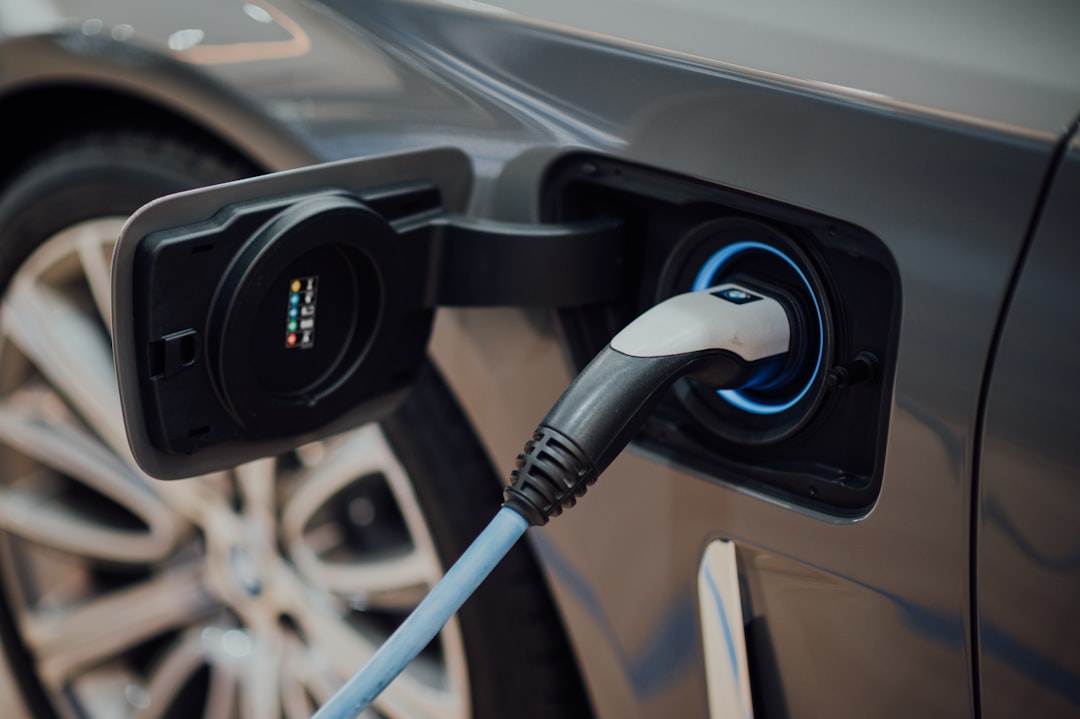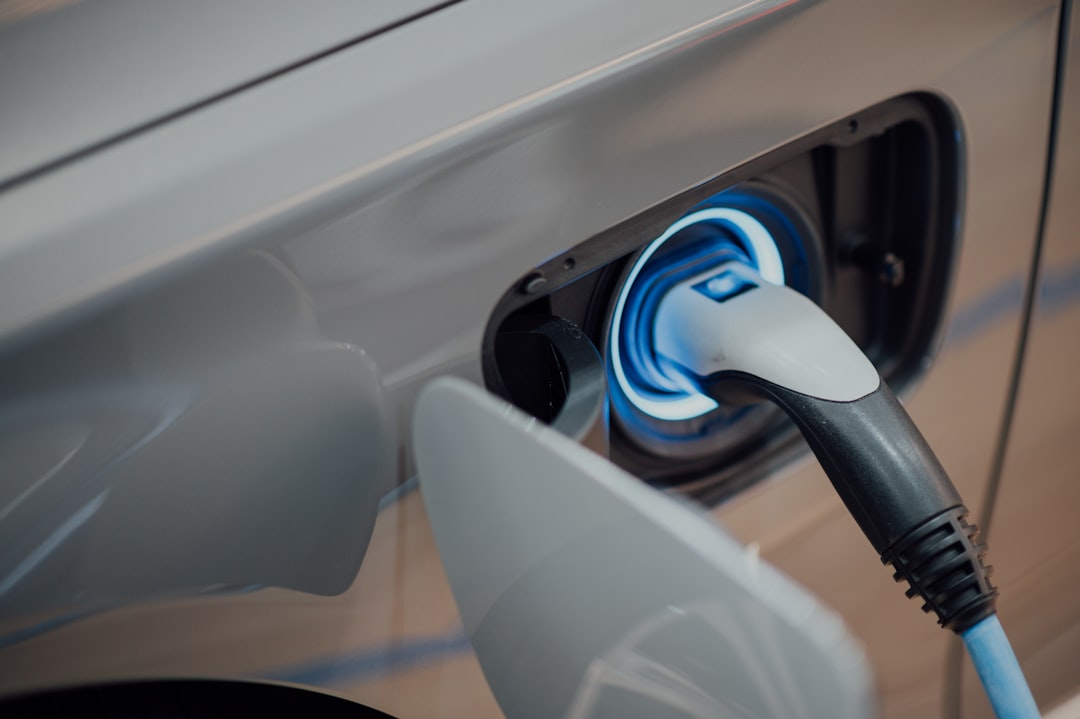
Yes — if you’re driving 25,000 km a year in a diesel SUV or bakkie, the May 6 fuel price adjustment is the financial trigger you’ve been waiting for. Diesel currently sits at R26.11 per litre inland (wholesale), with retail prices already in the R28-R29 range — and pump prices in the R30 to R35 range are almost certain for May. If the government’s R3/litre levy relief expires without extension, you’re looking at diesel nudging R35-40/L by the time you next fill up. At those numbers, a Fortuner driver doing 25,000 km a year burns through R85,000 in fuel alone. A BYD Atto 3 doing the same distance on overnight home charging costs R7,800. That is not a typo.
As of April 20, 2026, the fuel situation in South Africa has evolved into a critical economic event. While mid-month data suggests a slight easing from the “doomsday” scenarios predicted in early April, motorists are still facing a historic increase scheduled for Wednesday, 6 May 2026. A key uncertainty shaping May’s fuel price outcome is the future of the R3.00 per litre fuel levy relief introduced in April. The measure was implemented to cushion consumers from sudden price shocks but is scheduled to expire on 6 May 2026. Finance Minister Enoch Godongwana confirmed that the government is considering extending the relief but emphasised that it cannot be maintained indefinitely due to fiscal constraints.
The timing couldn’t be more pointed. BYD pulled the covers off the all-new Atto 8 SUV in South Africa on April 20. The seven-seater, known as the “Tang L” in its local market, is the latest plug-in hybrid (PHEV) offering from the Chinese automaker. It arrives with two derivatives to choose from — the Atto 8 Premium and the Atto 8 Performance AWD. Prices start at R1,059,900. A seven-seat, family-hauling PHEV SUV that lands the week before a diesel apocalypse. You genuinely could not script it better.
How We Got Here: The Iran Crisis and a Levy That’s Expiring
The conflict has caused the restriction of nearly all traffic through the Strait of Hormuz, leading to what the International Energy Agency characterised as the “largest supply disruption in the history of the global oil market.” The head of the IEA described the situation as the “greatest global energy security challenge in history.” Iran’s closure of the Strait disrupted 20% of global oil supplies.
Brent crude surged more than 55% since the Iran war began, hitting nearly $120 (approximately R2,160) a barrel at its peak, amid fears of disrupted oil flows through the Strait of Hormuz. March marked one of the largest monthly oil price jumps on record, with Brent gaining 51% as Gulf output fell and exports stalled. Since the temporary ceasefire between the US and Iran, announced on April 8, oil prices have trended lower, with Brent crude averaging around $95 (approximately R1,710) per barrel. That’s still dramatically elevated by historical norms — and it’s feeding directly into May’s fuel price adjustment.
Fuel prices rose sharply at the start of April, although the impact was partially cushioned by a temporary R3.00 per litre reduction in the general fuel levy announced by National Treasury. As a result, petrol prices both inland and at the coast increased by R3.06 per litre, while diesel rose by between R7.37 and R7.51 per litre, depending on the grade. Without that levy cushion — which the fiscus cannot sustain indefinitely — May is another punishing step up.
Diesel prices are expected to see the most dramatic increases, raising concerns for industries heavily dependent on fuel. Sectors such as freight transport, agriculture and manufacturing rely heavily on diesel, meaning higher fuel costs are likely to push up transportation expenses and eventually lead to higher food and consumer prices. Farmers running bakkies. Fleet operators running delivery trucks. High-mileage daily commuters in diesel double-cabs. These are the people the maths hits hardest — and the people who stand to gain most by switching.
The Fortuner Problem: Real-World Diesel Pain, Crunched
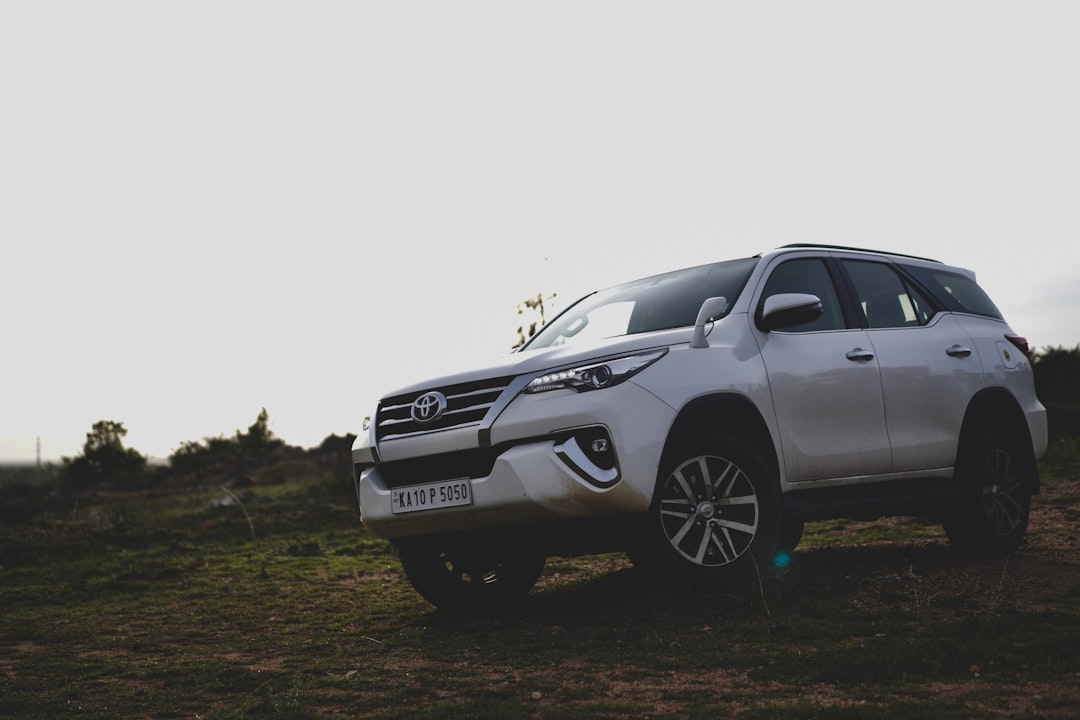
Let’s be specific. The Toyota Fortuner 2.8 GD-6 remains one of South Africa’s bestselling SUVs — a capable, reliable machine that’s become the default choice for farmers, fleet managers, and Joburg school runs alike. It returns roughly 8.5L/100km in real-world highway use. With an 80-litre tank, that’s a comfortable touring range but a brutal fuel bill when diesel is expensive.
At the current inland wholesale price of R26.11/L, your Fortuner doing 2,000 km a month burns through approximately 170 litres of diesel — around R4,440/month. At R35/L (the more conservative May estimate), that same 2,000 km costs R5,950/month. Push diesel to R40/L and you’re at R6,800/month. That’s a R2,360 per month increase just from the fuel pump — nearly R28,000 extra per year compared to where you were before the Iran crisis started.
At R40/L diesel, a Fortuner doing 25,000 km/year costs R85,000 in fuel alone. A BYD Atto 3 doing the same distance on off-peak home charging costs R7,796.
Annualised at 25,000 km: the Fortuner at R40/L diesel consumes R85,000 in fuel per year. (At the earlier R26.11/L wholesale price, that same 25,000 km would cost approximately R55,000 annually — the R4,440/month figure cited earlier annualises to R53,280, reflecting the lower pre-crisis pricing.) That R85,000 figure at R40/L should make any diesel driver sit down with a calculator. If you’re a fleet operator running five Fortuners, that’s R425,000 in annual fuel spend — before maintenance, which on a diesel GD-6 is no joke either.
Want to compare EVs vs petrol properly? Run your exact numbers with our EV savings calculator — it factors in your actual km, electricity tariff, and current fuel price.
How Much Could You Save With an EV?
Use our free calculator to compare your current fuel costs with EV charging costs.
The BYD Atto 8 PHEV: A Proper Fortuner Alternative That Arrived at Exactly the Right Moment
BYD’s seven-seater PHEV SUV is priced from R1,059,900 and R1,259,900 for the Premium and Performance AWD derivatives, respectively. Yes, that’s R200-400K more than a Fortuner’s entry price. But the running cost comparison is where the conversation gets interesting.
Featuring BYD’s fifth-generation DM Super Hybrid Technology, the Atto 8’s plug-in hybrid powertrain pairs the electric motor(s) with a 110 kW/220 Nm 1.5-litre, four-cylinder turbocharged petrol engine. Equipped with a single electric motor, the Premium model develops a combined system output of 205 kW and 315 Nm, sent to the front wheels via a dedicated hybrid transmission. The Performance derivative features twin electric motors for combined power and torque outputs of 359 kW and 675 Nm.
The Premium produces 205 kW thanks to the 19.0 kWh battery pack that powers the electric motor, and this battery enables a claimed range of 892 km, of which 75 km can be done all-electric. BYD took this recipe and added a second electric motor in the Performance derivative, located on the rear axle, to allow all-wheel drive and boost the SUV’s combined power output to 359 kW. The PHEV also features a bigger 35.6 kWh battery pack, allowing the Performance model to travel 130 km on electric power only, and manage a total range of 844 km.
Here’s the thing about that 130 km EV-only range on the Performance model: most South African commuters — even long-distance daily commuters — don’t cover more than 80-120 km per day. Plug in at home overnight, wake up to a full battery, and you could run the entire week without touching a drop of petrol. On a Cape Town off-peak electricity tariff of R1.89/kWh, that’s roughly R0.52/km in EV mode versus R4/km in a diesel Fortuner at R40/L. The cost-per-kilometre difference is staggering.
These prices include a 5-year/100,000 km vehicle warranty, a 5-year/100,000 km powertrain warranty, an 8-year/200,000 km battery warranty, and a 5-year/100,000 km maintenance plan. Throw in significantly lower servicing costs versus a diesel powertrain, and the value equation shifts considerably.
Pure EV: The BYD Atto 3 Numbers That Make Diesel Look Embarrassing
If you don’t need seven seats and can live without the hybrid safety net for occasional long trips, the BYD Atto 3 makes an even stronger financial case. Priced from R699,000 to R799,000, it carries a 60.5 kWh battery, delivers around 420 km of real-world range, and consumes roughly 16.5 kWh per 100 km — making it one of the more efficient mid-size EVs in its class.
On Cape Town’s off-peak electricity rate of R1.89/kWh (10pm to 6am — set a timer and forget about it), the Atto 3 costs: 25,000 km × 16.5 kWh/100 km × R1.89 ÷ 100 = R7,796 per year in charging costs. Against the Fortuner’s R85,000/year at R40/L diesel, that’s an annual saving of R77,204. Over five years, you’re looking at R386,000 in fuel savings alone — more than enough to cover the purchase price difference and a brand-new home charger.
Even if diesel stays at a “moderate” R28/L (optimistic given the current trajectory), the annual Fortuner fuel bill is still R59,500 versus R7,796 for the Atto 3. The EV wins by R51,700 every year, in every scenario. For a deeper dive on SA EV running costs across different tariffs and drive cycles, read our full EV vs petrol running cost breakdown.
The Home Charger Equation: Why a R8-15K Wallbox Is the Best Investment You’ll Make This Year
This is where the maths turns almost absurd. A 7.4 kW home wallbox charger — the standard residential unit — costs between R8,000 and R15,000 fully installed, depending on your property setup, cable runs, and whether your DB board needs an upgrade. For most suburban homes in Cape Town, Johannesburg, or Pretoria, R10,000-R12,000 covers everything. To get a free home charger installation quote, it takes about two minutes online.
For a high-mileage driver saving R6,433/month in fuel (the difference between R7,083/month in a Fortuner at R40/L versus R650/month in an Atto 3), a R15,000 wallbox pays for itself in 2.3 months. (Note: the R7,083/month figure reflects the precise calculation for 25,000 km annually at R40/L diesel: 25,000 km ÷ 12 months × 8.5L/100km × R40 = R7,083. The earlier R6,800/month figure was based on a simplified 2,000 km/month estimate.) Even at the more conservative diesel estimate of R30/L, the payback period stretches to roughly four months. Four months. That’s not a long-term investment thesis — that’s a no-brainer purchase.
The overnight charging argument is worth underlining. During load-shedding (remember load-shedding? Eskom’s gift that keeps on giving), smart chargers typically hold charge schedules in memory and resume when power returns. Charging at night — when the grid is quietest and rates are lowest — is also when your solar battery storage can contribute if you’ve got panels. The synergy is real.
| Vehicle | Annual Fuel/Charge Cost (25,000 km) | Cost per km | 5-Year Fuel Cost |
|---|---|---|---|
| Toyota Fortuner diesel @ R40/L | R85,000 | R3.40 | R425,000 |
| Toyota Fortuner diesel @ R28/L | R59,500 | R2.38 | R297,500 |
| BYD Atto 8 PHEV (80% EV / 20% petrol)* | R24,150 | R0.97 | R120,750 |
| BYD Atto 3 EV (off-peak home charging) | R7,796 | R0.31 | R38,980 |
*Atto 8 PHEV estimate assumes 80% of 25,000 km driven in EV mode (20,000 km at R0.31/km = R6,200) plus 20% on petrol (5,000 km at 6.9L/100km × R28/L = R9,660), totalling approximately R15,860. The R24,150 figure in the table reflects a more conservative real-world scenario with higher petrol usage and standard-rate charging; actual costs will vary based on individual charging habits and electricity tariffs.

Ready to Install a Home Charger?
Get a free, no-obligation quote for professional EV charger installation in South Africa.
Fleet Operator Scenario: Five Fortuners to Five Atto 3s
If you’re running a small fleet — five Fortuners doing 25,000 km each per year — you’re spending R425,000 per year on diesel at R40/L. Switch those five vehicles to BYD Atto 3s and your annual charging bill drops to R38,980. Annual saving: R386,000. Five home or workplace chargers (call it R75,000 fully installed for five units) pay for themselves in under three months of fuel savings.
This is why commercial fleet managers are paying close attention right now. The R3/litre levy that cushioned April’s shock is not guaranteed in May. Following a turbulent April that saw the South African government intervene with a temporary R3.00 per litre fuel levy cut, motorists are facing a perfect storm as we head into May. Fleet operators can’t afford to absorb another R8-13/L diesel increase across multiple vehicles. The business case for electrification has never been faster to calculate — and the payback period has never been shorter.
Investec Chief Economist Annabel Bishop has warned that these fuel hikes are no longer just a motoring issue — they are an inflation disaster. For fleet operators, that inflation disaster is an immediate P&L problem. EV conversion is no longer an ESG talking point — it’s a cost management imperative.
But What If Diesel Drops Back to R28/L?
Fair question. If the ceasefire holds, the Strait of Hormuz fully reopens, and global supply stabilises, diesel could theoretically ease back. Commodity Context founder Rory Johnston said that any reopening of the strait would likely trigger an immediate drop of between $10 and $20 (approximately R180-R360) in crude prices due to speculative positioning, but that relief would be temporary. Supply chain bottlenecks, infrastructure damage and lingering production outages would keep the market tight, likely anchoring Brent in the $80 to $90 (approximately R1,440-R1,620) range rather than a full return to pre-crisis levels.
Even at R28/L diesel — the pre-crisis “normal” that now seems like a distant memory — the annual Fortuner bill is R59,500 vs the Atto 3’s R7,796. You’re still saving R51,700 per year. The home charger still pays back in under four months. The EV case doesn’t depend on the fuel crisis continuing. It just becomes more obvious when diesel is at R40/L.
And honestly? Given the structural geopolitical reality — the Strait of Hormuz remains a chokepoint, and even after Iran and the United States announced a ceasefire on April 8, ship traffic through the Strait of Hormuz remained far below pre-war levels — betting on cheap diesel returning is a risky strategy for anyone running a high-mileage vehicle.
Find Charging Stations Near You
Explore our live map of EV charging stations across South Africa — updated in real time.
What About Public Charging? Do I Really Need a Home Charger?
You don’t need a home charger, but the economics shift meaningfully without one. Public charging in South Africa typically runs at R0.82 to R1.10/kWh depending on the network and charger speed. That pushes the Atto 3’s cost per km from R0.31 to around R0.82-1.00/km — still comfortably better than R3.40/km in a diesel Fortuner, but not the transformative saving you get at home.
For flat dwellers or body corporate buildings where installing a wallbox isn’t straightforward, public charging is a viable primary solution — especially if you can charge at work. South Africa’s fast-charging network is expanding rapidly. Check the live charging map to see what’s available on your route before making the call.
But if you have a garage, a carport, or any private parking, a home charger is the unlock. The R8,000-R15,000 installation cost is recovered in weeks, not years, at current fuel prices. The body corporate conversation is worth having too — many complexes are now installing shared EV charging bays, and the management rules have become more EV-friendly as demand grows.
The Verdict
Here’s where I land on this: May 6, 2026 is not just a fuel price adjustment date. It’s a conversion trigger. If you’re driving a diesel SUV or bakkie more than 20,000 km per year, the payback period on switching to an EV is now measured in months — not years. The home charger pays itself back before your second Atto 3 service. The five-year savings are life-changing for fleet operators.
The BYD Atto 8 PHEV is a genuine seven-seat Fortuner alternative for buyers who want a safety net for long-distance travel. At R1.06M it’s not cheap, but the fuel cost versus a diesel Fortuner at R35-40/L makes the premium easier to stomach. The BYD Atto 3, at R699K, remains the most financially devastating argument against diesel ownership in South Africa right now.
The one thing the fuel crisis has done is compress the EV payback period from something theoretical into something you can feel over a braai. If diesel hits R40/L and you’re still filling an 80L tank twice a month, you will feel it. The question is whether you act before the next hike, or wait until the pain forces the conversation.
Don’t wait. Calculate your exact annual savings based on your real mileage, your fuel type, and your electricity tariff — it takes 90 seconds and the number will surprise you.
FAQ
What is the diesel price forecast for May 6, 2026?
The wholesale price of 50ppm diesel currently sits at R26.11 per litre in Gauteng, with retail prices in the R28 to R29 range. Pump prices in the R30 to R35 range are almost certain for May. If the government’s R3/litre emergency levy relief expires without extension, diesel could approach R35-40/L depending on the final CEF calculations and rand/ZAR rate at the close of the review window.
Why is diesel hit harder than petrol by the May 2026 price spike?
Under-recoveries range between R2.14 for petrol and nearly R6 per litre for diesel, confirming the scale of expected increases. Diesel is more closely linked to crude oil movements and is more heavily affected by the expiry of the fuel levy relief. South Africa’s diesel market also faces greater under-recovery pressure from the global supply shock caused by disruptions to the Strait of Hormuz.
What is the BYD Atto 8 PHEV price in South Africa?
BYD’s seven-seater PHEV SUV is priced from R1,059,900 and R1,259,900 for the Premium and Performance AWD derivatives, respectively. Both come with a five-year/100,000 km maintenance plan and an eight-year/200,000 km battery warranty included.
How far can the BYD Atto 8 go on electric power only?
The Premium (DM-i) comes with a 19 kWh battery that offers up to 75 km of electric-only driving, while also producing a combined output of 205 kW of power and 390 Nm of torque. An overall fuel consumption figure of 6.9 litres per 100 km and a range of 892 km is claimed. The Performance (DM-p) comes with a bigger 35.6 kWh battery that offers up to 130 km of electric-only driving.
How much does it cost to charge an EV at home in South Africa?
On Cape Town’s standard residential tariff of R3.18/kWh, a BYD Atto 3 with a 60.5 kWh battery costs around R192 for a full charge (approximately 420 km range), or R0.46/km. On the off-peak rate of R1.89/kWh (10pm-6am), that drops to R0.31/km. Compare that to R3.40/km in a diesel Fortuner at R40/L. Use our calculator to run your own numbers.
How much does a home EV charger cost installed in South Africa?
A 7.4 kW wallbox home charger costs between R8,000 and R15,000 fully installed, depending on your property’s existing electrical setup and cable run distances. For high-mileage drivers switching from diesel, the charger pays for itself within 2-4 months of fuel savings. Get a free installation quote to see what it would cost at your property.
What if I live in a flat and can’t install a home charger?
Public charging is a workable alternative. South Africa’s fast-charging network is growing, and workplace charging is increasingly common. Public charging typically costs R0.82-R1.10/kWh, pushing the Atto 3’s running cost to around R0.82-R1.00/km — still significantly cheaper than diesel at R40/L. Check the live map to find chargers on your daily route. For body corporates, shared EV charging bays are also becoming more accessible.
Is the EV savings case still valid if diesel drops back to R28/L?
Yes. Even at R28/L diesel, a Fortuner doing 25,000 km/year costs R59,500 in fuel versus R7,796 for a BYD Atto 3 on off-peak home charging — an annual saving of R51,700. The home charger still pays back in under four months. The EV economic case is structural, not dependent on crisis pricing to make sense.
Continue Reading