
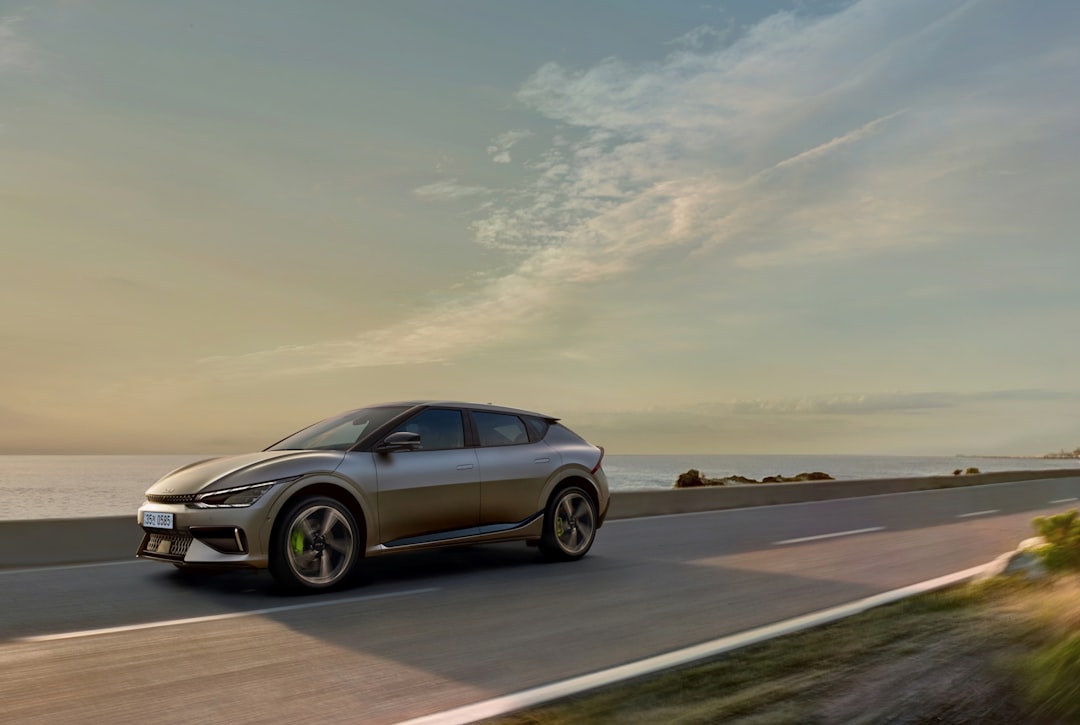
The Hyundai Tucson 2.0 costs R812,475 over five years of ownership, while the Kia EV6 rings in at R1,171,621 — a R359,146 gap driven almost entirely by the EV’s R450,000 higher purchase price. That’s the headline number, but it hides a more nuanced story: the EV6 saves R18,171 annually in fuel and maintenance, meaning the break-even point arrives around year eight. For buyers planning typical five-year ownership, the petrol Tucson wins on total cost. For those keeping their vehicle a decade or more, the EV’s running-cost advantage eventually flips the equation.
The Real Cost: 5-Year Ownership Analysis
| Feature | Kia EV6 | Hyundai Tucson 2.0 |
|---|---|---|
| Purchase Price | R1,100,000 | R650,000 |
| 5-Year Fuel Cost | R56,621 | R122,475 |
| 5-Year Maintenance | R15,000 | R40,000 |
| Total Cost of Ownership | R1,171,621 | R812,475 |
| Winner | Petrol wins by R359,146 | |
The numbers reveal an important truth about EV ownership in 2025: while electric vehicles offer compelling running cost advantages, the higher purchase price of the Kia EV6 at R1,100,000 compared to the Hyundai Tucson 2.0’s R650,000 creates a substantial upfront gap of R450,000 that takes many years to overcome through fuel and maintenance savings.
Understanding the Total Cost Picture
Over five years of ownership, the Kia EV6 costs R359,146 more than the Hyundai Tucson 2.0 when you factor in purchase price, fuel, and maintenance. This works out to approximately R5,986 more per month for the EV option — meaning the petrol Tucson is the more economical choice for typical ownership periods.
However, this doesn’t tell the complete story. The gap narrows significantly when you look at running costs alone, and the longer you own the vehicle, the more the EV’s efficiency advantages compound. The Kia EV6 delivers substantial annual savings on fuel and maintenance that gradually offset the higher purchase price over extended ownership.
Fuel Costs Breakdown
- Kia EV6 electricity cost: R11,324/year = R56,621 over 5 years
- Hyundai Tucson 2.0 petrol cost: R24,495/year = R122,475 over 5 years
- Annual fuel savings with EV: R13,171 per year (R65,854 over 5 years)
The Kia EV6 delivers impressive efficiency at just R0.75 per kilometre for electricity, compared to the Tucson’s R1.63 per kilometre for petrol. This represents a 54% reduction in fuel costs — a significant advantage that becomes more valuable as petrol prices rise and as you accumulate more kilometres.
Maintenance Costs
- Kia EV6: R15,000 over 5 years (minimal — no oil changes, less brake wear)
- Hyundai Tucson 2.0: R40,000 over 5 years (regular servicing, oil, filters, etc.)
- Annual maintenance savings with EV: R5,000 per year (R25,000 over 5 years)
Electric vehicles require dramatically less maintenance than petrol cars. The Kia EV6 has no engine oil to change, no spark plugs to replace, and regenerative braking means brake pads last significantly longer. Over five years, this translates to R25,000 in maintenance savings — another area where the EV’s running costs prove substantially lower.
The Cost-Per-Kilometre Reality
When you divide total 5-year costs by total kilometres driven (75,000km at 15,000km/year):
- Kia EV6 total cost per kilometre: R15.62
- Hyundai Tucson 2.0 total cost per kilometre: R10.83
The petrol Tucson costs R4.79 less per kilometre when the purchase price is included in the calculation. This demonstrates why the higher upfront cost of the EV matters so significantly over typical ownership periods — the R450,000 purchase price premium dominates the total cost equation despite the EV’s superior efficiency.
Charging Infrastructure in South Africa
South Africa’s EV charging network is growing rapidly, with over 500 public charging points nationwide according to PlugShare’s live database. Major cities like Johannesburg, Cape Town, Durban, and Pretoria have excellent coverage, and the network expands monthly as retailers, hotels, and municipalities install new stations.
Home charging is the game-changer: Installing a home charger (R15,000–R30,000) gives you a “full tank” every morning at a fraction of petrol costs. Most EV owners charge overnight when electricity rates are lowest, waking up to a fully charged vehicle without ever visiting a petrol station. This convenience factor often outweighs the slightly longer “refuelling” time for daily driving.
The Kia EV6 offers a real-world range of approximately 400–450km on a single charge under typical South African driving conditions. This covers most daily commutes and weekend trips comfortably, with DC fast-charging available for longer journeys when needed.
Charging Time Considerations
- Home charging (7kW): 10–12 hours for a full charge — perfect for overnight charging while you sleep
- Public DC fast-charging (50kW+): 18 minutes to charge from 10% to 80% — ideal for road trips and quick top-ups
While petrol refuelling remains faster at around 5 minutes, most EV owners find that home charging eliminates the need for regular petrol station visits, actually saving time over the course of ownership. You never need to detour to a petrol station during your daily routine — your car charges while you sleep.
Who Should Buy the Kia EV6?
The Kia EV6 is perfect for you if:
- Long-term ownership planned: The longer you keep the vehicle, the more the R18,171 annual running cost savings accumulate to offset the purchase premium
- Home charging available: Wake up to a “full tank” every morning for just R944/month in electricity
- City/suburban driving: Perfect for daily commutes and weekend trips within the 400–450km range
- Low maintenance priority: No oil changes, no exhaust systems, minimal brake wear saves R5,000 annually
- Environmental responsibility: Zero tailpipe emissions in SA’s cities, reducing your carbon footprint significantly
- Modern technology: Latest infotainment, over-the-air updates, advanced safety features, and instant torque delivery
- Higher upfront budget: Can manage the R450,000 premium for EV technology and long-term savings
- Ownership beyond 8 years: Planning to keep the vehicle long enough for total costs to equalise with petrol alternatives
Who Should Buy the Hyundai Tucson 2.0?
The Hyundai Tucson 2.0 makes sense if:
- Lower upfront cost needed: R450,000 cheaper to purchase — a significant saving that delivers better value over typical 5-year ownership
- Long-distance flexibility: Refuel anywhere in 5 minutes with petrol stations across South Africa, even in remote areas
- Heavy towing/off-road: 2.0L engine provides proven capability for trailers and rough terrain without range anxiety
- Rural/remote areas: No charging infrastructure concerns in areas where public chargers are scarce or non-existent
- No home charging option: Petrol stations remain more accessible if you rent or live in a complex without charging facilities
- Familiar technology: Comfortable with traditional vehicle ownership and maintenance routines you understand
- Frequent long trips: Regularly drive routes exceeding 400km where charging stops would add time and inconvenience
- Shorter ownership horizon: Planning to keep the vehicle for 5–7 years, where the Tucson’s lower total cost provides clear savings
Key Decision Factors
Choose the Kia EV6 if you:
- Drive less than 400km per trip on average (well within the single-charge range)
- Have access to home charging or workplace charging infrastructure
- Plan to keep the vehicle for 8+ years (when total costs equalise and the EV becomes cheaper)
- Prioritise lower running and maintenance costs over upfront purchase price
- Want zero tailpipe emissions and the latest automotive technology
- Can manage the higher upfront cost of R1,100,000
- Value the convenience of home charging over petrol station visits
- Appreciate instant torque, quiet operation, and modern EV driving dynamics
Choose the Hyundai Tucson 2.0 if you:
- Need to minimise upfront costs — R450,000 is a substantial saving that matters more than long-term running costs
- Require maximum flexibility for long-distance travel without planning charging stops
- Don’t have reliable charging access at home or work
- Frequently drive routes exceeding 400km where range becomes a consideration
- Prefer the familiarity of petrol stations nationwide with 5-minute refuelling
- Live in an area with limited charging infrastructure
- Need proven towing capability for trailers, boats, or caravans
- Want the most economical option over a typical 5-year ownership period
Long-Term Value and Break-Even Analysis
Over 5 years of ownership (15,000km/year, 75,000km total):
- Hyundai Tucson 2.0 total cost: R812,475
- Kia EV6 total cost: R1,171,621
- Tucson advantage: R359,146 cheaper (R5,986/month savings)
- Total cost per kilometre — Hyundai Tucson 2.0: R10.83
- Total cost per kilometre — Kia EV6: R15.62
The Hyundai Tucson 2.0 is the more economical choice over five years, costing R10.83 per kilometre compared to the EV’s R15.62 per kilometre when purchase price is included. This R4.79/km difference adds up to substantial savings over typical ownership periods.
However, the equation changes with longer ownership. The Kia EV6 saves approximately R18,171 per year in combined fuel and maintenance costs (R13,171 fuel + R5,000 maintenance). This means the break-even point occurs around year 8–9 of ownership, when the cumulative running cost savings finally offset the R450,000 purchase price premium. If you plan to keep your vehicle for a decade or more, the EV becomes the more economical choice.
What About Resale Value?
EV resale values in South Africa are still establishing themselves, but early indicators from AutoTrader data suggest strong demand for well-maintained electric vehicles. The Kia EV6’s modern technology, lower running costs, and growing charging infrastructure make it attractive to second-hand buyers, potentially offsetting some of the higher initial purchase price when you eventually sell.
Battery degradation is often cited as a concern, but modern EV batteries typically retain 80–90% capacity after 8–10 years according to Geotab’s battery health research. Kia’s 7-year/150,000km warranty on the EV6’s battery provides additional peace of mind for both first and second owners.
Environmental Impact
By choosing the Kia EV6 over the Hyundai Tucson 2.0, you’ll prevent approximately 12,301kg of CO₂ from entering the atmosphere over 5 years (75,000km) — equivalent to planting roughly 560 trees. This calculation assumes 164g CO₂/km for the petrol Tucson versus zero tailpipe emissions for the EV.
Even accounting for South Africa’s coal-heavy electricity grid (approximately 900g CO₂/kWh), EVs produce significantly fewer emissions over their lifetime than petrol vehicles when you include fuel extraction, refining, and transportation. As the national grid incorporates more renewable energy from solar and wind projects, this advantage will only increase in coming years.
The Verdict
The Hyundai Tucson 2.0 Wins on Total Cost
For most South African buyers in 2025, the Hyundai Tucson 2.0 represents better value over a typical 5-year ownership period. The R450,000 lower purchase price outweighs the running cost savings of the EV, resulting in a total saving of R359,146. At R10.83 per kilometre versus the EV’s R15.62/km, the petrol Tucson delivers superior economics for buyers who prioritise upfront affordability and plan standard ownership periods.
But the Kia EV6 Wins on Running Costs and Long-Term Ownership
If you have home charging, plan long-term ownership (8+ years), or place high value on environmental impact and technology, the Kia EV6 becomes increasingly attractive. Its R18,171 annual saving in fuel and maintenance eventually overcomes the purchase price premium. The superior driving experience, minimal maintenance requirements, and zero tailpipe emissions add intangible value beyond pure economics.
Our Recommendation
- Choose the Kia EV6 if you have home charging, drive predictable daily routes under 400km, plan to keep the vehicle for 8+ years, and can manage the R1.1M purchase price
- Choose the Hyundai Tucson 2.0 if upfront cost matters most, you need maximum flexibility for long trips, lack reliable charging access, or want the most economical option over 5 years
Both are excellent vehicles that will serve you well — your choice should align with your specific circumstances, budget, driving patterns, and ownership timeline. The Tucson offers proven value and flexibility, while the EV6 delivers technology and long-term savings for the right buyer.
Calculate Your Own Savings
Want to see how the numbers work for your specific situation? Use our EV Cost Savings Calculator to input your exact annual kilometres, electricity rate, fuel costs, and ownership timeline for a personalised comparison.
Ready to Make the Switch?
Decided on the Kia EV6? Get a free quote for professional EV charger installation anywhere in South Africa — we’ll help you set up convenient home charging. Explore our live EV charging map to see public charging locations near you and plan your journeys with confidence.
Last updated: January 2025
Continue Reading
Deprecated: File Theme without comments.php is deprecated since version 3.0.0 with no alternative available. Please include a comments.php template in your theme. in /var/www/wordpress/wp-includes/functions.php on line 6085
Leave a Reply