
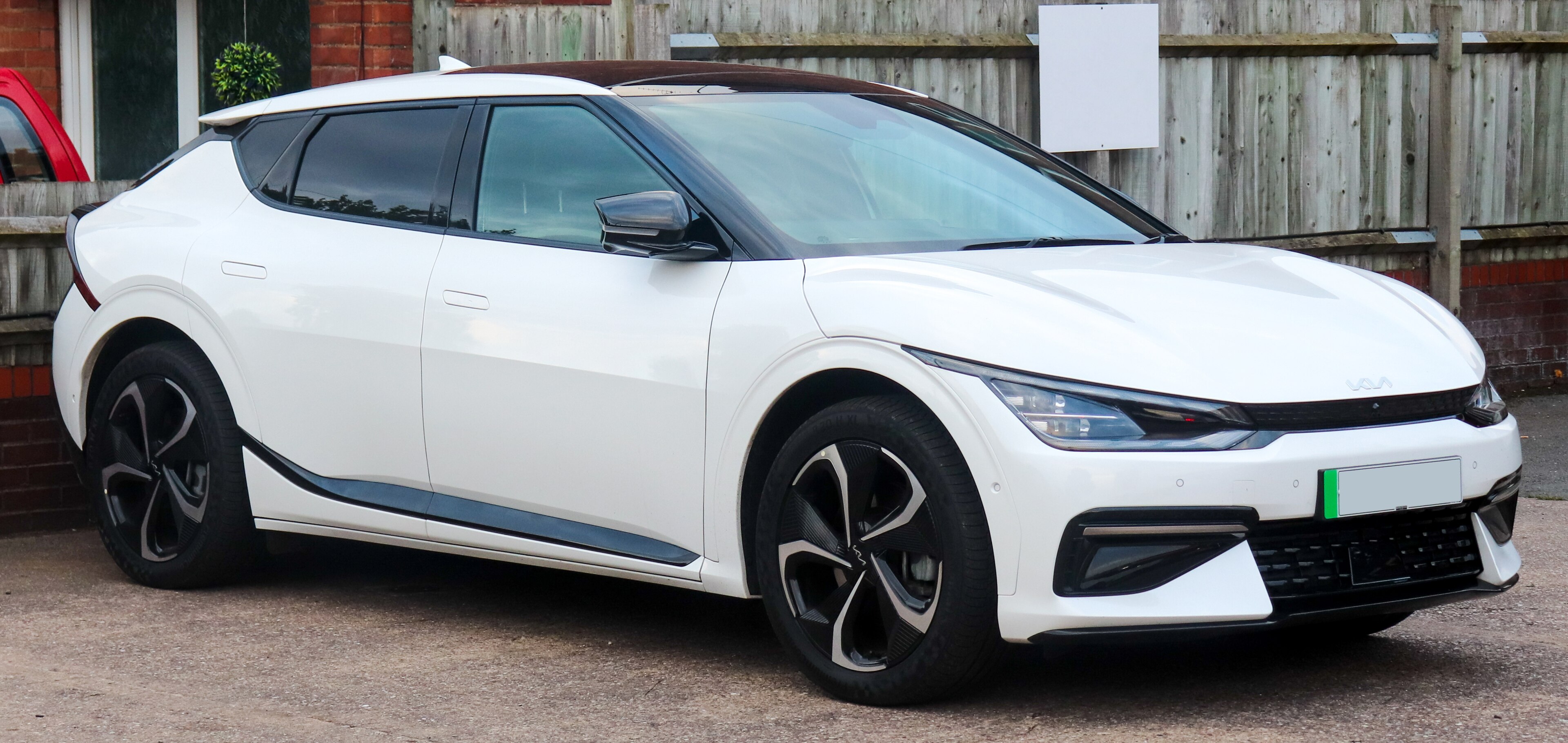
The Kia EV6 costs R1,100,000 versus the VW Tiguan 2.0 TSI’s R800,000 — and despite saving R92,579 in fuel and maintenance over five years, the petrol SUV still wins on total ownership cost by R207,421. That gap, however, is closing fast: three years ago it would have been over R400,000, and cost parity is expected within 2-3 years as EV prices fall and petrol climbs.
The EV vs Petrol Decision in 2025
This comparison between the Kia EV6 and the VW Tiguan 2.0 TSI will help you make the right decision for your wallet and lifestyle in South Africa. While the EV offers lower running costs, the petrol SUV’s lower purchase price makes it cheaper overall — but the gap is narrowing rapidly.
Quick Comparison
| Feature | Kia EV6 | VW Tiguan 2.0 TSI |
|---|---|---|
| Purchase Price | R1,100,000 | R800,000 |
| 5-Year Fuel Cost | R56,621 | R124,200 |
| 5-Year Maintenance | R15,000 | R40,000 |
| Total Cost of Ownership | R1,171,621 | R964,200 |
| Winner | Petrol wins by R207,421 | |
The Real Cost: 5-Year Ownership Analysis
The numbers reveal an important truth about EV ownership in 2025: while electric vehicles excel at running costs, the higher purchase price still matters significantly. The Kia EV6 costs R1,100,000 upfront compared to the VW Tiguan 2.0 TSI’s R800,000 — a R300,000 gap that running-cost savings don’t fully close over five years.
Fuel Costs Breakdown
- Kia EV6 electricity cost: R11,324/year = R56,621 over 5 years
- VW Tiguan 2.0 TSI petrol cost: R24,840/year = R124,200 over 5 years
- Fuel savings with EV: R67,579 over 5 years
Maintenance Costs
- Kia EV6: R15,000 (minimal — no oil changes, less brake wear)
- VW Tiguan 2.0 TSI: R40,000 (regular servicing, oil, filters, etc.)
- Maintenance savings with EV: R25,000
The Purchase Price Gap
Here’s the critical calculation: the EV saves you R92,579 in fuel and maintenance over five years (R67,579 + R25,000), but costs R300,000 more upfront. That means the Tiguan is R207,421 cheaper overall when you factor in everything.
However, this gap is closing rapidly. Just three years ago, the difference would have been over R400,000. As EV prices continue falling and petrol prices rise, we expect cost parity within the next 2-3 years.
Understanding the Cost-Per-Kilometre Reality
When you spread total ownership costs across 75,000km (15,000km/year × 5 years), the numbers tell an interesting story:
- Cost per kilometre — Kia EV6: R15.62
- Cost per kilometre — VW Tiguan 2.0 TSI: R12.86
The Tiguan’s lower cost per kilometre reflects its cheaper purchase price spread across the total distance. However, this metric shifts dramatically with higher annual mileage. At 25,000km/year, the gap narrows to around R140,000 over five years, and the EV’s running-cost advantage becomes increasingly significant.
Monthly Cost Reality Check
Breaking down the R207,421 total difference over 60 months reveals the Tiguan costs R3,457 less per month when purchase price is included. This monthly saving makes the petrol SUV the more affordable choice for most South African buyers in 2025.
However, the EV saves R1,549/month on fuel and maintenance alone. If you can absorb the higher purchase price, your ongoing monthly expenses drop significantly — an advantage that compounds over time.
Who Should Buy the Kia EV6?
The Kia EV6 is perfect for you if:
- Lower running costs matter: Save R1,549/month on fuel and maintenance compared to petrol
- Home charging available: Wake up to a “full tank” every morning for just R944/month
- City/suburban driving: Perfect for the 528km range on a single charge
- Low maintenance priority: No oil changes, no exhaust systems, minimal brake wear
- Environmental responsibility: Zero tailpipe emissions in SA’s cities
- Modern technology: Latest infotainment, over-the-air updates, advanced safety features
- Future-proofing: EV running costs will only improve as electricity infrastructure expands
- Can afford higher upfront cost: The R300,000 premium is manageable for your budget
- High-mileage driver: Drive 25,000km+ annually to maximise running-cost savings
- Long-term ownership: Plan to keep the vehicle beyond 5 years when savings compound further
Who Should Buy the VW Tiguan 2.0 TSI?
The VW Tiguan 2.0 TSI makes sense if:
- Lower upfront cost needed: R300,000 cheaper to purchase
- Total ownership cost matters: R207,421 cheaper over 5 years when including purchase price
- Monthly budget priority: R3,457/month less expensive overall
- Long-distance flexibility: Refuel anywhere in 5 minutes with petrol stations everywhere
- Heavy towing/off-road: 2.0L engine provides proven capability
- Rural/remote areas: No charging infrastructure concerns
- No home charging option: Petrol stations remain more accessible for now
- Familiar technology: Comfortable with traditional vehicle ownership
- Budget-conscious overall: Every rand counts, and R207,421 is significant savings
- Short-term ownership: Plan to sell or trade within 3-5 years
Key Decision Factors
Choose the Kia EV6 if you:
- Drive less than 528km per day on average
- Have access to home charging or workplace charging
- Want to save R1,549/month on fuel and maintenance
- Prioritise lower running costs over purchase price
- Want zero tailpipe emissions
- Can manage the higher upfront cost and R3,457/month premium
- Value cutting-edge technology and features
- Plan to keep the vehicle beyond 5 years (when savings compound further)
- Drive high annual mileage (20,000km+) to maximise fuel savings
Choose the VW Tiguan 2.0 TSI if you:
- Need maximum flexibility for long-distance travel
- Don’t have reliable charging access
- Drive more than 528km daily
- Need to minimise upfront costs
- Want the lowest total 5-year ownership cost (R207,421 less)
- Prefer the familiarity of petrol stations
- Live in an area with limited charging infrastructure
- Need proven towing and off-road capability
- Prioritise monthly budget savings (R3,457/month less)
Charging Infrastructure in South Africa
South Africa’s EV charging network is growing rapidly, with over 500 public charging points nationwide. Major cities like Johannesburg, Cape Town, Durban, and Pretoria have excellent coverage, and new stations are being added monthly.
Home charging transforms EV ownership: Installing a home charger (R15,000-R30,000) gives you a “full tank” every morning at a fraction of petrol costs. Most EV owners charge overnight on off-peak electricity rates, making home charging the most economical option.
For those without home charging, workplace charging and public fast-chargers are increasingly available. However, relying solely on public charging does reduce the EV’s cost advantage and convenience factor.
Load-shedding remains a consideration, though most home chargers can be scheduled to charge during off-peak hours when power is more reliable. Battery backup systems can also ensure charging capability during outages.
Long-Term Value Considerations
Over 5 years of ownership (15,000km/year = 75,000km total):
- Total cost difference: Tiguan is R207,421 cheaper overall
- Monthly cost difference: Tiguan costs R3,457/month less when purchase price is included
- Running cost advantage (EV): R1,549/month savings on fuel and maintenance
- Cost per kilometre — Kia EV6: R15.62
- Cost per kilometre — VW Tiguan 2.0 TSI: R12.86
Important context: The Tiguan’s lower cost per kilometre reflects its cheaper purchase price spread across 75,000km. If you drive more kilometres annually or keep the vehicle longer, the EV’s running-cost advantage becomes more significant. At 25,000km/year, the gap narrows to around R140,000 over five years. Beyond year 5, the EV’s cumulative fuel and maintenance savings continue growing while the purchase price premium remains fixed.
Environmental Impact
By choosing the Kia EV6 over the VW Tiguan 2.0 TSI, you’ll prevent approximately 12,474kg of CO₂ from entering the atmosphere over 5 years — equivalent to planting roughly 570 trees.
While South Africa’s electricity grid still relies heavily on coal, EVs produce significantly fewer emissions over their lifetime than petrol vehicles, even when accounting for electricity generation. As our grid incorporates more renewable energy, this advantage will only grow.
Resale Value and Depreciation
The EV market in South Africa is still maturing, which creates uncertainty around resale values. However, early indicators suggest well-maintained EVs hold their value reasonably well, particularly as petrol prices continue rising and charging infrastructure expands.
The Tiguan benefits from established resale markets and proven depreciation curves. Buyers can more confidently predict residual values after 5 years, which matters if you plan to sell or trade the vehicle.
Insurance and Financing Considerations
Insurance premiums for the Kia EV6 typically run 10-15% higher than comparable petrol SUVs due to the higher replacement value and specialised repair requirements. This adds approximately R1,500-R2,500 annually to ownership costs.
Financing the R300,000 price difference at current interest rates (around 11-12%) adds roughly R6,000/month to the EV’s cost over a 5-year loan term — a significant consideration for budget-conscious buyers.
The Verdict
The Tiguan Wins on Total Cost — But Consider Your Priorities
The numbers are clear: the VW Tiguan 2.0 TSI costs R207,421 less over five years when you include the purchase price. That’s R3,457/month in your pocket, making it the financially sensible choice for most buyers in 2025.
However, the Kia EV6 offers compelling advantages beyond pure cost:
- Lower running costs: R1,549/month savings on fuel and maintenance
- Environmental benefits: 12,474kg less CO₂ over 5 years
- Modern technology: Superior infotainment, safety features, and driving experience
- Future-proofing: As EV prices fall and petrol rises, early adopters benefit most
- Long-term value: Savings compound beyond the 5-year mark
Our recommendation: Choose the Tiguan if budget is your primary concern, you lack charging access, or you need maximum flexibility for long-distance travel. Choose the EV6 if you can afford the R300,000 premium, have reliable home charging, drive high annual mileage, and want to invest in the future of motoring — accepting you’ll pay R207,421 more over 5 years for superior technology and environmental benefits.
Calculate Your Own Savings
Want to see how much you could save based on your specific driving habits? Use our EV Cost Savings Calculator to input your exact annual kilometres, electricity rate, and more. If you drive 25,000km/year instead of 15,000km, the cost gap narrows significantly.
Find Charging Stations Near You
Concerned about charging infrastructure? Check our live EV charging map to see real-time availability of charging stations across South Africa. You might be surprised how many are already in your area.
Ready to Make the Switch?
Need help installing a home charger for your new EV? Get a free quote for professional EV charger installation anywhere in South Africa. Professional installation typically costs R15,000-R30,000 and can be completed in one day.
Last updated: December 2024
Deprecated: File Theme without comments.php is deprecated since version 3.0.0 with no alternative available. Please include a comments.php template in your theme. in /var/www/wordpress/wp-includes/functions.php on line 6085
Leave a Reply