
Key points
- Chargify does not publish hardware prices, per-bay costs, or total cost of ownership figures. ChargePointSA publishes indicative pricing from the outset and quotes installation per site.
- A 22 kW AC charger installed at a South African hospitality or commercial property costs R24,000-R40,000 per bay all-in (equipment plus labour plus CoC), based on installed quotes tracked across Gauteng, Western Cape, and KZN through November 2025. Hospitality operators on the Garden Route should budget R18,000-R45,000 per bay for 11 kW or 22 kW three-phase units.
- Every installation must comply with SANS 62196-2 (AC connectors), SANS 10142-1:2024 Edition 3.2 Annex N (wiring), and the Electrical Installation Regulations 2009. A Certificate of Compliance (CoC) is legally mandatory. Commercial and government projects require ECSA-registered installers.
- Sites that bill guests or tenants per kWh need a billing-grade (Eichrecht-conformant, MID-metered) charger. South Africa currently has no MID mandate for EV charger billing, but NERSA’s draft Electricity Trading Rules published 24 November 2025 require advanced metering infrastructure capable of automated real-time time-of-use readings, a signal that the metering gap is narrowing.
- Charger power rating is not charger speed for every guest. The BYD Dolphin Surf caps at 6.6 kW AC, while the Tesla Model 3, Hyundai Ioniq 5, and BMW i3 all cap at 11 kW AC, meaning a 22 kW charger delivers no speed benefit over an 11 kW unit for those vehicles. Speccing 22 kW for vehicles with a 6.6 kW onboard charger wastes R8,000-R15,000 per bay in unnecessary hardware and installation cost.
- Properties advertising EV charging on booking platforms report 12-18% higher occupancy among eco-conscious travellers, based on hospitality operator data from the Garden Route.
- ChargePointSA’s managed service programme covers SANS 10142-1 compliance, CoC, ECSA-registered installers, OCPP/OCPI open platform, managed billing, RFID/app access, load balancing, and remote monitoring from approximately R350 per charger per month.
If you run a hotel, manage a sectional-title estate, or oversee a commercial property portfolio in South Africa, you are being pitched EV charging from multiple directions right now. The conversation usually starts with a logo, a glossy case study, and a vague promise of “full support”. What it rarely starts with is a standard number, a compliance checklist, or a per-bay cost range.
This guide cuts through that. We compare ChargePointSA and Chargify on the questions that actually matter to a hospitality or property decision-maker: what each provider names publicly on standards, what each charges, what the law actually requires, and which scenario suits which approach. South Africa’s EV market recorded 389 battery-electric vehicle sales in March 2026 alone, its highest monthly total ever, and Engineering News argues commercial property can no longer defer this decision. The question is no longer whether to install, it is how to install correctly.
What each provider actually names on compliance
This is the most important section of this guide. Before you compare price or aesthetics, ask: does this provider name the legal requirements by number?
ChargePointSA: named standards
- SANS 62196-2, mandatory AC connector standard (Type 2) for all South African AC EV chargers
- SANS 62196-3, mandatory DC connector standard (CCS2) for fast chargers
- SANS 10142-1:2024 Edition 3.2 Annex N, the EV-specific wiring annex, released July/August 2024, covering dedicated RCD requirements, minimum 6 mm² cable for 32A single-phase runs under 25 m, earthing thresholds, and surge protection
- Electrical Installation Regulations 2009 (OHS Act No. 85 of 1993), makes the Certificate of Compliance (CoC) legally mandatory for all electrical work over 16A
- ECSA registration, required for commercial, fleet depot, and public-sector projects; Professional Engineer sign-off is mandatory on government or public tenders
- NRCS Letter of Authority, each charger model must hold a valid LoA before it can be legally imported or sold in South Africa (processing: up to 120 working days)
- ICASA type approval, mandatory for any networked charger with Wi-Fi or LTE connectivity under Section 35(1) of the Electronic Communications Act
Chargify: what is named publicly
Chargify’s public-facing website states that it provides “full assistance during installation of charging stations, including site evaluation, zoning, permitting, and installation processes.” It does not publish hardware prices, per-bay costs, or TCO figures. It does not name SANS 10142-1, SANS 62196-2, SANS 62196-3, NRCS LoA requirements, or ECSA registration criteria on its public pages. Pricing is available by direct enquiry only.
This is not necessarily a disqualifier, Chargify is a Charge Point Operator (CPO) partnership model funded by Mercedes-Benz South Africa’s R40 million commitment across two phases, and its installations are professionally executed. But it does mean a property manager cannot benchmark Chargify’s compliance claims without a direct conversation. ChargePointSA names the standards in writing. That is a meaningful difference when you are the person signing the CoC.
What South African law actually requires, and why it matters for hospitality
Whether you are installing two chargers at a boutique lodge in Hermanus or twelve bays at a Sandton hotel, the legal requirements are identical. There are no hospitality exemptions.
The Certificate of Compliance (CoC)
Every EV charger installation must be completed by a Department of Labour (DoL)-registered electrician and carry an electrical CoC issued under the Electrical Installation Regulations 2009. CoC issuance costs R500-R1,500 depending on installer. Without a valid CoC, your property’s insurance may be void and, at the point of property transfer, a missing or expired CoC blocks the transfer entirely. The CoC must be less than two years old at transfer.
SANS 10142-1:2024 Annex N, the EV-specific wiring code
Edition 3.2 of SANS 10142-1 was published in July/August 2024 and introduced Annex N specifically for EV charging infrastructure. Key requirements include: a dedicated Type A or Type B RCD rated for DC residual currents (generic household earth leakage protection is explicitly not compliant); minimum 6 mm² copper cable for 32A single-phase runs under 25 m; earthing thresholds; and surge protection. Many generalist electricians are not yet aware of these requirements. Specify Annex N compliance in writing before any works begin.
ECSA-registered installers for commercial projects
For commercial, fleet depot, and public-sector or government-tendered projects, ECSA-registered Professional Engineers are required. Residential installations have not required a separate ECSA PE sign-off since October 2025, but hotel, estate, and body-corporate installations remain in the commercial category. If your project involves a government or public-sector tender, or an Eskom-connected site, ECSA registration is non-negotiable.
Billing-grade metering: the gap that is closing
South Africa currently has no MID metering mandate for EV charger billing equivalent to Europe’s Eichrecht framework. EV charger session-level billing is an unregulated gap where operators set tariffs by commercial agreement without a mandated calibration framework. However, NERSA’s draft Electricity Trading Rules, published 24 November 2025 with a public hearing on 27 January 2026, require advanced metering infrastructure (AMI) capable of automated real-time time-of-use readings. Most municipal systems currently lack this capability. If you are billing guests or tenants per kWh, specify an Eichrecht-conformant, MID-metered charger now, the ChargePointSA CP-AC22-N includes this at 1% accuracy with every transaction recorded.
Plan your site free with our Commercial Site Builder
Installed cost benchmarks for hospitality and property
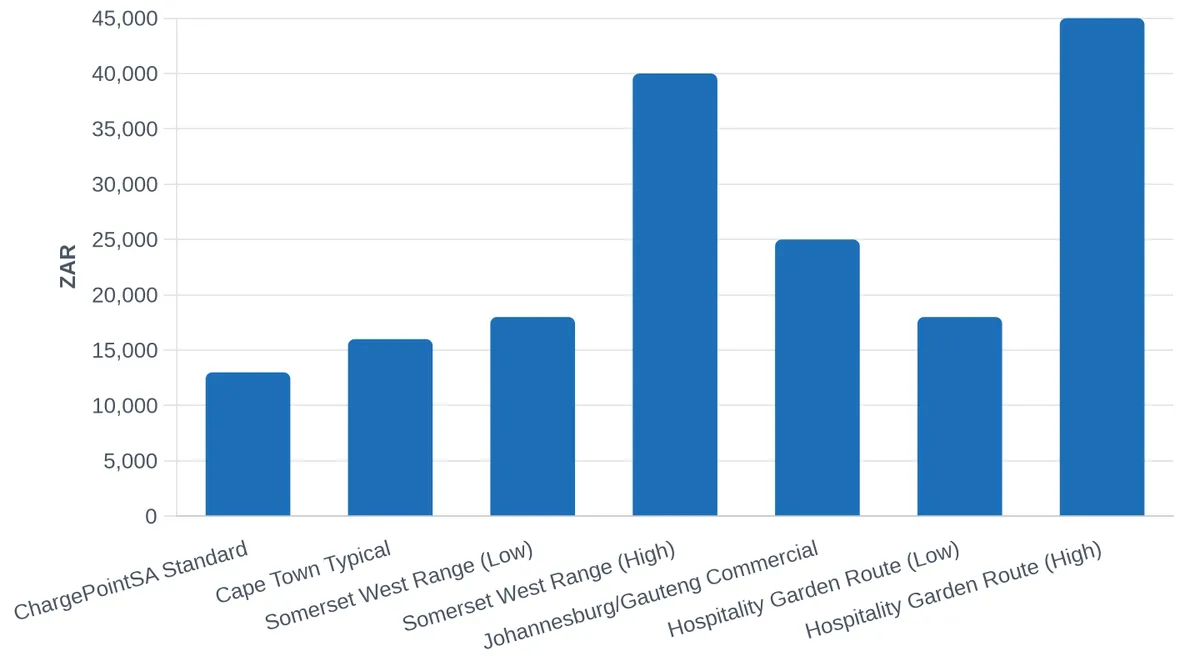
Chargify does not publish cost figures. The following benchmarks are drawn from ChargePointSA’s installed-quote tracking across Gauteng, Western Cape, and KZN.
| Scenario | Charger type | Indicative all-in cost (ZAR) |
|---|---|---|
| Standard 22 kW three-phase AC (equipment + labour + CoC) | 22 kW AC wallbox | R24,000-R40,000 per bay |
| Hospitality operator, Garden Route (11 kW or 22 kW three-phase) | 22 kW AC wallbox | R18,000-R45,000 per bay |
| 4-bay commercial install with load management | 22 kW AC, managed | R80,000-R150,000 |
| Additional bays beyond initial 4-bay setup | 22 kW AC | R25,000-R35,000 per bay |
| Commercial DC fast charger (hospitality sector) | 60-120 kW DC | R250,000-R850,000 installed |
| DB board sub-board upgrade (where required) | Add-on | R3,500-R8,000 extra |
| CoC issuance | Add-on | R500-R1,500 |
ChargePointSA’s CP-AC22 (22 kW three-phase AC wallbox) is available from approximately R13,900 per unit in hardware before installation. The CP-AC22-N billing-grade variant adds Eichrecht-conformant smart metering and MID metering for sites where guests or tenants are billed per kWh. The managed service programme, covering SANS 10142-1-compliant installation, CoC, ECSA-registered installers, OCPP/OCPI platform, billing, RFID/app access, load balancing, and remote monitoring, runs from approximately R350 per charger per month, which equates to R21,000 per charger over five years before electricity costs.
Understanding the OBC mismatch, why charger kW rating is not guest charging speed
This is the speccing error that costs hospitality operators the most money. A charger’s output rating is only relevant up to the vehicle’s onboard charger (OBC) limit. Install a 22 kW AC wallbox and you will get 22 kW only from vehicles whose OBC supports it.
- The BYD Dolphin Surf, one of South Africa’s highest-volume EV models, caps at 6.6 kW AC regardless of charger rating. A 22 kW wallbox delivers zero speed benefit over a 7 kW unit for this vehicle.
- The Tesla Model 3 is limited to 11 kW AC due to its OBC; on single-phase supply it charges at 7.4 kW, the 22 kW charger delivers no speed gain beyond what an 11 kW unit provides.
- The Hyundai Ioniq 5 and BMW i3 both max out at 11 kW AC even when connected to a 22 kW charger.
- The majority of EVs currently on South African roads support only 11 kW three-phase AC maximum; some earlier-generation models do not support three-phase at all.
Installing 22 kW hardware for vehicles with a 6.6 kW OBC wastes R8,000-R15,000 per bay in unnecessary hardware and installation cost. A competent installer-advisor will survey your expected guest vehicle mix before speccing charger power. ChargePointSA conducts this as part of the site assessment. The right charger for most South African hotel car parks is an 11 kW or 22 kW AC unit with dynamic load balancing, not the maximum kW rating available.
For a lodge or hotel with mixed guest vehicles, a 22 kW AC wallbox with dynamic load balancing is the practical sweet spot: it delivers full speed to vehicles that can accept it, and automatically right-sizes delivery to those that cannot, while keeping your DB board within safe demand limits.
Understand billing and revenue models for guest EV charging
Chargify’s hospitality and property footprint, what we know
Chargify’s track record in SA hospitality is real and growing. As of early 2026, its deployments include:
- EV charging stations at 8 City Lodge Hotels properties (announced January 2026), using AC charging points compatible with all new EVs sold in South Africa. City Lodge Hotels CEO Odette Sangweni-Siddo confirmed the rollout supports both overnight guests and day visitors using meeting and boardroom facilities.
- 11 charging stations at key Redefine Properties commercial sites, launched December 2024 at Alice Lane, Sandton.
- Chargers at Steyn City Lifestyle Estate.
Chargify is a Level 2 BBBEE company and deploys AC and DC fast charging stations at airports, shopping malls, restaurant hubs, private hospitals, residential estates, and small towns. Mercedes-Benz EQ customers receive a 10% discount when charging via the Chargify network. Its CPO model means the operator does not publish pricing, you engage directly, and Chargify handles the rollout under the Mercedes-Benz SA umbrella.
What Chargify does not do is position itself as an independent compliance advisor. It is a network operator and CPO partner. If your primary concern is verifiable compliance documentation, named standards, published CoC processes, ECSA-registered sign-off, you are managing that conversation yourself unless you appoint a separate advisor.
The demand case: why South African hospitality cannot wait
South Africa’s EV fleet reached approximately 7,000-10,000 vehicles by end of 2025, up from fewer than 1,000 in 2020. March 2026 recorded 389 battery-electric vehicle sales, the highest monthly total in SA history. South Africa’s first dedicated fleet charging network dispensed 205,845 kWh across 18,884 sessions in its first three months of operation in Gauteng, hard evidence that demand is here, not hypothetical.
Bright Light Solutions’ community scheme guide confirms that AC Level 2 chargers are the dominant solution for residential and semi-public sites, and that properties planning now will manage the transition more smoothly than those who defer. The guest who drives a BYD Atto 3 or Tesla Model 3 to your hotel is already asking about charging before they book. Properties advertising EV charging on booking platforms report 12-18% higher occupancy among eco-conscious travellers.
The question for a hotel GM or property manager is not whether to install, it is which installer-advisor gives you the compliance paper trail, the cost transparency, and the ongoing managed service that protects your asset. ChargePointSA is an installer-advisor: we supply, install, and support our own charger range under a single accountable contract, with SANS 10142-1-compliant wiring, an electrical CoC, and ECSA-registered installers across 11 South African cities.
Plan your site free with our Commercial Site Builder
Comparison summary: ChargePointSA vs Chargify for hospitality and property
| Criterion | ChargePointSA | Chargify |
|---|---|---|
| Publishes hardware prices | Yes, indicative pricing published | No, direct enquiry only |
| Names SANS 10142-1 Annex N | Yes, named in writing | Not on public pages |
| Names SANS 62196-2 / 62196-3 | Yes, named in writing | Not on public pages |
| CoC process named | Yes, legally required, cost published (R500-R1,500) | Not on public pages |
| ECSA-registered installers | Yes, commercial projects | Not confirmed publicly |
| NRCS LoA requirement named | Yes, up to 120 working days lead time | Not on public pages |
| Billing-grade (MID) metering option | Yes, CP-AC22-N (Eichrecht-conformant) | Not confirmed publicly |
| Managed service from | ~R350/charger/month | Not published |
| Hospitality deployments | Quoted per site | 8 City Lodge Hotels, Redefine Properties, Steyn City |
| BBBEE status | Enquire per site | Level 2 confirmed |
AC vs DC for hospitality: the practical decision
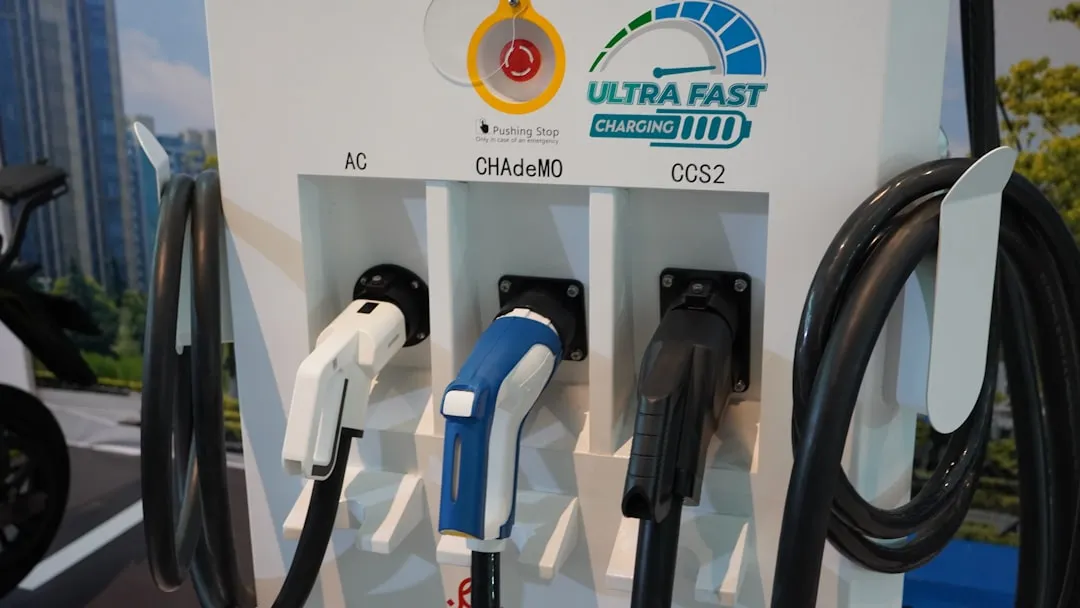
Most South African hotel and lodge car parks suit AC charging, specifically 22 kW three-phase with dynamic load balancing. Here is the logic:
- Dwell time: A hotel guest typically parks for 6-12 hours overnight. A 22 kW AC charger adds 110-140 km of range per hour under ideal conditions. Even a vehicle capped at 11 kW will be fully charged before breakfast.
- Infrastructure cost: A 22 kW AC wallbox installed at R24,000-R40,000 per bay is a fraction of a DC fast charger at R250,000-R850,000 installed.
- Guest mix: Unless you are a highway-corridor property or a destination charging hub, the majority of your guests will be satisfied by overnight AC charging.
- DC makes sense when: You operate a high-throughput forecourt, a highway stopover, or you want to differentiate your property with a premium fast-charge amenity, and your three-phase industrial connection supports it. ChargePointSA’s CP-DC60 (60-120 kW dual-outlet DC fast charger) is available from approximately R430,000 installed for this scenario.
Frequently asked questions
Do I need an ECSA-registered installer for my hotel?
Yes. Commercial installations, including hotels, lodges, estates, and body corporates, require ECSA-registered Professional Engineers for sign-off. This requirement applies to government and public-sector tenders as well. Residential installations have not required a separate ECSA PE since October 2025, but commercial and hospitality projects remain in the commercial category.
Can I bill guests per kWh for EV charging?
Yes, but you need the right charger. South Africa does not currently mandate Eichrecht or MID metering for EV charger billing, so operators technically set tariffs by commercial agreement. However, to bill credibly and protect yourself when NERSA’s draft Electricity Trading Rules progress, specify a billing-grade charger with Eichrecht-conformant metering, such as ChargePointSA’s CP-AC22-N, from the outset.
What is the public AC charging tariff?
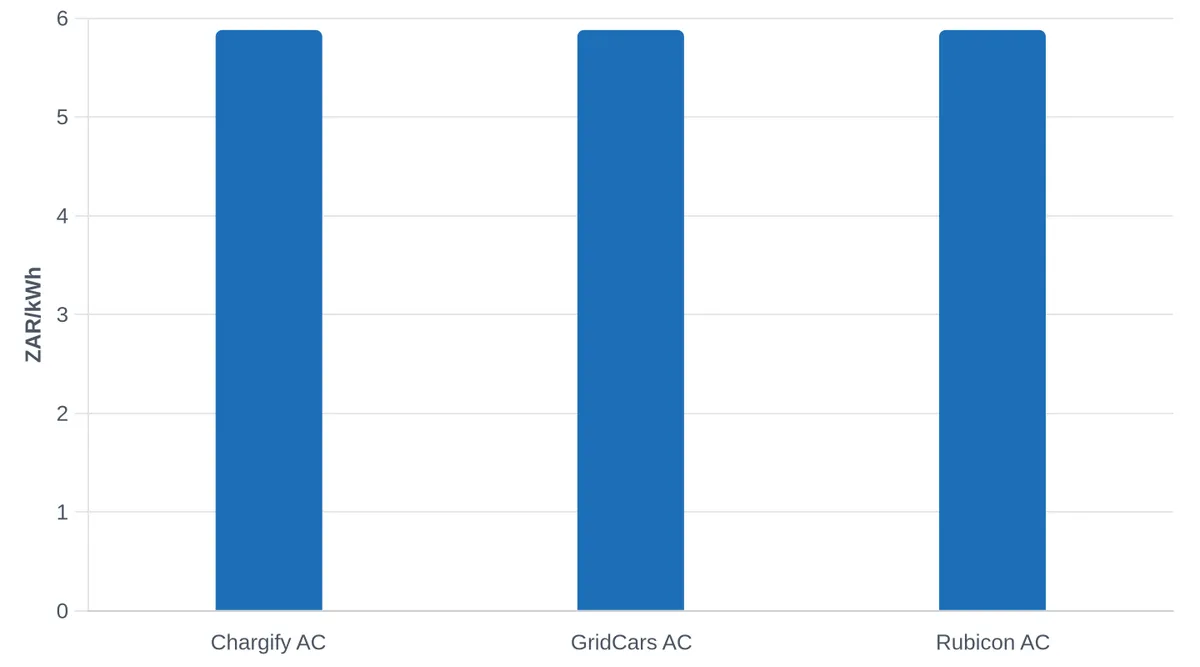
Across major SA public networks (including Chargify and GridCars), AC charging was approximately R5.88-R6.00/kWh as of 2023/2024 benchmarks. GridCars implemented approximately a 15% increase from 1 December 2025, so current 2026 rates are higher. Eskom direct-customer tariffs rose 12.74% in April 2025 with a further 8.76% from 1 April 2026. Factor these trajectories into your guest charging tariff pricing.
How long does an NRCS Letter of Authority take?
Up to 120 working days (approximately 18 weeks). Every charger model must hold a valid NRCS LoA before it can be legally imported or sold in South Africa. If you are procuring charger hardware directly, build this lead time into your project schedule.
Is a CoC mandatory even if I am not selling the property?
Yes. The CoC is mandatory under the Electrical Installation Regulations 2009 for all electrical work over 16A. Without it, your property’s insurance may be void and you and your installer are exposed to direct OHS Act liability. It is not a transfer-only requirement, it is an ongoing legal obligation from the day of installation.
What is the difference between ChargePointSA and Chargify?
ChargePointSA is an installer-advisor: we supply our own charger range, install under SANS 10142-1, issue the CoC, and provide ongoing managed services under a single accountable contract. Chargify is a Charge Point Operator (CPO) that partners with property and hospitality operators to deploy charging stations, primarily within the Mercedes-Benz SA ecosystem. ChargePointSA publishes standards, pricing benchmarks, and compliance requirements in writing. Chargify does not publish pricing or named compliance requirements publicly.
Plan your site free with our Commercial Site Builder
Photo: Kindel Media / Pexels
Plan EV charging for your hospitality or property site
Get indicative pricing and installation costs upfront—free, no obligation.
Plan my site’s charging →WhatsApp us
CoC-certified installers, nationwide