
Key points
- The BYD Seagull is confirmed at R299,900 (entry variant), no other mainstream EV in South Africa is currently priced below R300,000, according to TechCentral’s 2026 EV price ranking.
- Specification: 38 kWh LFP Blade Battery, 55 kW / 135 Nm front-mounted motor. Real-world range in South African conditions is approximately 280-300 km for most urban drivers.
- Home charging at Gauteng rates (R1.95-R3.40/kWh) costs roughly R0.35-0.55 per km. Petrol costs approximately R1.86 per km at current prices (R26.63/L at inland 95, May 2026).
- BYD covers the battery for 8 years or 200,000 km and the complete vehicle for 5 years or 100,000 km. Free servicing runs to 6 years or 150,000 km.
- Public DC fast charging in South Africa costs R7.00/kWh (Rubicon eMSP) or R7.35/kWh (GridCars eMSP) as of August 2025, confirmed by Rubicon’s published tariff schedule. Budget accordingly for top-up stops on longer trips.
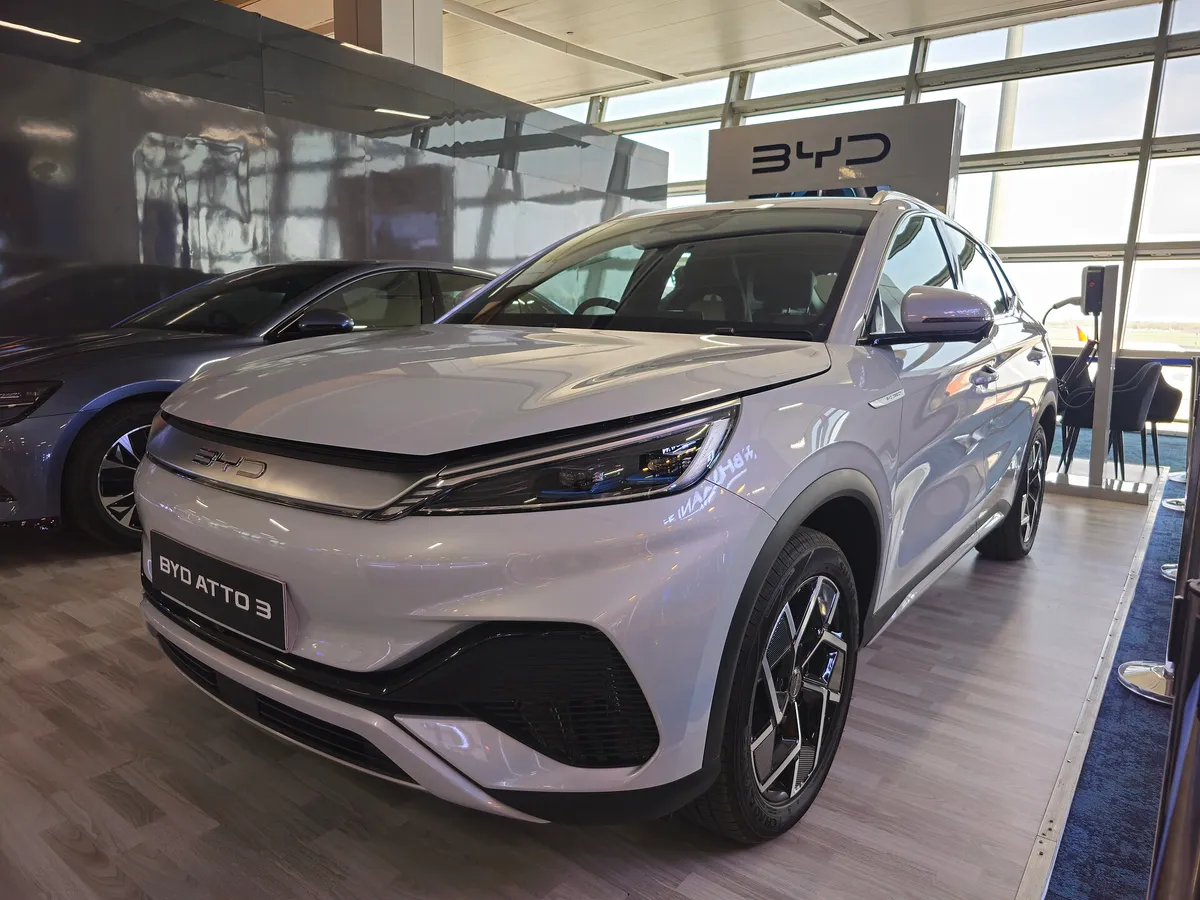
South Africa’s EV price floor has dropped faster than almost anyone predicted. In 2023, the cheapest new EV you could buy was a Mini at around R800,000. By September 2025 the BYD Dolphin Surf launched at R339,900, opening the mass-market conversation. And now the BYD Seagull, confirmed at R299,900 by CarMagazine South Africa, is the first mainstream EV to crack the R300,000 barrier in this market.
That number deserves scrutiny, not celebration on its own. Purchase price is only one chapter of the ownership story. This article works through every number that actually determines whether the Seagull makes financial sense for a South African buyer: the real charging costs, the five-year running cost comparison, the warranty small print, and the service-network gaps you need to know about before you sign.
What you actually get for R299,900
| Specification | BYD Seagull | BYD Dolphin Surf Comfort | MG4 Electric (Standard Range) |
|---|---|---|---|
| Launch price | R299,900 | R339,900 | R459,900 |
| Battery capacity | 38 kWh LFP | 30.1 kWh LFP | 51 kWh |
| Motor output | 55 kW / 135 Nm | 125 kW | |
| WLTP range | approx. 280-300 km (real-world est.) | 232 km | 350 km |
| Vehicle warranty | 5 yr / 100,000 km | 3 yr / 100,000 km | |
| Battery warranty | 8 yr / 200,000 km | 8 yr / 200,000 km |
The SA-market BYD Seagull is powered by a 38 kWh LFP (Lithium Iron Phosphate) Blade Battery and a front-mounted 55 kW / 135 Nm motor, as confirmed by BYD South Africa official channels and EV24.africa’s BYD buyer guide. LFP chemistry matters here: it is more thermally stable than NMC, tolerates frequent full charges without accelerating degradation, and is better suited to South Africa’s heat than older lithium chemistries. BYD’s own data puts LFP cycle life at 3,000+ charge cycles before degradation becomes significant, at one full cycle per day, that is more than eight years of daily use.
Battery degradation over the vehicle’s life is modest. Expect 2-3% capacity loss per year, meaning a car that covers 400 km new will still manage around 370 km after five years. Real-world battery health reported from South African BYD owners after 100,000 km sits at 96-98% retained capacity, well within the 8-year/200,000 km battery warranty threshold, which triggers replacement only if capacity falls below 70% of original.
What does it actually cost to charge?

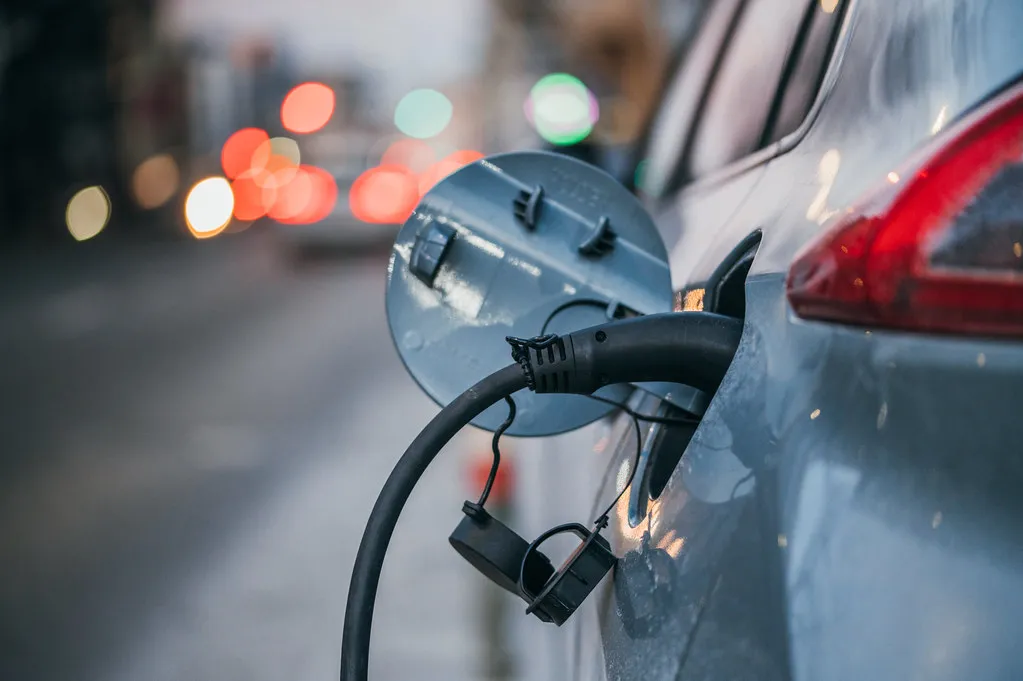
The Seagull’s 38 kWh battery is one of the larger packs in its segment. At Gauteng home rates (R1.95-R3.40/kWh as of 2026), a full charge from empty costs between R74 and R129. At Cape Town residential tariffs (R1.80-R3.20/kWh depending on consumption block), you are looking at R68 to R122 for a full charge.
On a per-kilometre basis, that translates to roughly R0.35-R0.55/km at home rates, compared to approximately R1.86/km for a petrol car at the current inland 95 price of R26.63/L. The saving is not marginal: it is the difference between R0.35 and R1.86 every single kilometre you drive.
For public DC fast charging, the published tariffs as of August 2025 are R7.00/kWh for Rubicon eMSP customers and R7.35/kWh for GridCars eMSP customers, as documented by CleanTechnica’s South African tariff analysis. At R7.35/kWh, a full charge from near-empty on the Seagull’s 38 kWh pack costs around R279. That is still cheaper per kilometre than petrol, but the home-versus-public cost difference is significant enough to reward anyone who can charge at home overnight.
South Africa now has approximately 650 public EV chargers across 445+ charging sites as of early 2026, per ChargePoint SA’s network gap analysis. GridCars operates roughly 60% of those public charge points. BYD itself has committed to installing 200-300 Flash charging stations nationally by end of 2026, with construction beginning at dealerships and expanding to highways and urban areas.
Home charger installation: the full cost picture
Buying the Seagull at R299,900 is not the full acquisition cost if you want to charge it properly at home. A professional 7 kW single-phase home charger installation in South Africa costs R14,000-R26,000 fully installed, including the Certificate of Compliance (CoC). That CoC is not optional, it is a legal requirement under SANS 10142-1, and any installation must be carried out by an ECSA-registered electrician.
Approximately 70% of South African residential properties run on single-phase 60-80 amp supplies, which caps EV charger output at around 7 kW, delivering roughly 30 km of range per hour of charging. For the Seagull’s 38 kWh pack, a full overnight charge on a 7 kW wallbox takes approximately five to six hours, which fits comfortably within a standard overnight parking window.
The payback period on a home charger installation, measured purely from fuel savings, is typically 8-14 months for a driver covering 20,000 km per year.
Ready to work out the exact charger type and installation cost for your home? Get a free installation quote from a SANS 10142-1 certified installer.
Five-year ownership costs: the honest numbers
Annual fuel savings for a driver covering 20,000 km per year, charging at home versus running a 9 L/100 km petrol car, come to R31,500-R34,500 per year. Over five years, that is a saving of R157,500-R172,500 on energy alone, before accounting for maintenance.
EV maintenance costs are substantially lower than petrol equivalents. Over five years, BYD EV owners are looking at approximately R12,000 in maintenance costs versus around R45,000 for a comparable petrol hatchback. BYD also includes free servicing for 6 years or 150,000 km, which further reduces out-of-pocket running costs during the ownership period.
There are a few cost items that go the other way. EV tyres wear slightly faster than on petrol cars due to the heavier kerb weight and instant torque delivery, budget an additional R3,000-R5,000 over five years. EV insurance in South Africa also runs approximately 10-15% higher than for equivalent petrol vehicles, reflecting the higher repair cost and longer repair time (EVs are 25.5% more expensive to repair and take 14% longer than ICE vehicles, according to AutoTrader South Africa data).
Resale value for BYD vehicles in South Africa after three years sits at 65-80% of original purchase price, a reasonable retention figure for a Chinese brand that has now established genuine market presence.
Calculate your real BYD Seagull charging costs at home
Warranty and after-sales: what the fine print says
BYD’s warranty package on the Seagull mirrors the rest of the South African BYD range:
- Complete vehicle warranty: 5 years or 100,000 km
- Power battery warranty: 8 years or 200,000 km
- Drive unit warranty: 5 years or 100,000 km
- Free servicing: 6 years or 150,000 km
Those are competitive numbers, the battery warranty in particular matches what premium European brands offer at twice the price. BYD’s central parts distribution hub is established in Gauteng, with fast-moving service items (brake pads, wiper blades, cabin filters) stocked at established dealers for same-day availability. Non-stocked or factory-order parts carry a lead time of 4-8 weeks, which is worth factoring in if you live outside a major metro.
Dealer network: growing, but not uniform
BYD is expanding from 20 to 35 dealers by end-2026, according to IOL’s December 2025 report on BYD’s South African expansion. The network is primarily concentrated in Gauteng, the Western Cape, and KwaZulu-Natal. Coverage in Limpopo, Mpumalanga, the Eastern Cape, the Free State, and the Northern Cape remains limited. All authorised service centres require EV-certified technicians with BYD-specific training.
If you live or commute regularly outside the three main metro regions, check the current dealer map before committing. A 4-8 week wait for a non-stocked part is manageable in Johannesburg; it is a more serious inconvenience 400 km from the nearest dealer.
The Seagull in context: South Africa’s sub-R400k EV race

Cars.co.za’s 2026 affordable EV rankings document how dramatically the South African entry-level EV market has shifted. In 2023, the cheapest EV available was priced around R800,000. The BYD Dolphin Surf’s September 2025 launch at R339,900 reset expectations. The Seagull at R299,900 goes further still, it is the only confirmed sub-R300k EV from a mainstream brand currently on sale in South Africa.
The Geely E2 offers a longer body (4,135 mm vs the Seagull’s more compact footprint) and an 85 kW rear-wheel-drive motor with 325 km WLTP range, meaningful advantages for drivers who need more range or carry more load. The BYD Dolphin Surf Comfort, at R339,900, offers a 5-star Euro NCAP rating and a 7 kW wallbox included at purchase. The Seagull’s R40,000 price advantage over the Dolphin Surf buys you the larger 38 kWh battery but trades off some of those additional inclusions.
South Africa sold 1,088 battery-electric vehicles in all of 2025, then recorded 544 BEV sales in Q1 2026 alone, more than double the prior year’s first quarter, as the Business Day’s tipping-point analysis makes clear. AutoTrader recorded a 220% increase in EV searches between March 2025 and March 2026. The market is moving, and sub-R300k pricing is the clearest accelerant yet.
Load-shedding and the Seagull: practical reality

South Africa reached 328 consecutive days without load-shedding as of late April 2026, with Eskom projecting continued grid stability through August 2026. That is genuinely good news for EV ownership, but any serious buyer needs a plan for when load-shedding returns.
A 7 kW home charger delivers roughly 30 km of range per hour of charging. If a two-hour Stage 4 outage interrupts an overnight charge, you lose approximately 60 km of recovered range, still enough for most SA commutes. Approximately 90% of EV charging in South Africa happens at home, so the overnight window is the critical one.
For buyers who want load-shedding resilience, a solar and battery backup system paired with the home charger is the most robust solution. One documented SA case shows an owner with proper solar integration paying R180/month for EV charging versus a neighbour without solar paying R850/month, same vehicle, same tariff, entirely different outcome based on installation configuration. The payback period on a solar-plus-battery home EV charging system is approximately 4.4 years based on current tariff levels.
For public charging during load-shedding, approximately 60% of GridCars’ DC fast chargers are backed by emergency generators and remain available 24/7 regardless of grid status.
Frequently asked questions
Is the BYD Seagull the cheapest EV in South Africa?
Yes. At R299,900, it is the only confirmed sub-R300,000 EV from a mainstream brand currently on sale in South Africa. The next closest is the BYD Dolphin Surf Comfort at R339,900.
Can I charge a BYD Seagull at home on a standard single-phase supply?
Yes. Approximately 70% of South African homes run on single-phase supply, which supports a 7 kW home charger. At 7 kW, the Seagull’s 38 kWh battery takes approximately five to six hours for a full charge, easily completed overnight. Installation cost for a SANS 10142-1 compliant 7 kW wallbox runs R14,000-R26,000 including CoC.
What is the real-world range of the BYD Seagull in South Africa?
The 38 kWh battery supports approximately 280-300 km in mixed urban driving. Highway driving at 120 km/h will reduce this, real-world range at sustained highway speeds typically comes in at approximately 70% of the best-case figure. Running the air-conditioning in heat adds a further 5-15% energy consumption penalty.
How does the Seagull’s charging cost compare to petrol?
At Gauteng home rates, charging costs approximately R0.35-R0.55/km. A comparable petrol vehicle costs approximately R1.86/km at current pump prices (R26.63/L inland 95, May 2026). Public DC fast charging at R7.35/kWh raises the per-km cost to around R0.96/km, still cheaper than petrol, but the case for home charging is compelling.
What warranty does the BYD Seagull carry in South Africa?
5 years or 100,000 km on the complete vehicle; 8 years or 200,000 km on the power battery; and 6 years or 150,000 km free servicing. Battery warranty triggers replacement only if capacity drops below 70% of original, a threshold very few owners reach within the warranty period.
Want to work out which charger suits your home or site, and what the full installed cost looks like? Get a free installation quote from our SANS 10142-1 certified, ECSA-registered installers, national network, single accountable contract, electrical CoC included.
Compare the BYD Seagull with South Africa’s sub-R400k EVs
See specs, range, and real ownership costs side by side.
Compare EV options →WhatsApp us
CoC-certified installers, nationwide
Photo: Ganesh Mohan T / WikimediaCommons