

EV Charger Installation Costs in Knysna: 2026 Overview
Installing an EV charger in Knysna in 2026 typically costs between R8,500 and R45,000 depending on charger type, installation complexity, and electrical upgrades required. As the Garden Route’s tourism hub attracts retirees, second-home owners, and eco-conscious hospitality operators, demand for home and commercial EV charging infrastructure is accelerating alongside South Africa’s broader electric vehicle adoption.
Knysna’s municipal electricity tariff of approximately R3.10 per kWh makes home charging significantly more economical than public fast-charging alternatives, which cost R5.88–R7.35 per kWh across South Africa’s public networks. For a typical electric vehicle with a 60 kWh battery, a full home charge in Knysna costs around R186 compared to R353–R441 at public DC fast chargers.
This guide covers everything Western Cape property owners need to know about EV charger installation in Knysna, from equipment selection and labour costs to municipal permits and long-term operating economics.
Understanding EV Charger Types and Costs
Three main charger categories serve different use cases in Knysna’s residential and commercial markets:
Level 1 Charging (Portable EVSE)
Level 1 chargers plug into standard 220V household outlets and deliver 2.3–3.7 kW charging speeds. While the slowest option—adding roughly 15–20 km of range per hour—portable units cost just R3,500–R8,500 and require no installation beyond a dedicated 16A circuit.
Best for: Second-home owners visiting Knysna occasionally, or households with low daily driving distances (under 50 km) who can charge overnight.
Level 2 Wall-Mounted Chargers (7 kW–22 kW)
Wall-mounted Level 2 units represent the standard for permanent home installations in Knysna. A 7 kW charger adds 35–45 km of range per hour, fully charging most EVs in 6–8 hours. Higher-power 11 kW and 22 kW models halve charging times but require three-phase electrical supply.
| Charger Power | Equipment Cost | Installation Cost | Total Investment | Charging Speed |
|---|---|---|---|---|
| 7 kW (single-phase) | R8,500–R15,000 | R4,500–R12,000 | R13,000–R27,000 | 35–45 km/hour |
| 11 kW (three-phase) | R12,000–R22,000 | R6,000–R15,000 | R18,000–R37,000 | 55–70 km/hour |
| 22 kW (three-phase) | R18,000–R28,000 | R8,000–R17,000 | R26,000–R45,000 | 110–140 km/hour |
Best for: Primary residences, guesthouses, and B&Bs where vehicles charge daily. The 7 kW single-phase option suits most Knysna households, while tourism operators benefit from faster three-phase installations serving multiple vehicles.
DC Fast Chargers (50 kW+)
Commercial DC fast chargers cost R250,000–R850,000 installed and require dedicated three-phase industrial connections. While inappropriate for residential use, these units serve Knysna’s hospitality sector—hotels, restaurants along the N2 corridor, and tourist attractions where visitors need rapid 20–40 minute charging sessions.
The Garden Route District Municipality launched a public-private EV charging partnership in July 2025 to deploy fast-charging hubs along the N2 from Cape Town to Plettenberg Bay, with the first station operational at François Ferreira Academy in George. This regional infrastructure supports Knysna’s tourism economy while reducing pressure on individual businesses to install expensive DC equipment.
Installation Cost Breakdown for Knysna Properties
Total EV charger installation costs in Knysna depend on five main factors:
1. Equipment Purchase (R3,500–R28,000)
Charger hardware represents 40–60% of total project costs. Popular brands available through South African distributors include:
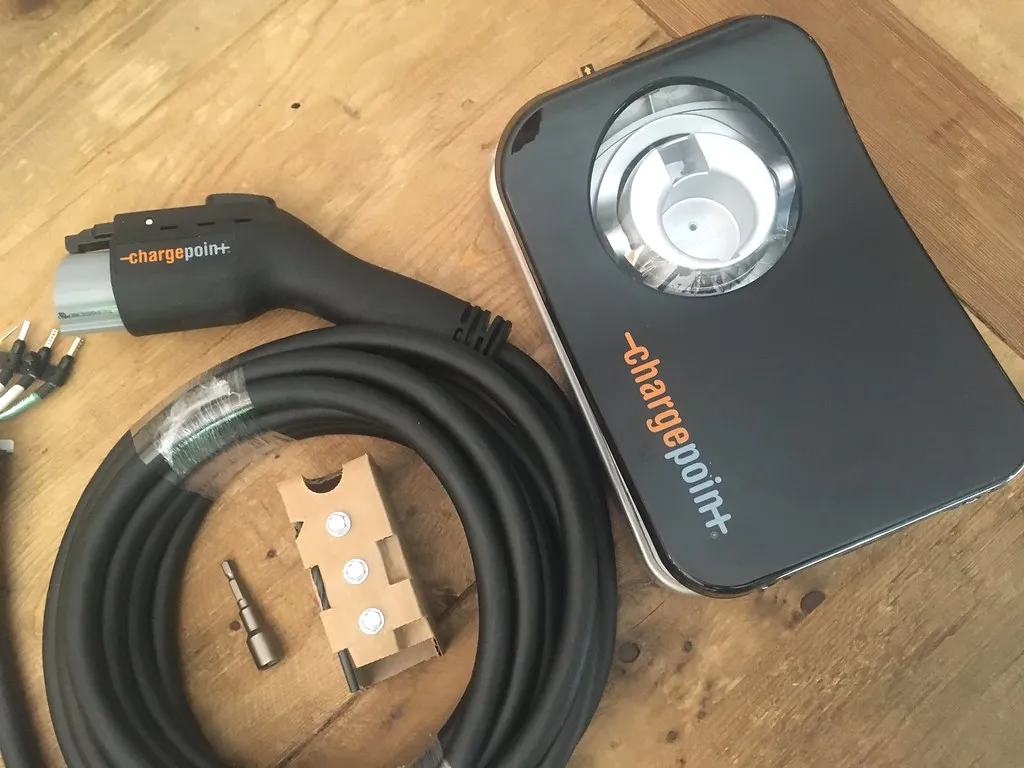
- ChargePointSA CP-AC7-CP (7 kW): R7 400 — compact tethered design, app connectivity, suitable for most Knysna homes
- ChargePointSA CP-AC7-CP (7 kW): R7 400 – tethered Type 2, IP65, OCPP app control
- ChargePointSA CP-AC22-CP (22 kW, three-phase): R13 900 – Reliable three-phase charging for guesthouses
- ChargePointSA CP-DUO-44B (dual 2×22kW): RFQ pricing – MID meter for fair per-unit billing, OCPP 1.6J, built for multi-unit installations
Most manufacturers offer three-year warranties; extended five-year coverage adds R1,200–R2,500.
2. Electrical Installation Labour (R4,500–R17,000)
Licensed electrician labour in Knysna typically costs R450–R750 per hour. Standard installations require 8–15 hours depending on:
- Distance from distribution board: Chargers within 10 metres of the main DB cost R4,500–R7,000 to install; runs exceeding 25 metres add R2,000–R5,000 in cable and conduit costs
- Wall mounting complexity: Brick/concrete walls require core drilling (R800–R1,500); wooden structures install faster (R600–R900)
- Cable routing: Surface-mounted conduit costs R180–R250 per metre; underground trenching adds R350–R500 per metre
Knysna’s older properties—particularly in heritage areas near the Heads—may require additional structural work, adding R2,000–R4,000 to labour costs.
3. Electrical Upgrades (R0–R25,000)
Many Knysna homes built before 2010 require electrical system upgrades to support EV charging loads:
| Upgrade Required | Cost Range | When Necessary |
|---|---|---|
| Dedicated 32A circuit breaker | R800–R1,500 | All Level 2 installations |
| Earth leakage protection (RCD) | R1,200–R2,200 | Required by SANS 10142-1 wiring code |
| Distribution board upgrade | R4,500–R9,000 | When existing DB lacks capacity |
| Three-phase conversion | R15,000–R25,000 | For 11 kW+ chargers (single-phase properties) |
| Service cable upgrade | R8,000–R18,000 | Properties with 60A or smaller main breakers |
Knysna Municipality requires electrical Certificates of Compliance (CoC) for all new circuits exceeding 16A. Licensed electricians issue CoCs upon installation completion; municipal inspection fees cost R450–R850.
4. Municipal Permits and Approvals (R450–R2,500)
Knysna Local Municipality, operating under the Garden Route District Municipality, requires:
- Electrical CoC: R450–R850 (included in electrician’s quote or billed separately)
- Building plan approval: R0 for wall-mounted chargers on existing structures; R1,200–R2,500 for new carport/shade structures with integrated charging
- Homeowners association approval: R0 but allow 4–8 weeks for estate/complex approval processes
Properties in Knysna’s heritage overlay zones (Old Town, Thesen Islands) may require additional Heritage Western Cape consultation, adding 2–4 weeks to approval timelines but typically no extra fees for minor electrical installations.
5. Optional Enhancements (R3,500–R45,000)
Many Knysna installations include:
- Solar PV integration: R3,500–R8,000 for smart chargers with solar diversion; full 5 kW rooftop system costs R65,000–R95,000 but offsets both home and EV charging costs
- Load management systems: R4,500–R12,000 for dynamic load balancing (prevents grid overload during peak usage)
- Backup battery coupling: R8,000–R15,000 to integrate EV charger with existing home battery systems (critical during load-shedding)
- Weather protection enclosures: R1,200–R3,500 for coastal-rated IP65 housings (recommended in Knysna’s salt-air environment)
- Dual-charger installations: R18,000–R35,000 for two-vehicle households or guesthouses
Knysna’s EV Charging Economics: Municipal Tariffs vs Public Charging
Knysna’s municipal electricity tariff of R3.10 per kWh creates compelling economics for home charging compared to South Africa’s public charging networks:
| Charging Location | Cost per kWh | 60 kWh Battery Cost | Cost per 100 km |
|---|---|---|---|
| Knysna municipal (home) | R3.10 | R186 | R10.33 |
| Public AC charging (SA avg) | R5.88 | R353 | R19.60 |
| Public DC fast charging | R7.00–R7.35 | R420–R441 | R23.33–R24.50 |
| Petrol equivalent (R24/L) | — | R432 (18L) | R24.00 |
For a Knysna household driving 15,000 km annually (typical for retirees and second-home owners), home charging costs R1,550 per year versus R2,940 at public AC chargers or R3,500+ at DC fast chargers—a R1,400–R1,950 annual saving that recovers a R15,000 charger installation in 8–11 years.
Tourism operators see faster payback: a guesthouse offering complimentary charging to guests (average 2 vehicles/day, 30 kWh total) spends R2,883 monthly on electricity versus R5,467 if guests used public AC chargers—the R2,584 monthly difference recovers a R35,000 dual-charger installation in 14 months.
Impact of 2026 Tariff Increases
NERSA approved an 8.76% tariff increase for Eskom direct customers (April 2026) and 9.01% for municipal customers (July 2026). Knysna’s municipal tariff will likely rise to R3.38/kWh by mid-2026, increasing the 60 kWh charge cost from R186 to R203—still 43% cheaper than public AC charging and 52% below DC fast charging rates.
Choosing the Right Charger for Knysna Properties
For Primary Residences and Retirement Homes
Most Knysna homeowners should install a 7 kW single-phase wall-mounted charger (R13,000–R27,000 total cost). This configuration:
- Fully charges typical EVs (50–70 kWh batteries) in 7–10 hours overnight
- Requires no three-phase conversion (avoiding R15,000–R25,000 upgrade costs)
- Handles 95% of daily driving needs for Garden Route residents (average 40–60 km/day)
- Supports solar integration for daytime charging from rooftop PV systems
Recommended: the ChargePointSA CP-AC7-CP, our 7kW single-phase tethered Type 2 charger — R7 400.
For Guesthouses, B&Bs, and Self-Catering Units
Knysna’s hospitality operators should consider 11 kW or 22 kW three-phase installations (R18,000–R45,000) to serve multiple guests with faster turnaround times. Key features:
- Dynamic load balancing distributes available power across multiple vehicles
- RFID or app-based access control prevents unauthorised usage
- Usage metering enables cost recovery through room rates or pay-per-use billing
- Weatherproof IP65-rated enclosures withstand coastal salt spray
The Garden Route’s growing EV tourism market—driven by Cape Town-Plettenberg Bay road-trippers—makes charging infrastructure a competitive differentiator. Properties advertising EV charging on booking platforms report 12–18% higher occupancy among eco-conscious travellers.
For Estates and Body Corporates
Knysna’s residential estates (Simola, Pezula, Brenton-on-Sea developments) increasingly face EV charging requests from owners. Sectional title schemes should implement:
- Individual metering: Prepaid meters (R2,500–R4,500 installed) ensure owners pay actual consumption
- Load management: Centralised systems (R15,000–R35,000 for 10-unit estates) prevent transformer overload
- Standardised installation specs: Pre-approved charger models and electricians streamline trustee approvals
- Future-proofing: Conduit installation during construction costs R800–R1,500 per unit versus R4,000–R8,000 retrofitted
Solar Integration and Load-Shedding Resilience
Knysna’s 2,200+ annual sunshine hours make solar-powered EV charging highly viable. A 5 kW rooftop system generates approximately 7,500 kWh annually—enough to power a typical EV for 37,500 km plus household consumption.
Solar Diversion Charging
The ChargePointSA CP-AC22-CP, with its built-in solar load management, adjusts charging to work alongside your available solar generation. On sunny Garden Route days, a 5 kW system delivers:
- Peak generation (10:00–14:00): 4–5 kW continuous charging (20–25 km range per hour)
- Shoulder periods (08:00–10:00, 14:00–16:00): 2–3 kW charging (10–15 km/hour)
- Cloudy days: 1–2 kW trickle charging (5–10 km/hour)
Solar diversion reduces grid dependence by 60–80% for retirees and remote workers who charge during daylight hours, cutting the effective charging cost from R3.10/kWh to R0.50–R1.20/kWh (solar system amortisation).
Battery Backup Integration
Knysna experienced 45 load-shedding days in 2025 (down from 89 in 2024 but still disruptive). Homeowners with battery backup systems (5 kWh–15 kWh) can integrate EV chargers to:
- Charge vehicles during grid outages (limited by battery capacity—5 kWh adds ~25 km range)
- Prioritise essential loads (refrigeration, security) over EV charging during extended outages
- Use EV as emergency home backup (vehicle-to-load capable models like BYD Seal, Volvo EX30)
Integration costs R8,000–R15,000 for compatible inverter/charger communication protocols.
Finding Qualified Installers in Knysna
Knysna has 12–15 licensed electrical contractors qualified for EV charger installations. When selecting an installer, verify:
- Electrical Contractors Registration (Department of Employment and Labour): All installers must hold valid registration
- EV charger-specific training: Ask your installer for manufacturer-specific certification credentials for the charger you’re buying
- Insurance coverage: Minimum R5 million public liability and professional indemnity
- CoC issuance authority: Installer must be registered to issue electrical Certificates of Compliance
- Local references: Request 3+ recent Knysna installations to inspect
Typical lead times in Knysna: 2–3 weeks for equipment procurement, 1–2 weeks for installation scheduling, 3–5 days for municipal CoC processing. Total project duration: 4–6 weeks from quote acceptance to commissioning.
ChargePoint SA connects property owners with vetted installers nationwide. Request a free Knysna installation quote to compare three local contractors’ pricing and timelines.
Knysna’s EV Adoption Trajectory and Infrastructure Growth
South Africa’s EV market accelerated sharply in early 2026, with AutoTrader reporting a 45% month-on-month surge in EV search queries and 10% sales growth in March 2026, driven by record petrol prices (R24+/litre). The BYD Dolphin Surf’s February 2026 launch at R339,900 marked the first real price compression at entry level, making EVs accessible to Knysna’s middle-income households and small business owners.
The Garden Route’s strategic position benefits from regional infrastructure investment:
- N2 corridor charging network: Public-private partnership deploying fast chargers from Cape Town to Plettenberg Bay (operational July 2025+)
- George Airport charging hub: First Garden Route airport with public EV charging (commissioned September 2025)
- Knysna Waterfront development: Proposed mixed-use precinct includes 8-bay public charging station (planning approval pending)
South Africa operates over 450 public AC and DC charging stations as of early 2026, with approximately 445 sites representing 650 chargers and 1,200+ connectors nationwide. The Western Cape accounts for 38% of this infrastructure, concentrated along the Cape Town-Garden Route-Port Elizabeth corridor.
Zero Carbon Charge’s May 2026 launch of two solar-powered, off-grid charging stations on the N3 corridor (backed by R100 million DBSA investment) signals a shift toward grid-independent charging infrastructure—particularly relevant for Knysna’s eco-tourism positioning and load-shedding resilience requirements.
Financing and Incentives for Knysna EV Charger Installations
Government Incentives (2026)
South Africa currently offers limited direct incentives for residential EV charger installations, but related programmes include:
- Solar PV tax incentives: Section 12B allowance permits 125% first-year deduction for renewable energy assets (including solar systems powering EV chargers) for businesses
- NEV manufacturing tax credit: 150% incentive activated March 1, 2026 for local EV/battery production—expected to reduce vehicle prices 8–12% by 2027, strengthening home charging demand
- Municipal rebates: Knysna Municipality does not currently offer EV charger rebates, but the Western Cape Department of Mobility is piloting a R5,000 rebate programme for first 500 applicants (launch expected Q3 2026)
Financing Options
Most Knysna homeowners finance EV charger installations through:
- Home improvement loans: Major banks offer unsecured loans at 11.5–14.5% APR for R10,000–R50,000 (36–60 month terms)
- Access bond facilities: Homeowners with paid-down mortgages access equity at prime +0.5–1.5% (currently 12.25–13.25%)
- Solar financing packages: Providers like Hohm Energy and SolarAdvice bundle charger installations with rooftop PV systems (R80,000–R150,000 financed over 5–7 years)
- Sectional title levy financing: Body corporates spread costs across 24–36 months through special levies (R400–R1,200/unit monthly for estate-wide installations)
Maintenance and Long-Term Operating Costs
EV chargers require minimal maintenance compared to petrol infrastructure:
| Maintenance Item | Frequency | Cost |
|---|---|---|
| Visual inspection (cable wear, housing damage) | Monthly | R0 (owner-performed) |
| Electrical safety test (insulation, earth leakage) | Annual | R800–R1,500 |
| Firmware updates (smart chargers) | Quarterly | R0 (automatic OTA) |
| Connector replacement (wear/damage) | 5–7 years | R2,500–R4,500 |
| Coastal corrosion treatment | Biannual | R400–R800 |
Knysna’s coastal environment accelerates corrosion on exposed metal components. Installers should use marine-grade stainless steel fixings (add R300–R600 to installation cost) and IP65-rated enclosures. Annual maintenance costs average R1,200–R2,300 for coastal properties versus R800–R1,500 inland.
Charger lifespan: Quality Level 2 units last 10–15 years with proper maintenance. Manufacturers typically warrant electronics for 3 years and mechanical components for 5 years; extended warranties (R1,200–R2,500) cover 5–7 years total.
Common Installation Challenges in Knysna Properties
Heritage and Aesthetic Restrictions
Properties in Knysna’s Old Town and Thesen Islands heritage zones face stricter installation guidelines:
- Wall-mounted chargers must match building facade colours (custom powder-coating adds R800–R1,500)
- Conduit runs require concealment or colour-matching (underground routing adds R350–R500/metre)
- Freestanding pedestal chargers may require Heritage Western Cape approval (4–8 week process, no fee for minor works)
Electrical Capacity Constraints
Older Knysna properties (pre-1995 construction) often have 60A main breakers insufficient for 7 kW+ EV charging plus typical household loads (geysers, stoves, pool pumps). Solutions:
- Load management: Smart chargers reduce charging rate when household demand peaks (R4,500–R8,000 for dynamic systems)
- Geyser timers: Prevent simultaneous geyser and EV charging (R1,200–R2,500 installed)
- Service upgrade: Increase main breaker to 80A–100A (R8,000–R18,000 including municipal fees)
Parking Configuration Issues
Knysna’s hillside properties and narrow estate roads create unique challenges:
- Steep driveways: Charger placement must allow cable reach without tripping hazards (cable management hooks: R200–R400)
- Shared driveways: Dual-household installations require cost-sharing agreements and separate metering (add R2,500–R4,500)
- Carports vs garages: Open carports need weatherproof chargers (IP65-rated units: R1,500–R3,000 premium over IP54 garage models)
Future-Proofing Your Knysna EV Charging Installation
Plan installations with 5–10 year horizons to accommodate:
Higher-Capacity Vehicles
Battery sizes are growing: 2026 models average 65 kWh versus 55 kWh in 2023. Install 32A-rated cabling even for 7 kW chargers—upgrading to 11 kW later costs R2,500–R4,000 for the charger unit only (versus R8,000–R12,000 to re-cable).
Bi-Directional Charging (Vehicle-to-Home)
V2H-capable vehicles (BYD Seal, Volvo EX30, upcoming models) can power homes during outages. Install chargers with bi-directional capability (R3,000–R5,000 premium) even if your current EV lacks the feature—future vehicles will support it.
Multi-Vehicle Households
Install conduit for a second charger during initial construction (R800–R1,500) even if only one EV currently. Adding a second charger later costs R4,000–R8,000 for trenching/conduit versus R2,500–R4,000 if pre-wired.
Smart Grid Integration
Eskom and municipalities are piloting time-of-use tariffs and demand response programmes. Choose chargers with OCPP protocol support — like ChargePointSA’s CP-DUO-44B and CP-DC30 — to participate in future grid services and access off-peak rates.
Get Your Knysna EV Charger Installation Quote
Installing an EV charger in Knysna represents a R13,000–R45,000 investment that delivers R1,400–R3,500 annual savings versus public charging, recovers costs in 4–11 years, and future-proofs your property for South Africa’s accelerating electric vehicle transition.
Key takeaways for Garden Route property owners:
- Most Knysna homes need 7 kW single-phase chargers (R13,000–R27,000 installed)
- Municipal electricity at R3.10/kWh costs 43–52% less than public charging
- Solar integration reduces effective charging costs to R0.50–R1.20/kWh
- Tourism operators recover installation costs in 12–18 months through guest charging
- Coastal properties require IP65-rated equipment and marine-grade fixings
- Heritage zones need aesthetic compliance but rarely block installations
ChargePoint SA connects Knysna property owners with certified local installers who understand Western Cape building codes, municipal requirements, and coastal installation best practices. Request your free installation quote to receive three competitive proposals from vetted electricians, typically within 48 hours.
As South Africa’s EV market grows—with 445 public charging sites, accelerating sales, and new models under R350,000—Knysna’s combination of affordable municipal electricity, abundant sunshine, and tourism-driven demand makes 2026 the optimal year to install home charging infrastructure along the Garden Route.