

Are EVs Worth It in South Africa? The 2025 Verdict
A BYD Atto 3 owner in Johannesburg will pocket R143,935 more than a Corolla Cross driver over five years — and that’s accounting for the R58,000 higher sticker price. The financial case for electric cars in South Africa has shifted from marginal to overwhelming in 2025, particularly for drivers with daily commutes, access to home charging, and ownership horizons beyond three years. Load-shedding concerns, once the primary objection, have proven largely overblown in practice.
The Financial Case (Overwhelming)
The numbers tell a clear story. For a typical South African driver covering 50km daily, an electric vehicle delivers substantial savings across every cost category:
- Fuel savings: R26,827 annually compared to petrol (based on R5.15/kWh electricity vs R24.00/L petrol)
- Maintenance savings: R6,600 annually (EVs cost R200–R400/month vs R800–R1,200 for petrol vehicles)
- 5-year total savings: R143,935 despite higher upfront purchase price
- Insurance: Comparable to equivalent petrol vehicles in the same price bracket
| Factor | Electric Vehicle | Petrol Vehicle |
|---|---|---|
| Purchase Price | R627,900 (BYD Atto 3) | R569,900 (Corolla Cross) |
| Annual Fuel | R16,973 (R5.15/kWh) | R43,800 (R24.00/L) |
| Annual Maintenance | R2,400 | R9,000 |
| 5-Year TCO | R348,025 | R491,960 |
Bottom line: The EV is R143,935 cheaper over 5 years — and that gap widens the longer you own the vehicle.
Breaking Down the Payback Period
The R58,000 purchase premium (BYD Atto 3 vs Corolla Cross) is recovered within 2.2 years through combined fuel and maintenance savings. After that point, every kilometre driven represents pure savings compared to petrol ownership.
For drivers keeping vehicles 7–10 years (typical in South Africa), the cumulative advantage becomes substantial. By year 10, total savings reach approximately R287,870 — extrapolating the annual R33,427 combined fuel and maintenance savings over the full decade.
The Load-Shedding Reality Check
Concern: “But what about load-shedding?”
Reality: EVs handle load-shedding better than most people expect — and often better than petrol vehicles handle fuel supply disruptions.
Why Load-Shedding Isn’t a Deal Breaker
- Large Battery = Built-in Buffer
- 400km range equals 8 days of 50km daily commuting
- You don’t need to charge every night
- Smart scheduling charges during available windows (typically 4–6 hours available daily even during Stage 6)
- Most EVs gain 50km range per hour on home charging (7kW)
- Flexible Charging Options
- Home charging when power is available (schedule around load-shedding)
- Workplace charging during business hours (increasingly common)
- Public DC fast chargers (30-minute top-up, unaffected by residential load-shedding)
- Solar + battery systems for complete grid independence (R120,000–R180,000 investment)
- Actually Better Than Petrol During Crises
- No queues during fuel shortages (remember March 2022?)
- No price spikes from supply disruptions
- Multiple charging locations vs limited petrol stations
- Can charge at home overnight regardless of station hours
The key insight: load-shedding affects when you charge, not whether you can charge. With 400km+ range and smart planning, the vast majority of EV owners report minimal disruption to their routines.
Real-World Load-Shedding Strategies
South African EV owners have developed practical approaches:
- Schedule charging for 2am–6am: Lowest load-shedding probability window
- Top up opportunistically: Plug in whenever home and power is on
- Use workplace charging: Commercial areas often on different grids
- Keep 30% buffer: Never let battery drop below 30% for flexibility
- Install solar: 5kW system provides 25–30km daily driving from sun alone
Understanding Range Anxiety in the SA Context
Range anxiety — the fear of running out of charge — is the most commonly cited concern among prospective EV buyers. Yet real-world experience tells a different story. The average South African drives 40–60km daily, well within the 400km+ range of modern EVs. This means most drivers use only 10–15% of battery capacity per day, leaving substantial buffer even during load-shedding periods.
Consider the mathematics: if you drive 50km daily and your EV offers 400km range, you’re consuming 12.5% of capacity per day. Even if load-shedding prevents charging for two consecutive days, you’d still have 75% battery remaining — enough for three more days of normal driving. This multi-day buffer fundamentally changes the charging equation compared to petrol vehicles, which typically require weekly refuelling regardless of circumstances.
The Solar Solution: Energy Independence
For South Africans seeking complete independence from both Eskom and petrol price volatility, pairing an EV with home solar represents the ultimate solution. A 5kW solar system (R80,000–R120,000 installed) generates sufficient electricity to cover 25–30km of daily driving from sunshine alone, while a 10kWh battery backup system (additional R60,000–R80,000) ensures charging capability during load-shedding.
The combined investment of R140,000–R200,000 for solar + battery may seem substantial, but consider the long-term economics: you’re eliminating both petrol costs (R43,800 annually for 50km/day driving) and grid electricity costs for vehicle charging (R16,973 annually). The system pays for itself within 3.5–4 years through combined savings, after which your daily driving becomes essentially free for the 20–25 year lifespan of the solar panels.
Who Should (and Shouldn’t) Buy an EV in 2025
EVs Are Perfect For:
- Daily commuters (30–80km/day): Save R20,000–R35,000 annually on fuel alone
- Home owners with off-street parking: Essential for convenient overnight charging
- Urban and suburban drivers: Excellent charging infrastructure in major metros
- Second car in household: Ideal as primary daily driver while keeping ICE for long trips
- Environmentally conscious buyers: Zero tailpipe emissions, renewable energy compatible
- Tech enthusiasts: Over-the-air updates, advanced driver assistance, connected features
- Cost-conscious long-term owners: Maximum savings over 5–10 year ownership
Consider Carefully If:
- No home charging access: Relying solely on public charging adds inconvenience and cost
- Frequent long road trips (>500km): Requires route planning and charging stops
- Apartment dwelling: Check building infrastructure first — some complexes installing chargers, many aren’t
- Short ownership horizon (<3 years): Won’t fully recover purchase premium
- Very tight budget: Entry price (R429,900+) still higher than budget petrol cars (R250,000–R350,000)
- Towing requirements: Limited EV options with towing capacity in SA market
Not Yet Ideal For:
- Rural and remote areas: Limited charging infrastructure outside major routes
- Very high daily mileage (>150km): Requires large battery or midday charging access
- No secure parking: Need safe overnight charging location with theft protection
- Commercial heavy-duty use: Bakkie/truck EV options still limited and expensive
Understanding the South African EV Market in 2025
Available Models and Pricing
The South African EV market has expanded significantly, offering options across price brackets:
- Budget entry (R429,900): GWM Ora — 400km range, solid features, ideal first EV for cost-conscious buyers seeking the most affordable path to EV ownership
- Value sweet spot (R627,900): BYD Atto 3 — 420km range, excellent features, 6-year warranty, best cost-per-kilometre and feature-to-price ratio in the mid-range segment
- Premium choice (R990,000): BMW iX1 — luxury appointments, 400km range, brand prestige
- Performance option (R1,200,000+): Tesla Model Y — 500km+ range, Supercharger network, advanced tech
Note: The BYD Atto 3 at R627,900 represents the “value” category due to its feature set, warranty, and total cost of ownership — not absolute lowest price. For pure budget entry, the GWM Ora at R429,900 offers the most accessible path to EV ownership at nearly R200,000 less than the Atto 3.
Charging Infrastructure Reality
South Africa’s charging network continues expanding:
- Public DC fast chargers: 200+ locations nationwide (GridCars, Jaguar, Tesla Superchargers)
- AC destination charging: 500+ locations at shopping centres, hotels, restaurants
- Major routes covered: N1, N2, N3 have charging every 150–200km
- Urban density: Gauteng, Western Cape, KZN well-served
For 90% of driving (daily commute, local errands), you’ll charge at home. Public charging serves road trips and emergency top-ups.
The Charging Experience: What to Expect
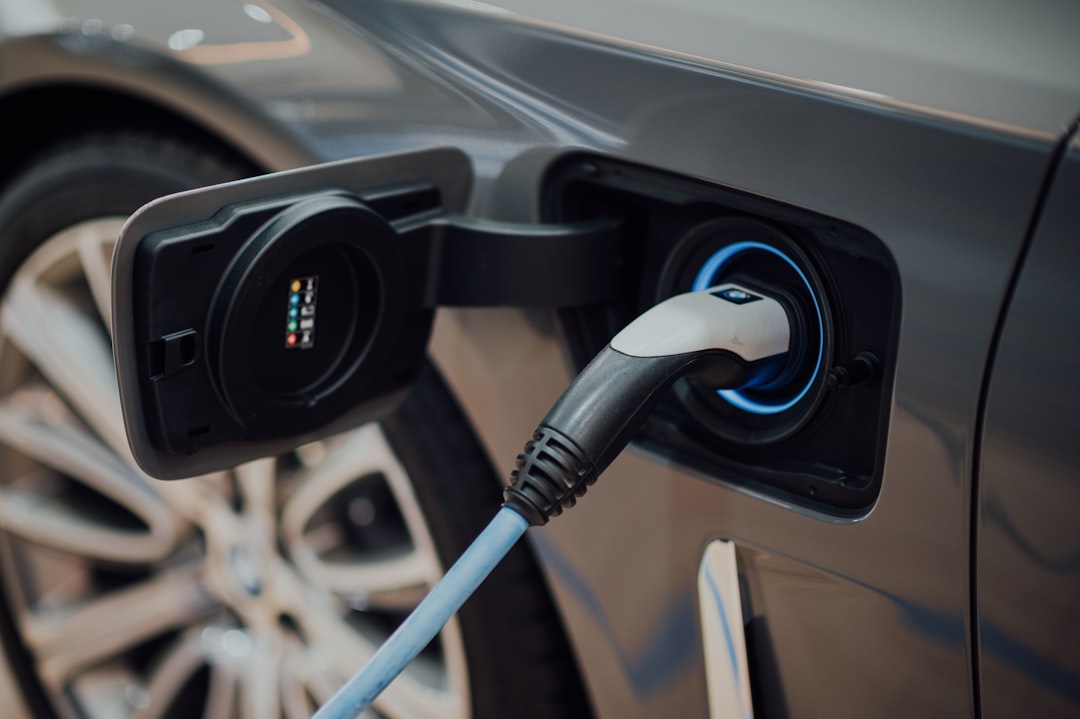
Understanding charging speeds and costs helps set realistic expectations. Home charging via a 7kW wall box (R8,000–R15,000 installed) adds approximately 50km of range per hour — meaning an overnight charge easily replenishes a full day’s driving. Municipal electricity at R5.15/kWh translates to roughly 34 cents per kilometre, compared to R1.31/km for petrol vehicles.
Public DC fast charging costs more (R4.50–R6.50/kWh depending on provider) but delivers 200–300km of range in 30 minutes. While convenient for road trips, frequent reliance on public fast charging erodes the EV cost advantage — another reason home charging access remains the critical prerequisite for EV ownership.
Maintenance: The Hidden Advantage
EVs eliminate entire categories of maintenance that petrol vehicle owners accept as normal. No oil changes, no timing belt replacements, no spark plug servicing, no exhaust system repairs, no clutch replacements. Brake pads last 2–3 times longer thanks to regenerative braking. The typical EV service involves tyre rotation, cabin air filter replacement, brake fluid check, and software updates — often completed in under an hour at R200–R400 per service.
Over 5 years, this maintenance simplicity saves R33,000 compared to equivalent petrol vehicles. Over 10 years, maintenance savings alone exceed R66,000 — a substantial portion of the original purchase premium.
The Bottom Line: 2025 Verdict
For the majority of South African drivers — particularly those with home charging and regular daily commutes — EVs are absolutely worth it in 2025.
Key Numbers to Remember
- R26,827 annual fuel savings (50km/day driving)
- R143,935 total savings over 5 years
- 2.2 years to recover purchase premium
- R287,870 cumulative savings by year 10
- 70% lower maintenance costs
The Tipping Point Has Arrived
In 2025, EVs have reached the point where they’re not just environmentally better — they’re financially smarter for most drivers. The combination of rising petrol prices (R24.00/L and climbing), improving charging infrastructure, competitive EV pricing, and proven real-world performance makes the case clear.
Load-shedding, once considered the primary barrier to EV adoption, has proven manageable in practice. The large battery capacity provides multi-day buffer, flexible charging options accommodate power availability, and many owners have added solar systems for complete energy independence.
If you drive 50km+ daily, own your home with off-street parking, and plan to keep the vehicle 5+ years, an EV will save you significant money while providing a superior driving experience.
Making the Decision
The question is no longer “Are EVs worth it?” but rather “Which EV fits my specific situation?” Consider your daily driving distance, parking situation, budget, and ownership timeline. For most South Africans meeting the basic criteria, the financial and practical case is now compelling.
Calculate your specific savings using our EV Cost Calculator — input your daily driving, current fuel costs, and see exactly how much you’d save. Check our live charging map to verify infrastructure along your regular routes. When you’re ready to explore options, get a personalised quote comparing EV models suited to your needs.
Frequently Asked Questions
Are electric cars worth it in South Africa with load-shedding?
Yes. EVs have 400km+ range (equivalent to 8 days of normal 50km daily driving), allowing you to charge during available power windows rather than daily. Smart scheduling charges during low-demand periods (typically 2am–6am), and you can add solar + battery systems for complete grid independence (R120,000–R180,000 investment). The large battery acts as a buffer, and most owners report minimal disruption to their routines even during Stage 6 load-shedding.
How much money do you actually save with an EV in South Africa?
For 50km/day driving: R26,827 annually in fuel savings (R5.15/kWh electricity vs R24.00/L petrol) plus R6,600 annually in maintenance savings. Over 5 years, you save R143,935 total — despite the higher purchase price. The purchase premium is recovered within 2.2 years, after which every kilometre represents pure savings.
Is the higher purchase price of EVs worth it?
Yes, if you keep the vehicle 3+ years. The typical R58,000 purchase premium (comparing BYD Atto 3 to Corolla Cross) is recovered within 2–3 years through fuel and maintenance savings. Over 5 years, EVs are R143,935 cheaper total. Over 10 years, savings reach approximately R287,870 — nearly half the original vehicle purchase price.
Do EVs hold their value in South Africa?
Yes, similar to premium petrol vehicles. EVs retain 60–65% of value after 3 years, matching popular models like the VW Polo and exceeding many petrol competitors. Strong demand for used EVs, long battery warranties (typically 8 years/160,000km), and the growing charging infrastructure support resale values. As petrol prices continue rising, used EV demand is expected to strengthen further.
What’s the best electric car to buy in South Africa in 2025?
For value and features: BYD Atto 3 (R627,900) — excellent 420km range, features, 6-year warranty, and best cost-per-kilometre in its class. For budget entry: GWM Ora (R429,900) — most affordable path to EV ownership with solid 400km range. For premium buyers: BMW iX1 (R990,000) — luxury appointments, performance, and brand prestige. Choice depends on budget and priorities, but the BYD Atto 3 offers the strongest overall value proposition for most buyers.
Continue Reading

Deprecated: File Theme without comments.php is deprecated since version 3.0.0 with no alternative available. Please include a comments.php template in your theme. in /var/www/wordpress/wp-includes/functions.php on line 6085
Leave a Reply