
“I’m spending around R4,500 a week on fuel,” wrote u/Ok-Type-858 on r/electriccars. “I think an EV would be a good solution to save some money. I’m looking for a BYD Sealion 6.” That sentiment — fuel costs eating into take-home pay — is driving South Africa’s 241% year-on-year surge in plug-in hybrid sales. But does the maths actually stack up when you compare the BYD Sealion 6 DM-i against a proven petrol rival like the Hyundai Tucson 2.0 Executive?
We’ve taken the official figures, real-world electricity tariffs, and current petrol prices to build a five-year total cost of ownership comparison for the BYD Sealion 6 DM-i vs Hyundai Tucson 2.0 Executive. The answer isn’t as simple as “plug-in hybrid always wins” — but for the right driver, the savings are substantial.

The bottom line
- The BYD Sealion 6 DM-i Dynamic (R729,900) costs R50,000 more upfront than the Hyundai Tucson 2.0 Executive (R679,900), but delivers 100 km pure-electric range and 1,100 km combined WLTP range from an 18.3 kWh battery plus 1.5L petrol engine.
- At 1,500 km/month with daily home charging, the Sealion 6 costs roughly R1,100/month in electricity (Cape Town residential tariff) versus R3,100/month in petrol for the Tucson — a saving of R2,000/month or R24,000/year.
- Over five years, the Sealion 6 recoups its R50,000 premium through fuel savings alone, breaking even around month 25 — but real-world charging losses, load-shedding backup costs, and service intervals affect the final tally.
- The Tucson 2.0 Executive remains the safer choice for buyers without reliable home charging, those driving long-distance routes daily, or anyone prioritising Hyundai’s proven 7-year/200,000 km drivetrain warranty over BYD’s newer SA service network.
Price and specification snapshot
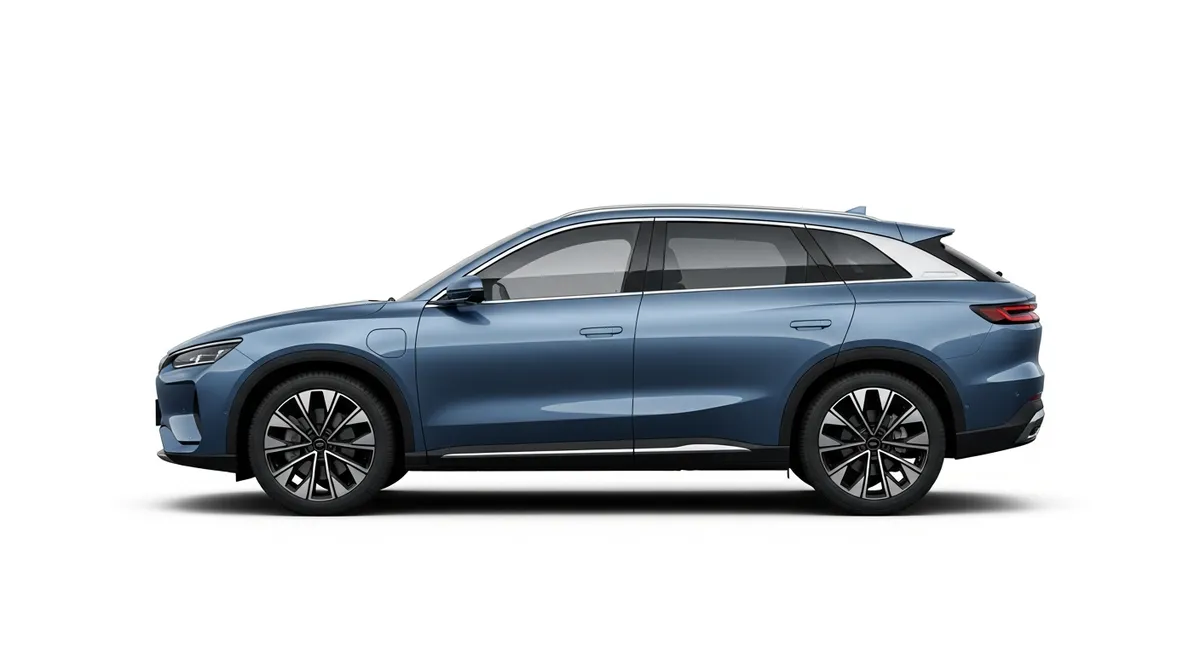
BYD launched the Sealion 6 DM-i in April 2025 as South Africa’s most affordable plug-in hybrid with a 1,000 km-plus range, undercutting the BMW X1 xDrive30e by R410,100. Hyundai responded with a facelifted Tucson in the same month, slashing the 2.0 Premium’s price by R39,000 to R559,900. The Dynamic trim tested here sits at R729,900, while the Tucson 2.0 Executive (a higher specification than the base Premium) retails at R679,900. Here’s how the two midsize SUVs line up:
| Specification | BYD Sealion 6 DM-i Dynamic | Hyundai Tucson 2.0 Executive |
|---|---|---|
| Price (ZAR) | R729,900 | R679,900 |
| Engine / motor | 1.5L petrol + electric motor | 2.0L petrol |
| System power | 160 kW / 300 Nm | 115 kW / 192 Nm |
| Drivetrain | Front-wheel drive | Front-wheel drive |
| Transmission | EHS electric hybrid system | 6-speed automatic |
| Battery capacity | 18.3 kWh (LFP) | — |
| Pure-electric range (WLTP) | 100 km | — |
| Combined range (WLTP) | 1,100 km | ~640 km (57L tank) |
| Fuel consumption (WLTP) | 5.8 kWh/100 km (electric mode) | 8.5 L/100 km |
| 0–100 km/h | 8.5 seconds | ~11 seconds (estimate) |
| Warranty | 6-year/150,000 km vehicle; 8-year/150,000 km battery | 5-year/150,000 km vehicle; 7-year/200,000 km drivetrain |
| Service plan | 3-year/45,000 km | 5-year/75,000 km |
The BYD’s 160 kW system output gives it a meaningful performance edge — 8.5 seconds to 100 km/h versus the Tucson’s more leisurely 11-second sprint. But the Hyundai counters with a longer service plan (5 years versus 3) and a proven local dealer network spanning 60+ sites.

Running costs: electricity vs petrol at 1,500 km/month
This is where the plug-in hybrid’s value proposition lives or dies. We’ve modelled a realistic SA use case: 1,500 km per month, with the BYD owner charging at home every night to maximise electric-only driving, and the Tucson owner filling up at the petrol station.
BYD Sealion 6 DM-i monthly electricity cost
The Sealion 6’s 18.3 kWh battery delivers 100 km of pure-electric range under WLTP test conditions. In real-world SA driving — accounting for aircon, highway speeds, and battery conditioning — expect closer to 80 km per full charge. That means you’ll cover roughly 1,200 km per month on electricity (15 full cycles) and 300 km on petrol.
Electricity portion: 15 charges × 18.3 kWh = 274.5 kWh/month. At Cape Town’s residential tariff averaging R2.85/kWh in the Homepower band, that’s R782/month. Accounting for 15–20% charging losses (heat dissipation, AC-to-DC conversion, battery management overhead), the real cost climbs to R900/month.
Petrol portion: 300 km in hybrid mode. The Sealion 6’s electric efficiency is rated at 5.8 kWh/100 km; when running on petrol, the 1.5L engine delivers approximately 5.5 L/100 km. That’s 16.5 litres for the 300 km petrol portion. At R24.50/L (April 2026 inland 95 octane), that’s R404/month.
Total BYD monthly cost: R900 (electricity) + R404 (petrol) = R1,304/month.
Hyundai Tucson 2.0 Executive monthly petrol cost
The Tucson’s consumption averages 8.5 L/100 km in real-world SA conditions, translating to 127.5 litres per month at 1,500 km. At R24.50/L, that’s R3,124/month. At the coastal price of R23.80/L, it drops to R3,034/month. We’ll use R3,100/month as the average.
Monthly savings summary
| Vehicle | Monthly cost (1,500 km) | Annual cost |
|---|---|---|
| BYD Sealion 6 DM-i | R1,304 | R15,648 |
| Hyundai Tucson 2.0 | R3,100 | R37,200 |
| Saving (BYD) | R1,796 | R21,552 |
Over five years, that’s R107,760 in fuel savings — more than double the Sealion 6’s upfront premium.

Five-year total cost of ownership
Fuel savings alone don’t tell the full story. Service intervals, insurance, depreciation, and the hidden costs of load-shedding all shift the balance.
Service and maintenance
The BYD includes a 3-year/45,000 km service plan; the Hyundai covers 5 years/75,000 km. After the plans expire:
- BYD Sealion 6 DM-i: Plug-in hybrids still need engine oil changes, gearbox fluid, coolant, and brake fluid. Expect R2,500–R3,500 per major service at a BYD dealer. Budget R10,000 for years 4–5.
- Hyundai Tucson 2.0: Conventional petrol servicing. Post-plan costs run R3,000–R4,000 per service. The Tucson is fully covered for the five-year window, so R0 out-of-pocket.
Insurance
The Sealion 6’s higher retail price (R729,900 vs R679,900) pushes comprehensive premiums up by roughly R100–R150/month, or R6,000–R9,000 over five years. We’ll use R7,500 as the midpoint.
Depreciation
This is the wild card. Hyundai’s residual values in SA are well-documented; the Tucson typically retains 45–50% after five years. BYD is too new to the market for reliable data, but March 2026 sales figures show 589 units sold (21st overall), with the Sealion 6 as the second-best seller at 130 units. Strong early demand suggests decent residuals, but Chinese-brand stigma and battery-age concerns could push depreciation steeper. We’ll assume both vehicles lose 50% over five years for a neutral comparison.
Total cost of ownership (five years, 90,000 km)
| Cost category | BYD Sealion 6 DM-i | Hyundai Tucson 2.0 |
|---|---|---|
| Purchase price | R729,900 | R679,900 |
| Fuel / electricity (5 years) | R78,240 | R186,000 |
| Service (post-plan, years 4–5) | R10,000 | R0 |
| Insurance (5-year delta) | +R7,500 | — |
| Residual value (50% retained) | −R364,950 | −R339,950 |
| Net 5-year cost | R460,690 | R525,950 |
The BYD comes out ahead by R65,260 over five years — but only if you charge at home every night, drive the assumed 1,500 km/month mix, and the residual values hold. If petrol climbs to R26/L (likely by 2027), the gap widens to R85,000+. If you can’t charge daily, the Sealion 6 becomes a 1.5L petrol SUV running at 5.5 L/100 km — still better than the Tucson’s 8.5 L/100 km, but nowhere near as compelling.
Charging at home: what you need for the BYD Sealion 6 DM-i
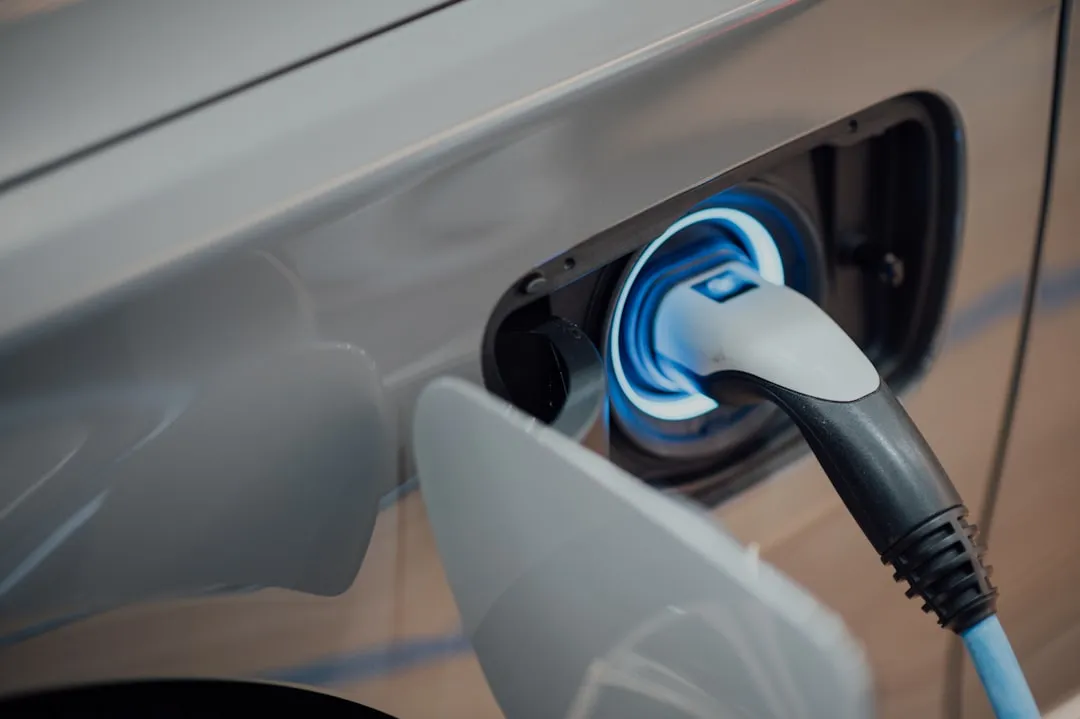
The Sealion 6 supports up to 7 kW AC charging and 18 kW DC fast charging. For home use, you’ll install an AC wallbox. Here’s how the three common options stack up:
| Charger type | Power output | Time to full (18.3 kWh) | Installation cost | Best for |
|---|---|---|---|---|
| 7.4 kW single-phase | 7.4 kW | ~2.5 hours | R15,000–R20,000 | Most SA homes (single-phase supply) |
| 11 kW three-phase | 11 kW | ~1.7 hours | R18,000–R25,000 | Homes with three-phase, faster top-ups |
| 22 kW three-phase | 22 kW | ~50 minutes | R22,000–R30,000 | Overkill for the Sealion 6 (capped at 7 kW) |
The Sealion 6’s onboard charger maxes out at 7 kW, so a 7.4 kW single-phase wallbox is the sweet spot. You’ll recharge the battery from empty in under three hours — perfect for overnight charging. An 11 kW or 22 kW charger won’t charge the Sealion 6 any faster, though it future-proofs your home if you later buy a vehicle with a higher AC acceptance rate (e.g., a BMW iX that can take 11 kW).

Solar pairing and load-shedding backup
If you already have rooftop solar, the economics tilt heavily toward the BYD. Charging from your own panels costs roughly R0.50–R1.00 per kWh (amortised system cost), slashing the monthly electricity bill from R900 to R180–R360. That pushes the five-year fuel saving past R140,000.
But load-shedding complicates things. If you’re on stage 3+ and don’t have battery backup, you’ll miss charging windows. A 5 kWh home battery (R40,000–R60,000 installed) lets you store solar energy and charge the Sealion 6 overnight even during outages. Factor that into the TCO if load-shedding is chronic in your area.
Public charging infrastructure: can you road-trip the Sealion 6?
South Africa’s public charging network grew 122% between 2022 and 2025, reaching approximately 445 sites with 650 chargers by early 2026. GridCars operates 60% of that capacity, with Rubicon, CHARGE, and Zero Carbon Charge filling the gaps.
The good news: the Sealion 6’s 1,100 km combined range means you can drive Johannesburg to Durban (560 km) or Cape Town to George (420 km) without charging at all. The 100 km electric range handles daily commutes; the petrol engine is your long-distance insurance policy. This is the PHEV’s killer advantage over a pure EV like the BYD Atto 3, which would need at least one DC fast-charge stop on the same routes.
Public DC charging costs R7.00–R7.35 per kWh as of August 2025 tariffs — roughly three times the Cape Town residential rate. If you’re relying on public charging for daily top-ups, the BYD’s cost advantage evaporates. The Sealion 6 makes sense only if home charging is your primary strategy.
BYD has announced plans to deploy 200–300 flash charging stations with up to 1,000 kW power by the end of 2026, but those are aimed at full EVs. The Sealion 6’s 18 kW DC limit won’t benefit much.
Who should buy the BYD Sealion 6 DM-i — and who shouldn’t
The BYD makes sense if you:
- Drive 1,200–2,000 km per month, mostly urban or suburban (maximises electric-only driving).
- Have secure off-street parking with access to a 15A or 20A wall socket (minimum for AC charging).
- Can install a 7.4 kW wallbox or already have solar with spare daytime capacity.
- Occasionally need 600+ km range for road trips (the petrol engine removes range anxiety).
- Value tech features — the 15.6-inch rotating touchscreen, wireless Apple CarPlay, V2L functionality, and 10-speaker Infinity audio are all standard on the Dynamic trim.
Stick with the Hyundai Tucson 2.0 if you:
- Park on-street or in a complex without charging infrastructure (you’ll burn petrol constantly in the BYD).
- Drive long-distance routes daily (500+ km per day makes the PHEV’s 100 km electric range irrelevant).
- Prioritise warranty length and dealer footprint — Hyundai’s 7-year/200,000 km drivetrain cover and 60+ SA dealers beat BYD’s newer, smaller network.
- Want a lower upfront price — the Tucson 2.0 Executive at R679,900 undercuts the Sealion 6 Dynamic by R50,000.
- Prefer proven resale values — Hyundai residuals are a known quantity; BYD’s are still being written.
_May_2026_01.jpg)
The honest verdict
The BYD Sealion 6 DM-i isn’t a no-brainer replacement for the Hyundai Tucson — it’s a different tool for a different job. If you can plug in every night, the BYD’s R21,500/year fuel saving (at 1,500 km/month) justifies the R50,000 upfront premium within 28 months. Pair it with rooftop solar, and the payback shrinks to 18 months. But if you’re an apartment dweller, a road warrior doing 3,000+ km/month, or someone who values the peace of mind that comes with a 60-dealer service network, the Tucson 2.0 Executive remains the rational choice.
The broader trend is clear: PHEV market share surged 241% year-on-year in South Africa, driven by Chinese brands like BYD, Chery, and Geely slashing entry prices. The Sealion 6 is the sharp end of that wedge — a credible, feature-rich midsize SUV that happens to run on electricity for 100 km per charge. Whether that 100 km is enough to change your cost equation depends entirely on your daily routine and your access to a plug.
Ready to go electric?
If the BYD Sealion 6 DM-i looks like the right fit for your driving patterns, the next step is a home charging assessment. ChargePoint SA installs 7.4 kW and 11 kW wallboxes across Gauteng, Western Cape, and KZN, with solar-integration options and load-shedding backup solutions. We’ll survey your electrical panel, calculate your overnight charging window, and give you a fixed-price quote — no surprises, no upselling.
Book your free site assessment and find out whether your home is PHEV-ready. If it is, you could be saving R1,800+ per month within six weeks. If it’s not, we’ll tell you exactly what it would take to get there — and whether the Tucson might be the smarter buy after all.
Image credits
“BYD Sealion 6 DM-i Stone Grey” via Wikimedia Commons, CC BY-SA 4.0 · “BYD Sealion 6 DM-i 1.5 Premium 2025” via Wikimedia Commons, CC BY-SA 4.0 · “BYD Sealion 6 DM-i Harbour Grey” via Wikimedia Commons, CC BY-SA 4.0 · “2024 BYD Sealion 6 DM-i Premium” via Wikimedia Commons, CC BY-SA 4.0 · “Hyundai Tucson (TL) May 2026” via Wikimedia Commons, CC BY-SA 4.0