
BYD shipped 30,000 vehicles to Australia across May and June 2026 in response to record fuel prices driving a sales spike — and that same plug-in hybrid value proposition has landed in South Africa with the Sealion 6 PHEV starting at R639,900, a full R260,000 below the Toyota Fortuner 2.8 GD-6’s R900,000 entry price. The question isn’t whether the BYD undercuts Toyota on sticker price — it’s whether the plug-in tech delivers real-world cost advantages over the Fortuner’s proven diesel drivetrain when you factor in 2026 fuel prices, Eskom tariffs, and actual SA driving patterns.
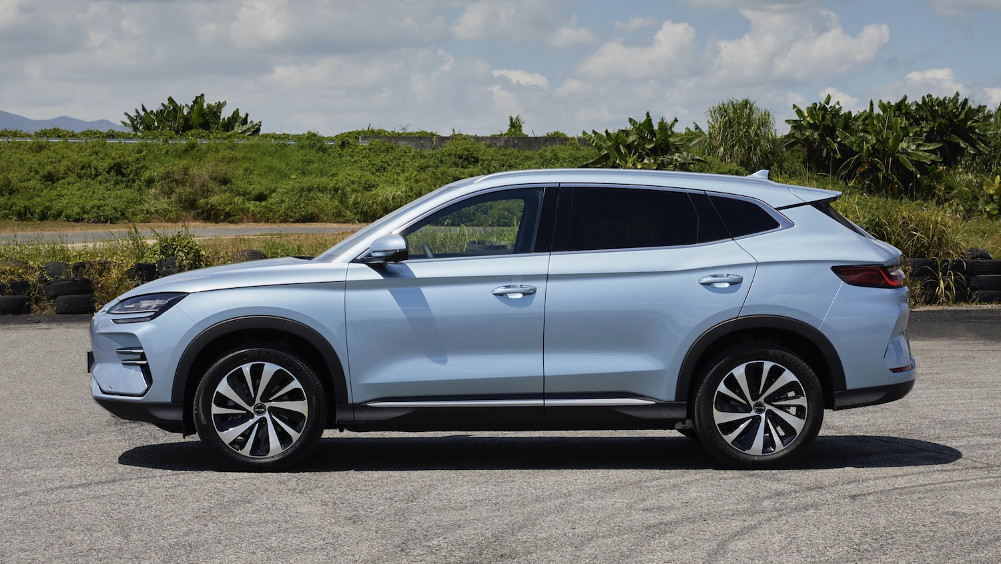
The BYD Sealion 6 PHEV launched in April 2025 with three trims starting at R639,900, while the 2026 Toyota Fortuner 2.8 GD-6 ranges from R900,000 to R1,009,000. That’s a R260k–R370k saving before you turn the key. We’ve crunched the numbers using 2026 fuel prices, Eskom tariffs, and real SA driving patterns to see which SUV makes financial sense.

Price showdown: sticker shock vs long-term value
The 2026 pricing landscape tells two stories. BYD’s three Sealion 6 PHEV trims — Comfort (R639,900), Dynamic (R696,900), and Premium AWD (R797,900) — all land below the Fortuner 2.8 GD-6’s entry point. Toyota’s diesel SUV starts at R900,000 for the 4×2 models and climbs to R1,009,000 for the VX mHEV 4×4, according to Carfind’s 2026 new-vehicle listings.
| Model | Variant | Price (ZAR) | Powertrain | Drive |
|---|---|---|---|---|
| BYD Sealion 6 | Comfort PHEV | R639,900 | 1.5T + 160kW motor | FWD |
| BYD Sealion 6 | Dynamic PHEV | R696,900 | 1.5T + 160kW motor | FWD |
| BYD Sealion 6 | Premium AWD PHEV | R797,900 | 1.5T + dual motors (238kW) | AWD |
| Toyota Fortuner | 2.8 GD-6 4×2 | ~R900,000 | 2.8 diesel (150kW) | RWD |
| Toyota Fortuner | 2.8 GD-6 VX 4×4 | R1,009,000 | 2.8 diesel (150kW) | 4WD |
That R260k–R370k delta is real money. For context, it’s enough to install a 5 kW rooftop solar system with battery backup — which would make the Sealion 6’s home charging effectively free during the day and load-shedding-proof at night. The Fortuner’s higher sticker reflects its body-on-frame construction, proven off-road capability, and Toyota’s premium brand positioning in SA. But if you’re shopping on total cost of ownership rather than badge prestige, the BYD’s pricing is disruptive.

Range, efficiency, and the plug-in advantage
BYD Sealion 6 PHEV: 1,080 km combined, 5.5 L/100 km
The Sealion 6 pairs a 1.5-litre turbocharged petrol engine with a 160 kW front motor (238 kW combined in the AWD Premium) and an 18.3 kWh LFP Blade Battery. BYD claims 1,080 km combined range and 5.5 L/100 km fuel consumption when the battery is depleted. Pure-electric range is approximately 80–100 km (BYD hasn’t published an official WLTP figure for SA yet, but Australian reviews suggest 80–90 km in real-world conditions).
What that means in practice: if you charge nightly at home and your daily commute is under 80 km, you’ll run almost entirely on electricity. Only road trips and longer weekend drives will burn petrol. The 18.3 kWh battery charges in about 2.5 hours on a 7.4 kW AC charger or 5 hours on a standard 3.6 kW household socket.
Toyota Fortuner 2.8 GD-6: 80 L tank, ~10 L/100 km real-world
The Fortuner 2.8 GD-6 uses a 2.8-litre turbodiesel producing 150 kW and 500 Nm, mated to a six-speed automatic. Official combined consumption is 7.4 L/100 km, but real-world figures — especially with the 4×4 models and seven-seat payload — sit closer to 9.5–10.5 L/100 km in mixed driving. The 80-litre tank delivers roughly 750–850 km of range depending on driving style and terrain.
Diesel’s advantage: you can refuel anywhere in five minutes. The trade-off: you’re paying R24.95/litre (inland price as of May 2026) every time, and that figure has climbed 8–12% annually over the past three years.

Running costs: the R21,420/year question
Let’s model a typical SA household: 1,500 km per month, mix of urban commuting (70%) and weekend highway (30%). We’ll use May 2026 fuel prices and the NERSA-approved Eskom tariff increase of 8.76% effective April 2026.
BYD Sealion 6 PHEV monthly cost
Assumption: 70% of driving (1,050 km) on electric, 30% (450 km) on petrol when battery depleted.
- Electric portion: 1,050 km ÷ 100 × 15 kWh/100 km = 157.5 kWh/month
- Home charging cost: 157.5 kWh × R2.85/kWh (2026 Eskom Homelight tariff average) = R449
- Petrol portion: 450 km ÷ 100 × 5.5 L/100 km = 24.75 litres
- Petrol cost: 24.75 L × R24.35/L (coastal, May 2026) = R603
- Total monthly: R449 + R603 = R1,052
(If you charge during off-peak hours or via solar, the electric cost drops to R0–R200/month, pushing total running cost below R800.)
Toyota Fortuner 2.8 GD-6 monthly cost
Real-world consumption: 10 L/100 km (conservative estimate for mixed driving).
- Diesel consumption: 1,500 km ÷ 100 × 10 L/100 km = 150 litres
- Diesel cost: 150 L × R24.95/L (inland, May 2026) = R3,743
If we use the coastal diesel price (R23.90/L), the monthly cost drops to R3,585. Either way, the Fortuner burns R2,533–R2,691 more per month than the Sealion 6 in this scenario — R30,396–R32,292 per year.
| Vehicle | Monthly fuel/energy cost | Annual cost | 5-year total |
|---|---|---|---|
| BYD Sealion 6 PHEV | R1,052 | R12,624 | R63,120 |
| Toyota Fortuner 2.8 GD-6 | R3,743 | R44,916 | R224,580 |
| Difference | R2,691 | R32,292 | R161,460 |
Over five years, the Sealion 6 saves R161,460 in energy costs alone — more than double the R63,120 it costs to run. Add in the R260k lower purchase price (Comfort vs base Fortuner), and the total cost of ownership gap widens to over R420,000 in BYD’s favour.
Charging at home: 7.4 kW vs 11 kW vs 22 kW — what does the Sealion 6 need?
The BYD Sealion 6 PHEV’s 18.3 kWh battery accepts AC charging at up to 7.4 kW via its Type 2 inlet. That means:
- 7.4 kW charger: 0–100% in ~2.5 hours (ideal for overnight charging)
- 3.6 kW household socket: 0–100% in ~5 hours (fine if you plug in after dinner)
- 11 kW or 22 kW charger: No benefit — the car’s onboard charger maxes out at 7.4 kW
For most households, a 7.4 kW wall-box is the sweet spot. It’s cheaper to install than an 11 kW unit (no three-phase wiring required in most homes), and it fully charges the Sealion 6 during off-peak hours (23:00–06:00) when Eskom’s Homelight tariff drops to ~R1.80/kWh. If you’re pairing the charger with solar, size your inverter to handle 7.4 kW continuous draw — a 5 kW inverter will throttle the charge rate to ~3.6 kW.
According to ChargePoint SA’s 2026 infrastructure report, public DC fast charging costs R7.00–R7.35/kWh, while home AC charging averages R2.85–R4.00/kWh. The math is clear: home charging is 50–60% cheaper, and the Sealion 6’s modest 18.3 kWh battery makes overnight top-ups painless.

SA-specific realities: load-shedding, infrastructure, and service networks
Load-shedding and solar pairing
Load-shedding remains a wild card. If you’re charging a PHEV during Stage 4+ and your suburb loses power for 4–6 hours daily, you’ll need either a battery backup system or a willingness to charge during the petrol engine’s regen cycles (which is inefficient). The smarter play: pair a 7.4 kW charger with a 5 kWh lithium battery and 3–5 kW of rooftop solar. That setup costs R80k–R120k installed, but it makes your Sealion 6 immune to Eskom’s schedule and drops your per-km energy cost to near-zero during daylight hours.
The Fortuner, meanwhile, doesn’t care about load-shedding — diesel pumps run on generator backup at every fuel station. But you’re still paying R24.95/L, and that price climbs every time Brent crude spikes or the rand weakens.
Public charging infrastructure
GridCars operates 445 sites with 650 chargers (60% of SA’s public network), while Rubicon runs 103 stations with 6,648 kW installed capacity. BYD plans to add 200–300 Flash charging stations by end-2026, which would more than double the national footprint.
For the Sealion 6 PHEV, public charging is a nice-to-have, not a must-have. The 1,080 km combined range means you can road-trip Cape Town to Johannesburg on a single tank of petrol plus one overnight charge. The Fortuner’s 750–850 km diesel range is shorter, but refuelling is faster (5 minutes vs 2.5 hours for the BYD’s AC charge).
Service and parts networks
Toyota’s 200+ dealerships and parts availability are unmatched. BYD is expanding to 35 dealerships by Q1 2026 and targeting 60–70 by year-end, but that’s still a fraction of Toyota’s footprint. If you live in a rural area or frequently travel off-grid, the Fortuner’s ubiquitous service network is a real advantage. BYD’s 6-year/150,000 km warranty (including 8-year battery cover) is generous, but you’ll want a dealership within 100 km for peace of mind.

The honest verdict: who should buy which?
Buy the BYD Sealion 6 PHEV if you…
- Drive mostly urban/suburban routes (under 80 km/day)
- Have off-street parking and can install a 7.4 kW charger (or already have solar)
- Want predictable energy costs immune to fuel-price swings
- Value tech features (15.6-inch rotating screen, 360° cameras, adaptive cruise) over off-road pedigree
- Can live with a smaller service network (35 dealerships now, 60+ by end-2026)
The Sealion 6 is the rational choice for cost-conscious families who do 90% of their driving within a 100 km radius of home. You’ll save R32k/year in running costs, enjoy near-silent electric commutes, and still have 1,080 km of petrol-hybrid range for road trips. The R260k–R370k lower purchase price is just the opening act — the real savings compound over 5–10 years.
Buy the Toyota Fortuner 2.8 GD-6 if you…
- Regularly tow heavy trailers (2,500–3,500 kg) or boats
- Drive dirt roads, farm tracks, or venture deep into the Karoo/Kalahari
- Need 7-seat capacity with rugged body-on-frame construction
- Value Toyota’s 200+ dealership network and instant parts availability
- Can’t install home charging (apartment living, no off-street parking)
The Fortuner remains the default choice for SA’s outdoor lifestyle and rural realities. Its diesel torque, proven off-road ability, and 5-minute refuel time make it the safer bet for buyers who venture beyond tarred roads or tow regularly. You’ll pay R32k/year more in fuel, but you’re buying peace of mind and Toyota’s bulletproof reputation.
The hybrid middle ground
If you’re torn, consider this: PHEV sales quadrupled in SA from 2024 to 2025, while traditional hybrids (like the Fortuner’s mild-hybrid variant) still dominate NEV sales. That suggests SA buyers want electrification’s cost benefits without full EV commitment. The Sealion 6 PHEV delivers exactly that — 80 km of pure-electric daily driving with a 1,080 km petrol safety net.
Ready to charge smarter?
Our free site assessment covers:
- Electrical capacity check (single-phase vs three-phase, DB board upgrades)
- Optimal charger placement (garage, carport, driveway)
- Solar integration options (size your array to cover daily charging + household load)
- Load-shedding resilience (battery backup sizing, auto-switchover)
- Municipal compliance (COC, Eskom notification if required)
Book your assessment today at chargepointsa.co.za/get-a-quote — we’ll have a qualified electrician at your property within 48 hours, and you’ll receive a detailed quote within 24 hours of the visit. No obligation, no fine print, just honest advice on what it takes to make PHEV ownership work in your driveway.
FAQ
Can I charge the BYD Sealion 6 PHEV on a standard household plug?
Yes. The Sealion 6 accepts 3.6 kW charging from a standard 15A household socket and will fully charge the 18.3 kWh battery in about 5 hours. For faster overnight charging, a 7.4 kW wall-box cuts that to 2.5 hours.
How does the Fortuner’s diesel range compare to the Sealion 6’s combined range?
The Fortuner’s 80-litre tank delivers 750–850 km on diesel alone (at 9.5–10.5 L/100 km real-world). The Sealion 6 offers 1,080 km combined — 80–100 km pure-electric plus ~1,000 km on petrol when the battery depletes.
What happens to the Sealion 6’s running costs if I can’t charge at home?
Without home charging, you’ll rely on public DC fast charging (R7.00–R7.35/kWh) or run the petrol engine more often. Monthly costs would rise from R1,052 to roughly R1,800–R2,200, still below the Fortuner’s R3,743 diesel bill.
Does the Fortuner’s mild-hybrid system offer any fuel savings?
The Fortuner VX mHEV uses a 48V system for start-stop and mild regenerative braking, but real-world savings are minimal — typically 0.3–0.5 L/100 km. It’s not a plug-in hybrid and offers no pure-electric driving.
Which SUV holds its value better in South Africa?
Toyota Fortuners historically retain 55–60% of their value after five years, while BYD’s resale data in SA is still emerging (the brand only launched locally in 2022). The Sealion 6’s R161,460 five-year fuel savings offset most depreciation concerns.
Image credits
“BYD Sealion 6 DM-i 1.5 Premium 2025” by Wikimedia Commons contributor, CC BY-SA 4.0 · “BYD Sealion 6 DM-i Harbour Grey” by Wikimedia Commons contributor, CC BY-SA 4.0 · “2023 Toyota Fortuner 2.8 LTD” by Wikimedia Commons contributor, CC BY-SA 4.0 · “2023 Toyota Fortuner 2.8 LTD rear” by Wikimedia Commons contributor, CC BY-SA 4.0 · “BYD Sealion 6 DM-i interior” by Wikimedia Commons contributor, CC BY-SA 4.0
Continue Reading
Deprecated: File Theme without comments.php is deprecated since version 3.0.0 with no alternative available. Please include a comments.php template in your theme. in /var/www/wordpress/wp-includes/functions.php on line 6085
Leave a Reply