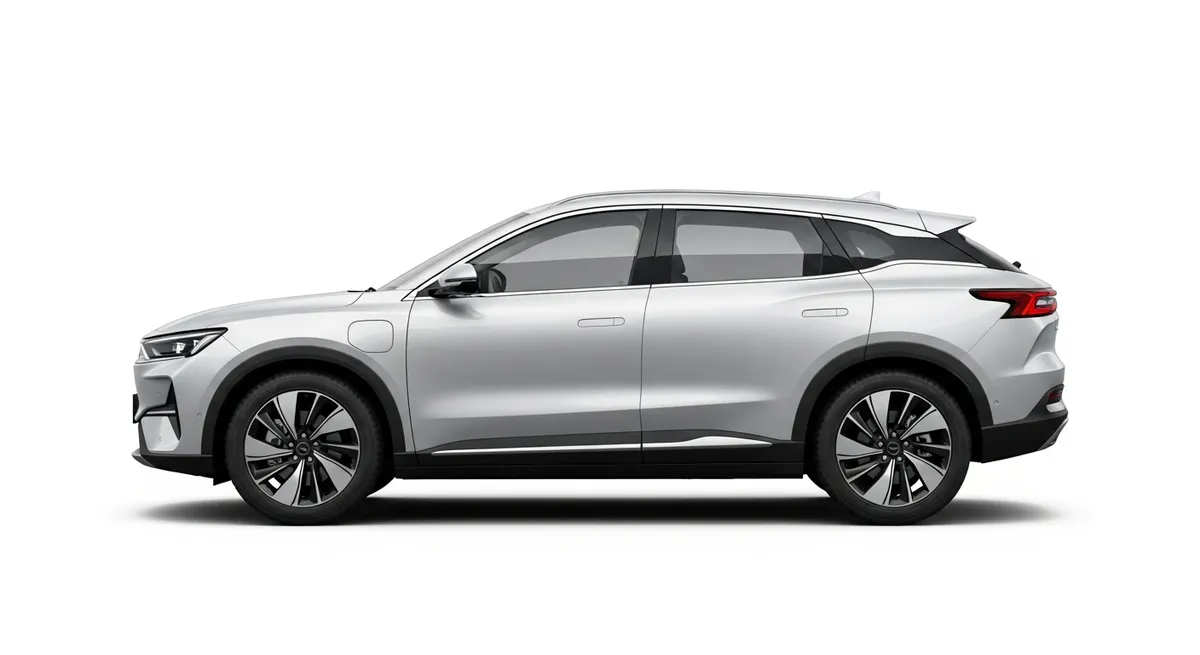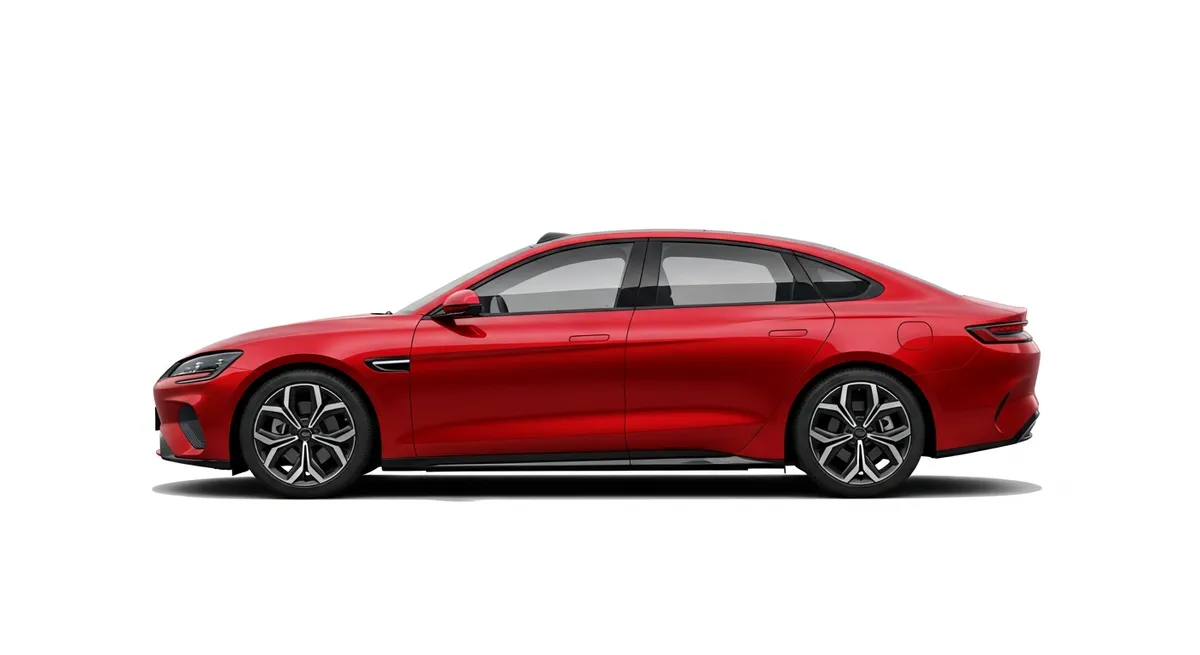

The BYD Seal retails at R999,900 in South Africa—R410,000 more than the Volkswagen Jetta’s R589,900 starting price—but at 1,500 km per month, the electric sedan saves R1,920 in fuel costs versus the petrol alternative, clawing back R23,040 annually from that upfront premium. With petrol at R24 per litre and municipal off-peak electricity under R2 per kWh in most metros, the running-cost gap is wide enough to reshape the five-year total cost of ownership, though the Jetta still wins on pure TCO unless you drive well above average or petrol prices surge past R28 per litre.

This comparison unpacks the real-world economics: upfront costs, monthly electricity versus petrol bills, five-year total cost of ownership, and the SA-specific realities of load-shedding, charging infrastructure, and service networks. If you’re weighing a premium electric sedan against a mainstream petrol alternative, the numbers below will clarify which path suits your wallet—and your driving habits.
Purchase price and specifications
The entry point tells half the story. The BYD Seal retails at R999,900 for the Standard Range variant, delivering 570 km WLTP range from an 82.5 kWh Blade Battery and a single 230 kW rear motor. The Volkswagen Jetta starts at R589,900 for the 1.4 TSI Trendline, pairing a 110 kW turbocharged petrol engine with a 50-litre tank and a claimed 5.6 l/100 km combined consumption.

| Specification | BYD Seal Standard Range | VW Jetta 1.4 TSI Trendline |
|---|---|---|
| Retail price (ZAR) | R999,900 | R589,900 |
| Power output | 230 kW / 360 Nm | 110 kW / 250 Nm |
| Range / tank capacity | 570 km (WLTP) | ~890 km (50 L tank, 5.6 l/100 km claimed) |
| Efficiency | 15.2 kWh/100 km (WLTP) | 5.6 l/100 km (claimed combined) |
| 0–100 km/h | 5.9 seconds | 8.9 seconds |
| Warranty | 6 years / 150,000 km vehicle; 8 years / 200,000 km battery | 3 years / 120,000 km vehicle; 2 years / unlimited km Motorplan |
The R410,000 gap buys you 120 kW more power, a longer vehicle warranty, and zero visits to the petrol station—but also commits you to home charging infrastructure and route planning around SA’s public charging network.
Monthly running costs at 1,500 km
Fuel is where the electric sedan starts recouping its premium. At 1,500 km per month—a typical Johannesburg-to-Pretoria commuter’s mileage—the cost difference is stark.
BYD Seal electricity cost
The Seal’s 15.2 kWh/100 km consumption translates to 228 kWh per month at 1,500 km. Charging exclusively at home on a municipal off-peak tariff (Cape Town’s is R1.77/kWh; Johannesburg City Power’s is approximately R1.95/kWh as of mid-2026), you’d pay:
- Cape Town: 228 kWh × R1.77 = R404 per month
- Johannesburg: 228 kWh × R1.95 = R445 per month
If you charge 50% at home and 50% at public DC fast chargers (Rubicon’s R7.00/kWh or GridCars’ R7.35/kWh), the blended cost rises to approximately R900–R950 per month. For this comparison, we’ll assume 80% home charging and 20% public DC, yielding a realistic R600 per month average.
Volkswagen Jetta petrol cost
Real-world consumption rarely matches the claimed 5.6 l/100 km—expect closer to 7.0 l/100 km in mixed urban-highway driving. At 1,500 km per month and R24 per litre (mid-2026 inland 95 octane average):
- 7.0 l/100 km × 1,500 km = 105 litres
- 105 L × R24 = R2,520 per month

Monthly savings
The Seal saves you R1,920 per month in fuel costs versus the Jetta at 1,500 km—or R23,040 per year. That’s the headline number EV advocates quote, and it’s accurate for home-charging households. If you rely heavily on public DC fast charging, the monthly saving shrinks to around R1,600, still substantial.
Five-year total cost of ownership
Fuel savings alone don’t tell the full TCO story. Insurance, maintenance, depreciation, and financing costs all shift the ledger.
| Cost category (5 years) | BYD Seal | VW Jetta 1.4 TSI |
|---|---|---|
| Purchase price | R999,900 | R589,900 |
| Fuel / electricity (90,000 km) | R36,000 (80% home, 20% public DC) | R151,200 (7.0 l/100 km, R24/L average) |
| Maintenance & servicing | R12,000 (cabin filters, brake fluid, tyres) | R35,000 (oil changes, filters, plugs, belts) |
| Insurance (estimated) | R90,000 (R1,500/month average) | R60,000 (R1,000/month average) |
| Home charger install (one-time) | R15,000 (7.4 kW wallbox + installation) | R0 |
| Total 5-year TCO | R1,152,900 | R836,100 |
The Seal’s TCO remains R316,800 higher over five years—a significant gap, though narrower than the R410,000 purchase premium. The Jetta wins on pure five-year economics unless:
- You drive significantly more than 18,000 km/year (the fuel-cost delta accelerates).
- Petrol prices climb above R28/L (every R1 increase adds roughly R6,300 to the Jetta’s five-year fuel bill).
- You can charge almost exclusively at home, pushing the Seal’s energy cost toward R24,000 over five years instead of R36,000.
For high-mileage drivers covering 25,000 km/year, the Seal’s five-year fuel saving jumps to approximately R192,000, tightening the TCO race to within R150,000—still a Jetta advantage, but one that evaporates if petrol trends above R26/L.
Charging the BYD Seal at home: 7.4 kW vs 11 kW vs 22 kW
The Seal’s onboard AC charger accepts up to 11 kW, making it compatible with single-phase 11 kW wallboxes (the most common residential installation in SA) and three-phase 22 kW units (though it will draw only 11 kW from the latter). Here’s what that means in practice:
| Charger power | Charge time (10–100%) | Typical SA installation cost | Best for |
|---|---|---|---|
| 7.4 kW (single-phase) | ~11 hours | R12,000–R15,000 | Overnight charging; most suburban homes |
| 11 kW (single-phase) | ~7.5 hours | R15,000–R18,000 | Faster overnight top-ups; the Seal’s maximum AC rate |
| 22 kW (three-phase) | ~7.5 hours (Seal draws only 11 kW) | R20,000–R25,000 | Future-proofing if you plan to own multiple EVs or upgrade to a higher-AC-rate model |
For most Seal owners, an 11 kW single-phase wallbox hits the sweet spot: full charge overnight (even starting at 20%), lower installation cost than three-phase, and no wasted capacity. If your home already has three-phase supply and you’re planning solar-plus-battery, a 22 kW charger makes sense for flexibility—but the Seal won’t use the extra headroom.
On the road, the Seal supports up to 150 kW DC fast charging, reaching 10–80% in approximately 26 minutes. GridCars operates 445 charging sites with over 1,200 connectors across SA as of January 2026, while Rubicon’s network includes 103 public stations. BYD itself plans to install 200–300 Flash charging stations (up to 1,000 kW capacity) by end-2026, dramatically improving long-distance viability.
South Africa–specific considerations
Load-shedding and solar pairing
Load-shedding remains the elephant in the room for EV buyers. If Eskom implements Stage 4 during your typical charging window (say, 22:00–06:00), you’ll need either a home battery system to buffer your solar panels or a willingness to charge during the day when the grid is live. The Seal’s 82.5 kWh battery is too large to fill from a typical 5 kW residential solar array in one day without grid top-up, so most owners pair a rooftop system with a 10–15 kWh home battery (Pylontech, Sunsynk, or similar) to guarantee overnight charging regardless of load-shedding schedules.

The Jetta, by contrast, is immune to grid outages—you simply fill up at any petrol station, load-shedding or not. That convenience has real value if your municipal supply is unreliable and you lack solar infrastructure.
Service and support networks
Volkswagen’s 50+ SA dealers and ubiquitous parts supply give the Jetta a decisive advantage in service accessibility. BYD sold 589 units in March 2026, ranking 21st among SA automakers, and its dealer footprint remains concentrated in Gauteng, Western Cape, and KwaZulu-Natal. If you live in Polokwane or East London, the nearest BYD service centre may be 200+ km away—a non-trivial concern for warranty work or collision repairs.
That said, EVs require far less routine maintenance (no oil changes, timing belts, or exhaust systems), so service visits are infrequent. BYD’s 6-year/150,000 km vehicle warranty and 8-year/200,000 km battery warranty also provide longer coverage than VW’s 3-year/120,000 km plan.
Resale value uncertainty
The SA used-EV market is nascent. We don’t yet have five-year depreciation curves for Chinese EVs, and battery-health anxiety may depress resale values until the market matures. The Jetta’s residual value is predictable—expect 50–55% after five years based on historical VW sedan data. The Seal’s residual is speculative; if BYD’s brand gains traction (the Dolphin Surf at R341,900 is SA’s cheapest EV and sold 239 units in March 2026 alone), values may hold better than pessimists expect. Conversely, rapid tech advancement could render 2026 EVs obsolete faster than petrol cars, steepening depreciation.
The honest verdict: who should buy which?
Buy the BYD Seal if you:
- Drive 15,000+ km per year and can charge at home 70%+ of the time—the fuel savings compound quickly.
- Have reliable municipal electricity or existing solar-plus-battery infrastructure to sidestep load-shedding.
- Value performance (5.9-second 0–100 km/h) and want a spacious, tech-forward sedan with over-the-air updates and a premium interior.
- Live within 50 km of a BYD dealer and are comfortable with a smaller service network.
- Can afford the R410,000 upfront premium and view it as a long-term investment in lower running costs and zero emissions.
Stick with the Volkswagen Jetta if you:
- Need the lowest possible purchase price and can’t finance or justify the R999,900 Seal outlay.
- Lack home charging infrastructure (rental property, sectional-title complex without EV-ready parking, or unreliable municipal supply).
- Regularly drive long distances beyond SA’s current fast-charging network footprint—petrol’s refuelling flexibility still wins for Karoo road trips.
- Prioritise service convenience and want a dealer in every mid-sized town.
- Drive under 12,000 km per year—the Seal’s fuel savings take too long to offset the purchase premium at low annual mileage.

The wildcard: petrol price trajectory
If petrol climbs to R28–R30 per litre by 2028 (not implausible given global oil volatility and SA’s rand weakness), the Seal’s five-year TCO advantage swings dramatically. At R30/L, the Jetta’s fuel bill over 90,000 km jumps to R189,000—an extra R37,800 versus the R24/L scenario modelled above. That alone narrows the TCO gap to under R280,000, and the Seal starts looking like the financially rational choice for anyone driving above 20,000 km/year.
Ready to go electric?
If the BYD Seal’s economics make sense for your mileage and charging situation, the next step is a professional site assessment. ChargePoint SA evaluates your home’s electrical capacity, recommends the right wallbox (7.4 kW, 11 kW, or three-phase 22 kW), and handles the full installation—from compliance certificates to load-shedding-proof solar integration.
Book a free site assessment and get a no-obligation quote. We’ll map your daily driving patterns, calculate your real-world charging costs, and design a system that works whether Eskom cooperates or not. South Africa’s EV transition is accelerating—make sure your home is ready.
Image credits
“BYD Seal 2023010703” by Wikimedia Commons contributor, CC BY-SA 4.0