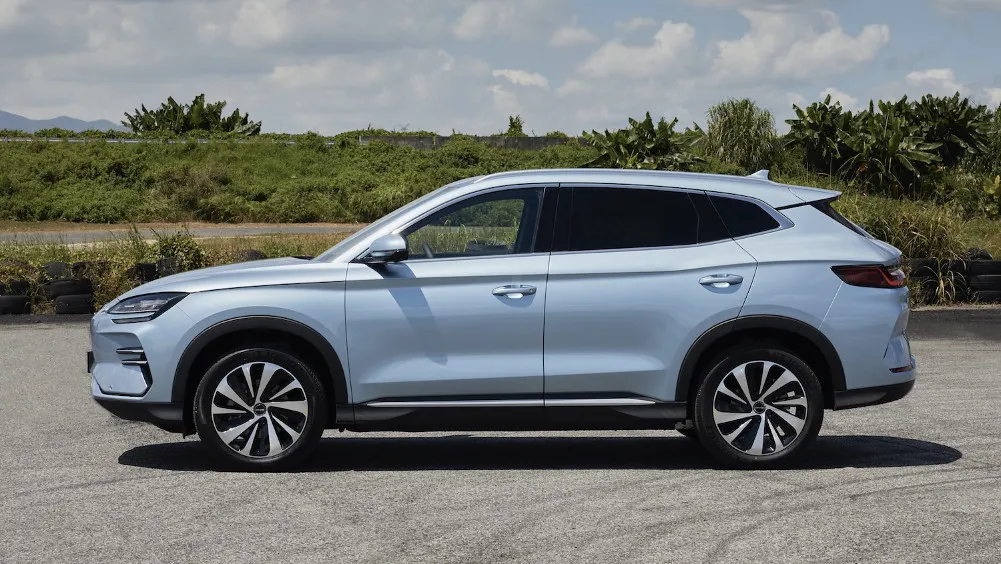

Toyota bZ4X vs Toyota RAV4 2.4 VX: The Brand-Loyal Buyer’s Dilemma
On 19 May 2026, Toyota South Africa made history by launching the Toyota bZ4X vs Toyota RAV4 2.4 VX debate official: the bZ4X became Toyota’s first-ever pure electric vehicle in South Africa, priced at R1,182,000. For decades, Toyota buyers chose between petrol and hybrid RAV4s at the same dealership. Now they face a starker choice: stick with the proven RAV4 2.4 VX petrol at around R850,000, or leap to the bZ4X EV at a R332,000 premium.
This isn’t a hypothetical comparison. The RAV4 has been South Africa’s perennial SUV best-seller, and the bZ4X targets the exact same buyer: families wanting space, AWD capability, and Toyota’s legendary reliability. Same badge on the bonnet, same service network, same brand trust — but radically different powertrains and five-year ownership costs.
We’ve crunched the numbers using May 2026 pricing, Cape Town electricity tariffs, current petrol costs, and real-world driving data. Here’s what brand-loyal Toyota buyers need to know before choosing between petrol and plug.
Purchase Price & Specifications: R332,000 Apart
The bZ4X arrives as a premium statement. At R1,182,000, it undercuts the Lexus RZ (Toyota’s luxury EV sibling) by R483,000 but commands a significant premium over the RAV4 2.4 VX petrol, which Toyota South Africa positions around R850,000 based on the sixth-generation RAV4 launch pricing structure (the 2.0 VX debuted at R799,900 in May 2026).
What does that extra R332,000 buy?
| Specification | Toyota bZ4X | Toyota RAV4 2.4 VX |
|---|---|---|
| Price (May 2026) | R1,182,000 | ~R850,000 (est.) |
| Powertrain | Dual-motor AWD electric | 2.4L petrol AWD |
| Power output | 160 kW combined | ~132 kW |
| Range / Tank | 480 km (WLTP) | ~650 km per tank |
| Fuel / Energy | 71.4 kWh battery | 55L petrol tank |
| Warranty | 3-year/100,000 km + 8-year battery | 3-year/100,000 km |
| Service plan | 3-year/45,000 km | 3-year/45,000 km |
The bZ4X delivers more power, instant torque, and an eight-year battery warranty — but 170 km less range than a full RAV4 tank. For urban Cape Town or Johannesburg commuters, 480 km covers a week of driving. For Durban-to-Johannesburg road-trippers, it means a charging stop — now easier thanks to CHARGE’s new off-grid solar stations on the N3 corridor, launched the same day as the bZ4X.
Charging Infrastructure: No Longer a Dealbreaker
Toyota’s timing is deliberate. As of May 2026, South Africa’s public charging network has matured dramatically:
- GridCars operates 445 sites with 1,200+ connectors nationwide (January 2026 data)
- Rubicon runs 103 public stations plus 20 OEM dealership chargers, totalling 6,648 kW capacity
- CHARGE opened two solar-powered ultra-fast stations on the N3 on 19 May 2026, backed by R100-million DBSA investment
- BYD plans 200–300 flash-charging stations (up to 1,000 kW) by end-2026, with rollout starting April–May
Public DC fast charging now costs R7.00/kWh (Rubicon eMSP) to R7.35/kWh (GridCars eMSP) as of August 2025 rates. AC charging runs R5.88/kWh. Home charging — where most bZ4X owners will plug in — costs R3.00–R4.00/kWh on Cape Town’s residential tariffs.
The RAV4 2.4 VX, meanwhile, refuels at 4,600+ petrol stations nationwide in under five minutes. No range anxiety, no app juggling, no tariff confusion — but significantly higher per-kilometre costs, as we’ll see below.
Five-Year Ownership Cost Comparison
Purchase price is only the opening bid. Over 100,000 km (a typical five-year ownership cycle for South African SUV buyers), fuel, maintenance, insurance, and depreciation tell the real story.
We’ve modelled both vehicles over five years assuming:
- 20,000 km/year (100,000 km total)
- 80% home charging for the bZ4X at R3.50/kWh (Cape Town average), 20% public DC at R7.00/kWh
- Petrol at R24.50/litre (May 2026 inland 95 octane average)
- Real-world consumption: bZ4X 18 kWh/100 km, RAV4 2.4 VX 9.5 L/100 km
- Insurance at 5% of purchase price annually, declining 10% per year
- Depreciation at 50% over five years for both (conservative for EVs, standard for petrol)
| Cost Category (5 years) | Toyota bZ4X | Toyota RAV4 2.4 VX | Difference |
|---|---|---|---|
| Purchase price | R1,182,000 | R850,000 | +R332,000 EV |
| Fuel / Energy (100,000 km) | R61,600 | R232,750 | −R171,150 EV |
| Maintenance & servicing | R18,000 | R35,000 | −R17,000 EV |
| Insurance (5 years) | R207,000 | R149,000 | +R58,000 EV |
| Depreciation (50%) | R591,000 | R425,000 | +R166,000 EV |
| TOTAL 5-year cost | R2,059,600 | R1,691,750 | +R367,850 EV |
| Cost per kilometre | R20.60/km | R16.92/km | +R3.68/km EV |
Energy Costs: Where the bZ4X Shines
The bZ4X’s biggest advantage is energy cost. Over 100,000 km:
- bZ4X: 18,000 kWh × 80% home (R3.50/kWh) + 20% public (R7.00/kWh) = R61,600
- RAV4 2.4 VX: 9,500 litres × R24.50/L = R232,750
That’s a R171,150 saving on energy alone — enough to buy a second-hand Suzuki S-Presso. Even if petrol drops to R22/litre, the bZ4X still saves R123,000 over five years.
Maintenance widens the gap. The bZ4X has no oil changes, no exhaust system, no clutch, no timing belt. Toyota’s EV service plan covers software updates and brake fluid; owners report services costing R2,000–R4,000 versus R6,000–R8,000 for the RAV4’s petrol services. Over five years, that’s another R17,000 in the bZ4X’s favour.
Where the RAV4 Fights Back: Depreciation & Insurance
The RAV4 2.4 VX claws back ground on depreciation and insurance. A higher purchase price means higher absolute depreciation (even at the same 50% rate) and higher insurance premiums. The bZ4X’s R1.18-million sticker inflates both:
- Depreciation penalty: R166,000 more lost value over five years
- Insurance penalty: R58,000 more in premiums (5% of a bigger asset base)
Combined, these offset R224,000 of the bZ4X’s energy and maintenance savings, leaving the RAV4 2.4 VX R367,850 cheaper over five years — or R3.68/km less expensive.
Put another way: the bZ4X’s R332,000 purchase premium grows to a R368,000 total-cost-of-ownership premium over 100,000 km, despite saving R188,150 on energy and maintenance.
Break-Even Analysis: When Does the bZ4X Pay Off?
For high-mileage drivers, the math shifts. If you drive 30,000 km/year (Uber, sales reps, rural doctors), the bZ4X’s per-kilometre energy advantage compounds faster:
- Annual energy saving: R51,345 (bZ4X R18,480 vs RAV4 R69,825)
- Annual maintenance saving: R3,400
- Total annual saving: R54,745
At 30,000 km/year, the bZ4X recoups its purchase premium in roughly 6.1 years (R332,000 ÷ R54,745). For 40,000 km/year drivers, break-even drops to 4.5 years. For 20,000 km/year family drivers, you never break even within a typical ownership cycle — but you do enjoy guilt-free driving, zero exhaust emissions, and Toyota’s first EV badge.
The Intangible Value Proposition
Numbers don’t capture everything. bZ4X buyers get:
- Instant torque: 160 kW dual-motor AWD delivers Tesla-like acceleration off the line
- Silence: No engine drone on highway cruises or morning cold-starts
- Tech prestige: First Toyota EV in SA carries early-adopter cachet
- Future-proofing: As petrol prices rise and carbon taxes loom, the bZ4X’s cost advantage grows
- Home charging convenience: Plug in overnight, wake to a “full tank” every morning — no more petrol station detours
RAV4 2.4 VX buyers get:
- Proven resale: RAV4s hold value like few other SUVs in South Africa
- Zero range anxiety: 650 km range, 5-minute refuelling, 4,600 stations
- Lower upfront cost: R332,000 less capital tied up (or better spent on solar panels, a second car, or university fees)
- Simplicity: No charging apps, no load-shedding worries, no tariff calculations
Market Context: Toyota’s EV Gambit in a Shifting Landscape
Toyota’s bZ4X launch comes as South Africa’s EV market accelerates. AutoTrader reported a 45% year-on-year increase in EV searches (February–March 2026), and March 2026 saw a record 389 EV sales. New-energy vehicle (NEV) sales — including hybrids — rose 7.1% to 16,716 units in 2025.
Toyota is hedging its bets. Alongside the bZ4X, the brand is expanding its hybrid lineup: the new RAV4 hybrid launched in May 2026 from R770,500, and a Prado hybrid is confirmed for later in the year. For buyers not ready for full EV commitment, Toyota offers a middle path — though hybrid running costs sit between the bZ4X and the 2.4 VX petrol.
Government policy is also shifting. President Ramaphosa signed a 150% tax deduction for NEV manufacturers into law (effective 1 March 2026), and Trade Minister Parks Tau published draft APDP amendments in May 2026 to incentivise local battery production. Three Chinese automakers have signed NDAs with naamsa. If local EV assembly takes off, prices could drop 15–20% by 2028.
For now, the bZ4X is a premium statement — TechCentral called it “a signal of Toyota’s EV intent but not a mass-market play.” It arrives after cheaper Chinese EVs (BYD Atto 3, GWM Ora) and even Toyota’s own Lexus RZ. But for brand-loyal Toyota buyers who want the badge, the dealer network, and the peace of mind, it’s the first time “Toyota” and “electric” have appeared on the same South African vehicle.
Verdict: Same Badge, Different Buyer
The Toyota bZ4X vs Toyota RAV4 2.4 VX comparison isn’t about which is “better” — it’s about which matches your driving profile, budget, and values.
Choose the bZ4X if:
- You drive 25,000+ km/year and can recoup the premium faster
- You have off-street parking and can install a home charger
- You want Toyota’s first EV and the tech prestige that comes with it
- You prioritise low running costs and zero emissions over upfront price
- You rarely drive beyond 400 km in a day, or you’re comfortable planning charging stops
Choose the RAV4 2.4 VX if:
- You want the lowest total five-year cost (R368k less than the bZ4X)
- You drive long distances regularly and need 650 km range + fast refuelling
- You lack home charging access (apartment, street parking, load-shedding concerns)
- You prefer proven resale value and RAV4’s 20-year track record in SA
- You’d rather spend R332,000 less upfront and invest the difference elsewhere
For the average South African family driving 20,000 km/year, the RAV4 2.4 VX remains the rational choice: R368,000 cheaper over five years, no range compromise, and the same Toyota badge. But for early adopters, high-mileage drivers, or buyers who value silence and zero emissions, the bZ4X offers a compelling — if premium — alternative.
Either way, you’re buying from the same dealer, with the same service network, and the same brand trust. The only question is whether you’re ready to plug in — or prefer to keep pumping.
Ready to Compare EV vs Petrol Costs for Your Driving?
Every driver’s situation is different. If you’re considering the switch to electric — whether a Toyota bZ4X, a Chinese EV, or any other model — our free cost calculator shows your personalised five-year savings based on your actual mileage, electricity tariff, and local petrol prices.
Get your free EV vs petrol cost comparison — no registration required. Enter your details, see your numbers, make an informed choice.
Pricing and specifications current as of May 2026. Petrol prices, electricity tariffs, and incentives subject to change. Always confirm final pricing with your Toyota dealer before purchase.