
Key points
- A 22 kW AC commercial charger costs R20,000, R45,000 all-in installed; a single 60 kW DC fast-charger setup ranges from R450,000 to R1.25 million depending on site conditions.
- Winstone Jordaan (GridCars) said at Enlit Africa 2025: “There’s just no business case. We need about 100,000 vehicles on the road before any of us will see real profitability.” That is the honest baseline, plan accordingly.
- Payback is real, but it depends almost entirely on which revenue model you choose: cost recovery for tenants or staff, dwell-time retail uplift, captive-fleet depot charging, or a hybrid.
- A captive fleet depot running ~350 kWh/day can recover a R650,000 DC investment in roughly 1.2 years. A lightly used public forecourt may never break even on charging revenue alone.
- OCPP-managed smart chargers are non-negotiable for any business case: without them you cannot bill, monitor or load-balance.
- SANS 62196-2 (AC connectors), SANS 62196-3 (DC connectors) and SANS 10142-1 (wiring code) are the governing standards. Every commercial installation requires a Certificate of Compliance (CoC) and an ECSA-registered installer.
- Eskom tariffs rose 8.76% from 1 April 2026 and a further 9.01% from 1 July 2026, the energy cost embedded in every charging session is rising, which tightens operator margins if tariffs are not indexed.
Why the “just install a charger and earn” pitch is wrong, and what actually works
Every month, property managers, mall owners, hotel operators and fleet directors receive a version of the same pitch: install EV chargers, charge drivers more than your electricity cost, and watch passive income roll in. It is not entirely wrong, but it is not the full picture either. Before you commit capital, you need the honest maths.
South Africa has roughly 445 public charging sites and around 650 chargers as of early 2026, according to ChargePoint SA’s market research, which also notes the network grew 122% between 2022 and 2025. GridCars operates approximately 60% of that capacity. Even so, the GridCars director himself put the utilisation picture bluntly:
“There’s just no business case. We need about 100,000 vehicles on the road before any of us will see real profitability. But that doesn’t mean we shouldn’t build the foundation now.” , Winstone Jordaan, Director of GridCars, Enlit Africa 2025 panel, Cape Town
Thinking about a home charger?Get a fixed-price installation quote — a few quick questions and we’ll send your cost, with no surprises on the day.Get my fixed-price quote →
That is not a reason to do nothing. It is a reason to choose the right model for your specific site, and to size your expectations correctly before signing a purchase order.
Understanding the real capital costs before you calculate payback
Payback calculations are meaningless without accurate numerators. Here is what operators actually spend in South Africa today.
AC Level 2 (22 kW three-phase) chargers
A single 22 kW AC wallbox costs R15,000-R25,000 for the hardware unit, with all-in installed costs (hardware, labour, DB works, CoC) of R20,000-R39,000 in Pretoria, R18,000-R35,000 in Durban, and R18,000-R40,000 in Somerset West, where higher-capacity components and more complex wiring drive up the total. Multi-bay projects typically reduce per-point cost by 15-20% through bulk procurement and shared civil works, which means a 10-bay rollout can bring the per-bay figure closer to R25,000 even for a Gauteng property (per the Builders in Gauteng cost guide).
Hidden cost items that blow out budgets include underground trenching at R300-R600 per metre (or R500-R1,200/metre through landscaped gardens), distribution board upgrades of R2,000-R8,000 for standard capacity increases (and up to R35,000 for a full 100A+ panel upgrade), and a three-phase supply upgrade from single-phase that costs R15,000-R30,000 including municipal approval, new cabling and a new meter. Cable alone runs R180-R320 per metre for the 6 mm² or 10 mm² copper mandated by SANS 10142-1, and every additional 10 metres adds R850-R1,200 in cable and labour. OCPP/OCPI managed platform access costs approximately R350 per charger per month (ChargePoint SA fleet electrification guide), covering billing, RFID access control, load balancing and remote monitoring.
DC fast chargers
The capital scale-up is significant. A single 50 kW DC unit installed at a Rosebank commercial property costs R450,000-R750,000 (ChargePoint SA Rosebank 2026 guide). A 47-60 kW setup nationally runs R400,000-R1.25 million (Imotonews.co.za, March 2025). At the high end, Greg Blandford, Director of Rubicon, gave the clearest real-world anchor at Enlit Africa 2025:
“Where the public charging infrastructure is concerned, the investment is quite high. So typically you start anywhere from a half million rand up to two million rand per site. We’ve got a 200 kW DC charger at the Mall of Africa in Johannesburg. That site cost us… about R2.5 million. We’ve got a site at Canal Walk in Cape Town, which is 150 kW DC, that’s about R1.5 million.” , Greg Blandford, Director of Rubicon, Enlit Africa 2025
ChargePoint SA’s own CP-DC60 (60-120 kW dual-outlet DC, CCS2, OCPP, 10.1-inch touch with app/QR/RFID/POS payment) is available from approximately R430,000 installed at the 60 kW configuration, that is the realistic entry point for a site that needs genuine fast charging rather than destination top-up speed.
The electricity cost layer: what you actually pay per kWh in 2026
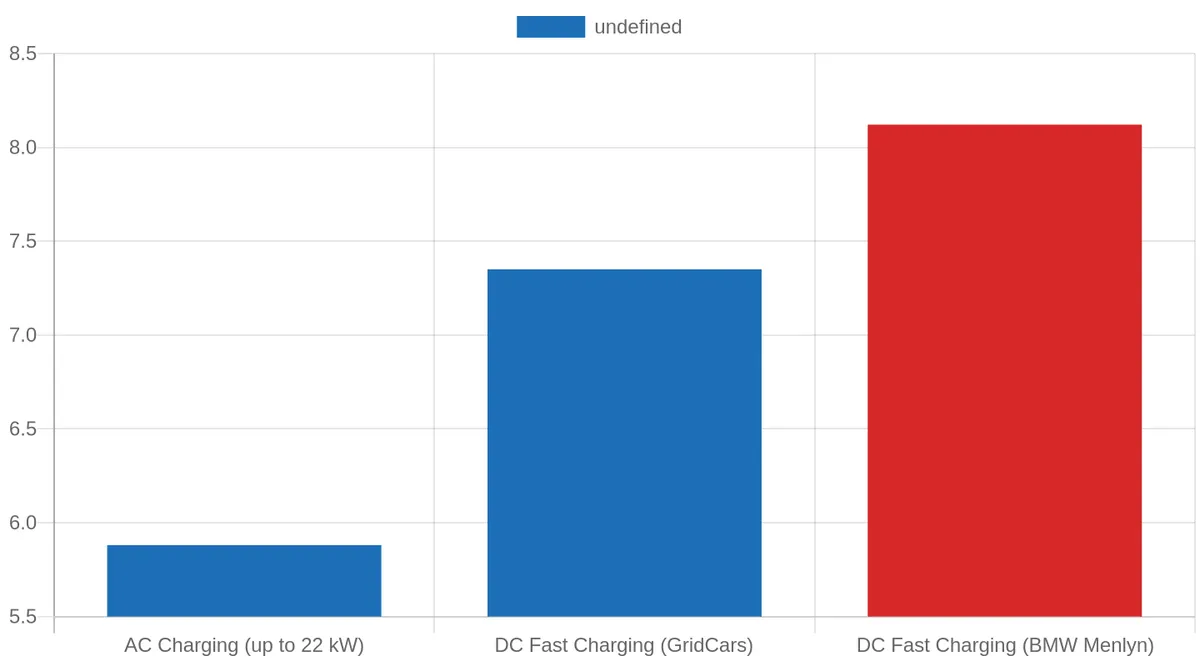
Every rand of charging revenue you collect must first cover the electricity you bought. In 2026 that cost is moving fast. NERSA approved an 8.76% increase for Eskom direct customers from 1 April 2026, and a further 9.01% municipal tariff increase from 1 July 2026. Eskom’s average standard rate from 1 April 2025 (FY2025/26) stands at 220.92 c/kWh (R2.21/kWh) for direct supply, per OUTA’s confirmed figures.
Municipal indirect customers pay more: City of Johannesburg residential tariffs are R3.4826/kWh for consumption above threshold (FY2025/26), and City Power’s residential prepaid average selling price is R3.29/kWh. EV journalist Nafisa Akabor shared her own Eskom bill rates directly:
“Based on my Eskom bill and the rates I’m charged based on usage, it would cost me R2.1779 per kWh for up to 600 kWh of usage and R3.4391 for anything above.” , Nafisa Akabor, EV journalist and home wallbox owner, City Press
For DC fast-charge operators on Eskom Megaflex, the demand charge is a fixed R52.65/kVA/month in the high-demand season (June, August) and R26.29/kVA/month in the low-demand season (September, May), billed whether or not anyone charges. A 60 kW DC unit drawing 100 kVA peak could therefore incur over R5,000/month in demand charges alone during winter, regardless of session count. This is the cost structure that makes low-utilisation public DC sites genuinely unviable as standalone revenue generators.
Note: public network AC tariffs of R5.88/kWh and DC tariffs of R7.00-R8.12/kWh were the verified figures as of August 2025. GridCars implemented approximately a 15% increase from 1 December 2025, so current 2026 retail rates are higher, confirm directly with each network before building a business case on August 2025 numbers.
Revenue model comparison: which one actually works for your site type
There is no single answer to “does a charger make money” because there are at least four distinct commercial models operating in South Africa today. Each suits a different operator type.
Model 1: Cost-recovery for tenants or staff (workplace and residential)
If you manage a commercial office park, a residential estate, or a body corporate, this is the most reliable model. You install billing-grade chargers, recover the electricity cost plus a margin from users, and your payback comes from a guaranteed, predictable captive audience. The CP-AC22-N (ChargePoint SA’s 22 kW billing-grade wallbox with Eichrecht-conformant smart meter and OCPP 2.0.1J) is built for exactly this: every session is recorded to 1% accuracy, Plug and Charge (ISO 15118) removes friction for regular users, and the OCPP backend feeds into your billing system. For a two-bay installation at ~R50,000 all-in, recovering R2.50/kWh above your R2.21/kWh Eskom direct cost across 20 sessions per bay per week at 20 kWh per session generates roughly R4,000/month gross, giving a payback of around 12-15 months before OpEx. That maths works consistently because utilisation is captive.
The twin-bay CP-DUO-44 (2×22 kW from a single unit, dynamic load balancing, optional MID meter) is particularly well-suited here: one unit, two bays, lower civils cost, and a simpler DB connection than running two separate wallboxes.
“Without software, station owners have no idea who is charging at their stations or how much, they cannot tell whether a station has a problem, and they have no way to monetize the sessions, not even to recover the energy cost.” , Charging operator quoted by Elvo.io, EV Charging Management Software explainer
Model 2: Dwell-time retail uplift (malls and hospitality)
If you manage a mall, hotel or restaurant precinct, your primary return is not the kilowatt-hours you sell, it is the additional spend from EV-driving customers who stay longer because they are charging. Blandford of Rubicon was explicit about this at Enlit Africa 2025:
“We’re bringing foot traffic and high LSM clients to malls. They’re spending more time there… now they’re charging their cars. They have to spend 30 to 45 minutes at the charger. They’re going to spend more money. They’re going to go to a coffee shop, they’re going to buy some cake and tea, and they might go do some shopping.” , Greg Blandford, Director of Rubicon, Enlit Africa 2025
Under this model, the charger is a marketing cost, not a profit centre. Your ROI calculation should be: incremental spend per session multiplied by session frequency, compared against capital and OpEx. A 45-minute DC session that adds R180 in cafe-and-retail spend per visit, at eight sessions per day, generates roughly R43,000/month in secondary revenue on top of whatever charging margin you collect. Blandford’s own break-even model for the R1.5 million Canal Walk site:
“It would take eight to ten charging sessions per day over three years for the investment in an installation like the one at Canal Walk to be paid back in full. Interestingly, the use case and the adoption rate of charging in public environments is so, so important.” , Greg Blandford, Director of Rubicon, Enlit Africa 2025
Eight to ten sessions per day at a prominent Cape Town mall is achievable today. At a secondary mall in a smaller city, it may not be, and that gap is the difference between a sound investment and a stranded asset.
Model 3: Captive fleet depot charging (the strongest ROI case)
If you manage a fleet depot, this is where EV charging economics are genuinely compelling right now. A captive fleet that charges overnight at your premises eliminates public network tariffs (post-December 2025 rates, which are materially higher than August 2025 benchmarks), removes range anxiety, and lets you schedule charging to Eskom’s off-peak TOU window to minimise both energy costs and demand charges.
ChargePoint SA’s illustrative model for a dual-gun 60 kW DC depot site at approximately R650,000 all-in, with R3,300/month in demand charges and R3,500/month in O&M and software, shows payback ranging from roughly 1.2 years at ~350 kWh/day of captive fleet throughput to never at ~30 kWh/day of light public use. The difference is not the charger, it is how many vehicles need it. Eskom itself recognised this: its five pilot sites (Midrand EAL, Brackenfell, Mkondeni, Tlhabane CNC, and Marathon CNC) each received 22 kW dual AC chargers for overnight fleet charging alongside 60 kW DC units for rapid session use, launched 22 August 2024, with a target of electrifying the Distribution Division’s approximately 10,000 vehicles by 2035.
For a fleet operator, the ChargePoint SA CP-DC60 (60-120 kW, dual CCS2 outlets, OCPP, smart-grid integration) handles ~30-minute top-ups for operational vehicles during the day, while 22 kW AC wallboxes overnight-charge lighter commercial vehicles at lower energy cost. The Commercial EV Charging Programme (supply, install and support under one accountable contract, managed billing, load balancing, remote monitoring from ~R350 per charger/month) is designed precisely for this multi-charger, multi-vehicle scenario.
Model 4: Hybrid public-commercial (forecourt or highway corridor)
Petrol forecourts, highway rest stops and destination charging on travel corridors are the hardest model to make work in South Africa at current EV volumes. Jordaan (GridCars) acknowledged that some of the network’s more remote stations are “used less frequently and are therefore less profitable, if they’re profitable at all,” noting the deliberate loss-leader strategy behind rural charger deployment. Zero Carbon Charge’s off-grid solar model, backed by R100 million from the DBSA and launched on 19 May 2026 along the N3 Johannesburg, Durban corridor (targeting 60 stations by 2027), addresses the grid-dependency problem:
“We are completely off-grid… we do not have a middleman selling electricity, which if you’re grid-dependent, you are subject to inflation increases.” , Larissa Venter, Chief Stakeholder Officer at Zero Carbon Charge, Enlit Africa 2025
For a grid-connected forecourt operator, the honest answer is that this model requires either very high throughput (which requires EV density that does not yet exist outside major metros) or a cross-subsidy from fuel or retail. Plan accordingly.
Payback maths: a plain-language cost-of-ownership comparison
| Scenario | Hardware + install (all-in) | Monthly OpEx (est.) | Monthly gross revenue (est.) | Indicative payback |
|---|---|---|---|---|
| Single 22 kW AC, workplace cost-recovery (10 sessions/day, 15 kWh avg, R2.50 margin/kWh) | R30,000 | R1,050 (software + maintenance) | R11,250 | ~3.2 months |
| Twin 22 kW AC (CP-DUO-44), estate cost-recovery (12 sessions/day, 15 kWh avg, R2/kWh margin) | R45,000 | R1,400 | R10,800 | ~5 months |
| 22 kW billing-grade (CP-AC22-N), mall destination charging (6 sessions/day, 20 kWh, R3/kWh retail; R1.80 margin after Eskom cost) | R40,000 | R1,200 | R6,480 | ~7.5 months (charging revenue only; dwell-time uplift additional) |
| 60 kW DC (CP-DC60), captive fleet depot (~350 kWh/day, R1.50 net margin/kWh after all-in energy cost) | R650,000 | R6,800 (demand charge + O&M + software) | ~R63,000 | ~1.2 years |
| 60 kW DC, lightly used public forecourt (~30 kWh/day, same margin) | R650,000 | R6,800 | ~R5,400 | Never on charging revenue alone, requires dwell-time or cross-subsidy |
| 150 kW DC public mall site (Rubicon Canal Walk benchmark) | R1,500,000 | ~R20,000+ | Viable at 8-10 sessions/day | ~3 years (Blandford’s own model) |
Important caveats: All revenue figures above are illustrative estimates based on verified cost inputs and publicly stated operator benchmarks. Your actual margin depends on your grid tariff (Eskom direct vs municipal, TOU vs flat, demand-charge category), session length, average kWh per session, utilisation rate by hour of day, and whether you carry demand charges during low-use periods. Request a site-specific model before committing capital.
Compare revenue models that actually work for SA sites
The smart-charger requirement: why dumb hardware kills any business case
One of the clearest warnings from SA’s most experienced operators came from Jordaan at Enlit Africa 2025:
“You’ve got to stop the installation of dumb chargers. You need smart, connected chargers to avoid what happened in the UK, where they had to ban 200,000 dumb units after rollout. We have the chance to get it right from the start.” , Winstone Jordaan, Director of GridCars, Enlit Africa 2025
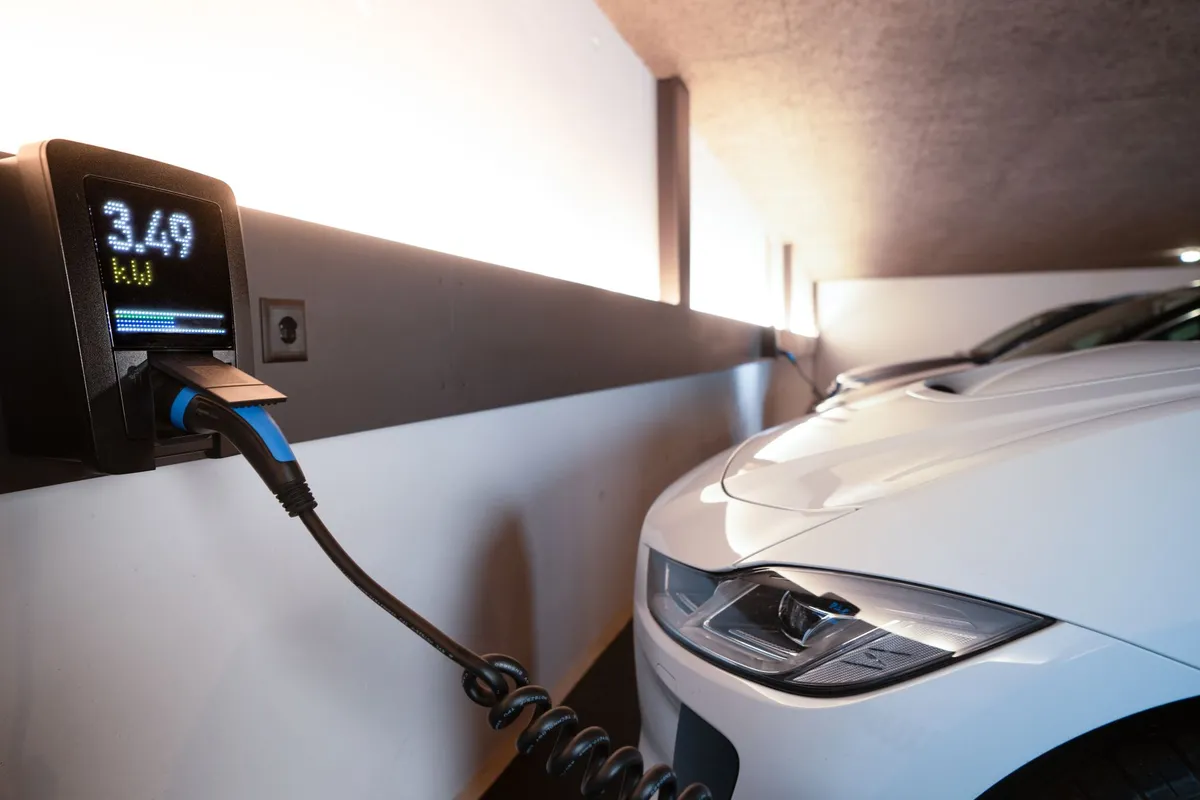
A smart charger in the South African commercial context means OCPP 1.6 or 2.0.1 connectivity, dynamic load balancing (essential if your site is near its supply limit), session-level metering that satisfies billing accuracy requirements, and remote monitoring so you know when a unit goes offline. Without those capabilities, as the Elvo.io operator quote above confirms, you cannot bill, you cannot manage, and you cannot prove your ROI.
The practical cost of smart capability is modest relative to the hardware: approximately R3,000-R8,000 more for dynamic load management on top of a basic unit (ChargePoint SA Somerset West guide), and roughly R350 per charger per month for managed OCPP/OCPI platform access. That is the minimum viable operating model. Without it, as NERSA’s draft Electricity Trading Rules (published 24 November 2025, public hearing 27 January 2026) make clear, session-level billing at public sites sits in a regulatory grey zone, and operators who cannot demonstrate metering accuracy face increasing compliance exposure as the framework matures.
Compliance is a commercial requirement, not a box-tick
For any procurement decision-maker evaluating EV charging for a commercial property, the compliance layer is where contracts get signed or voided. South Africa’s standards framework is explicit:
- SANS 62196-2 governs AC connectors (Type 2 for all 22 kW AC installations).
- SANS 62196-3 governs DC connectors (CCS2 for all modern DC fast-charging installations).
- SANS 10142-1 is the electrical wiring code. Annex N (2025 update) specifically covers EV charging infrastructure. It mandates minimum 16 mm² copper cable for 22 kW circuits, a dedicated circuit with a Type A or Type B RCD rated for DC residual currents (a standard household earth leakage is not compliant), and voltage drop calculations for all runs.
- An electrical Certificate of Compliance (CoC) is legally required for all EV charging installations. Commercial CoC costs R1,000-R3,000 per installation. The CoC is issued by a Department of Employment and Labour-registered electrician with a valid wireman’s licence, verifiable at labour.gov.za.
- For high-capacity installations, designs must be signed off by an ECSA-registered professional (Pr Eng or Pr Tech Eng) under the Engineering Profession Act 46 of 2000. A formal load report from a consulting engineer costs R3,000-R6,000, required by most body corporates and large commercial sites before approval is granted.
The penalty for non-compliance is not abstract: unlicensed installation work carries fines of R20,000 or more, voids commercial property insurance, and typically requires a full reinstallation at double the original cost. The ChargePoint SA Commercial EV Charging Programme uses ECSA-registered installers and issues CoCs as a standard deliverable on every contract, not an optional add-on.
Section 12B tax incentive: the accelerator your accountant needs to know about
Businesses installing EV charging infrastructure may qualify for accelerated depreciation under Section 12B of the Income Tax Act. A 150% tax deduction for EV and hydrogen vehicle manufacturing was approved in January 2025 and took effect from 1 March 2026 (ChargePoint SA Rosebank guide). If you are a registered company deploying chargers for staff or fleet use, this changes the after-tax payback calculation meaningfully. Confirm the specific qualifying criteria with your tax advisor, the interaction between Section 12B, the investment category, and your company’s tax position is complex enough to require a qualified opinion.
Site selection: the variable that matters most
Every payback model above depends on utilisation, and utilisation depends almost entirely on site selection. Blandford at Enlit Africa 2025 was direct:
“The hard part is finding the right place to maximise the number of cars that will use that station, so traffic flows and EV concentration are important factors.” , Greg Blandford, Director of Rubicon, TechCentral, January 2025
Meanwhile, at Durban malls, community reporting documented the congestion-and-downtime paradox that high-traffic sites produce: chargers at Gateway and Pavilion are frequently full on weekends, while technical issues can leave units offline for days, and ICEing (internal combustion engine vehicles occupying charging bays) is common. Neither extreme, chronic over-demand nor chronic under-use, is managed without smart chargers, access control (RFID or app), and a monitored maintenance contract.
For a mall or property manager planning a new site, the Rubicon/EFTCorp open-loop payment deployment at 21 DC stations (February 2025, Africa’s first) illustrates the payment friction question: if drivers cannot pay easily, utilisation suffers. As Vahini Jaganath (Visa Sub-Saharan Africa Senior Director) noted at that launch: “With over 60% of transactions in South Africa now contactless, open-loop solutions allow drivers to charge their electric vehicles at any public charging station without needing an account or membership.”
The CPO/eMSP margin structure: what public network economics actually look like
If you are considering hosting a publicly accessible charger under a network operator agreement rather than operating it yourself, you need to understand the margin structure. Hilton Musk of Rubicon explained it plainly:
“Think of it like the fibre internet model. The fibre network providers, like Openserve or Vumatel, sell bandwidth to internet service providers such as Afrifast or MWeb, who then add their margin before offering it to customers. Public EV charging works in much the same way.” , Hilton Musk, Head of E-Mobility at Rubicon, CleanTechnica, November 2025
That means the tariff a driver pays at your charger is set by the eMSP agreement, not necessarily by you. Musk also noted: “It’s important to note that these tariffs are typically set through agreements between the charge point operator (CPO) and the e-mobility service provider (eMSP), which means they can vary in some cases. For example, at AIDC-EC charging stations, Rubicon eMSP customers pay R7.00 per kWh while GridCars eMSP customers pay R8.24 per kWh.” If you are a site host in a CPO arrangement, the energy margin you retain after the eMSP takes its cut may be thinner than headline retail tariffs suggest, model this explicitly in your business case.
Specific guidance by operator type
If you run a hotel or hospitality property
Your EV-driving guests typically arrive with 40-60% charge and want to depart with 80-100%. A 22 kW AC charger overnight handles most modern EVs. Install billing-grade units (the CP-AC22-N with MID metering and ISO 15118 Plug and Charge), price the session to recover your electricity cost plus a modest service fee, and position it as a premium amenity in your booking listing. The Section 12B accelerated depreciation may apply. Installed cost per bay: R25,000, R40,000 depending on DB location and cable run.
As a body corporate trustee or estate manager
Common-property charger approval requires an ordinary resolution (more than 50%) under the Sectional Titles Schemes Management Act, not a special resolution. Individual owners can install in their exclusive-use areas under STSMA section 27 rights (real rights) with trustee approval, separate from personal-use rights under sections 10(7) and (8). A twin-bay CP-DUO-44 serving two owners from one unit minimises your common infrastructure footprint. The ECSA-registered load report (R3,000-R6,000) is advisable before any trustees’ meeting to pre-empt capacity objections. Most Johannesburg and Cape Town complex installations land between R16,000 and R20,000 once everything is included, based on installed quotes tracked through March 2026.
For a mall or property manager
Model your business case on dwell-time retail uplift as the primary return, charging revenue as secondary. Budget R500,000, R2.5 million for a DC fast-charge site depending on power rating, access and civils. Ensure your lease and car park management agreements address bay enforcement: ICEing and charger occupation during off-hours are your main operational risks. Managed OCPP access control (RFID or app) with access-hour restrictions addresses both.
If you manage a fleet
This is where the numbers work best right now. Overnight AC charging at your depot, scheduled to Eskom’s off-peak TOU window to reduce both energy cost and demand charges, is the most economically compelling EV infrastructure investment in South Africa in 2026. A mix of 22 kW AC wallboxes for overnight charging and a single CP-DC60 (60-120 kW) for daytime top-ups covers most fleet profiles. The ChargePoint SA Commercial EV Charging Programme delivers this under a single accountable contract: supply, SANS 10142-1 compliant installation, CoC, OCPP billing, remote monitoring and load balancing from ~R350 per charger per month.
Frequently asked questions
How long does it really take to pay back a commercial EV charger in South Africa?
It depends entirely on your model and utilisation. A billing-grade 22 kW AC charger at a workplace or estate recovering R2-R3/kWh above electricity cost across 10-15 sessions per day can pay back in 3-8 months. A single 60 kW DC fast charger at a captive fleet depot with ~350 kWh/day throughput pays back in roughly 1.2 years. A lightly used public DC forecourt site at ~30 kWh/day may never pay back on charging revenue alone and requires dwell-time retail uplift or a cross-subsidy to be viable.
Can I legally charge EV drivers for electricity at my commercial property?
Yes, but the regulatory framework is still developing. NERSA’s draft Electricity Trading Rules (published 24 November 2025) require advanced metering infrastructure for real-time billing; session-level billing is currently set by commercial agreement between the operator and eMSP. To protect yourself, use billing-grade chargers with Eichrecht-conformant smart meters (1% accuracy) and ensure your installation has a valid electrical Certificate of Compliance (CoC) issued by a DoL-registered electrician. Without metering accuracy and a CoC, your billing arrangements are legally exposed as the regulatory framework tightens.
What connector standard do I need to specify for a South African commercial charger?
SANS 62196-2 covers AC connectors, Type 2 (Mennekes) is the standard for all 7 kW and 22 kW AC installations, and is what all current South African EVs accept. SANS 62196-3 covers DC connectors, CCS2 (Combined Charging System 2) is the standard for all modern DC fast chargers from 50 kW upwards. CHAdeMO is legacy and declining. Specifying anything other than CCS2 for new DC infrastructure is a future-proofing risk.
Do I need an ECSA-registered engineer to sign off my commercial charger installation?
For standard commercial installations (single or multiple 22 kW AC wallboxes with standard DB works), a DoL-registered electrician with a valid wireman’s licence issuing a Certificate of Compliance is the minimum legal requirement under SANS 10142-1. For higher-capacity installations, structural work, or designs above certain capacity thresholds, the Engineering Profession Act 46 of 2000 requires sign-off from an ECSA-registered professional (Pr Eng or Pr Tech Eng). Most body corporates and large commercial properties also require a formal load report from a consulting engineer (R3,000-R6,000) as part of the approval process, regardless of the legal minimum.
What happens if I install a charger without a Certificate of Compliance?
Fines of R20,000 or more apply for unlicensed electrical work. More practically, a commercial property insurance claim arising from an electrical fault at an un-CoC’d installation is almost certain to be rejected, and a reinstallation by a licensed electrician typically costs double the original quote. The CoC for a commercial EV charger installation costs R1,000-R3,000, it is the lowest-cost item in any installation budget and the highest-cost omission.
Is the Section 12B tax deduction available for EV charger hardware?
Businesses installing EV charging infrastructure may qualify for accelerated depreciation under Section 12B of the Income Tax Act, with a 150% deduction approved for EV-related investments effective 1 March 2026. The precise qualifying criteria depend on your business category and how the installation is classified, the interaction between Section 12B, your company’s tax position and the asset category is specific enough to require advice from a qualified tax professional before you rely on it in your business case.
What the most experienced SA operators say you should do differently
Three practical lessons from the people who have already spent the capital:
Build a phased infrastructure, not a single charger. The per-point cost of a 10-bay deployment is 15-20% lower than 10 individual installations, and the civil works (trenching, DB upgrades) are done once. Future-proof your cable run now: running 10 mm² cable instead of 6 mm² adds only R800-R1,200 but avoids a full re-cable when you add solar integration or a second charger later.
Treat the managed platform as essential infrastructure, not an optional extra. The R350/charger/month OCPP platform cost is what gives you billing, monitoring, access control and load balancing. Without it, you are operating blind:
“Without software, station owners have no idea who is charging at their stations or how much, they cannot tell whether a station has a problem, and they have no way to monetize the sessions, not even to recover the energy cost.” , Charging operator quoted by Elvo.io
Match charger type to your grid capacity before you buy hardware. The most common reason commercial installations run over budget is an under-scoped DB or supply upgrade. A three-phase supply upgrade from single-phase costs R15,000-R30,000 and requires municipal approval, that is a 6-12 week lead time in most metros. If your site is near its supply limit, dynamic load balancing (R3,000-R8,000 add-on) is cheaper than a new municipal connection.
Larissa Venter of Zero Carbon Charge captured the broader mindset required in one sentence at Enlit Africa 2025:
“If you go into EV charging, it’s not to make revenue.” , Larissa Venter, Chief Stakeholder Officer at Zero Carbon Charge, Enlit Africa 2025
That is an overstatement for fleet depots and cost-recovery models, but it is the right mental frame for any operator expecting a public charging station to generate passive income at current SA EV volumes. Position it as infrastructure that pays for itself while delivering a service, and your business case will be honest, robust and achievable.
If you are ready to move from maths to a real site plan, use our free Commercial Site Builder: enter your site type, expected vehicle count and available supply capacity, and we will return a recommended charger configuration, indicative cost range and payback estimate, then back it with an engineered site assessment at no charge. Plan your site free with our Commercial Site Builder and let our ECSA-registered team turn the numbers into a fixed-scope proposal.
Photo: Kindel Media / Pexels
Model your commercial charger payback before you invest
See real ROI for depot, fleet, retail and cost-recovery models.
Plan my site’s payback →WhatsApp us
CoC-certified installers, nationwide