
Key points
- Nearly half of EV drivers will not stay at a hotel without charging (Hospitality Technology via EV Connect). EV charging is now the highest-converting amenity on Hilton.com, outranking pools, breakfast and spas.
- AC 22 kW billing-grade chargers are the standard hotel choice: guests are parked for hours, so speed is less important than reliability and metered billing.
- Installed cost in South Africa ranges from roughly R24,000 to R40,000 per AC bay for a hotel-grade commercial fit-out, rising to R800,000 to R1.4 million for a larger project that includes a 60 kW DC unit, underground conduit and DB upgrade.
- Hardware is only 20 to 35 percent of total project cost. Civil works, trenching, concrete pads and permitting make up the rest, which is why a proper engineering load assessment (R3,000 to R6,000) before committing is non-negotiable.
- Every installation must comply with SANS 10142-1, SANS 62196-2 and SANS 62196-3, carry an electrical Certificate of Compliance (CoC), and use ECSA-registered installers. Non-compliance can void building insurance and expose the property to fines exceeding R20,000.
- Installing one or two unmanaged chargers carries more reputational risk than having none. Networked, OCPP-connected chargers resolve faults 4.2 times faster than manually monitored deployments (Oxmaint).
- EVCI data suggests most SA hospitality properties see 2 to 3 additional bookings per month once listed as EV-friendly on accommodation platforms.
- Well-maintained hotel EV charging programmes reach payback in 2.4 to 4.1 years (Oxmaint), before accounting for the guest acquisition value of EV-friendly listings.
Why South African hotels can no longer ignore EV charging
South Africa had 3,543 cumulative passenger EVs on the road by the end of 2024, with over 500 public charging stations across the country (Cartrack, GreenCape 2025). The EV-to-public-charger ratio sits at roughly 1:7, which means destination charging at hotels, lodges and resorts is not a marginal amenity, it is part of the infrastructure that makes EV road travel practical.
The guest profile matters here. EV owners in South Africa are, by and large, higher-income travellers who stay longer and spend more on property amenities (Oxmaint). Rubicon reported that total charging sessions doubled in 2024 compared to the prior year (TechCentral), and that trajectory is accelerating. If you run a hotel on a major leisure or business travel corridor, Garden Route, Cape Winelands, Midlands Meander, Joburg-Durban N3, your EV-driving guests are already making booking decisions based on whether you have a charger.
Globally, Hilton reports that EV charging has become the highest-converting amenity on its platform, with guests who filter for EV charging more likely to complete a reservation than those filtering for pools, complimentary breakfast or spas. EVCI data for South African hospitality properties mirrors this: most hosts see 2 to 3 additional bookings per month once listed as EV-friendly on accommodation platforms.
The other side of that equation is the guest you lose. As one SA hospitality operator put it plainly: “You’ve probably had guests ask about charging options. Maybe you’ve lost bookings because you didn’t have an answer.” As a hotel owner or GM, that is the simplest possible framing of the business case.
Which charger type fits a hotel?
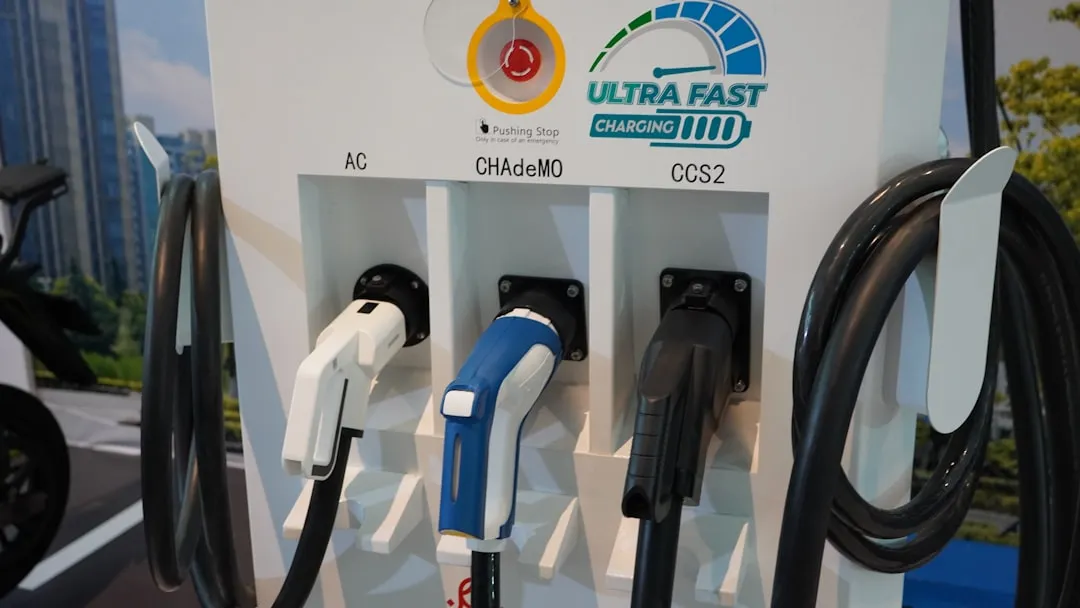
Hotel charging is fundamentally different from forecourt charging. Your guests are parked for six to twelve hours overnight. They do not need to add 150 km of range in twenty minutes, they need a reliable charge waiting for them at checkout. That changes the hardware decision entirely.
AC 22 kW: the standard hotel choice
Elinta Charge summarises the logic concisely: most hotel deployments prioritise AC charging because of long dwell time. The three tiers are 7.4 kW single-phase (light commercial and smaller sites), 11 kW three-phase (common destination standard), and 22 kW three-phase (higher-turnover or premium bays). For most South African hotels, 22 kW three-phase is the correct specification: it delivers a full charge in one to two hours on cars that accept that rate, or a practical overnight top-up on any Type 2-compatible vehicle.
AC chargers require a 240 V circuit with at least 40 amps, and three-phase supply at 22 kW. They do not require the 480 V three-phase service that DC fast chargers demand, making the electrical upgrade path simpler and cheaper at most hotel sites.
For hotel deployments, the ChargePoint SA CP-AC22-N is the purpose-built choice. It is a 22 kW three-phase billing-grade AC wallbox with an Eichrecht-conformant smart meter (1% accuracy) that records every transaction, MID metering, OCPP 2.0.1J, ISO 15118 Plug and Charge, and dynamic load balancing. It is operator-ready from day one, guests can pay by app, QR or RFID without a staff member involved. If you want two bays from a single unit, the CP-DUO-44 serves two vehicles simultaneously (2×11 kW or up to 2×22 kW) with optional MID metering and dynamic load balancing, which reduces the cost per bay on multi-space installations.
DC fast charging: when does it make sense for hotels?
A DC fast charger on a hotel site makes sense in one specific scenario: your property sits on a major travel corridor and you want to attract passing EV travellers who are not staying with you, generating revenue from drive-in sessions. A 47 kW DC setup costs R400,000 to R1.25 million all-in (Imotonews). A dual-gun 60 kW DC site runs approximately R650,000 all-in, with Eskom Megaflex demand charges of R52.65 per kVA per month during high-demand season and approximately R3,500 per month in O&M and software costs.
For a 150 kW DC charger at a public destination site, Rubicon’s modelling requires 8 to 10 sessions per day to break even over three years. At high-utilisation captive fleet depot rates (around 350 kWh per day), DC payback can reach approximately 1.2 years at an internal rate of return of around 80%. At a hotel with modest throughput, that math is harder to close. The ChargePoint SA CP-DC60 (60 to 120 kW dual-outlet, CCS2, with 10.1-inch touch, app/QR/RFID/POS payment and OCPP) is from approximately R430,000 installed, the entry point for serious DC deployment. Use it to serve passing traffic and your overnight guests; do not rely on overnight guests alone to justify the capex.
The honest answer for most South African hotels in 2026: start with AC, size it correctly, design the conduit and DB for DC expansion later.
What does it actually cost to install EV charging at a South African hotel?
The single most important thing to understand about hotel EV charging costs is that hardware is not the dominant expense. Hardware accounts for only 20 to 35 percent of total installed project cost. Civil works, trenching, concrete pads, DB upgrades and permitting account for the remaining 65 to 80 percent.
| Project type | Indicative installed cost | Notes |
|---|---|---|
| Single AC 22 kW billing bay | R24,000 to R40,000 per bay | Assumes reasonable cable run; varies by DB proximity |
| Small hotel: 2 to 4 AC bays | R48,000 to R160,000 | Per-unit cost reduces 15 to 20% for bulk installs |
| Boutique OPEX model (managed service) | R1,500 upfront + R498/month | Break-even at 4 to 5 sessions per month (EVCI) |
| Large hotel: 6 AC + 1 x 60 kW DC, 60 m underground conduit, DB upgrade | R800,000 to R1.4 million | Civil works dominate cost |
| Single 47 kW DC fast charger setup | R400,000 to R1.25 million | Wide range reflects site complexity (Imotonews) |
| Dual-gun 60 kW DC site (all-in) | ~R650,000 | Plus ~R3,300/month demand charge + ~R3,500/month O&M |
| Engineering load assessment (before committing) | R3,000 to R6,000 | Identifies supply capacity, upgrade requirements |
Installation costs are quoted per site because they vary materially with DB board location, cable run length, whether trenching is required across paved areas, and the existing supply capacity. Do not budget from hardware cost alone. Before signing any contract, commission a formal load report from a consulting engineer (R3,000 to R6,000): it tells you whether your existing supply can accommodate chargers or whether you need a transformer upgrade, new sub-board or demand management system. Without it, you are guessing at the biggest line item.
Cost-of-ownership comparison: three hotel scenarios
The table below compares three representative hotel deployments across a five-year horizon. All energy costs use indicative on-site commercial tariffs (approximately R4.50 per kWh for depot-grade commercial supply, per Cartrack). Public DC retail tariffs are excluded from the hotel energy cost calculation since hotels supply energy directly from their own connection. Eskom Megaflex demand charges use the current FY26/27 schedule: R52.65 per kVA per month (high-demand season) and R26.29 per kVA per month (low-demand season).
| Scenario | Setup | Capex | Monthly OPEX (demand + O&M) | Revenue model | Estimated payback |
|---|---|---|---|---|---|
| Boutique lodge (managed service) | 1 to 2 AC 22 kW bays, OPEX model | R1,500 | R498/month | R120 per 4-hour session; break-even at 4 to 5 sessions/month | Under 1 month on service cost; full capex immaterial |
| Mid-size hotel (4 to 6 AC bays, billing-grade) | 4 to 6 x CP-AC22-N, no DC | R100,000 to R240,000 (indicative, per-site) | R350/charger/month managed service + demand charges | Metered billing at session rate; absorbed into nightly rate or R120/session | 2.4 to 4.1 years (Oxmaint benchmark) |
| Large hotel or resort (6 AC + 1 DC) | 6 x AC 22 kW + 1 x CP-DC60, conduit, DB upgrade | R800,000 to R1.4 million | ~R6,800/month combined (demand + O&M/software) | Metered AC + paid DC sessions from road traffic; potential revenue sharing | 3 to 5 years, depending on utilisation |
The boutique managed-service model (R1,500 upfront, R498 per month) is specifically designed for properties where full capex deployment is not viable. EVCI data shows that at R120 per four-hour session, cost neutrality requires only four to five sessions per month. A property seeing the documented 2 to 3 additional bookings per month generates far more in room revenue than the service cost.
For larger properties, the billing margin on metered AC charging, selling energy at a rate that covers your tariff plus a margin, returns 40 to 60 percent margin at typical hotel occupancy, according to Oxmaint. Some hotels absorb the energy cost and add R50 to the nightly rate, offering complimentary EV charging as a booking differentiator rather than a direct revenue line. Either model works; the right choice depends on your guest mix and positioning.
Pricing your EV charging: what to charge guests
South African hotels that have deployed charging use broadly three pricing approaches:
Session-based flat rate: R120 for a four-hour charge is the documented SA benchmark (EVCI). Simple to communicate, no dynamic pricing complexity, no billing system required beyond a basic payment terminal.
Complimentary with a nightly rate premium: Add approximately R50 to the nightly rate and offer EV charging included. Works well for leisure properties where the EV-friendly positioning is a booking filter, not a revenue centre.
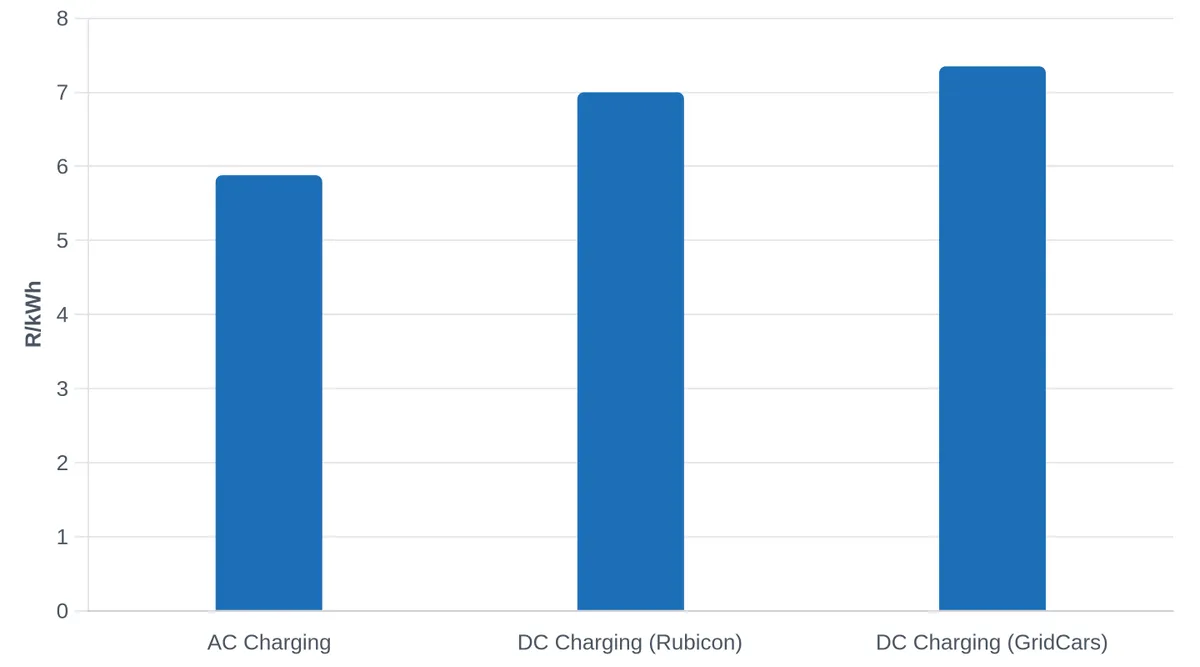
Metered per-kWh billing: The most scalable model for larger properties. Billing-grade hardware (such as the CP-AC22-N with its Eichrecht-conformant MID meter) records every kilowatt-hour to 1% accuracy. Guests pay by app, QR code or RFID card. At commercial tariff rates of approximately R4.50 per kWh and a guest-facing rate that reflects current public AC rates (note: public AC rates were R5.88 per kWh as of August 2025, with GridCars implementing approximately a 15% increase from December 2025, verify current market rates before setting yours), the margin per session is material and the accounting is clean.
Approximately 10 percent of South African public chargers are offered free, often by hotels and shopping centres as a loyalty and footfall tool (Cartrack, Imotonews). That is a legitimate strategy for boutique eco-tourism properties, where the brand statement matters more than the per-session revenue. Raw Africa Boutique Collection, which installed EV charging at its Sky Villa Boutique Hotel, framed it as the next step in a long history of responsible tourism principles, a positioning that resonates with their specific guest segment.
Compare AC 22 kW and DC fast chargers for hotels
The compliance you cannot skip
Every EV charger installation in South Africa must comply with three standards and carry two credentials. If you run a hotel and are evaluating suppliers, these are the questions that protect you:
- SANS 10142-1 (wiring code): The national electrical wiring standard, including Annex N which contains EV-specific installation requirements. Many generalist electricians are not familiar with Annex N. Your installer must know it.
- SANS 62196-2 (AC connectors): Covers the Type 2 AC connector that every modern EV in South Africa accepts.
- SANS 62196-3 (DC connectors): Covers CCS2 and the DC connector standards applicable if you add fast charging.
- Certificate of Compliance (CoC): The electrical CoC must be issued on completion. Without it, your building insurer can void your policy in the event of a fire or electrical fault traced to the charger installation.
- ECSA-registered installers: Commercial installations must be carried out by engineers or contractors registered with the Engineering Council of South Africa. Ask for the registration number before work commences.
Non-compliance exposes your property to fines exceeding R20,000 and, far more seriously, to voided insurance. This is not a bureaucratic detail, it is the single biggest risk in a poorly procured installation. A good indicator of a credible supplier: they raise these requirements upfront, rather than after you ask.
On the software side, Winstone Jordaan, Director of GridCars, was direct at Enlit Africa 2025: “You’ve got to stop the installation of dumb chargers. You need smart, connected chargers to avoid what happened in the UK, where they had to ban 200,000 dumb units after rollout. We have the chance to get it right from the start.” OCPP-connected, networked chargers are not optional for a hotel deployment that expects to work reliably over years. They enable remote diagnostics, over-the-air firmware updates, load balancing, and the managed billing your guests expect.
Avoiding the ‘checkbox charger’ trap
SWTCH Energy puts it plainly: “Installing one or two EV chargers to satisfy an online booking filter creates more reputational risk than having no chargers at all.” The scenario is familiar: a guest arrives after a long drive, finds the single unmanaged charger occupied or broken, and walks to the front desk at 11:30 PM. Your night auditor is an expert in hospitality, not high-voltage electrical engineering. They cannot fix the hardware, and they cannot make a car that has finished charging move to free up the bay. The result is a bad review, not a satisfied guest.
Oxmaint data shows that 78 percent of hotel EV charger downtime events are caused by missed preventive maintenance, not hardware failure. Cable jacket cracking, connector pin corrosion and latch mechanism wear are the leading causes of guest-facing faults. The recommended inspection interval is every 500 usage cycles or 90 days, whichever comes first, hotel charger cables take five to fifteen plug-and-unplug cycles daily, so that interval arrives quickly.
The practical answer is threefold: deploy enough bays that one fault does not strand a guest, use networked chargers that surface faults before guests find them, and have a maintenance SLA in place. Hotels using networked chargers with maintenance management system integration resolve faults 4.2 times faster than manually monitored deployments (Oxmaint). EV guests with a positive charging experience return at 2.1 times the average rate (Oxmaint). The investment in operational reliability is what converts a charger from a liability into a loyalty tool.
Dynamic load balancing: adding more chargers without a transformer upgrade
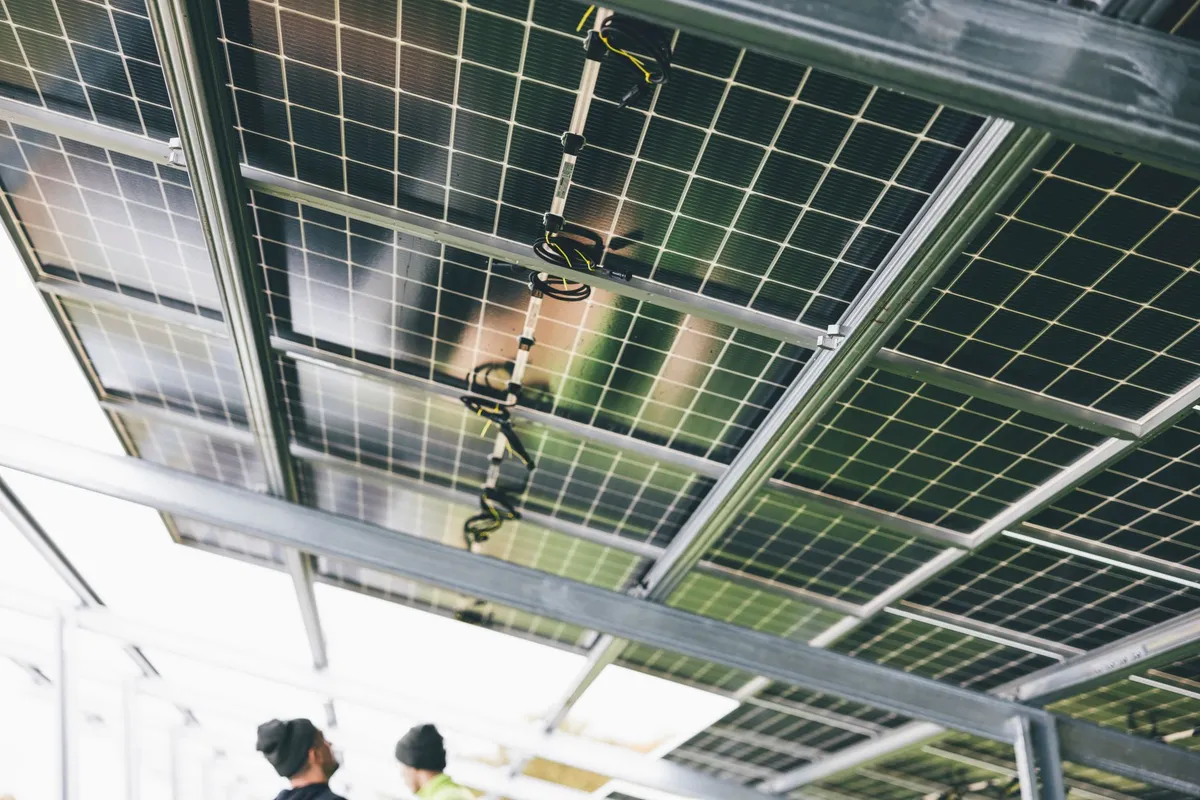
One of the practical constraints at established South African hotel properties is that existing electrical supply cannot simply accommodate six new 22 kW circuits without upgrades. Dynamic load balancing, built into the CP-AC22-N, CP-DUO-44 and CP-DC60, allows multiple chargers to share a fixed electrical supply intelligently, distributing available capacity across active sessions and throttling individual chargers when demand peaks. This means you can often install more bays on your existing supply than a static calculation would suggest, deferring or avoiding an expensive transformer upgrade.
When you do trench, lay oversized or additional conduit during the initial civils phase. Adding wiring later without digging again is one of the few hotel infrastructure decisions that genuinely pays for itself: the marginal cost of conduit during the first dig is a fraction of re-trenching across a paved car park later.
Planning your hotel EV charging deployment: a practical sequence
If you are a hotel owner or GM starting this process, the sequence below reflects what a well-run South African installation looks like:
- Commission a load assessment: R3,000 to R6,000 from a consulting engineer. This is the document that tells you what is actually possible at your site, what upgrades are required, and whether the quote you have been given is realistic.
- Define your bay count and location: Parking orientation must align with cable length and connector reach. Reserve space for future bays even if you install fewer now. Consider bollards, barriers and equipment islands in your layout. Accessible bays require an adjacent 1.5 m (five-foot) access aisle.
- Select billing-grade, networked hardware: For hotel use, the CP-AC22-N (22 kW, MID-metered, OCPP, billing-ready) is the correct specification. For twin bays, the CP-DUO-44 reduces per-bay installation cost.
- Confirm SANS compliance and CoC issuance: Verify that your installer is ECSA-registered and that a CoC will be issued on completion. Get this in writing before work begins.
- Set your billing model: R120 flat-rate sessions, complimentary charging with a nightly rate premium, or metered per-kWh billing. The right model depends on your property size and guest profile.
- List as EV-friendly: Update your listings on accommodation platforms, Google Business Profile and your own website. This is where the 2 to 3 additional bookings per month documented by EVCI come from.
- Put a maintenance SLA in place: Inspection every 500 cycles or 90 days. A managed service with remote monitoring eliminates the 11:30 PM front-desk scenario.
What the South African hotel market is already doing
City Lodge Hotels has deployed EV chargers across eight of its properties, positioning the rollout explicitly as part of its sustainability programme and guest experience design. Raw Africa Boutique Collection installed charging at its Sky Villa Boutique Hotel as a direct expression of its eco-tourism principles. Eendracht Hotel in Stellenbosch is among the first South African properties to offer 22 kW charging, with management describing it as a long-term investment consistent with their sustainability philosophy.
These are not outliers. They are early adopters in a market where the EV fleet is growing and the infrastructure expectation is shifting. The hotels that have already invested are competing for a guest segment that books based on charging availability. The hotels that have not are increasingly visible by their absence on EV-friendly listing filters.
The honest market reality, noted by GridCars Director Winstone Jordaan: South Africa needs approximately 100,000 EVs on the road before public charging-as-a-service reaches real standalone profitability. At 3,543 EVs by end of 2024, the volume is not there yet for a hotel to expect a DC fast charger to pay for itself purely on session revenue from the public. But that framing misses the point for a hotel: your charger does not need to be a public charging business. It needs to win you bookings, increase length of stay, and improve guest satisfaction scores. On those metrics, the case already closes, and it closes faster than the 2.4 to 4.1 year payback window that Oxmaint benchmarks for well-maintained hotel programmes.
Frequently asked questions
How many EV chargers does a hotel need?
The minimum viable deployment for a hotel is at least two to four bays, wired from a managed, networked system, never a single unmanaged unit. One charger that fails or is occupied creates a guest experience problem that damages your reputation more than having no charger. A practical rule of thumb for South African properties in 2026: plan for 5 to 10 percent of your parking capacity as EV-ready bays, with conduit laid for future expansion to 20 percent. A formal load assessment will tell you how many bays your current supply supports without upgrading, and a dynamic load balancing system can often increase that number without additional civils.
What is the best charger type for an overnight hotel stay?
A 22 kW AC charger is the correct specification for most South African hotels. Guests parked for six to twelve hours overnight do not need DC fast charging speed, a 22 kW AC connection delivers a full charge in one to two hours on vehicles that accept that rate, or a practical overnight top-up on any Type 2-compatible car. AC chargers are cheaper to buy, simpler to install, and do not require the 480 V three-phase service that DC fast chargers demand. DC fast charging is worth considering only if your hotel sits on a major travel corridor and you want to serve passing EV drivers who are not overnight guests.
Can a hotel charge guests for EV charging, and how should it be priced?
Yes, and most South African properties that have deployed charging do charge guests. The documented benchmark is R120 for a four-hour session (EVCI). Alternatively, some properties add approximately R50 to the nightly rate and offer EV charging as a complimentary amenity, which strengthens the EV-friendly positioning on booking platforms. For larger properties with billing-grade hardware, metered per-kWh charging is the most scalable model: the CP-AC22-N records every kilowatt-hour to 1% accuracy, and guests pay by app, QR code or RFID without staff involvement. Note that public AC charging rates in South Africa were R5.88 per kWh as of August 2025, with a circa 15% increase from December 2025, use current market rates as your ceiling reference when setting guest-facing prices.
What compliance is legally required for hotel EV charger installations in South Africa?
All commercial EV charger installations in South Africa must comply with SANS 10142-1 (the national electrical wiring code, including Annex N for EV-specific requirements), SANS 62196-2 (AC connectors) and SANS 62196-3 (DC connectors). An electrical Certificate of Compliance (CoC) must be issued on completion, without it, your building insurer can void your policy in the event of a fault. On commercial projects, work must be carried out by ECSA-registered installers. Non-compliance exposes the property to fines exceeding R20,000 and, more critically, to uninsured liability. Verify ECSA registration and CoC issuance before contracting any installer.
How long does it take to install EV chargers at a hotel?
For a straightforward installation of two to four AC bays with an existing adequate DB and short cable runs, the physical installation typically takes one to three days once materials are on site. More complex projects, underground conduit across a paved car park, DB upgrades, new sub-boards, take longer and require coordination with your local municipality or Eskom for any supply upgrade. Commission the engineering load assessment first, as this identifies whether a supply upgrade is needed: in markets where grid upgrade queues are long, starting that process early is the single biggest schedule lever. Build eight to twelve weeks into your project timeline for a straightforward hotel deployment; larger projects with grid works should allow six months or more.
What happens if the EV charger breaks down and a guest complains?
Without a managed service and remote monitoring, a fault typically goes undetected until a guest finds it, often late at night. That guest walks to the front desk, and your night auditor is left trying to troubleshoot hardware they are not trained to repair. With a networked, OCPP-connected charger and a managed maintenance SLA, faults are flagged automatically and resolved remotely where possible, or escalated to a technician. Oxmaint data shows that 78 percent of hotel charger downtime is caused by missed preventive maintenance, not hardware failure. Hotels using networked chargers resolve faults 4.2 times faster than manually monitored deployments. The operational layer, not just the hardware, is what determines whether your charging installation builds or destroys guest trust.
Recommended chargers for South African hotel deployments
For hotel and destination charging, ChargePoint SA supplies and installs two primary configurations:
- CP-AC22-N (22 kW billing-grade AC wallbox): The standard hotel choice. Three-phase, Eichrecht-conformant MID metering (1% accuracy), OCPP 2.0.1J, ISO 15118 Plug and Charge, dynamic load balancing, app/QR/RFID payment. Operator-ready from day one. Unit pricing on request; installation quoted per site.
- CP-DUO-44 (twin 2×22 kW wallbox): Two bays from one unit, with dynamic load balancing and optional MID metering. Reduces per-bay installation cost on multi-space hotel deployments.
- CP-DC60 (60 to 120 kW DC fast charger): For hotels on major travel corridors that want to serve both overnight guests and passing EV drivers. From approximately R430,000 installed (60 kW, indicative). Dual-outlet CCS2, 10.1-inch touch display, app/QR/RFID/POS payment.
All installations are delivered under the ChargePoint SA Commercial EV Charging Programme: supply, installation, SANS 10142-1 compliance, electrical CoC, ECSA-registered installers, OCPP/OCPI platform, managed billing, load balancing and remote monitoring, from approximately R350 per charger per month for the managed service layer. A white-label option is available if you want the charger branded under your property identity.
The bottom line for hotel owners and GMs
EV charging at a South African hotel is no longer a green marketing exercise. It is a booking conversion tool for a guest segment that spends more, stays longer and returns at more than twice the average rate when they have a positive charging experience. The financial case closes on guest acquisition alone before you count a single rand of session revenue. The compliance case is straightforward: SANS standards, a CoC, and ECSA-registered installers are the minimum, not optional details. And the operational case is clear: the right number of networked, managed chargers is what separates a reputation-building amenity from a front-desk liability.
The next step is a site assessment. Use the free Commercial Site Builder to get a recommended charger configuration, an indicative cost range and a payback estimate for your specific property, then book an engineered site assessment with our team: Plan your site free with our Commercial Site Builder.
Plan EV charging for your hotel’s guest parking
Free site plan with no obligation — includes cost estimates tailored to your property.
Plan my hotel’s charging →WhatsApp us
CoC-certified installers, nationwide
Photo: Engin Akyurt / Pexels