
Key points
- A 7.4 kW single-phase wallbox in a Pretoria freestanding home costs R10,000-R14,000 all-in (charger, SWA cable, labour, CoC) in 2026, the sweet spot for most owners (ChargePoint SA).
- The full range is wider: R8,000-R35,000 depending on charger type, cable run distance, DB board condition, and whether you need a panel upgrade.
- A 22 kW three-phase setup costs R20,000-R39,000 installed; a single-to-three-phase upgrade alone adds R15,000-R30,000.
- The single biggest cost variable is distance from the DB board to the charger: a 5 m run takes about 2 hours of labour; a 25 m run takes a full day (Handyman Pretoria).
- Charging on City of Tshwane off-peak rates (R1.70/kWh overnight) costs roughly R0.66/km versus R2.40/km for petrol (ChargePoint SA).
- A SANS 10142-1 Certificate of Compliance is mandatory, not optional, and must be issued by a DoL-registered electrician.
- Approximately 95% of South African EV owners charge primarily at home (ChargePoint SA); getting the installation right from day one determines your running cost for years.
Ask three electricians in Pretoria for a quote to install an EV charger and you may get numbers anywhere from R4,500 to R45,000. That spread is not dishonesty, it mostly reflects genuine differences in scope. But it also reflects the fact that some quotes exclude items the law requires, some electricians are not registered for EV work, and some have never touched a modern wallbox.
This guide cuts through all of that. Every number below is sourced from verified data, real installation records, and owners who have been through the process in Tshwane. By the end you will know what a fair quote looks like, what questions to ask before signing anything, and how to budget your real total, not the number on a brochure.
The short answer: what does a Pretoria EV charger installation actually cost?
For a freestanding home in suburbs like Centurion, Montana, Waterkloof East, or Pretoria East, the most common scenario is a 7.4 kW single-phase wallbox installed where the garage is reasonably close to the DB board. According to ChargePoint SA’s Pretoria installation data, that job lands between R10,000 and R14,000 all-in, covering the charger hardware, SWA cable, dedicated circuit breaker (typically a 40 A breaker), residual current device, labour, and the SANS 10142-1 Certificate of Compliance. The broader documented range across all scenarios is R8,000 to R35,000.
That R35,000 ceiling is not invented headroom. It reflects real situations: an older Sunnyside or Arcadia home with a 60 A service panel that needs a full board upgrade, or a Waterkloof Ridge property where three-phase is available but the wiring is forty years old, or a cluster home where the cable must run sixty metres through a conduit trench.
“Very thorough in how they do their assessment of the job and required material, no waste and no surprises when it comes to quotations. Even with additional work, everything is explained well.”
That quote captures what a good installation process looks like. The site assessment should happen before any quote is finalised, it is the only way to avoid a low number that mushrooms once the electrician opens the DB board.
Cost breakdown: what you are actually paying for

A charger installation invoice has several distinct line items. Understanding each one lets you audit a quote and spot what is missing.
1. Charger hardware (supply only)
Hardware-only prices for home wallboxes in South Africa run from R8,000 to R18,000 (ChargePoint SA). OEM-supplied chargers from vehicle manufacturers span a wider range: TopAuto documented retail pricing from R2,277 to R40,779, with BMW’s unit at R15,651 and Volvo’s at around R25,000 (February 2023 pricing, current pricing will vary). The charger hardware itself is usually the second or third largest line item, not the largest.
For most Pretoria homeowners on single-phase supply, the ChargePoint SA Caro Plus (CP-AC7) is the practical starting point: 7 kW single-phase, tethered Type 2 cable (5-7 m), RFID or app start, OCPP 1.6/2.0.1, Wi-Fi/Bluetooth, optional dynamic load balancing and PV solar integration, IP65 weatherproof, and a Type A RCD with 6 mA DC earth-leakage protection built in. Indicative unit price: from approximately R8,900 (installation is quoted separately per site, as cable runs, board condition, and civils vary).
If your home has three-phase supply, common in parts of Brooklyn and Waterkloof Ridge, the Caro Pro (CP-AC22) delivers 22 kW, turning a flat battery to full charge in a couple of hours. Indicative unit price: from approximately R13,900, installation quoted per site.
2. Installation labour
Labour runs from R5,000 to R15,000 depending on complexity (ChargePoint SA). Electrician day-rates in Gauteng average around R550 per hour, with a range of R350-R700 (Builders in Gauteng). A straightforward installation on a modern DB board with a short cable run, typical in Montana, Highveld, or newer Centurion estates like Eldoraigne and Lyttelton, takes 3-5 hours (ChargePoint SA Pretoria Team). A complex job with board work and a long conduit run can stretch to two full days.
3. Cable and materials
The minimum cable specification for a 7.4 kW charger circuit under SANS 10142-1 (Edition 3.2, published July 2024) is 6 mm² copper for a 32 A single-phase circuit up to 25 metres. Longer runs or three-phase circuits require larger sizing. SWA (steel-wire armoured) cable is standard for exposed or underground runs and adds to material cost.
Distance is the single most significant cost driver. According to Handyman Pretoria data: a 5 m cable run takes approximately 2 hours of labour; a 25 m run takes a full day. Every extra metre beyond 15 m adds R2,000-R5,000 to the standard installation cost (The Handyman Johannesburg). Outdoor or weatherproofed installations add R1,500-R3,000 in Pretoria (ChargePoint SA).
4. Certificate of Compliance (CoC)
The SANS 10142-1 CoC is not a formality. It is a legal requirement for all permanent EV charger installations in the City of Tshwane, and it must be issued by a DoL-registered master installation electrician (ETSP, IE, or MIE depending on supply type). The CoC is valid for 24 months.
“Without a valid Electrical Certificate of Compliance covering the EV circuit, home insurance policies routinely reject claims for electrical fires or damage. You also cannot transfer ownership of the property, the CoC is a condition of sale.”
CoC cost varies by source: R800-R1,100 for a standard residential inspection (The Handyman Johannesburg), or R2,000-R4,000 when issued as part of a full EV charger installation scope (ChargePoint SA). The difference reflects whether the CoC covers only the new circuit or the broader installation. Permit and admin fees in Gauteng municipalities add a further R800-R2,500 (Handyman Pretoria).
“The CoC is not optional and it is not bureaucratic box-ticking, it is proof that the work was done safely.”
5. DB board and panel upgrades (when needed)
This is where budgets can shift dramatically. About 70% of South African homes run on single-phase 60-80 A supplies (ChargePoint SA / TopAuto), which is adequate for a 7 kW charger in most cases. But older homes, particularly pre-2000 builds in Sunnyside, Arcadia, and parts of Hatfield, sometimes have boards that are full, undersized, or not earthed correctly.
A full DB replacement with earth leakage and circuit upgrades costs R5,000-R15,000 or more depending on complexity (Pretoria Transfer Guide). Homes with 60 A service needing an upgrade to 100 A or higher face costs of R15,000-R35,000 (The Handyman Johannesburg). A complete electrical panel upgrade ranges R8,000-R20,000 depending on current system capacity and age (The Handyman Johannesburg).
Upgrading from single-phase to three-phase supply, necessary only if you want a 22 kW charger and your home does not already have three-phase, costs R15,000-R30,000, includes new cabling from the street transformer and a new meter, and requires municipal approval (ChargePoint SA).
“I enquired about 3 phase to my house and it was R30k from the transformer to my garage wall, where the meter was going to be located… a distance of around 20 meters…”
That real-world figure aligns with ChargePoint SA’s documented R15,000-R30,000 range. If a quote for three-phase comes in well below that, ask specifically what is included, some quotes cover only the internal wiring, not the municipal service connection.
Pretoria suburb by suburb: what to expect
Not all Tshwane suburbs are equal when it comes to electrical infrastructure. Here is a practical breakdown based on ChargePoint SA’s installation experience:
- Centurion (Eldoraigne, Lyttelton, Highveld): Newer estates with modern DB boards that handle a 7.4 kW charger without drama. Expect the standard R10,000-R14,000 range for most jobs.
- Montana: Newer development with modern boards and larger garages, one of the simpler installation environments in Tshwane. Similar cost range to Centurion’s newer precincts.
- Brooklyn and Waterkloof Ridge: Many homes have three-phase supply already, which opens the door to a 22 kW charger. However, some older homes in these suburbs have dated wiring and may need a board upgrade before installation.
- Pretoria East (Faerie Glen, Garsfontein, Moreleta Park): Mix of home ages. Newer homes in estates generally straightforward; older freestanding homes may need a board assessment first.
- Sunnyside, Arcadia, Hatfield: Higher probability of older wiring and undersized boards. Budget a contingency of R5,000-R15,000 for potential board work before confirming total cost.
- Waterkloof Glen: Generally well-equipped newer precincts; most homes handle a 7.4 kW charger without upgrades.
ChargePoint SA notes that approximately 60% of Pretoria EV installations are in apartments, clusters, or sectional-title properties. Body-corporate consent for a charger on common property requires an ordinary resolution (more than 50% of trustees or owners), not a special resolution. Exclusive-use-area rights are governed by STSMA sections 27 (real rights) versus sections 10(7) and (8) (personal rights). ChargePoint SA’s Pretoria team handles the body-corporate paperwork at no additional cost, with a typical approval timeline of 2-4 weeks.
The cost calculator: build your own budget
Use this table to construct a realistic cost estimate for your specific scenario before requesting quotes. Add the relevant line items for your situation.
| Cost item | Typical range | Notes |
|---|---|---|
| 7 kW wallbox hardware | R8,000-R18,000 | Caro Plus from ~R8,900 (indicative); ChargePoint SA |
| 22 kW wallbox hardware | R13,900+ | Caro Pro from ~R13,900 (indicative); requires 3-phase supply |
| Installation labour (standard) | R5,000-R15,000 | 3-5 hours for simple job; full day+ for complex; ChargePoint SA |
| Cable run surcharge (>15 m) | R2,000-R5,000 | 25 m run = full day; The Handyman Johannesburg |
| Outdoor/weatherproof installation | R1,500-R3,000 | Exposed or carport mounting; ChargePoint SA |
| SANS 10142-1 CoC | R2,000-R4,000 | Mandatory; issued by DoL-registered electrician; ChargePoint SA |
| Permit and admin fees (Tshwane) | R800-R2,500 | Handyman Pretoria |
| DB board circuit breaker (40 A) | Included in most quotes | Confirm explicitly in writing |
| DB board upgrade (if needed) | R5,000-R15,000 | Full board with earth leakage; Pretoria Transfer Guide |
| Electrical panel upgrade (60A to 100A+) | R15,000-R35,000 | Older homes; The Handyman Johannesburg |
| Single-to-three-phase upgrade | R15,000-R30,000 | Includes transformer cabling and new meter; ChargePoint SA |
| Typical all-in (7 kW, modern home) | R10,000-R14,000 | Sweet spot for Centurion, Montana, Pretoria East freestanding; ChargePoint SA |
| Typical all-in (22 kW, three-phase home) | R20,000-R39,000 | Assumes three-phase supply already present; ChargePoint SA |
| Full range (all scenarios) | R8,000-R35,000 | Hardware + cabling + circuit + CoC; ChargePoint SA |
How to use this table: Start with the hardware line for your charger type. Add the standard labour figure. Then work through the additional items that apply to your property. If you are unsure about DB board condition, include a R5,000-R15,000 contingency and confirm during the pre-installation site assessment. Do not accept a quote that does not explicitly include the CoC, it is not an optional extra.
The compliance framework: what the law requires in Tshwane
SANS 10142-1 Edition 3.2 (published July 2024) governs all residential electrical installations in South Africa, including EV charger circuits. Annex N specifies the EV-specific requirements. The key mandatory elements for a Pretoria installation are:
- A dedicated circuit with a Type A or Type B RCD rated for DC fault currents exceeding 6 mA. A Type A RCD can be used if the charger includes built-in 6 mA DC protection, which the Caro Plus (CP-AC7) does.
- Minimum 6 mm² copper cable for 32 A single-phase circuits under 25 metres.
- Earth continuity resistance meeting the 1-ohm threshold (lower depending on soil conditions), with bonding verified at the prescribed supply levels.
- A SANS 10142-1 CoC issued by a DoL-registered electrician (ETSP, IE, or MIE depending on supply type), valid 24 months.
- For commercial, public, or government-tendered projects, ECSA registration is also required. For residential installations, a DoL-registered electrician is sufficient.
All EV charger hardware sold in South Africa must carry an NRCS Letter of Authority (LoA), valid 3 years, and a SABS EMC Certificate of Conformance. Processing time for an LoA application can run up to 120 working days. Chargers without valid LoA approval should not be installed, the insurance and legal exposure is the owner’s to carry.
Verified NRCS-approved chargers with confirmed CoC-backed installations in South Africa include the Wallbox Pulsar Plus, Zappi v2.1, Victron EVCS, and EO Mini Pro 3 (ChargePoint SA installation portfolio).
See your actual Pretoria charging costs vs petrol
Hidden costs that inflate final invoices
The Handyman Johannesburg identifies existing electrical infrastructure as the most overlooked cost factor in EV charger installations. A thorough pre-installation assessment prevents costly surprises. Here are the specific issues that inflate final costs most often in Pretoria:
- The DB board is full. A modern 7.4 kW charger needs a dedicated 40 A breaker. If the board has no spare capacity, the electrician must either add a sub-board or upgrade the main board.
- The cable run is longer than it looks. A garage on the far side of the property from the DB board, common in Pretoria East cluster homes, can mean 25-35 m of conduit and cable. That is a full day’s labour and significant materials cost.
- The supply is undersized. Approximately 70% of South African homes run on single-phase 60-80 A supplies (TopAuto / ChargePoint SA). A 7 kW charger drawing 32 A continuously on a 60 A service leaves only 28 A for everything else. If the household load peaks above that, either the charger needs dynamic load balancing or the service needs upgrading.
- The quote excludes the CoC. Some low quotes are low because they do not include the Certificate of Compliance. Ask explicitly: is the CoC included, and will the invoice reference the SANS 10142-1 standard?
- The charger has no LoA. A cheap wallbox sourced from an online marketplace may not carry NRCS approval. If it does not, it cannot be legally installed and your insurer will not cover it.
“We had three attempts for installation of our complimentary MB Wallbox. Apparently the installation asks for an unusual type of wiring (4 AWG). Did anybody have trouble with their electrician installing it?”
That experience illustrates a genuine risk with OEM-supplied chargers: the hardware arrives, the local electrician has never installed that specific unit, and the wiring specification is unfamiliar. An installer who works across multiple charger brands regularly will navigate this more confidently than a generalist electrician encountering a wallbox for the first time.
The real cost of getting it wrong
“I initially got quotes from three electricians. ChargePoint SA was R6,000 more expensive. I almost went with the cheaper option. Then I asked the electrician about solar integration, he had no idea. About off-peak charging programming, he said ‘you can set that in the app yourself.’ About load-shedding, ‘not my problem.’ I went with ChargePoint SA. Six months later, my neighbour (who used a cheap electrician) is paying R850/month to charge. I’m paying around R180/month effective cost because ChargePoint SA set up everything properly with solar integration.”
That is a R670/month difference in running cost, R8,040 per year. Over a three-year period, the R6,000 premium paid upfront returns more than R24,000 in lower charging bills, before accounting for any solar generation benefits. The installation cost is a one-time expense. The charging cost runs every day for the life of the vehicle.
Cost of ownership: does a home charger pay for itself in Pretoria?
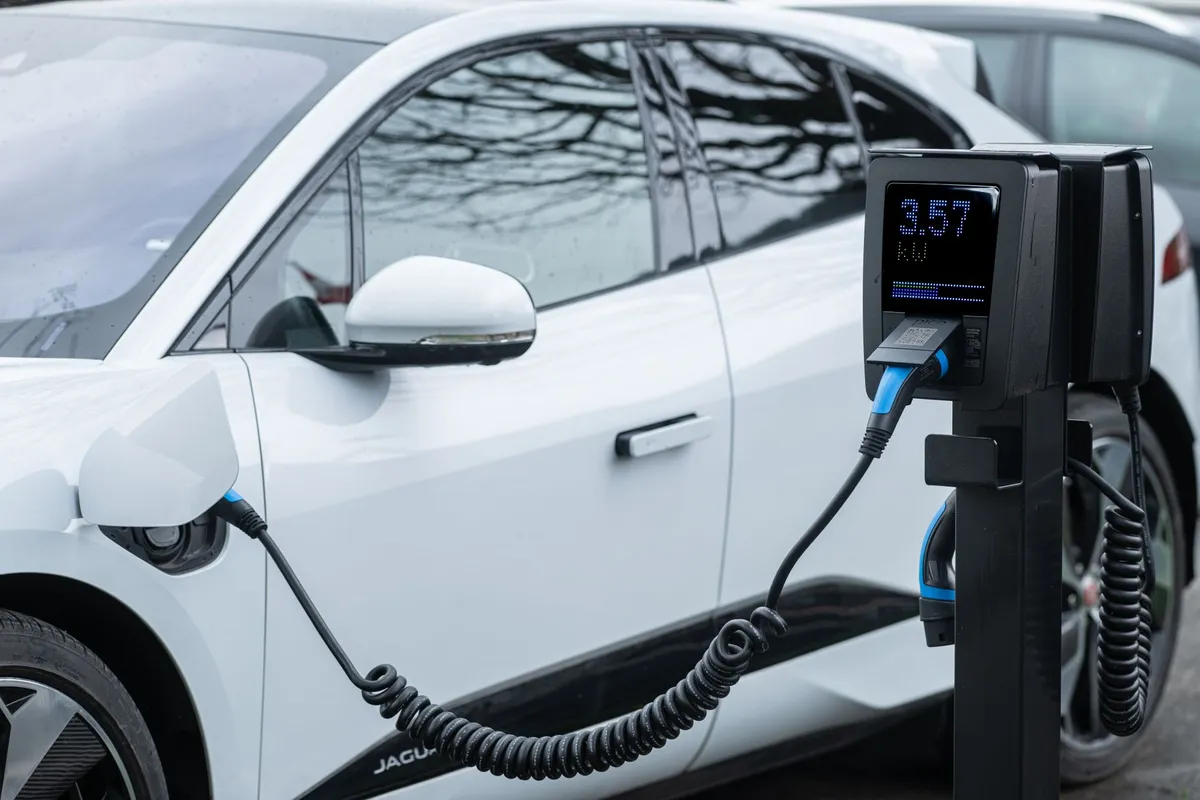
The City of Tshwane’s overnight off-peak electricity tariff is R1.70/kWh (ChargePoint SA). Charging at that rate on a 7.4 kW wallbox costs approximately R0.66/km, against roughly R2.40/km for a typical petrol vehicle (ChargePoint SA). For a BYD Atto 3 (60 kWh battery, 18 kWh/100 km consumption), that translates to approximately R26 per 100 km on the Eskom Homeflex off-peak rate (ChargePoint SA).
The City of Tshwane’s Block 1 daytime tariff (0-100 kWh tier) is R2.9790/kWh for the 2025/2026 financial year (City of Tshwane / MidCity Utilities). Charging at that rate costs more, roughly R0.54/km on the same vehicle, but still substantially less than petrol. The Tshwane tariff increased 10.2% for the 2025/2026 year (City of Tshwane / Utilinova), following a 12% increase the previous year. Petrol prices have generally tracked inflation or above; the cost advantage of home charging tends to widen over time.
Public DC fast chargers in South Africa were priced at R7.00-R7.35 per kWh (DriveElectric, August 2025 data, note: GridCars implemented approximately a 15% increase from 1 December 2025, so current 2026 public DC rates are higher than those figures). At post-increase rates, public DC charging likely costs 4-5 times more per kilowatt-hour than overnight home charging. That gap is precisely why 95% of South African EV owners charge primarily at home (ChargePoint SA).
ChargePoint SA’s payback modelling for a R22,000 all-in installation in Gauteng on Homeflex off-peak rates shows a payback period of roughly 10 months, with an annual saving of R26,100. Over a 7-year ownership period, cumulative savings are projected north of R180,000 (ChargePoint SA). Even at the conservative end, a R14,000 installation and more modest daily driving, the charger typically pays for itself within the first year of use.
Charging on your timeline: what a 7.4 kW charger actually delivers
A 7.4 kW single-phase charger delivers 40-80 km of range per hour (ChargePoint SA). For a 60-80 km daily commute, plugging in at 22:00 and unprogramming at 05:00 is sufficient: a full overnight charge takes 6-8 hours (ChargePoint SA). The 3-5 hour installation time for a typical freestanding Pretoria home (ChargePoint SA Pretoria Team) means your charger is operational the same day as installation in most straightforward scenarios.
Load-shedding has decreased dramatically: South Africa had 335 days of load-shedding in 2023 (FTI Consulting / National Treasury), falling to 83 days in 2024, and only 12 days in the first eight months of 2025 with the last occurrence on 15 May 2025 (FTI Consulting). For most Pretoria EV owners today, charging around outages is no longer a daily operational concern. A 7.4 kW home charger can typically complete an overnight charge in 8-10 hours, which is long enough to schedule around Stage 2-4 outages even if they return (ChargePoint SA).
Choosing the right charger for your Pretoria home
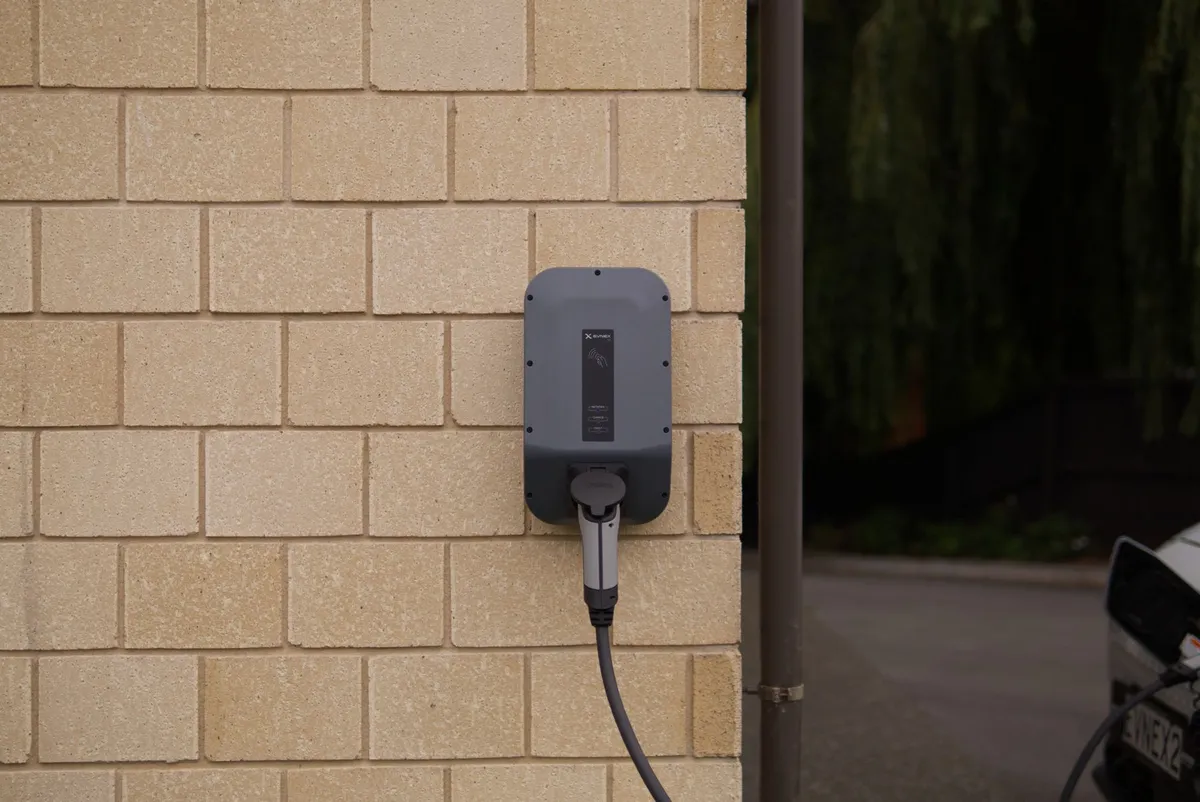
The choice between a 7 kW and 22 kW charger depends on three things: your home’s electrical supply, your car’s onboard AC charger capacity, and your daily driving pattern.
Most Tshwane homes are on single-phase supply, approximately 70% of South African residential properties, which caps output at around 7 kW (ChargePoint SA). For the majority of Pretoria EV owners with a 60-80 km daily commute, that is entirely adequate. A car parked overnight for 7-8 hours will be fully charged by morning.
Three-phase supply is more common in older established suburbs like Waterkloof Ridge and parts of Brooklyn (ChargePoint SA). If you have three-phase supply and your vehicle accepts 11 kW or 22 kW AC charging (most current BEVs accept 11 kW; some accept 22 kW), the Caro Pro (CP-AC22) delivers up to three times the charge rate of a 7 kW unit. The installed cost range is R20,000-R39,000 (ChargePoint SA), versus R10,000-R14,000 for a typical 7 kW installation. The additional cost is only justified if both the supply and the vehicle support it.
Specific verified all-in costs for comparison: a Victron EV charger installs at approximately R17,000 all-in (7 kW single-phase, including dedicated circuit and CoC); a Zappi smart charger runs approximately R24,000 installed due to import costs (ChargePoint SA).
What good service looks like: questions to ask before you sign
The quotes that mislead are usually not fraudulent, they are incomplete. Here is a checklist to verify any quote before approving it:
- Is the SANS 10142-1 Certificate of Compliance explicitly included, at what cost, and issued under the electrician’s DoL registration number?
- Is the charger hardware NRCS LoA approved? Can the installer provide the LoA number?
- Does the quote include a dedicated 40 A circuit breaker and the correct RCD (Type A with 6 mA DC protection, or Type B)?
- What cable specification is used? (6 mm² copper minimum for runs under 25 m on a 32 A circuit.)
- Has the installer visited the site or reviewed photos of the DB board and proposed cable route? A quote without a site assessment is an estimate, not a fixed price.
- Does the quote include a DB board assessment? What are the contingency terms if the board needs work?
- What is the warranty period on both hardware and installation workmanship?
- Will the charger support smart scheduling for overnight off-peak charging, and will the installer configure it?
“Very reliable, used them for both home and office. Lots of installers in Joburg that don’t know what they’re doing; these guys did a good job. Referred my cousin in Cape Town too, same feedback.”
That kind of consistency across home and commercial installations, and across cities, is a reasonable proxy for the process discipline that prevents budget surprises. A typical straightforward Pretoria installation (freestanding house, modern DB board, 10-15 m cable run) completes in one day; complex jobs with board upgrades take two days (ChargePoint SA Pretoria 2026 Guide).
A note on public charging as a backup
South Africa’s public charging network has grown from approximately 350 stations at mid-2023 to over 500 stations by mid-2025, with an EV-to-charger ratio of roughly 1:7 (ChargePoint SA market research, 2026). For Pretoria residents, public chargers in shopping centres along Garsfontein Road, Menlyn, Centurion Mall, and along the N1 and N4 corridors provide useful backup for longer trips. They are not a substitute for home charging economics: even at pre-December-2025 rates of R7.00-R7.35/kWh, public DC charging cost substantially more per kilometre than home off-peak rates. Post-December 2025, with approximately 15% increases applied by major networks, the gap is wider still.
Rubicon’s Head of E-mobility Hilton Musk has noted that public charging tariffs are not standardised and can vary by network operator:
“It’s important to note that these tariffs are typically set through agreements between the charge point operator (CPO) and the e-mobility service provider (eMSP), which means they can vary in some cases. For example, at AIDC-EC charging stations, Rubicon eMSP customers pay R7.00 per kWh while GridCars eMSP customers pay R8.24 per kWh.”
That opacity in public charging pricing reinforces why a correctly installed home charger, scheduled for overnight off-peak charging, is the most cost-effective foundation for EV ownership in Tshwane.
Summary: what to budget for your Pretoria EV charger installation
| Scenario | All-in cost range | Typical suburbs |
|---|---|---|
| 7 kW, modern DB board, short cable run | R10,000-R14,000 | Centurion, Montana, Pretoria East estates |
| 7 kW, older DB board or long cable run | R14,000-R22,000 | Hatfield, older Pretoria East freestanding |
| 7 kW, board upgrade required | R20,000-R35,000 | Sunnyside, Arcadia, pre-1990 builds |
| 22 kW, three-phase supply present | R20,000-R39,000 | Brooklyn, Waterkloof Ridge |
| 22 kW including single-to-three-phase upgrade | R35,000-R69,000+ | Any single-phase home wanting 22 kW |
These are all-in figures covering hardware, cable, labour, dedicated circuit, RCD, and CoC. Installation cost varies per site, these ranges are indicative guides, not fixed prices. A site assessment before quoting is the only way to get a reliable number for your specific property.
Ready to get a precise number for your home? Get a free installation quote from ChargePoint SA’s Pretoria team, they will assess your DB board, cable route, and supply type before quoting, so you have a real number, not an estimate that grows after the job starts.
Get your Pretoria installation cost locked in
Free quote covers charger, labour, cable, CoC and any DB upgrades needed.
Request my installation quote →WhatsApp us
CoC-certified installers, nationwide
Illustration: chargepointsa.co.za