Key points
- A 47 kW DC commercial charging site costs R400,000 to R1.25 million in hardware alone, according to ChargePoint SA’s network cost research and DriveElectric.co.za; electrical infrastructure (transformer upgrades, switchgear, panel replacements) accounts for a further 30-60% of total project cost per ABNewswire/Recharged data.
- Outright purchase lets you claim Section 11(e) depreciation and deduct interest, but you carry full technology-obsolescence risk, as AEVERSA notes, global standards are already pushing well beyond 50 kW DC toward high-power charging.
- Operating leases and Charging-as-a-Service (CaaS) convert capital expenditure into a predictable monthly fee; Engineering News reports that AEVERSA documents a 12.75% reduction in total cost of ownership for named commercial clients including Takealot, DHL, DP World, and Adcock Ingram.
- Eskom Megaflex network demand charges run R52.65/kVA/month in the high-demand season and R26.29/kVA/month in the low-demand season (Eskom 2026/27 tariff schedule), billed whether or not a single vehicle charges, a fixed liability that belongs in every TCO model.
- Every installation in South Africa must comply with SANS 10142-1 Annex N (updated 2025), use a Type A or Type B RCD, and be issued a Certificate of Compliance by an ECSA-registered installer; without a CoC your insurance is void if there is a fire.
- WattSpot, a joint venture between AEVERSA and Valternative Energy, delivered 18,884 charging sessions across three Gauteng sites in its first three months at 98.5%+ uptime, per Engineering News, making it South Africa’s only published live benchmark for managed fleet CaaS performance.
Why the own-vs-lease decision is harder than it looks in South Africa
If you manage a fleet in South Africa, you already know that fuel cost volatility is the most uncontrollable line item in your operating budget. Diesel prices move monthly; petrol is worse. The move to electric vehicles promises to fix that, but it introduces a new capital decision you probably have not made before: how do you fund and structure the charging infrastructure that makes your fleet actually work?
The honest answer is that there is no single correct model. The right structure depends on your tax position, your balance-sheet appetite, your grid connection quality, your load-shedding exposure, and critically, whether you have a captive depot or rely on shared public infrastructure. This article decodes each model using verified South African figures, not estimates imported from European case studies, so you can take a defensible number to your CFO.
The stakes are real. CleanTechnica’s June 2026 analysis of SA commercial fleet data shows EVs delivering 27% lower total cost of ownership versus diesel equivalents when purchased outright, and 23% lower when financed. Fuel savings alone can reach 80% versus ICE vehicles, and maintenance costs are projected 30% lower. But those advantages only materialise if your charging infrastructure works reliably, and how you own or lease that infrastructure determines whether the economics hold.
The capital reality: what fleet charging actually costs in South Africa
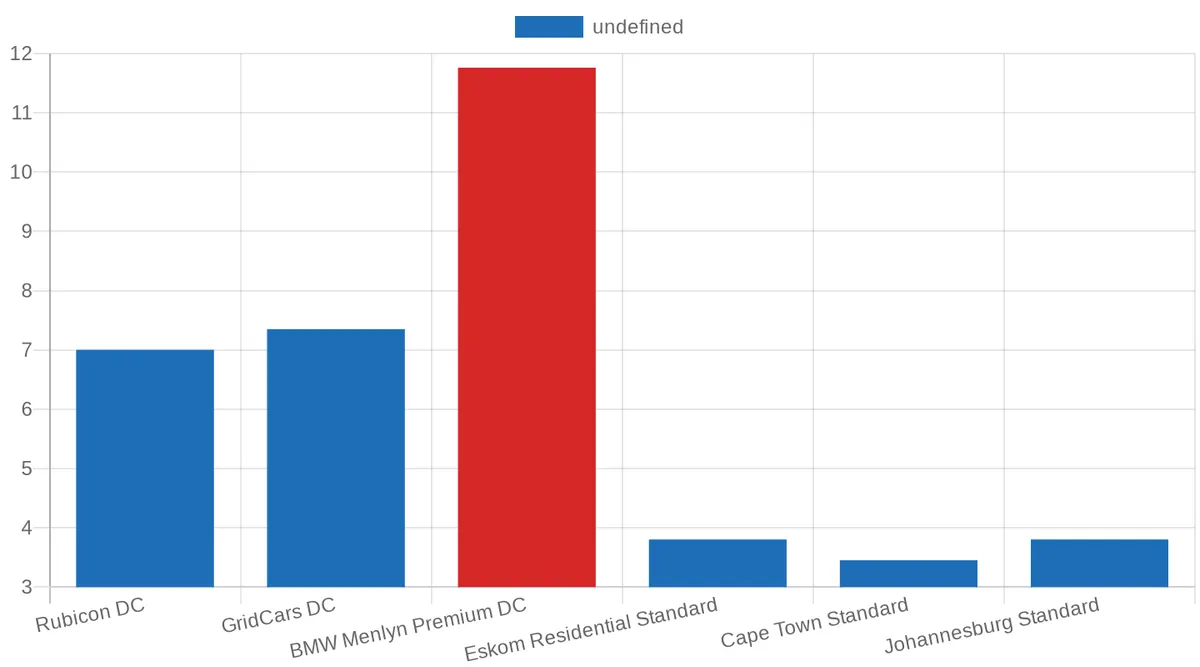
Before you can compare models, you need the real numbers. Entry-level 47 kW DC fast charging stations start from around R400,000 and can reach R1.25 million per site for the hardware alone, according to ChargePoint SA’s charging cost research. In the most demanding scenario, a single Level 3 DC fast charger fully installed, sector experts cite costs up to R2 million when grid upgrades, civils, and compliance are included.
DC charger hardware alone accounts for 25%, 40% of total project cost; electrical infrastructure, transformer upgrades, switchgear, panel replacements, accounts for a further 30%, 60%. That means a R600,000 hardware line item can become a R900,000 to R1 million project before a single vehicle plugs in.
On the AC side, a 7 kW single-phase wallbox installation runs R8,000-R15,000 all-in, and a 22 kW three-phase wallbox typically lands at R24,000-R40,000 for premium units fully installed. These are realistic depot-charger benchmarks for lighter fleet applications, delivery vans, sedans, minibuses.
On top of hardware and installation, fleet operators on an Eskom Megaflex connection face a network demand charge of R52.65/kVA/month in the high-demand season and R26.29/kVA/month in the low-demand season (Eskom 2026/27 tariff schedule). This charge is levied on your contracted maximum demand, billed whether or not a single vehicle charges that month. For a depot running multiple DC chargers, the demand charge alone can dwarf the cost of electricity consumed.
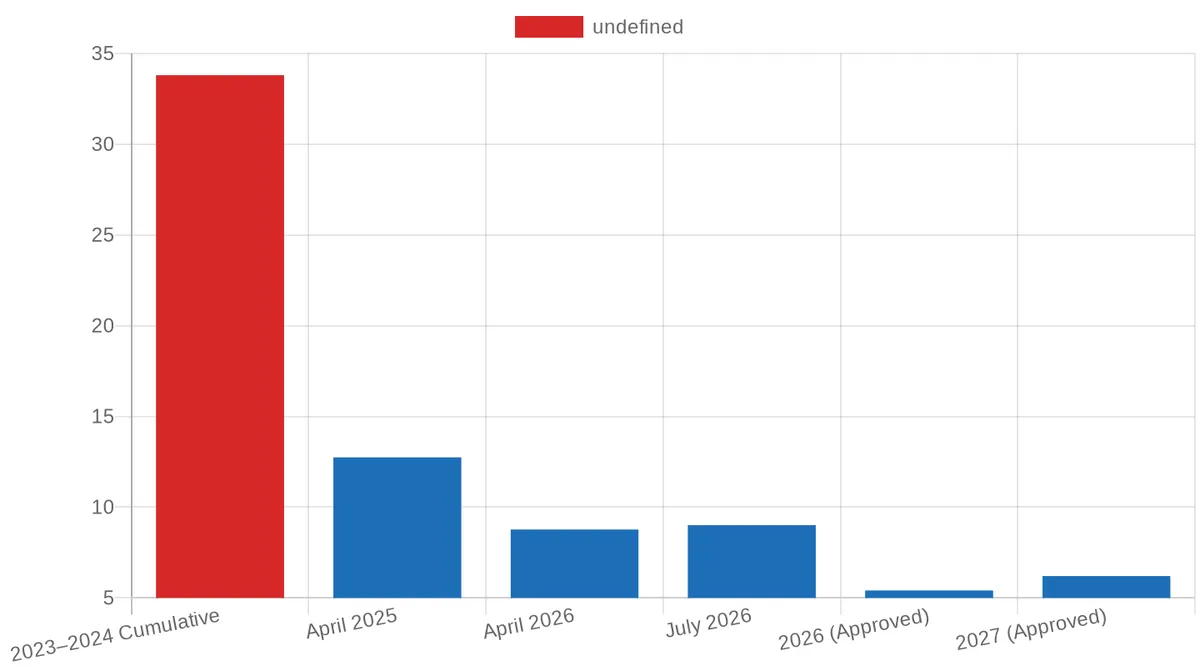
Eskom tariffs themselves are rising. The 2026 increase for direct customers was 8.76% effective 1 April 2026, with a further 9.01% for municipal bulk purchases effective 1 July 2026. NERSA has also approved further hikes of 5.4% and 6.2% in subsequent years. Any TCO model that uses today’s tariff without escalation will understate the cost of owning an asset that runs on grid electricity for a decade.
Model 1: Outright ownership, when captive demand makes it the winner
Owning your fleet charging infrastructure outright means the charger, switchgear, cabling, DB board upgrades, and all compliance costs sit on your balance sheet as a fixed asset. Under IFRS 16 and South African tax rules, the business can claim Section 11(e) depreciation on the asset and deduct interest if it is debt-funded. A capital lease (finance lease) works similarly: the asset and liability both appear on the balance sheet, the lessee can claim depreciation and interest, and ownership transfers at the end of the term. Capital lease monthly costs typically run R2,000-R6,000 per charger installation, with approval in 48-72 hours for established businesses with good credit.
The ownership model performs best when you have captive demand, a depot where your own fleet charges every night at a predictable rate. An illustrative commercial DC site analysis from ChargePoint SA shows a dual-gun 60 kW DC site at roughly R650,000 all-in, with around R3,300 per month in demand charges and R3,500 per month in operations, maintenance, and software. At low utilisation (around 30 kWh/day), the payback period becomes very long. But at high captive-fleet utilisation (around 350 kWh/day), the payback can compress to approximately 1.2 years with an IRR of around 80%. That is the argument for owning: when you control the demand, the asset pays for itself fast.
The risk you absorb under ownership is technology obsolescence. A 47 kW DC charger installed today is already considered entry-level in global terms. As AEVERSA’s fleet charging analysis notes, standards are moving rapidly toward much higher power levels. If you own the asset, you bear the cost of upgrading it. Under a CaaS or managed-lease model, that risk transfers to the provider.
There is also the compliance overhead. Every South African fleet charging installation must comply with SANS 10142-1 Annex N (updated 2025), use a Type A or Type B RCD rated for DC residual currents, and be issued a Certificate of Compliance by an ECSA-registered installer. Without a CoC, your business insurance is void if an electrical fire occurs. These compliance costs are non-negotiable and belong in every ownership TCO model.
Model 2: Operating lease and Charging-as-a-Service, the off-balance-sheet route
The operating lease and CaaS models convert charging infrastructure from a capital asset into a predictable monthly operating expense. The equipment is returned, renewed, or upgraded at the end of the term; the residual and technology-obsolescence risk stays with the lessor or provider. Under IFRS treatment, a qualifying operating lease does not appear as a balance-sheet liability, keeping your gearing ratios clean.
In South Africa, the most mature CaaS model for fleets is operated by AEVERSA, which Engineering News reports has delivered a 12.75% reduction in total cost of ownership for named commercial clients including Takealot, DHL, DP World, and Adcock Ingram. AEVERSA’s monthly fee covers 24/7 real-time monitoring, a guaranteed 98%+ uptime SLA, smart charging optimisation and dynamic load balancing, load-shedding resilience via strategic scheduling, AmpControl and AE Cloud software, technology upgrades and compliance updates, on-site training, and monthly reporting. Fleet operators can scale from 4 DC chargers in year one to 16 chargers by year five without triggering a new capital approval.
The real-world proof of concept is the WattSpot network, a joint venture between AEVERSA and Valternative Energy, which recorded 18,884 charging sessions and dispensed 205,845 kWh across three Gauteng sites (Wynberg, Northgate, and Fourways) in its first three months of operation, from December 2025 to February 2026. The associated Uber Go Electric fleet of 240 vehicles covered over 2 million kilometres since its November 2025 launch. WattSpot held 98.5%+ uptime throughout, with drivers reaching AEVERSA’s technical team via a dedicated WhatsApp support channel and technicians dispatched on fault detection. The expansion pipeline targets 200+ charge points nationally by 2027, with Durban next.
Everlectric’s EVaaS (EVs-as-a-Service) model takes the bundling one step further, wrapping vehicles, on-site depot AC charging hardware, installation, charging operations and reporting, third-party DC public charging billing, maintenance, servicing, and insurance into a single predictable monthly per-kilometre cost. Business Day reports that Woolworths, DSV, and FedEx are among Everlectric’s lease clients, operators who chose to eliminate charging infrastructure from their balance sheets entirely.
AEVERSA recommends that SA logistics operators replace 5-6% of their fleet with EVs annually, starting with 4 DC chargers in year one and scaling to 16 by year five, with a 10% contingency built into infrastructure budgets and quarterly reviews of energy costs and usage.
Key contractual risks to watch in any lease or CaaS agreement: total cost over the full term can exceed outright purchase; contract terms may restrict charger selection, upgrades, or relocation; the boundary between site electrics and charger faults must be explicitly defined; early termination fees and end-of-term buyout conditions add cost; and OCPP software portability must be contractually guaranteed to avoid lock-in if you change providers.
Plan your fleet depot’s charging ROI and total cost
Model 3: Reserved-capacity and third-party network access
A third route, less commonly discussed but gaining traction, is contracting reserved capacity on a third-party fleet charging network rather than installing any infrastructure at all. Zimi and CHARGE Holdings signed a three-year agreement giving Zimi-operated fleet vehicles reserved charging capacity of up to 500 kWh per station per day on the N3 corridor, with Zimi bundling vehicles, energy, and software into one unified lease for logistics operators. The partnership announcement illustrates how fleet operators can avoid owning charging infrastructure entirely by contracting guaranteed capacity through a partner network.
CHARGE (Zero Carbon Charge) launched South Africa’s first off-grid EV charging network on the N3 corridor, backed by a R100 million DBSA investment, with solar-powered stations spaced roughly 150 km apart. Each station serves up to 8 EVs simultaneously via on-site solar microgrids and battery storage, and because they are off-grid, they operate normally during load-shedding, removing grid-connection CAPEX risk from charging infrastructure ownership in underserved corridors.
The load-shedding dimension matters significantly for the own-vs-lease calculus. Most public chargers remain vulnerable to load-shedding, a charger offline during Stage 4 is not just inconvenient but a range emergency for a driver depending on it. Under outright ownership with no backup, your depot chargers are equally exposed. A managed CaaS provider with an uptime SLA contractually transfers that grid-risk liability. Off-grid reserved-capacity networks sidestep the problem entirely.
Compliance costs belong in every model, they are not optional
Whether you own, lease, or access a third-party network, the compliance costs of the electrical installation on your site are yours to bear. South African law requires that all EV charger installations comply with SANS 10142-1 Annex N, use a Type A or Type B earth-leakage unit rated for DC residual currents (a generic household earth leakage is not compliant), meet a minimum IP54 enclosure rating for outdoor installs, and be issued a CoC by an ECSA-registered installer. A Certificate of Compliance is legally mandatory, without one, your business insurance may be void if an electrical fire occurs.
The relevant standards are SANS 62196-2 (AC connectors), SANS 62196-3 (DC connectors), and SANS 10142-1 (the national low-voltage wiring code). These are not administrative formalities. Poor installation can damage the charger and the vehicle, and will not be covered by any manufacturer warranty. Any TCO model, owned or leased, must include the cost of a compliant installation by a registered specialist. A standard 7 kW wallbox installation runs R8,000-R15,000 all-in; a 22 kW three-phase installation typically lands at R24,000-R40,000 for premium units. These figures are the floor, not the ceiling, before grid-upgrade costs are added.
Head-to-head: own vs lease for South African fleet depot charging
| Factor | Outright ownership / capital lease | Operating lease / CaaS |
|---|---|---|
| Balance-sheet treatment | Asset + liability (IFRS 16) | Off-balance-sheet (qualifying operating lease) |
| Monthly cash outflow | R2,000-R6,000/charger (capital lease); zero once paid off | Predictable monthly fee; no end-of-term ownership |
| Technology-obsolescence risk | Carried by owner | Transferred to provider |
| Compliance and CoC | Owner’s cost; must use ECSA-registered installer | Provider typically includes; verify in contract |
| Uptime responsibility | Owner’s risk; reactive maintenance cost | SLA-backed (AEVERSA: 98%+); provider dispatches technicians |
| Load-shedding resilience | Owner must add solar/battery buffer at own cost | CaaS providers can include smart scheduling; off-grid networks available |
| Tax treatment (SA) | Section 11(e) depreciation; interest deductible | Lease payments fully deductible as operating expense |
| Best suited to | High-utilisation captive depots with strong credit | SMEs, operators avoiding capex, rapid scalers |
The breakeven point for outright ownership versus CaaS depends almost entirely on utilisation. CleanTechnica’s analysis of Everlectric’s SA fleet data puts the fleet EV cost-parity point at approximately 2,500-3,200 km per month per vehicle versus diesel, depending on vehicle type. Below that threshold, neither ownership model generates compelling returns. Above it, especially at the 350 kWh/day utilisation level typical of a captive urban delivery depot, owned assets generate the best long-run IRR.
Stellenbosch-based Zimi recently secured a R50 million DBSA-led funding round precisely because institutional capital has validated the lease model for operators who cannot or will not carry charging infrastructure on their balance sheets. Innovation Village reports that Zimi’s bundled EV-as-a-Service model converts fleet capital expenditure into predictable operating expenses, covering vehicles, depot charging, solar, and energy management in a single lease. Banks remain cautious given market immaturity, making the CaaS model financially relevant for businesses unable to access CAPEX for depot charging assets.
Get your free commercial charging site plan
How to decide: a practical framework for fleet managers
Start with three questions. First, is your charging demand captive? If your vehicles return to a single depot every night and you control when and how much they charge, you have the utilisation profile that makes ownership pencil out. Second, what is your balance-sheet appetite? If gearing is a concern or your CFO wants predictable opex, the CaaS or operating-lease route keeps debt off the books. Third, what is your load-shedding exposure? If your depot is on a vulnerable municipal feeder with no backup, owning chargers without a solar-battery buffer is a reliability risk, and adding that buffer is an additional owned-asset cost that changes the TCO calculation.
If you answer captive demand, yes; balance-sheet appetite, open; load-shedding exposure, manageable, then owning the asset (via outright purchase or a capital lease) and working with an ECSA-registered installer to deliver a SANS 10142-1-compliant installation with a CoC is almost certainly the lower-cost long-run route. If any of those three answers goes the other way, the CaaS or operating-lease model is worth a detailed proposal comparison.
Everlectric argues that 2026 is the year converging vehicle classes, clearer operating economics, and diesel price instability make fleet electrification unavoidable. The charging-infrastructure ownership decision is where that economics argument becomes concrete. Neither model wins universally, but the right model, sized correctly and installed to standard, is the difference between a fleet EV programme that delivers the promised 27% TCO advantage and one that erodes it in maintenance, demand charges, and downtime.
Frequently asked questions
Can I deduct fleet EV charger costs from tax in South Africa?
Yes. Under outright ownership or a capital lease (finance lease), you can claim Section 11(e) depreciation on the charging asset and deduct interest. Under an operating lease or CaaS, the monthly lease payments are fully deductible as an operating expense. In either case, the electrical installation cost, including the CoC, DB board upgrades, and ECSA-registered installer fees, is a deductible business expense. Get a tax opinion from your accountant on the specific treatment for your entity type.
What compliance standards apply to depot EV charger installations?
All South African commercial EV charger installations must comply with SANS 10142-1 (national low-voltage wiring code) including Part 1 Annex N (EV charging infrastructure, updated 2025), SANS 62196-2 (AC connectors), and SANS 62196-3 (DC connectors). A dedicated circuit with a Type A or Type B RCD rated for DC residual currents is mandatory. Outdoor installations require IP54 minimum enclosure rating. A Certificate of Compliance issued by an ECSA-registered installer is legally required, without it, your business insurance may be void in the event of an electrical fire.
What is the uptime guarantee under a CaaS model in South Africa?
AEVERSA publishes a 98-99% uptime SLA under its standard CaaS terms. Its WattSpot network (a joint venture with Valternative Energy) held above 98.5% uptime across three Gauteng sites from December 2025 to February 2026, according to Engineering News. Faults are detected in real time; technicians or hardware replacements are dispatched on detection. Drivers reach the technical team via a dedicated WhatsApp channel.
What happens if load-shedding hits my depot chargers?
Under outright ownership with no backup power, your depot chargers go offline with the grid. Adding a solar-battery buffer is an additional owned-asset cost. Under a managed CaaS contract, providers can include smart scheduling to charge vehicles during grid-availability windows. Off-grid networks like CHARGE’s N3 corridor stations operate normally during load-shedding, but these serve intercity routes rather than depot charging. For depot resilience, a solar-pairing strategy bundled into the infrastructure decision is the most cost-effective answer, and ChargePoint SA can include this in your site assessment.
What does ChargePoint SA offer fleet operators specifically?
ChargePoint SA’s commercial programme delivers a single accountable contract: charger supply, SANS 10142-1-certified installation, electrical CoC, and ECSA-registered installers through a national network with standardised site surveys and fixed-scope pricing. Four ownership models are available, host buys, revenue-share, investor-funded, or ChargePoint SA-owns-host-free, matched to your site’s risk appetite and balance-sheet position. The contract can be billed to the business or to the end customer.
Get your free commercial charging site plan
Compare own-vs-lease charging cost models for your fleet
AEVERSA data shows CaaS cuts total cost of ownership by 12.75% for major operators.
Compare ownership models →WhatsApp us
CoC-certified installers, nationwide