
Key points
- BYD launched three vehicles in Johannesburg on 3 April 2025: the Shark 6 PHEV bakkie (R989,900), Sealion 6 PHEV SUV (from R639,900) and Sealion 7 BEV SUV (from R1,099,900).
- The Shark 6 produces 321 kW and 650 Nm combined, SA’s most powerful bakkie at launch, 29 kW more than the Ford Ranger Raptor and, per cars.co.za, R309,100 cheaper at R989,900 versus the Ranger Raptor’s R1,299,000.
- The Sealion 6 Comfort at R639,900 undercuts the Toyota RAV4 2.5 PHEV (R980,000) by R340,100, making it SA’s most affordable PHEV SUV at launch.
- The Sealion 7 Performance AWD carries a manufacturer-claimed 0-100 km/h time of 4.5 seconds; real-world range is approximately 400 km versus BYD’s 456-482 km WLTP figure.
- All three models include a home wallbox charger and portable charger in the purchase price, and an 8-year/200,000 km battery warranty.
- SA NEV sales doubled to 15,611 units in 2024, and PHEV volumes surged 120% year-on-year in 2025, per the Mail & Guardian, BYD is the primary driver of that growth.
Why this launch matters beyond the press release
On 3 April 2025, BYD held an official launch event in Johannesburg and put three vehicles on sale simultaneously: the Shark 6 PHEV double-cab bakkie, the Sealion 6 PHEV SUV, and the Sealion 7 battery-electric SUV. That brought BYD’s local lineup to six models and extended its strategy of pairing PHEVs, for buyers not yet ready to go fully electric, with pure BEVs in the same showroom.
The timing is deliberate. NAAMSA data shows SA new energy vehicle sales hit 15,611 units in 2024, up from 7,782 in 2023, a doubling in one year. South Africa recorded approximately 3,800 total EV and PHEV sales in 2025 per the IEA Global EV Outlook 2026, with PHEVs accounting for more than 70% of those, an inversion of the global norm. BYD is not merely responding to demand; it is trying to create it.
BYD’s share of African electric car sales grew from roughly 4% in 2023 to 35% in 2025, displacing European brands that held approximately 40% of the market in 2023, per the IEA. In South Africa specifically, the Dolphin Surf became the country’s top-selling EV in April 2026, recording 302 units in a single month, outselling petrol rivals such as the Honda Fit and Kia Picanto. Monthly BEV records were broken consecutively in March (389 units) and April 2026 (403 units).
BYD Shark 6: SA’s most powerful bakkie at R989,900
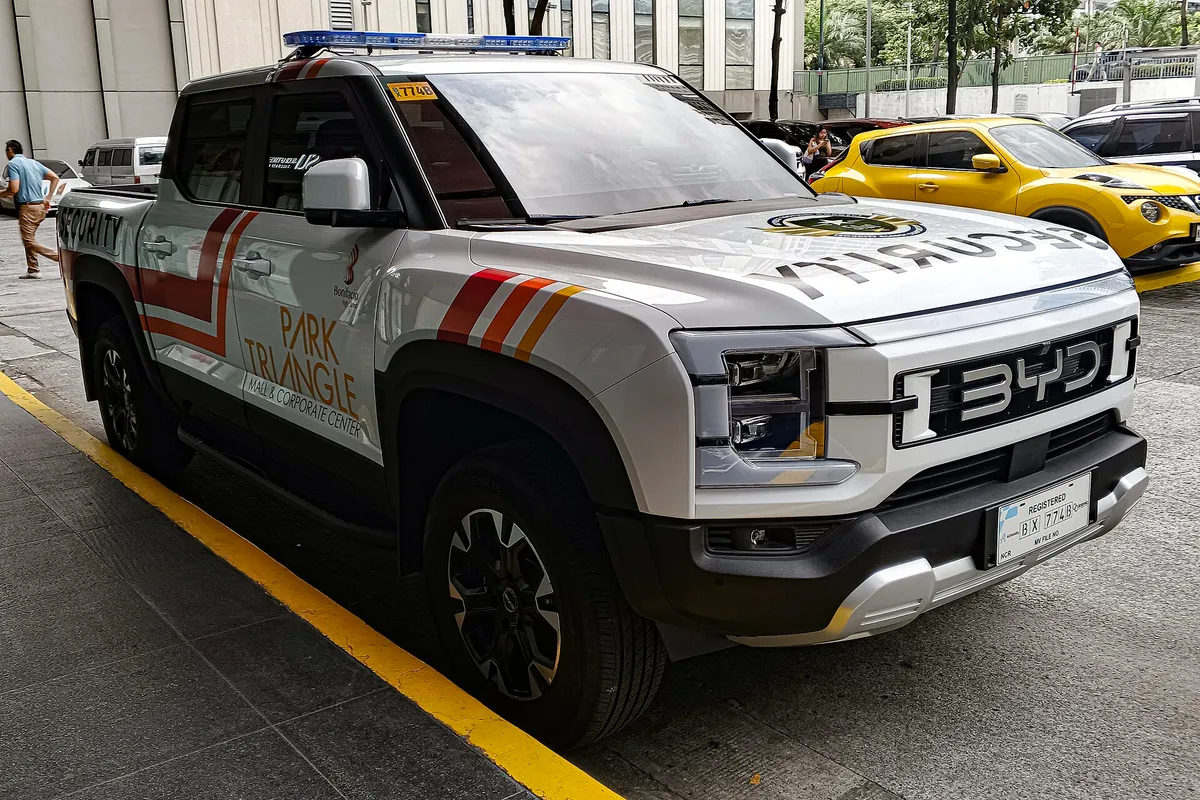
The Shark 6 is a PHEV double-cab bakkie combining a 1.5-litre turbocharged petrol engine with dual electric motors, 170 kW/310 Nm at the front and 150 kW/340 Nm at the rear, for a combined 321 kW and 650 Nm. Power goes to all four wheels. It covers 0-100 km/h in 5.7 seconds and carries a 29.6 kWh Blade Battery good for 85 km of pure electric range (WLTP), with a combined range of 670 km and a claimed fuel consumption of 9.6 L/100 km on a depleted battery.
Payload is 835 kg and braked towing capacity is 2,500 kg. Ground clearance sits at 230 mm unladen. The load bin holds 1,200 litres. Off-road angles are 31° approach, 17° breakover and 19.3° departure, with 700 mm wading depth, figures that make the Shark 6 a genuine workhorse, not just a lifestyle vehicle.
At R989,900, the Shark 6 is priced in the thick of the double-cab competition. AutoTrader’s official pricing summary confirmed it undercuts or matches the VW Amarok 2.0BiTDI Style 4Motion (R966,500), Ford Ranger 2.0 BiTurbo Wildtrak 4×4 (R983,000), Toyota Hilux 2.8GD-6 GR-Sport 4×4 (R999,000) and GWM P500 2.0T HEV Ultra Luxury 4×4 (R999,900). Against the Ford Ranger Raptor at R1,299,000, the Shark 6 saves R309,100 and outpowers it by 29 kW (321 kW vs 292 kW).
The purchase price includes a 5-year/100,000 km service plan, a 6-year/150,000 km vehicle warranty, an 8-year battery warranty, a home wallbox charger and a portable charger. DC fast charging is supported at 55 kW, taking the battery from 30% to 80% in approximately 20 minutes. On a 7 kW home wallbox, a full charge takes roughly four to five hours, practical for overnight charging even during load-shedding windows.
By April 2026, the Shark 6 was moving 94 units a month and ranked 12th among SA’s best-selling bakkies, a notable achievement for a brand that only began formally reporting to NAAMSA in early 2025.
BYD Sealion 6: the affordable PHEV SUV that undercuts Toyota by R340,100
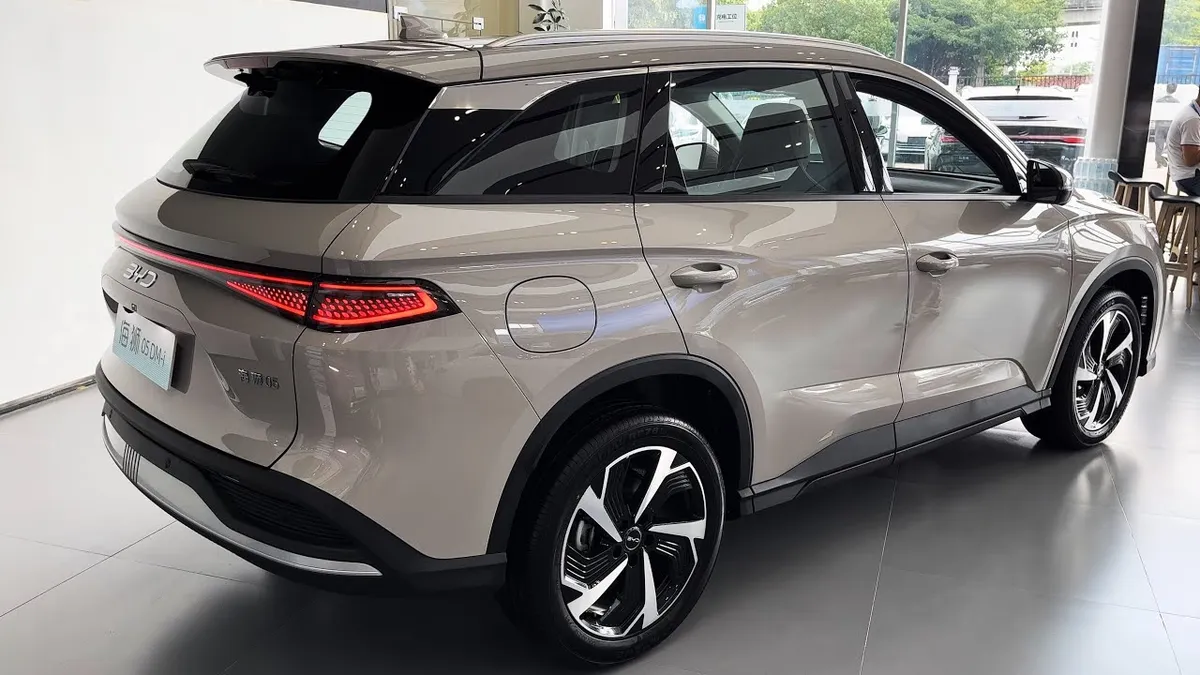
The Sealion 6 is a PHEV family SUV offered in three derivatives. The Comfort FWD and Dynamic FWD use a 1.5-litre naturally aspirated engine paired with a front electric motor for 160 kW and 300 Nm. The Premium AWD steps up to a 1.5-litre turbocharged engine and dual motors for 238 kW and 550 Nm. Electric range is 80 km for FWD variants and 70 km for the AWD. Combined range is 1,080 km for FWD and 870 km for AWD. BYD claims 5.5 L/100 km for the FWD in combined driving, a real-world CARmag test recorded 5.8 L/100 km, a modest 5% above the official figure.
One practical caveat: boot volume with rear seats up is only 232 litres because the battery intrudes into the floor. Fold the rear seatbacks and that expands to 960 litres. Wheelbase is 2,756 mm.
Pricing confirmed by multiple SA sources: Comfort FWD R639,900 | Dynamic FWD R689,900 | Premium AWD R789,900. All three include a 5-year/100,000 km warranty and maintenance plan. The Dynamic adds a 12.8-inch touchscreen, synthetic leather seats with power-adjust driver seat, 50 W wireless phone charger, 360-degree camera, rain-sensing wipers, adaptive cruise control, emergency lane-keeping assist and front collision warning over the Comfort.
The Comfort’s R639,900 entry price undercuts the Toyota RAV4 2.5 PHEV at R980,000 by R340,100. The next-cheapest PHEV alternative at launch was the Haval H6 GT PHEV at R799,900, still R160,000 more than the Sealion 6 Comfort. By June 2026, AutoTrader was listing Sealion 6 units from R579,900 across 102 active adverts, suggesting strong supply and competitive asking prices.
See your real Sealion 7 home charging costs vs petrol
BYD Sealion 7: the pure-electric SUV and what it means for home charging
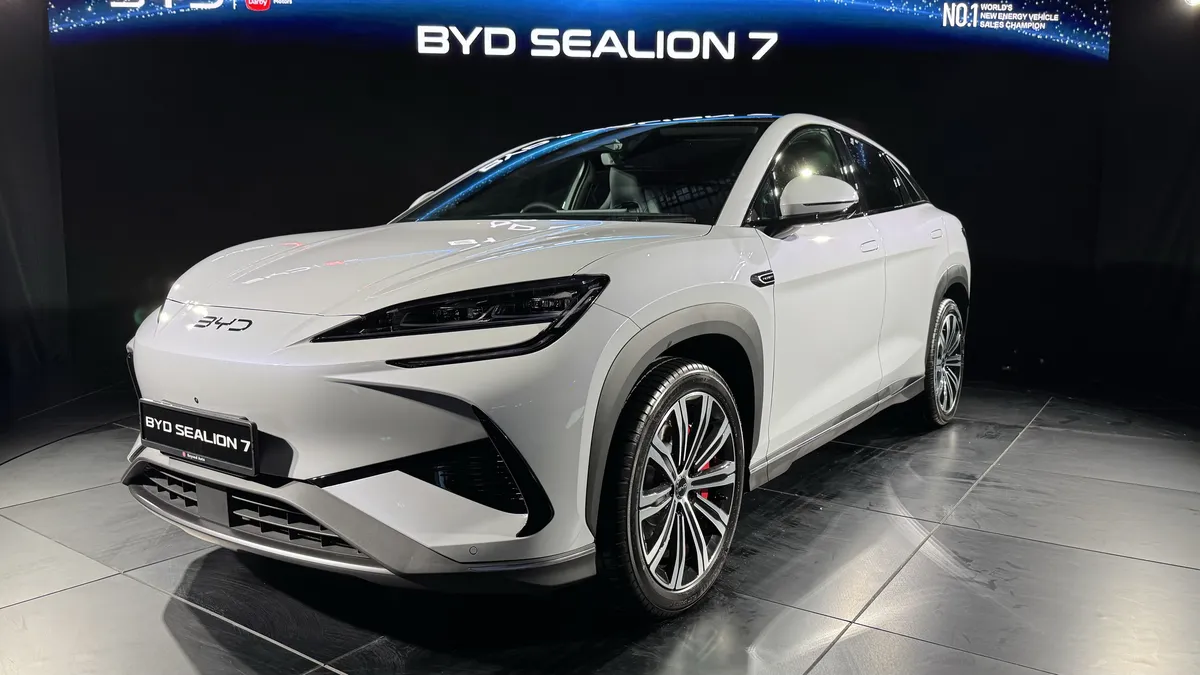
The Sealion 7 is the only fully battery-electric vehicle in the trio. It uses an 82.56 kWh Blade Battery in two configurations: Premium RWD at 230 kW (0-100 km/h in 6.7 seconds) and Performance AWD at 390 kW / 690 Nm with a manufacturer-claimed 0-100 km/h time of 4.5 seconds. Both variants top out at 215 km/h. WLTP range is up to 482 km (Premium) and 456 km (Performance). DC fast charging at 150 kW takes the battery from 20% to 80% in 30 minutes. A real-world test recorded approximately 400 km with conservative driving and average energy consumption of 18.0 kWh/100 km.
Pricing confirmed by AutoTrader SA’s official launch summary: Premium RWD R1,099,900 | Performance AWD R1,299,900. Both include a 5-year/100,000 km vehicle warranty, 8-year/150,000 km battery warranty, 5-year/100,000 km maintenance plan, a 2.2 kW portable charger and a 7 kW wall charger.
The Sealion 7 is the model that most directly raises home-charging questions. Its 82.56 kWh battery takes roughly 12 hours to charge from near-empty on a 7 kW single-phase wallbox, manageable overnight. Most SA homes run single-phase supplies, so buyers should confirm their DB board capacity before purchase. A fully installed 7 kW smart wallbox costs R14,000-R26,000 all-in. If your home already has solar, pairing the Sealion 7 with a solar-surplus charging setup can cut running costs dramatically, charging via home solar at R3.43-R3.80/kWh (Johannesburg City Power flat rate) is roughly half the cost of public DC fast charging at R7.00-R7.35/kWh on the GridCars or Rubicon networks.
Get a free installation quote, our certified installers will assess your DB board, confirm your supply phase and give you an all-in wallbox installation price before you sign the car deal.
Home charging costs versus petrol: the real numbers
The fuel saving across all three models is genuine, but only if you charge at home regularly. Home electricity in Johannesburg runs at approximately R3.80/kWh (City Power flat rate), while inland 95 unleaded petrol was sitting at R28.06/litre in June 2026. Durban’s eThekwini tariff is lower still at around R3.20/kWh.
For the Sealion 7 Performance AWD with its 82.56 kWh battery, a full charge at home in Johannesburg costs approximately R313. That delivers up to 400 km of real-world range, roughly R0.78/km. A petrol car consuming 9 L/100 km at R28.06/litre costs about R2.52/km. The saving per kilometre is substantial and compounds quickly at typical SA commuting distances of around 30 km per day.
For the Shark 6 in pure electric mode (29.6 kWh battery), a full home charge costs approximately R113 at R3.80/kWh and covers 85 km. If your daily commute is under 85 km, you can complete a full week of driving on electricity alone and use the petrol engine only for longer runs.
Load-shedding changes the calculation slightly. A 7.4 kW home charger recovers roughly 30 km of range per hour, so a two-hour Stage 4 window overnight delivers about 60 km, enough for most SA commutes. Pair the Sealion 7 with a solar inverter and 10 kWh battery backup and you are largely grid-independent. BYD has also announced plans to install 200-300 public fast-charging stations across SA by end-2026, though the Mail & Guardian reports the rollout is behind schedule due to a hardware upgrade from Flash Charger 1.0 to a more capable Flash Charger 2.0 system.
Model comparison: specs and pricing at a glance
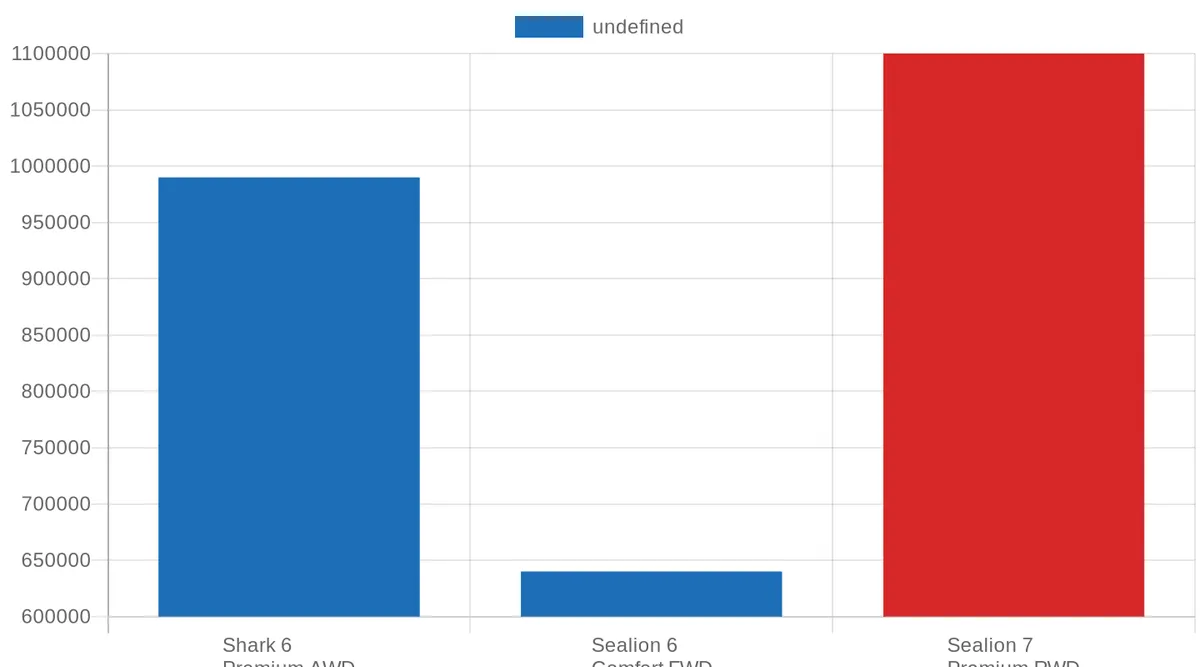
| Model | Type | Power | Electric range | Combined range | Launch price |
|---|---|---|---|---|---|
| Shark 6 Premium AWD | PHEV bakkie | 321 kW / 650 Nm | 85 km (WLTP) | 670 km | R989,900 |
| Sealion 6 Comfort FWD | PHEV SUV | 160 kW / 300 Nm | 80 km (WLTP) | 1,080 km | R639,900 |
| Sealion 6 Dynamic FWD | PHEV SUV | 160 kW / 300 Nm | 80 km (WLTP) | 1,080 km | R689,900 |
| Sealion 6 Premium AWD | PHEV SUV | 238 kW / 550 Nm | 70 km (WLTP) | 870 km | R789,900 |
| Sealion 7 Premium RWD | BEV SUV | 230 kW | 482 km (WLTP) | 482 km | R1,099,900 |
| Sealion 7 Performance AWD | BEV SUV | 390 kW / 690 Nm | 456 km (WLTP) | 456 km | R1,299,900 |
BYD’s SA network and what it means for buyers right now
BYD targeted approximately 35 dealerships across South Africa by Q1 2026, with plans to grow to 60-70 dealerships by end-2026, according to BYD Auto South Africa Managing Director Steve Chang. The brand had 13 dealerships in mid-2025 and was targeting 20 by end-2025. BYD also has a financing partnership with Absa, making vehicle finance more accessible for buyers moving from petrol to plug-in models.
South Africa’s public charging infrastructure currently totals approximately 650 chargers across 445 sites, with GridCars accounting for roughly 60% of all public charge points. Known gaps remain on the N1 between Beaufort West and Three Sisters (a stretch of approximately 300 km), the N2 between East London and Durban, the Free State interior and Limpopo outside Polokwane. For Sealion 7 buyers planning long-distance travel, home charging is not just convenient, it is currently essential backup for stretches where public infrastructure remains thin.
South Africa applies a 25% import duty on fully electric vehicles, higher than the 18% duty on ICE vehicles, a structural cost that the government acknowledged when it introduced a 150% tax deduction on qualifying EV manufacturer investments, effective March 2026 and running for ten years. That policy is aimed at stimulating local production rather than lowering import prices directly, so buyers of the Sealion 7 today are paying a premium that reflects the current tariff environment.
Early 12V battery failures have been reported on some 2024/2025 BYD models in SA. Replacement costs R1,200-R1,800 at a BYD dealer or R800-R1,200 aftermarket. It is a minor issue, but worth knowing before you buy. BYD’s Blade Battery warranty, 8 years or 200,000 km with a guaranteed 70% state of health floor, provides meaningful protection against the larger battery degradation concern that often deters first-time EV buyers.
Get a free installation quote and find out exactly what a home wallbox will cost for your property, including DB board assessment, cable run and Certificate of Compliance.
Photo: Ganesh Mohan T / WikimediaCommons
Compare BYD’s new Shark 6, Sealion 6 & Sealion 7
Real pricing, specs and total cost of ownership for each model.
Compare the new BYDs →WhatsApp us
CoC-certified installers, nationwide