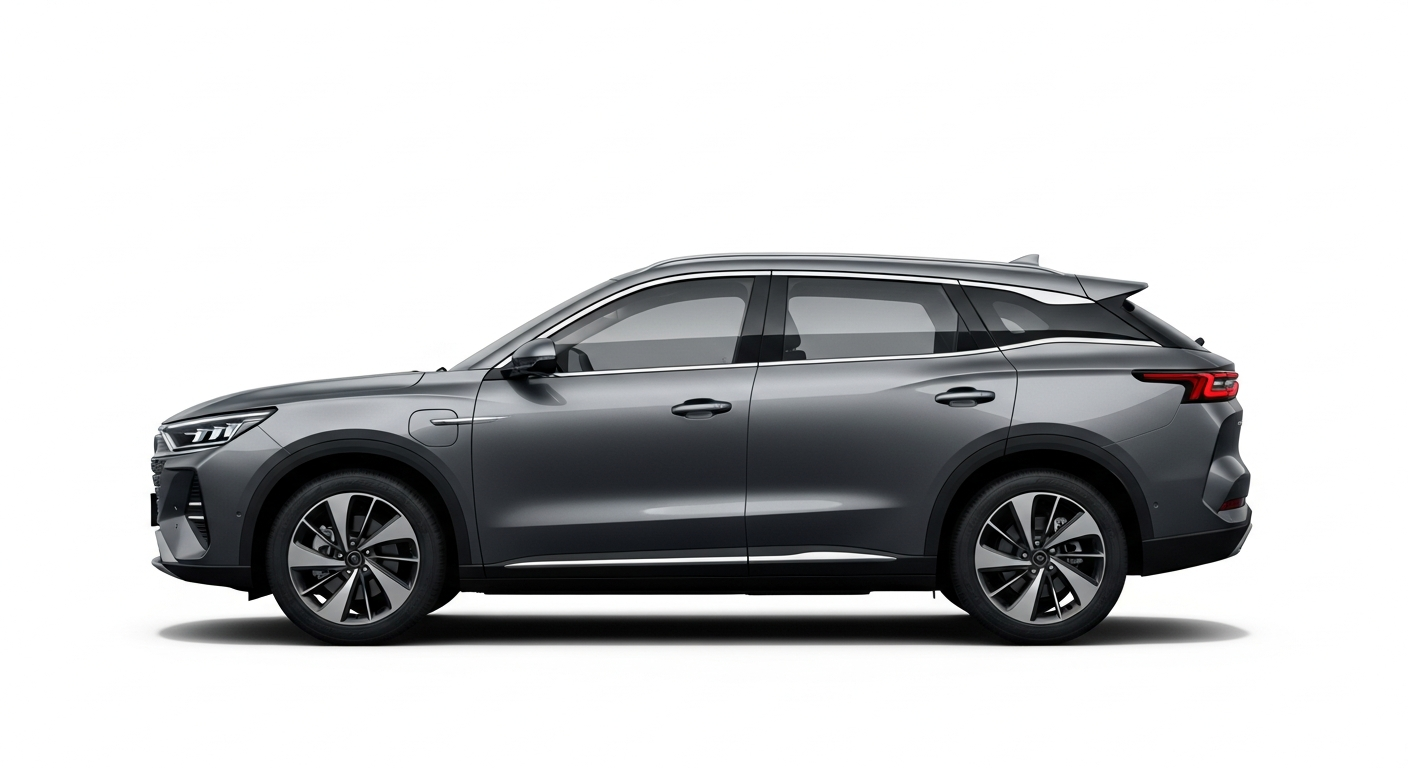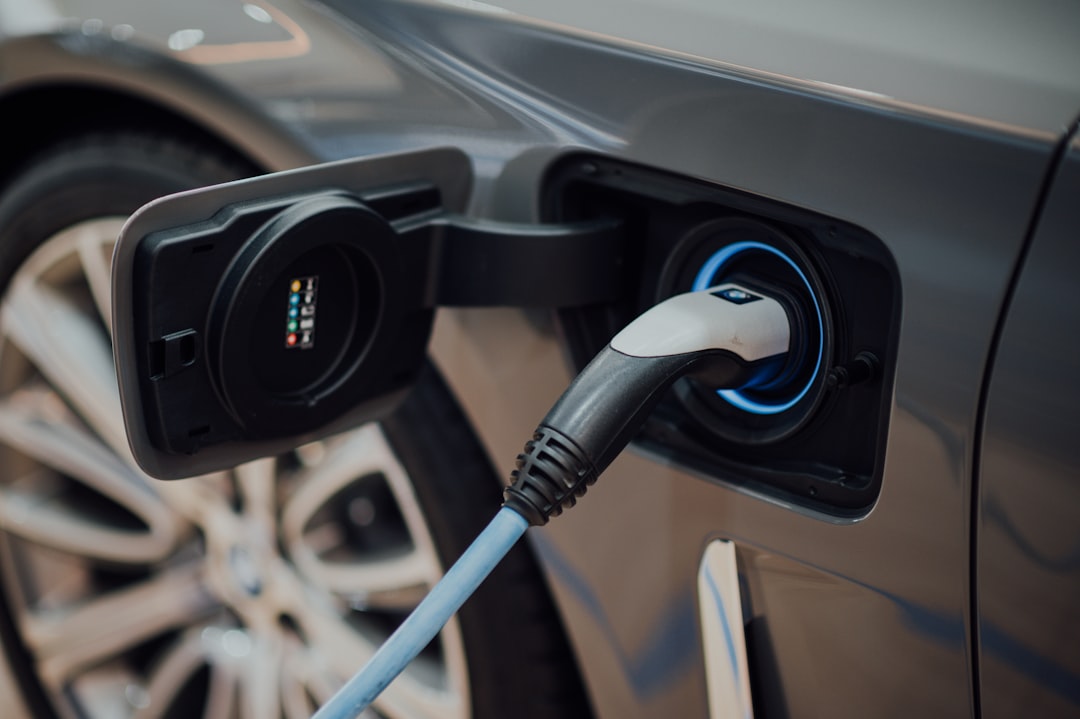
Here is the short, honest answer: as of April 2026, there are no direct consumer rebates or purchase subsidies for buying an electric vehicle in South Africa. None. What does exist is a powerful new manufacturer-side tax deduction that came into effect on 1 March 2026, and a handful of indirect angles that savvy buyers and business owners can use to their advantage. The government has promised consumer incentives are “under consideration” — but promising and delivering are two very different things. This article cuts through the noise and tells you exactly where things stand.
Every few months, someone shares a headline on social media saying “SA has EV incentives!” — and technically, that’s true.
President Cyril Ramaphosa signed the tax amendment into law on 24 December 2024, enabling manufacturers to claim a 150% tax deduction on investments in NEV production facilities, effective from 1 March 2026.
But that incentive is for Toyota, BMW, and Volkswagen — not for you standing at a dealership trying to figure out why a BYD Seal costs so much more than it should. The two things get conflated constantly, and it’s causing real confusion.
We’ve done the digging so you don’t have to. Below is every incentive — current, pending, and dead — explained in plain English. Where there’s nothing to claim, we’ll say so. And where there is a legitimate angle, we’ll tell you exactly how to use it. While you’re at it, use our EV calculator to see what you’d save on fuel and running costs even without a government rebate — because the numbers are often compelling enough on their own.
The 150% Manufacturer Tax Deduction: What It Is and Why It Matters to You
Section 12V provides a 150% tax deduction of the cost of certain parts and assets used by automotive manufacturers in the production of electric battery-powered or hydrogen-powered vehicles in South Africa.
The incentive came into effect on 1 March 2026 and will apply to assets brought into use for the first time before 1 March 2036.
That’s a ten-year window for manufacturers to invest in local EV production and write off more than the actual cost of that investment against their tax bill.
The incentive allows taxpayers to claim income tax allowances of 150% of the cost of new and unused plant and machinery, including the cost of installation of any foundations or supporting structures designed for the plant and equipment, that are used mainly in the production of battery electric or hydrogen-powered vehicles in South Africa.
In other words, if a manufacturer spends R1 billion on a new EV production line, they can deduct R1.5 billion from their taxable income. That’s a meaningful sweetener.
The government estimates this incentive will cost around R500 million in tax expenditure for the 2026/27 fiscal year.
To put that in context, it is a relatively modest commitment for a country trying to reposition its entire automotive export strategy.
Some of South Africa’s key export markets like the European Union and the UK plan to ban the sale of new ICE vehicles by 2035, and this paradigm shift threatens the country’s strategic position in the global automotive export industry.
The 150% incentive is essentially government saying: we need you to retool, and we’ll help pay for it.
So why should this matter to a consumer? Because local production is the long game.
The Trade Minister indicated that South Africa will likely produce its first EV in 2026, and BMW has chosen South Africa as the exclusive production hub for its hybrid X3.
Once EVs are assembled locally rather than imported, that brutal 25% import duty disappears from the equation — and prices drop. It’s indirect, it’s slow, but it’s real. For a deeper look at how all of this feeds into what you actually pay monthly, read our monthly cost breakdown for owning an electric car in South Africa.
Is There a Consumer Rebate for Buying an EV in South Africa? The Honest Answer
No. Full stop.
When asked if there were plans to complement the manufacturing incentive with consumer-focused policies such as subsidies or tax rebates, National Treasury said that the Finance Minister “has not made any announcement in this regard.”
That was the official position as of early 2025, and nothing has changed since. If you buy an EV in April 2026, you will not receive a cent back from SARS or the government for making that choice.
President Ramaphosa has at least acknowledged the gap.
He indicated that incentives for manufacturers, as well as tax rebates or subsidies for consumers, are under consideration to accelerate the uptake of electric vehicles, stating: “Consideration must be given to incentives for manufacturers, as well as tax rebates or subsidies for consumers, to accelerate the uptake of electric vehicles.”
Words, not policy. The industry has heard this kind of language before.
Phase two of the NEV white paper will prioritise motivating buyers to purchase NEVs — but the former Trade Minister said this is only expected to kick off in roughly seven years.
Seven years. That’s 2030 or later before consumer incentives are even phased in, if the current trajectory holds. Compare that to what’s happening elsewhere: Norway offered VAT exemptions from the 1990s, the UK had a purchase grant (since ended), and India ran its FAME II subsidy scheme. South Africa is firmly at the back of this particular queue.
While 596,818 vehicles were sold in South Africa in 2025 — the highest number in over a decade — only 1,018 passenger battery-electric vehicles were sold last year, down 17% from 1,231 in 2024. That means BEVs made up only 0.17% of all vehicles sold in South Africa in 2025.
The absence of consumer incentives is not a minor policy footnote. It is the single biggest reason EVs remain a fringe purchase in this country. For the full picture on what EVs are available and what they cost, see our complete 2026 guide to electric vehicles in South Africa.
Find Charging Stations Near You
Our live map shows every public EV charger in South Africa — updated in real time.
The Import Duty Problem: The Incentive Working Against You
Here’s the part that doesn’t get nearly enough attention. While the government hands manufacturers a 150% deduction to build EVs locally, it simultaneously makes imported EVs more expensive than imported petrol cars.
South Africans have been starved of affordable electric vehicles due in part to high import duties and taxes — petrol and diesel vehicles imported from the EU into South Africa face a customs duty of 18%, while for electric vehicles it is 25%.
That seven percentage point gap compounds badly.
Currently, imported electric vehicles are subject to a 25% import duty, plus an ad valorem tax that can reach up to 30% depending on the vehicle’s value, while internal combustion engine vehicles generally face only an 18% import duty.
So a premium EV gets hit with both a higher base duty and a luxury tax on top.
Importing a $30,000 EV into South Africa can cost $50,000–$55,000 after taxes
— that’s a landed cost uplift of between 65% and 83% on the original price. No consumer rebate anywhere in the world compensates for that kind of structural penalty.
Industry group CHARGE has put it plainly: “You cannot incentivise EV production on one hand and penalise EV adoption on the other.”
Their call ahead of the 2026 Budget was for the Finance Minister to at minimum equalise the import duty on EVs with the 18% applied to ICE vehicles.
CHARGE called on the South African Finance Minister Enoch Godongwana to align import duties on electric vehicles with those applied to ICE vehicles, scrap the ad valorem tax on EVs, and allocate dedicated funding to roll out off-grid, solar-powered EV charging infrastructure nationwide.
As of April 2026, none of those changes have been enacted.
Import duties on EVs remain steep at 25%, which is notably higher than the 18% duty applied to combustion engine vehicles. This disparity creates a “reverse incentive” that makes importing EVs more expensive than traditional gas-powered cars, slowing their accessibility and adoption.
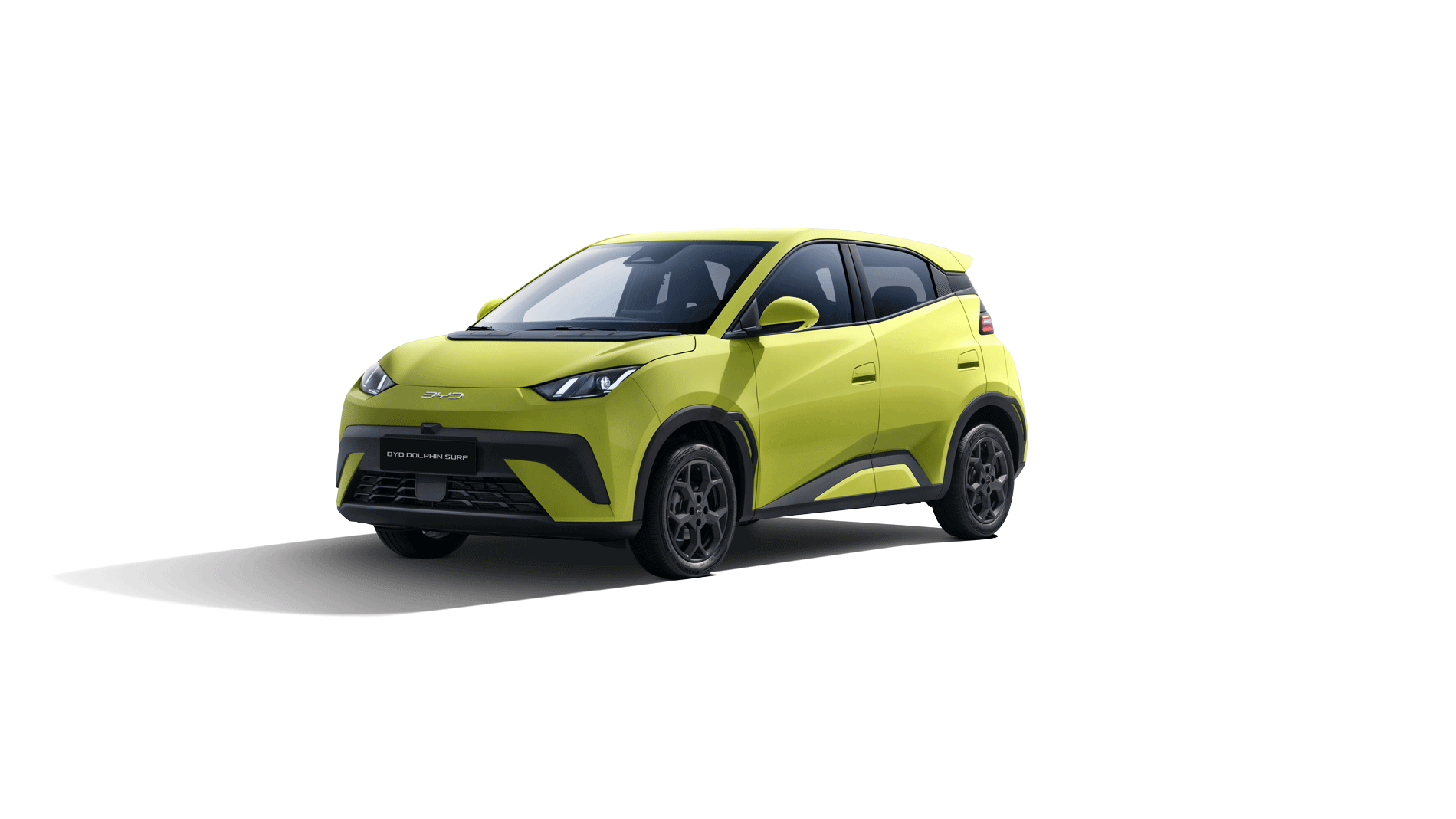
The BYD Dolphin Surf’s runaway success in March 2026 —
the Dolphin sold 239 units in March 2026 to become the country’s best-selling BEV by a wide margin
— proves that South Africans will absolutely buy EVs at the right price point. The price just needs to come down further, and tariff reform is the fastest way to get there. To understand what these costs mean for your day-to-day wallet, our EV vs petrol running costs comparison for 2026 lays it all out.
What South African EV Buyers Can Actually Do Right Now
The picture so far is fairly bleak on the incentive front. But there are genuine angles worth exploring — they’re just not the obvious “government rebate” that people keep looking for.
1. Buy a Locally Assembled EV When They Arrive
The 150% manufacturing deduction exists precisely to attract EV assembly to South Africa.
Three Chinese companies have entered into non-disclosure agreements with the Automotive Business Council (NAAMSA), with reports indicating potential investment interest from major Chinese automakers.
Once a model is assembled locally, it sidesteps the 25% import duty entirely.
BMW has chosen South Africa as the exclusive production hub for its hybrid X3, and Stellantis is exploring expanding their production to include new-energy vehicles.
The first locally built EVs are not far away — and they will be noticeably more affordable than their fully imported equivalents. Watch this space closely.
2. Business Owners: Section 12B Solar for Your EV Charging Setup
This is perhaps the most overlooked practical incentive for EV owners who run a business. If you install solar panels at your business premises — including to power EV charging — those panels qualify for an accelerated depreciation deduction under Section 12B of the Income Tax Act.
Section 12B is permanent legislation that continues to apply to qualifying assets brought into use from 2026 onwards with no expiry date.
It offers accelerated depreciation over three years at 50% in year one, 30% in year two, and 20% in year three. For solar PV installations up to 1 MW, a 100% deduction in year one is available.
Note that the enhanced 125% Section 12BA incentive — which offered a once-off supercharged deduction — has now lapsed.
The Finance Minister did not renew the Section 12BA allowance in the March 2025 Budget Speech, and qualifying renewable assets brought into use after 28 February 2025 are not eligible for that accelerated allowance.
The base Section 12B deduction remains intact and is still very useful, particularly for businesses with meaningful tax liabilities.
A salaried employee installing solar panels on their home for personal use cannot claim 12B
— this is a business tool, not a personal one. For more on the solar-plus-EV charging combination, read our guide on charging your EV with solar in South Africa.
3. Fleet EVs and Accelerated Depreciation
If you’re a business owner running a fleet, EVs can qualify for standard accelerated depreciation under SARS rules, just as any other business vehicle would. This isn’t EV-specific legislation — it’s general capital allowance treatment — but it does mean the tax cost of acquiring fleet EVs is spread more favourably than a straight-line treatment would suggest. When you combine accelerated depreciation on the vehicles themselves with Section 12B deductions on the charging infrastructure, the business case for fleet electrification improves meaningfully. Speak to your tax advisor — this is an area where the numbers can genuinely work in your favour before any specific EV policy even arrives.
4. The Running Cost Advantage Is Real Even Without Incentives
People focus so much on purchase incentives that they sometimes miss the point: EVs are significantly cheaper to run. Eskom’s tariffs, as painful as they are, remain a fraction of the per-kilometre cost of petrol at R22-plus per litre. Even charging from the grid — let alone from solar panels on your roof — the monthly savings on fuel alone can be substantial over a three-to-five-year ownership period. Punch your numbers into our EV savings calculator and see what the real cost of ownership looks like for your specific situation. The answer is often surprising.
Ready to Get a Charger Installed?
Get a free, no-obligation quote for a home or business EV charger installation. We handle everything.
How South Africa Compares to the Rest of the World
The honest comparison is not flattering for South Africa. Here’s a quick look at how key markets have handled the consumer incentive side of the equation:
| Country | Consumer Incentive | Import Duty on EVs | Status |
|---|---|---|---|
| Norway | 25% VAT exemption (from 1990s) | Low / zero | Active — partly scaled back |
| UK | £2,500 Plug-in Car Grant | Low | Ended June 2022 |
| India | FAME II purchase subsidy | Reduced for local assembly | Active (phase III planned) |
| Rwanda | 0% import duty on EVs and components | ~1.9% (minimal fees only) | Active |
| Kenya | Zero-rated VAT on EVs | 0% | Active |
| South Africa | None for consumers | 25% (vs 18% for ICE) | Under consideration — no timeline |
Worldwide, incentives are playing an important role in the initial adoption of EVs and in supporting the growth of the EV manufacturing and battery industries. Other important measures being used include purchase subsidies, registration taxes, and tax rebates. Countries like Norway (1990s), the US (2008), and China (2014) were among the first to offer such measures.
South Africa is roughly three decades behind Norway on the consumer-incentive timeline. What’s frustrating is that Africa’s own neighbours are doing better —
Rwanda has 0% import duty on EVs and charging equipment, with VAT waivers on locally assembled EVs,
while South Africa charges a 25% tariff. The contrast is stark.
The BYD Effect: Proof That Price Is the Real Incentive
While policy makers debate and Treasury “considers” options, the market has just demonstrated something important.
In March 2026 — the first month BYD reported its sales to NAAMSA — the Dolphin sold 239 units to become the country’s best-selling BEV by a wide margin. The second-placed BYD Atto 3 managed 28 units and the Volvo EX30 took third place with 19.
That single data point should be a wake-up call for policymakers.
EV adoption in South Africa has been slow despite a growing number of battery-powered models arriving in recent years, with early offerings being largely premium vehicles aimed at affluent early adopters, while high import duties and a lack of affordable entry-level options kept volumes low.
The Dolphin Surf’s success is not about rebates. It’s about a price point that finally feels accessible to a broader market. It’s proof that South Africans aren’t resistant to EVs — they’re resistant to prices that feel unjustifiable when a family petrol car costs half as much.
BYD notoriously does not report its sales figures to NAAMSA, and it’s almost a given that the true BEV sales figure would be much higher if we had numbers from the top EV seller in the world.
The official 2025 figure of roughly 1,018 BEVs sold is almost certainly a significant undercount. The real EV market in South Africa is likely bigger than the official data suggests — which makes the lack of consumer policy support even more frustrating. Want to know what’s available and what to buy? Check our guide to the best EVs to own in South Africa.
Charging Infrastructure: A Related Policy Gap
Any discussion of EV incentives is incomplete without mentioning charging.
The National Treasury must move beyond policy intent and fund charging infrastructure, as envisaged in the 2023 EV White Paper.
CHARGE notes that the EV charging network will largely be built by the private sector, but only if the financial framework makes it viable — and the 2026 Budget must provide clear tax treatment for EV charging infrastructure, including VAT certainty on electricity sold through charging stations.
The public charging network is growing, but it’s still patchy outside major urban centres. If you’re planning a trip beyond the Joburg-Cape Town corridor, knowing where to charge is critical. Our live charging maps for Johannesburg, Cape Town, and Durban are kept up to date and are genuinely useful trip-planning tools.
For home charging — which is where the vast majority of EV owners do 80–90% of their charging — the setup is more straightforward. You’ll want a proper wall box rather than relying on a standard three-pin plug, and the cost of installation is more accessible than many people think. Get a free charger installation quote to see what it would cost at your specific property. And if you want to understand the load shedding implications of home charging — a very valid concern — read our piece on load shedding and electric cars. It’s less of a problem than most people fear, provided you plan intelligently. You can also check the live EV charging map to find stations near you wherever you are in the country.
What Needs to Change — and What Might Actually Happen
The South African EV policy landscape in 2026 is essentially a half-finished bridge. The manufacturing side has a structure (the Section 12V deduction), a budget (R500 million per year), and a ten-year runway. The consumer side is still sitting on the drawing board.
Mike Whitfield, head of Stellantis sub-Saharan Africa, has emphasised that while the tax amendment is significant, it “cannot and will not on its own be sufficient,” advocating for comprehensive policies including investment in charging infrastructure and adjustments to import levies on electric cars.
An adjustment to the import duties applied to EVs could be considered, to at least bring this in line with ICE vehicles, at 18% instead of the current 25%.
That single change — a seven-point duty cut — would not cost government much in revenue at current EV sales volumes, but it would send a powerful signal to the market and make entry-level EVs noticeably more affordable overnight. It’s the lowest-hanging fruit on the reform tree, and industry has been lobbying for it for years.
South Africa is the world’s sixth-largest supplier of raw materials for lithium-ion battery manufacturing, has the world’s largest manganese reserves along with a growing supply of nickel — both critical for battery production — and is the world’s biggest producer of platinum, a crucial component in hydrogen fuel cells.
The country has extraordinary natural advantages in the EV supply chain. Wasting them through tariff policy that actively discourages EV adoption is, frankly, self-defeating. The manufacturers being courted with Section 12V deductions will look very hard at domestic market depth before committing billions to local production — and right now that market depth barely registers.
None of this means you should wait. If the running cost savings work for your situation, an EV makes sense today — incentive or not. Understand what a home charger installation costs, then check what home charging looks like day-to-day in South Africa. The ownership experience is better than most people expect, and it gets more compelling every time the petrol price ticks up.
How Much Would YOU Save?
Plug in your monthly km, current fuel costs, and see the exact Rand savings of switching to an EV.
FAQ
Is there a tax rebate for buying an EV in South Africa in 2026?
No. As of April 2026, there is no consumer tax rebate or purchase subsidy for buying an electric vehicle in South Africa. The only EV-related tax incentive in effect is a 150% manufacturing deduction for companies that invest in EV production facilities — this applies to manufacturers, not individual buyers.
What is Section 12V and does it help me as a buyer?
Section 12V provides a 150% tax deduction of the cost of certain parts and assets used by automotive manufacturers in the production of electric battery-powered or hydrogen-powered vehicles in South Africa.
It does not benefit individual buyers directly. Indirectly, it is designed to attract local EV manufacturing, which could reduce prices over time by eliminating import duties on locally assembled vehicles.
Why does South Africa charge more import duty on EVs than on petrol cars?
Import duties remain steep for EVs at 25%, compared to 18% for traditional combustion engine vehicles.
Can I claim a tax deduction for installing a home EV charger or solar panels?
If you’re a business owner charging a company vehicle, solar panels installed at your business premises can qualify for a Section 12B deduction — up to 100% in year one for installations under 1 MW.
A salaried employee installing solar panels on their home for personal use cannot claim Section 12B.
The individual Section 6C solar rebate was a temporary measure — check with SARS or a tax advisor for its current status. For getting a charger installed, request a free installation quote here.
When will South Africa introduce consumer EV incentives?
Phase two of the NEV white paper will prioritise motivating buyers to purchase NEVs, but this is only expected to kick off in roughly seven years
— which points to approximately 2030–2031 at the earliest. President Ramaphosa has said consumer incentives are “under consideration,” but no concrete timeline or policy has been announced as of April 2026.
Does it still make financial sense to buy an EV in South Africa without incentives?
It depends entirely on your situation — usage pattern, whether you have solar at home, and how long you plan to keep the vehicle. The running cost savings versus petrol are real and significant. Try our EV savings calculator with your own numbers to find out, and check the EV charging time guide to understand what day-to-day charging actually looks like.
Is BYD manufacturing EVs in South Africa yet?
Three Chinese companies have entered into non-disclosure agreements with the Automotive Business Council regarding potential investment in South African EV production
, and BYD is widely reported to be among those in discussions. However, no local production has commenced as of April 2026. Once local assembly begins, vehicles will not attract the 25% import duty, which would significantly lower retail prices.
Continue Reading