
Introduction: Cape Town – South Africa’s Premier EV City
Cape Town isn’t just beautiful – it’s the perfect city for electric vehicle ownership in 2026. With over 3,100 hours of sunshine annually (according to South African Weather Service data), competitive electricity rates, and compact urban geography, the Mother City offers unique advantages that make EV ownership both practical and economical.
If you’re considering making the switch to electric, Cape Town presents compelling reasons that go far beyond environmental consciousness. From actual cost savings to enhanced driving experience, here are the top 10 reasons why Cape Town drivers are embracing EVs in 2026.
1. Dramatically Lower Fuel Costs That Actually Add Up
The single biggest advantage of driving an EV in Cape Town is the substantial reduction in fuel costs. With City of Cape Town electricity rates projected to range from R2.20 to R3.80 per kWh in 2026 (based on City of Cape Town tariff escalation trends), charging an EV costs a fraction of what you’d pay for petrol.
Real Cape Town Cost Comparison
Let’s examine projected costs for a typical Cape Town commute from the City Bowl to Canal Walk (approximately 15 km each way, 30 km daily). According to Department of Energy projections, petrol prices are expected to reach R25.50 per litre by 2026 based on current inflation trends and international crude oil forecasts:
- Petrol vehicle (10L/100km at R25.50/L projected 2026 rate): R7.65 per day = R153 per week = R7,956 per year
- Electric vehicle (18 kWh/100km at R3.00/kWh average): R1.62 per day = R32.40 per week = R1,685 per year
- Annual savings: R6,271 on this commute alone
For drivers who frequently travel longer distances – say, from Cape Town to Stellenbosch (44 km each way) twice weekly for work or leisure – the savings become even more dramatic:
- Petrol vehicle: 88 km × 104 trips = 9,152 km annually × R2.55/km = R23,338
- Electric vehicle: 9,152 km × R0.54/km = R4,942
- Annual savings on Stellenbosch trips alone: R18,396
The Home Charging Advantage
Unlike petrol stations, which charge the same price regardless of when you fill up, home electricity charging allows you to take advantage of off-peak rates. Many Cape Town residents charge overnight when rates are lowest, further reducing costs.
Additionally, Cape Town’s high solar adoption rate means many EV owners are effectively driving on sunshine – charging their vehicles with rooftop solar panels for near-zero fuel costs. Check our EV Cost Calculator to see exactly how much you could save based on your driving patterns.
2. Cape Town’s Compact Geography Makes Range Anxiety Obsolete
One of the most common concerns about EVs is range anxiety – but Cape Town’s geography makes this concern largely unfounded. The city’s compact layout means that most journeys are well within any modern EV’s range.
Real Cape Town Distances
Here are actual driving distances for common Cape Town routes:
- City Centre to V&A Waterfront: 1.5 km
- City Centre to Camps Bay: 7 km
- City Centre to Constantia: 18 km
- City Centre to Muizenberg: 25 km
- City Centre to Somerset West: 50 km
- City Centre to Stellenbosch: 44 km
- City Centre to Hermanus: 122 km
Modern EVs available in South Africa typically offer 300-450 km of real-world range. This means you could drive from the City Bowl to Hermanus and back with range to spare, or complete an entire week of typical Cape Town commuting on a single charge.
The 95% Rule
Studies consistently show that 95% of daily driving happens within 60 km. In Cape Town, you can travel from the City Bowl to Stellenbosch, do a full day’s activities, and return home using less than 30% of a typical EV’s battery capacity.
Even weekend trips to popular destinations like Betty’s Bay, Franschhoek, or Paarl are easily accomplished with a single charge, leaving you with comfortable range buffer.
3. Cape Town’s Growing Charging Infrastructure
Cape Town has embraced EV charging infrastructure faster than most South African cities. According to GridCars network data, the company operates over 350 charging stations nationwide, with a significant concentration in the Western Cape metro area, including dozens of charging points specifically within Cape Town’s city limits and surrounding suburbs.
Public Charging Locations in Cape Town
You’ll find public charging stations at major locations including:
- V&A Waterfront (multiple locations)
- Canal Walk Shopping Centre
- Tyger Valley Shopping Centre
- Cape Town International Airport
- Century City
- Multiple shopping centres in the Southern Suburbs
- Hotels along the Atlantic Seaboard
- Wine estates in Stellenbosch and Franschhoek
But here’s the key insight: Most EV owners rarely use public charging. With over 95% of EV charging happening at home overnight, public infrastructure serves primarily as a convenient backup rather than a necessity. You can explore all available charging points on our Live EV Charging Map.
4. Cape Town’s Solar Advantage: Drive on Sunshine
Cape Town enjoys over 3,100 hours of sunshine annually – one of the highest solar radiation levels in the world, according to South African Weather Service data. This natural advantage, combined with South Africa’s load-shedding challenges, has led to widespread solar panel adoption across the city.
The Perfect Synergy: Solar + EV
Many Cape Town homeowners who have already installed solar panels for load-shedding resilience are discovering that EVs create perfect synergy:
- Daytime Charging: Excess solar production during the day can charge your EV instead of feeding into the grid at minimal rates
- Battery Storage: Your EV essentially becomes mobile energy storage, capable of powering your home during load-shedding with vehicle-to-load (V2L) capabilities – essentially using your car’s battery to run appliances when the power goes out
- Near-Zero Fuel Costs: With solar charging, your fuel cost approaches zero – you’re literally driving on sunshine
- Environmental Impact: Solar charging means your EV produces zero emissions from “well to wheel” – no coal-fired electricity involved
Real-World Solar Charging
A typical 5kW solar system in Cape Town generates approximately 20-25 kWh per day. This is enough to:
- Fully charge a small EV (40 kWh battery) every two days
- Add 100+ km of range daily to any EV
- Cover most Cape Town residents’ daily driving with pure solar energy
For many Cape Town EV owners with solar, their monthly “fuel” cost is literally R0.
5. Reduced Maintenance Costs and Complexity
EVs have significantly fewer moving parts than petrol vehicles, resulting in substantially lower maintenance costs over the vehicle’s lifetime.
What EVs Don’t Need
- Oil changes (save R800-R1,200 annually)
- Transmission service (save R2,000-R4,000 over vehicle life)
- Spark plugs replacement
- Timing belt replacement (R4,000-R8,000 saved)
- Exhaust system repairs
- Clutch replacement (for manual transmissions)
What EVs Still Need (But Less Frequently)
- Brake pads and rotors (last 2-3x longer due to regenerative braking – the system that converts your car’s motion back into electricity when slowing down)
- Tyres (standard replacement schedule)
- Cabin air filters
- Windscreen washer fluid
- 12V battery replacement (every 5-7 years)
Estimated Annual Savings
Cape Town EV owners report annual maintenance savings of:
- First 5 years: R3,000-R5,000 per year in avoided maintenance
- Years 5-10: R5,000-R8,000 per year as major services become due for petrol vehicles
- Lifetime savings: R50,000-R100,000 over typical vehicle ownership period
6. Superior Driving Experience in Cape Town Traffic
Anyone who’s driven in Cape Town traffic knows the frustration of stop-and-go driving, whether it’s the N1 during rush hour or the M3 on a Friday afternoon. EVs transform this experience entirely.
Instant Torque Changes Everything
Unlike petrol engines that need to build RPM, EVs deliver maximum torque instantly. This means:
- Merging onto highways: Effortlessly accelerate onto the N1 or M5
- Overtaking: Confident passing power at any speed
- Hill climbing: Scale Chapman’s Peak or Constantia Nek without downshifting
- Stop-and-go traffic: Smooth, seamless acceleration from every stop
Regenerative Braking: The One-Pedal Advantage
Most EVs offer one-pedal driving through regenerative braking. When you lift off the accelerator, the motor reverses to generate electricity, simultaneously slowing the vehicle and recharging the battery.
Benefits for Cape Town driving:
- Downhill driving: Descend from Signal Hill or Constantia Berg while regenerating energy
- Traffic management: Control speed without touching the brake pedal
- Extended brake life: Brake pads last 2-3x longer
- Recovered energy: Regenerative braking can extend range by 10-15%
Quiet, Peaceful Driving
EVs operate nearly silently, transforming your daily commute from a noisy, stressful experience into a peaceful journey. This is particularly appreciated on scenic Cape routes – imagine cruising Chapman’s Peak Drive or the Clarence Drive to Hermanus with only the sound of the wind and waves.
7. Future-Proof Your Transportation in Cape Town
Cape Town and South Africa are following global trends toward electrification. Making the switch now positions you advantageously for the coming changes.
Regulatory Trends
- Emission standards: South Africa is progressively tightening vehicle emission standards
- Urban access: Future low-emission zones may restrict petrol vehicle access to city centres
- Incentives: Government incentives for EV adoption are expanding
- Carbon tax: Future carbon pricing may increase petrol costs further
Infrastructure Investment
Major infrastructure investments are underway:
- Charging networks continue expanding across Cape Town and the Western Cape
- Shopping centres installing charging infrastructure
- Hotels and guesthouses adding EV charging for guests
- Apartment complexes incorporating EV charging in new developments
Resale Value Protection
As EV adoption accelerates, petrol vehicles may experience faster depreciation. Early EV adopters benefit from:
- Strong resale demand in growing EV market
- Lower depreciation on newer EV models
- Avoided depreciation impact of future petrol restrictions
8. Environmental Impact That Actually Matters
While not everyone prioritises environmental concerns, it’s worth noting that EVs offer substantial environmental benefits, especially in Cape Town’s context.
Air Quality Improvement
Cape Town’s air quality, while generally good, suffers during winter months and in traffic corridors. EVs produce zero local emissions, contributing to:
- Reduced nitrogen oxide (NOx) emissions in urban areas
- No particulate matter from exhaust
- Elimination of volatile organic compounds (VOCs)
- Improved air quality along major traffic routes
Carbon Footprint Reality
Even when charged from South Africa’s coal-heavy grid, EVs produce fewer total emissions than petrol vehicles over their lifetime. When charged with Cape Town’s abundant solar power, emissions approach zero.
Noise Pollution Reduction
Vehicle noise significantly impacts quality of life, especially in residential areas. EVs operate at a fraction of the noise level of petrol vehicles, contributing to a quieter, more pleasant urban environment.
9. Load-Shedding Resilience Through Smart EV Integration
Load-shedding remains a reality in Cape Town, but EV ownership can actually help rather than hinder your energy resilience.
Vehicle-to-Load (V2L) Capability
Many modern EVs offer V2L capability, allowing them to function as backup power sources:
- Emergency power: Power essential appliances during load-shedding
- Outdoor activities: Power camping equipment, events, or outdoor work
- Backup capacity: A typical EV battery can power a home for 2-3 days
Smart Charging Around Load-Shedding
Modern EV charging systems can be programmed to:
- Automatically charge during off-peak periods (avoiding load-shedding windows)
- Integrate with solar systems for daytime charging
- Adjust charging speed based on available power
- Pause charging during high-demand periods
Solar + Battery + EV: The Complete Solution
Many Cape Town homes now combine solar panels, battery storage, and EVs for complete energy independence:
- Solar panels generate electricity during the day
- Battery storage provides power during load-shedding
- EV charges from solar excess or battery storage
- EV can serve as additional backup power if needed
10. Enhanced Lifestyle and Property Value
Beyond the practical benefits, EV ownership enhances your lifestyle and can even increase your property value in Cape Town’s competitive real estate market.
Daily Convenience
EV ownership eliminates several common inconveniences:
- No more petrol station stops: Wake up to a “full tank” every morning
- No exposure to petrol fumes: No more fuel on your hands or clothes
- Remote climate control: Pre-cool or pre-heat your vehicle from your phone
- Scheduled charging: Set it and forget it – your car charges automatically overnight
Technology and Features
Modern EVs typically include advanced technology as standard:
- Smartphone integration and remote control
- Advanced driver assistance systems
- Over-the-air software updates
- Large touchscreen infotainment systems
- Premium sound systems
Property Value Enhancement
Installing EV charging infrastructure adds tangible value to Cape Town properties:
- Market differentiation: Stand out in competitive property market
- Future-proof appeal: Attracts forward-thinking buyers
- Energy infrastructure: EV charging often accompanies solar and battery systems, further increasing property value
- Rental advantage: Properties with EV charging command premium rental rates
Social Benefits
EV ownership connects you with a growing community of forward-thinking Cape Town residents. Many EV owners report:
- Engaging with the local EV community
- Sharing knowledge and experiences
- Discovering new destinations with charging facilities
- Enjoying the conversation starter that EVs create
Making the Switch: Your Questions Answered
By now, you might be convinced that an EV makes sense for Cape Town driving. Here are answers to common questions about making the switch:
What About Long-Distance Travel?
Charging networks extend across South Africa, making long-distance travel increasingly practical. Popular routes from Cape Town (Garden Route, Karoo) have charging infrastructure. For the occasional long trip, many EV owners simply rent a petrol vehicle, which still saves money compared to year-round petrol ownership.
How Long Does Charging Really Take?
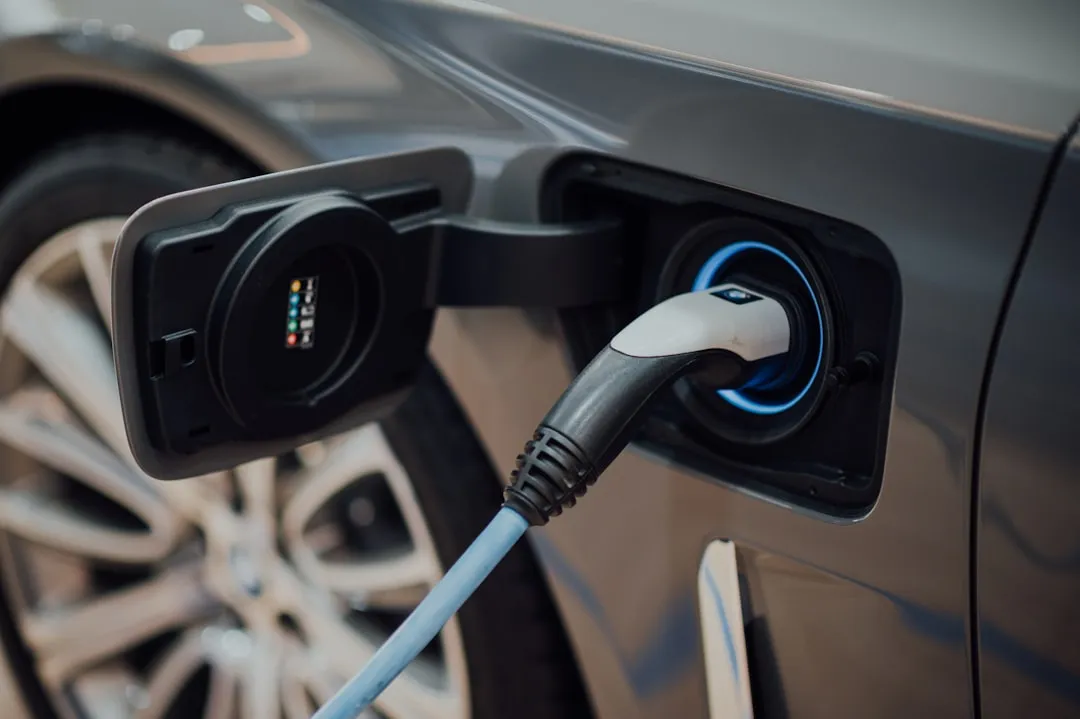
- Home charging (7kW): 3-5 hours for a full charge (done overnight while you sleep)
- Public fast charging (50kW): 30-40 minutes for 80% charge
- Rapid charging (150kW+): 15-20 minutes for 80% charge
The key insight: You almost never need a “full” charge, just enough range for your next journey. And overnight home charging means you start each day with full range.
What If I Live in an Apartment?
Apartment EV ownership in Cape Town is becoming increasingly viable:
- Many new developments include EV charging infrastructure
- Body corporates are increasingly approving charging installations
- Public charging networks provide workplace and public charging options
- Some employers offer workplace charging
Are EVs More Expensive to Buy?
While EVs typically have higher purchase prices, the total cost of ownership is often lower when you factor in:
- Fuel savings: R5,000-R20,000+ annually
- Maintenance savings: R3,000-R8,000 annually
- Potential incentives and tax benefits
- Higher resale value retention
Most Cape Town EV owners break even within 5-7 years, then continue saving for the remainder of ownership.
Taking the First Step: Installing Home Charging
For most Cape Town EV owners, installing home charging is the essential first step. Here’s what you need to know:
Home Charging Installation Requirements
- Dedicated circuit: A 7kW home charger requires a dedicated 32A circuit
- Certificate of Compliance: Professional installation includes CoC for insurance purposes
- Installation time: Most installations complete in 4-6 hours
- Cost: Professional installation typically costs R8,000-R15,000
Solar Integration
If you have or plan to install solar panels, coordinate your EV charging installation to maximise solar charging benefits. Many Cape Town installers specialise in integrated solar + EV charging systems.
Smart Charging Features
Modern home chargers offer valuable features:
- Smartphone control and monitoring
- Scheduled charging during off-peak periods
- Integration with home energy management systems
- Usage tracking and reporting
- Load balancing to prevent circuit overload
Ready to get started? Visit our quote page for professional EV charger installation in Cape Town.
Conclusion: Cape Town’s EV Future is Now
The question isn’t whether to switch to an EV in Cape Town – it’s when. With dramatic fuel savings, reduced maintenance costs, superior driving experience, and increasing infrastructure, EVs offer compelling advantages that extend far beyond environmental benefits.
Cape Town’s unique combination of factors makes it one of South Africa’s premier cities for EV ownership:
- Compact geography eliminates range anxiety
- Abundant sunshine enables solar charging
- Growing infrastructure supports EV adoption
- Forward-thinking residents embrace new technology
- Competitive electricity rates maximise savings
The early adopters who switched to EVs years ago are now enjoying substantial savings while watching petrol prices continue to rise. Those who switch in 2026 will experience similar benefits for years to come.
The future of transportation is electric. In Cape Town, that future has arrived.
Your Next Steps
- Calculate your savings: Use our EV cost calculator to see exact costs for your driving patterns
- Research available EVs: Compare models, ranges, and features that suit Cape Town driving
- Plan your charging: Assess your home charging options or apartment capabilities
- Get installation quote: Contact professional installers for home charging setup
- Test drive: Experience the difference yourself – most dealers offer extended test drives
The transition to electric driving isn’t just about changing vehicles – it’s about embracing a better, more economical, and more enjoyable way to experience Cape Town. Start your journey today.