
Key points
- Price (mid-2026): BYD Dolphin Surf Comfort R341,900 and Dynamic R395,900 recommended retail, per the cars.co.za live new-car listing and BB Group BYD dealer. That is a small rise from the September 2025 launch prices of R339,900 and R389,900 (cars.co.za Price & Specs). It remains the cheapest EV on sale in South Africa.
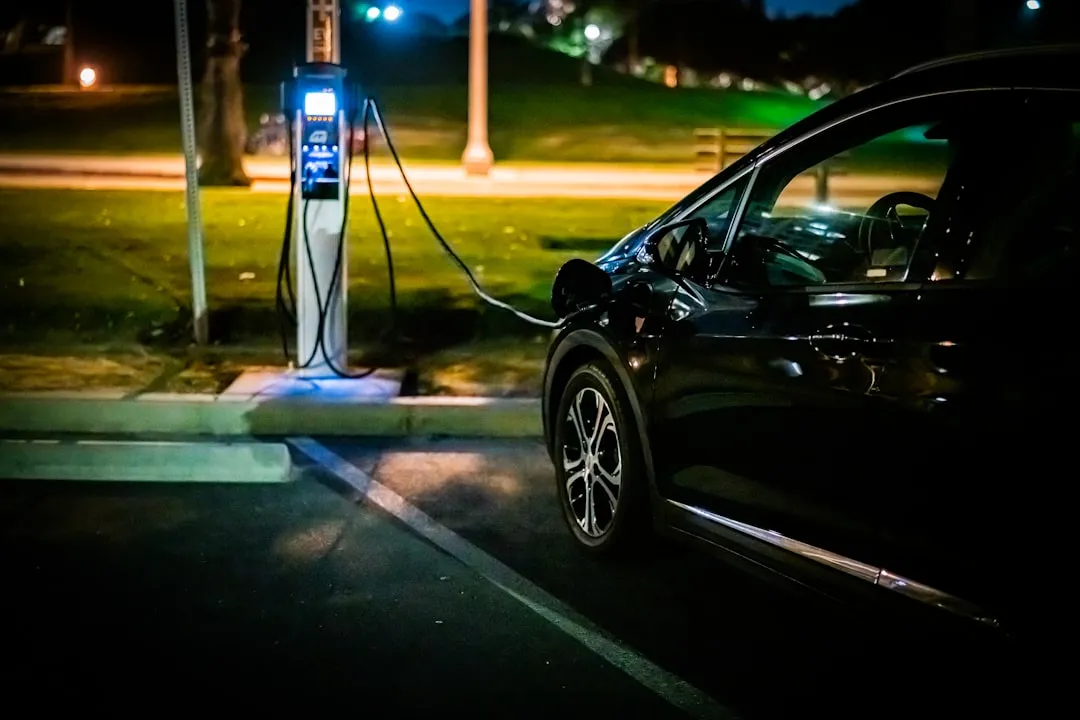
- The wallbox you may not get: the 7 kW home charger was part of BYD’s launch “Early Adopter Package”, not permanent standard kit. ChargePoint SA warns mid-2026 buyers without that perk are “shopping for a charger from scratch” — budget R14,000-R26,000 for a fully installed unit.
- Real range: a Durban owner reports “+- 220km on a full charge” from the 30 kWh Comfort (232 km WLTP). EV-Database real-world bands for the same battery run ~220 km mild combined down to ~130 km cold highway.
- The running-cost gap is real but petrol-dependent: 95 unleaded inland hit R28.06/litre on 3 June 2026 — the highest in SA history (BusinessTech/IOL). cars.co.za’s like-for-like model puts the Surf at R0.47/km versus a VW Polo 1.0 TSI at R1.84/km.
- V2L is a bonus, not a backup: 3.3 kW maximum (EV-Database). It runs a fibre router, lights or a laptop through a socket — not your whole DB board.
- Load-shedding is currently off: SA passed 365 days without it on 15 May 2026 (TechCentral/EWN), but Eskom’s own outlook warns blackouts could return toward 2029-2030.
- Who saves, who gets burned: high-mileage urban commuters who charge at home — ideally off solar — win big. Highway-heavy drivers and people without off-street parking or a CoC-compliant circuit should think twice.
What it is, and why everyone is talking about it
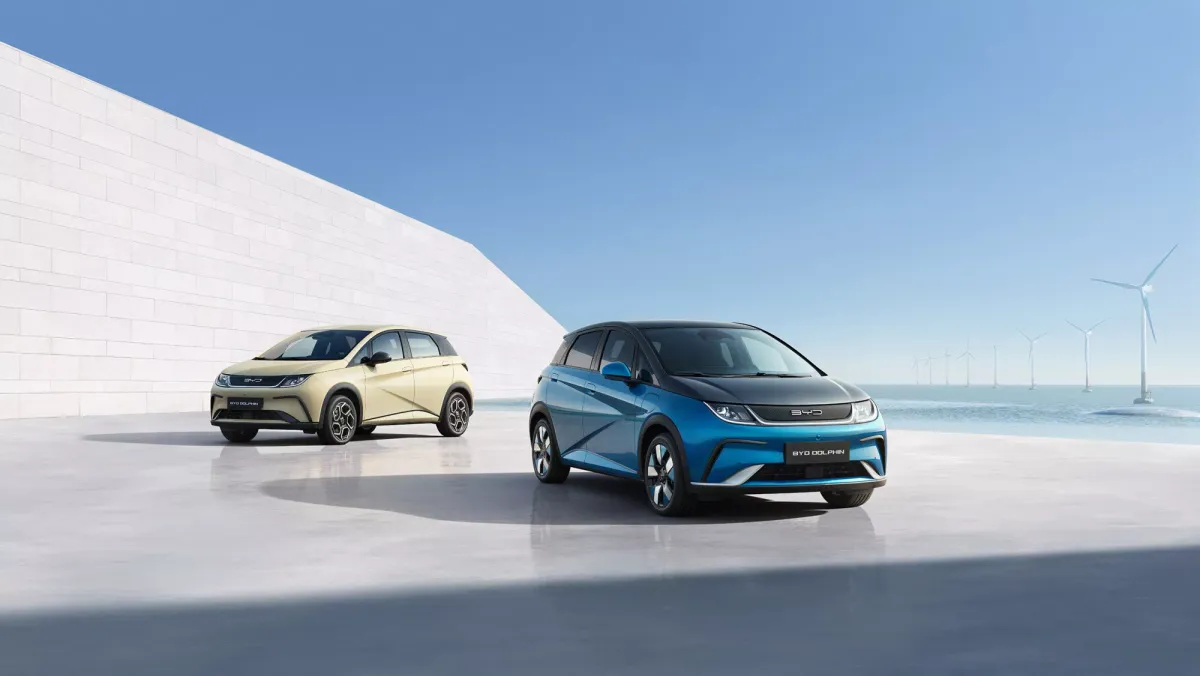
The BYD Dolphin Surf is South Africa’s cheapest electric car. It launched in September 2025 at R339,900 for the Comfort and R389,900 for the Dynamic (cars.co.za Price & Specs, 16 September 2025). By mid-2026 those prices have crept to R341,900 and R395,900 respectively (cars.co.za live new-car listing and BB Group BYD dealer). Some 2026 reviews quote R393,900 for the Dynamic — that is a review-date variation, not a contradiction; treat R395,900 as the current RRP.
BYD entered South Africa in 2023 with the Atto 3, and by mid-2025 had a six-model line-up (CnEVPost/TimesLIVE). Steve Chang, Managing Director of BYD Auto South Africa, told Reuters in December 2025: “I think by next year we’re probably comfortably setting up between 60 to 70 (dealership stores).” Up to 300 fast-charging stations are planned by the end of 2026 — but treat those dealer and charger numbers as announced plans, not delivered totals.
The two derivatives differ mainly in battery size. Both use BYD’s Blade LFP chemistry. The Comfort gets a 30 kWh pack rated at 232 km WLTP; the Dynamic gets 38.8 kWh and 295 km WLTP (cars.co.za Price & Specs). Both share a single 55 kW front-mounted PMSM motor, single-speed, front-wheel drive. The cars.co.za Launch Review quotes 135 Nm of torque; the Price & Specs page omits it, so treat 55 kW as the firmly sourced figure and 135 Nm as reasonable but review-sourced. It carries a 5-star Euro NCAP rating (cars.co.za Price & Specs).
Specs and prices at a glance
| Spec | Comfort | Dynamic |
|---|---|---|
| Launch price (Sept 2025) | R339,900 | R389,900 |
| Current RRP (mid-2026) | R341,900 | R395,900 |
| Battery (Blade LFP) | 30 kWh | 38.8 kWh |
| WLTP range (claimed) | 232 km | 295 km |
| Realistic SA mixed range (estimate) | ~200-215 km | ~255-270 km |
| Motor | Single PMSM, 55 kW, FWD, single-speed | |
| Max DC fast charge | 30 kW | 40 kW (30-80% in ~30 min) |
| Max AC charge | 6.6 kW (both) | |
| Full AC charge time | ~4.6 hrs | ~5.9 hrs |
| V2L output | 3.3 kW AC (EV-Database) | |
| Safety | 5-star Euro NCAP | |
The home-charging truth: it caps at 6.6 kW, and the wallbox may not be free
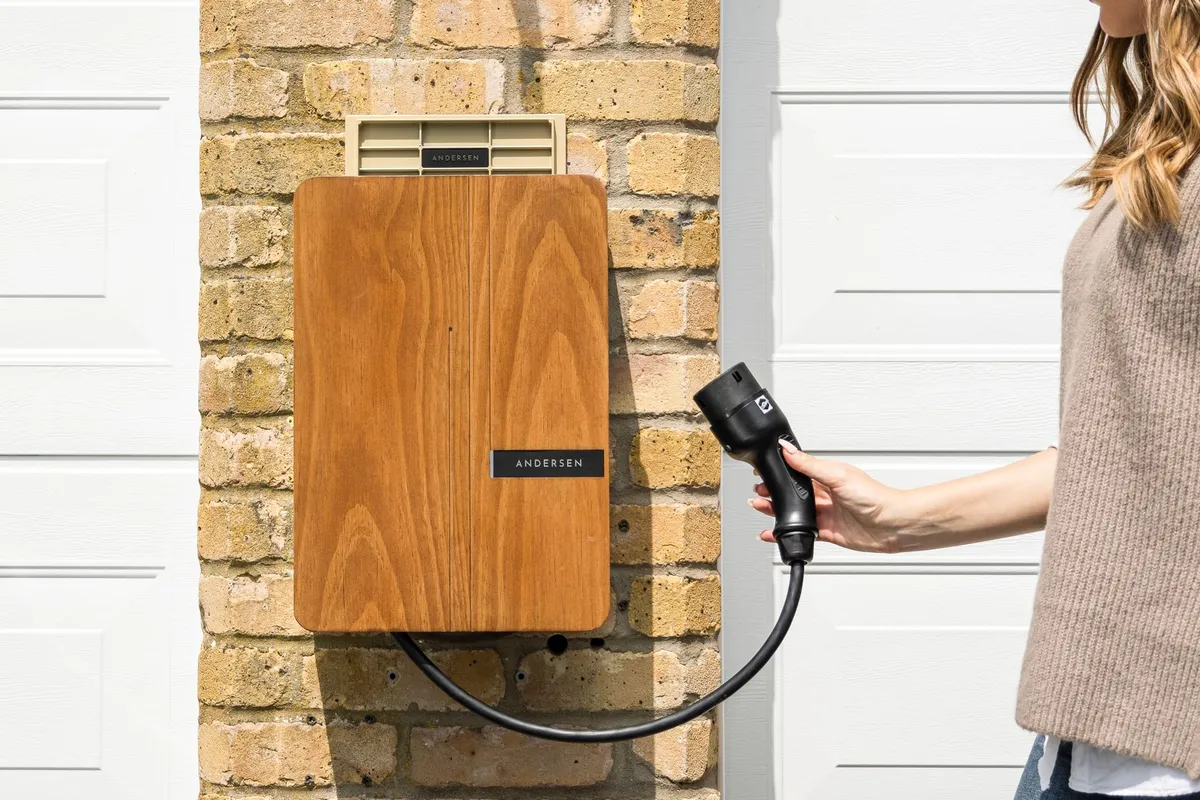
Here is the single most important number for a buyer planning home charging: the Dolphin Surf’s onboard AC charger maxes out at 6.6 kW. That means a 32A single-phase circuit is all you need — and an expensive 11 kW or 22 kW three-phase wallbox brings no benefit, because the car simply won’t draw more than 6.6 kW (ChargePoint SA Home Charging Guide). On a 6.6 kW supply a full charge takes about 4.6 hours for the Comfort and 5.9 hours for the Dynamic.
If you don’t have a wallbox and lean on the bundled portable charger from a standard plug, expect it to be slow. As the Stuff South Africa reviewer put it, AC charging is slow enough (around 13 hours to 100% on the trickle cable) that “you’ll want to make friends with one of your local DC chargers ASAP.”
Now the catch buyers keep missing. That 7 kW wallbox you saw in the launch coverage was part of BYD’s “Early Adopter Package” — not permanent standard equipment. ChargePoint SA (May 2026) is blunt: BYD “included a 7kW home charger wall box in its Early Adopter Package at launch,” and mid-2026 buyers without the package are “shopping for a charger from scratch.” TopGear calls it an “early adoption deal.” The full launch package bundled a V2L socket, portable charger, point-to-point cable, the 7 kW wallbox, an R999/month Absa insurance package and an R10,000 cash incentive (cars.co.za Launch Review) — but that was a launch offer, not today’s standard kit.
If the perk has lapsed, here is what a charger actually costs. Our own hardware price is public: the ChargePointSA CP-AC7-CP is R7 400, supply only, including a Certificate of Compliance where the run is less than 15 m from the DB board. Fully installed, ChargePointSA’s detailed-component band is R14,000-R26,000 all-in (hardware + labour R3,500-R9,500 + CoC R700-R1,500). Add R2,000-R4,000 if the run exceeds 30 m, and R15,000-R35,000 in the rare case your main supply needs upgrading.
One honest note: ChargePoint’s separate “Survival Guide” quotes a lower R6,500-R12,000 band, which conflicts with the detailed figure above. We’re publishing the more granular R14,000-R26,000 band and flagging that the two ChargePoint estimates disagree.
The installation is not optional DIY. A registered electrician must mount the unit, run dedicated cabling, fit DC-fault RCD protection and earthing, and issue a Certificate of Compliance to SANS 10142-1. The charger cannot legally be energised without that CoC (ChargePoint SA EV Home Charger Complete Guide).
There’s a subtler limitation too. The basic bundled wallbox is exactly that — basic. ChargePoint SA: “The bundled unit is a basic wallbox — no app control, no scheduling, no load management, no solar integration.” It can’t auto-shift charging to off-peak hours or chase your solar production. If your savings plan depends on charging off the sun, the cheap unit can’t follow it — a smarter charger is a separate spend.
What it actually costs to run — and the petrol number that changes everything

On 3 June 2026, 95 unleaded inland reached R28.06/litre — a R1.43/litre jump and the highest petrol price in South African history, beating the previous R26.74/litre record from July 2022 (BusinessTech/IOL/Mabumbe). The driver was the halving of fuel-levy relief. That backdrop is the whole reason this car’s economics work.
On the electricity side, what you pay depends entirely on your municipality — and there is a widespread myth worth killing. The City of Cape Town’s standard residential (Home User) tariff is a flat inclining-block tariff with no residential time-of-use off-peak rate. For 2025/26, Block 1 (up to 600 kWh) is about R3.38/kWh including VAT and Block 2 about R4.42/kWh (City of Cape Town 2025/26 Budget Annexure 6). Time-of-use off-peak rates apply only to Large User/commercial categories. So a normal Cape Town household charging an EV pays the flat ~R3.38/kWh — not a cheap ~R1.89-R2.10/kWh off-peak rate that simply doesn’t exist for them.
In Gauteng and Eskom-direct areas the picture differs. EV Cost Calculator’s modelling uses ~R2.72/kWh (Gauteng, Eskom 2024/25 basis), but Eskom standard prices rose 8.76% from 1 April 2026, so that figure is now dated and low. Eskom’s Homeflex off-peak rate sits closer to ~R2.92/kWh for 2025/26 (2Zero50) — but that applies only to Eskom-direct customers, not City of Cape Town households.
Here is one publishable worked example for Cape Town, framed as an illustrative computation, not a measured bill: at the flat R3.38/kWh, assuming 18.7 kWh/100km and 1,200 km/month, home charging works out to roughly R758/month. Treat that as a worked scenario with stated assumptions.
| Per-km running cost | Figure | Source / basis |
|---|---|---|
| Dolphin Surf (home charging) | R0.47/km (R0.34 energy + R0.13 maint) | cars.co.za ICE-vs-EV TCO |
| VW Polo 1.0 TSI (petrol) | R1.84/km (R1.50 energy + R0.34 maint) | cars.co.za ICE-vs-EV TCO |
| Public DC fast charging | ~R6.00-R7.35/kWh | GridCars ~R6.00, Shell Recharge ~R6.50 (ChargePoint); EV Cost Calculator R7.00-R7.35 |
What do real owners pay? Mohammed Kathrada, a Durban owner who bought a Comfort for R340,000, charges mostly off home solar during the day: “Due to the car being parked off at home for the majority of the day, we benefit from slow charging via our home solar panels. This means day charging is basically ‘free’.” He adds: “The increase in our electricity bill has been negligible thus far,” and, against the fuel-price backdrop, “With the rising fuel price, we can look forward to further savings in the future.”
That “free” narrative is real but conditional. As ChargePoint SA puts it: “On a 8kW solar system with a 10kWh home battery… the Dolphin Surf effectively drives for R0 most months.” The honest caveat is that this depends on owning solar plus battery — and the basic bundled wallbox can’t even follow that solar. Without panels, you’re paying your municipal rate, whatever it is.
Calculate the true running cost of the BYD Dolphin Surf at home
Real-world range: forget the WLTP number, and watch the EV-Database trap
The Comfort’s 232 km WLTP and the Dynamic’s 295 km WLTP are lab figures. Real SA driving lands lower. EV Cost Calculator’s modelled bands put the Comfort at ~200-215 km and the Dynamic at ~255-270 km in mixed use — roughly 8-13% below WLTP, assuming ~13-14 kWh/100km. Label those as estimates, not measured numbers.
Owner data backs this up. Kathrada reports “+- 220km on a full charge” from his Comfort and an honest worst-case consumption: “Electricity consumption is 14.3 (kWh/100km) whilst being driven in sport mode and air-conditioning switched on.” On the Dynamic, AutoTrader saw an indicated 303 km against the 295 km WLTP claim — though no measured kWh/100km was published.
EV-Database’s real-world figures for the 30 kWh battery (the SA Comfort proxy) show how much conditions matter: mild combined consumption around 103 Wh/km giving ~220 km, mild highway ~170 km; cold combined ~160 km, and cold highway dropping to ~130 km (188 Wh/km, 231 Wh/km highway cold). Cold weather and highway speed roughly halve your range versus a mild urban best case.
That urban-versus-highway split is the recurring theme. cars.co.za’s launch drive saw an indicated 12.5 kWh/100km — but that was an urban-only test with no highway leg, explicitly a best case. As their reviewer explained, “cruising at these double-digit urban speeds is where an EV is at its most efficient, as it doesn’t have to battle excessive wind resistance.” On the open road it climbs. AutoTrader’s reviewer noted the upside of the small motor: “The small 55 kW motor means it lasts quite a while, especially when using the strongest regeneration setting.”
The data trap to avoid: EV-Database also lists a UK/EU “43.2 kWh Comfort” rated at 310 km WLTP. That is a larger battery not sold in South Africa. The SA Comfort is the 30 kWh car (the EU “Active” trim, ~220 km WLTP). Conflating the two overstates SA range by 80-90 km WLTP. So when you see UK reviews — like Carwow’s praise of “a hugely impressive 4.4mi/kWh in city driving… this dropped down to 4.0mi/kWh in mixed conditions” (about 14.1 to 15.5 kWh/100km) — that’s the big-battery car, not yours.
V2L during load-shedding: a genuine bonus, not a home backup
The Dolphin Surf can power devices through its Vehicle-to-Load function, rated at a maximum 3.3 kW AC (EV-Database). Through a socket it can run a small inverter, lights, a fibre router, camping gear, a laptop or a small electric braai. What it cannot do is back-feed your whole house or DB board — that needs V2H, meaning a bidirectional charger plus a transfer switch (ChargePoint SA Home Charging Guide).
An honesty note on the runtime claims floating around: a specific breakdown (“camping fridge for 24 hours, TV and decoder for eight hours…”) has circulated, but it does not appear on the cited ChargePoint page and could not be verified, so we are not publishing those runtime figures.
ChargePoint SA frames V2L’s real role well: “During last winter’s load-shedding season, the V2L function turned many an EV into a household hero. Plug in a small inverter, run the lights and fibre router, and your family barely notices the power is out. This is not a replacement for a proper home backup system, but as a free bonus on a R339,900 car, it is genuinely useful.” That is exactly the right altitude — useful, not a UPS.
International examples show the upper bound of the concept (note: not SA-specific, and from cars with bigger batteries). During Australia’s Cyclone Alfred blackout, one EV owner ran a fridge, freezer, microwave, kettle, lights and phones for over two days on V2L using only 18% of the battery, and “even provided their neighbors with fresh cups of coffee.” A Nissan Leaf owner kept “food fresh, phones charged, and laptops going” on roughly 10% of battery per day.
One critical safety rule: an EV must never be back-fed via an AC transfer switch into a regular grid-connected or hybrid inverter — solar can be forced into the vehicle and damage it (Clean Energy Reviews). V2L is for plugging devices into the car’s socket, full stop.
The load-shedding context: off now, but watch the late decade
Timing matters here. South Africa reached a full 365 days — 12 consecutive months — without load-shedding at midnight on 15 May 2026, the first complete year without it since 2018 (TechCentral/EWN/TimesLIVE). Eskom’s winter outlook for 1 April to 31 August 2026 expects no load-shedding, citing roughly 6 GW of surplus and an Energy Availability Factor improved to ~65% from ~54.5% in FY2023 (The Citizen).
But don’t bank on it forever. Eskom’s own medium-term adequacy outlook warns blackouts could return toward 2029-2030, driven by the planned retirement of ~5.3 GW of coal capacity, with large volumes of renewables, storage and gas needing to come online by 2030 (TechCentral/Eskom outlook). And as IOL notes, public charging is also vulnerable: “Load-shedding creates real uncertainty, charging stations can be inoperative during peak outages.” So the V2L bonus and a home solar setup may matter more again later this decade than they do today.
5-year TCO: Dolphin Surf vs VW Polo, like for like
This is the comparison that matters, because it’s segment-matched. cars.co.za’s like-for-like 5-year model (90,000 km over 5 years; petrol at an R21.80/litre 5-year average; electricity rising to ~R3.40/kWh by 2026) puts the totals as follows:
| 5-year total (90,000 km) | VW Polo 1.0 TSI | BYD Dolphin Surf Comfort |
|---|---|---|
| Total cost of ownership | R535,600 | R381,500 |
| Running cost per km | R1.84/km | R0.47/km |
| Energy per km | R1.50 | R0.34 |
| Maintenance per km | R0.34 | R0.13 |
| Tyres over 5 yrs | R8,500 | R11,000 |
The break-even is the headline: by 90,000 km the Dolphin Surf claws back its roughly R125k purchase-price premium through accumulated energy and maintenance savings (cars.co.za ICE-vs-EV TCO). One correction for honesty — a “tie at ~45,000 km” figure has circulated but is not stated in the article and could not be verified, so we cite only the 90,000 km / ~R125k break-even.
Crucially, cars.co.za reached its verdict against petrol at just R23.36/litre: “in 2026, the ‘electric gap’ hasn’t just closed; in the face of R23.36 for a litre petrol, it has effectively flatlined.” At June 2026’s actual R28.06/litre, the EV advantage is wider than their model assumes — their conclusion is conservative. They frame the real decision as one of resilience: “the choice is no longer about the bank balance; it’s about the lifestyle and resilience.”
A second model, with two big caveats. EV Cost Calculator pits the Surf Comfort (R387,300 over 5 years) against a Toyota Corolla Cross 1.8 Xi (R640,400), for a headline R253,100 saving. But the comparator is a larger, ~R140k pricier crossover, and the model excludes depreciation and resale — so much of that “saving” is segment and price difference, not running-cost advantage. Treat the cars.co.za Polo comparison as the fairer like-for-like.
The one model that includes depreciation uses different, pricier cars: AutoTrader’s 100,000 km / 5-year model puts a VW Polo GTI at R878,847 and a BYD Dolphin Premium Extended at R759,340 — a R119,507 saving. Notably, the Dolphin depreciates ~28% in year one versus the Polo GTI’s 8.3%/year (a R75,740 petrol depreciation advantage over 5 years), and the EV is insured higher (~R1,650 vs ~R1,500/month). AutoTrader still concluded: “The break-even point comes after just 6.3 months of ownership. After that, every month you drive the Dolphin instead of the Polo GTI, you’re more than R2000 better off.” But do not conflate that with the Surf — it uses the larger Dolphin Premium (R599,900) and a Polo GTI, not the base cars.
The depreciation and resale question nobody can answer yet
Here is the genuine open question. There is no real 5-year SA resale data for the Dolphin Surf — it only launched in September 2025. BYD limits discounting to protect registry value, and it’s South Africa’s best-selling EV brand, but local long-term residuals are untested (TopAuto/IOL/EV Cost Calculator). Every TCO number above excludes depreciation precisely because nobody has five years of SA data. If residuals come in soft, the gap narrows; if BYD’s price discipline holds, it doesn’t. We can’t tell you which, and anyone who claims to is guessing.
On reliability, the warranty is genuinely strong and worth getting right, because one widely-repeated figure is wrong. The battery (Power Battery) warranty is 8 years or 200,000 km, confirmed verbatim on BYD South Africa’s official Service & Maintenance page and corroborated by AutoTrader. The cars.co.za “5 years/100,000 km battery” figure is an error — it actually matches BYD’s separate Drive Unit warranty (5 years/100,000 km). The complete-vehicle warranty is 3 years/100,000 km, and the service plan is 3 years/60,000 km (cars.co.za/AutoTrader).
| Cover | Dolphin Surf |
|---|---|
| Battery (Power Battery) | 8 years / 200,000 km |
| Drive Unit (motor & transmission) | 5 years / 100,000 km |
| Complete vehicle | 3 years / 100,000 km |
| Service plan | 3 years / 60,000 km |
As global proxy context (not SA-specific data): Blade LFP packs show ~8-12% degradation at 100,000+ km in Norway/China owner data. Common niggles flagged globally include 12V auxiliary battery failures in years 4-6, brake-disc glazing, and OTA-fixable infotainment lag; a 2024 China recall covered ~100,000 Dolphin/Yuan Plus cars for a power-steering controller (DriveAuthority/BYD Media/Electrek). Industry data also shows EVs are ~25.5% more expensive and ~14% slower to repair (Thatcham).
Living with it: the honest niggles
This is a budget car and it shows. The cars.co.za launch reviewer found “some of the trim materials and fixtures, such as the inner door handles, felt insubstantial… The cabin’s general fit-and-finish is a mixed bag.” Stuff SA agreed: “it does all feel a bit cheap… It’s louder than we anticipated… it doesn’t live up to the EV revolution.”
It is not quick. AutoTrader: “With a claimed 0-100 km/h sprint time of 15.5 seconds, the Dolphin Surf is not what anyone would deem fast.” CAR Magazine’s independent road test measured 0-100 km/h in 15.23 seconds (15.5 claimed), 0-60 km/h in 6.28 seconds, the quarter mile in 19.93 seconds, and a claimed 130 km/h top speed. Stuff SA was skeptical of even that: “BYD reckons the car will top out at around 130km/h, but we can confirm that isn’t true… it’ll require your whole foot to be down if you hope to keep up.” The cars.co.za reviewer was kinder: “its performance is rather leisurely, but to be fair, it’s more than adequate to allow you to slip past slower traffic with ease.”
The real ownership gripe is Android Auto. Stuff SA called the wireless connection a “complete and utter nightmare,” working “perfectly about 25% of the time we got in the car” — adding that “our resident Android device failed to automatically connect when wireless, necessitating us to restart our phone before it would work.” Apple CarPlay had no such issues.
Who saves money — and who gets burned
You win if: you do high urban mileage, charge at home (ideally off solar), and rarely hit the highway. The economics land squarely here. AutoTrader’s verdict: “If you’re looking for a sensible commuter for the office or school run, and seldom venture onto the highway for these trips, the BYD Dolphin Surf is a sensible choice.” Kathrada, six months in, is unequivocal: “Range anxiety would not be a problem despite only getting +- 220km on a full charge, as we would primarily be using it for school drop offs and pick ups,” and “it has probably been one of the wisest purchases we’ve made.” His one warning is half a joke: “The biggest con with driving an EV is that you really do not want to drive an ICE vehicle ever again.”
You get burned if: you have no off-street parking or no CoC-compliant 32A circuit (and must therefore spend R14,000-R26,000 on a charger that was once a launch freebie); you drive a lot of highway, where range can fall toward 130 km on a cold Comfort; you can’t charge at home and lean on public DC at R6.00-R7.35/kWh, which erodes the running-cost win; or you were counting on the V2L to be a whole-home backup it was never designed to be. And if load-shedding returns toward 2029-2030 as Eskom warns, public charging itself becomes less reliable.
The bottom line is the one Stuff SA reached despite all its complaints: “for urban South Africans eyeing their first EV, it’s one heck of a compelling gateway drug.” At R341,900 for the Comfort, against R28.06/litre petrol, the maths is real for the right driver — and genuinely doesn’t work for the wrong one. Run your own commute through the per-km figures before the showroom runs them for you.
Prices and tariffs cited are current as of mid-2026 and change frequently; confirm with your dealer and municipality before purchase. Finance example (Dynamic): an indicative ~R6,977/month over 72 months at 12.25%, 10% deposit, no balloon (AutoTrader) — rate-dependent, not a quote.
Image: BYD
Compare the BYD Dolphin Surf against other affordable EVs
See real-world range, running costs, and which budget EV fits your needs.
CoC-certified installers, nationwide