
Imagine pulling into a charging station on the N3 between Johannesburg and Durban, battery at 12%, only to discover the charger only accepts a network-specific RFID card you’ve never heard of — and your phone’s data signal is too weak to load the app. It sounds like an edge case. For thousands of South African EV drivers, it’s a lived reality.
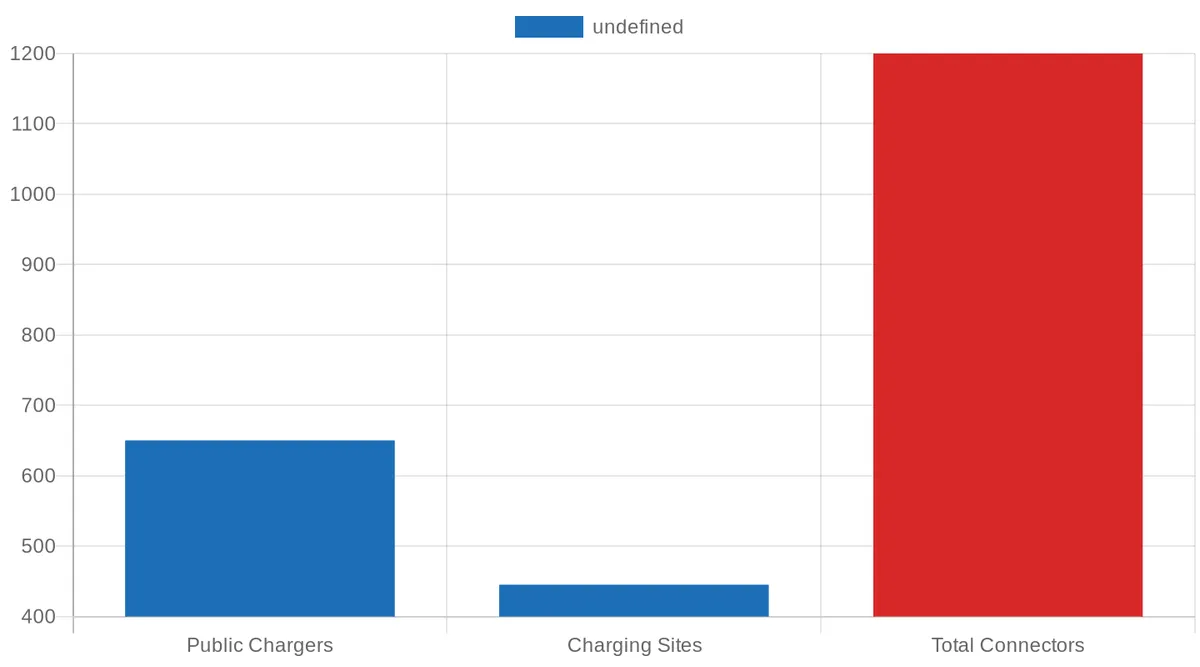
Until February 2025, not a single EV charging station on the entire African continent accepted an open-loop bank card or digital wallet tap. That milestone — achieved by Rubicon, EFT Corporation, Visa, and Verifone — was genuinely significant. But with South Africa’s approximately 650 public chargers across 445 sites still split between competing networks and payment systems, the job is far from done.
Key points
- Until early 2025, every SA public charger required a pre-funded RFID wallet or network app — no bank card or digital wallet was accepted anywhere in Africa.
- Rubicon, EFT Corporation, Visa, and Verifone launched Africa’s first open-loop tap-to-pay credit card terminals in February 2025.
- GridCars — which operates approximately 60% of SA’s public charging points — still lists RFID cards and mobile apps as its primary payment options, with no publicly advertised tap-to-pay terminals as of mid-2026.
- Load-shedding adds a uniquely South African dimension: physical card reader hardware at unattended stations is vulnerable to power interruptions, which partly explains why SA networks historically favoured app and RFID over always-on terminal hardware.
How SA’s payment ecosystem was built — and why it left drivers behind
South Africa’s EV charging networks grew quickly but in silos. Each charge point operator (CPO) launched its own closed-loop system: GridCars with its ChargePocket RFID card and app, Rubicon with its branded wallet card, Zero Carbon Charge (CHARGE) with its own app-based access. The logic made sense at the time — closed-loop systems are cheaper to deploy, don’t require bank-grade POS terminals, and sidestep the complexity of card-present transaction security at unattended machines.
The problem is that the world moved on. Rubicon noted that over 60% of South African transactions are now contactless. Drivers tap their Visa or Mastercard at Pick n Pay, at Woolworths, at the fuel forecourt — and then arrive at an EV charger and are told to download an app or top up a proprietary wallet. The friction is jarring, and the company regularly fielded support calls from drivers baffled that their bank card wouldn’t work.
The result is a payment landscape that looks like this in mid-2026:
| Network | RFID card | Network app | Open-loop bank card / digital wallet | Notes |
|---|---|---|---|---|
| GridCars (ChargePocket) | Yes | Yes | Not publicly advertised | Largest SA network; ~60% of public charge points |
| Rubicon | Yes (legacy) | Yes | Yes (from Feb 2025) | Verifone UX700 terminals; Visa, Mastercard, Google Pay, Apple Pay |
| Zero Carbon Charge (CHARGE) | No | Yes | Not confirmed | Off-grid solar N3 corridor sites; app-primary model |
Plan your charging when the network grows
The Rubicon/EFTCorp breakthrough — and what it actually took
Africa’s first open-loop card payment at an EV charger involved more than simply bolting a card machine onto a charging post. The project required cloud-based remote terminal management, a solution to the theft and vandalism risk that physical POS hardware attracts at unattended outdoor locations, and careful power management to keep terminals live without drawing significant standby current from the charger’s own supply.
The solution EFT Corporation and Verifone landed on uses the Verifone UX700 unattended payment device — a ruggedised terminal designed for petrol forecourts and vending machines, where it already handles millions of contactless transactions across SA. Crucially, it accepts Visa, Mastercard, Google Pay, and Apple Pay without any pre-registration. Drivers who have never heard of Rubicon can pull up, tap, and charge.
TechCentral confirmed the rollout was expanding to 53 Rubicon charging sites nationally — a meaningful step, but still a fraction of SA’s total public charging infrastructure.
Load-shedding: the constraint that shapes every hardware decision
Here’s the dimension that no internationally focused debate about card readers at chargers ever addresses: Eskom. South Africa’s history of Stage 4 to Stage 6 load-shedding — with cuts of up to 12 hours a day during peak periods — creates a hardware reliability problem that simply doesn’t exist in Europe, the US, or most other markets where the card-reader debate plays out.
A physical POS terminal at an unattended charging station is always-on hardware. It needs a stable power supply to maintain a network connection, process transactions, and communicate with the cloud. During load-shedding, a station without its own battery backup loses that terminal. The charger itself may have UPS protection to preserve session continuity, but the card reader is a separate device drawing from the same supply.
This is a significant reason why SA networks historically preferred app and RFID over physical terminal hardware. A mobile app requires only the driver’s phone and data signal. An RFID card authenticates via the charger’s own controller, with no external hardware dependency. Neither fails because the grid went down.
Zero Carbon Charge’s approach on the N3 corridor illustrates one solution. Its new stations — launched in May 2026 and backed by development finance investment — are fully off-grid, using 645 kWh battery storage systems backed by biodiesel generators, making them entirely independent of Eskom. The first N12 site near Wolmaransstad has maintained 99% uptime since its November 2024 launch with zero grid connection. These stations can theoretically power a card terminal continuously, load-shedding or not. But the capital cost of that infrastructure is substantial, and not every CPO can replicate it.
For grid-connected stations, the practical answer is a card terminal backed by its own small UPS — enough to keep the reader live through a load-shedding window. The engineering is solvable. The question is whether the economics justify it at SA’s current EV fleet size.
Why this matters more as the network expands
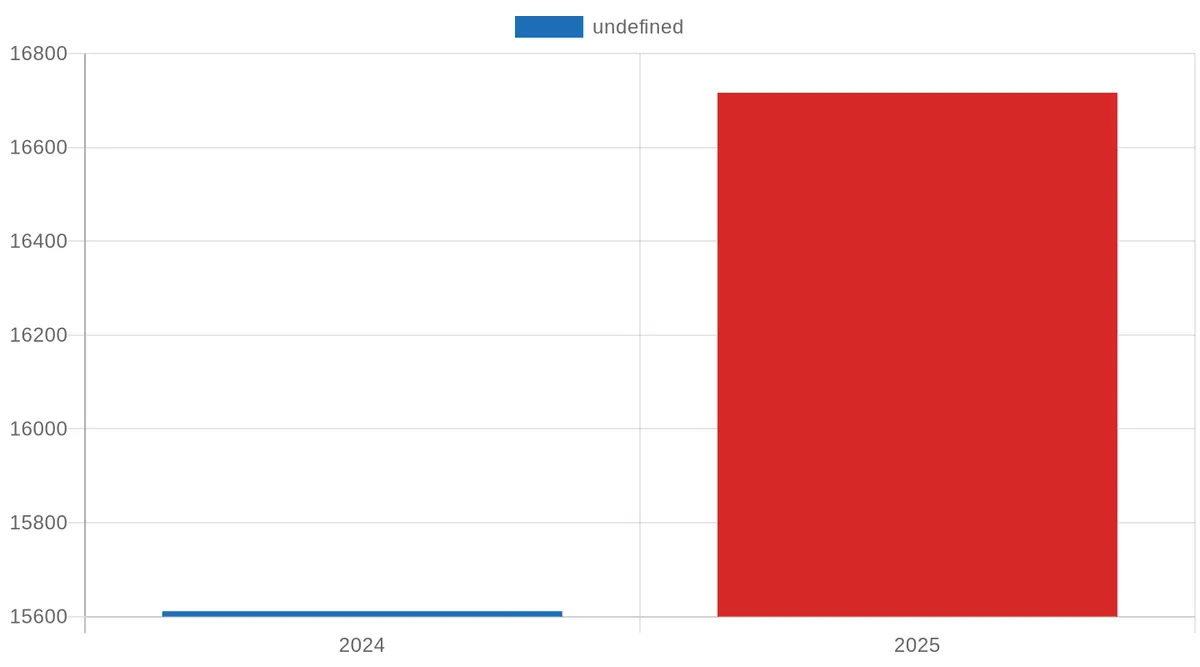
South Africa’s new energy vehicle sales reached 16,716 units in 2025 — a 7.1% year-on-year increase — and NEVs accounted for 2.8% of total new vehicle sales. Industry observers have noted that approximately 100,000 EVs on SA roads are needed before charging operators see real profitability. The fleet is growing, but it’s still small and concentrated among early adopters who have already downloaded the apps, registered accounts, and pre-funded wallets.
The next wave of EV buyers is different. Fleet managers adding two or three EVs to a mixed fleet don’t want to manage a separate ChargePocket balance. Road-trippers on the N1 or N2 corridors — possibly in a rental EV or a recently purchased second-hand vehicle — will not have a Rubicon app installed. International visitors driving hire cars won’t know what GridCars is.
Payment friction at this stage doesn’t just inconvenience drivers — it actively discourages EV adoption. The question a prospective EV buyer asks isn’t only
Understand SA’s public charging payment standards
Explore how load management and payment systems shape network reliability.
Learn charging standards →WhatsApp us
CoC-certified installers, nationwide