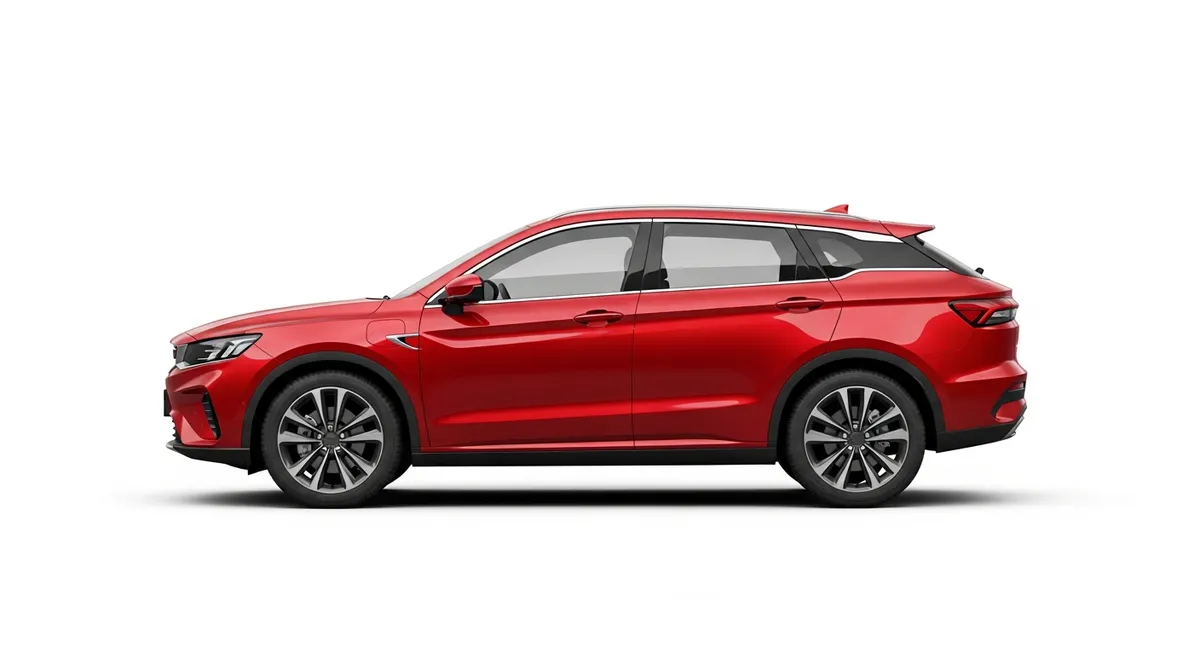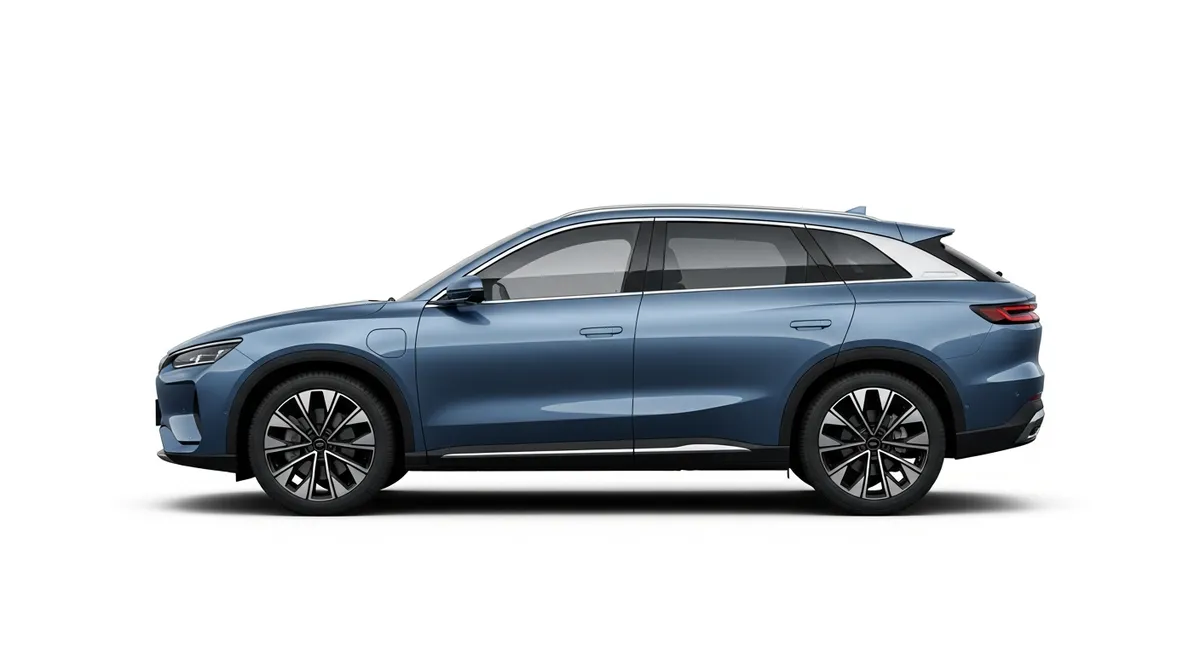

South Africa’s electric-vehicle market just posted its most dramatic month on record. When naamsa released May 2026 new-vehicle sales statistics in early June, one figure stopped the industry cold: new-energy vehicle (NEV) sales—battery-electric, plug-in hybrid, and full hybrid combined—had jumped 120% year-on-year in April 2026. The same dataset showed overall May 2026 sales hitting 51,071 units, the strongest May since 2013, underscoring a broader rebound in consumer confidence despite rising interest rates and fuel costs.
For anyone tracking South Africa’s slow-burn transition to electric mobility, April’s triple-digit growth feels less like an anomaly and more like the moment the dam finally cracked. Infrastructure is scaling, policy is sharpening, and automakers—including Toyota, the country’s sales king—are finally launching pure-electric models. The question is no longer if SA will go electric, but how fast.

TL;DR
- NEV sales surged 120% YoY in April 2026, per naamsa’s May 2026 report—the sharpest monthly gain on record.
- Infrastructure is exploding: CHARGE opened solar-powered off-grid stations on the N3 in May 2026, BYD is rolling out 200–300 megawatt Flash chargers by year-end, and Rubicon dispensed 625 MWh in 2025 (+142% YoY).
- Policy tailwinds: the 150% EV manufacturing tax incentive went live in March 2026, and Trade Minister Parks Tau published draft battery-production incentives in May 2026.
- Toyota launched its first pure BEV in SA (bZ4X, R1.18m) in May 2026, signalling the market leader’s pivot from hybrid dominance.
What happened: the numbers behind the headline
The naamsa May 2026 release confirmed what dealers had been whispering for weeks: April 2026 saw NEV sales climb 120% compared to April 2025. While naamsa’s public summary didn’t break out pure battery-electric (BEV) versus plug-in hybrid (PHEV) versus full hybrid (HEV) for that single month, the trend mirrors 2025’s pattern—PHEV sales had already exploded 280% in calendar 2025, while pure BEV sales dipped 13.4% to 1,088 units as buyers hedged range anxiety with plug-in hybrids.
April’s surge reversed that BEV slump. Anecdotal reports from GridCars and Rubicon charging networks showed record session counts in April and May 2026, consistent with more pure-electric cars hitting the road. Overall May 2026 new-vehicle sales reached 51,071 units—the best May performance in 13 years—suggesting macroeconomic headwinds (the South African Reserve Bank had hiked the repo rate 25 basis points in March 2026, and fuel prices continued climbing) weren’t enough to dampen pent-up demand for cleaner, cheaper-to-run transport.
The infrastructure backdrop
April’s sales spike didn’t happen in a vacuum. Three major charging announcements landed between February and May 2026:
- Rubicon’s 2025 report card: In February 2026, Rubicon disclosed it had dispensed 625 MWh across 21,606 transactions in 2025 (+142% and +159% YoY respectively), equivalent to 3.1 million electric kilometres. The network stood at 103 public stations plus 20 OEM dealership sites (6,648 kW total capacity).
- CHARGE’s N3 solar hubs: In May 2026, CHARGE (Zero Carbon Charge) opened two off-grid, solar-powered fast-charging stations on the N3 Johannesburg–Durban corridor, backed by R100 million from the Development Bank of Southern Africa. The company plans 120 solar stations by year-end 2026, spaced roughly 150 km apart along the N1 and N3.
- BYD’s megawatt rollout: BYD confirmed in October 2025 it would deploy 200–300 Flash charging stations (up to 1,000 kW per vehicle) starting Q2 2026, initially at dealerships then along national highways—the largest private charging investment to date.
By May 2026, PlugShare estimated South Africa had 549 public EV charging stations nationwide, with GridCars operating over 450 of them (roughly 60% of public capacity). Range anxiety—the perennial EV-adoption killer—was finally losing its sting.

Why now? The policy and pricing convergence
April 2026’s sales jump reflects three forces converging:
1. Policy momentum
The 150% tax incentive for EV manufacturing (announced late 2025) went live in March 2026, encouraging local assembly and shaving import duties on certain components. Then in May 2026, Trade Minister Parks Tau published draft amendments introducing higher production credits and customs rebates for EV battery manufacturers—a signal that government sees South Africa shifting from vehicle exporter to battery-mineral shipper. The draft rules are open for comment until mid-2026, but the intent is clear: make it cheaper to build EVs here.
2. Falling EV prices (and rising petrol costs)
Chinese brands—led by BYD, GWM, and JAC—have driven EV sticker prices below R600,000 for credible 400+ km range. The BYD Atto 3, for instance, became SA’s best-selling pure EV by Q4 2025, offering 480 km range at a price point that undercuts most premium European models. Meanwhile, petrol hovered near R25/litre in early 2026, and municipal electricity tariffs climbed 9.01% in July 2026 (following NERSA’s March 2026 approval of an 8.76% Eskom hike). The total-cost-of-ownership equation tipped decisively toward electric for high-mileage drivers, especially those pairing EVs with rooftop solar to dodge Eskom’s tariff spiral.
3. OEM commitment
Toyota’s May 2026 launch of the bZ4X BEV at R1.18 million marked a watershed. Toyota and Lexus had captured 57.7% of SA’s NEV market in 2025 on the strength of hybrids alone; the bZ4X (and a promised seven-seater EV in early 2027) signals the brand is no longer sitting on the BEV sidelines. When the market leader moves, the rest follow.

Stakeholder reactions: government, automakers, and installers
Government: cautious optimism
Trade Minister Parks Tau’s May 2026 battery-incentive draft suggests the Department of Trade, Industry and Competition sees EVs as an industrial-policy lever, not just an emissions play. The 150% manufacturing incentive and proposed battery credits aim to capture value from SA’s platinum, manganese, and lithium reserves rather than exporting raw minerals. NERSA’s tariff hikes, however, complicate the EV value proposition for grid-dependent charging—hence the push for solar-powered networks like CHARGE’s.
Automakers: all-in
Beyond Toyota’s bZ4X, commercial-EV launches are accelerating. Tata and Bolt have both announced fleet trials in Gauteng for electric last-mile delivery, and BYD’s megawatt charging network is as much a sales enabler as a public service—buyers won’t touch a 600 km EV if they can’t charge it on the N1. Expect more OEM-funded charging infrastructure in H2 2026.
Installers and networks: capacity crunch
ChargePoint SA and peers report lead times for home-charger installations have stretched from two weeks to four as demand outpaces electrician capacity. GridCars and Rubicon are racing to add DC fast chargers in secondary cities (Rubicon added 11 Eastern Cape stations between January and February 2026 alone), but the real bottleneck is skilled labour—every new charger needs a qualified electrical contractor to commission it, and load-shedding (still sporadic in early 2026) complicates grid connections.
What this means for SA EV buyers
If you’ve been waiting for the “right time” to go electric, April 2026’s data says that time is now—or very soon. Here’s what the 120% sales jump changes for you:
| Factor | Before April 2026 | After April 2026 |
|---|---|---|
| Charging anxiety | Patchy coverage outside Gauteng/WC; long gaps on N1/N3 | CHARGE’s solar hubs + BYD’s megawatt rollout fill the gaps by Q4 2026 |
| Resale value | Uncertain; thin used-EV market | 120% sales growth thickens the buyer pool; expect better residuals |
| Service network | Limited to major metros | OEM commitment (Toyota, BYD) means more authorised workshops opening 2026–27 |
| Electricity cost | ~R2.50/kWh municipal average (2025) | ~R2.73/kWh post-July 2026 tariff hike; solar + battery combos increasingly viable |
Practically: if you drive over 20,000 km/year, the fuel savings now cover a BYD Atto 3’s monthly payment versus a comparable petrol SUV within 18 months (assuming R25/litre petrol and R2.73/kWh grid charging). Pair that EV with a 5 kW rooftop solar array and a 10 kWh home battery, and you’re looking at near-zero energy cost per kilometre—load-shedding be damned.
What’s next: three things to watch in H2 2026
- BYD’s megawatt chargers go live: The first Flash stations should appear at BYD dealerships in June–July 2026. If BYD hits its 200-station target by December, the N1 Cape Town–Johannesburg corridor will have sub-20-minute top-ups every 150 km—a game-changer for long-distance adoption.
- Battery-incentive finalisation: Minister Tau’s draft closes for public comment mid-2026. If the production credits pass as written, expect announcements from battery-cell manufacturers (possibly LG Energy Solution or CATL) scouting SA sites by Q4 2026.
- naamsa’s June–August data: April’s 120% jump could be a one-month spike (pent-up demand from Q1 rate hikes) or the start of a sustained S-curve. If May, June, and July 2026 sales hold above 100% YoY growth, we’re officially past the tipping point.

Ready to charge smarter?
April 2026’s sales surge proves South Africa’s EV market has left the curiosity phase and entered the growth phase. Whether you’re eyeing a Toyota bZ4X, a BYD Atto 3, or a plug-in hybrid to hedge range anxiety, one thing is non-negotiable: you need a home charger that won’t trip your municipal breaker or leave you queuing at a public station every second day.
ChargePoint SA installs Level 2 AC chargers (7.4 kW and 11 kW) across all nine provinces, with optional solar integration and load-management systems that play nicely with Eskom’s time-of-use tariffs. We’ll assess your electrical panel, pull the necessary certificates of compliance, and get you charging overnight at a fraction of petrol’s cost per kilometre. Get a free site assessment and quote—because the only thing worse than missing the EV tipping point is buying the car before you’ve sorted the charger.
Image credits
“BYD Atto 3” by Alexander Migl, CC BY-SA 4.0 · “BYD Tygervalley dealership in Cape Town” by Husskeyy, CC BY-SA 4.0 · “Golden Arrow BYD electric bus in Cape Town” by Husskeyy, CC BY-SA 4.0 · “BYD Atto 3” by Alexander Migl, CC BY-SA 4.0