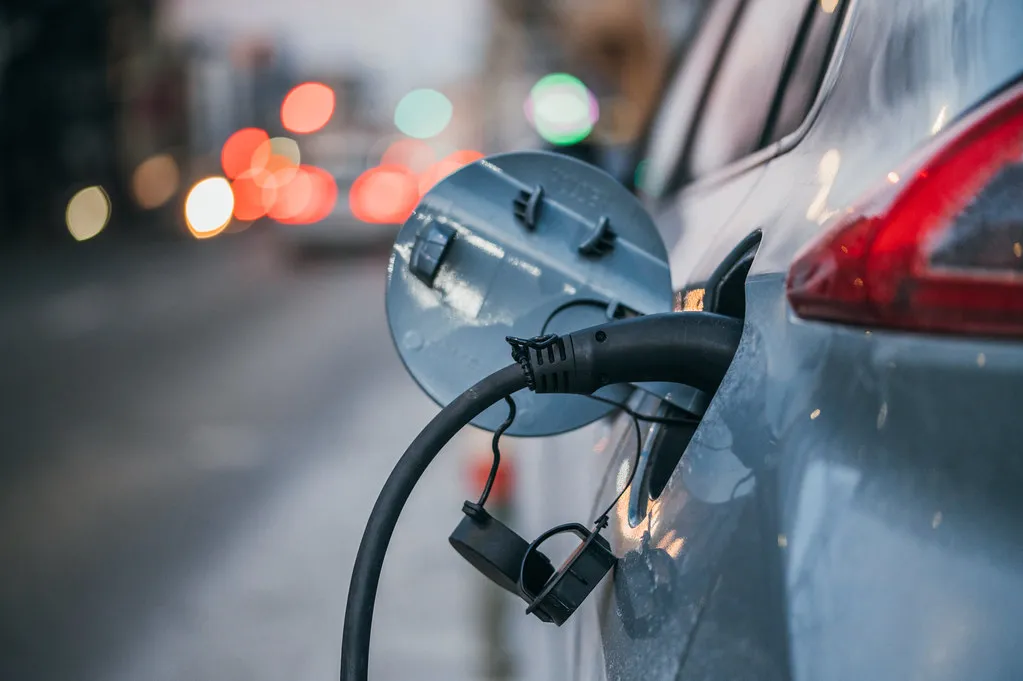

As u/ApprehensiveSize7662 put it on r/electricvehicles: “According to Omoda Jaecoo, the latest extension of the very attractive driveaway price could help more Australians get behind the wheel of an affordable family electric SUV, ‘amid the current fuel price pressures’.” That sentiment rings even louder in South Africa, where petrol hovers above R25 per litre and load-shedding makes home solar pairing a genuine competitive advantage for EVs.
The Jaecoo J5 EV vs Hyundai Creta 1.5 Executive comparison hinges on a critical caveat: Jaecoo has announced a Q3 2026 launch window for the J5 EV in South Africa, but final specifications, pricing, and homologation details remain unconfirmed as of June 2026. CAR Magazine reports the model will arrive in Q3 2026, referencing global specifications of a 155 kW motor, 58.9 kWh battery, 402 km WLTP range, and 130 kW DC fast-charging capability — but these figures have not been officially confirmed for the South African market. Meanwhile, the Hyundai Creta 1.5 Executive is available today at R519,900 with known performance and running costs. This comparison uses the best available global data for the J5 EV while acknowledging the uncertainty, then unpacks what the real numbers might look like if those specs hold true for SA.

TL;DR
- The Jaecoo J5 EV (Q3 2026, pricing and final SA specs TBC) is reported globally with 402 km WLTP range, 155 kW motor, 58.9 kWh battery, and 130 kW DC fast-charging; Hyundai Creta 1.5 Executive IVT costs R519,900 with 7.5 L/100 km fuel consumption and 51 L tank.
- If the J5 EV’s global specs translate to SA: at 1,500 km/month and R2.73/kWh off-peak Eskom tariff, projected charging costs are approximately R634/month vs R3,188/month for the Creta at R25/L petrol — a potential monthly saving of R2,554.
- Home charging projection: assuming the J5 EV’s global 130 kW DC capability and an 11 kW AC onboard charger (typical for this segment), a 7.4 kW AC wallbox would charge the 58.9 kWh battery in ~8 hours, an 11 kW unit in ~5.5 hours.
- 5-year TCO projection: if the J5 EV launches at R550,000–R600,000 and delivers the reported efficiency, electricity savings of ~R130,000–R153,000 over five years plus lower servicing costs could narrow or eliminate the upfront price gap — but this remains speculative until SA pricing and specs are confirmed.
Price comparison: upfront vs long-term value
Jaecoo has not yet announced J5 EV pricing or final specifications for South Africa. CAR Magazine reports a Q3 2026 arrival with global specifications including a 155 kW motor, 58.9 kWh battery, and 402 km WLTP range, but these figures await official SA confirmation. In Australia, the J5 EV launched at approximately AUD 38,990 driveaway (roughly R425,000 at current exchange rates). SA pricing typically includes a 10–20% premium for homologation, logistics, and smaller market volumes, suggesting a conservative estimate between R500,000 and R600,000 at launch — but this is speculative arithmetic, not confirmed pricing.
The Hyundai Creta 1.5 Executive IVT, by contrast, retails at R519,900 as of November 2024. That’s a known quantity: you walk into a Hyundai dealer today and drive out tomorrow. The J5 EV requires patience and a willingness to wait for final confirmation — but if the global specs hold and pricing lands in the projected range, the running-cost arithmetic could make that wait worthwhile.
| Model | Retail Price (ZAR) | Motor/Engine | Power (kW) | Range / Tank (km) | Efficiency |
|---|---|---|---|---|---|
| Jaecoo J5 EV | R500,000–R600,000 (est.)* | Electric motor | 155 (global spec)* | 402 WLTP (global)* | ~14.7 kWh/100 km* |
| Hyundai Creta 1.5 Executive IVT | R519,900 | 1.5L petrol | 84.5 | ~680 (51 L tank) | 7.5 L/100 km (NEDC) |
*J5 EV figures based on global specifications reported by CAR Magazine; SA specifications, pricing, and final efficiency pending official confirmation from Jaecoo South Africa.

Range, efficiency, and real-world practicality
Jaecoo J5 EV: projected 402 km WLTP, ~14.7 kWh/100 km (global specs)
Global specifications report the J5 EV’s 58.9 kWh usable battery delivering 402 km on the WLTP cycle. If these figures hold for the SA model, real-world conditions — highway cruising at 120 km/h, occasional gravel, and summer aircon — would likely yield closer to 340–360 km in practice. That’s a Cape Town–Hermanus round trip with charge to spare, or a Johannesburg–Pretoria daily commute for a full week without plugging in.
Projected efficiency sits at approximately 14.7 kWh/100 km (58.9 kWh ÷ 402 km × 100), based on the global WLTP figures. At Eskom’s off-peak tariff of approximately R2.73/kWh for residential Homelight customers (extrapolated from the 12.74% FY2026 increase), that would work out to roughly R0.40 per kilometre. Drive 1,500 km in a month and you’d spend approximately R634 on electricity — if you charge exclusively at home during off-peak windows (23:00–06:00 weekdays, all day weekends) and the reported efficiency holds true in SA conditions.
Hyundai Creta 1.5 Executive: 7.5 L/100 km, 51 L tank
The Creta’s naturally aspirated 1.5-litre petrol engine and CVT transmission deliver a claimed 7.5 L/100 km on the NEDC cycle. Real-world SA driving — stop-start traffic in Gauteng, N1 highway slogs, the occasional Eastern Cape gravel detour — typically adds 10–15% to NEDC claims. Call it 8.5 L/100 km in mixed use.
At R25 per litre (mid-2026 inland petrol price), 1,500 km costs you 127.5 litres × R25 = R3,188 per month. Even at a more optimistic R23/L coastal price, you’re still looking at R2,933. The projected gap between R634 (EV, if global specs hold) and R2,933–R3,188 (petrol) is R2,299–R2,554 every single month — a compelling saving if the J5 EV delivers on its reported efficiency.
Public charging: when home isn’t an option
The J5 EV’s reported 130 kW DC fast-charging capability would enable a 20–80% top-up in roughly 25 minutes at a compatible station, if that spec is confirmed for SA. ChargePoint SA reports that SA has approximately 650 public chargers across 445 sites as of early 2026, with Rubicon and GridCars dominating the networks. Standard DC fast-charging tariffs sit at R7.00/kWh (Rubicon) and R7.35/kWh (GridCars), while AC charging runs R5.88/kWh.
If you rely exclusively on public DC charging — say, you live in a sectional-title complex with no dedicated parking — your projected cost per 100 km would jump to approximately R103 (14.7 kWh × R7.00), assuming the global efficiency figures hold. That’s still R0.73 cheaper per kilometre than petrol at R25/L and 8.5 L/100 km real-world (R2.13/km), but the convenience gap narrows. Home charging remains the EV’s killer app.
Running costs: projected monthly electricity vs monthly petrol
Let’s anchor the comparison at 1,500 km per month — a realistic figure for a daily commuter or small-family SUV doing school runs, weekend trips, and the occasional road journey. The J5 EV figures below are projections based on global specifications; actual SA costs will depend on final confirmed specs and efficiency.
| Scenario | Jaecoo J5 EV (projected)* | Hyundai Creta 1.5 Executive | Projected Monthly Saving (EV) |
|---|---|---|---|
| Home charging (off-peak ~R2.73/kWh) | R634 | — | — |
| Petrol (R25/L inland, 8.5 L/100 km real-world) | — | R3,188 | R2,554 |
| Petrol (R23/L coastal, 8.5 L/100 km real-world) | — | R2,933 | R2,299 |
| Public DC charging (R7.00/kWh Rubicon) | R1,544 | — | R1,389–R1,644 |
*J5 EV costs calculated using global efficiency spec of 14.7 kWh/100 km; actual SA costs may vary once final specifications are confirmed.
Over 12 months, if the J5 EV delivers the projected efficiency, home-charging would save you R27,588–R30,648 compared to fuelling the Creta. Over five years, that’s R137,940–R153,240 in your pocket — before accounting for lower EV servicing costs (no oil changes, fewer brake replacements thanks to regenerative braking, simpler drivetrain). But these projections hinge entirely on the global specs translating accurately to the SA model.
Service and maintenance
The J5 EV’s service intervals and costs have not yet been published for SA, but global EV norms suggest 12-month or 20,000 km intervals with minimal consumables. The petrol J5 comes with a 5-year/75,000 km service plan included; expect the EV to match or exceed that coverage. The Creta 1.5 Executive includes a 7-year/200,000 km warranty and 5-year/90,000 km service plan, but petrol servicing — oil, filters, spark plugs, transmission fluid — adds up faster than EV equivalents.
Conservative estimate: the EV would likely save you R3,000–R5,000 per year in service costs over the petrol alternative. That’s another R15,000–R25,000 over five years.
5-year total cost of ownership (projected)
Let’s model two scenarios: J5 EV at R550,000 (mid-range estimate) and J5 EV at R600,000 (pessimistic). We’ll assume 18,000 km per year (1,500 km/month), R25/L petrol, R2.73/kWh off-peak electricity, and conservative R4,000/year service-cost savings for the EV. Critical caveat: these projections use global efficiency figures (14.7 kWh/100 km) that have not been confirmed for the SA model; actual costs may differ once final specifications are released.
| Cost Category | Jaecoo J5 EV (R550k)* | Jaecoo J5 EV (R600k)* | Hyundai Creta 1.5 Exec |
|---|---|---|---|
| Purchase price (est.) | R550,000 | R600,000 | R519,900 |
| 5-year fuel/electricity (90,000 km) | R38,070 | R38,070 | R191,250 |
| 5-year service (est. difference) | R10,000 | R10,000 | R30,000 |
| Total 5-year cost (projected) | R598,070 | R648,070 | R741,150 |
| Projected saving vs Creta | R143,080 | R93,080 | — |
*J5 EV projections based on unconfirmed pricing estimates (R550k–R600k) and global efficiency spec (14.7 kWh/100 km); actual TCO will depend on final SA pricing and confirmed specifications.
If the J5 EV launches at R600,000 and delivers the reported efficiency, it would undercut the Creta’s five-year total cost by a projected R93,080. If Jaecoo prices it closer to R550,000 — plausible given the Australian driveaway pricing and SA’s 150% NEV production tax incentive driving competitive pressure — the projected saving balloons to R143,080. But these are projections, not guarantees, until final SA specs and pricing are confirmed.
_front_view_01.jpg)
EV charging at home: 7.4 kW vs 11 kW vs 22 kW
The J5 EV’s reported 130 kW DC fast-charging spec is irrelevant at home — that’s a public-station capability. What matters is the onboard AC charger, which Jaecoo has not yet disclosed for the SA model. Most affordable EVs in this segment (BYD Atto 3, GWM Ora, MG ZS EV) ship with 6.6 kW or 11 kW AC onboard chargers. We’ll assume 11 kW for the J5 EV until confirmed, and use the global 58.9 kWh battery spec for charging-time projections.
7.4 kW single-phase wallbox
A 7.4 kW AC wallbox is the most common home-charging solution in SA — it runs off a standard 32 A single-phase circuit and doesn’t require three-phase power. Charging the reported 58.9 kWh battery from 20% to 80% (a 35.34 kWh top-up) would take approximately 4 hours 46 minutes. A full 0–100% charge would take roughly 8 hours. Plug in at 23:00 during off-peak, and you’d be topped up by 07:00 — perfect for overnight charging.
11 kW three-phase wallbox
An 11 kW AC wallbox requires three-phase power, which many suburban homes and newer estates have but older properties may not. If your home supports it and the J5 EV’s onboard charger accepts 11 kW (typical for this segment), the same 20–80% top-up would drop to approximately 3 hours 13 minutes, and a full charge would take approximately 5 hours 21 minutes. That buys you flexibility: arrive home at 19:00, plug in, and you’re full by midnight even if you forgot to charge the night before.
22 kW three-phase wallbox
A 22 kW AC wallbox is overkill for most EVs in this price bracket — the car’s onboard charger is the bottleneck. If the J5 EV maxes out at 11 kW AC (likely, based on segment norms), a 22 kW wallbox delivers no speed advantage; you’re just paying R8,000–R12,000 extra for a capability the car can’t use. Save your money unless you plan to future-proof for a higher-spec EV down the line.
Verdict: If you have three-phase power, an 11 kW wallbox is the sweet spot for the J5 EV (assuming it supports 11 kW AC charging). If you’re single-phase, a 7.4 kW unit does the job overnight. Skip 22 kW unless you know your next EV will support it.
SA-specific considerations: load-shedding, solar, and service networks
Load-shedding and home charging
Load-shedding remains a wildcard in 2026, though Stage 0–2 has been the norm since mid-2025. If you charge overnight during off-peak (23:00–06:00), you’ll typically avoid scheduled outages — Eskom prioritises residential supply during those windows. But if your area gets hit with Stage 4+ during your charging slot, you’ll need a backup plan: a petrol generator defeats the cost-saving purpose, but a home battery + solar array turns load-shedding into a competitive advantage.
Solar pairing: the EV’s secret weapon
As u/EinSV noted on r/electricvehicles, “Especially given huge (and growing) installations of rooftop solar — and now home batteries — Australia is an obvious place for EVs to rapidly take over.” The same logic applies in SA, where rooftop solar adoption is exploding. A 5 kW solar array generates roughly 20–25 kWh per day in Gauteng or the Western Cape — enough to cover the J5 EV’s projected daily driving needs (14.7 kWh per 100 km = 22 kWh for 150 km, if global specs hold) and still feed the house.
Pair the EV with a 10 kWh home battery, and you can charge the car from stored solar energy overnight even during load-shedding. Your effective cost per kilometre drops to near-zero (ignoring the upfront solar investment, which pays for itself in 4–6 years on current Eskom tariffs). The Creta can’t tap into that arbitrage — petrol is petrol, regardless of what’s on your roof.
Service network: Hyundai’s edge vs Jaecoo’s gamble
Hyundai has 70+ dealers nationwide and a 7-year/200,000 km warranty with a 5-year/90,000 km service plan. You’ll find a Hyundai workshop in every major town. Jaecoo, by contrast, launched in SA in September 2025 with a handful of dealers concentrated in Gauteng, Western Cape, and KZN. The brand promises a 5-year/150,000 km warranty and 5-year/75,000 km service plan (plus a 10-year/1-million-km engine warranty for the petrol J5’s first owner), but the dealer footprint is thin outside metro areas.
If you live in Bloemfontein, Kimberley, or Tzaneen, the Creta’s service accessibility is a tangible advantage. If you’re in Joburg, Cape Town, or Durban and willing to book ahead, Jaecoo’s network will suffice — and EV servicing requirements are lighter anyway. But this is a real consideration for buyers in smaller centres.
Public charging infrastructure: better than you think, still patchy
ChargePoint SA’s April 2026 audit counted 650 public chargers across 445 sites, with GridCars operating approximately 450 stations (60% of capacity) and Rubicon adding 103 public stations plus 20 at OEM dealerships. BYD has committed to installing 200–300 flash-charging stations by end-2026, and CHARGE launched two off-grid solar-powered ultra-fast stations on the N3 corridor in May 2026.
The N1 Cape Town–Joburg route, N2 Cape Town–Gqeberha route, and N3 Joburg–Durban route are now EV-viable with strategic planning. The N4 to Mbombela and N12 to Kimberley still have gaps. If your driving pattern keeps you within 300 km of home base, the J5 EV would be fine (assuming the reported 402 km WLTP range holds). If you regularly drive Joburg–Polokwane or Cape Town–Upington, the Creta’s 680 km petrol range and 5-minute refuel time remain unbeatable.
Honest verdict: who should buy which?
Consider waiting for the Jaecoo J5 EV if:
- You drive mostly within a 200 km radius of home and can charge overnight.
- You have off-street parking with a dedicated 32 A circuit (or can install one for R8,000–R15,000).
- You already have solar, or plan to install it — the payback period shrinks dramatically when you’re charging from your own roof.
- You live in a metro area with decent Jaecoo dealer access (Gauteng, Western Cape, KZN, Eastern Cape urban centres).
- You value instant torque, one-pedal driving, and the silent cabin experience. As u/Deep-Dragonfruit-955 put it, “The driving experience is still the car’s biggest strength. It’s quick, extremely easy to drive, and feels light and responsive.”
- You’re comfortable waiting until Q3 2026 for the launch and can accept that final SA pricing and specifications remain unconfirmed — the projections in this article are based on global specs that may not translate exactly to the SA model.
Stick with the Hyundai Creta 1.5 Executive if:
- You regularly drive long-distance routes (500+ km) where public charging is sparse or inconvenient.
- You live in a sectional-title complex or apartment block with no dedicated parking or charging infrastructure.
- You need a car now and can’t wait until Q3 2026 for the J5 EV launch and final spec confirmation.
- You prioritise Hyundai’s established 70+ dealer network and 7-year warranty over Jaecoo’s newer, smaller footprint.
- You’re in a smaller town (Nelspruit, George, Bethlehem) where Jaecoo service points are scarce.
- You want the psychological comfort of a 5-minute refuel and 680 km range, even if it costs you R2,500+ per month more to run.
- You prefer certainty over projections — the Creta’s costs are known and proven, while the J5 EV’s economics depend on unconfirmed specifications and pricing.
The wildcard: pricing and final specs
If Jaecoo prices the J5 EV above R620,000, the projected TCO advantage narrows and the Creta starts to look rational again — especially for buyers who can’t install home charging. If it lands below R550,000 (plausible given SA’s 150% NEV production tax incentive and Chinese brands’ aggressive pricing strategies) and delivers the reported efficiency, the J5 EV becomes compelling for anyone with a garage and a 32 A plug point. But until Jaecoo confirms final SA specifications and pricing, all TCO projections in this article remain educated estimates based on global data.
Ready to charge smarter?
If the J5 EV’s projected five-year savings of R93,000–R143,000 have you rethinking your next SUV, the first step is confirming your home can support EV charging. ChargePoint SA offers free site assessments across Gauteng, Western Cape, KZN, and the Eastern Cape — we’ll evaluate your electrical panel, recommend the right wallbox (7.4 kW or 11 kW), and provide a fixed-price quote with no obligation.
Whether you’re waiting for the J5 EV launch or considering a BYD Atto 3, GWM Ora, or MG ZS EV in the meantime, knowing your charging setup is sorted removes the biggest barrier to EV ownership. Book your free assessment and get a clear answer in 48 hours.
And if you’re still on the fence? That’s fine. The Creta isn’t going anywhere, petrol stations aren’t closing, and you can revisit the EV question in late 2026 when the J5 EV’s real-world SA reviews are in, final specifications are confirmed, and the charging network has another 300 BYD stations online. As u/Many_Initiative6473 wisely noted, “Charging has been easy for my use case, though it does require more planning than gas.” The key word is planning — if your life and infrastructure allow for it, and if the J5 EV delivers on its reported specs, the economics could be compelling. If they don’t, there’s no shame in sticking with what works.
Image credits
“Jaecoo J5 EV MY2025” by Wikimedia Commons contributor, CC BY-SA 4.0 · “2024 Hyundai Creta Alpha” by Wikimedia Commons contributor, CC BY-SA 4.0 · “2021 Hyundai Creta 1.5 Prime (Indonesia)” by Wikimedia Commons contributor, CC BY-SA 4.0