

As u/Peccz put it on r/electricvehicles: “TCO is the knockout punch: When comparing our used 2020 EQV to other used vans from the same era, the electric models are dramatically cheaper… beating all diesel rivals on monthly cost.” That owner voice — backed by real-world mileage — captures the question every South African buyer is asking in 2026: does an EV actually save money, or is it just green virtue signalling with a R500k price tag?
This comparison pits the Dongfeng 06 E1 — SA’s cheapest electric SUV at R499,000 — against the Nissan Magnite 1.0 Turbo, which starts at R252,200. One runs on electrons, the other on petrol. Both are compact SUVs built for budget-conscious families. We’ll crunch the numbers on purchase price, monthly running costs, 5-year total cost of ownership, and the real-world realities of living with each in South Africa — load-shedding, service networks, and all.
TL;DR
- The Dongfeng 06 E1 costs R499,000; the Nissan Magnite Turbo range spans R252,200–R370,900 — a R128k–R247k upfront gap.
- At 1,500 km/month, the EV costs roughly R403/month to charge at home (Eskom tariff), while the Magnite Turbo costs around R1,265/month in petrol — a R862/month saving.
- Over five years, the Dongfeng’s lower running costs recover most of the purchase premium — TCO gap narrows to under R100k if you compare mid-spec models.
- The Dongfeng suits metro buyers with home charging and solar; the Magnite suits rural drivers, road-trippers, and anyone without reliable off-street parking.
Price comparison: upfront investment
Let’s start with the sticker shock. The Dongfeng 06 E1 launched in April 2026 at R499,900 (some dealers list R499,000), making it the most affordable all-electric SUV in South Africa — undercutting the BYD Atto 3 and Geely E5 by around R200,000. The Nissan Magnite 1.0 Turbo range runs from R252,200 (Visia manual) to R370,900 (Acenta Plus CVT).
| Model | Variant | Price (ZAR) | Power (kW) | Torque (Nm) |
|---|---|---|---|---|
| Dongfeng 06 E1 | Single spec | R499,000 | 120 | 230 |
| Nissan Magnite | 1.0T Visia MT | R252,200 | 74 | 160 |
| Nissan Magnite | 1.0T Acenta MT | R329,900 | 74 | 160 |
| Nissan Magnite | 1.0T Acenta CVT | R344,900 | 74 | 160 |
The gap is R246,800 if you compare base Dongfeng to base Magnite, or R154,100 if you match the EV against the mid-spec Acenta CVT. That’s the hill the Dongfeng must climb through lower running costs.
Range, efficiency, and real-world performance
Dongfeng 06 E1: electrons and kilometres
The Dongfeng packs a 44.9 kWh LFP battery driving a 120 kW / 230 Nm front motor. Official CLTC range is 401 km; the more realistic WLTP figure is around 300 km. Real-world consumption sits at roughly 16.8 kWh/100 km in mixed driving — expect 250–280 km if you’re heavy on the throttle in Joburg traffic, or closer to 320 km on a steady highway cruise.
Charging: the onboard AC charger is rated at 6.6 kW, so a full charge on a 7.4 kW home wallbox takes about 6.5 hours (0–100%). DC fast charging peaks at 60 kW, delivering 30–80% in roughly 30 minutes at a GridCars or Rubicon station. That’s adequate for metro commuting but slower than the 150 kW+ flagships.
Nissan Magnite 1.0 Turbo: petrol and practicality
The Magnite’s HRA0 1.0-litre turbo three-cylinder makes 74 kW at 5,000 rpm and 160 Nm between 2,800–3,600 rpm. Official combined fuel consumption is 5.27 l/100 km (manual) or around 5.9 l/100 km (CVT). With a 40-litre tank, that’s a theoretical range of 680–760 km per fill — double the Dongfeng’s best day.
Performance: 0–100 km/h in 11.7 seconds (vs 7.8 for the Dongfeng). The Magnite is slower off the line but perfectly adequate for overtaking on the N1. Boot space is 336 litres vs 500 litres for the Dongfeng.
Running costs: monthly electricity vs petrol
This is where the EV starts clawing back that R150k–R250k upfront gap. Let’s model 1,500 km per month — a typical family doing school runs, shopping, and the odd weekend away.
Dongfeng 06 E1: home charging at Eskom rates
At 16.8 kWh/100 km, 1,500 km requires 252 kWh per month. Eskom direct customers pay an 8.76% increase from 1 April 2026; the blended residential tariff (including VAT and fixed charges) averages around R1.60/kWh for households in the 600–1,000 kWh/month bracket.
Monthly cost: 252 kWh × R1.60 = R403
If you charge exclusively on off-peak (midnight–06:00), you might drop that to R1.20/kWh, cutting the monthly bill to R302. Add solar and a battery, and marginal cost approaches zero — but that’s a R150k+ capex conversation.
Nissan Magnite Turbo: petrol at the pump
At 5.27 l/100 km (manual), 1,500 km burns 79 litres. Coastal 95-octane petrol averaged R23.50/litre in mid-2026 (inland around R22.80). We’ll use R23.50 for a worst-case scenario.
Monthly cost: 79 litres × R23.50 = R1,857
The CVT variant (5.9 l/100 km) pushes that to 88.5 litres or R2,080/month. Even the manual configuration costs R1,454 more per month than charging the Dongfeng at home.
Public charging: when you can’t plug in at home
If you rely on GridCars (R7.35/kWh) or Rubicon (R7.00/kWh) DC fast chargers, the Dongfeng’s monthly cost jumps to 252 kWh × R7.00 = R1,764 — suddenly neck-and-neck with the Magnite. Home charging is non-negotiable if you want the EV to pencil out financially.
Five-year total cost of ownership
Purchase price is only the opening bid. Maintenance, insurance, depreciation, and fuel/electricity compound over time. Here’s a simplified TCO model comparing the base Dongfeng (R499k) against the mid-spec Magnite Acenta manual (R330k).
| Cost category | Dongfeng 06 E1 (5 years) | Magnite 1.0T Acenta (5 years) |
|---|---|---|
| Purchase price | R499,000 | R329,900 |
| Fuel / electricity (90,000 km) | R24,200 | R111,600 |
| Service plan (5 yr / 90k km) | R12,000 | R18,000 |
| Insurance (avg R1,200/mo EV, R950/mo petrol) | R72,000 | R57,000 |
| Tyres (one set) | R6,000 | R5,000 |
| Total 5-year cost | R613,200 | R521,500 |
| Resale value (est. 50% EV, 55% petrol) | -R249,500 | -R181,450 |
| Net TCO | R363,700 | R340,050 |
Over five years and 90,000 km, the Dongfeng costs roughly R23,650 more than the Magnite Acenta — a gap of under R400/month. If petrol prices climb 10% (not unrealistic given global volatility), the EV pulls ahead. If you add solar and drop your electricity cost to R0.80/kWh, the Dongfeng wins outright.
Key assumptions: Eskom home charging at R1.60/kWh; petrol at R23.50/litre; EV service costs 30% lower than petrol (fewer consumables, no oil changes); insurance 25% higher for the EV (replacement-part risk). Depreciation is the wild card — SA’s EV resale market is too young to model with confidence, but LFP batteries hold value better than older NCM chemistries.
Charging at home: 7.4 kW, 11 kW, or 22 kW?
The Dongfeng’s 6.6 kW onboard charger is the bottleneck. Even if you install a 22 kW three-phase wallbox, the car will only draw 6.6 kW. A 7.4 kW single-phase charger (32 A breaker) is the sweet spot: it maxes out the Dongfeng’s AC capability, costs R12,000–R18,000 installed, and charges the 44.9 kWh battery in about 6.5 hours.
If you’re future-proofing for a second EV (say, a BYD Seal with an 11 kW or 22 kW onboard charger), spec an 11 kW or 22 kW unit now. But for the Dongfeng alone, 7.4 kW is plenty — and cheaper on the electrician’s invoice.
Load-shedding and solar pairing
Load-shedding has eased in 2026, but Eskom’s 8.76% tariff hike is a reminder that grid reliability isn’t guaranteed. A 5 kW solar array with a 5 kWh battery (total cost R120k–R150k) can charge the Dongfeng during the day and buffer evening top-ups. Payback period: 4–6 years if you offset both household and EV consumption. Without solar, you’re at Eskom’s mercy — but the same applies to the Magnite owner who needs municipal power for everything else.
SA-specific considerations: service, infrastructure, and reality checks
Service network
Nissan has 70+ dealers nationwide; parts are cheap, and any backyard mechanic can wrench a turbo three-cylinder. Dongfeng? The brand is new to SA (2026 launch), with a handful of dealers in Gauteng, Cape Town, and Durban. Warranty is five years / 150,000 km, but if you’re in Upington or Nelspruit, the nearest technician might be 400 km away. Buy the Dongfeng only if you live within 100 km of a franchised dealer.
Public charging infrastructure
As of early 2026, South Africa has roughly 650 public chargers across 445 sites — GridCars and Rubicon dominate. Major gaps remain: the N1 between Beaufort West and Three Sisters, the N2 between East London and Durban, and most of the Free State interior. If your route includes those stretches, the Magnite’s 700 km range and 5-minute refuel time are unbeatable.
Resale anxiety
The Magnite will sell in 48 hours on AutoTrader. The Dongfeng? You’re pioneering. SA sold just 1,088 battery EVs in 2025 — a rounding error in a 500k-unit market. Residual values are unproven. Plan to keep the Dongfeng for the full five-year warranty, or accept that early exit might cost you.
Honest verdict: who should buy which?
Buy the Dongfeng 06 E1 if you…
- Live in a metro (Joburg, Cape Town, Durban, Pretoria) with a franchised dealer nearby.
- Have off-street parking and can install a 7.4 kW home charger (budget R15k–R20k).
- Drive predictable routes under 200 km/day — school, office, gym, Woolies.
- Already have solar or plan to add it (this is where the math gets really good).
- Value instant torque, silent cabin, and the smug satisfaction of spending R400/month on “fuel”.
Buy the Nissan Magnite Turbo if you…
- Live rural, travel frequently, or can’t guarantee home charging.
- Need a 700 km range and 5-minute refuelling for long-distance trips.
- Want a proven service network and a car you can sell in two years without drama.
- Prefer lower upfront cost (R252k–R345k) and predictable running expenses.
- Don’t want to explain to your mother-in-law why the car “doesn’t start” during load-shedding (even though it would, if you’d charged it yesterday).
As u/Peccz observed, “I’ve seen the EQV get mixed reviews from professional reviewers that often focus on on-paper specs, so I spent the summer tracking our real-world usage to create a more complete picture.” The Dongfeng vs Magnite question isn’t about specs — it’s about your parking situation, your driving patterns, and whether you trust Eskom (or your solar installer) more than you trust Sasol’s refinery uptime.
Ready to charge smarter?
If the Dongfeng 06 E1 fits your life — metro commute, home charging, 200 km/day max — the five-year savings are real, even if the upfront gap feels steep. But an EV is only as good as the infrastructure behind it. Before you sign, make sure your electrical panel can handle a 32 A circuit, your complex allows wallbox installation, and your nearest dealer stocks parts.
ChargePoint SA installs home chargers across South Africa — 7.4 kW, 11 kW, and 22 kW units, with load-shedding backup options and solar integration. Book a free site assessment and we’ll tell you exactly what your property can support, what it’ll cost, and how long payback takes once you factor in your monthly mileage. No jargon, no overselling — just the numbers you need to decide.
Image credits
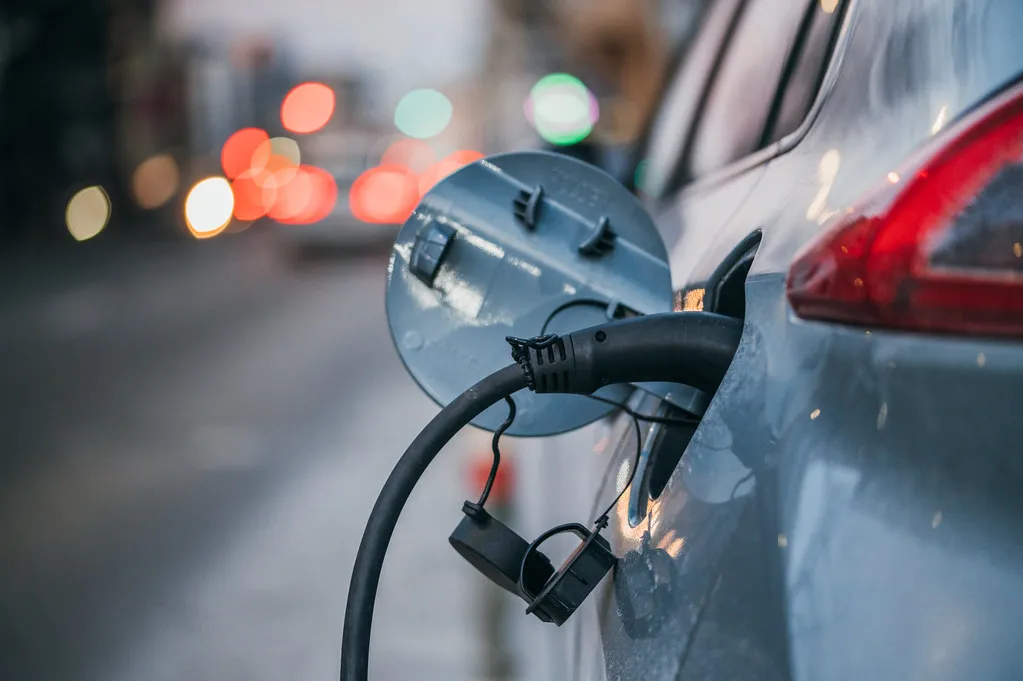
“electric car charging point” by frankh (CC BY 2.0, via flickr)