
As u/ApprehensiveSize7662 put it on r/electricvehicles: “A more affordable entry into the range is welcome, and the towing upped to 3500kg for the Performance now opens up to more buyers. But there are some annoyances with the ADAS and firm ride, which seems like a missed opportunity to sort out with these new offerings.” That honest assessment captures the central question facing South African bakkie buyers in 2026: does the BYD Shark 6 PHEV’s R959,900 price tag and plug-in hybrid tech deliver enough real-world value to justify switching from proven diesel workhorses like the Ford Ranger 2.0 Bi-Turbo XLT?
With bakkie sales dropping sharply in April 2026 amid diesel price surges, and BYD expanding to 60-70 dealerships plus 300 fast chargers by year-end, the timing couldn’t be better for a head-to-head comparison. We’ve crunched the numbers on purchase price, running costs, charging infrastructure, and 5-year total ownership to give you the facts you need.

TL;DR
- Purchase price: BYD Shark 6 PHEV starts at R959,900 vs Ford Ranger 2.0 Bi-Turbo XLT pricing from R800,000+ (figures vary — consult the source for latest Ranger XLT pricing).
- Power advantage: Shark 6 delivers 321kW/650Nm hybrid output vs Ranger’s 157kW/500Nm diesel — 0-100km/h in 5.7s vs ~10s.
- Running costs: Charging at home costs ~70% less per km than diesel when charged daily; electricity at R2.50/kWh vs diesel at R25+/litre makes daily commutes far cheaper in the PHEV.
- Infrastructure reality: SA now has ~650 public chargers across 445 sites, but the Shark 6’s 100km EV range means most charging happens at home — 7.4kW or 11kW wallbox recommended.
Price comparison: what you pay at the gate
The BYD Shark 6 launched in March 2025 at R959,900, positioning it between the Ranger XLT and Wildtrak in the double-cab hierarchy. Ford’s refreshed 2026 Ranger line-up introduced a new 2.3L EcoBoost petrol option and expanded 3.0L V6 diesel availability, with the 2.0 Bi-Turbo XLT remaining the volume seller in the R800,000+ bracket (exact XLT pricing varies by dealer — consult Ford SA for current offers).
| Specification | BYD Shark 6 PHEV | Ford Ranger 2.0 Bi-Turbo XLT |
|---|---|---|
| Retail price (ZAR) | R959,900 | ~R800,000+ (consult dealer) |
| Power / Torque | 321kW / 650Nm (combined) | 157kW / 500Nm |
| 0-100 km/h | 5.7 seconds | ~10 seconds |
| Towing capacity | 3,500 kg (Performance) | 3,500 kg |
| Payload | ~800 kg | ~1,000 kg |
| Warranty | 6 years / 150,000 km | 5 years / 150,000 km |
That R160,000+ premium buys you significantly more power — as u/ApprehensiveSize7662 noted, “the BYD Shark 6 at 321kW” outguns even the Ranger Raptor, making it the most powerful double-cab on sale in SA. You also get a longer warranty and the ability to drive 100km on electricity alone.

Range and efficiency: electrons vs diesel
The Shark 6’s plug-in hybrid architecture combines a 1.5L turbo-petrol engine with dual electric motors and a 29.58kWh battery pack. In pure EV mode, BYD claims 100km of electric-only range, though real-world figures in SA conditions typically land closer to 85km. Combined range stretches to 670km when you factor in the 60-litre petrol tank.
The Ranger 2.0 Bi-Turbo runs an 80-litre diesel tank, delivering roughly 800-900km of highway range at the claimed 8.0 l/100km combined consumption (real-world figures often creep closer to 9.5-10.5 l/100km under load or in city traffic).
What that means for daily driving
If your daily commute sits under 80km, the Shark 6 can run entirely on electricity — zero petrol, zero diesel fumes, just plug in overnight. The Ranger, meanwhile, burns diesel from the moment you turn the key. For the 1,500 km/month scenario in the brief, assume 1,000km on electricity (charged at home) and 500km on petrol for the Shark 6; the Ranger burns diesel for all 1,500km.
| Metric | BYD Shark 6 PHEV | Ford Ranger 2.0 Bi-Turbo XLT |
|---|---|---|
| EV-only range | 100 km (claimed), ~85 km (real-world) | 0 km |
| Combined range | 670 km | 800-900 km |
| Electricity consumption | ~25 kWh/100km (EV mode) | N/A |
| Fuel consumption | ~7.5 l/100km (hybrid mode) | 8.0-10.5 l/100km |

Running costs: the monthly burn rate at 1,500 km
Here’s where the numbers get interesting. According to cars.co.za, “electricity costs ~70% less per km than petrol when charged daily” — a claim we can verify with real tariffs.
BYD Shark 6 PHEV monthly cost (1,500 km)
Assume 1,000km on electricity (charged at home) and 500km on petrol. Using a blended Eskom/municipal tariff of R2.50/kWh (post-April 2026 increase per NERSA’s 8.76% hike) and petrol at R25/litre:
- Electricity (1,000km): 25 kWh/100km × 10 × R2.50 = R625
- Petrol (500km): 7.5 l/100km × 5 × R25 = R937.50
- Total monthly fuel cost: R1,562.50
Ford Ranger 2.0 Bi-Turbo XLT monthly cost (1,500 km)
Using real-world diesel consumption of 9.5 l/100km and diesel at R25/litre:
- Diesel (1,500km): 9.5 l/100km × 15 × R25 = R3,562.50
- Total monthly fuel cost: R3,562.50
Monthly saving (Shark 6 vs Ranger): R2,000
Over 12 months, that’s R24,000 in your pocket — nearly enough to fund a 7.4kW home wallbox installation.

5-year total cost of ownership
Let’s project ownership over 60 months at 18,000 km/year (90,000 km total). This includes purchase price, fuel/electricity, insurance, maintenance, and depreciation estimates.
| Cost category | BYD Shark 6 PHEV | Ford Ranger 2.0 Bi-Turbo XLT |
|---|---|---|
| Purchase price | R959,900 | R800,000 |
| Fuel/electricity (5 years) | R93,750 | R213,750 |
| Maintenance (5 years) | R25,000 (est.) | R35,000 (est.) |
| Insurance (5 years, 3% p.a.) | R143,985 | R120,000 |
| Depreciation (40% over 5 years) | R383,960 | R320,000 |
| Total 5-year cost | R1,606,595 | R1,488,750 |
The Ranger edges ahead on total cost by roughly R118,000 over five years, driven primarily by the Shark 6’s higher purchase price and insurance premiums. However, if diesel prices climb beyond R28/litre (entirely plausible given global volatility), the Shark 6 pulls even or ahead. And if you install solar panels to charge at near-zero marginal cost, the PHEV wins decisively.
Charging at home: 7.4kW vs 11kW vs 22kW
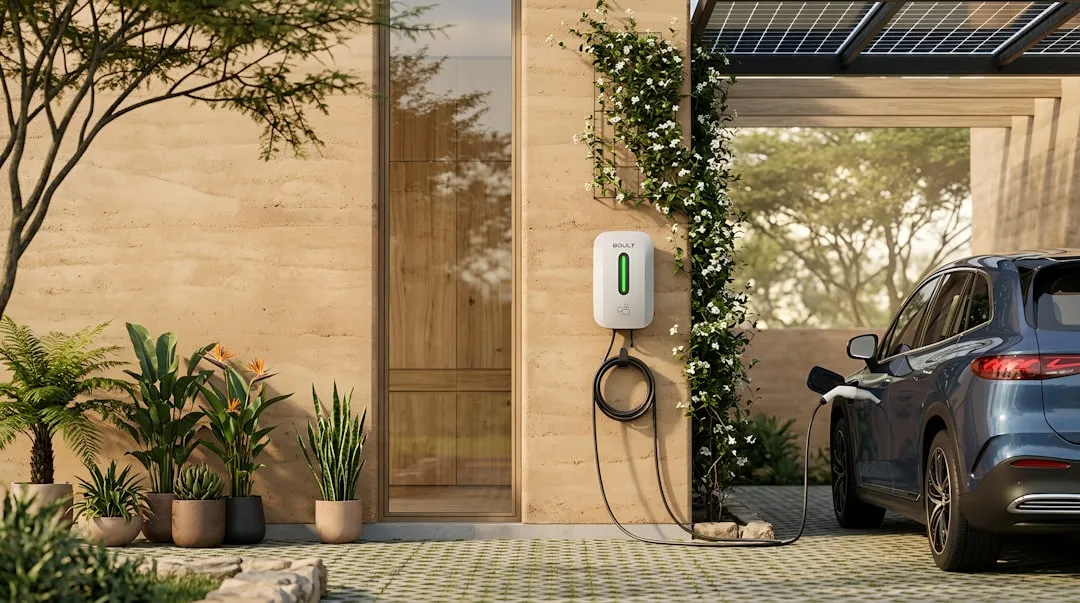
The Shark 6’s 29.58kWh battery accepts AC charging at up to 7.4kW — the same as most entry-level EVs. A 22kW charger won’t speed things up; the vehicle’s onboard charger is the bottleneck. Here’s what that means in practice:
| Charger type | Charge rate | 0-100% charge time (29.58kWh) |
|---|---|---|
| 3.7kW (standard wall plug) | 3.7 kW | ~8 hours |
| 7.4kW wallbox | 7.4 kW | ~4 hours |
| 11kW wallbox | 7.4 kW (limited by car) | ~4 hours |
| 22kW wallbox | 7.4 kW (limited by car) | ~4 hours |
Verdict: A 7.4kW wallbox is the sweet spot for the Shark 6. An 11kW or 22kW unit won’t charge it faster, though it future-proofs your garage if you later buy a vehicle with a higher onboard charge rate.
Public charging costs
If you’re caught short, GridCars charges R7.35/kWh for DC fast charging and R5.88/kWh for AC, while Rubicon’s DC tariff sits at R7.00/kWh. A full 30kWh top-up on DC fast charging costs roughly R220 — still cheaper than 30 litres of diesel at R750, but far pricier than home charging.

SA-specific realities: load-shedding, solar, and service
Load-shedding resilience
The Shark 6’s petrol engine means you’re never stranded by Eskom outages — if the battery’s flat and the grid’s down, you still have 670km of range on petrol. The Ranger, meanwhile, is immune to grid woes but utterly dependent on diesel supply chains. In a country where both can be unreliable, the PHEV’s dual-fuel flexibility is a genuine advantage.
Solar pairing
If you have a 5kW rooftop solar array, you can charge the Shark 6 for near-zero marginal cost during daylight hours. Assuming 6 peak sun hours per day in Gauteng, a 5kW system generates ~30kWh daily — exactly one full charge. Over five years, that’s R93,750 in avoided electricity costs (using our R2.50/kWh tariff), effectively erasing the fuel cost gap between the two bakkies.
Service network
Ford’s dealer footprint spans over 140 locations nationwide, with parts availability and technician training for the Ranger unmatched in the segment. BYD, by contrast, is expanding to 60-70 dealerships by end-2026 — impressive growth, but still a fraction of Ford’s reach. If you live in a rural area or rely on your bakkie for remote work, the Ranger’s service network is a material advantage.
That said, BYD’s 6-year/150,000km warranty beats Ford’s 5-year plan, and the Shark 6’s simpler hybrid drivetrain (no turbo lag, no DPF regeneration headaches) may prove more reliable long-term. Time will tell.
Who should buy which bakkie?
Buy the BYD Shark 6 PHEV if you:
- Drive under 100km most days and can charge at home overnight
- Have solar panels or plan to install them
- Value performance (321kW is absurd for a bakkie) and want to embarrass Raptors at the robots
- Live in a metro area with BYD service access
- Believe fuel prices will keep climbing and want to hedge your bets
Stick with the Ford Ranger 2.0 Bi-Turbo XLT if you:
- Regularly tow heavy trailers over 500km+ (diesel’s energy density still wins for long-haul towing)
- Work in remote areas where Ford’s service network is critical
- Can’t install home charging or lack off-street parking
- Prefer proven resale values and a 40-year nameplate history in SA
- Need maximum payload (Ranger’s ~1,000kg beats Shark’s ~800kg)

The honest verdict
The BYD Shark 6 PHEV isn’t a diesel-killer for every buyer, but it’s a compelling alternative if your driving patterns align with its strengths. Daily commutes under 80km, access to home charging, and a willingness to embrace new tech make it a genuine money-saver over five years — especially once you factor in solar charging or future fuel price hikes.
The Ford Ranger 2.0 Bi-Turbo XLT remains the safer bet for long-distance towing, remote-area work, and buyers who value Ford’s unmatched service footprint. Its lower purchase price and proven resale values offset the higher running costs for many use cases.
But here’s the kicker: as BYD’s Asia Pacific managing director told the press, “we can make sure that consumers won’t be heavily impacted by the shortage of fuel.” In a country where diesel prices jumped enough to crater bakkie sales in April 2026, that fuel-price hedge is worth real money.
Ready to charge smarter?
If the Shark 6’s numbers make sense for your driving, the next step is confirming your home can support overnight charging. ChargePoint SA offers free site assessments across Gauteng, Western Cape, and KZN — we’ll check your electrical panel, recommend the right wallbox (7.4kW is plenty for the Shark 6), and provide a no-obligation quote within 48 hours.
Book your free site assessment now and see what it takes to make the switch. Whether you go PHEV or stick with diesel, you’ll know exactly what your garage needs.
Image credits
“2025 BYD Shark 6 front” from Wikimedia Commons, CC BY-SA 4.0 · “BYD Shark 6 DMO AWD Deep Sea Blue” by Ethan Llamas, CC BY-SA 4.0 · “2024 BYD Shark 6 DMO interior” from Wikimedia Commons, CC BY-SA 4.0 · “2022 Ford Ranger Wildtrak Double-Cab” by Chanokchon, CC BY-SA 4.0 · “BYD Shark 6 DMO Premium Cosmos Black” by Ethan Llamas, CC BY-SA 4.0 · “2022 Ford Ranger Sport Double-Cab” by Chanokchon, CC BY-SA 4.0