
- Only 1,257 fully electric vehicles were sold in South Africa in 2024, just 0.24% of total new-car sales, even before the BYD Dolphin Surf broke the R350,000 barrier in September 2025.
- Driving 100 km in an EV costs R37-R60 at home tariffs versus roughly R210 in a 9 L/100 km petrol car. The problem is the purchase price, not the running cost.
- Public DC fast-charging sits at R7.00, R7.35 per kWh, which is 75-140% more expensive than home charging. If you rely on public chargers, running-cost savings evaporate quickly.
- EVs face a 25% import tariff versus 18% for petrol cars, making every model structurally more expensive before a single rand of dealer margin is added.
- Battery replacement risk is real (R150,000, R483,000 for an out-of-warranty pack) but the real-world frequency is low: only 2.5% of post-2016 EVs have needed one, per Recurrent Auto.
- The Volvo EX30 battery recall, 372 South African units affected, is a reminder that new technology carries new risks. The EX30 was SA’s best-selling EV in 2024.
- Load-shedding has improved dramatically: Eskom reported over 168 consecutive days without a single stage as of November 2025. But public charger reliability remains a genuine problem.
- A PHEV such as the BYD Shark 6 or Sealion 6 sidesteps most of these concerns, and Hyundai SA’s own CEO publicly recommends the hybrid route for most SA buyers right now.
Where the SA EV market actually stands in 2026
South Africa’s electric vehicle story is a tale of two headlines. The optimistic one: Autotrader reported a 220% increase in EV searches between March 2025 and March 2026, per Business Day’s market analysis. The sober one: NAAMSA-reporting brands sold just 1,088 fully electric vehicles in the whole of 2025, approximately 0.2% of total new-vehicle sales. That figure excludes BYD, Geely, and Dongfeng, which did not report to NAAMSA until early 2026, but even including those brands, total BEVs on South African roads stands at only roughly 7,000-10,000 units by end of 2025, according to the ChargePoint SA 2026 EV Guide.
Interest is clearly climbing. Actual buying is still the preserve of a narrow slice of the population. Understanding why that gap exists, and whether it is closing, is what this article is about.
The purchase price reality: why most South Africans cannot yet buy an EV
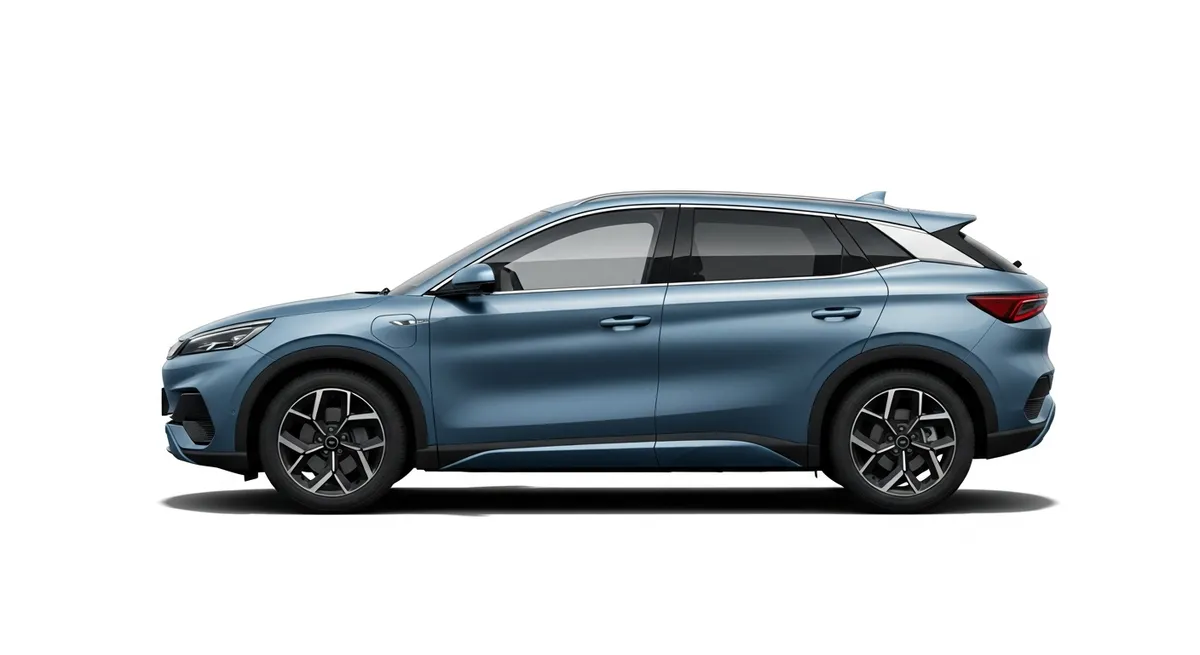
The single biggest barrier is not range anxiety or charging anxiety. It is the sticker price. Fully electric vehicles attract a 25% import tariff in South Africa versus 18% for petrol and diesel cars, plus Ad Valorem tax. That structural cost disadvantage is baked in before a single rand of dealer margin, shipping, or compliance cost is added. The result: even the most affordable mainstream BEV in the country, the BYD Dolphin Surf at R339,900 (launched September 2025), costs roughly what a well-specced Toyota Fortuner or a mid-range Volkswagen Tiguan costs. That is not a budget car. It is a meaningful purchase for a household earning a combined income in the top 5-10% of South Africans.
Stanley Anderson, CEO of Hyundai Automotive South Africa, put the problem plainly at SA Auto Week 2025 in Gqeberha:
“Look, we have EVs available to us, we could start ordering and bringing in EVs, but it’s just not viable. They’re just too expensive.”
That is not a fringe opinion. It is the view of a major OEM that sells hundreds of thousands of cars globally and chooses not to bring its EV range to South Africa because the economics do not work for its target customers here. When the people who sell cars for a living are telling you the price does not work, take that seriously.
GreenCape projects the SA EV market will grow to 25,456 vehicles by 2030, with an estimated market value of R13.9 billion. Volkswagen predicts South Africa will reach 10,000 EV sales per year by 2030. Both forecasts assume meaningfully lower prices, higher fuel costs, and an improved charging network. All three conditions are trending in the right direction, slowly.
Running costs: where EVs actually do win, clearly and with real numbers
Strip away the purchase price debate and the running cost case for EVs in South Africa is genuinely compelling. Home charging in Johannesburg costs from R1.82 per kWh off-peak (City Power 2025/26 tariff schedule); in Cape Town from R1.75/kWh; in Durban from R1.70/kWh. An EV consuming 15 kWh per 100 km therefore costs R37-R60 per 100 km at home tariffs, per the ChargePoint SA 2026 guide. A petrol car averaging 9 L/100 km at approximately R23.36 per litre for 95 unleaded inland costs roughly R210 per 100 km. That is a running-cost saving of R150 or more for every 100 km driven at home.
The most dramatic case study in the SA market comes from Volvo Car SA’s MD Grant Locke, cited in Business Day’s May 2026 tipping-point analysis: a Volvo EX30 owner accumulated a total energy cost of just R970 over two years and 28,000 km, approximately 4 cents per kilometre, by charging at work for free and at home via solar. The estimated petrol equivalent over the same distance would have been R48,000. That difference does not include the solar installation cost, but the directional truth is undeniable.
“I bought a BYD Atto 3 expecting it to be my car. It became my backup power supply. During Stage 6, my neighbors ran diesel generators for R500/day. I powered my house from my car for R0. Best purchase decision ever.”
Johan’s experience illustrates something unique to the South African EV ownership context: Vehicle-to-Load (V2L) technology turns an EV into a mobile generator, which has real rand value in a country that spent much of 2023 and 2024 under Stage 4-6 load-shedding. An EV with V2L is not just a car. For South African buyers who have already invested in solar panels and batteries, adding a V2L-capable EV closes the loop on energy independence in a way that no petrol car can.
Monthly running-cost savings for BYD Atto 3 owners are estimated at R2,500-R3,500 versus an equivalent petrol SUV at 20,000 km per year, per ChargePoint SA data. Over three years that is R90,000, R126,000 in fuel savings, meaningful against a purchase price premium, though it does not fully close the gap at current EV prices versus petrol equivalents.
The public charging reality: honest numbers, not marketing copy
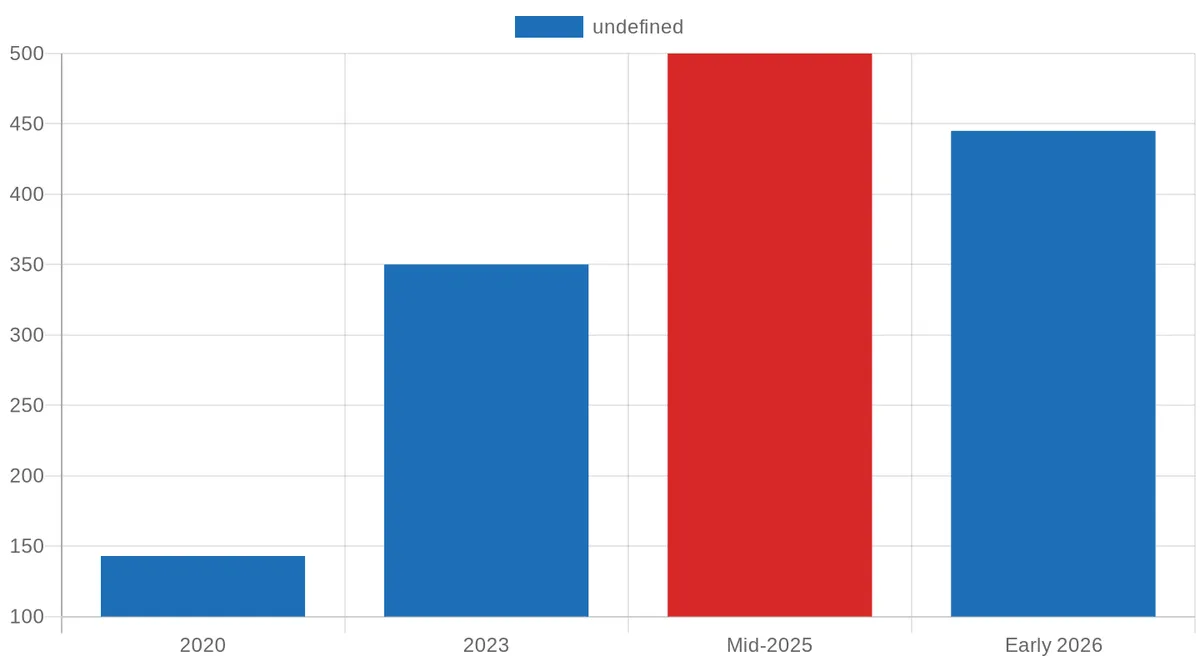
South Africa has between 500 and 600 public charging stations as of late 2024, growing to approximately 445 sites hosting 650 chargers and 1,200-plus connectors by early 2026, per ChargePoint SA. GridCars operates around 60% of that capacity. The EV-to-charger ratio is actually better than the global benchmark: roughly one charger per seven EVs in SA versus the global 1:10 benchmark, per Rubicon’s 2025 annual report.
Those headline numbers look fine. The ground-level reality is messier. A MyBroadband poll cited by Tech-Brunch found that only 23% of surveyed EV owners reported smooth experiences with public charging; 46% reported unresolved problems; and 31% experienced problems they eventually resolved. GridCars stations at Alzu (near Emalahleni) and Mooirivier Mall in Potchefstroom have been cited as offline for extended periods. GridCars itself changed majority ownership in October 2025, and its founder Winstone Jordaan acknowledged the fundamental economics: “there’s just no business case, we need about 100,000 vehicles on the road before any of us will see real profitability.”
Anderson’s assessment of the charging planning burden resonates:
“We’re a very comfortable nation, we don’t like hassle. And when you drive an EV, you need to work out: ‘when can I charge’ and ‘where can I charge’, especially when you do longer distances. And I think that’s still a big deterrent to customers buying EVs.”
Regional distribution compounds the problem. As of May 2025, Gauteng had 29 free charging stations. Limpopo had one. Western Cape and Gauteng together account for 78% of all public charging points (Department of Energy 2025 EV Charging Infrastructure Report). There are roughly 300 km gaps on the N1 between Beaufort West and Three Sisters, and sparse coverage between East London and Durban on the N2. South Africa has approximately 5,000 petrol stations versus around 445 public EV charging sites, a ratio of roughly 1:11.
Public DC fast-charging costs R7.00 per kWh for Rubicon eMSP customers and R7.35 per kWh for GridCars eMSP customers on DC stations, as of August 2025, per CleanTechnica’s tariff analysis. AC public charging costs R5.88 per kWh on both networks. Some branded OEM stations charge up to R11.76 per kWh. At R7.35/kWh, fast charging an EV at 15 kWh/100 km costs R110 per 100 km, still roughly half the petrol cost, but far from the R37-R60 per 100 km you achieve at home. If you park in a flat with no home charger, or rely on public charging for even half your mileage, the running-cost case weakens substantially.
The bright spot in the public charging picture is CHARGE (formerly Zero Carbon Charge), which in December 2024 opened South Africa’s first fully off-grid solar-powered EV charging station on the N12 between Klerksdorp and Wolmaransstad, featuring 6 DC fast chargers and 2 AC chargers delivering over 700 kW combined. The network targets 60 sites by end-2027, and its model directly addresses the load-shedding vulnerability of grid-dependent chargers:
“CHARGE Charging stations are powered by solar energy and therefore completely independent from the national grid. They offer a resilient, stable charge regardless of grid instability and unpredictable electricity prices.”
BYD has also announced plans for 200-300 flash-charging stations across South Africa by 2026. If those numbers materialise, the charging map changes meaningfully. Hold that thought for 2027.
Load-shedding: how bad is the EV charging risk, really?
This is the fear that haunts every prospective EV buyer’s spreadsheet. Eskom reported over 168 consecutive days without load-shedding as of November 2025, per Elum Energy’s tracking data. That streak is real and it has lasted. South Africa’s electricity supply position in 2025 is meaningfully better than it was in 2022-2024. Whether it holds is a political and engineering question this article cannot answer, but the risk calculation has shifted.
For practical EV management during power cuts, most owners charge overnight. A 7 kW home wallbox can add roughly 40-50 km of range per hour of charging. A car plugged in during stable evening hours, fully topped up by morning, is not exposed to daytime load-shedding in any meaningful way for a suburban commuter. The V2L capability in BYD’s range adds a secondary benefit: a full battery is also a home power buffer.
The CSIR’s 2024 Electric Vehicle Lifecycle Emissions Study adds another dimension: even when charged exclusively from Eskom’s coal-dominated grid, battery EVs in South Africa produce 28-32% lower lifetime CO2 emissions than equivalent petrol vehicles over a 200,000 km lifespan, per ChargePoint SA citing the CSIR data. The grid is cleaner than most people assume when lifecycle manufacturing emissions are factored in.
Battery degradation and replacement risk: the number you need to know
The biggest single fear of EV buyers in South Africa is the prospect of a battery replacement bill that exceeds the car’s residual value. That fear is not unfounded, but it is significantly overstated relative to the real-world evidence.
Geotab’s real-world fleet analysis of average EV battery degradation finds 1.8% per year. After 10 years, that implies roughly 82% capacity remaining. Pickles Auction House tested 250 EVs (Tesla, Hyundai, Kia, BYD, Polestar, MG, Audi) with more than four years and 120,000-plus kilometres on the clock, and found they retained more than 93% of battery capacity, per Zecar’s analysis. A US-based Recurrent Auto study from May 2024 found only 2.5% of post-2016 EVs had required a battery replacement.
South Africa’s own highest-mileage data point is instructive:
“Shaun Maidment, owner of the highest-mileage i3 in Africa, told Cars.co.za that his 2016 60-Ah model is still going strong on the original battery after a whopping 364,000 km.”
BMW Group SA has never been called upon to replace an entire battery pack in a local i3, zero full pack replacements on record in South Africa. That is a remarkable real-world data point from a market where the i3 has been operating since 2015.
However, the worst-case cost is worth knowing precisely. A live VIN lookup by Cars.co.za in 2024 confirmed the replacement cost for a 2019 BMW i3 (120-Ah) battery pack at R483,644, excluding labour and consumables. General EV battery replacement estimates in South Africa run R150,000, R300,000, per Cars.co.za’s EV ownership analysis. Those numbers are real. They are also unlikely, but “unlikely” is not “impossible,” and any buyer of an out-of-warranty EV should factor this into their risk calculation.
Warranty coverage matters enormously here. The BMW i3’s early 60-Ah models sold in SA before 2017 no longer carry battery warranty cover, as Cars.co.za explicitly warns in its i3 buyer’s guide. The 120-Ah models carried an 8-year/100,000 km high-voltage battery warranty covering capacity below 70% of original. The Geely E5, launched in SA in 2025, offers the most generous battery warranty currently in the market: 8 years and 200,000 km. BYD’s Atto 3 and Dolphin are warranted for 8 years and 160,000 km on the battery. Know your warranty terms before buying any used EV.
One mechanical risk specific to used BMW i3 buyers: the model can suffer an AC compressor failure known as “Black Death,” where metal filings travel through the AC system, including the battery refrigerant circuit. Full system replacement can exceed $10,000 and often totals the vehicle, per InsideEVs’ used buyer’s guide. It is not universal, but it is severe enough that a pre-purchase inspection by a specialist is non-negotiable for any i3 purchase.
Explore affordable EVs breaking the R350,000 barrier
The Volvo EX30 recall: SA’s first major EV safety action
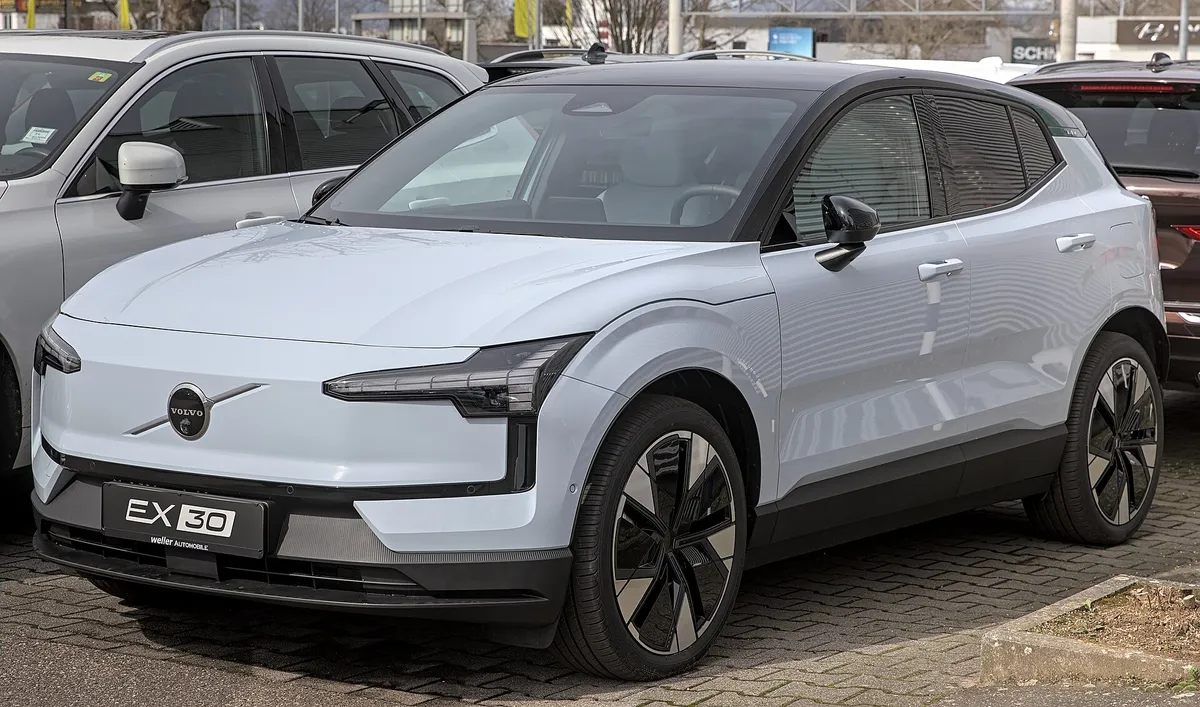
The EX30 was South Africa’s best-selling EV in 2024, with 406 units sold. In late 2025 and into 2026, 372 EX30 Ultra units (Single Motor Extended Range and Twin Motor Performance, model years 2024-2026) were identified in South Africa as part of a global recall affecting more than 40,000 vehicles, at an estimated cost to Volvo of approximately $195 million (Reuters).
The defect involves manufacturing faults in the 69-kWh NMC battery cells (supplied via a Geely-Sunwoda joint venture) that can cause internal short circuits and overheating when the battery is charged to high levels, risking a thermal event or fire. Volvo’s own statement:
“In rare cases, the battery can overheat when charged to a high level, which could in a worst-case scenario lead to a fire starting in the battery.”
Volvo was measured about the scale of actual incidents:
“Although the number of reported incidents is very small, representing around 0.02% of the cars we have identified as potentially affected, and we have no reports of related personal injuries, we are treating it very seriously.”
South African owners were instructed to limit battery charging to a maximum of 70% and to park outdoors, away from structures, until a permanent fix is applied. This is the first major automotive safety action in South Africa involving an electric car model, and it is a relevant data point for buyers: EV technology is still maturing, battery chemistry from supply chains involving multiple partners carries risk, and recall processes work, but they are disruptive. Factor it into your due diligence.
Separately, Volvo Car SA is conducting a strategic review of its dealer network as of early 2025, with MISA (Motor Industry Staff Association) warning that some dealerships will close as a result. A brand that is narrowing its dealer footprint while managing a major recall is worth monitoring closely before committing to a purchase.
Insurance: the hidden cost that surprises most first-time EV buyers
EV insurance in South Africa costs more than for a comparable petrol vehicle of similar value. Advanced technologies, expensive lithium-ion batteries, higher repair costs, and longer repair times all push premiums up, per AutoTrader SA’s insurance analysis. The South African Insurance Association (SAIA) is frank about why:
“Due to limited local expertise and reliance on imported parts, repairs can be delayed, significantly increasing claims costs compared to conventional vehicles.”
SAIA further identifies that reliance on imported components leads to “longer claims cycles and higher write-off rates” for EVs in South Africa. The body also notes that “limited local claims history complicates accurate premium setting, as international data may not reflect South African driving conditions or road infrastructure”, meaning premiums are being set conservatively, i.e. high, because insurers lack local data to be precise.
Some SA insurers (OUTsurance, Discovery, Santam) offer green vehicle discounts of 5-10% that partially offset higher premiums, per the ChargePoint SA 2026 guide. Get multiple quotes before accepting the first premium offered. Factor the insurance delta into your full cost-of-ownership calculation below.
Cost of ownership comparison: EV vs petrol, honest numbers for SA buyers
| Cost element | BYD Dolphin Surf (BEV) | Typical petrol hatchback equivalent |
|---|---|---|
| Purchase price (entry) | R339,900 | R280,000, R360,000 (e.g. VW Polo 1.0 TSI, Toyota Starlet) |
| Running cost per 100 km (home charging) | R37-R60 | ~R210 (at 9 L/100 km, 95 inland) |
| Running cost per 100 km (public DC fast charge) | ~R105, R110 | ~R210 |
| Annual fuel/energy saving (20,000 km, home charging) | R30,000, R34,600 saved vs petrol | Baseline: R42,000/year |
| Home wallbox charger (7 kW, installed) | R8,000-R15,000 (once-off) | Not applicable |
| Scheduled servicing cost | Lower (no oil, spark plugs, filters) | R3,000, R6,000 per service interval |
| Insurance premium | Higher than petrol equivalent (quantum varies) | Lower, well-understood risk |
| Battery warranty | 8 years / 160,000 km (BYD) | Not applicable |
| Worst-case battery replacement (out of warranty) | R150,000, R483,000 (model-dependent) | Engine rebuild: R30,000, R80,000 (also rare) |
| Break-even on purchase premium (home charging, R30k/year saving) | Varies by petrol comparison. Roughly 2-4 years if purchase price comparable | N/A |
Read the table honestly: if you can charge at home and the purchase price gap between your chosen EV and a petrol equivalent is modest, the numbers can work within a 3-5 year horizon. If you cannot charge at home and rely on public DC fast charging for most of your mileage, the running-cost savings roughly halve. In that scenario, the financial case is weak unless fuel prices rise substantially.
Are PHEVs the smarter buy for most South African families right now?
Sales data from Cars.co.za’s Industry Report 2025 confirms that plug-in hybrid vehicle sales in Q4 2024 outstripped fully electric vehicle sales, ending the quarter at 260 PHEVs versus fewer BEVs. BEV sales dipped 16.4% year-on-year to 276 units in Q1 2025. Consumers are voting with their purchases: the PHEV is the practical compromise for a country where home charging is not universal, public charging is unreliable in many areas, and long-distance driving between major centres is a real use case.
Anderson’s summary at SA Auto Week was measured and honest:
“Hybrid, or plug-in hybrid, is probably the sweet spot. [This technology] would sidestep both range anxiety and any concerns over local charging infrastructure.”
The BYD Shark 6 PHEV bakkie (from R959,900) illustrates exactly this logic: a 1.5-litre turbo paired with a hybrid system producing over 320 kW total, a combined WLTP range of 670 km, and 85 km of pure electric range from its 29.6-kWh battery. You can run EV-only around town, and fall back on petrol without anxiety on the N1 to Cape Town. No public charger dependency required. The BYD Sealion 6 PHEV SUV operates on the same principle at a lower price point. In April 2026, BYD sold 94 Shark 6 units and 130 Sealion 6 units, both strong sales signals for the PHEV proposition in SA.
That said, PHEVs carry their own complexity: two drivetrains to maintain, a battery that must be kept charged to deliver the claimed fuel efficiency, and the highest purchase prices in the range. They are not for everyone either.
The market is changing: what 2026 and beyond actually looks like
Three concrete signals suggest the affordability barrier is slowly being dismantled. First, the BYD Dolphin Surf broke the R350,000 ceiling in September 2025 and sold 302 units in April 2026 alone, becoming SA’s top-selling EV and outselling petrol rivals such as the Honda Fit and Kia Picanto in that month, per Business Day. That is the first hard evidence that price-competitive EVs can achieve genuine mass-market volumes in South Africa.
Second, BYD sold 589 total units in March 2026, its first month formally reporting to NAAMSA, ranking 21st overall among all South African automakers. A brand that does not appear in official statistics for years and then debutes at 21st nationally is not a niche player.
Third, early-adopter commercial fleet data is building a compelling emissions and cost case. Fleets operated by DSV, FedEx, Woolworths, Vodacom, Nightwing, Sanitech, Scatec, UPD, and Waco have collectively covered more than 12.5 million km locally and avoided approximately 2,750,000 kg of carbon emissions, per Business Day’s 2026 tipping-point analysis. Commercial operators are rational about cost. Their continued EV expansion is a proxy for genuine running-cost viability.
The headwinds are real too. Anderson’s public decline to bring Hyundai EVs to SA signals that several model ranges South Africans want, the Ioniq 5, Ioniq 6, remain commercially unviable at current tariff structures. Anderson also framed the EV as a secondary vehicle honestly:
“It’s never going to be your first car in the family, anyway, it’ll be your 3rd or 4th car, for short commutes. But it’s also not free to run, you still have to pay [for] electricity. Especially when you charge at the public charging stations, it’s quite expensive.”
That framing is not pessimism, it is accuracy. At current prices and infrastructure coverage, a BEV works best as a commuter and around-town vehicle for a household that already owns a petrol or diesel car for long-distance trips. The family buying one car only, for all purposes including rural travel and N-road road trips, faces genuine limitations that no amount of enthusiasm resolves today.
If you do buy an EV: the home charger decision matters more than most buyers realise
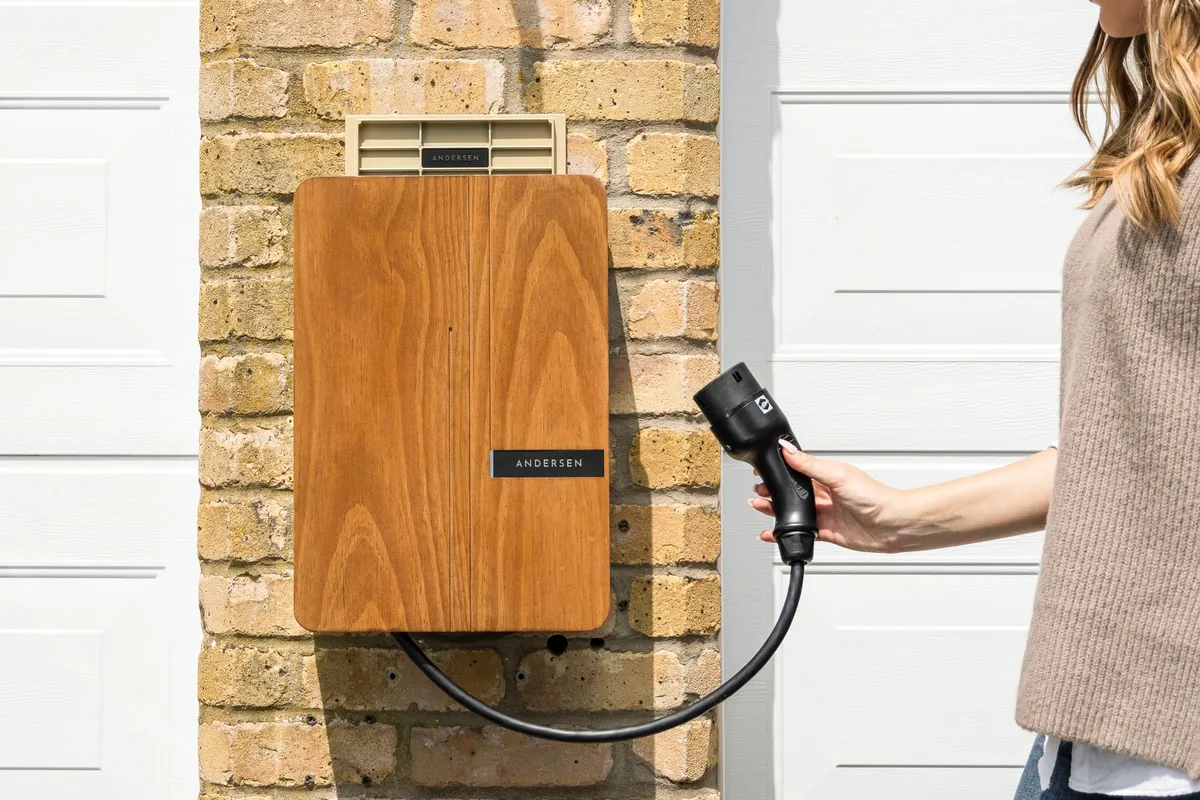
If you are seriously considering an EV purchase, a home wallbox charger is not optional, it is what makes the running-cost case work. A 7 kW single-phase unit costs R8,000-R15,000 fully installed (charger unit R5,000-R8,000; labour R2,000-R4,000; Certificate of Compliance R1,000-R2,000), per the ChargePoint SA 2026 guide. The difference in per-km charging cost between home and public DC charging is so large (home at R1.70, R4.00/kWh versus public DC at R7.00, R7.35/kWh) that the wallbox pays for itself within months of daily use.
The two home chargers we recommend most at ChargePoint SA, based on what we install and the products we trust:
- ChargePoint SA Caro Plus (CP-AC7) — 7 kW home wallbox, from ~R8,900 per unit (installation quoted per home). Single-phase, tethered Type 2 cable (5–7 m), with plug, RFID or app start. Supports optional PV solar charging so your car can charge from solar surplus rather than the grid — the ideal choice for any home with solar panels installed or planned. Wi-Fi/Bluetooth, OCPP 1.6/2.0.1, optional dynamic load balancing, IP65 weatherproof, with Type A + 6 mA DC earth-leakage protection built in. SANS 10142-1 compliant install with CoC included. Our entry home charger — lowest cost, full charge while parked overnight (~8 hours).
- ChargePoint SA Caro Pro (CP-AC22) — 22 kW AC wallbox, from ~R13,900 per unit (installation quoted per home). Three-phase, tethered 7 m Type 2 — up to ~3× faster than a 7 kW unit if your car accepts three-phase charging. Dynamic load balancing, Wi-Fi/Ethernet/4G/BT, OCPP, PV solar charging, IP65 · IK10. Turns a full charge around in a couple of hours — the best everyday AC choice for homes where faster charging matters or where a three-phase supply is already available.
We can supply and install other configurations on request; these two are the units we recommend most because we know them best and stand behind them. Installation cost depends on your property: DB board location, cable run distance, wall material, and whether a 3-phase supply is involved. Get a proper quote for your specific home before budgeting.
The bottom line: an honest verdict for 2024-2026
Will electric cars ever be affordable in South Africa? Yes, and for a growing slice of buyers, they are affordable already. The BYD Dolphin Surf at R339,900 is genuine evidence of that. But “affordable in South Africa” for most families means a car in the R150,000, R280,000 range, and no BEV exists there yet. The 25% import tariff, the absence of local EV manufacturing, and the limited scale of the local market are structural constraints that will take years to unwind, even with BYD’s manufacturing ambitions and the government’s slowly evolving EV policy position.
The running-cost case is real and the numbers are clear. The battery durability evidence is more reassuring than the fear-driven narrative suggests. The infrastructure is improving, if unevenly distributed. But the purchase price premium, the insurance loading, the public charging reliability gaps, and the parts-and-repair ecosystem immaturity are real costs that belong in any honest calculation.
Buy an EV today if: you can charge at home or at work for free, you do the bulk of your driving in Gauteng or the Western Cape, you have a second vehicle for long-distance travel or you have planned your highway route carefully, and your chosen model’s warranty coverage aligns with how long you plan to own it.
Wait, or consider a PHEV, if: your home does not allow a wallbox installation, your primary routes include areas with sparse public charging, or you need one car that does everything including a 600 km road trip on demand without planning every charge stop.
The market is moving. South Africa’s EV story in 2026 is genuinely more optimistic than it was in 2023. It is just not yet the story the marketing brochures tell.
Ready to find out what an EV would actually cost you to run from home, with your specific electricity tariff and your daily kilometre count? Calculate your home charging cost with our free EV running-cost calculator and get a number you can actually use.
Photo: Anil Baki Durmus / Unsplash
Compare your real EV running costs vs petrol at home
See the R37–R60 per 100 km advantage with your own tariff.
Calculate my savings →WhatsApp us
CoC-certified installers, nationwide