
Key points
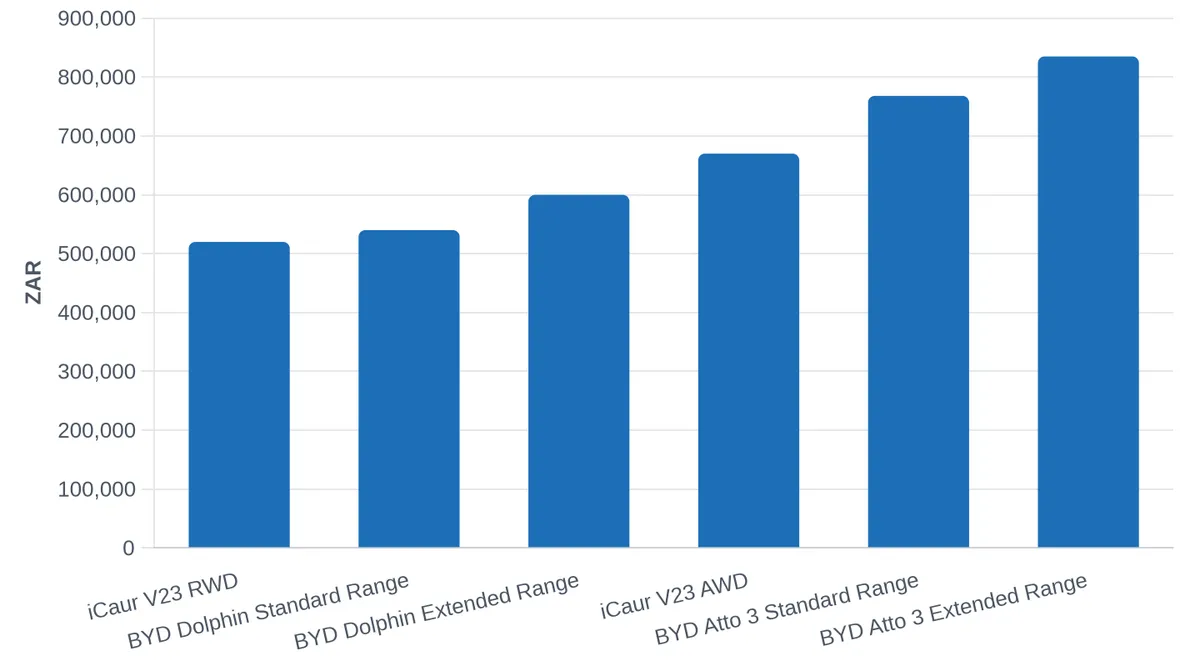
- The sub-R600k electric vehicle segment in South Africa has expanded rapidly: the BYD Dolphin Surf launched at R339,900-R341,900 and became SA’s top-selling EV in April 2026 with 302 units, while the iCaur V23 RWD (R519,900) and BYD Dolphin Standard Range (R539,900) fill the mid-tier.
- Sticker price is not total cost: import duties (25% on EVs vs 18% on ICE), a 15% battery duty, dealer setup fees, and home charger installation add R10,000 to R30,000 before you turn the key.
- Home charging at R2.71 to R3.55 per kWh costs R46 to R71 per 100 km for the iCaur V23, versus R156 per 100 km for a Toyota RAV4 petrol equivalent at April 2026’s R23.36 per litre.
- Over five years, a sub-R600k EV buyer can expect to save R120,000 to R150,000 in fuel and maintenance compared with a similarly priced petrol SUV, according to ChargePoint SA modelling.
- The warranty packages on sub-R600k Chinese EVs are genuinely competitive: 8 years on the battery is now standard across BYD and iCaur.
- Public fast-charging is improving (500+ stations nationally, per ChargePoint SA) but reliability remains patchy. Home charging is the financial and practical backbone of EV ownership.
- The ideal buyer drives under 150 km per day, can charge at home, and plans to keep the car at least five years.
Why the sub-R600k threshold matters
For most of the past decade, electric vehicles in South Africa were a premium purchase. Cars.co.za notes the cheapest EV dropped from nearly R800,000 in 2023 to under R340,000 by April 2026, driven by Chinese manufacturer competition. The BYD Dolphin Surf at R339,900 was the breakthrough that shifted the affordability conversation entirely, followed by the BYD Dolphin Standard Range at R539,900 and then the iCaur V23 RWD at R519,900. Today the segment spans R340,000 to just under R600,000, a range that competes directly with well-equipped petrol SUVs.
The iCaur V23, which launched on 28 May 2026 at R519,900 RWD (Cars.co.za), has pushed the SUV-body-style ceiling lower still. South African NEV sales grew 78.8% between January and May 2026, with BEV sales up 193% year-on-year. BYD sold 2,011 new energy vehicles in the first five months of 2026, ranking as the country’s second best-selling NEV brand over that period. According to TimesLive, EV searches and buyer interest tracked closely with rising fuel costs, suggesting the price point is landing with real buyers. AutoTrader data shows EV searches on its platform jumped 220% between March 2025 and March 2026, per Reframed.co.
“For anyone paying attention to their monthly transport budget, the direction of travel is clear. For many South African car buyers, the window in which a battery electric vehicle makes compelling financial sense has already opened.”
Thinking about a home charger?Get a fixed-price installation quote — a few quick questions and we’ll send your cost, with no surprises on the day.Get my fixed-price quote →
But a low sticker price can mask a more complicated financial reality. This article works through every layer of cost, so you can decide with your eyes open.
What is actually for sale under R600,000?
Three fully electric models now sit below R600,000 on official dealer price lists as of mid-2026, and the Geely E2 Aspire competes at the entry level alongside the Dolphin Surf.
BYD Dolphin Surf: R339,900-R341,900
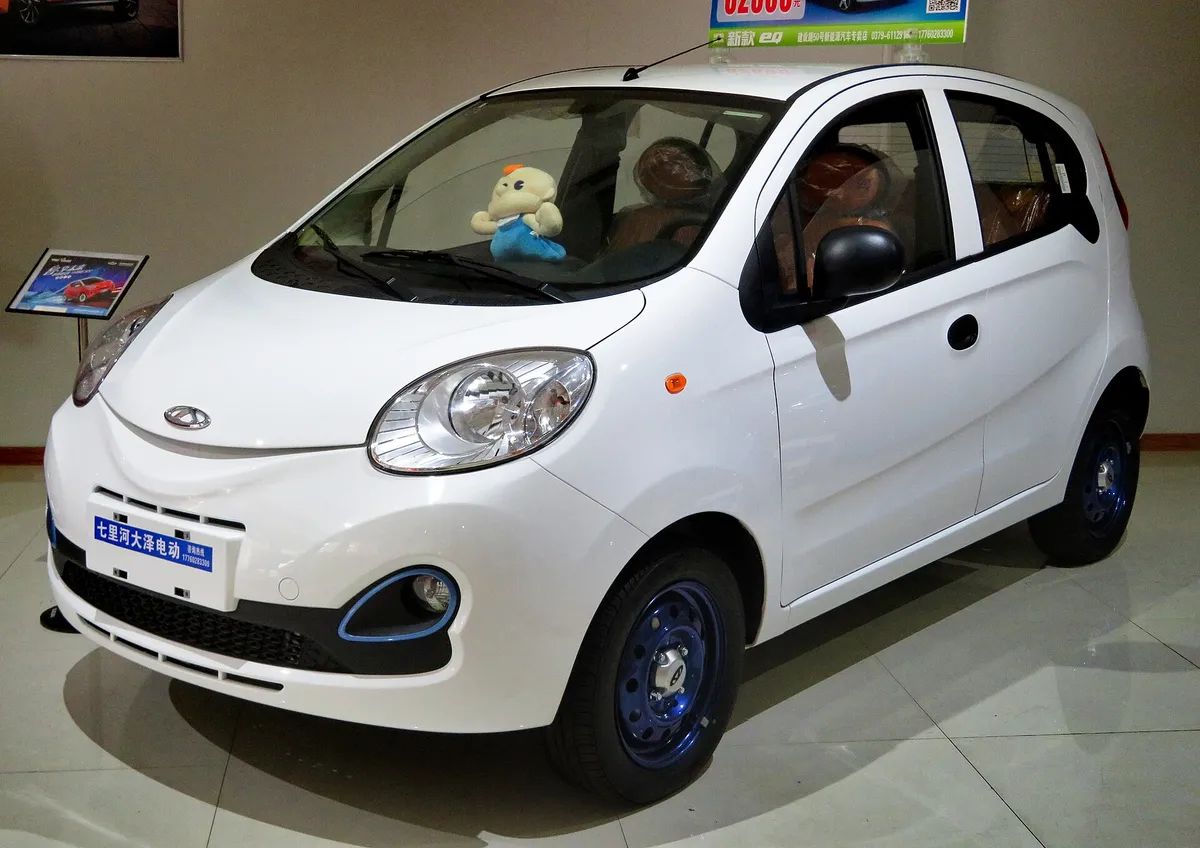
The BYD Dolphin Surf became SA’s top-selling EV in April 2026 with 302 units, a remarkable result for a model priced roughly R200,000 below the Dolphin Standard Range. It is a compact city hatchback rather than an SUV, with a 55 kW motor, 135 Nm, a 0-100 km/h time of 14.2 seconds, and a top speed of 130 km/h (TopAuto). It includes an 8-year/200,000 km battery warranty (TopAuto). For buyers whose priority is lowest possible entry cost and city driving, nothing on the official SA market beats it. Its limitations, modest performance and range, are the honest trade-off for that price.
BYD Dolphin Standard Range: R539,900
The Dolphin Standard Range is a compact hatchback-crossover competing squarely in the commuter segment. BB Group BYD lists it at R539,900 and the Extended Range at R599,900. Crucially, both prices include a 7 kW home wallbox charger, a 3-year/60,000 km service plan, a 3-year/100,000 km vehicle warranty, and an 8-year/200,000 km battery warranty (EV24.africa). That bundled charger alone saves you R8,000 to R15,000 in installation costs if you were buying one separately.
Real-world range from the Dolphin’s WLTP claim is typically 350 to 400 km in South African conditions, per ChargePoint SA. That covers roughly two weeks of daily Johannesburg or Cape Town commuting before needing a top-up. Performance is modest: the Dolphin is not a performance car. It is a practical, low-cost daily driver.
iCaur V23 RWD: R519,900
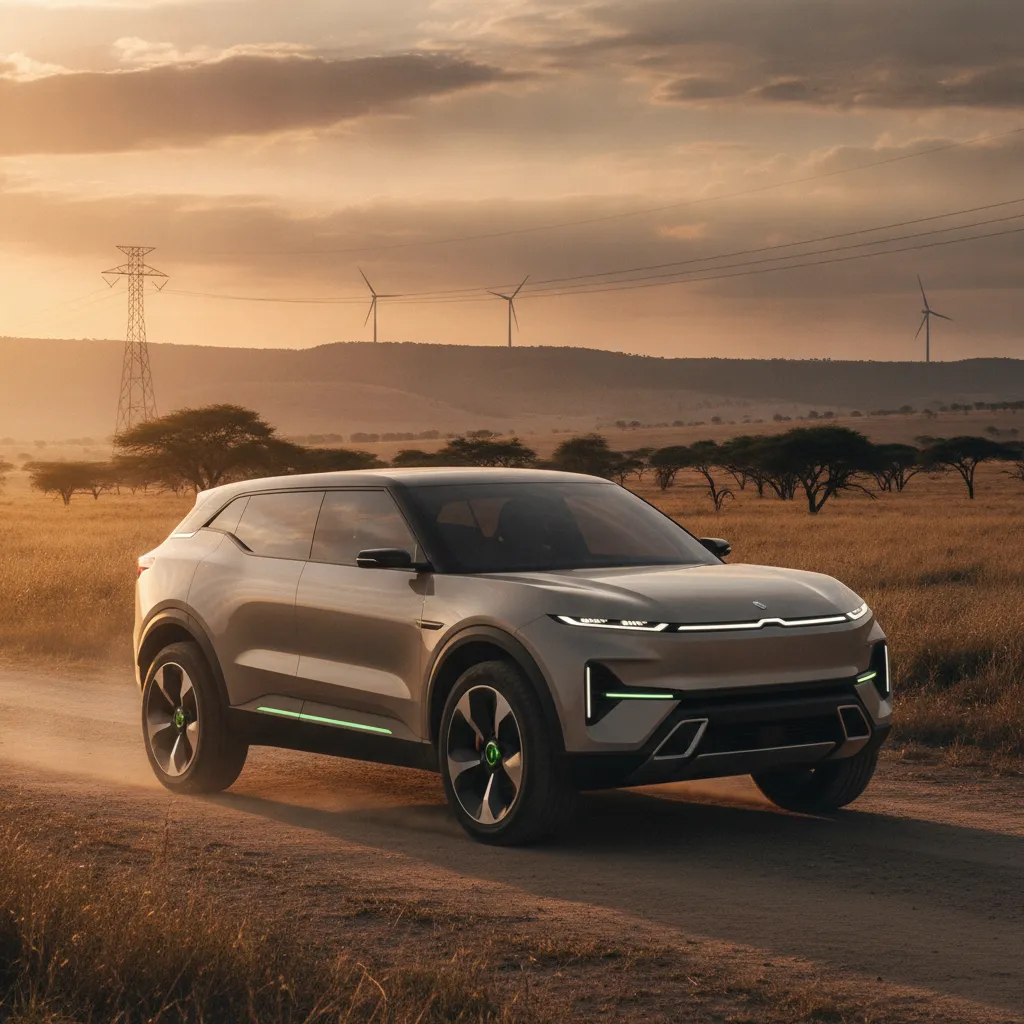
The iCaur V23, a Chery sub-brand with retro-styled bodywork and a proper SUV silhouette, entered the market at R519,900 for the RWD and R669,900 for the AWD (Cars.co.za). Its package is arguably the most compelling warranty story in this price class: 8 years/200,000 km vehicle warranty, 8 years/160,000 km battery warranty (first owner only), a 5-year/100,000 km service plan, and 8 years/200,000 km roadside assistance, all included in the purchase price (Cars.co.za).
The RWD uses a 59.93 kWh lithium-iron phosphate battery (CAR Magazine SA), a 100 kW single rear motor producing 180 Nm, does 0 to 100 km/h in 11.0 seconds, and tops out at 140 km/h (Cars.co.za). The AWD steps up to an 81.8 kWh NMC battery, 155 kW dual motor, 292 Nm, and a 7.5-second sprint time. NEDC range is rated at 360 km RWD and 430 km AWD. Real-world consumption recorded in a South African road test was 17.0 kWh per 100 km (Cars.co.za review), which is better than the manufacturer’s own claim of 20.0 kWh per 100 km. The car also offers 3.3 kW Vehicle-to-Load output (AutoTrader SA), useful during load-shedding.
The catch: iCaur launched with 25 dealerships, with 15 more planned before end-2026 (CAR Magazine SA). Parts availability and after-sales service are unproven quantities in South Africa at this stage. That is a genuine risk for early buyers, and it deserves weight in any purchase decision.
The price is not the price: what actually lands in your driveway
South Africa levies a 25% import duty on EVs, compared with 18% on ICE vehicles, according to Forbes Africa. A 15% battery duty applies on top, added from 2025 (EV24.africa). VAT at 15% applies to the final consumer price (NAAMSA). These duties are already baked into the dealer’s on-the-road price, but they explain why a $30,000 EV from China costs $50,000 to $55,000 by the time it lands (EV24.africa). The gap between Chinese factory price and South African showroom sticker is structural, not a dealer margin game.
Beyond the on-the-road price, expect to pay:
- Dealer setup fees: up to R4,000 for delivery, admin, fuel, license application and plates (Cartrack ZA).
- License and registration: dealers typically charge R2,350 for vehicles under 3,500 kg; doing it yourself in the Western Cape costs R744 (TopAuto).
- Finance initiation fee: R1,000 to R1,200 (capped by the National Credit Act, per Imotonews).
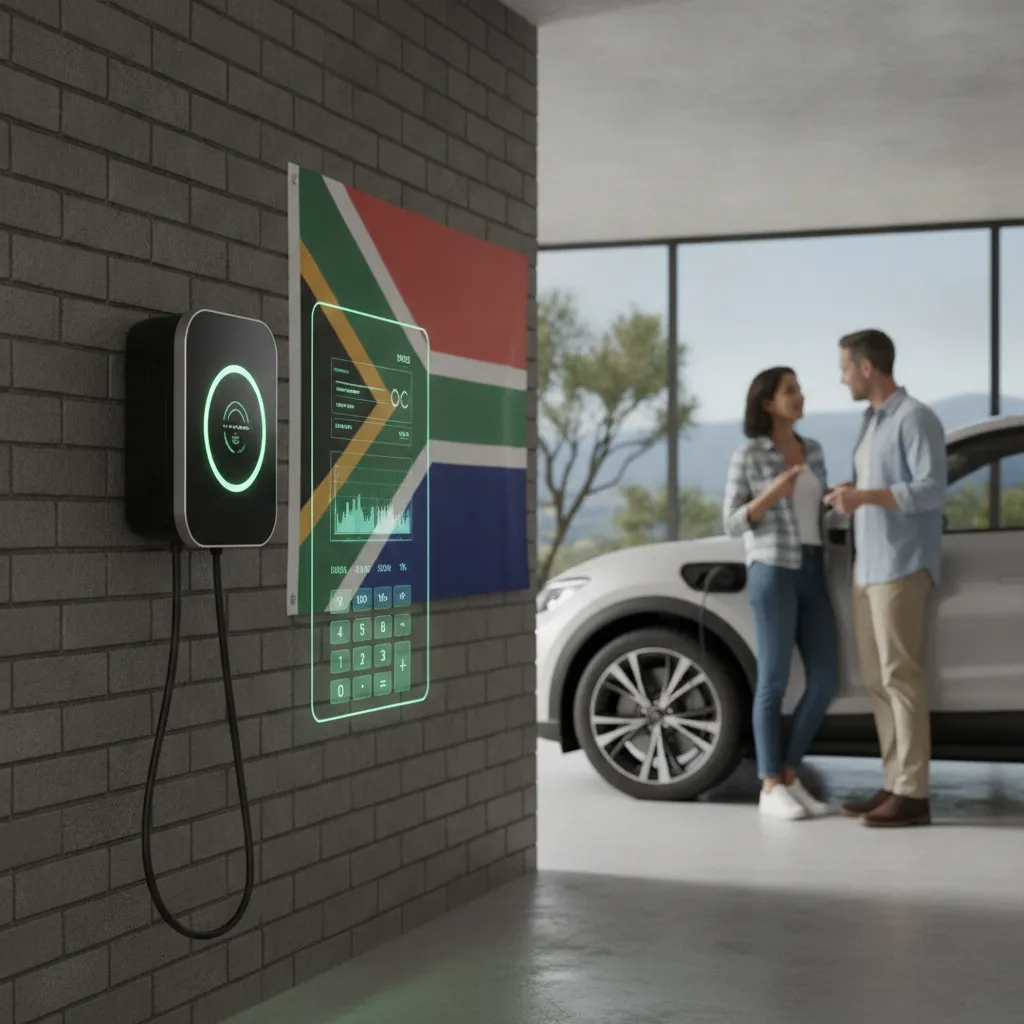
- Home charger installation: R8,000 to R15,000 if not included in the purchase price, covering the unit, a licensed electrician, cabling, and a compliance certificate (ChargePoint SA). Note that the BYD Dolphin Standard Range includes this; the iCaur V23 does not.
Add those realistic extras and the iCaur V23 RWD’s real all-in cost moves from R519,900 to roughly R535,000 to R545,000 if you handle registration yourself, or closer to R555,000 if the dealer does it, plus a separate charger installation. The BYD Dolphin’s bundled charger makes its total cost cleaner to calculate.
“The sticker price of any vehicle, new or used, only tells in part how your bank account is going to suffer for years to come. Numerous hidden costs can significantly impact your budget, and you need to take this into account when deciding to buy a new vehicle to avoid unpleasant financial surprises later down the line.”
Home charging: the number that changes everything
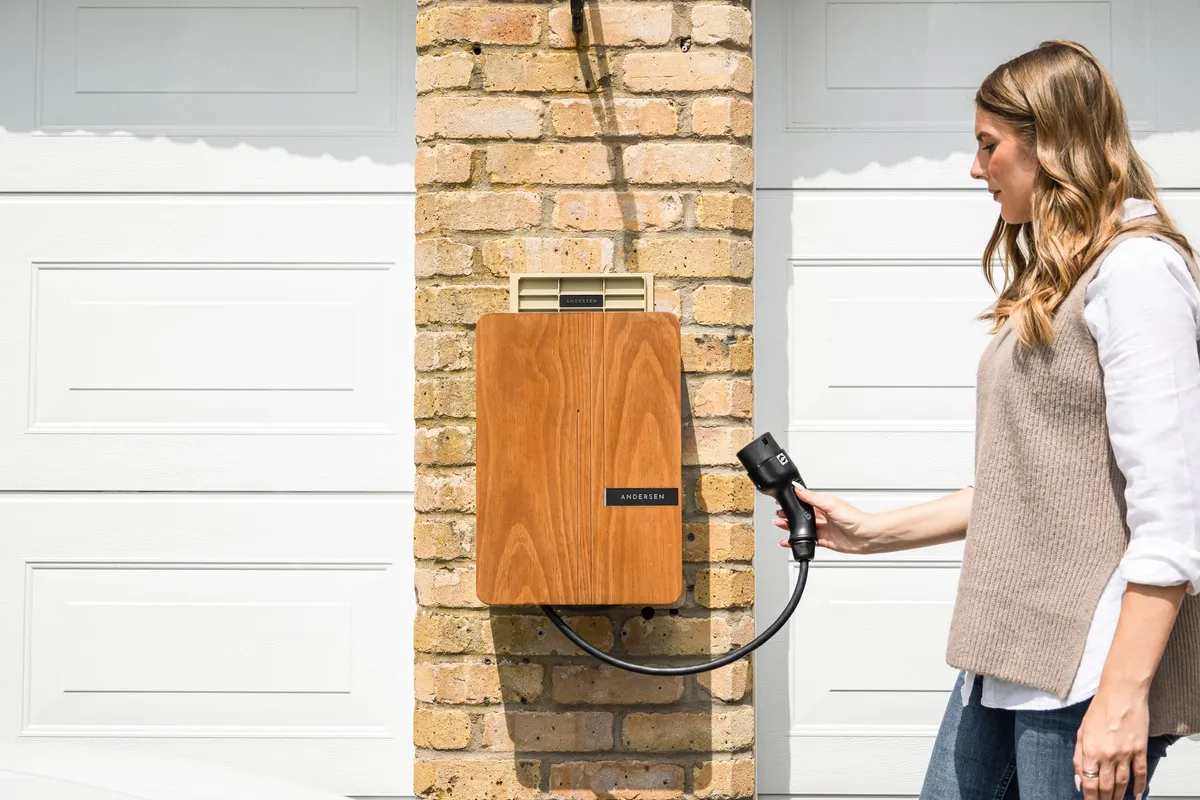
Every cost model for EV ownership starts and ends with home charging. If you cannot charge at home, the economics change materially.
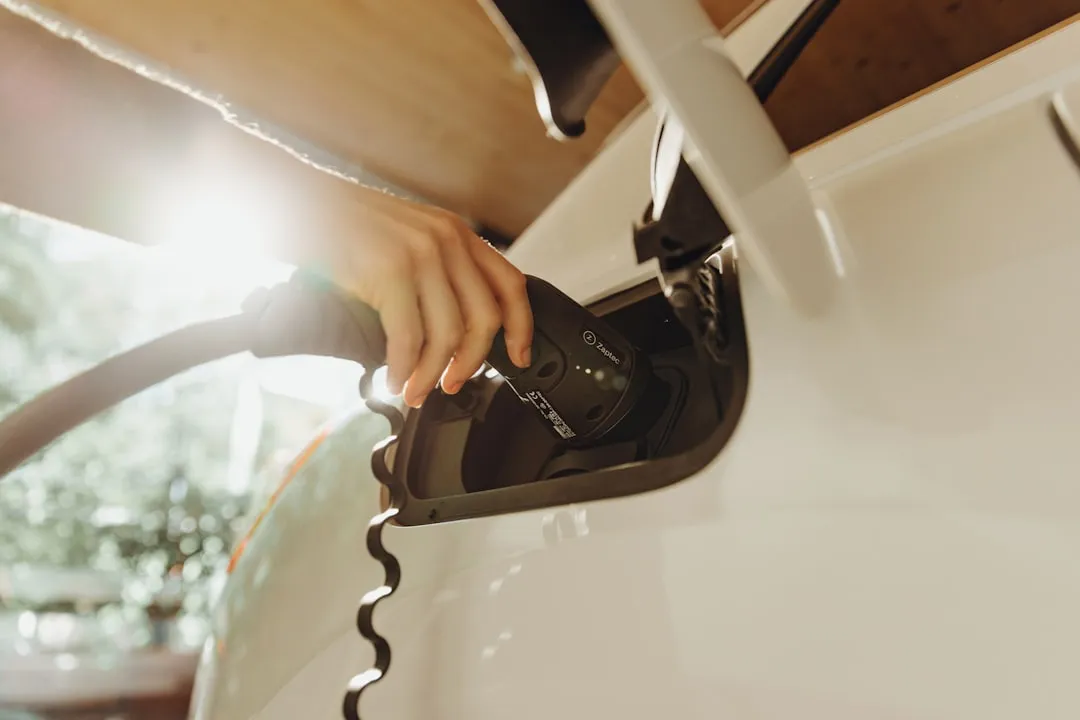
The iCaur V23’s onboard charger accepts a maximum of 6.6 kW AC (AutoBuzz.my official spec). A 7 kW wallbox will deliver the full rate; a 22 kW three-phase charger will be throttled to 6.6 kW by the car. A full charge from 0 to 100% takes approximately 8.8 hours at home (NepalEVs.com). For a 20 to 80% top-up on a 7 kW wallbox, allow around 5.3 to 5.5 hours. DC fast charging hits a maximum of 85 kW on the RWD (CAR Magazine SA), covering 20 to 80% in 36 minutes (Arrive Alive).
The BYD Dolphin’s included 7 kW wallbox covers roughly the same overnight charging window.
Now for the numbers that matter to a monthly budget. Using the Eskom Homelight Prepaid tariff of R2.71 per kWh effective 1 April 2026 (RandTools.co.za citing Eskom NERSA MYPD6), and the iCaur V23’s real-world consumption of 17.0 kWh per 100 km (Cars.co.za road test):
- Cost per 100 km at Eskom direct rate: R46.07
- Cost per 100 km at typical Tshwane/Joburg municipal rate (R3.49 to R3.60 per kWh, Home-calc-hub.com): R59 to R61
- Cost per 100 km for a Toyota RAV4 petrol at R23.36 per litre (DMRE, April 2026): R156
That is a saving of R95 to R110 per 100 km on fuel alone. For a commuter covering 20,000 km per year, that is R19,000 to R22,000 per year back in your pocket, every year.
Approximately 70% of South African residential properties are on single-phase 60 to 80A supply, which limits charger size to 7 kW (ChargePoint SA). That is enough for overnight charging. Larger Gauteng properties and estates with three-phase supply can use 11 kW or 22 kW chargers.
“A 7 kW home wallbox pays for itself in 10 to 18 months if you’re charging overnight. That’s five times cheaper than petrol at R25 per litre, and the reason most EV owners who install a wallbox never go back to public charging for daily use.”
One practical note on installation: even a charger that comes included in a purchase price needs to be installed by a qualified electrician, and the installation process is not always straightforward.
“We had three attempts for installation of our complimentary MB Wallbox. Apparently the installation asks for an unusual type of wiring (4 AWG). Did anybody have trouble with their electrician installing it?”
The point applies broadly: budget for a professional installation regardless of whether the unit itself is included. Any EV charger installation in South Africa requires SANS 10142-1 wiring compliance and a Certificate of Compliance issued by a qualified electrician.
Model, price and spec comparison
| Model | Price (OTR) | Battery | 0-100 km/h | DC fast charge (max) | Vehicle warranty | Battery warranty | Charger included |
|---|---|---|---|---|---|---|---|
| BYD Dolphin Surf | R339,900-R341,900 | LFP | 14.2 sec | Not stated | 3yr/100,000km | 8yr/200,000km | Yes (7 kW) |
| iCaur V23 RWD | R519,900 | 59.93 kWh LFP | 11.0 sec | 85 kW | 8yr/200,000km | 8yr/160,000km* | No |
| BYD Dolphin Standard Range | R539,900 | LFP | Not stated | Not stated | 3yr/100,000km | 8yr/200,000km | Yes (7 kW) |
| BYD Dolphin Extended Range | R599,900 | LFP | Not stated | Not stated | 3yr/100,000km | 8yr/200,000km | Yes (7 kW) |
| iCaur V23 AWD | R669,900 | 81.8 kWh NMC | 7.5 sec | 104 kW | 8yr/200,000km | 8yr/160,000km* | No |
| GWM Ora 03 300 Super Luxury | R686,950 | Not specified | Not stated | Not stated | 7yr/200,000km | 8yr/150,000km | Not specified |
| BYD Atto 3 Extended | R835,000 | 60.5 kWh Blade LFP | 7.3 sec | ~80 kW | 5yr/100,000km | 8yr/200,000km | Yes (7 kW) |
Understanding the range claims
Every EV sold in South Africa uses WLTP European certification figures, derived from lab testing at a controlled 23 degrees Celsius with no passengers and no air conditioning (IOL Motoring). South Africa does not have a mandatory local range certification standard. The real-world gap is well documented: advertised WLTP range is typically 10 to 20% optimistic, per ChargePoint SA. Highway driving at sustained speeds reduces range by 25 to 30% compared with WLTP.
“Range anxiety is real and there is a lot to get your head around, like the WLTP European certification figures which are not renowned for being completely accurate because they’re derived from lab testing.”
The iCaur V23 is rated at 360 km NEDC for the RWD. NEDC figures tend to be more generous than WLTP. Using the real-world consumption of 17 kWh per 100 km recorded in the Cars.co.za road test, and 70% usable capacity from a 59.93 kWh pack, a practical real-world range is roughly 240 to 280 km under mixed conditions. Under gentler city conditions, 300 km is achievable. Plan with 70 to 80% of any manufacturer claim as your working range.
Additional South African factors: in extreme heat above 38 degrees Celsius, the battery cooling system draws 0.5 to 1 kW of extra energy. In hilly terrain, regenerative braking partially offsets the extra energy used on ascent. AC use in a Durban summer will reduce range measurably. None of this disqualifies these cars for South African use. It just means calibrating expectations honestly before buying.
Calculate your actual five-year EV ownership cost vs petrol
Five-year cost-of-ownership comparison
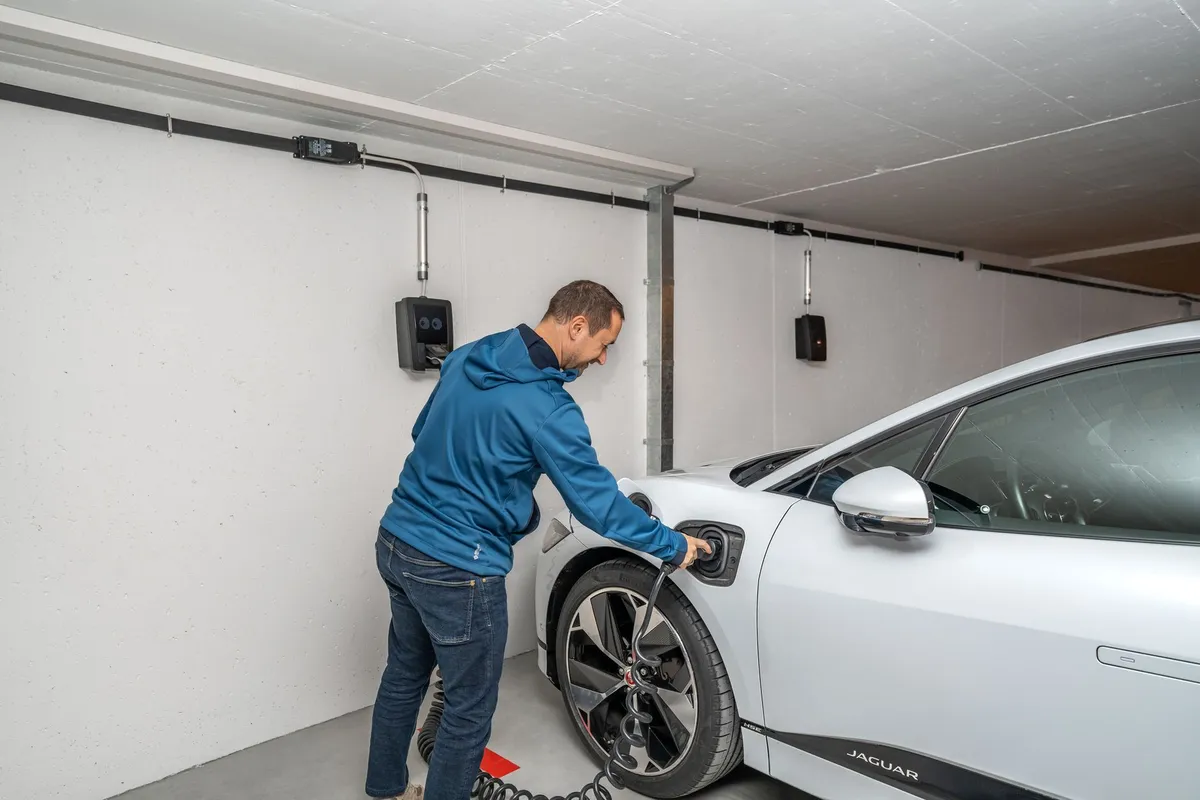
The table below compares a BYD Dolphin Extended Range (R599,900) against a petrol SUV at a comparable entry-level price point, modelled over five years at 20,000 km per year. Figures draw on ChargePoint SA modelling, April 2026 petrol prices, and published warranty and service plan terms. All electricity costs assume home charging at the Eskom Homelight Prepaid rate of R2.71 per kWh, with 20% of charging done at public DC fast chargers at R4.50 to R6.50 per kWh (ChargePoint SA).
| Cost item | BYD Dolphin Extended Range | Petrol SUV equivalent |
|---|---|---|
| Purchase price (OTR) | R599,900 | ~R560,000 (est.) |
| Home charger installation | Included | N/A |
| 5-year fuel/electricity (20,000 km/yr) | ~R60,000 (ChargePoint SA) | ~R210,000 (R23.36/L, 9L/100km) |
| 5-year maintenance | ~R12,000 (ChargePoint SA) | ~R45,000 (ChargePoint SA) |
| Insurance premium uplift (10-15% higher for EV) | +R6,000 to R9,000 (est.) | Baseline |
| Tyre replacement (15-20% higher wear on EVs) | ~R2,000 extra over 5 years | Baseline |
| Estimated 5-year total cost | ~R680,000 | ~R815,000 to R822,000 |
| 5-year EV saving | ~R135,000 to R142,000 | |
This aligns with independent analysis:
“The total cost of ownership of an EV is significantly lower than an ICE vehicle, even though the purchase price remains higher.”
The savings are real, but they are back-loaded. The finance instalment on a R599,900 EV will be higher than on a R560,000 petrol car. The gap closes quickly on running costs, but a buyer stretching their budget to reach the EV price point needs to model their monthly cash flow carefully, not just the five-year total.
“The savings garnered from not having to refuel an EV puts money in your pocket each month and this can comfortably offset the higher instalment premium if you opt for one of the more affordable EV offerings in South Africa.”
Ready to see exactly what home charging will cost you before you commit to buying? Calculate your home charging cost with ChargePoint SA’s free tool, tailored to your municipality and daily driving distance.
Battery health, degradation and what warranties actually cover
The 8-year battery warranties on the BYD Dolphin and iCaur V23 are meaningful, but understanding what they cover matters. Industry standard is that batteries are guaranteed to retain at least 70% of original capacity during the warranty period (GreenCars). Routine degradation below that threshold is not covered; only degradation that breaches the 70% floor triggers a warranty claim (GreenCars).
Global data from Geotab puts average annual EV battery degradation at 2.3% per year. In South Africa’s hot climate, there is a 0.4% per year additional degradation penalty (Geotab). That means a South African EV battery degrades at roughly 2.7% per year on average. Over eight years, that is approximately 21% total degradation under normal conditions. At that rate, a battery warrantied to 70% capacity is comfortably covered with margin to spare.
Regular DC fast charging above 100 kW accelerates degradation to 3.0% per year versus 1.5% per year for low-power home charging (Geotab). The practical advice: use DC fast charging when you need it on long trips, but rely on overnight home charging for daily top-ups. It is also cheaper: home at R2.71 per kWh versus R4.50 to R6.50 per kWh at public DC chargers (ChargePoint SA).
The iCaur V23 battery warranty is noted as applying to the first owner only (Cars.co.za). This is worth factoring in if you plan to sell within the warranty period: the next buyer gets no battery protection, which may affect your residual value.
Public charging: useful on long trips, not a substitute for home
South Africa had approximately 600 public charging stations as of late 2025, with most concentrated in Gauteng, the Western Cape, and KwaZulu-Natal (EV24.africa). The GridCars network alone covers 445 sites with over 650 chargers and more than 1,200 connectors (ChargePoint SA). The EV-to-charger ratio stands at roughly 1 charger for every 7 EVs, better than the global 1:10 benchmark (ChargePoint SA).
For a Dolphin or V23 buyer in a major metro, day-to-day charging is entirely manageable at home. The public network fills a different role: confidence on intercity trips. The Johannesburg to Cape Town N1 corridor has a known gap: roughly 300 km of semi-desert between Beaufort West and Three Sisters where fast charging is essentially absent (ChargePoint SA). The N3 corridor from Johannesburg to Durban has seen meaningful investment, including a R100 million commitment from the Development Bank of Southern Africa into the CHARGE (Zero Carbon Charge) network. A solar-powered Tugela station on that corridor recently charged a Volvo ES90 from 9% to 79% in 20 minutes at 321.9 kW peak.
Public charger reliability is an honest concern. A MyBroadband poll found 46% of respondents reported unresolved GridCars charger problems, and Consumer Reports data globally puts EV owners experiencing a problem at 1 in every 5 public charging sessions. For daily commuting, this barely matters. For a road trip, it means planning with backup options and carrying the PlugShare app, which community-reported data has proven accurate 94% of the time (SolarTech Online).
“Charging infrastructure remains a hurdle in South Africa. The country faces limited charging networks and longer charging times compared to the quick refueling of traditional cars.”
Who this category of EV is genuinely right for
The sub-R600k EV makes strong financial sense if you match this profile: you drive under 150 km per day, you have a garage or dedicated parking where a wallbox can be installed, you plan to keep the car for at least five years, and you commute in a city where public charging exists as a backup (ChargePoint SA).
It is less suitable if you frequently tow (towing reduces EV range by 40 to 60%, per ChargePoint SA), if you drive 200 km or more per day for work, if you live in a rural area without charging, or if you cannot charge at home (ChargePoint SA). For those buyers, a hybrid or petrol vehicle remains the more practical tool.
The awareness gap is narrowing. As Hiten Parmar, Executive Director of Electric Mission South Africa, observed in May 2026: “There’s a big gap in consumers in terms of education and awareness… some buyers who switched to electric vehicles are already replacing their first EVs with newer models rather than returning to petrol-powered cars.” Repeat EV buyers are now a measurable cohort in South Africa.
Choosing between the models: BYD Dolphin Surf, Dolphin Standard Range, or iCaur V23?
If your priority is the lowest possible entry cost into electric motoring, the BYD Dolphin Surf at R339,900 is in a category of its own. It is a city hatchback rather than an SUV, but its combination of established BYD dealer support, an 8-year battery warranty, and its sub-R340,000 price makes it the most accessible electric car in the country. If you need a proper SUV silhouette and can stretch to R539,900, the Dolphin Standard Range adds a more crossover-friendly body style plus the bundled 7 kW wallbox that makes total cost easier to calculate.
If your priority is a proper SUV body style, a stronger vehicle warranty package, V2L capability for load-shedding resilience, and you are comfortable being an early adopter, the iCaur V23 RWD at R519,900 is compelling on paper. The 8-year vehicle warranty is the most generous in this price bracket. The real-world efficiency figures from South African testing are better than the manufacturer’s own claim. But with only 25 dealer points at launch, it carries network risk that the Dolphin range does not.
All three cars are best suited to buyers in metros with reliable overnight charging available. None is a compromise choice for a city commuter. Together they represent a genuine step-change in the accessibility of electric motoring in South Africa.
Home charger recommendation
If you are buying the iCaur V23 (which does not include a home charger), or replacing an existing charger, the ChargePoint SA Caro Plus (CP-AC7) is a practical fit. It delivers 7 kW single-phase, matching the iCaur V23’s 6.6 kW onboard charger limit precisely. It includes a tethered 5 to 7 m Type 2 cable, RFID and app start, Wi-Fi and Bluetooth, optional PV solar charging integration, and meets SANS 10142-1 wiring compliance with an electrical CoC included. Indicative unit price from approximately R8,900, with installation quoted per site depending on your DB board, cable run, and whether your supply is single or three-phase. It is the everyday home pick for straightforward residential installation.
If your property has three-phase supply and you want faster turnaround (or plan to charge two vehicles eventually), the Caro Pro (CP-AC22) at from approximately R13,900 per unit offers 22 kW three-phase with dynamic load balancing and PV integration. Note the iCaur V23’s onboard charger will still cap at 6.6 kW, so the speed benefit only applies if you add a second EV with a higher AC acceptance rate. Installation for both is quoted per site.
Frequently asked questions
Is the iCaur V23 the cheapest electric SUV in South Africa?
At R519,900 for the RWD, the iCaur V23 is the most affordable electric vehicle with a dedicated SUV body style on sale in South Africa as of mid-2026. The BYD Dolphin Surf (R339,900) is cheaper overall but is a city hatchback rather than an SUV.
Does the BYD Dolphin include a home charger?
Yes, both the Dolphin Standard Range (R539,900) and Extended Range (R599,900) include a 7 kW home wallbox charger in the purchase price, along with a service plan and battery warranty. The iCaur V23 does not include a charger.
What charging standard do these cars use?
Both the BYD Dolphin range and the iCaur V23 use the Type 2 AC connector (SANS 62196-2) for home and public AC charging, and CCS2 (SANS 62196-3) for DC fast charging, the dominant standards across South Africa’s public charging network.
How long does home charging take overnight?
The iCaur V23’s onboard charger caps at 6.6 kW, meaning a full charge takes approximately 8.8 hours from a 7 kW wallbox. A 20-80% top-up takes around 5.3 to 5.5 hours. That is well within a typical overnight window.
What is the real-world running cost per 100 km?
Using the iCaur V23’s road-test consumption of 17 kWh/100 km and the Eskom Homelight Prepaid tariff of R2.71/kWh: R46.07 per 100 km. At a typical Joburg municipal rate of R3.55/kWh: roughly R60 per 100 km. Compare that with R156 per 100 km for a Toyota RAV4 petrol at April 2026’s R23.36/litre.
Ready to see exactly what home charging will cost you before you commit to buying? Calculate your home charging cost with ChargePoint SA’s free tool, tailored to your municipality and daily driving distance.
Compare sub-R600k electric SUVs available now in South Africa
Explore the BYD Dolphin, iCaur V23, and models to find your fit.
Find your perfect EV →WhatsApp us
CoC-certified installers, nationwide
Illustration: chargepointsa.co.za