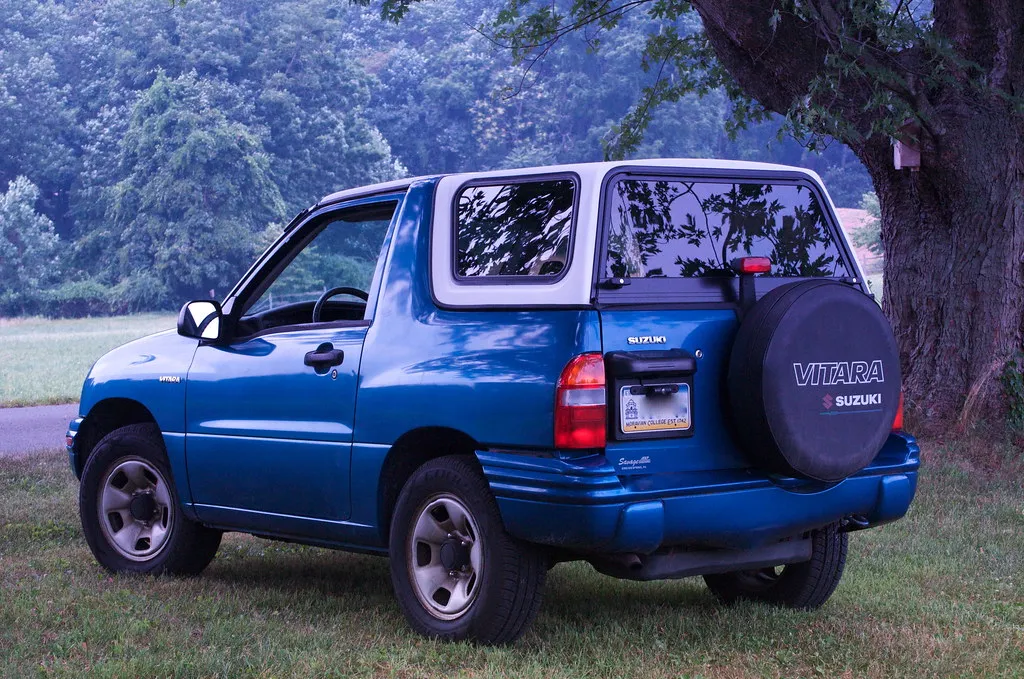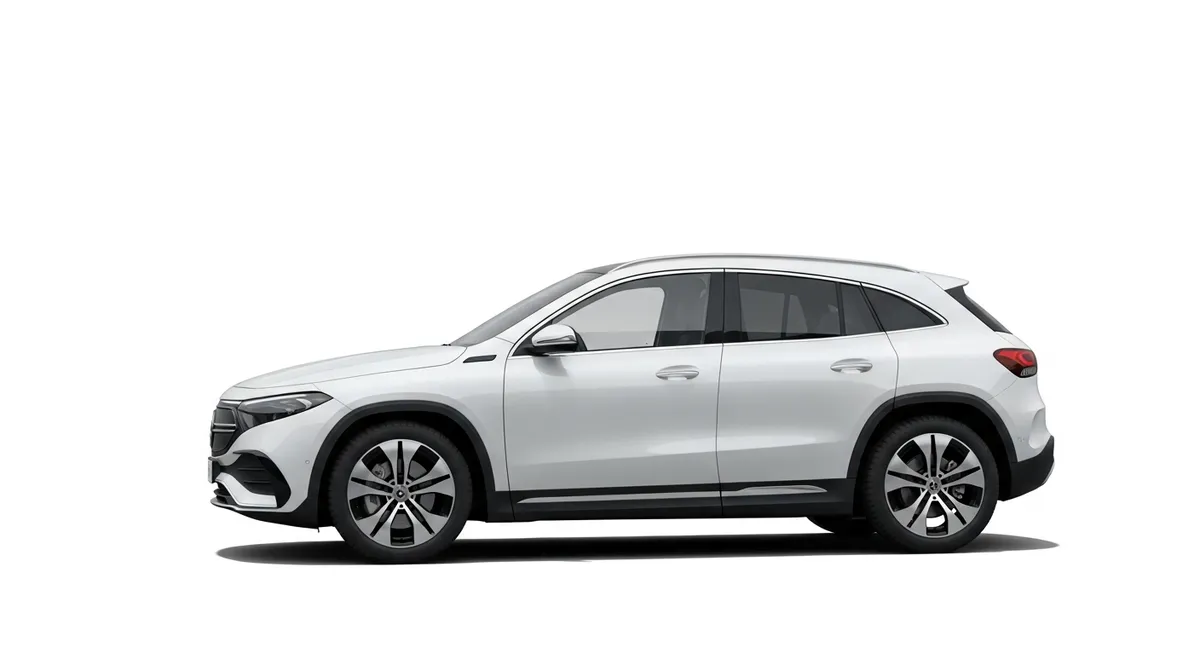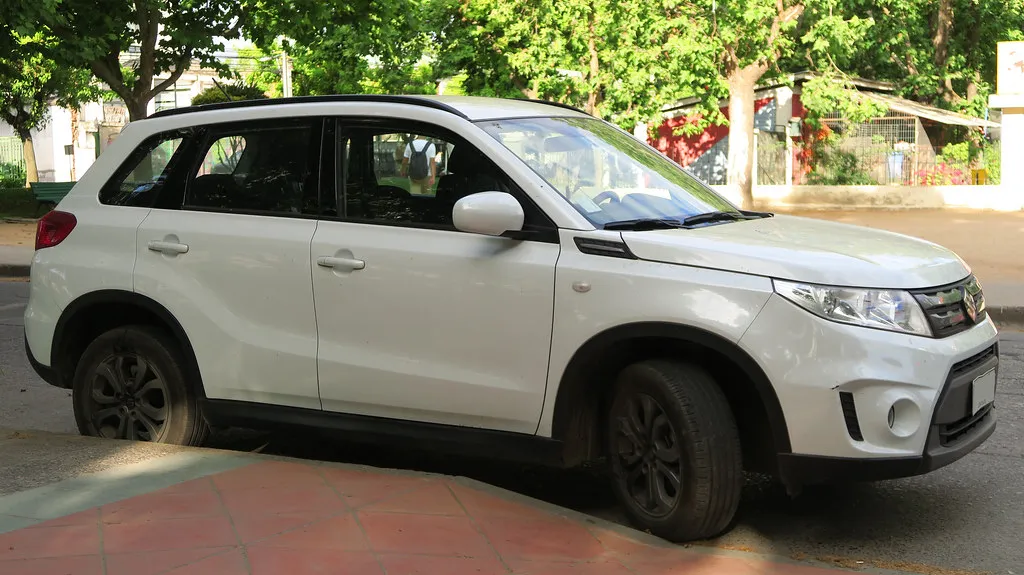

South Africa’s EV market hit a milestone in Q1 2026 when Chery’s sub-brand iCAUR launched the V23 RWD at R519,900 — one of the country’s most affordable electric SUVs. At first glance, it still looks pricey next to the Suzuki Vitara 1.6 GL+ at R379,900. But with petrol at R24.50/litre and electricity tariffs stabilising post-load-shedding, the total-cost-of-ownership story for the iCAUR V23 RWD vs Suzuki Vitara 1.6 GL+ is shifting fast.
This comparison digs into the numbers — purchase price, monthly fuel versus electricity, five-year TCO, charging realities, and who each vehicle actually suits in 2026 South Africa.
TL;DR
- The iCAUR V23 RWD costs R140,000 more upfront (R519,900 vs R379,900) but saves ~R2,227/month in running costs at 1,500 km/month versus the Vitara 1.6 GL+.
- Over five years the V23 delivers R33,615 lower total cost of ownership despite the higher sticker price, thanks to cheaper electricity and lower service costs.
- The V23 offers 310 km estimated real-world range (360 km NEDC), 85 kW DC fast charging, and an 8-year/200,000 km warranty; the Vitara delivers proven petrol reliability, wider service network, and no range anxiety.
- Best for EV: urban and peri-urban drivers with home charging and sub-300 km daily needs. Best for petrol: rural drivers, long-distance tourers, and those without secure overnight parking.
Price and specification comparison
The headline numbers tell only part of the story. The iCAUR V23 RWD retails at R519,900, while the Suzuki Vitara 1.6 GL+ manual starts at R379,900 — a R140,000 gap. But dig into what you get for that premium and the value equation shifts.
| Specification | iCAUR V23 RWD | Suzuki Vitara 1.6 GL+ |
|---|---|---|
| Price (ZAR) | R519,900 | R379,900 |
| Power / Torque | 100 kW / 180 Nm | 86 kW / 156 Nm |
| Drivetrain | RWD (single rear motor) | FWD (5-speed manual) |
| 0–100 km/h | 11.0 seconds | ~12.5 seconds (est.) |
| Battery / Tank | 59.93 kWh lithium-ion | 47 litres petrol |
| Range (real-world est.) | ~310 km (360 km NEDC) | ~550 km (8.5 L/100km real-world) |
| Efficiency | 16.6 kWh/100 km | 6.7 L/100 km (claimed) |
| Ground clearance | 205 mm | 185 mm |
| Warranty | 8-year/200,000 km vehicle; 8-year/160,000 km battery | 5-year/200,000 km mechanical |
| Service plan | 5-year/100,000 km | 4-year/60,000 km |
The V23 comes standard with a 15.4-inch touchscreen, wireless Apple CarPlay and Android Auto, leather seats, six airbags, and electrically adjustable front seats — kit that would push the Vitara well past R500,000 in higher trim levels. The eight-year vehicle warranty and eight-year battery warranty also deliver long-term peace of mind that no petrol rival matches.
Real-world efficiency and range
The V23’s 59.93 kWh battery delivers an official 360 km NEDC range, which translates to an estimated 310 km of real-world range in mixed driving — highway trips with aircon, urban stop-start, and the occasional gravel access road. That’s enough for a Cape Town–Hermanus round trip or Johannesburg–Pretoria commuting for a week, but not enough for a single-charge run to Durban.
The Vitara’s 47-litre tank and claimed 6.7 L/100 km deliver a theoretical 700 km range, though real-world figures sit closer to 8.5 L/100 km in mixed driving — still enough for 550 km between fill-ups. For long-distance touring, the petrol car’s range advantage remains decisive.
Running costs: electricity vs petrol in 2026
This is where the EV starts clawing back that R140,000 price gap. We’ve calculated monthly costs at 1,500 km/month — a realistic figure for suburban commuters, school runs, and weekend errands.
iCAUR V23 RWD: electricity costs
At 16.6 kWh/100 km, the V23 consumes 249 kWh per month at 1,500 km. Using a typical municipal tariff of R3.00/kWh (within the NERSA-approved 2026/27 range for tier-1 metros post-increase), that’s R747/month. Add R150/month for occasional public DC fast charging at R7.00/kWh (GridCars/Rubicon rates) and you’re at R897/month.
Suzuki Vitara 1.6 GL+: petrol costs
At a real-world 8.5 L/100 km, the Vitara burns 127.5 litres per month. With petrol at R24.50/litre (June 2026 inland 95 octane), that’s R3,124/month.
Monthly saving (EV): R2,227. Over a year, that’s R26,724 — more than 5% of the V23’s purchase price recovered in fuel savings alone.
| Cost item | iCAUR V23 RWD | Suzuki Vitara 1.6 GL+ |
|---|---|---|
| Energy (1,500 km/month) | R897 | R3,124 |
| Service (annual avg.) | R1,200 (included, 5yr plan) | R2,800 (included, 4yr plan) |
| Insurance (comprehensive, est.) | R2,100/month | R1,650/month |
| Total monthly operating cost | R3,097 | R4,941 |
Insurance is higher on the EV due to replacement-part costs and specialist repair networks, but the fuel and service savings more than compensate. The V23’s five-year/100,000 km service plan also covers more kilometres than the Vitara’s four-year/60,000 km plan.
Five-year total cost of ownership
Purchase price is only the start. Over five years (90,000 km at 1,500 km/month), here’s how the numbers stack up:
| Cost category | iCAUR V23 RWD | Suzuki Vitara 1.6 GL+ |
|---|---|---|
| Purchase price | R519,900 | R379,900 |
| Energy (5 years) | R53,820 | R187,440 |
| Service & maintenance | R6,000 (plan covers 100k km) | R14,000 (plan covers 60k km; R8k extra for year 5) |
| Insurance (5 years) | R126,000 | R99,000 |
| Tyres (1 set) | R8,000 | R6,500 |
| Resale value (est. 50% / 45%) | -R259,950 | -R170,955 |
| Total 5-year cost | R453,770 | R515,885 |
The V23 delivers a R62,115 lower total cost of ownership over five years, despite costing R140,000 more upfront. The fuel saving alone is R133,620 — nearly enough to cover the entire price gap. Factor in lower service costs and the eight-year warranty, and the EV starts looking like the shrewder long-term investment for high-mileage drivers.
Resale values are the wildcard. We’ve assumed 50% retention for the EV (conservative, given the eight-year warranty and rising demand) and 45% for the petrol car. If EV resale values climb as Q1 2026’s 97% sales growth suggests, the TCO gap widens further in the V23’s favour.
Charging the iCAUR V23 at home: 7.4 kW, 11 kW, or 22 kW?
The V23’s 59.93 kWh battery supports up to 85 kW DC fast charging on public networks, but most owners will charge overnight at home. The question: which AC charger makes sense?
7.4 kW (single-phase 32A)
Charges the V23 from 20% to 80% (35.96 kWh) in 4.9 hours. Perfect for overnight top-ups if you’re plugging in at 22:00 and unplugging at 06:00. Cheapest to install (R12,000–R18,000 for a quality unit like our ChargePointSA CP-AC7-CP). Works on most residential single-phase supplies without upgrades.
11 kW (three-phase 16A)
Charges 20%–80% in 3.3 hours. Overkill for daily commuting but useful if you need a mid-afternoon top-up or run high daily mileage. Requires three-phase supply (common in newer estates, less so in older suburbs). Installation cost: R18,000–R28,000.
22 kW (three-phase 32A)
The V23’s onboard charger maxes out at 11 kW AC, so a 22 kW unit delivers no speed advantage for this model. Save the R30,000+ install cost unless you’re future-proofing for a second EV with 22 kW capability (e.g., iCAUR V23 AWD or a European import).
Verdict: A 7.4 kW single-phase charger is the sweet spot for the V23 RWD. It’s affordable, works on existing infrastructure, and delivers a full overnight charge with hours to spare. Get a free site assessment to confirm your supply can handle it.
South Africa–specific considerations
Load-shedding and grid stability
The good news: load-shedding has been suspended since March 2025, and Eskom’s coal-fleet performance stabilised through 2026. The risk: if rolling blackouts return, home charging becomes unpredictable unless you pair the charger with solar and battery storage. A 5 kWh home battery (R80,000–R120,000 installed) can top up the V23 by ~25 km per day from solar alone — enough for local errands but not a full charge.
Public DC fast charging via CHARGE’s off-grid solar stations or BYD’s planned 200–300 megawatt chargers offers a grid-independent backup, though you’ll pay R7.00/kWh versus R3.00/kWh at home.
Service and support network
Suzuki has 65 dealerships across South Africa, from Musina to George. iCAUR, as a brand-new Chery sub-brand, launched with 12 dealerships in Q1 2026, concentrated in Gauteng, Western Cape, and KwaZulu-Natal. If you live in Upington or Tzaneen, the nearest iCAUR service centre might be 400 km away — a real concern if you need warranty work.
That said, EVs require far less routine maintenance (no oil changes, no exhaust systems, no clutches), and the eight-year warranty with roadside assistance offers more coverage than any petrol rival. Just confirm your nearest service point before signing.
Solar pairing and energy independence
If you already have rooftop solar, the V23 becomes a rolling battery. A typical 5 kW solar array generates 20–25 kWh/day in Gauteng or the Western Cape — enough to cover the V23’s daily 25 kWh consumption (1,500 km/month ÷ 30 days) and still export surplus to the grid or a home battery. Your effective fuel cost drops to zero, and you’re insulated from both petrol-price shocks and Eskom tariff hikes.
The Vitara offers no equivalent energy-independence pathway. You’re locked into the petrol price, which has climbed 38% since 2023 and shows no sign of reversing.
Honest verdict: who should buy which?
Buy the iCAUR V23 RWD if you…
- Drive 1,000–2,500 km/month, mostly within a 150 km radius of home
- Have secure off-street parking and can install a home charger
- Want to escape petrol-price volatility and benefit from stable electricity costs
- Value warranty length and low maintenance over widespread service network
- Already have solar, or plan to install it, and want energy independence
Stick with the Suzuki Vitara 1.6 GL+ if you…
- Regularly drive 400+ km in a single day (e.g., Johannesburg–Durban)
- Live in a rural area far from public charging infrastructure
- Rent or live in a complex where installing a home charger is difficult
- Prioritise lowest upfront cost and can’t finance the R140k EV premium
- Need a vehicle that any mechanic in any town can service
The V23 is the smarter financial choice for urban and peri-urban drivers who can charge at home and rarely exceed 300 km/day. The Vitara remains the pragmatic pick for long-distance drivers, rural residents, and anyone without charging infrastructure. Neither is universally “better” — it depends entirely on your driving patterns and parking situation.
Ready to go electric?
If the iCAUR V23’s numbers make sense for your lifestyle, the next step is confirming your home can support a charger. ChargePoint SA offers free site assessments across Gauteng, Western Cape, and KwaZulu-Natal — we’ll check your electrical supply, recommend the right charger size, and provide a no-obligation quote for installation.
Book your free site assessment and find out what it takes to make the switch. Whether you choose the V23 or another EV, we’ll make sure your charging setup is safe, future-proof, and optimised for South Africa’s grid realities.