
Key points
- South Africa has roughly 11 EVs per public charging station as of early 2026 (ChargePoint SA), and EV sales grew 150% year-on-year with AutoTrader reporting a 220% surge in EV searches between March 2025 and March 2026, demand for mall charging is structural, not cyclical.
- A 150 kW DC charger at a major shopping centre costs roughly R1.5 million all-in; a 200 kW unit at a flagship mall costs roughly R2.5 million (Greg Blandford, Rubicon, Enlit Africa 2025). Hardware is only 20-35% of total installed cost, civil works, trenching, concrete pads and permitting account for the remainder.
- Breakeven for a 150 kW DC mall charger requires 8 to 10 charging sessions per day over three years, per Rubicon’s own modelling (Enlit Africa 2025).
- Retail partnerships with EV charging have boosted foot traffic by 10-20% (VUKA Group, April 2025), and EV drivers spend up to 38% more per visit at businesses where they can charge (CEBR, cited by Zest UK).
- All installations must comply with SANS 10142-1 (wiring code), SANS 62196-2 (AC connectors) and SANS 62196-3 (DC connectors), require an electrical Certificate of Compliance (CoC), and must be carried out by ECSA-registered installers.
- Smart, OCPP-connected chargers are non-negotiable: Winstone Jordaan of GridCars warned at Enlit Africa 2025 that South Africa must “stop the installation of dumb chargers” to avoid the UK’s mistake of having to ban 200,000 non-networked units after rollout.
- AC 22 kW billing-grade chargers (from ~R24,000-R40,000 installed per bay) deliver a faster payback path for malls with moderate EV volumes; DC fast chargers (from ~R450,000-R750,000 installed for 50 kW, up to R2.5 million for 200 kW) anchor the destination strategy.
Why shopping malls are the front line of South Africa’s EV charging rollout
South Africa’s EV fleet sat at 3,543 registered passenger vehicles at the end of 2024 (GreenCape Electric Vehicles Market Intelligence Report 2025). By early 2026, estimates including non-reporting Chinese OEMs such as BYD and Geely put the on-road figure at 7,000 to 10,000 vehicles. EV sales grew 150% year-on-year, BYD became the number-one selling EV brand by Q4 2025, and AutoTrader recorded a 220% year-on-year increase in EV searches between March 2025 and March 2026 (ChargePoint SA, Rosebank 2026 Cost Guide). Against that backdrop, the country had roughly 600 public charging points and a ratio of 11 EVs per public station in early 2026, a supply gap that any high-traffic retail destination can profitably address.
For a mall or property manager, the opportunity sits at the intersection of three converging trends: growing EV penetration among high-LSM shoppers, falling mall dwell times due to online competition, and a strategic need to give shoppers a reason to spend 30 to 45 minutes on-site. A DC fast charger does exactly that.
“We’re bringing foot traffic and high LSM clients to malls. They’re spending more time there… now they’re charging their cars. They have to spend 30 to 45 minutes at the charger. They’re going to spend more money. They’re going to go to a coffee shop, they’re going to buy some cake and tea, and they might go do some shopping, etc.”
Thinking about a home charger?Get a fixed-price installation quote — a few quick questions and we’ll send your cost, with no surprises on the day.Get my fixed-price quote →Greg Blandford, Director of Rubicon, Enlit Africa 2025 (ESI-Africa, June 2025)
That dwell-time argument is backed by international data. A 2024 Nature Communications study found a 3.2% spending increase at businesses within 100 metres of an EV charging station. CEBR research, cited by Zest UK, found EV drivers spend up to 38% more per visit at businesses where they can charge. VUKA Group (April 2025) reported that retail partnerships with EV charging have boosted foot traffic by 10-20% locally. And approximately 10% of public chargers in South Africa are currently offered free of charge, often sponsored by shopping centres and hotels, as a loyalty and footfall tool (imotonews.co.za).
“EV drivers are increasingly charging where they already live, shop, work, and spend time, a trend that is reshaping how the industry thinks about charging deployment.”
John Eichberger, Executive Director of the Transportation Energy Institute, Electric Era State of Retail-First EV Charging Report, Q4 2025
Understanding the charging options: AC, DC fast, and what each does for your site
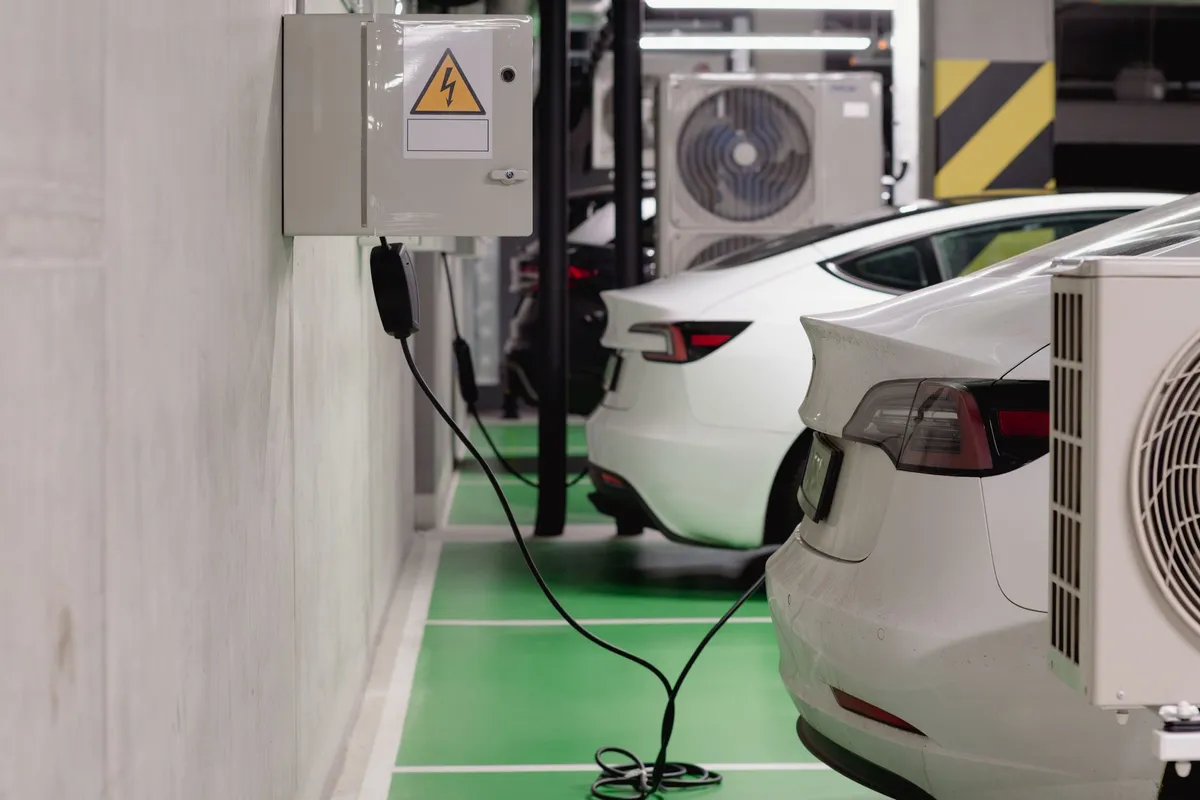
As a mall or property manager evaluating your first or next installation, the choice between AC Level 2 and DC fast charging is not simply about speed, it determines your capital outlay, your grid capacity requirement, your revenue model, and the type of shopper behaviour you are trying to anchor.
AC 22 kW smart chargers (the tenants’ and top-up play)
A 22 kW three-phase AC charger delivers a full charge to most current EVs in two to four hours, and a meaningful top-up in 45 to 90 minutes. At R24,000 to R40,000 installed per bay (ChargePoint SA, reflecting tracked quotes across Gauteng, Western Cape and KZN through November 2025), AC chargers have the lowest capex of any networked option and the fastest payback per rand invested where parking dwell times are already 60 to 120 minutes, think grocery anchors, cinemas and large-format retail.
The critical distinction for a billing-capable mall installation is between a standard 22 kW wallbox and a metered, billing-grade unit. For any public or semi-public site where you want to recover electricity costs from drivers, you need a unit with a calibrated MID meter and OCPP connectivity. The ChargePoint SA CP-AC22-N is built specifically for this: it carries an Eichrecht-conformant smart meter accurate to 1%, supports OCPP 2.0.1J and ISO 15118 Plug and Charge, and is operator-ready out of the box. For malls wanting to serve two bays from a single installation (reducing cable runs and DB connections), the CP-DUO-44 twin 2×22 kW unit charges two vehicles simultaneously, 2×11, 1×22 or 2×22 kW, with dynamic load balancing, optional MID metering and ad-hoc or app payment, all from one IP54-rated enclosure.
DC fast chargers (the destination anchor)
DC fast charging bypasses the car’s onboard AC charger and pushes power directly into the battery. A 60 kW DC station adds roughly 200 km of range in 30 minutes for most current EVs; a 150 kW station achieves a similar result in closer to 20 minutes (Winstone Jordaan, GridCars, EV24.africa 2026). This is the product that competes with a petrol station for convenience, and it is the one that earns its keep at a mall entrance or premium parking bay.
Real South African mall installations provide the clearest cost benchmarks. At Enlit Africa 2025, Greg Blandford of Rubicon disclosed:
“…where the public charging infrastructure is concerned, the investment is quite high. So typically you start anywhere from a half million rand up to two million rand per site. I’ll give you two case examples. So we’ve got a 200 kilowatt DC charger at the Mall of Africa in Johannesburg. That site cost us… about R2.5 million. We’ve got a site at Canal Walk [shopping centre] in Cape Town, which is 150 kilowatt DC, that’s about R1.5 million.”
Greg Blandford, Director of Rubicon, Enlit Africa 2025 (ESI-Africa, June 2025)
For mall operators who want their own DC fast charging capability, the ChargePoint SA CP-DC60 (60-120 kW, dual CCS2 outlet, 10.1-inch touchscreen, app/QR/RFID/POS payment, full OCPP and smart-grid integration) is available from ~R430,000 installed for the 60 kW configuration (indicative). For higher-traffic flagship sites, the CP-DC160 (160-300 kW, dual CCS2, 350 A, 40 kW constant-power modules) delivers ultra-rapid turnaround and is quoted per site assessment.
The real cost breakdown: hardware, civil works, grid connection and compliance
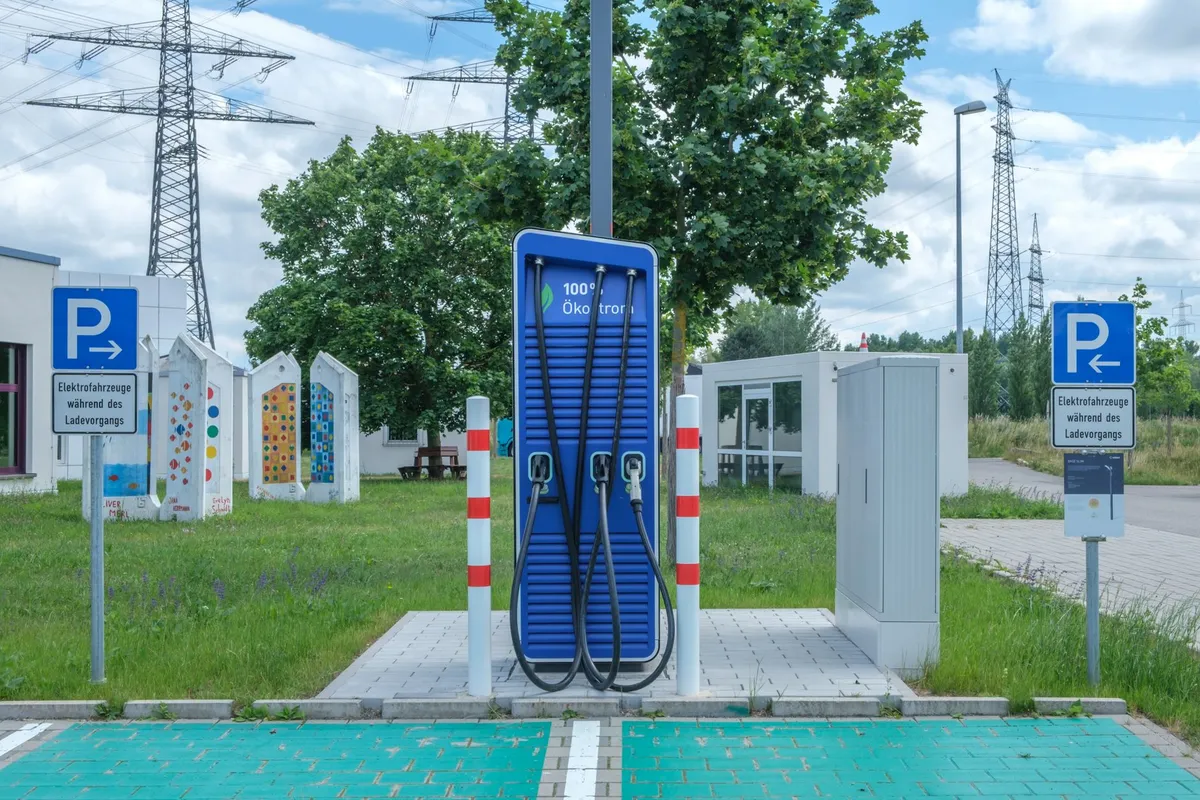
One of the most common miscalculations in mall EV charging projects is treating the charger hardware price as a proxy for the total installed cost. Internationally, hardware accounts for only 20-35% of total installed cost; civil works, trenching, concrete pads and permitting account for the remainder (Wins Parking, 2026 Cost and ROI Guide). South African site conditions, older electrical infrastructure, underground parking, long cable runs from LV rooms to parking bays, often push that ratio further toward civil and electrical.
| Cost item | Indicative range | Source |
|---|---|---|
| 22 kW AC charger unit (billing-grade) | R17,000-R30,000 | ChargePoint SA |
| 22 kW AC charger: installation labour | R6,000-R12,000 | ChargePoint SA |
| 22 kW AC charger: all-in installed (simple) | R24,000-R40,000 | ChargePoint SA (Nov 2025 quotes) |
| Commercial Level 2 charger starting price per bay | From R25,000 | The Handyman Johannesburg |
| Bulk procurement saving (10+ units, shared civils) | 15-20% reduction | Builders in Gauteng |
| 50 kW DC fast charger: fully installed (unit + civil + electrical) | R450,000-R750,000 | ChargePoint SA Rosebank 2026 |
| 47-50 kW DC hardware only | R400,000-R1,250,000 | DriveElectric / MyBroadband; imotonews.co.za |
| DC install labour only | From R100,000; can exceed R250,000 | The Handyman Johannesburg |
| 150 kW DC all-in (Canal Walk, Cape Town) | ~R1,500,000 | Rubicon / Enlit Africa 2025 |
| 200 kW DC all-in (Mall of Africa, Johannesburg) | ~R2,500,000 | Rubicon / Enlit Africa 2025 |
| Underground conduit trenching (parking lot) | R350-R500 per metre | ChargePoint SA Knysna 2026 |
| Surface-mounted conduit | R180-R250 per metre | ChargePoint SA Knysna 2026 |
| Cable run exceeding 25 m (6 mm² or 10 mm² + conduit) | R150-R300 per metre | ChargePoint SA Sandton 2026 |
| DB board / electrical panel upgrade (pre-2000 property) | R15,000-R35,000 | The Handyman Johannesburg |
| Single-to-three-phase supply upgrade (meter, approval, cabling) | R15,000-R30,000 + 6-12 weeks approval | ChargePoint SA Pietermaritzburg 2026 |
| Full phase upgrade (Centurion/Tshwane context) | R30,000-R60,000+ | ChargePoint SA Centurion 2026 |
| Earthing upgrade (older properties) | R2,000-R4,000 | ChargePoint SA Sandton 2026 |
| Outdoor weatherproofing (IP54+ fittings, sealed conduit) | R1,500-R3,000 | Builders in Gauteng |
| Sub-metering (individual prepaid meter per point) | R2,500-R4,500 installed | ChargePoint SA Knysna 2026 |
| Centralised load management system (10-unit small commercial site) | R15,000-R35,000 | ChargePoint SA Knysna 2026 |
| Smart / OCPP / Wi-Fi connectivity add-on | R2,000-R5,000 | ChargePoint SA 2026 |
| Formal load report (consulting engineer) | R3,000-R6,000 | ChargePoint SA Body Corporate Guide 2026 |
| Municipal permit fees (Gauteng municipalities) | R800-R2,500 | The Handyman Johannesburg |
| Municipal inspection fee (circuits exceeding 16 A) | R450-R850 | ChargePoint SA Knysna 2026 |
| Certificate of Compliance (CoC) | R1,000-R3,000 | The Handyman Johannesburg |
| ECSA-registered electrician labour rate | R350-R700/hour (avg ~R550) | The Handyman Johannesburg |
For a large mall project, say, six AC billing bays plus one 60 kW DC unit in an existing parking structure requiring 60 m of underground conduit and a DB upgrade, total installed cost will typically sit between R800,000 and R1.4 million before Eskom demand-charge considerations. Installation time for a straightforward Level 2 commercial charger with existing DB capacity and a short cable run is 4 to 6 hours; add 2 to 3 days if trenching is required, and 1 to 2 days for a DB upgrade (ChargePoint SA, Pietermaritzburg 2026). Total project timeline from site assessment to CoC: 3 to 8 weeks, depending on municipal approval speed.
One municipality-specific warning: Tshwane (Centurion) imposes prohibitive “Basic Charge” fees on charging operators, Rubicon currently avoids the area entirely as a result (ChargePoint SA, Centurion 2026). If your mall is in Tshwane, factor in a detailed municipal engagement before committing to a capex budget.
Compliance, standards and why they matter for your procurement decision
For a mall or property manager, compliance is not a box-ticking exercise, it is the difference between an installation that is legally insurable and one that voids your building policy and exposes you to R20,000+ fines (ChargePoint SA, 2026).
Every EV charger installation in South Africa must comply with SANS 10142-1 (The Wiring of Premises, Part 1: Low-voltage installations, Edition 3, SABS). The 2025 code updates added Annex N, which specifies EV-specific requirements including a dedicated circuit with a Type A or Type B residual-current device (RCD) rated for DC fault currents, a generic household earth leakage breaker is not compliant for EV charging. Minimum cable size for a 32 A single-phase EV charger circuit under 25 m is 6 mm² copper (EV Charge South Africa). All outdoor units must carry a minimum IP54 rating for weather resistance.
Connector standards are equally non-negotiable: AC connectors fall under SANS 62196-2 (the Type 2 standard used by all current passenger EVs sold in South Africa) and DC connectors under SANS 62196-3 (covering CCS2, the dominant DC standard). Every installation must produce an electrical Certificate of Compliance (CoC) and must be carried out by an ECSA-registered installer. These are not credentials that all suppliers can offer, they are the standard you should require in every tender and every contractor appointment.
Winstone Jordaan of GridCars has been unequivocal on the smart-charger requirement:
“You’ve got to stop the installation of dumb chargers. You need smart, connected chargers to avoid what happened in the UK, where they had to ban 200,000 dumb units after rollout. We have the chance to get it right from the start.”
Winstone Jordaan, Director of GridCars, Enlit Africa 2025 (ESI-Africa, June 2025)
A non-OCPP charger cannot be remotely managed, cannot implement load balancing, cannot generate billing records, and cannot be integrated into a roaming network. For a mall that may want to monetise its chargers or join a national eMSP network in future, a dumb charger installed today is a write-off tomorrow.
ROI models, tariff structures and the honest payback case
The South African public EV charging industry has been admirably transparent about the economics at the Enlit Africa 2025 panel. The honest summary: at current EV fleet volumes, standalone charging revenue rarely covers capex without secondary revenue streams. The business case for malls is built on a blend of direct charging revenue, dwell-time-driven retail spend uplift, and long-term competitive positioning.
Direct charging revenue
South African public charging networks currently use only flat-rate tariff structures, no time-of-use or dynamic pricing as of August 2025, per Hilton Musk, Rubicon’s Head of E-mobility:
“There are several types of tariff structures that can be used to charge customers for public EV charging, including flat rates, time-of-use-tariffs and dynamic pricing. Currently in South Africa, we only use flat rate tariffs.”
Hilton Musk, Rubicon’s Head of E-mobility, CleanTechnica, November 2025
The tariff figures below are August 2025 benchmarks. Note that GridCars implemented a tariff increase of approximately 15% from 1 December 2025, treat the figures below as a floor, not a current ceiling, and verify current rates with your chosen network partner before modelling revenue.
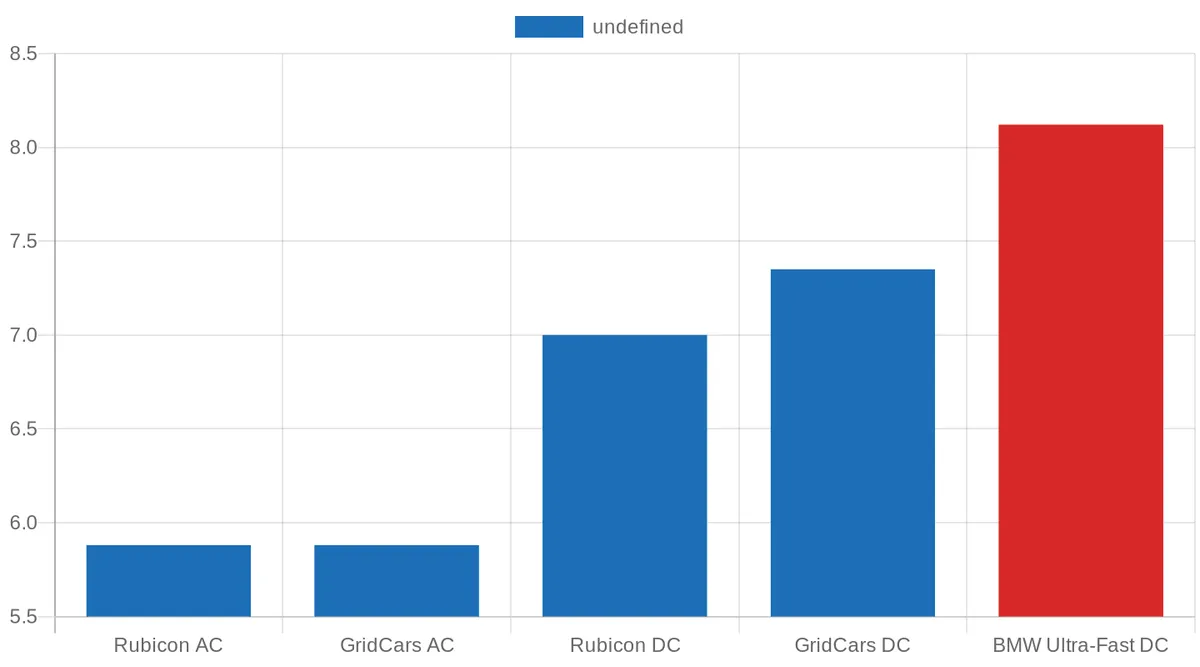
- Public AC charging (Rubicon and GridCars eMSP customers, August 2025): R5.88 per kWh
- Public DC charging, Rubicon eMSP customers (August 2025): R7.00 per kWh
- Public DC charging, GridCars eMSP customers (August 2025): R7.35 per kWh
- GridCars AC tariff at Durban shopping centres (Gateway, Pavilion, La Lucia Mall): R5.50 per kWh
- BMW ultra-fast (150 kW select sites): ~R8.12 per kWh (imotonews.co.za)
Tariffs are set through CPO-eMSP agreements and can vary by site and network. Hilton Musk illustrates this:
“It’s important to note that these tariffs are typically set through agreements between the charge point operator (CPO) and the e-mobility service provider (eMSP), which means they can vary in some cases. For example, at AIDC-EC charging stations, Rubicon eMSP customers pay R7.00 per kWh while GridCars eMSP customers pay R8.24 per kWh.”
Hilton Musk, Rubicon, Rubicon official blog, August 2025
The tariff structure is analogous to the fibre internet model, as Musk explains:
“Think of it like the fibre internet model. The fibre network providers, like Openserve or Vumatel, sell bandwidth to internet service providers such as Afrifast or MWeb, who then add their margin before offering it to customers. Public EV charging works in much the same way.”
Hilton Musk, Rubicon, CleanTechnica, November 2025
As the property owner and CPO, you set the wholesale rate and your chosen eMSP adds its margin, typically 15% (Rubicon). This means you have genuine pricing leverage, and the ability to offer sponsored or discounted sessions as a loyalty tool without giving up the entire unit economics.
The payback model: what the real numbers show
Rubicon’s own modelling for the Canal Walk 150 kW DC installation (total capex ~R1.5 million) requires 8 to 10 charging sessions per day over three years to recover the investment. Greg Blandford was direct about what that implies at scale:
“According to Rubicon’s number crunching, it would take eight to 10 charging sessions per day over three years for the investment in an installation like the one at Canal Walk to be paid back in full. So that doesn’t sound too bad, but you need a lot of sessions at the charger to realise that number and if you’ve got a network of 250 chargers out there. You’ve invested a lot of money… it’s going to take a long time.”
Greg Blandford, Director of Rubicon, Enlit Africa 2025 (ESI-Africa, June 2025)
At the same time, VUKA Group (April 2025) found that fast chargers in African markets are achieving profit margins of 30% to 50% with ROI in 12 to 24 months where utilisation is high, and slower AC chargers taking 2 to 3 years to break even. The divergence comes down entirely to site selection and utilisation.
“The hard part is finding the right place to maximise the number of cars that will use that station, so traffic flows and EV concentration are important factors.”
Greg Blandford, Director of Rubicon, TechCentral, January 2025
As Blandford also noted at Enlit Africa 2025: “Over time you start to see the adoption of specific sites and utilisation rates of those sites. And that’s critically important to present a business case.” Utilisation data per site, not network-wide averages, is what determines whether your particular mall installation returns capital in two years or ten. Mall of Africa already has 10 chargers and experiences wait times of 60 minutes or more on Saturdays (ChargePoint SA, EV Charging Stations Johannesburg 2025), which is both a capacity problem and a proof of demand.
Demand charges: the cost nobody budgets for
For malls on Eskom Megaflex tariffs, which covers most large shopping centres, DC fast charging creates a demand-charge liability that must be modelled before committing to capex. Eskom Megaflex network demand charges for FY26/27 are R52.65 per kVA per month during the high-demand season and R26.29 per kVA per month during the low-demand season (Eskom 2026/27 tariff schedule), billed whether or not a single vehicle charges. A single 200 kW DC charger running at peak can add R10,000 to R15,000 per month in demand charges before the first kilowatt-hour is sold. Dynamic load balancing, available on all ChargePoint SA commercial units, is not optional on a Megaflex tariff; it is the tool that prevents your demand spike from eliminating your margin.
Cost-of-ownership comparison: AC 22 kW vs DC 60 kW vs DC 150 kW for a mid-size mall
| Scenario | Capex (all-in, indicative) | Ongoing monthly costs (indicative) | Sessions needed per day to break even (3-year target) | Indirect benefit |
|---|---|---|---|---|
| 6x AC 22 kW billing bays (CP-AC22-N) | R150,000, R240,000 | ~R2,100 O&M + software (~R350/charger/month) + demand allocation | ~3-4 sessions per bay per day | Dwell-time uplift for grocery/cinema anchors; tenant amenity |
| 1x DC 60 kW (CP-DC60, dual CCS2) | From ~R430,000 installed (indicative) | ~R3,500 O&M/software + demand charge | ~5-7 sessions per day | Destination draw; 30-min dwell per session |
| 1x DC 150 kW (comparable to Canal Walk) | ~R1,500,000 | ~R5,000, R8,000 O&M/software + demand charge | 8-10 sessions per day (Rubicon modelling) | Flagship positioning; EV community buzz |
| 1x DC 200 kW (comparable to Mall of Africa) | ~R2,500,000 | ~R8,000, R12,000 O&M/software + demand charge | 12-15 sessions per day (estimated) | Category-defining anchor; roaming network partner |
Note: all monthly cost and breakeven figures are illustrative, based on publicly disclosed operator data and ChargePoint SA’s commercial revenue model. Actual figures depend on local electricity tariff, Megaflex demand allocation, network roaming agreement, and per-site utilisation. Request a site-specific model via the commercial site builder.
Explore CPO, revenue-share and ownership models for mall charging
Ownership models: CPO, eMSP, revenue-share or full ownership
As a mall or property manager, you have four broad paths to bringing EV charging to your site:
- Full ownership (capex model): you fund and own the hardware; you operate as the charge point operator (CPO); you set your own tariffs and keep the revenue. Highest upside, highest risk, highest capex. Best for flagship assets with strong EV catchment.
- Revenue-share partnership: a CPO funds and installs the hardware on your property; you receive a share of charging revenue in exchange for the site, power supply and parking bays. Minimal capex, lower revenue share. GridCars has done exactly this with a major South African shopping mall, attracting EV drivers, increasing foot traffic and integrating special pricing models (GridCars).
- Sponsored / amenity model: you install chargers as a customer amenity and offer free or subsidised charging, funded from the marketing or leasing budget. No charging revenue, but 10-20% foot traffic uplift and dwell-time benefit are the documented returns. Approximately 10% of South African public chargers operate on this model today (imotonews.co.za; VUKA Group).
- Hybrid (owned hardware, eMSP-managed billing): you own the hardware and the CPO relationship; a third-party eMSP manages driver authentication, billing and roaming. This preserves your revenue while offloading the operational complexity.
The ChargePoint SA Commercial EV Charging Programme covers all four models under one contract: supply, installation, SANS 10142-1 wiring compliance, CoC, ECSA-registered installers, OCPP/OCPI open platform, managed billing (RFID/app), load balancing and remote monitoring, from approximately R350 per charger per month for the managed service. A white-label option lets you brand the enclosure, app and driver portal as your own property’s amenity.
Site selection, grid capacity and the questions to answer before you commit
Greg Blandford of Rubicon has articulated the site-selection challenge plainly: “The hard part is finding the right place to maximise the number of cars that will use that station, so traffic flows and EV concentration are important factors.” Before any site assessment, a mall property manager should work through the following:
- EV catchment: what proportion of your current shopper base drives an EV or is considering one? A centre in a high-LSM suburb of Johannesburg, Cape Town or Durban will have a meaningfully higher EV concentration than a convenience strip in a peri-urban area.
- Existing grid headroom: does your LV distribution have spare capacity for DC fast charging? A 60 kW DC charger running at full load draws 60 kW continuously. Two such units plus the mall’s existing load may require a new transformer bay or a formal load report from a consulting engineer (R3,000-R6,000 per ChargePoint SA Body Corporate Guide 2026). An engineered site assessment will answer this definitively.
- Cable run distances: how far are the proposed charging bays from the nearest LV room or DB board? At R350 to R500 per metre for underground conduit (ChargePoint SA Knysna 2026), a 50 m run to an outdoor parking bay adds R17,500 to R25,000 per bay to your civil bill, and that is before the cable itself at R150 to R300 per metre for 6 mm² or 10 mm² conductors (ChargePoint SA Sandton 2026).
- Municipality: Tshwane’s prohibitive Basic Charge fees mean DC charging economics are materially different there versus Johannesburg or Cape Town. Your site-assessment engineer should verify the applicable municipal tariff and any connection fees before finalising the business case.
- Eskom demand tariff: if your site is on Megaflex, demand charges at R52.65 per kVA per month (high-demand season, FY26/27) are a fixed cost regardless of charger utilisation. Dynamic load balancing, built into all ChargePoint SA commercial units, is essential to cap your demand spike.
What EV drivers actually want from a mall charging experience
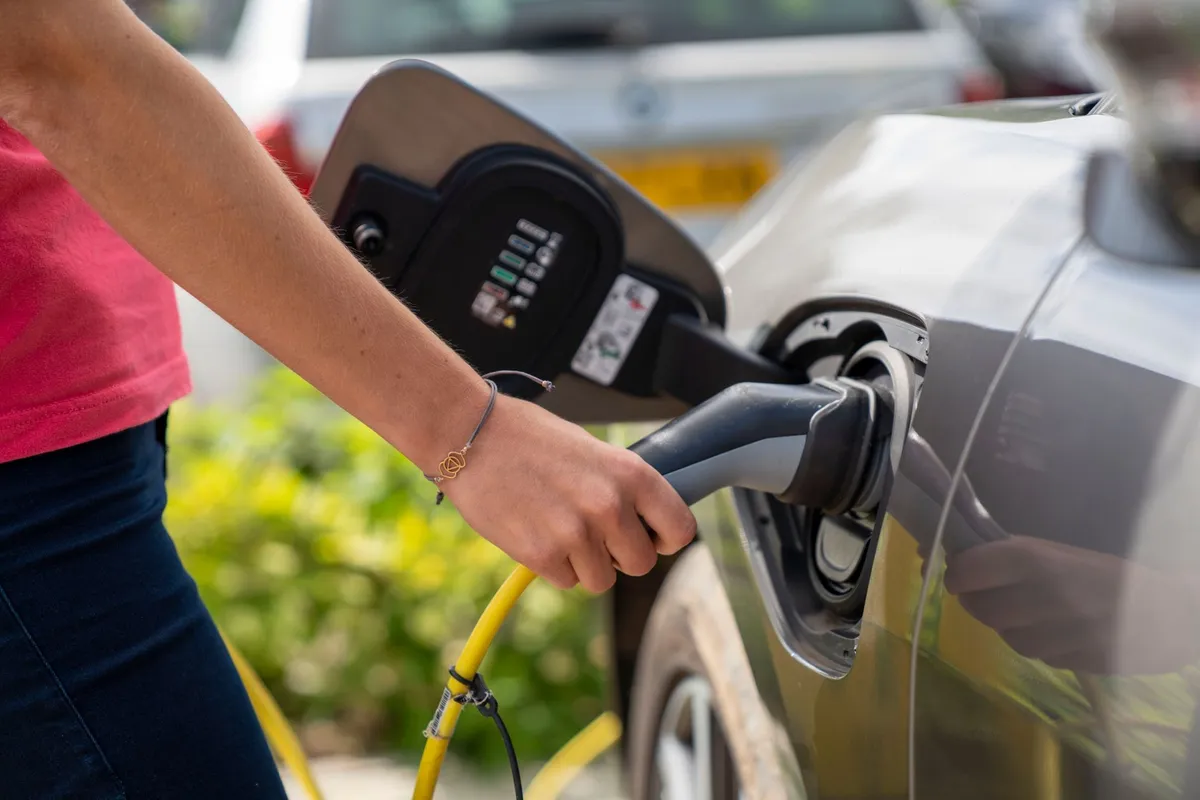
The real-owner voice here is instructive. A Reddit user described their actual charging behaviour in South Africa:
“I want to get this off my chest since I often see this and other EV communities recommend against buying one if you don’t have home/work charging like it’s some kind of global rule… We specifically bought an EV with relatively short range (410km WLTP) because most of our driving is in the city, maybe 10-20km per day… we only do 10-20km per day this already means the battery lasts us about 10 days and because we go shopping, swimming, dance classes, etc. as part of our routine, many of them have public charging, some even free.”
Reddit user u/Dan6erbond2, r/electricvehicles, quoted on ChargePoint SA (Sandton 2026 guide)
This is the archetype of the mall charging customer: a city driver who uses the shopping trip as a top-up opportunity, not an emergency rescue. For this driver, a 22 kW AC bay at the grocery anchor is sufficient and the session will last as long as the shopping trip. For the driver on a longer journey or a time-sensitive top-up, a 60-150 kW DC unit near the food court gives 200 km in 20 to 30 minutes, enough time for a meal and a coffee.
The driver experience is also shaped by what they pay. The Recharged.co.za journalist who tested a GWM Ora described the cost directly:
“The last time I had a GWM Ora on test, I charged it when it was on 17% and took it up to 98%. I was billed R328.76 for the 55.889kWh charged at the AC rate of R5.88 per kWh. I have an AC wallbox charger at home with a maximum charging speed of 7.4kW. Based on my Eskom bill and the rates I’m charged based on usage, it would cost me R2.1779 per kWh for up to 600kWh of usage and R3.4391 for anything above 600kWh.”
Recharged.co.za journalist, GWM Ora owner, real-world SA public charging cost (Recharged.co.za)
Public AC charging at R5.88 per kWh (August 2025 benchmark, noting the post-December 2025 increase) costs two to three times more than home charging for most South African EV owners. This is not a deterrent, it is what the convenience premium looks like, and drivers accept it. But it does mean price-sensitive drivers will prioritise a mall that offers competitive or sponsored charging over one that does not.
Tax incentives and the Section 12B depreciation opportunity
The financial case for mall EV charging has improved materially following the government’s January 2025 announcement of a 150% tax deduction for EV and hydrogen vehicle manufacturing, effective 1 March 2026 (capped at R500 million for the 2026/27 financial year). While this specific incentive targets manufacturers, the broader infrastructure signal is clear. More directly relevant for property owners: businesses installing EV charging infrastructure may qualify for accelerated depreciation under Section 12B of the Income Tax Act (ChargePoint SA, Rosebank 2026). For a R2.5 million DC installation, the difference between standard 33.3% straight-line depreciation and an accelerated write-down can represent R300,000 to R500,000 in brought-forward tax relief. Confirm the applicable treatment with your tax advisor before finalising the investment case.
The honest industry view on profitability and what it means for your decision
The South African EV charging industry’s leading operators have been publicly honest about where the economics stand today. Winstone Jordaan of GridCars said at Enlit Africa 2025: “There’s just no business case. We need about 100,000 vehicles on the road before any of us will see real profitability. But that doesn’t mean we shouldn’t build the foundation now.”
Larissa Venter of Zero Carbon Charge was equally direct: “If you go into EV charging, it’s not to make revenue.” Her company’s off-grid solar approach, backing the DBSA-funded Zero Carbon Charge network of 60 stations targeted by 2027 on the N3 corridor (backed by R100 million from the DBSA, launched May 2026), sidesteps grid-dependent tariff inflation entirely.
For a mall operator, this context is not discouraging, it is clarifying. The primary return on a 2026 EV charging investment is not the charging revenue line. It is the dwell-time uplift, the foot-traffic premium from high-LSM EV owners, the ESG and green-building narrative, and the competitive moat against malls that wait until the fleet is 100,000 strong. The charging revenue that does come in is a bonus, and it will compound as the fleet grows at 150% per year.
“South African shoppers have not lost their appetite for the mall experience but have become more deliberate about it. Winning centres give shoppers multiple reasons to make a trip, whether that is value, a genuine community space, or an experience they cannot get from a screen.”
Mohit Narotam, MD of Lightstone Retail, Bizcommunity
EV charging, particularly DC fast charging that mandates 30 to 45 minutes of on-site time, is one of the very few interventions a mall operator can make that structurally compels dwell time. It is an experience that cannot be replicated from a screen.
Frequently asked questions
How much does it cost to install EV chargers at a shopping mall in South Africa?
Total installed cost ranges from R24,000 to R40,000 per 22 kW AC billing bay (ChargePoint SA, November 2025 quotes) to R450,000-R750,000 for a 50 kW DC fast charger (ChargePoint SA Rosebank 2026) and R1.5 million to R2.5 million for a 150-200 kW DC flagship installation (Rubicon, Enlit Africa 2025). Hardware is only 20-35% of total cost, civil works, trenching at R350-R500 per metre underground, DB upgrades, permitting and the mandatory Certificate of Compliance make up the rest. A formal engineered site assessment is the only reliable way to cost a specific property.
What standards and compliance requirements apply to mall EV charger installations in South Africa?
Every installation must comply with SANS 10142-1 (the wiring code, Edition 3, including Annex N for EV-specific circuit protection), use connectors conforming to SANS 62196-2 for AC (Type 2) and SANS 62196-3 for DC (CCS2), produce a Certificate of Compliance (CoC) on completion, and be carried out by an ECSA-registered installer. Outdoor units require a minimum IP54 rating. DIY or unlicensed installation on circuits over 16 A is illegal under SANS 10142 and can result in fines of R20,000 or more, insurance voidance and legal liability.
What is the payback period for EV charging at a South African shopping centre?
Rubicon’s own modelling for a 150 kW DC installation at Canal Walk (total capex ~R1.5 million) requires 8 to 10 charging sessions per day over three years to recover the investment. VUKA Group (April 2025) found fast chargers in African markets achieving ROI in 12 to 24 months at high utilisation, while slower AC chargers take 2 to 3 years. The honest position, confirmed by Winstone Jordaan of GridCars at Enlit Africa 2025, is that standalone charging revenue at current SA EV fleet volumes does not build a complete business case without the secondary benefits of dwell-time uplift, foot-traffic increase (documented at 10-20% by VUKA Group) and the spending premium of EV drivers (up to 38% more per visit, per CEBR research).
Should a mall install AC chargers, DC fast chargers or both?
The optimal mix depends on your centre’s anchor tenant, parking dwell times and EV catchment. AC 22 kW billing bays (from ~R24,000-R40,000 installed) suit grocery anchors, cinemas and destinations where shoppers naturally spend 60 to 120 minutes. DC fast chargers (60 kW from ~R430,000 installed, indicative) suit destination malls where you want to attract cross-town EV drivers and dwell times of 30 to 45 minutes are the goal. Most mature South African mall charging deployments use both: AC bays for regular tenants’ customers and one or two DC units as the headline amenity. All units must be OCPP-connected, MID-metered if used for billing, and managed with dynamic load balancing to contain Eskom Megaflex demand charges.
Can a mall earn revenue from EV charging, and how are tariffs set?
Yes, provided the chargers are billing-grade (MID-metered, OCPP-connected). South African public charging currently uses flat-rate tariffs only, no time-of-use or dynamic pricing as of August 2025 (Hilton Musk, Rubicon, CleanTechnica, November 2025). As the charge point operator (CPO), you set your wholesale tariff; your chosen e-mobility service provider (eMSP) adds a margin of typically 15% (Rubicon) before billing drivers. You can also partner with a CPO under a revenue-share model where they fund the hardware and pay you a site fee, as GridCars has done at major South African shopping malls. Note: the August 2025 benchmark tariffs (AC R5.88/kWh, DC R7.00, R7.35/kWh) have been superseded by a GridCars increase from December 2025, verify current rates with your network partner before modelling revenue.
Do I need to upgrade the mall’s electrical supply to install DC fast chargers?
In most cases, yes, at least partly. A 60 kW DC charger draws 60 kW continuously at peak, which must be accommodated within your existing LV headroom after all other loads. For properties on Eskom Megaflex, this creates a demand-charge liability (R52.65 per kVA per month in the high-demand season for FY26/27) regardless of charger utilisation. A formal load report from a consulting engineer (R3,000-R6,000) will identify whether your existing supply can accommodate the proposed chargers, or whether a transformer upgrade, new sub-board or demand management system is required. Dynamic load balancing, built into all ChargePoint SA commercial units, is the primary tool for managing demand spikes without a full grid upgrade.
Recommended ChargePoint SA products for mall and retail centre installations
ChargePoint SA supplies and installs its own commercially certified range under one accountable contract, with SANS 10142-1 wiring compliance, electrical CoC, and ECSA-registered installers on every project. For a typical South African mall deployment:
- CP-AC22-N (22 kW billing-grade AC): the right choice for public and semi-public AC bays where you need to recover electricity costs. Eichrecht-conformant smart meter (1% accuracy), MID metering, OCPP 2.0.1J, ISO 15118 Plug and Charge, dynamic load balancing. Quoted per site.
- CP-DUO-44 (twin 2×22 kW): where you want two billing bays without two full installations, dynamic load balancing, OCPP, optional MID, ad-hoc or app payment, IP54/IK10. Quoted per site.
- CP-DC60 (60-120 kW DC fast): dual CCS2, 10.1-inch touch, app/QR/RFID/POS, OCPP and smart-grid integration. From ~R430,000 installed for the 60 kW configuration (indicative). The practical anchor for mid-size malls.
- CP-DC160 (160-300 kW ultra-rapid): dual CCS2, 350 A, modular 40 kW power blocks, OTA updates. Quoted per site. For flagship malls targeting the destination-charger market.
All commercial installations are available under the ChargePoint SA Commercial EV Charging Programme: managed billing, load balancing, remote monitoring and white-label branding from approximately R350 per charger per month.
Next step: plan your site before you commit to capex
If you manage a mall or retail property and you are evaluating EV charging, whether you are at the business-case stage or ready to proceed, the single most valuable thing you can do before committing budget is get a verified site plan with recommended charger specifications, cost range and payback model specific to your property. Plan your site free with our Commercial Site Builder to get the recommended charger type, indicative cost and payback estimate for your venue, and book a no-obligation engineered site assessment with an ECSA-registered specialist.
Photo: Kindel Media / Pexels
Plan profitable EV charging for your shopping centre
Work through site selection, grid capacity, and ROI modelling free, no obligation.
Plan my mall’s charging →WhatsApp us
CoC-certified installers, nationwide