
Key points
- A Virta/Kantar survey found 87% of EV drivers say hotel charging availability has at least some influence on their booking decision, and nearly half will refuse to stay at a property without it.
- EV guests book rooms at 18-27% higher ADR on average and stay 12-20% longer than general hotel guests, according to Oxmaint’s hotel EV charging ROI guide and National Car Charging research.
- South Africa now has 7,000-10,000 BEVs on the road, Q1 2026 recorded 544 BEV sales, more than double Q1 2025, and April 2026 set a new monthly record of 403 units. The local guest pool is growing fast.
- City Lodge Hotels has already rolled out Chargify EV chargers at 8 SA properties. The early-mover window for smaller operators is narrowing.
- Listing EV charging as an amenity on OTA platforms drives 43% more qualified impressions, and applying the EV filter removes unlisted properties from search results entirely.
- All installations require SANS 10142-1 wiring compliance, an electrical Certificate of Compliance (CoC) and ECSA-registered installers. Connectors must conform to SANS 62196-2 (AC) and SANS 62196-3 (DC).
Why South African hotel operators are reading this now
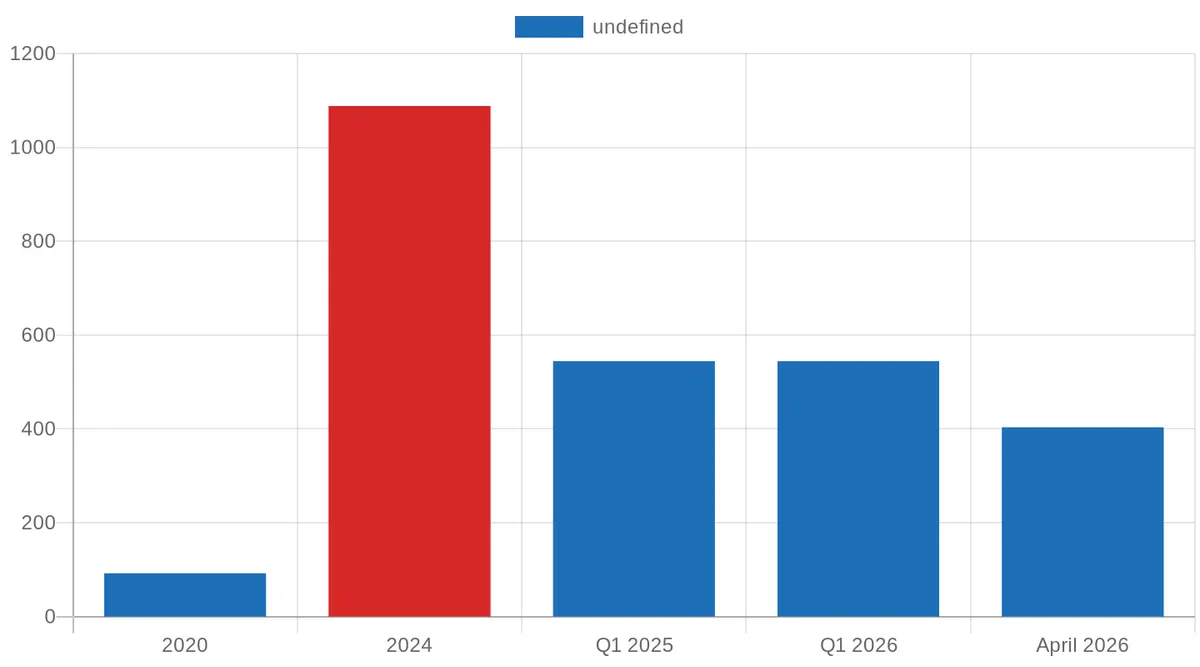
South Africa had fewer than 1,000 battery-electric vehicles on its roads in 2020. By the end of 2025 that figure had grown to between 7,000 and 10,000, and NAAMSA data reported by IOL shows Q1 2026 alone recorded 544 BEV sales, more than double the same period in 2025, with April 2026 setting a new monthly record of 403 units, driven by affordable Chinese models such as the BYD Dolphin Surf from R341,900 and the Geely E2 Aspire from R339,900. AutoTrader recorded a 220% increase in EV searches between March 2025 and March 2026. The government has set a target of 10% EV market share by 2030 and 40% by 2050.
What that means for a hotel or lodge owner is straightforward: the guests arriving at your property in 2026, 2027 and 2028 will increasingly drive EVs, and they are making booking decisions based on whether you can charge them. The question is no longer whether to install hotel EV charging in South Africa, but how to do it correctly, cost-effectively and before your competitors do.
The guest demand evidence is now impossible to ignore
Global hospitality data has moved decisively. Hilton’s global head of sustainability confirmed to Skift that EV charging is now the highest-converting amenity on Hilton.com across more than 1,800 properties, guests filtering for EV charging complete reservations at a higher rate than those filtering for pools, free breakfast, or spas. EV charging is also the second-highest search term converting searches to stays across Hilton properties globally.
The consumer survey data reinforces this. According to a Virta/Kantar survey, 87% of EV drivers say hotel EV charging has at least some influence on their accommodation choice, with only 5% saying it has no impact. A separate Virta survey of all hotel guests, not just EV owners, found that 80% say EV charging availability directly influences whether they book a room. A Boutique and Luxury Lodging Association study of 300 US EV drivers found 91% are more likely to stay at hotels with EV charging, and nearly 75% are willing to pay higher room rates for the privilege. Nearly half of EV drivers will not stay at a hotel without charging facilities at all.
The loyalty impact is equally striking. According to a 2024 J.D. Power Travel Trends report, 38% of EV drivers say they have switched hotel loyalty in favour of properties offering EV charging. On booking platforms, listing EV charging as an amenity drives 43% more qualified impressions on major OTA platforms, and applying the EV filter removes unlisted properties from search results entirely. Booking.com’s Property Q&A AI feature now allows travellers to ask directly whether a property has EV charging on-site, retrieving answers from listing data and reviews, making it a searchable, filterable, high-intent attribute that affects your visibility whether you act on it or not.
For South African hoteliers, McKinsey research adds a financially important dimension: BEV drivers tend to have higher-than-average incomes, prioritise sustainable brands, and are more likely to stay at properties they perceive as forward-looking. SA EV buyers are predominantly urban professionals from finance, technology, and healthcare backgrounds. These are exactly the guests driving ADR and RevPAR at business hotels, boutique properties, and upmarket game lodges.
The revenue uplift from EV guests is material. EV guests book rooms at 18-27% higher ADR on average compared to non-EV guests, and they stay 12-20% longer, during which time they are more likely to dine on-site while their vehicle charges. EV guests with a positive charging experience return at 2.1 times the average repeat-visit rate of non-EV guests. Airbnb data shows that listings with EV chargers are booked for more nights and generate more revenue than comparable listings without. For South African hospitality operators specifically, most SA hosts see 2-3 additional bookings per month once listed as EV-friendly on accommodation platforms.
72% of travellers globally say they are actively seeking sustainable travel options, according to Booking.com’s 2024 Sustainable Travel Report. A visible EV charger in your car park is one of the clearest sustainability signals a property can display.
Plan your hotel charging site free with our Commercial Site Builder
What South African hotels are already doing
City Lodge Hotels announced in February 2026 that it had rolled out Chargify EV charging stations at eight SA properties spanning five provinces: Courtyard Hotel Waterfall City, Courtyard Hotel Sandton, City Lodge Hotel Lynnwood, City Lodge Hotel Bloemfontein, Town Lodge Umhlanga, Road Lodge Pietermaritzburg, Courtyard Hotel Gqeberha, and Road Lodge Kimberley. The AC charging points are compatible with all EVs currently sold in South Africa and are open to day visitors as well as overnight guests. The programme has been phased over approximately two years, indicating City Lodge started investing in this amenity around 2024.
The Vineyard Hotel in Cape Town was the first hotel in the Western Cape to offer both AC and DC EV charging. Named properties in Gauteng with confirmed EV charging include the Johannesburg Marriott Hotel Melrose Arch, Protea Hotel Pretoria Loftus Park, and Voco Johannesburg Rosebank IHG. At the hotel level, Mercedes-Benz EQ-branded Chargify stations are operational at properties including Mayfair Hotel in Mthatha, Champagne Castle in the Drakensberg, Da Vinci Hotel in Sandton, and Silvermist Wine Estate in Hout Bay, with the Plettenberg Hotel, Wilderness Hotel, and Swartberg Hotel in Prince Albert in the rollout pipeline as of late 2023.
Rubicon, one of South Africa’s largest charging network operators, explicitly lists hotels and tourist spots as a primary deployment vertical for its AC charger rollout. Rubicon’s e-mobility project manager Hilton Musk has confirmed that many new AC installations are targeted at hotels and tourist destinations because the lower cost and reduced grid-capacity requirements of AC chargers make them viable for these sites. Rubicon’s network handled 21,606 charging transactions in 2025, up 159% from 8,338 in 2024, dispensing 625 MWh of energy, a 142% increase year-on-year.
AC vs DC: which charger type suits a hotel?
The most important hardware decision for a hotel is choosing between AC (Level 2) and DC fast charging. The right answer depends almost entirely on your guests’ average dwell time.
| Charger type | Power output | Typical dwell match | Indicative SA install cost | Best for |
|---|---|---|---|---|
| AC wallbox (7 kW) | 7 kW single-phase | Overnight stays (8+ hours) | From ~R25,000 installed | Guesthouses, B&Bs, boutique hotels |
| AC wallbox (22 kW) | 22 kW three-phase | Half-day visits (3-5 hours) | From ~R25,000, R35,000 installed | Business hotels, conference facilities, upmarket lodges |
| DC fast charger (60-120 kW) | 60-120 kW dual-outlet | Short stops (30-60 min) | From ~R430,000 installed | Highway-corridor hotels, high-traffic destinations |
| DC ultra-rapid (160-300 kW) | 160-300 kW | Drive-through pit stops | Quoted per site | Major highway stops, forecourt-adjacent hotels |
For most SA hotels, particularly those catering to overnight leisure or business guests, a 22 kW three-phase AC wallbox is the most practical starting point. At 22 kW, a vehicle that accepts three-phase charging can add substantial range in two to three hours, meaning a guest checking in at dinner has a full charge by morning. Where a vehicle’s onboard charger limits it to 7 kW, the same unit charges at 7 kW automatically, the hardware accommodates the vehicle.
The key advantage of AC destination charging for hotels is cost. A single public DC fast charging station in South Africa costs between R500,000 and R2 million to install, according to Rubicon Director Greg Blandford speaking at Enlit Africa 2025 in Cape Town. A 150 kW DC installation at Canal Walk shopping centre cost approximately R1.5 million, and Rubicon’s modelling requires 8-10 charging sessions per day over three years to break even on a public DC station. Commercial Level 2 AC chargers start at approximately R25,000 per unit installed, a fraction of the DC cost, and require far less grid capacity, meaning most hotels can add two to four AC bays without a transformer upgrade.
For hotels on a highway corridor or those targeting drive-through traffic alongside overnight guests, a mixed installation, AC bays for overnight guests plus one DC fast charger for transit guests, can serve both markets and generate direct charging revenue from non-staying visitors.
Industry benchmarks suggest hotels need at least 10% of their parking spaces to be charge-enabled to future-proof operations. Luxury and resort properties should plan for a ratio of approximately one charger per eight spaces. For most SA properties, starting with two to four AC wallboxes covers the near-term demand while leaving infrastructure in place, conduit, board space, and sub-metering, for easy expansion.
Compare AC vs DC chargers for hotel use
The SA compliance framework every hotel must follow
South Africa has a defined legal and technical framework for EV charger installations. Every installation at a hotel property must meet the following requirements, regardless of who supplies the hardware:
- SANS 62196-2, the standard governing AC charging connectors (Type 2 socket is the SA-standard for AC)
- SANS 62196-3, the standard governing DC charging connectors (CCS2 is the SA-standard for DC fast charging)
- SANS 10142-1, the South African wiring code; all DB board modifications and cable runs must comply
- Electrical Certificate of Compliance (CoC), mandatory after every installation or DB board modification; must be issued by a registered electrician
- ECSA-registered installers, the Engineering Council of South Africa registration is required for commercial installations
Non-compliance exposes a hotel to liability if a guest vehicle is damaged during charging, and invalidates the installation for insurance purposes. It also creates a risk at the CoC sign-off stage when the property changes ownership or undergoes a statutory inspection. Sourcing your installation through a single accountable contractor who supplies the charger, performs the SANS 10142-1 wiring, issues the CoC, and uses ECSA-registered installers eliminates the risk of misaligned responsibility between hardware supplier and electrician.
Load-shedding, grid reliability and solar pairing
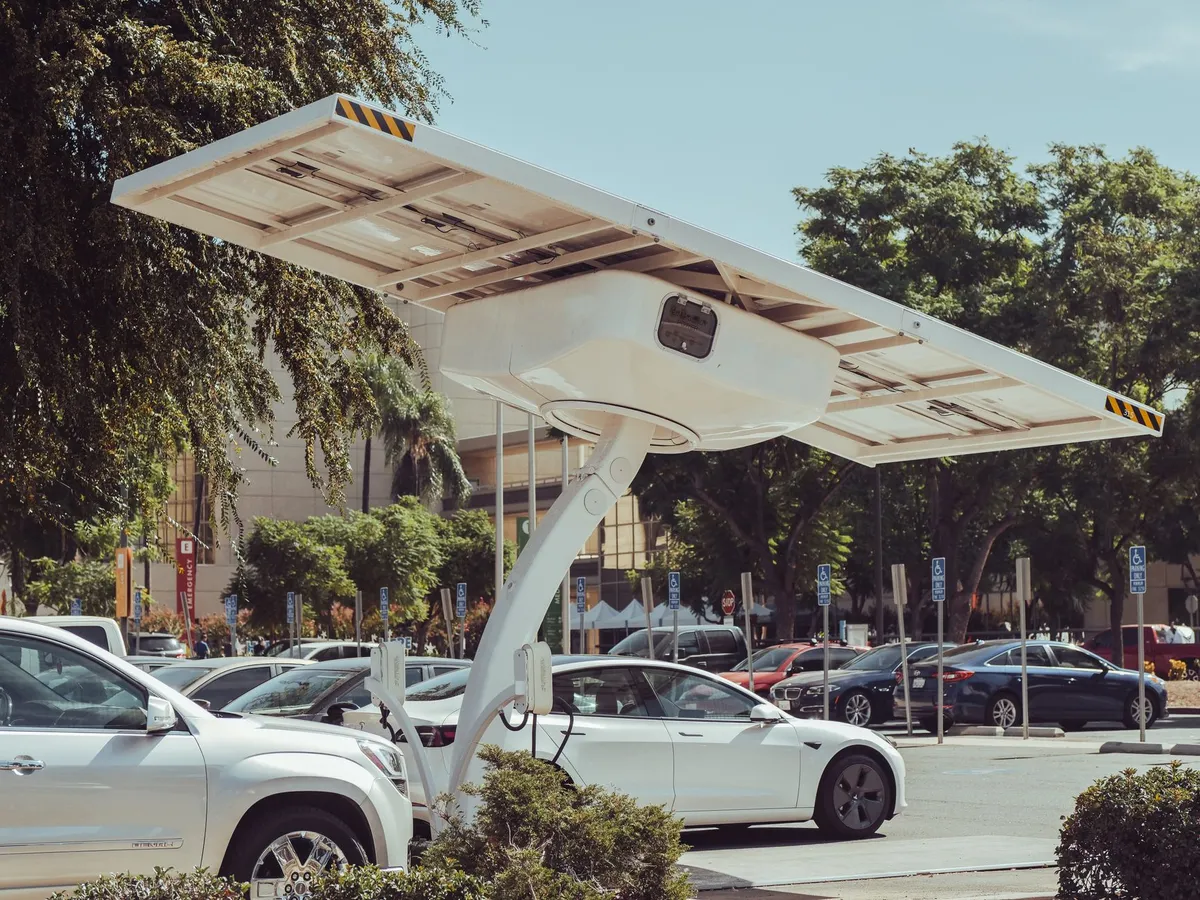
Load-shedding is the operational challenge that no other hotel EV charging guide addresses for South Africa. Most public EV chargers in South Africa remain vulnerable to Eskom outages, when the power goes off, the charger stops, and the guest experience is damaged at exactly the moment it matters most. Hotels and lodges across South Africa have already seen operating costs rise significantly due to investment in backup power systems (solar, inverters, generators) to maintain operations during load-shedding.
The practical mitigation is to pair your hotel EV chargers with your existing solar and battery backup infrastructure, or to size a new solar-plus-battery system to cover the charger load during outages. A smart AC wallbox with dynamic load balancing can be set to draw from solar generation first, shift load to off-peak grid windows, and pause charging during periods when the hotel’s main DB board is under pressure, preventing the charger from tripping the hotel’s main supply. This is both a guest-experience safeguard and a cost-management tool, since Eskom’s Megaflex demand charge for FY26/27 is R52.65/kVA/month during high-demand season, billed whether or not anyone is charging.
Eskom tariffs increased 8.76% from 1 April 2026 and a further 9.01% from 1 July 2026, meaning the cost of grid electricity for charging will continue to rise. Hotels that pair solar generation with EV chargers can offer guest charging at a lower effective cost-per-kWh, improving the economics of a paid-charging model and reducing the hotel’s own energy cost simultaneously.
Public DC charging in South Africa costs R7.00/kWh (Rubicon eMSP) to R7.35/kWh (GridCars eMSP) as of August 2025. A hotel offering guest charging at a competitive rate, or as a complimentary amenity priced into the room rate, provides a tangible value advantage over guests having to use a public network. Home charging costs R3.00-R4.20/kWh, so hotel destination charging priced in a similar range is perceived as fair value by EV-driver guests.
Revenue models and ROI: what to expect in South Africa
There are four ownership models a South African hotel can consider when evaluating EV charging investment:
- Hotel buys the hardware outright, highest upfront cost, but the hotel controls pricing, branding, and all revenue. Works best for larger properties with predictable EV-guest volumes.
- Revenue-share with a charging operator, the operator installs and maintains; the hotel earns a share of session revenue with no capital outlay. Session volumes need to be sufficient to generate meaningful income.
- Investor-funded installation, a third-party funds the infrastructure in exchange for a revenue share or site lease; the hotel contributes the parking bay and electrical connection.
- Operator-owns, hotel-free model, the charging operator installs and operates at no cost to the hotel; the hotel’s benefit is the amenity listing and guest satisfaction. Revenue goes to the operator.
For small SA hospitality venues, one published cost model pegs the entry cost at R1,500 upfront plus R498 per month, with 4-5 charging sessions per month at R120 per session making the solution cost-neutral. Alternatively, adding R50 to the nightly room rate and offering complimentary EV charging achieves premium positioning with no per-session billing complexity.
On the direct revenue side, global hotel Level 2 charger data from the EV Connect network shows average annual income from paid charging of USD 3,274 per unit, with top-performing hotel sites earning close to USD 11,000 per year. Session growth rates on hotel charging networks average 3.3% per month, and more than 50% of hotel charging sessions in any given month are from new drivers, meaning hotels are attracting net-new guests through EV charging availability, not just serving existing ones.
The indirect revenue from higher ADR and longer stays is typically the larger number. EV guests booking at 18-27% higher ADR, staying 12-20% longer, and returning at 2.1 times the repeat-visit rate of standard guests represents a compounding revenue uplift that a simple payback calculation on the charger hardware alone will always understate. The ROI window for a well-run hotel EV charging programme globally is 2.4-4.1 years before factoring in the guest acquisition value, and that figure improves materially once indirect revenue is included.
The global EV charging management market for hotels was valued at USD 1.2 billion in 2024 and is projected to reach USD 6.9 billion by 2033 at a CAGR of 21.7%. South Africa’s EV and charging infrastructure market is projected to grow from USD 373.1 million in 2024 to USD 1.01 billion by 2029 at a 21% CAGR. Hotels that install now are capturing infrastructure at current costs; those that wait will face both higher hardware prices and a significantly more EV-saturated guest base expecting the amenity as standard.
Plan your hotel site free, get your recommended charger, cost and payback in minutes
How ChargePoint SA installs hotel EV charging
ChargePoint SA supplies, installs and supports its own full charger range, from 7 kW single-phase AC wallboxes to 300 kW DC ultra-rapid, under a single accountable contract. For hotel operators, that means one point of contact for hardware supply, SANS 10142-1-compliant wiring, the electrical CoC, ECSA-registered installer sign-off, and ongoing managed services including billing, access management (RFID, app, or ad-hoc QR), smart metering, load balancing, and remote monitoring.
For hotel guest-facing installations, the CP-AC22-N, a 22 kW billable business wallbox with Eichrecht-conformant smart metering (1% accuracy), OCPP 2.0.1J, ISO 15118 Plug and Charge, and dynamic load balancing, is our recommended unit for hotels that want to offer both complimentary and paid charging with full billing-grade transparency. For dual-bay installations, the CP-DUO-44 charges two vehicles at once from a single unit, reducing installation cost per bay. For highway-corridor or high-traffic hotels where drive-through fast charging is commercially viable, the CP-DC60 (60-120 kW, from approximately R430,000 installed) provides forecourt-grade speed with app, QR, RFID, and POS payment built in.
We also offer a white-label option: any charger in the range can be branded as yours, enclosure, app, and operator portal, giving hotel groups and management companies a branded guest experience without building proprietary infrastructure from scratch.
Ownership models are flexible. We can structure your installation as host-buys, revenue-share, investor-funded, or a ChargePoint SA-owns-host-free arrangement, depending on your property’s CapEx appetite and expected session volumes. Every commercial installation starts with a free engineered site assessment, we review your DB board capacity, parking layout, cable-run distances, civil works requirements, and grid-connection status before quoting a fixed-scope project price.
Frequently asked questions: hotel EV charging in South Africa
Do I need planning permission to install EV chargers at a hotel?
In most cases, no separate planning permission is required for a standard wallbox installation in an existing car park. However, any DB board modification requires a Certificate of Compliance issued by a registered electrician, and civil works such as trenching or structural modifications may trigger a separate building consent requirement depending on the municipality. Your site assessment will identify any triggers specific to your property.
Which charger connector standard should I specify?
For AC charging in South Africa, the SANS 62196-2 Type 2 socket is the correct standard, it is compatible with all EVs currently sold locally. For DC fast charging, SANS 62196-3 CCS2 is the SA standard and is supported by all current Chinese, European, and American EV models sold in South Africa.
Can I charge guests for EV charging, or must it be complimentary?
You can charge guests directly for electricity consumed, provided the metering is billing-grade (Eichrecht-conformant in South Africa’s regulatory context). Complimentary charging priced into the room rate is simpler to administer and is a strong marketing differentiator, particularly for boutique and luxury properties. Larger hotels with high parking turnover may prefer paid charging via RFID or app to generate direct revenue from both guests and non-staying day visitors.
Will load-shedding affect my hotel EV chargers?
Grid-connected chargers without backup power will go offline during load-shedding. Smart chargers with dynamic load balancing can be integrated into your existing solar and battery backup system to maintain operation during outages. This is strongly recommended for any hotel positioning EV charging as a premium guest amenity, a charger that fails overnight destroys the guest experience and generates negative reviews.
What is the minimum number of chargers a hotel should install?
Industry guidance suggests at least 10% of hotel parking spaces should be charge-enabled to future-proof operations. For most SA properties in the near term, two to four AC wallboxes is a practical starting point. Pre-installing conduit and sub-metering infrastructure during the initial installation reduces the cost of expanding capacity as EV guest volumes grow.
How do I list EV charging on OTA booking platforms?
Booking.com, Expedia, and Airbnb all allow properties to list EV charging as a filterable amenity. Booking.com’s AI Property Q&A feature now retrieves EV charging information directly from listing data and guest reviews. Listing the amenity drives 43% more qualified impressions on major OTA platforms, and applying the EV filter removes unlisted properties from search results entirely, meaning the cost of not listing is a direct reduction in booking visibility.
Photo: Kindel Media / Pexels
Plan EV charging for your hotel’s guest parking
The Commercial Site Builder plan is free, with no obligation.
Plan my hotel charging →WhatsApp us
CoC-certified installers, nationwide