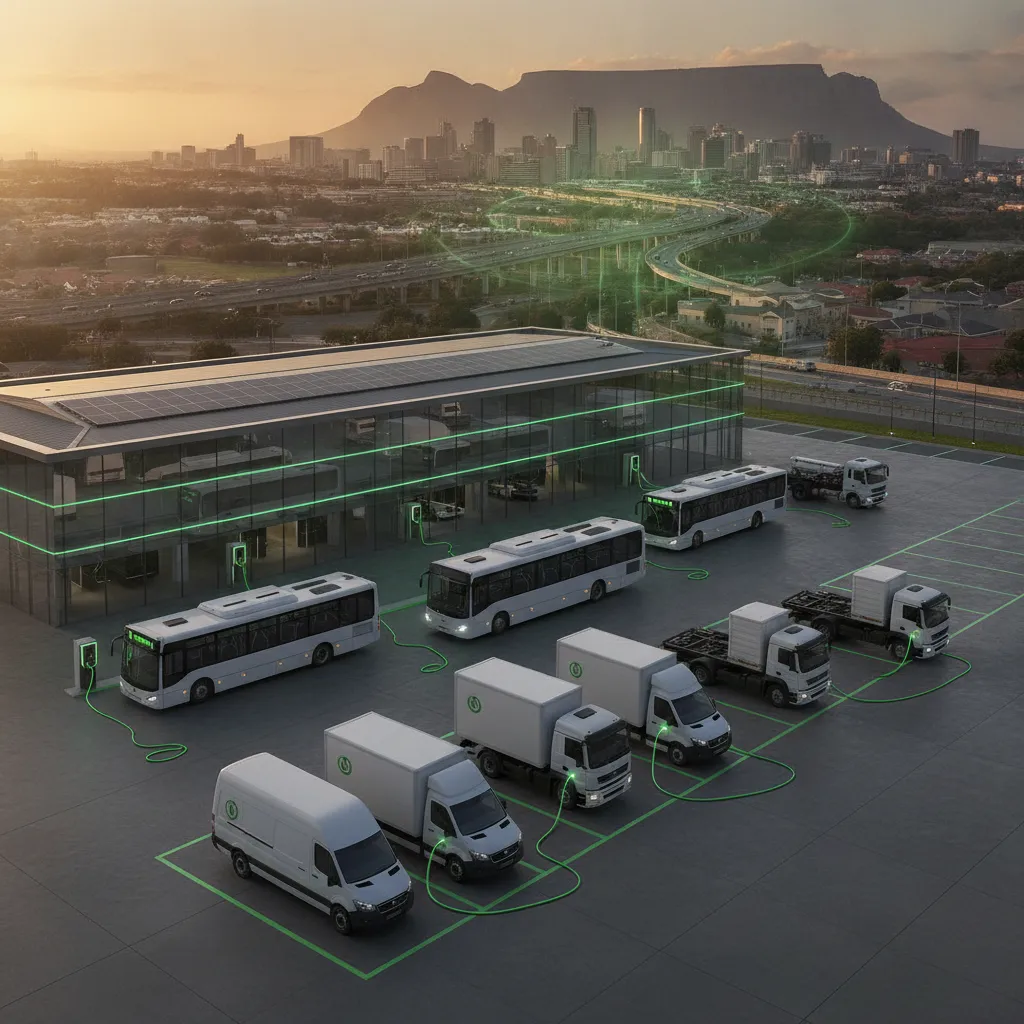
Key points
- AC Level 2 wallboxes (7-22 kW) are the correct starting point for most lodges: guests park overnight and a full charge costs the property roughly R3.50-R4.50/kWh, which you can recover by billing at the public AC rate of R5.88/kWh (August 2025 benchmark, confirm current rates before setting your tariff).
- A commercial Level 2 AC charger setup (unit plus installation) costs from approximately R25,000 for a basic install up to R45,000 for more complex commercial installs, per published South African cost data. A solar-integrated system pays back in roughly 4.2-4.4 years per academic and supplier studies.
- About 70% of South African residential properties are on single-phase supply, capping any one charger at 7 kW. Upgrading to three-phase from Eskom costs approximately R30,000 more than a single-phase rural connection, plan this before specifying charger hardware.
- Remote game lodge power typically means a weak or absent grid: a solar-plus-battery microgrid is not optional for Limpopo and Mpumalanga reserves, it is the only reliable foundation for EV charging infrastructure.
- All permanent EV charger wiring in South Africa must comply with SANS 10142-1, use SANS 62196-2 (AC) or SANS 62196-3 (DC) connectors, be carried out by an ECSA-registered installer, and be covered by an electrical Certificate of Compliance (CoC).
- Listing as EV-friendly typically generates 2-3 additional bookings per month and allows a nightly rate add-on of as little as R50 to recover charging costs entirely, according to EVCI.tech.
- City Lodge Hotels has already rolled out Chargify AC chargers across eight properties. Independent lodges that delay risk losing EV-driving guests to chain hotels that have already solved the problem.
Why EV charging for game lodges cannot be ignored in 2026
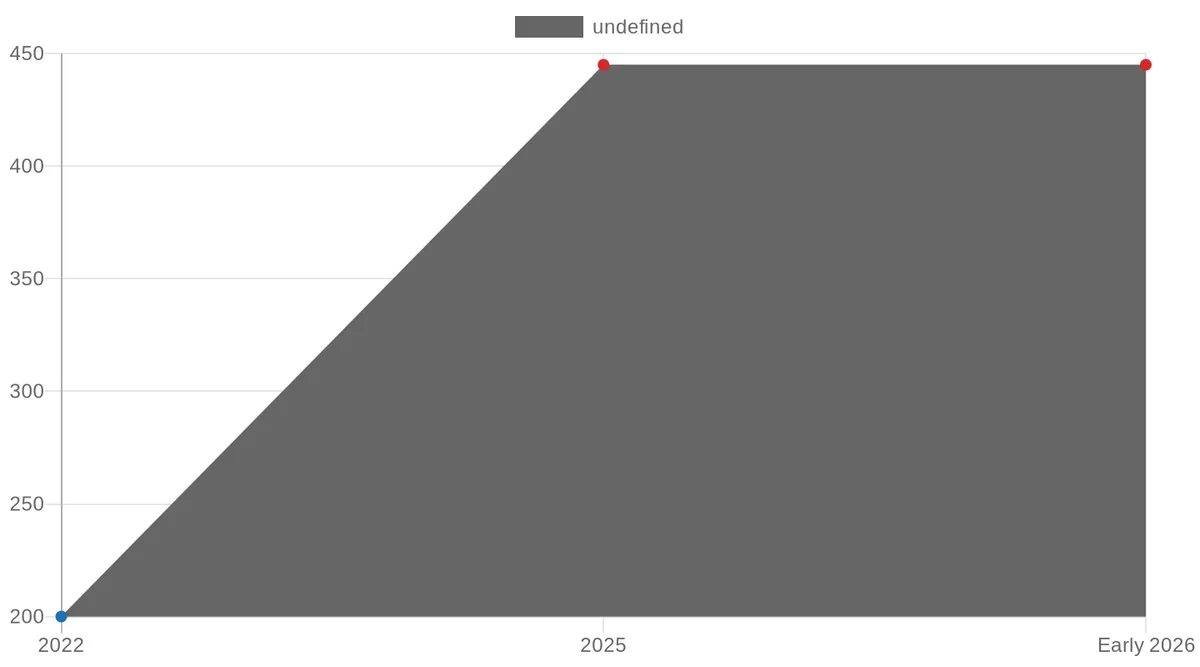
South Africa recorded 1,231 passenger battery-electric vehicle (BEV) sales in 2024, the country’s first year exceeding 1,000 units, and 1,018 BEVs in 2025 (down 17% year-on-year, representing 0.17% of total vehicle sales). The market remains small in absolute terms, but the guest profile matters more than national sales volumes. EV buyers in South Africa skew strongly toward high-income, urban professionals, exactly the demographic that books private game lodges and boutique hotels. An EV owner driving from Johannesburg to the Sabi Sand or the Waterberg faces a round trip of 600-900 km and will specifically filter accommodation by charger availability.
The competitive pressure is already arriving from chain hotels. City Lodge Hotels rolled out Chargify AC EV charging stations at eight of its properties across South Africa, announced in February 2026, compatible with all EVs sold in South Africa. Chargify was established in 2023 through an investment injection by Mercedes-Benz South Africa and operates more than 120 charging stations nationally. Meanwhile, Q1 2026 BEV sales reached 544 units, a 97.1% year-on-year increase versus Q1 2025, confirming that the pool of guests arriving at lodges with an EV is growing rapidly. Autotrader reported a 220% increase in EV searches between March 2025 and March 2026, affluent consumers are researching EVs at pace, and those buyers will soon be your guests.
The charging infrastructure gap is real and measurable. South Africa’s public charging network is heavily concentrated in urban areas, with the Western Cape and Gauteng accounting for 78% of all public charging points. The N1 between Beaufort West and Three Sisters, the N2 between East London and Durban, and Limpopo outside Polokwane, all key game lodge and safari tourism corridors, remain infrastructure-sparse. For EV-driving guests heading to these destinations, a charger at the lodge is not a luxury amenity; it is a logistical necessity.
The grid reality: what power do you actually have at the lodge?
Before specifying a single charger, you need an honest assessment of your power supply. Approximately 70% of South African residential and light-commercial properties are on single-phase 60-80A supplies, which caps EV charger output at around 7 kW, roughly 30 km of range per hour. For a lodge guest arriving with 100 km of remaining range after a long drive from Johannesburg, a 7 kW overnight charge of 8-10 hours delivers a full battery. That maths usually works in your favour, provided guests check in before sunset.
Upgrading to three-phase unlocks 11-22 kW AC charging, turning an eight-hour overnight dwell into a three-hour top-up. However, community-reported data suggests a three-phase rural connection costs approximately R30,000 more than a single-phase connection, a material capital item that must be budgeted before the charger hardware conversation begins. Factor in Eskom’s Notified Maximum Demand (NMD) upgrade fee, which is payable upfront and non-refundable, as well as overhead line relocation costs if your supply infrastructure requires it.
For lodges in Limpopo, Mpumalanga, and the Northern Cape, where the grid is present but unreliable, load-shedding is the bigger constraint. Approximately 92% of Eskom smart meters on load-reduction feeders are concentrated in Gauteng, Mpumalanga, Limpopo, and KwaZulu-Natal, the provinces with the highest network risk. A charging schedule that depends on predictable overnight grid power is fragile in these provinces. The answer is solar pairing.
Solar pairing and the off-grid lodge model
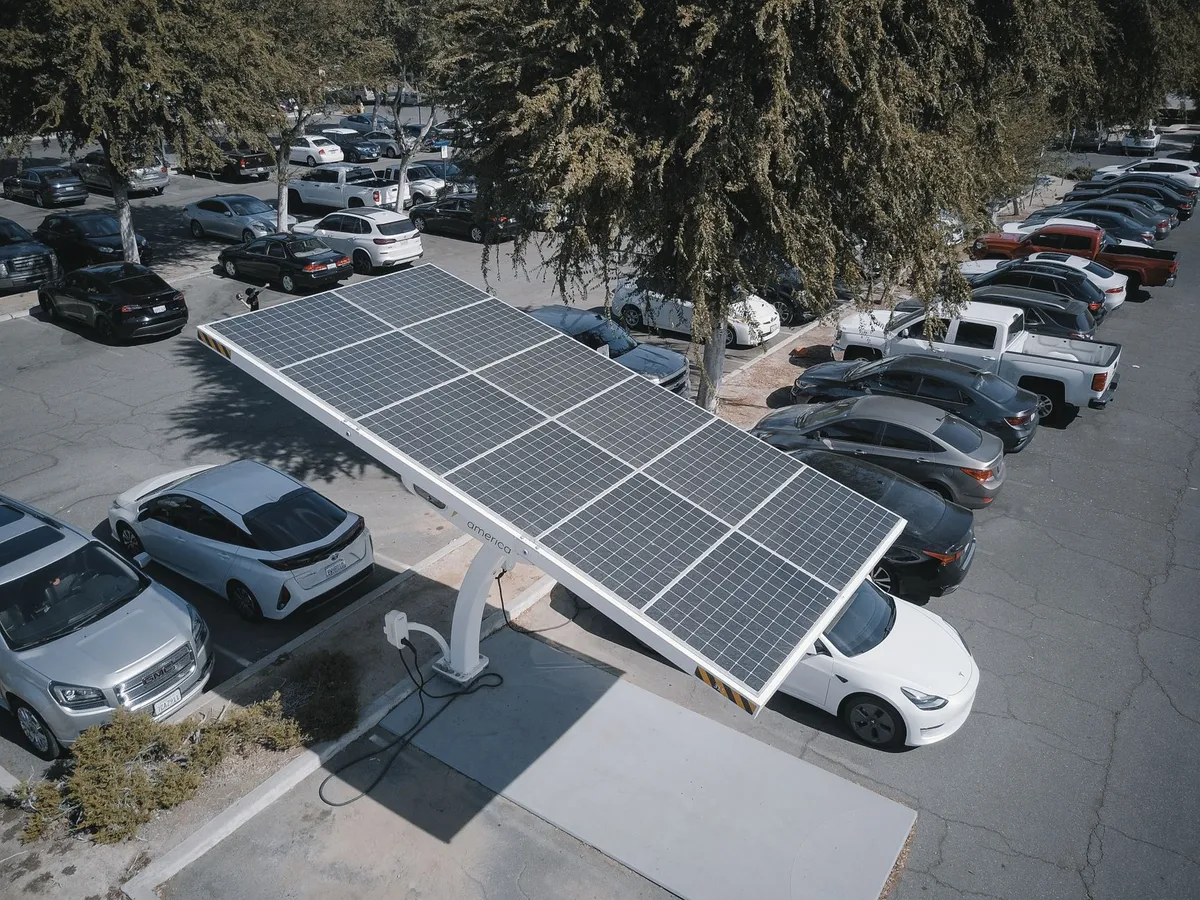
The most compelling proof of concept for off-grid EV charging in the SA bush is not theoretical, it is already running. Cheetah Plains Lodge in the Sabi Sand has a 330 kWp photovoltaic system made up of 1,205 solar panels, completed in 2019, capable of charging eight vehicles simultaneously. The system generates an average of 550 MWh per annum and offsets 530 tonnes of CO2 annually, and it powers electric safari vehicles (ESVs) entirely from renewable sources. Those ESVs drive an average of 32,000 km per year producing zero carbon emissions; an equivalent diesel 4×4 would emit over 7,000 kg of CO2 over the same distance. The noise and scent advantages of electric game drive vehicles are equally significant for wildlife viewing.
Singita’s Lebombo and Sweni lodges in Kruger National Park offer another benchmark. Singita’s Shishangaan staff village has had a 197 kWp photovoltaic hybrid system in place since 2016, with the upgraded system using Tesla Powerpack lithium-ion batteries with a total storage capacity of 696 kWh. Singita is forecast to cut generator usage by as much as 70% as a result, while reducing diesel consumption by approximately 80,000 gallons annually. The target is for off-grid lodges to be 80% powered by on-site renewable energy.
At the network level, Zero Carbon Charge (CHARGE) launched South Africa’s first fully off-grid, solar-powered EV charging stations on the Johannesburg, Durban N3 corridor in May 2026, backed by R100 million from the Development Bank of South Africa (DBSA). The Wolmaransstad station uses 480 bifacial solar panels generating up to 280 kW, backed by a 546 kWh liquid-cooled battery, and has operated at 99% uptime with no grid connection since launching in November 2024. The model scales down: a lodge solar plant sized for guest charging does not need to match CHARGE’s highway-grade output, but the principle, solar generation, battery buffer, no Eskom dependency, is directly transferable.
For lodges considering solar-integrated charging, a December 2025 academic study found that a solar-integrated EV charging solution achieves payback in 4.2 years versus 6.8 years for grid-only alternatives, with an NPV of R2.3 million and IRR of 11.2% over 20 years. A commercial supplier estimate puts the payback period at approximately 4.4 years for a solar EV charging solution in South Africa. Lodges already investing in solar to combat load-shedding can extend that infrastructure to cover EV charging with a relatively modest incremental cost.
Lodges currently on Eskom’s Ruraflex, Landrate, or Nightsave Rural tariffs that add a rooftop solar system must note: adding a solar system requires switching to the Ruraflex Gen tariff, which permits on-site generation and energy export at the same cost structure. This is an administrative step, but skipping it creates compliance exposure.
Set your lodge EV charging tariff and billing model
AC vs DC: what charger type does a lodge actually need?
For most game lodges and boutique hotels, the answer is AC, specifically a billing-grade 22 kW three-phase wallbox per bay, or a 7 kW single-phase unit where three-phase supply is unavailable. Here is why: lodge guests dwell for hours, often overnight. A 22 kW AC charger fully replenishes most EVs sold in South Africa during a standard dinner-to-breakfast window. DC fast chargers deliver speed, but at a capital cost that rarely makes economic sense at a property where nobody needs a 30-minute top-up.
| Charger type | Output | Typical installed cost (ZAR) | Best suited to |
|---|---|---|---|
| 7 kW AC wallbox (single-phase) | 7 kW | R14,000-R26,000 | Lodges on single-phase supply; overnight dwell |
| 22 kW AC wallbox (three-phase) | 22 kW | R25,000, R45,000 | Lodges on three-phase; overnight or multi-hour dwell |
| 60-120 kW DC fast charger | 60-120 kW | From R430,000 installed | High-traffic forecourts or corridor stops; rarely justified for a boutique lodge |
Rubicon’s e-mobility project manager confirmed that many of the operator’s new charging installations are slower AC chargers located at hotels and tourist spots, citing lower cost and reduced grid capacity requirements as key reasons they are viable for expanding the network’s reach into destination-style locations. That is the operating logic for a boutique lodge: lower capital, lower grid demand, and a natural fit with long guest dwell times.
The billable AC wallbox to specify is a metered, OCPP-compatible unit. ChargePoint SA’s CP-AC22-N is a 22 kW three-phase billing-grade AC charger with Eichrecht-conformant smart metering (1% accuracy), MID metering, OCPP 2.0.1J, ISO 15118 Plug and Charge, and dynamic load balancing, operator and billing ready out of the box. For twin-bay installations, the CP-DUO-44 charges two vehicles simultaneously from a single unit, reducing both hardware cost and installation complexity on a single DB board circuit.
The revenue and ROI case for lodge EV charging
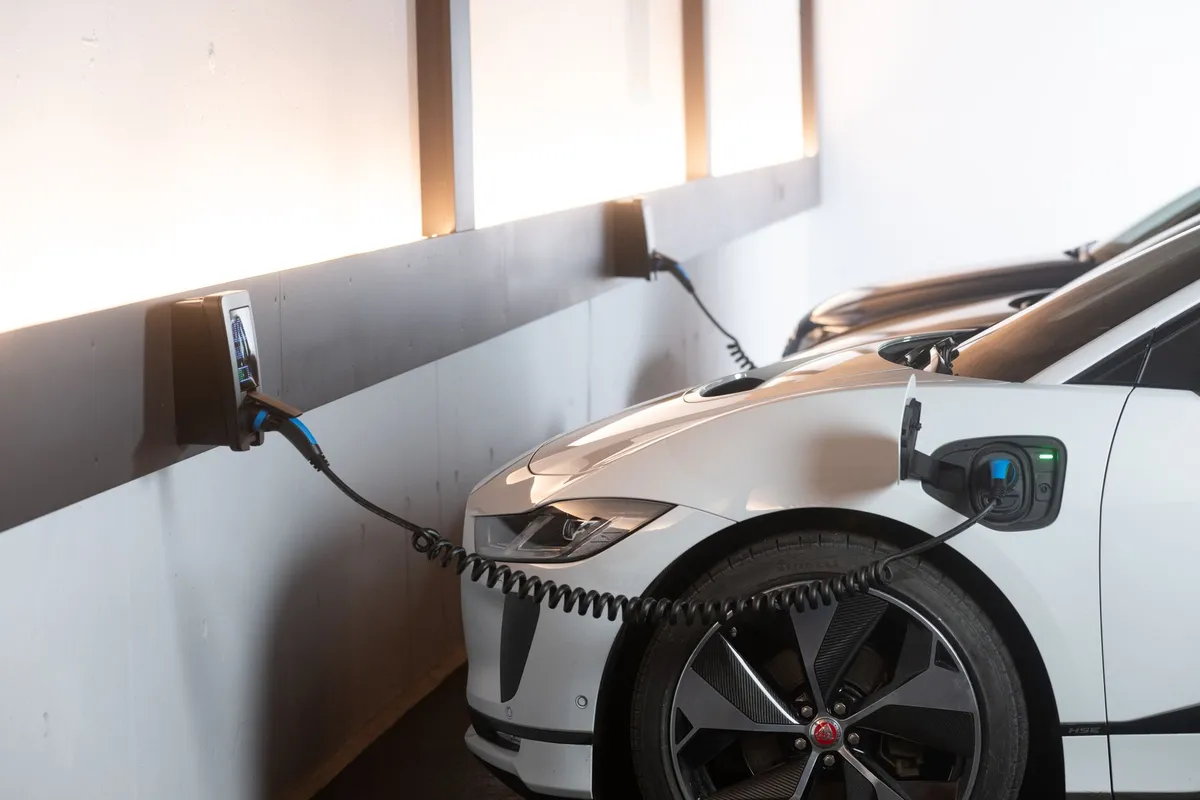
EV charging at a lodge is not a cost centre, it is a revenue line, a booking driver, and a sustainability credential. The numbers work straightforwardly at the AC charging margin. Your lodge buys electricity at a commercial rate of approximately R4.50/kWh for on-site commercial charging. You bill guests at the public AC benchmark of R5.88/kWh (August 2025), yielding a gross margin of approximately R1.38/kWh per session. On a 60 kWh charge (enough to fill most mid-range EVs), that is R82.80 gross per session, not a fortune, but the charger pays for itself through bookings, not through electricity margin alone.
The booking uplift is the real ROI driver. According to EVCI.tech, most hosts see 2-3 additional bookings monthly once listed as EV-friendly on booking platforms. Adding R50 to the nightly rate to offer ‘complimentary EV charging’ positions the amenity as a premium inclusion and recovers the electricity cost entirely. At R50 per room per night across 2-3 additional bookings per month, the incremental revenue comfortably covers the monthly operating cost of a managed AC wallbox service.
For lodges preferring a low-upfront model, EVCI.tech’s OPEX entry point is R1,500 upfront, then R498 per month, with 4-5 charging sessions per month making it cost-neutral. ChargePoint SA’s commercial programme is structured similarly, supply, installation, SANS 10142-1-compliant wiring, CoC, and managed billing from approximately R350 per charger per month, under a single accountable contract with ECSA-registered installers.
For lodges considering a Section 12B tax deduction: under Section 12B of the Income Tax Act, businesses can deduct the cost of solar panels and supporting structures from income tax, effectively subsidising the transition to solar-powered EV charging. If your lodge is investing in solar to offset Eskom tariffs, Ruraflex customers faced real-world bill increases of up to 25% from the 2025 tariff restructuring, the solar investment already makes fiscal sense independently, and EV charging rides on top of it.
Ready to model the numbers for your property? Plan your site free with our Commercial Site Builder, enter your property details and get the recommended charger, estimated cost, and payback period before booking an engineered site assessment.
Compliance: what SA law requires before you plug in a guest’s EV
Compliance for EV charging at a commercial property in South Africa is non-negotiable and has three components: the right connector standard, the right wiring standard, and the right installer credentials.
- Connector standards: AC charging must use SANS 62196-2 Type 2 connectors. DC fast charging must use SANS 62196-3 CCS2 connectors. All EVs sold in South Africa in 2025 and 2026 are compatible with these standards.
- Wiring standard: All permanent electrical work must comply with SANS 10142-1 (the South African wiring code). A Certificate of Compliance (CoC) must be issued, without it, your property insurance can reject claims for electrical fires and you cannot legally transfer the property.
- Installer credentials: The electrician must be ECSA-registered. In the commercial context, this is not a box-ticking exercise, an unregistered installer cannot legally issue a CoC, and a CoC issued by an unregistered installer is void.
- IP rating: Outdoor charger installations require a minimum IP54 rating. Lodges in KwaZulu-Natal coastal environments should specify higher-rated enclosures given humidity and salt-air exposure.
- Cable sizing: A 32A single-phase Level 2 circuit typically requires 6 mm² cable for runs under 25 m, stepping up for longer runs or three-phase circuits. Lodge installations often involve longer conduit runs across parking areas, this must be assessed per site.
- Tariff registration: Lodges adding solar generation must register on the correct Eskom generation tariff. Operating under the wrong tariff structure creates billing and compliance risk.
Frequently asked questions: EV charging at SA game lodges and boutique hotels
Do guests really arrive expecting a charger?
Increasingly, yes. EV searches on Autotrader grew 220% between March 2025 and March 2026. EV owners, who tend to be affluent, tech-comfortable travellers, treat charger availability the way a previous generation treated Wi-Fi: they check before booking, and they choose accordingly. Tourism-focused coverage of the City Lodge rollout explicitly frames destination EV charging as a guest convenience and sustainability differentiator.
Can my existing solar system handle the extra load?
It depends on the system’s available capacity and battery storage. The Cheetah Plains 330 kWp system charges eight vehicles simultaneously, a scale most lodges do not need to match. A more modest solar extension for two to four AC wallboxes is achievable as an incremental project. The key constraint is battery storage: overnight charging draws from stored solar energy, not live generation. This is precisely why a site assessment matters before any equipment is specified.
What happens to the charger during load-shedding?
A grid-tied charger with no battery backup stops when the grid goes down. A solar-plus-battery system, like the one demonstrated at CHARGE’s Wolmaransstad station, which achieved 99% uptime with zero grid dependency, continues charging. For lodges in Limpopo and Mpumalanga where load-shedding risk is highest, the solar-and-battery configuration is the appropriate baseline, not an upgrade.
Is a DC fast charger worth it for a lodge?
Rarely, at current traffic volumes. A 60 kW DC fast charger starts from approximately R430,000 installed and generates its strongest ROI at high-utilisation sites like forecourts or fleet depots. At a boutique lodge with 8-20 rooms, guests dwell overnight, AC charging is both sufficient and far more capital-efficient. If your property sits on a major EV travel corridor and wants to attract passing EV drivers as well as overnight guests, a single DC unit alongside two or three AC wallboxes may make sense, but model the utilisation carefully before committing.
Who handles billing and maintenance?
Under ChargePoint SA’s commercial programme, billing, access management (RFID or app), smart metering, load balancing, and remote monitoring are all included under a single managed contract, no need for the lodge to administer charging sessions manually. The expected lifespan of a commercial AC charger is approximately 10 years; annual maintenance for a commercial Level 2 AC charger runs approximately $400, $600 (roughly R7,600-R11,400) globally, with outdoor units in coastal or humid climates at the higher end.
What is the first step?
An engineered site assessment. Before any hardware is ordered, a qualified ECSA-registered electrician must assess your DB board capacity, available phase supply, cable run distances, outdoor enclosure requirements, and solar integration potential. This assessment drives the specification, the CoC scope, and the final installed cost. Use our free Commercial Site Builder to plan your site and get a recommended configuration, then book a full engineered site assessment.
Plan EV charging for your game lodge or boutique hotel
The Commercial Site Builder is free, with no obligation to proceed.
Plan my lodge’s charging →WhatsApp us
CoC-certified installers, nationwide