
Key points
- 120 BYD B12 electric buses ordered 23 July 2024, confirmed as South Africa’s largest-ever electric bus order, with all 120 now fully deployed and clocking 115,000-120,000 km per week.
- Each bus: 12.5 m long, 65 seats, LFP battery, 300 kW combined peak power, 1,100 Nm torque, 100 km/h top speed, pilot proved 300 km on a single charge.
- Electricity costs expected to be approximately 70% lower per km than diesel; GreenCape analysis puts annual fuel savings at roughly R359,000 per bus.
- Total Golden Arrow capital investment: R750 million, entirely self-funded with zero government subsidy confirmed.
- Arrowgate depot is South Africa’s largest EV charging hub, 30 chargers (60 points) operational at launch, with expansion to 120 simultaneous charge points planned.
- Decision on whether to expand beyond 120 buses will be made in the second half of 2026, once the fleet accumulates 3 million km of operational data.
On 23 July 2024, Golden Arrow Bus Services (GABS) and BYD South Africa signed a purchase agreement for 120 BYD B12 electric buses, the largest electric bus order ever placed in South Africa, according to CleanTechnica and BYD South Africa’s official press release. The deal made headlines. What the headlines missed was the detail: four years of pilot testing, a purpose-built R750 million charging infrastructure investment, a hard-nosed total-cost-of-ownership calculation, and a frank admission that the South African government provided essentially no help along the way.
By May 2026, Engineering News reported that all 120 buses are fully deployed and collectively clocking 115,000-120,000 km every week, with GABS now mulling a wheeling agreement with an independent power producer to secure renewable energy for the fleet’s growing appetite. This article unpacks every layer of that journey: specs, costs, charging strategy, what the pilot actually proved, and what it means for Cape Town’s commuters, local EV charging infrastructure, and any South African operator watching from the sideline.
Why Golden Arrow Made This Move: The Financial Case First
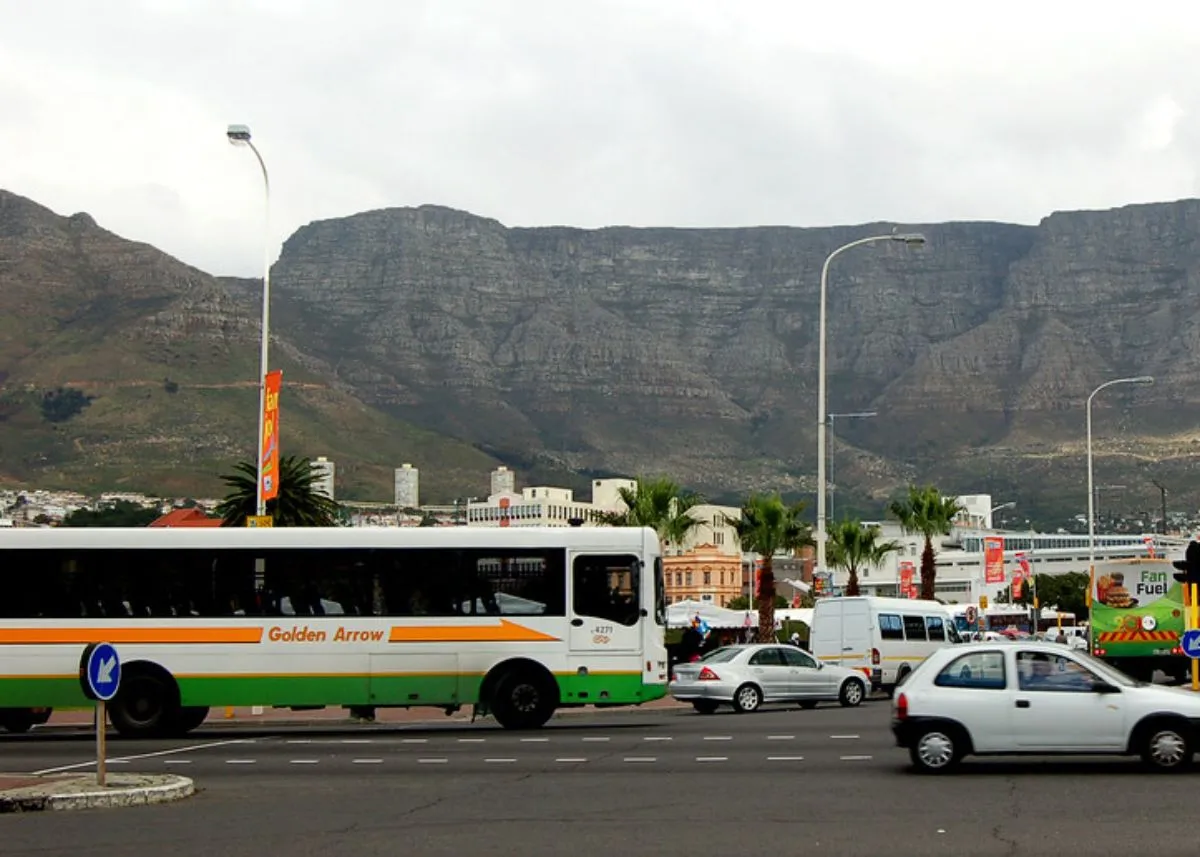
Golden Arrow operates 1,200 diesel buses across 1,300 routes, carrying 220,000 commuters every day, driven by 1,600 drivers (Engineering News, March 2025). At that scale, fuel is not a line item, it is the business. CEO Francois Meyer put it plainly: around 31% of total costs relate to fuel.
The diesel fleet collectively burns over 25 million litres of fuel and emits approximately 67.3 tonnes of CO2 per year across 65 million kilometres. With diesel prices volatile and rising, that 31% figure creates a powerful incentive to find an alternative, and after four years of testing, GABS concluded that alternative was viable.
“Compared to the current diesel price, we expect the electricity costs to be approximately 70% less than the equivalent diesel costs per kilometre.”
That 70% cost reduction per kilometre is the headline number. But the full financial picture is more nuanced, and more interesting.
The Four-Year Pilot: What Was Actually Tested
GABS did not rush this decision. The testing timeline, drawn from ESI-Africa and the GABS official press release, spans four years:
- 2020: Two BYD K9 pilot buses introduced, co-funded by uYilo (the national e-mobility programme).
- 2021: Pilot buses placed into regular service on the Retreat to Cape Town CBD route.
- 2022: A third test bus, the BYD B12 in Golden Arrow’s 65-seater specification, introduced to the fleet.
- 2023: A fourth test bus added.
- Total distance: Approximately 200,000 km of road testing completed before the bulk order was signed.
The 18-month pilot study (co-run with GreenCape) delivered concrete numbers. The two pilot K9 buses achieved 300 km on a single charge and recorded upwards of R657,000 per year in fuel savings across the two buses combined. Maintenance costs fell by 50% on spare parts and 80% on oils and lubricants compared to equivalent diesel buses in the fleet.
GreenCape independently published an annual fuel-saving estimate of approximately R359,000 per bus. CleanTechnica cited a GreenCape finding of $34,000 in reduced costs per bus per year over the 18-month pilot, a figure that, at prevailing exchange rates, broadly aligns with that ZAR figure.
“[Electric-bus acquisition on this scale is] a bold move and an expensive exercise, but Golden Arrow’s total cost of ownership analysis showed us that it is worth it.”
BYD B12 Specs: The Bus Behind the Headlines
The 120 buses ordered are BYD B12 models, chosen specifically because their dimensions and capacity closely match the bulk of Golden Arrow’s existing diesel fleet. Key specifications, drawn from BYD South Africa, TopAuto, and Engineering News:
| Specification | BYD B12 (GABS spec) |
|---|---|
| Length | 12.5 metres |
| Seating capacity | 65 passengers |
| Battery chemistry | Lithium Iron Phosphate (LFP / LiFePO4) |
| Drive motors | Two electric motors, 300 kW combined peak, 1,100 Nm torque |
| Top speed | 100 km/h |
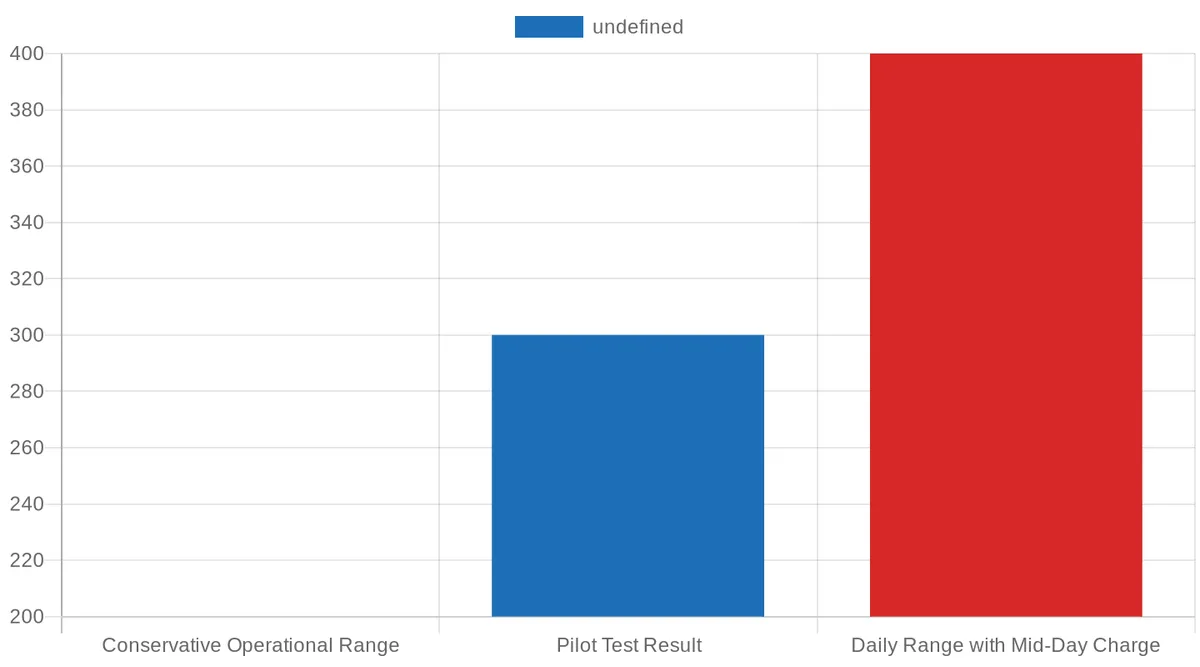
| Range per charge (pilot test) | 300 km |
| Range per charge (conservative, engineer-confirmed) | Just over 200 km (Gideon Neethling, Engineering News) |
| Max daily range (two-charge strategy) | Up to 400 km (Gideon Neethling, Engineering News) |
| DC fast charge time (80 kW, 0-100%) | Approximately 3 hours |
| Off-peak overnight charge time | 2 to 4 hours (ESI-Africa / BYD SA) |
| Controller integration | Six-in-one module: 2 motor controllers, steering, air compressor, DC-DC, power distribution |
| Local content (this order) | None, imported fully built; local body-builder collaboration planned for future orders |
One concern that circulated widely before the first buses entered service was whether electric buses could handle Cape Town’s notorious gradients, particularly Hospital Bend on De Waal Drive. CEO Francois Meyer addressed this directly at the March 2025 rollout:
“There is a rumour electric buses can’t get up Hospital Bend, but that’s not true. These buses fly up there.”
That performance is not surprising given the drivetrain: 1,100 Nm of torque from a standing start makes gradient climbing straightforwardly easy for an electric motor.
The Real Cost of Ownership: Capex, Opex, and Payback
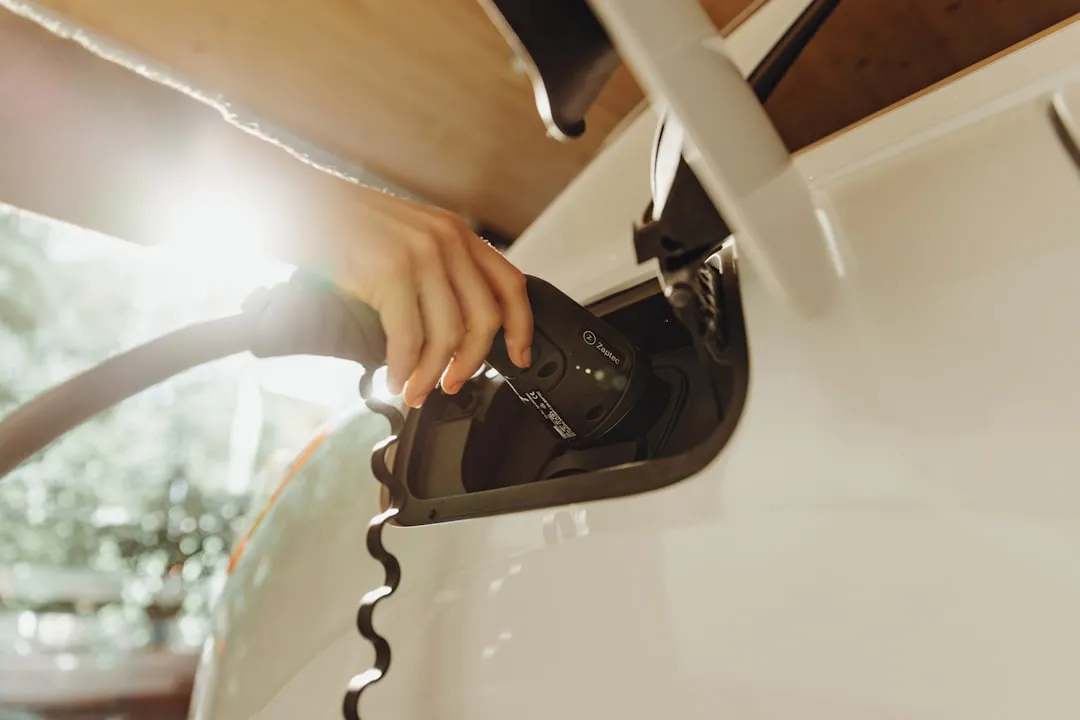
The financial case for the BYD B12 over diesel is real but it is not simple. The upfront cost is genuinely painful.
| Cost factor | Electric bus (BYD B12) | Equivalent diesel bus |
|---|---|---|
| Indicative capex per bus | ~R7 million (GreenCape independent benchmark) | R2.3, R3.5 million (implied; electric is 2-3x diesel, per Engineering News) |
| Annual fuel/energy saving per bus | ~R359,000 (GreenCape, Daily Maverick) | Baseline (no saving) |
| Electricity cost vs diesel per km | ~70% cheaper (GABS, Engineering News) | Baseline |
| Spare parts cost vs diesel | 50% less (pilot data) | Baseline |
| Oils and lubricants cost vs diesel | 80% less (pilot data) | Baseline |
| Payback period (GreenCape range) | 2 to 8 years (GreenCape case study) | N/A |
| Payback period (GABS estimate) | 8 to 12 years (Daily Maverick) | N/A |
| Vehicle lifespan for full payback | 15 to 20 years | Typically 12-15 years |
| 10-year CAPEX + OPEX comparison (60,000 km/year) | Lower total than diesel over 10 years despite higher upfront cost (GreenCape) | Higher total over 10 years |
At roughly R7 million per bus (GreenCape’s independent benchmark, not a GABS-confirmed figure), 120 buses represents an implied vehicle cost of around R840 million before charging infrastructure. GABS has financed this through South Africa’s commercial banks; exact loan terms and total contract value have not been publicly disclosed. The R750 million total investment figure confirmed publicly (LALADY Media House / CapeTalk) likely represents Phase 1 vehicles plus depot infrastructure combined.
“The initial capital outlay may be two or three times the costs of a traditional internal combustion engine (ICE) bus, but this initial capital outlay will be recovered over the life of the vehicle.”
Why is the capex so high? The same reason EVs are expensive across the board in South Africa: import duties and ad valorem taxes. GABS has not minced words about this policy failure. The 120-bus order was entirely self-funded, no government grant, no green finance concession, no subsidy. GABS company engineer Neethling was characteristically direct at the Smarter Mobility Africa 2025 Summit: green finance, as far as GABS has experienced it, does not exist in any meaningful form in South Africa.
The Charging Infrastructure: Arrowgate and the Managed Charging Strategy
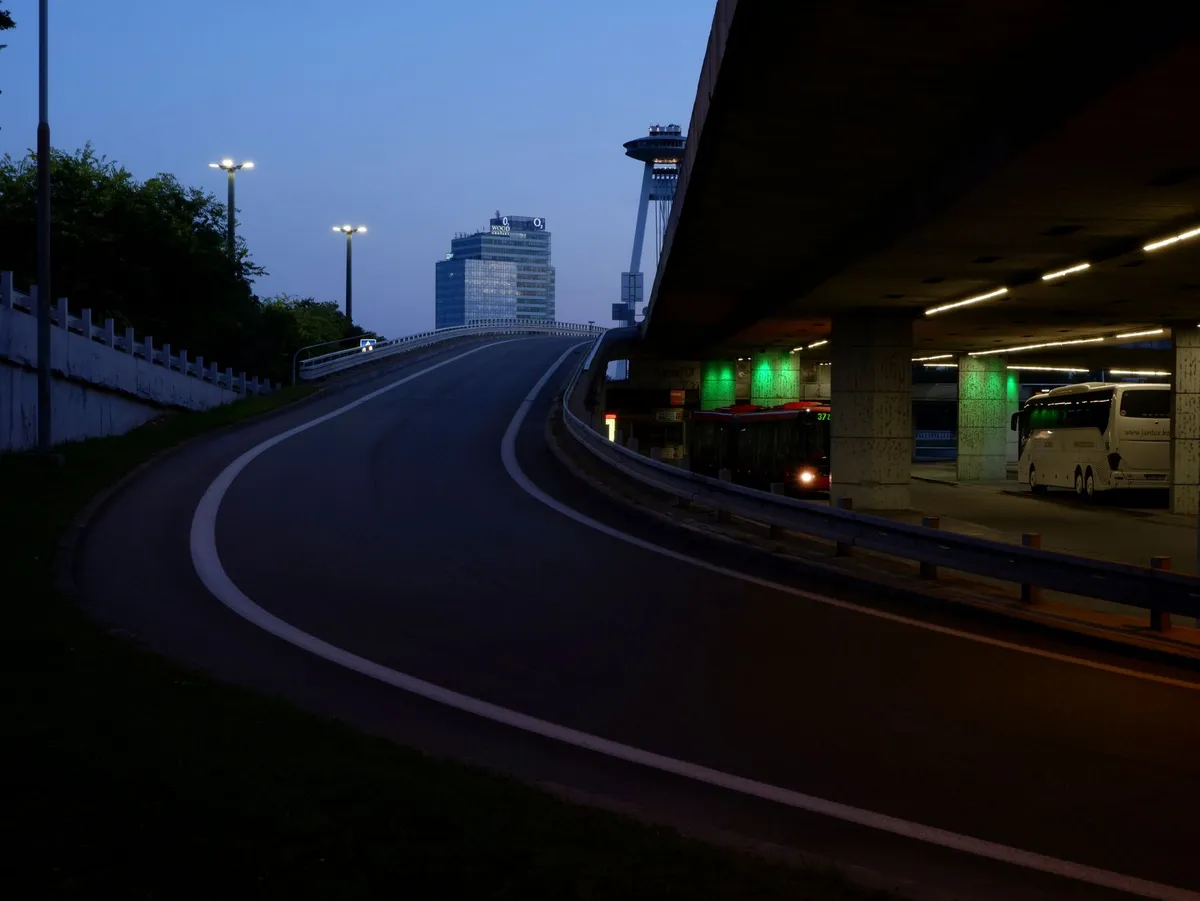
Buying 120 electric buses is one challenge. Charging them reliably, economically, and without triggering a catastrophic electricity bill is another challenge entirely. The Arrowgate depot in Montana, Cape Town, is where GABS has concentrated its charging infrastructure build-out, and the engineering decisions made there reveal how complex depot charging at this scale really is.
The build-out was completed by Smart EV, the EV charging division of STS Tech Group (ITWeb), using Autel Energy MaxiCharger DC Fast units as the charger hardware. Phase 1 was completed in just four months.
The Arrowgate hub, as of the September 2025 official launch:
- 30 charging units installed, each with two dispensers, giving 60 total charge points.
- Capable of charging 60 buses simultaneously.
- Autel Energy MaxiCharger DC Fast units with up to 98% conversion efficiency and IP65 weather protection.
- Connectors: CCS, CHAdeMO, and GB/T, the GB/T connection being critical for BYD’s native connector standard.
- Autel Cloud platform managing remote monitoring, smart load management, and diagnostics across all units.
- City of Cape Town grid supply tripled from 1 MW to 3 MW.
- 1.2 MWh battery and inverter system installed on-site, allowing the depot to avoid drawing power during peak tariff hours and to keep buses charging even during load-shedding events.
- Solar PV at rooftop and carport installations generating just over 2 MW at peak, supplementing the grid supply.
- 63% energy saving for the fleet achieved through the hub.
“I’ve had the opportunity to visit big charging facilities in other countries around the world and this definitely is one of the best. With the Smart EV system in place, we are saving energy and also using surplus solar power more strategically across the depot. When you’re running a facility of this size, you have to manage it with technology or you’ll be in big trouble.”
Phase 2 of the Arrowgate expansion targets 50 to 60 charger units with 120 total dispensers, giving the depot the capacity to charge all 120 buses simultaneously. Wikipedia’s entry on Golden Arrow Bus Services cites a longer-term plan for 100 DC fast chargers at 120 kW each, installed by Autel Intelligent Technology, though this timeline has not been confirmed by GABS directly.
The Hidden Operational Cost: Managing the Electricity Bill
Here is the detail that most coverage glosses over. Once the fleet reached 30 buses at Arrowgate, GABS faced a concrete constraint: drawing too much power simultaneously creates demand charges that dwarf the energy cost itself. A peer-reviewed MDPI study on electric bus depot charging in South Africa found that GABS imposed an effective cap of 30 kW per bus to avoid City of Cape Town demand surcharges. At 30 kW, a bus charging from 20% to 100% state of charge takes just over six hours, which is why the off-peak overnight charging window from 22:00 to 04:00 is central to the operational model.
GABS quality engineer Luqmaan Ryklief explained the trade-off at the Arrowgate launch:
“When it comes to electricity supply, there is a bit of a trade-off between how many buses we can charge and how many we want to charge. We could charge all the buses in 30 minutes using electricity from the grid but then we would receive a scary electricity bill.”
The energy strategy is to use on-site solar PV for daytime opportunity charging and off-peak Eskom and City of Cape Town grid electricity for overnight charging, avoiding peak tariff hours entirely. The 1.2 MWh on-site battery system provides a buffer that allows this strategy to work even during load-shedding events.
Bronwen Dyke-Beyer, GABS’s public relations manager, confirmed the off-peak strategy publicly: “The electricity being drawn from the grid is done outside of Eskom’s peak hours, when there is an oversupply of electricity” (News24, February 2025).
The two-charge-per-day operational model, one mid-day charge between morning and afternoon peak services, one overnight charge at the depot, is what unlocks the 400 km daily range figure:
“That will give us the opportunity to travel up to 400 km per day given a planned mid-day charging opportunity. The buses will operate from five of our depots, allowing us to collect bulk operational data and feedback from our passengers for most of our routes.”
If you operate a commercial fleet or depot and are thinking about what managed EV charging would look like at your site, our commercial charging programme covers supply, certified installation, SANS 10142-1 compliance, and an electrical Certificate of Compliance, with four ownership models to match your procurement approach. Get your free commercial charging site plan and we will assess your site and provide fixed-scope pricing.
Delivery Progress: Where Things Stand
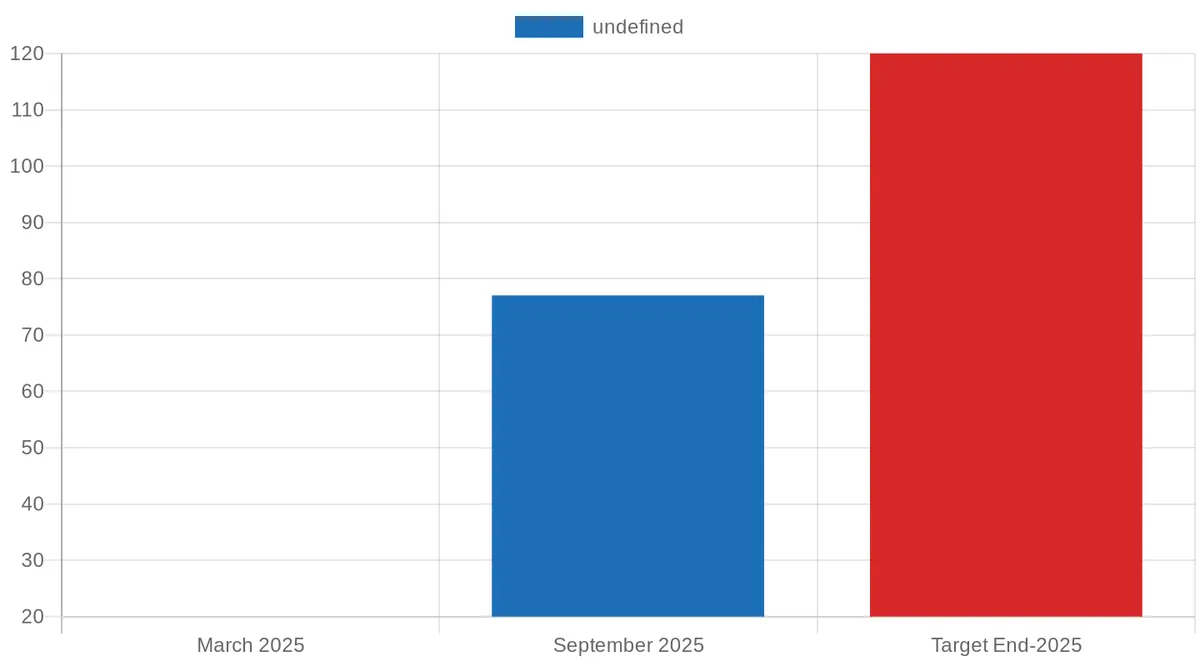
The original plan called for first deliveries in December 2024 and all 120 buses operational before December 2025, with ten buses introduced per month through 2025. Delivery ran slightly behind that schedule:
- January 2025: First buses being readied for February deployment; target of close to 20 on the road by end of February (Engineering News).
- March 2025: First 20 electric buses deployed; remaining 100 to follow through the rest of 2025 (Engineering News).
- September 2025: 60 buses live at the Arrowgate launch (ITWeb), with GABS on track to reach 120 by year-end.
- October 2025: 80 buses running, with 40 more arriving (ITWeb).
- May 2026: All 120 buses fully deployed and clocking 115,000-120,000 km per week (Engineering News).
Commuter reception to the first 20 buses was strongly positive. GABS spokesperson Bronwen Dyke-Beyer reported in March 2025 that “the new buses were given a resounding thumbs up by the company’s passenger forums and feedback from passengers and the public has been overwhelmingly positive thus far” (EWN).
CEO Meyer captured the emotional weight of the milestone with a historical anchor at the March 2025 rollout announcement:
“In 1896 we were behind the wheel of the first electric tram in South Africa and now, some 129 years later we are the first commuter bus company to introduce electric buses into service at scale.”
Compare your fleet’s electricity vs diesel running costs
What This Order Represents, and What It Does Not
The 120 BYD B12 buses electrify approximately 10% of GABS’s 1,200-bus diesel fleet. That is genuinely significant as a first step. It is not a fleet transformation. GABS is explicit about this: the decision on whether to expand beyond 120 electric buses will be made in the second half of 2026, once the fleet has accumulated 3 million kilometres of operational data (Engineering News).
“This bulk order confirms our commitment to renewable energy and will also provide us with the larger scale operational data to pave the way towards full fleet electrification.”
Full electrification of GABS’s 1,100-bus operational fleet, replacing 60 buses per year, would take approximately 18 years at an estimated total investment of R5.8 billion minimum. The annual investment required is estimated at R324 million to R486 million per year. That is a 2040s project at current pace, assuming financing is available and battery costs continue to fall.
The renewable energy requirements for the full fleet are enormous: ESI-Africa estimates that 80 MW to 100 MW of peak installed renewable generation capacity would be needed to charge an all-electric fleet of 1,100 buses. GABS currently has just over 2 MW of peak solar generation installed across six depots and owns 22 hectares of property on which to expand. GABS is now actively exploring a wheeling agreement with an independent power producer to close that gap (Engineering News, May 2026).
Electric Buses South Africa: The Broader Market Picture
The GABS deal sits inside a rapidly expanding South African electric bus market. According to GreenCape’s 2025 Electric Vehicles Market Intelligence Report, the cumulative electric bus market in South Africa stood at 156 vehicles with a total market value of R1.1 billion at end-2024. Electric bus sales are forecast to grow by 420 buses between 2025 and 2030 (valued at R2.9 billion), reaching a projected cumulative total of 576 electric buses by 2030.
Two other significant orders signal that the GABS deal is the leading edge of a broader wave:
- The City of Cape Town awarded a separate public tender to Volvo Bus Southern Africa in July 2025 for a minimum of 30 fully electric Volvo BZRLE buses for its MyCiTi BRT service. The first bus is scheduled for delivery in August 2026, with full rollout targeted by June 2027 (Engineering News).
- South Africa’s Paruk Group placed an order in October 2025 for 100 MAN Lion’s Explorer E fully electric buses, MAN Truck & Bus’s largest e-bus order outside Europe. All 100 vehicles will be locally manufactured, with delivery scheduled to begin in 2026 and be completed by end-2027.
South Africa holds a 41.98% revenue share of the Africa electric bus market, making it the continent’s dominant market for this segment.
What This Means for Cape Town’s EV Charging Infrastructure
The Arrowgate depot is, by any measure, South Africa’s most sophisticated EV charging installation as of its September 2025 launch. It was built in four months, with a 1.2 MWh on-site battery, tripled grid supply, and Autel Cloud-managed smart load balancing. The 63% energy saving reported from the Arrowgate system is the most concrete financial KPI the project has produced to date.
South Africa’s public charging network has surpassed 500 public stations as of mid-2025, with GridCars connecting to approximately 445 sites with 650+ chargers and 1,200+ connectors, according to Rubicon’s 2025 Annual Report cited by CleanTechnica. The Arrowgate depot is a private, fleet-only facility, it does not contribute to the public network. But the expertise being accumulated there, and the commercial relationships being formed with infrastructure partners like Smart EV and Autel, will directly shape what future commercial fleet charging looks like in Cape Town and beyond.
For the South African EV charging industry, Arrowgate proved that managed fleet charging at scale is buildable in this country, in four months, without government support, using commercially available hardware and smart energy management. The technical barriers are solved. The compliance framework is clear: SANS 10142-1 wiring code, electrical Certificate of Compliance, and ECSA-registered installers apply to every commercial depot installation of this type, regardless of scale. The remaining barriers are financial policy and import duty reform, and those are political questions, not engineering ones.
The Government Gap: A Policy Failure by Any Measure
South Africa’s government has not subsidised this project, has not reduced import duties on electric buses, and has not provided any material financial incentive for GABS to make this R750 million commitment. GABS spokesperson Bronwen Dyke-Beyers made this explicit at the Arrowgate launch in September 2025:
“Through exciting partnerships, and unfortunately not much help from government, we’ve now reached the stage where we’ve got buses on the road.”
The contrast with international norms is stark. Most large-scale public transit electrification projects globally, in Europe, China, and increasingly across Latin America, are supported by government capital grants, concessional finance, or fleet-purchase subsidies. South Africa has none of these for bus operators. The 150% tax deduction for new-energy-vehicle production investments signed into law by President Ramaphosa on 24 December 2024 (effective 1 March 2026) applies to manufacturers, not to operators buying finished vehicles. The ad valorem taxes that make these buses two to three times the cost of an equivalent diesel vehicle remain fully in place.
Risks and Honest Caveats
GABS has been admirably transparent about the difficulty of this transition. Three risks deserve honest examination.
1. After-sales and parts availability. BYD’s global after-sales infrastructure for commercial vehicles is a documented weak point in early-market entries. South Africa is at an equivalent early-entry stage for BYD commercial vehicles. GABS has not publicly disclosed the specific warranty or service terms agreed in the B12 contract.
2. Charging frequency as an operational constraint. The MDPI peer-reviewed study confirms that GABS’s Arrowgate depot faces a real constraint: at 30 kW per bus (imposed to avoid demand surcharges), each charge takes just over six hours from 20% to 100% state of charge when the full demand-management cap is applied. This makes the overnight charging window non-negotiable at current infrastructure capacity.
3. Maintenance culture and workforce readiness. GABS has been candid about the workforce preparation required:
“We are intensively preparing our workforce and infrastructure to operate a system with complex requirements, and this will involve many exciting future partnerships.”
None of these risks undermine the deal, GABS has done more homework than any other operator on the continent. They are reasons to watch the 3 million km data accumulation period carefully.
What Commuters and Operators Should Watch
Gideon Neethling has been frank about the scepticism the project faces:
“There’s many people out there that’s hoping for us to fail. We often say the cynical view from our side is that the petrochemical companies are sponsoring certain information to be punted out there: ‘It’s going to blow up in flames’, ‘no range’ all those things. It’s a tightrope we’re walking. It’s an absolutely fantastic project and it’s nice to be at the forefront in the country. I think there’s many that are going to follow.”
For commuters, the immediate practical question is simple: are these buses reliable in daily service? The commuter response from early in the rollout was positive. For operators and investors watching from the sideline, the 3 million km data accumulation milestone, expected in the second half of 2026, is the moment that will determine whether this was a 120-bus experiment or the first phase of an 18-year, R5.8 billion industry transformation.
If you operate a commercial fleet, a depot, or a transport facility and are thinking about what a managed EV charging installation would look like at your site, our commercial charging programme covers supply, certified installation, SANS 10142-1 compliance, and an electrical Certificate of Compliance, with four ownership models to match your procurement approach. Get your free commercial charging site plan and we will assess your site and provide fixed-scope pricing.
Frequently Asked Questions
How many BYD electric buses does Golden Arrow operate in South Africa?
Golden Arrow Bus Services ordered 120 BYD B12 electric buses in July 2024. All 120 are now fully deployed as of mid-2026, collectively covering 115,000-120,000 km per week across Cape Town routes.
How far can a BYD B12 electric bus travel on one charge?
The conservative engineer-confirmed range is just over 200 km per charge. During the 18-month pilot, 300 km on a single charge was achieved. Using a two-charge-per-day strategy, one mid-day top-up and one overnight charge, the buses can cover up to 400 km daily.
How are Golden Arrow’s electric buses charged during load-shedding?
The Arrowgate depot’s 1.2 MWh battery and inverter system allows charging to continue during load-shedding events. Buses are scheduled to charge during the off-peak window (22:00-04:00), and on-site solar PV supplements the grid supply during daylight hours.
What charging standards apply to commercial electric bus depots in South Africa?
Commercial depot installations must comply with SANS 10142-1 (the SA wiring code), require an electrical Certificate of Compliance (CoC), and must use ECSA-registered installers. Connector standards at the Arrowgate depot include CCS, CHAdeMO, and GB/T under SANS 62196.
Will Golden Arrow order more electric buses beyond the initial 120?
A decision on expanding beyond 120 buses will be made in the second half of 2026, once the fleet has accumulated 3 million kilometres of operational data. Full electrification of GABS’s 1,100-bus fleet would take approximately 18 years at an estimated total investment of R5.8 billion minimum.
Photo: Bing
Plan a large-scale EV charging depot like Arrowgate
The Commercial Site Builder is free with no obligation.
Plan my depot charging →WhatsApp us
CoC-certified installers, nationwide