
- South Africa had 3,543 registered EVs at end of 2024 (GreenCape 2025) and 500+ public charging stations by mid-2025, giving an EV-to-charger ratio of roughly 1:7.
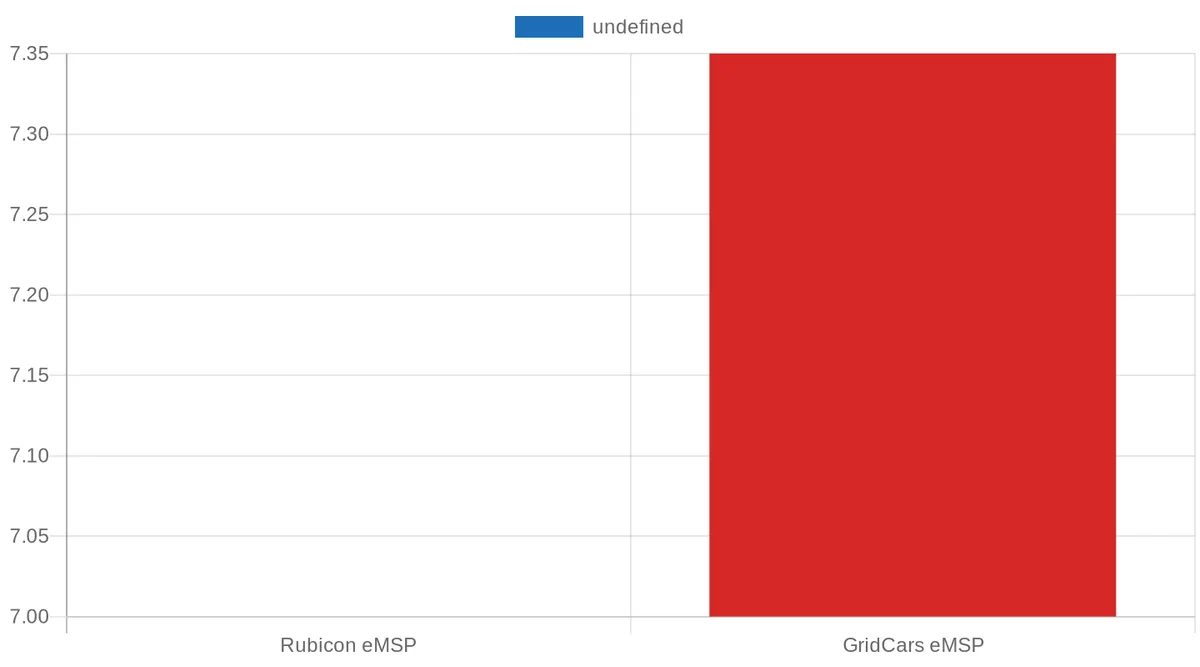
- Public DC retail tariffs ran R7.00-R7.35/kWh and AC R5.88/kWh as of August 2025 (Rubicon.tech official tariff page); note that GridCars implemented a circa 15% increase from 1 December 2025, so treat those figures as historical benchmarks, not current 2026 rates.
- The CPO-to-eMSP wholesale margin is typically 15%, implying a CPO DC wholesale rate of approximately R6.39/kWh and AC approximately R5.11/kWh before retail markup (derived from Rubicon/GridCars margin structure disclosed by Hilton Musk, Rubicon).
- OEM-branded DC tariffs can reach R11.76/kWh, a 60-68% premium over the standard network rate (ChargePoint SA, April 2026).
- Every charger installation in South Africa must comply with SANS 10142-1 (wiring code), SANS 62196-2 (AC connectors), SANS 62196-3 (DC connectors), carry an electrical Certificate of Compliance (CoC), and use ECSA-registered installers on commercial projects.
- The NRCS Letter of Authority (LoA) is mandatory for all EV charger hardware imported or sold in SA; processing takes up to 120 working days.
- Four OEM partnership models exist: host-buys, revenue-share, investor-funded, and CPO-owns-host-free. Choosing wrong costs more than the hardware.
- Winstone Jordaan, Director of GridCars, has publicly stated that the SA market needs approximately 100,000 EVs before charging-as-a-service reaches real profitability, context every OEM CFO should have before committing capex.
Why OEMs in South Africa now need a charging strategy, not just a charging product
If you manage fleet EV strategy, product planning, or dealer network development for a vehicle brand in South Africa, the charging question is no longer optional. Buyers now ask about home charging costs before they ask about fuel savings. Procurement teams at corporate fleets want a single SLA covering the vehicle and the energy infrastructure. And your competitors are already on the scoreboard: Jaguar Land Rover invested R30 million in 82 public stations via GridCars in 2018 (Jaguar SA official website). Audi South Africa exceeded R50 million in charging infrastructure since 2022, adding six 150 kW DC rapid chargers along the N1, N2, and N3 in July 2024 alone via Rubicon (AutoTrader SA). Mercedes-Benz and GridCars jointly invested approximately R40 million ($2.4 million) in 127 new charging stations, with 67 EQ-branded stations operational by July 2024 (EV24.africa).
The baseline reality, though, is sobering. At the end of 2024 South Africa had 3,543 passenger EVs on the road, with a total market value of R2.8 billion (GreenCape Electric Vehicles Market Intelligence Report 2025, cited by ESI-Africa). The public network had grown from roughly 350 stations in mid-2023 to 500+ by mid-2025, with an EV-to-charger ratio of approximately 1:7 (ChargePoint SA market research, 2026). That ratio looks healthy only until you factor in geographic clustering and the single most candid comment in South African e-mobility:
“There’s just no business case. We need about 100,000 vehicles on the road before any of us will see real profitability. But that doesn’t mean we shouldn’t build the foundation now.”
Winstone Jordaan, Director and founder of GridCars, speaking at Enlit Africa (reported by ESI-Africa and ChargePoint SA)
That statement from the market leader is not a reason to walk away. It is the clearest possible argument for a partnership model rather than an in-house build. OEMs that try to own charging infrastructure outright at this stage of the market carry stranded-asset risk. OEMs that white-label a network partner’s infrastructure, negotiate a subsidised tariff for their customers, and let a specialist installer handle compliance can launch a credible charging story in 90 days without a single line on their own balance sheet.
This guide maps every layer of that decision: tariff economics, bulk hardware pricing, the four partnership models, the compliance standards your legal team needs to know, and the hidden installation costs that have derailed more than one OEM bundled programme.
How South African public charging tariffs actually work: the CPO and eMSP structure
Before negotiating any OEM charging partnership, you need to understand the two-layer pricing architecture that governs every public kilowatt-hour sold in South Africa.
“Think of it like the fibre internet model. The fibre network providers, like Openserve or Vumatel, sell bandwidth to internet service providers such as Afrihost or MWeb, who then add their margin before offering it to customers. Public EV charging works in much the same way.”
Hilton Musk, Rubicon Head of E-mobility, quoted in CleanTechnica (November 2025)
The Charge Point Operator (CPO) owns and operates the physical hardware. The e-Mobility Service Provider (eMSP) manages the customer relationship, the billing platform, and the roaming agreements. The eMSP adds a margin, typically 15%, on top of the CPO’s wholesale tariff before charging the end driver (Rubicon Head of E-mobility, via Rubicon.tech and CleanTechnica).
At August 2025 retail rates (Rubicon.tech official tariff page), this translated to:
| Session type | Rubicon eMSP retail | GridCars eMSP retail | Implied CPO wholesale (before 15% markup) |
|---|---|---|---|
| DC fast charge | R7.00/kWh | R7.35/kWh | ~R6.39/kWh |
| AC charge | R5.88/kWh | R5.88/kWh | ~R5.11/kWh |
Critically, the same CPO site can carry different retail prices depending on which eMSP the driver uses. As Hilton Musk noted:
“It’s important to note that these tariffs are typically set through agreements between the charge point operator (CPO) and the e-mobility service provider (eMSP), which means they can vary in some cases. For example, at AIDC-EC charging stations, Rubicon eMSP customers pay R7.00 per kWh while GridCars eMSP customers pay R8.24 per kWh.”
Hilton Musk, Rubicon Head of E-mobility (Rubicon.tech, August 2025)
For an OEM, this tariff opacity is both a risk and an opportunity. The risk: if your brand is associated with a network where a competitor’s eMSP charges your customers R8.24/kWh when a different app charges R7.00/kWh at the same station, your customers notice and your brand suffers. The opportunity: negotiate a subsidised OEM-exclusive tariff for your customers (as Jaguar Land Rover did at R2.71/kWh for I-PACE owners versus the standard market AC rate of R5.88/kWh), and you own a genuine competitive differentiator that appears in every customer journey review.
“Once you understand the roles of CPOs and EMSPs, and how their pricing works, it becomes much clearer why charging costs vary, and what you’re actually paying for. It’s not just about electricity; it’s about infrastructure, access, and convenience.”
Hilton Musk, Rubicon Head of E-mobility, quoted in CleanTechnica (November 2025)
OEM charging partnership models: what each one costs and who bears the risk
If you manage fleet procurement, dealer network development, or product planning for a vehicle brand, the structural choice below determines your charging programme’s cost, risk, and commercial upside for the next five years. There is no universally correct answer, the right model depends on your brand’s volume, your dealer footprint, your customers’ driving profiles, and how much balance-sheet exposure your finance team will tolerate at this stage of the South African EV market.
Model 1: OEM funds infrastructure, CPO operates it (the Jaguar Powerway model)
The OEM provides the capital. A specialist CPO (GridCars, Rubicon, or similar) designs, installs, and operates the network under the OEM’s brand. The OEM takes brand ownership of every station; the CPO takes operational risk and day-to-day management.
Reference point: Jaguar Land Rover invested R30 million with GridCars for 82 public stations in 2018 (Jaguar SA official website). Richard Gouverneur, Managing Director of Jaguar Land Rover South Africa, described the rationale at launch:
“As Jaguar we are proud to be setting the pace for the new generation of electric vehicles in South Africa. The launch of the Jaguar Powerway demonstrates our commitment to electrification technology and the future of mobility in our market. This new network provides peace of mind to our Jaguar I-PACE customers who can now experience more of their world with less range restrictions.”
Richard Gouverneur, Managing Director, Jaguar Land Rover South Africa and sub-Sahara Africa (Jaguar SA press release, 2018)
The OEM-funds model works when your brand needs a first-mover narrative and has the balance sheet to support it. The risk is that 82 stations at R30 million works out to approximately R366,000 per station, before ongoing O&M, in a market where GridCars’ own director admits profitability requires 100,000 EVs. For 2026 volumes, a full in-house-funded rollout is very hard to justify on payback alone.
Model 2: Revenue-share partnership
The CPO or a third-party investor funds and operates the hardware. The OEM provides site access (typically dealership forecourts) and brand visibility. Revenue from public charging sessions is split per an agreed formula. The OEM’s balance-sheet exposure is limited to the co-branding and marketing commitment.
The DC site economics illustrate the range of outcomes: a dual-gun 60 kW DC site costs approximately R650,000 all-in, with roughly R3,300 per month in demand charges and approximately R3,500 per month in O&M and software costs (ChargePoint SA revenue model). At low utilisation (around 30 kWh per day), payback is never. At captive fleet depot utilisation (around 350 kWh per day), payback can reach approximately 1.2 years at an internal rate of return of approximately 80% (ChargePoint SA revenue model, illustrative). Revenue-share only makes commercial sense when utilisation is guaranteed, which in South Africa today typically means a captive fleet or a high-footfall retail anchor, not a standalone public station in a low-density EV corridor.
Model 3: White-label eMSP (OEM-branded app over CPO network)
The OEM white-labels an existing eMSP platform (GridCars or Rubicon) and issues customers a branded charge card or app. The OEM negotiates a bulk tariff, typically at or near the CPO wholesale rate (~R6.39/kWh DC, ~R5.11/kWh AC before the eMSP’s 15% margin), and may subsidise the customer-facing rate further from vehicle margin or a dedicated service fund.
Reference points: BMW South Africa appointed GridCars as its official Charge Point Operator in September 2020 and loads a R10,000 charging voucher onto the GridCars wallet for each new BMW EV buyer, redeemable within 90 days of purchase (BMW SA official website). Mercedes-Benz partnered with GridCars to issue EQ customers a Mercedes-Benz Charge Card accepted at all GridCars-operated public charge points and committed to installing no fewer than 36 charging points at key dealerships (AutoTrader SA). Both programmes required no new station infrastructure from the OEM beyond dealership hardware, they piggyback on GridCars’ existing CPO network.
This is the fastest and lowest-cost model to launch. The trade-off is that your brand’s charging experience is constrained by the underlying CPO’s uptime, tariff policy, and station density. When GridCars moves its tariffs (as it did with a circa 15% increase from 1 December 2025), your customers’ costs move with it unless you have a fixed-rate subsidy agreement in your contract.
Model 4: Turnkey dealer home-charger programme
The OEM partners with a national certified installer to offer every new EV buyer a co-branded home charger at point of sale. The dealership handles the customer introduction; the installer handles survey, supply, installation, compliance, and the Certificate of Compliance. The OEM either covers installation costs entirely (as Mercedes-Benz does for EQ customers in South Africa, per the MB SA official charging page) or bundles hardware into the vehicle finance agreement.
The cost baseline is well-established: a standard compliant 7.4 kW single-phase wallbox installation runs R13,000-R15,000 all-in including the CoC (ChargePoint SA installation services page); a 22 kW three-phase installation runs R18,000-R40,000 depending on property (ChargePoint SA home charger guide, December 2025). The OEM home charger retail price range across brands selling EVs in South Africa runs from R2,277 to R40,779 (TopAuto.co.za, February 2023); BMW’s wallbox was listed at R15,651.36 in February 2023 (TopAuto.co.za, citing BMW SA); Volvo’s home charging system at R25,000 (TopAuto.co.za, citing Volvo SA).
This model produces the highest customer satisfaction because 80-90% of EV charging happens at home, and a customer who has a properly installed, solar-integrated home charger from day one will almost never experience range anxiety. The risk lies in installation quality, a topic we address in detail below.
Bulk charger hardware pricing for OEMs: what you actually pay
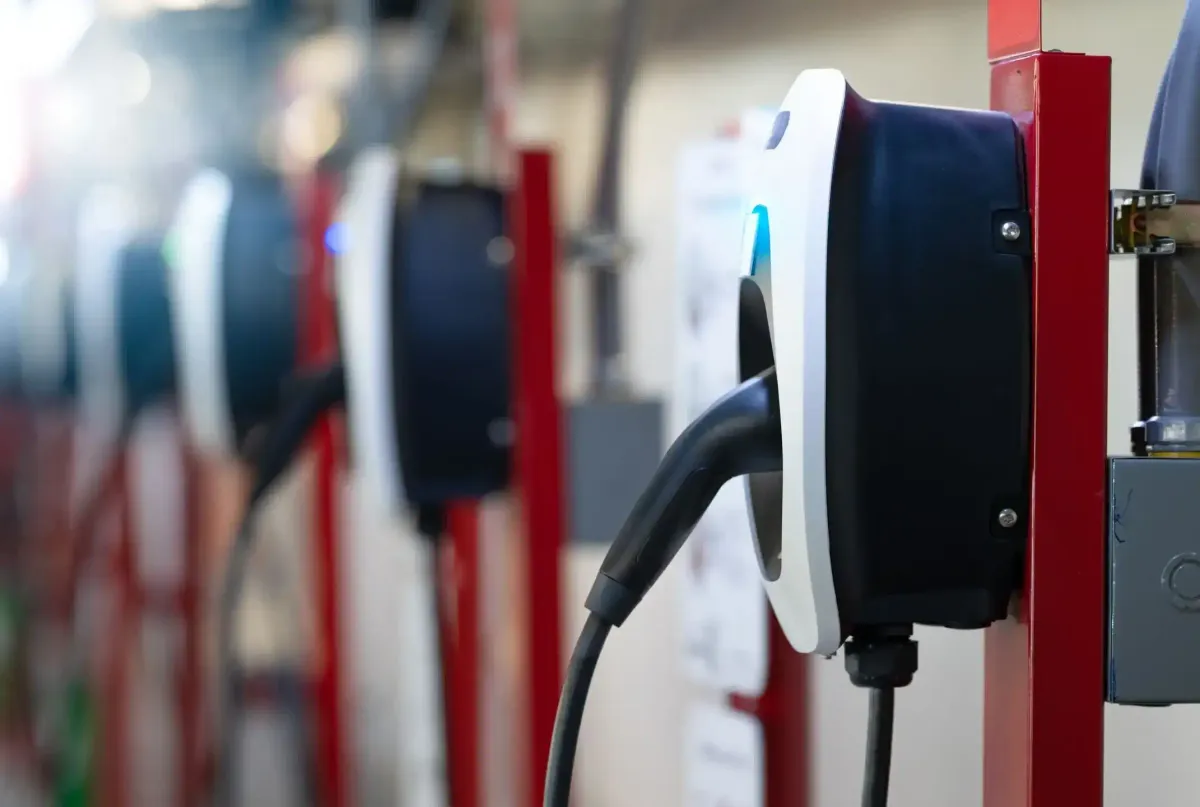
No South African supplier or distributor publicly discloses specific OEM bulk discount tiers, minimum order quantities, or volume pricing in rand. All wholesale EV charger suppliers in SA direct buyers to contact them directly for bulk pricing (EVCSTAR South Africa wholesale supplier listing). That opacity is the market norm, not an exception.
What the evidence does support:
| Hardware category | Retail/list price range (SA) | Wholesale discount (global benchmark) | Notes |
|---|---|---|---|
| 7 kW single-phase AC wallbox | R9,000-R18,000 unit only (ChargePoint SA, Dec 2025) | 20-50% below retail at manufacturer direct (Zeconex.com) | ACDC Dynamics SA lists entry-level residential units from R7,268 ex-VAT |
| 22 kW three-phase AC wallbox | R14,000-R22,000 unit only (ChargePoint SA, Dec 2025) | 20-50% below retail | ACDC Dynamics SA commercial units from R44,918 ex-VAT |
| 47 kW DC fast charger | R400,000, R1.25 million per unit (DriveElectric; imotonews, March 2025) | $15,000, $50,000 USD wholesale; volume orders attract further discounts (Zeconex.com) | DC is 20-30% more expensive than AC per session driven by capex (imotonews, March 2025) |
A real bulk procurement example on the South African market: a 42-unit order (28 AC plus 14 DC) across 14 cluster locations nationwide was requested on Procompare.co.za (circa June 2026), specifying unit and installation pricing, delivery timelines, warranty, and support terms. No prices were disclosed in the public record, which illustrates exactly why OEMs negotiating volume orders need a specialist procurement partner, not a retail quote engine.
For OEM-scale programmes, ChargePoint SA’s Commercial EV Charging Programme delivers a single accountable contract covering charger supply, certified installation, SANS 10142-1 wiring compliance, electrical CoC, and ECSA-registered installers, across a national certified-installer network with standardised site surveys and fixed-scope pricing. We can supply and install other quality charger brands on request; the point is one contract, one point of contact, and compliance documentation that survives a tender audit. Four ownership models are available, host-buys, revenue-share, investor-funded, or ChargePoint SA-owns-host-free, matched to your programme’s risk appetite. Request a B2B proposal at chargepointsa.co.za/commercial-site-builder.
Understand OEM tariff recovery and billing structures
The compliance layer every OEM procurement team must understand
This is the section your legal, risk, and procurement leads need to read. The compliance requirements for EV charger installation in South Africa are specific, layered, and, based on documented experience, poorly understood by the generalist electricians that many bundled OEM programmes rely on.
SANS standards that apply to every installation
- SANS 62196-2: governs AC connectors (the Type 2 connector used by virtually all AC-charging EVs sold in South Africa).
- SANS 62196-3: governs DC connectors (CCS2 and CHAdeMO).
- SANS 10142-1: South Africa’s mandatory low-voltage wiring code, compulsory under the OHS Act No. 85 of 1993. The 2024 revision aligned South Africa’s standard more closely with IEC international guidelines (TDMI, 2024). Critically, the 2024/2025 update introduced Annex N, which covers EV charging infrastructure specifically, dedicated RCD requirements, minimum cable sizes, earthing thresholds, and surge protection. As ChargePoint SA notes, “Your installer must know this. Many generalist electricians do not.”
Certificate of Compliance (CoC): mandatory, not optional
A CoC is legally required for all EV charger installations in South Africa under the Electrical Installation Regulations 2009. Without it, home insurance may be void and property cannot legally be transferred (ChargePoint SA, Complete EV Home Charger Guide 2026). At the point of property transfer, the CoC must be less than two years old; a missing or expired CoC blocks the transfer entirely (Electrical Conformance Board).
The CoC must be issued by a registered Master Installation Electrician (MIE), Installation Electrician (IE), or Electrical Tester for Single Phase (ETSP) registered with the Department of Employment and Labour. Issuing a CoC without proper inspection, or on behalf of an unregistered individual, is a criminal offence under South African law (Department of Employment and Labour). Non-compliance with the Electrical Installation Regulations carries penalties of up to 12 months imprisonment, plus R200 per day for each day a continuous offence continues, up to 90 additional days (Electrical Installation Regulations 2009, SAFLII). Any business contravening the OHS Act in terms of electrical compliance faces the same imprisonment exposure (JUPS Electrical).
CoC issuance costs R800-R1,500 and must be itemised separately in any compliant installation quote (ChargePoint SA, Somerset West Installation Guide 2026).
“If bartering on a legal certificate as a legal requirement is performed there is a strong indication that something is amiss.”
Industry electrician quoted by SAPAC (South African Professionals and Contractors)
For OEM bundled programmes, the fraud risk is real and documented. Reported incidents in South Africa include blank signed CoCs sold on the market, and former employees using stolen DoL registration details to issue fraudulent certificates (Titan Electrical). Anthony Schewitz, Regional Director of ECA(SA) Highveld region, put it directly:
“Contractors need to protect their CoCs and their registration details as carefully as they protect their PIN numbers and passwords because, should something go wrong, it’s going to go very, very wrong. At best, the repercussions may complicate your life, but the worst-case scenario is that your reputation will take a hammering and you could harm your business.”
Anthony Schewitz, Regional Director ECA(SA) Highveld region (ECA(SA) CoC Fraud Warning)
For OEMs running a dealer home-charger programme, the risk is compounded: if a customer’s property transfer is blocked two years after vehicle purchase because the CoC was fraudulent, the complaint lands on your brand’s customer service desk. The ECA Workmanship Guarantee Scheme provides recourse for customers of ECA-member contractors if work fails to meet statutory standards, even after payment and CoC issuance, an important selection criterion when appointing installation partners.
Annex N technical requirements that generalist electricians routinely miss
SANS 10142-1 Annex N (EV charging infrastructure, introduced in the 2025 code update) sets requirements that go beyond a standard household circuit:
- A dedicated Type A or Type B RCD rated for DC residual currents is mandatory. Generic household earth leakage protection is not compliant (ChargePoint SA, Complete EV Home Charger Guide 2026).
- Minimum cable size for a 32 A single-phase EV charger run under 25 metres is 6 mm2 copper. This is a non-negotiable SANS 10142-1 requirement (ChargePoint SA, Somerset West Installation Guide 2026).
- Earthing must meet a 1-ohm resistance threshold, lower in coastal areas (ChargePoint SA, Port Elizabeth Installation Guide 2026).
- A surge protection device on the dedicated EV circuit is strongly recommended under Annex N and increasingly required by insurers (ChargePoint SA, Complete EV Home Charger Guide 2026).
Installing a 22 kW three-phase charger when the vehicle’s onboard charger is capped at 7 kW single-phase wastes R8,000-R15,000 in hardware and installation, a speccing error common in poorly managed OEM bundled programmes (ChargePoint SA, Somerset West Installation Guide 2026). Approximately 70% of South African residential properties are on single-phase 60-80 amp supplies, capping EV charger output at approximately 7 kW (ChargePoint SA, Complete EV Home Charger Guide 2026). Older homes in East London, Pietermaritzburg, and Port Elizabeth often have 60 A or 80 A main breakers that cannot support a 32 A EV charger alongside existing household loads without a DB board upgrade costing R3,000-R8,000 (ChargePoint SA, East London Installation Guide 2026 and Port Elizabeth Installation Guide 2026).
ECSA registration for commercial and public projects
ECSA (Engineering Council of South Africa) is the sole body authorised to register engineering professionals under the Engineering Profession Act 46 of 2000. ECSA-registered engineers are required on complex or commercial EV charging infrastructure projects, particularly for government or public-sector tenders (ECSA official website). Note that since October 2025, residential EV charger installations no longer require a separate ECSA Professional Engineer sign-off for CoC issuance; a DoL-registered electrician is sufficient for residential installs (SurgePV, Africa Solar Compliance Guide 2026). For commercial, fleet depot, and public charging projects, the ECSA requirement remains active and is a standard tender criterion.
NRCS Letter of Authority for hardware importers and OEMs bundling international charger brands
Every EV charger hardware unit imported and sold in South Africa must carry a valid NRCS Letter of Authority (LoA) before it can be legally imported or offered for sale. The LoA covers both safety and energy efficiency compliance, is valid for three years and must be renewed, and processing takes up to 120 working days from application submission, with non-compliant applications terminated after 30 days if findings are not cleared (NRCS official; HTW Lab). The SABS EMC Certificate of Conformance for electromagnetic compatibility is also required and valid for three years (WorldWideBridge). EV charging systems integrated into vehicles fall under VC 9008 energy efficiency and labelling criteria as part of NRCS vehicle homologation (NRCS SA). OEMs sourcing chargers from new international suppliers for a bundled programme must allow a minimum of six months for LoA processing before launch, a timeline that has caught programmes out more than once.
The hidden installation costs in OEM-bundled programmes: where the real risk lives
The most damaging failures in OEM home-charger programmes are not hardware failures. They are installation failures that surface six to twenty-four months after vehicle delivery, when a customer tries to sell their house or files an insurance claim.
One owner’s experience captures the problem precisely:
“My charger stopped working 8 months after installation. The electrician who installed it said ‘not my problem, call the manufacturer.’ ChargePoint SA diagnosed the issue remotely, came out the next day, fixed it in 30 minutes. They also noticed my solar wasn’t configured properly and fixed that too, now I’m saving an extra R300/month. This is why you use specialists.”
Anonymous SA EV owner, ChargePoint SA customer testimonial page
The economics of cutting corners are well-documented: using unlicensed installers to save R2,000-R5,000 can require a full reinstallation by a licensed electrician at point of sale, often at double the original quote (ChargePoint SA, Somerset West Installation Guide 2026). Unlicensed installation can result in R20,000+ in regulatory fines (ChargePoint SA, Installation Cost Guide 2026). A DIY or non-compliant installation voids home insurance, violates SANS 10142-1, and creates a fire risk (ChargePoint SA, Pietermaritzburg Installation Guide 2026).
One owner described the cost of getting it right from the start:
“I initially got quotes from three electricians. ChargePoint SA was R6,000 more expensive. I almost went with the cheaper option. Then I asked the electrician about solar integration, he had no idea. About off-peak charging programming, he said ‘you can set that in the app yourself.’ About load-shedding, ‘not my problem.’ I went with ChargePoint SA. Six months later, my neighbour (who used a cheap electrician) is paying R850/month to charge. I’m paying around R180/month effective cost because ChargePoint SA set up everything properly with solar integration.”
SA EV owner, ChargePoint SA provider comparison page
The Mercedes-Benz OEM forum illustrates the coordination problem directly. One owner posted:
“We had three attempts for installation of our complimentary MB Wallbox. Apparently the installation asks for an unusual type of wiring (4 AWG). Did anybody have trouble with their electrician installing it?”
Roland, Mercedes EQ All Electric Forum (mbeqclub.com)
Three failed installation attempts for what should be the OEM’s flagship customer benefit. For an OEM running a programme across hundreds of dealerships nationally, multiply that by the proportion of properties with non-standard wiring, older DB boards, or coastal earthing requirements.
For dealer networks managing a home-charger programme, ChargePoint SA’s dealer charging programme delivers exactly this: turnkey home-charger installations for your EV buyers, co-branded at point of sale, account-billed to the dealership, with per-branch reporting. Supply and install from approximately R13,000-R15,000 per residential unit (7.4 kW single-phase, CoC included), with the exact figure quoted after a site survey because DB board upgrades (R3,000-R8,000 if needed), cable run length, and earthing conditions all vary by property.
Real cost of ownership: OEM charging programme versus competitor tariff
| Scenario | Rate (kWh) | Monthly cost (1,000 km, ~15 kWh/100 km) | Annual cost | Notes |
|---|---|---|---|---|
| Home charging (Eskom Homeflex off-peak) | R1.45-R2.25/kWh | R218, R338 | R2,610, R4,050 | ChargePoint SA home charger guide, Dec 2025 |
| Home charging (City Power standard) | ~R3.80/kWh | ~R570 | ~R6,840 | ChargePoint SA home charger guide, Dec 2025 |
| OEM-subsidised AC (JLR Powerway model) | R2.71/kWh | ~R407 | ~R4,880 | imotonews.co.za March 2025; Jaguar SA |
| Public AC (standard retail, Aug 2025) | R5.88/kWh | ~R882 | ~R10,585 | Rubicon.tech Aug 2025, historical benchmark only |
| Public DC standard retail (Aug 2025) | R7.00-R7.35/kWh | R1,050, R1,103 | R12,600, R13,230 | Rubicon.tech Aug 2025, historical benchmark only; Dec 2025 increase applies |
| OEM-branded DC premium (BMW Menlyn model) | Up to R11.76/kWh | Up to R1,764 | Up to R21,170 | ChargePoint SA April 2026-60-68% premium over standard network |
The cost-of-ownership gap between a well-configured home charging programme and a premium OEM-branded public tariff is up to R16,290 per year for the same 1,000 km per month driven. For a corporate fleet of 50 vehicles, that differential is over R800,000 annually. The OEM that designs its charging programme around home-first, subsidised-AC-second, and DC-emergency-third is the OEM whose total-cost-of-ownership story wins procurement decisions at a corporate fleet level.
For fleet depot charging economics: a dual-gun 60 kW DC site at approximately R650,000 all-in carries an Eskom Megaflex demand charge of R52.65/kVA/month (high-demand season) and R26.29/kVA/month (low-demand season) at the 2026/27 Eskom tariff (billed whether or not anyone charges), plus approximately R3,500 per month in O&M and software (ChargePoint SA revenue model). Eskom tariffs are rising: 8.76% from 1 April 2026 and 9.01% from 1 July 2026 (Eskom 2026/27 tariff schedule). Any capex model for a DC depot charging programme must model these demand-charge escalations explicitly.
Network landscape: who are the major CPO partners available to OEMs in South Africa?
As of early 2026, the two dominant public CPO networks available for OEM partnership agreements are:
GridCars: South Africa’s largest public charging network, official CPO for BMW Group SA (appointed September 2020), backend operator for Jaguar Powerway and Mercedes-Benz EQ charging programmes, and now under new ownership: a high-net-worth investor acquired 75% shareholding through Energex (affiliated with ABC Solar and Huawei Fusion Solar) in January 2026 (ChargePoint SA, April 2026). The ownership change has implications for OEMs mid-contract: governance, tariff policy, and investment priorities may shift. Any new OEM partnership agreement signed in 2026 should carry explicit tariff-lock and service-level provisions.
Rubicon: 103 public charging stations plus 20 stations at OEM partner dealerships (ChargePoint SA, April 2026). Official partner for Audi South Africa’s 2024 rapid charger rollout along the N1, N2, and N3. Rubicon’s transparent tariff communication (via Hilton Musk’s publicly published eMSP explainer) makes it a relatively lower-risk partner for OEMs concerned about tariff opacity and customer-facing pricing clarity.
Roughly 10% of all public chargers in South Africa are free to use, often at BMW dealerships, shopping centres, and hotels (imotonews.co.za, March 2025). Free chargers are a genuine marketing tool at the dealership level, but they displace revenue that would otherwise offset infrastructure investment, a tension that matters when you are modelling the return on a dealer charging programme.
Frequently asked questions
What is the minimum order quantity for bulk EV charger supply in South Africa?
No South African wholesale EV charger supplier publicly discloses specific minimum order quantities or tiered bulk pricing in rand. In practice, a 42-unit request (28 AC plus 14 DC across 14 locations) was documented on Procompare.co.za as a live OEM-scale tender (circa June 2026), which gives a practical sense of the scale at which formal bulk negotiations apply. All major SA distributors, including those carrying brands listed on the ACDC Dynamics catalogue, direct volume buyers to negotiate directly. If you manage an OEM programme and need fixed-scope pricing across a dealer network, a specialist commercial charging provider that consolidates supply, installation, and compliance into one contract eliminates the need to run separate hardware and installation tenders.
Which compliance certificates does an OEM need before launching a bundled home-charger programme in South Africa?
Three layers of compliance apply. First, each charger hardware model must carry a valid NRCS Letter of Authority before it can be legally imported or sold in South Africa; LoA processing takes up to 120 working days, so factor this into launch timelines. Second, each physical installation must be completed by a DoL-registered electrician (ETSP, IE, or MIE depending on whether the circuit is single-phase or three-phase) and must carry an electrical Certificate of Compliance issued under the Electrical Installation Regulations 2009 and SANS 10142-1. Third, commercial and public charging installations for government or public-sector tendered projects require ECSA-registered engineers; residential-only programmes since October 2025 no longer require a separate ECSA PE sign-off for CoC issuance. Installers must also apply SANS 62196-2 for AC connectors and SANS 62196-3 for DC connectors, and follow Annex N of SANS 10142-1 for EV-specific wiring requirements, including dedicated RCD types and minimum 6 mm2 cable sizing for 32 A single-phase runs.
How does the CPO and eMSP tariff structure affect OEM customer tariff negotiations?
The CPO sets the wholesale tariff; the eMSP adds a margin, typically 15%, before charging the end driver (Hilton Musk, Rubicon, via Rubicon.tech and CleanTechnica). At August 2025 benchmark rates, the implied CPO wholesale DC rate was approximately R6.39/kWh and AC approximately R5.11/kWh. An OEM negotiating a subsidised customer tariff typically does so at or near the CPO wholesale rate and funds the difference from the vehicle margin, a dedicated charging fund, or a cross-subsidy from dealer margin. The Jaguar Land Rover Powerway model delivered a customer AC tariff of R2.71/kWh (imotonews.co.za, March 2025 and Jaguar SA press release) against a standard market AC rate of R5.88/kWh, a subsidy that requires a direct funding commitment, not just a partnership agreement. Note that tariffs have moved since August 2025; any financial model for a new OEM programme should be built on current 2026 rates confirmed directly with the CPO partner.
What are the four OEM charging partnership ownership models and which carries the least balance-sheet risk?
The four models are: host-buys (OEM or dealer funds hardware and installation, CPO operates); revenue-share (CPO or investor funds hardware, OEM provides site access and brand, revenue split per formula); white-label eMSP (OEM brands an existing CPO’s network and negotiates customer tariffs without owning hardware); and CPO-owns-host-free (CPO funds, installs, and operates; OEM or dealer provides site access at no cost and earns no revenue but carries no capex). The white-label eMSP model carries the least immediate balance-sheet risk and can be launched fastest. The host-buys model at dealer level (combined with a national installation programme) produces the highest brand equity at point of sale. The right combination depends on your volume, dealer footprint, and customer driving profile; a site assessment prior to committing to any model is the only way to produce a reliable payback calculation.
What happens to an OEM home-charger programme if installations are not compliant?
The consequences are legal, financial, and reputational. If a non-compliant installation is discovered at property transfer, the seller is held liable for rectification costs and a new CoC; failure to rectify risks legal action from the buyer (Department of Employment and Labour media statement). Without a valid CoC covering the EV circuit, home insurance routinely rejects claims for electrical fires or damage (ChargePoint SA, Complete EV Home Charger Guide 2026). Municipalities can red-tag a property and disconnect supply during inspections if no valid CoC exists (ChargePoint SA, Port Elizabeth Installation Guide 2026). For an OEM, the reputational exposure is the most significant: a customer whose property transfer was delayed because an OEM-bundled installation lacked a valid CoC is not a neutral review. Using unlicensed installers can result in R20,000+ in regulatory fines and a full reinstallation at double cost at point of sale (ChargePoint SA, Installation Cost Guide 2026 and Somerset West Installation Guide 2026).
Can an OEM charger programme include solar integration and load-shedding resilience?
Yes, and for the South African market this is increasingly a competitive differentiator rather than a nice-to-have. Properly configured home charging with solar integration and a battery backup allows customers to charge at near-zero marginal cost during load-shedding periods. As one BYD Atto 3 owner described: “During Stage 6, my neighbors ran diesel generators for R500/day. I powered my house from my car for R0. Best purchase decision ever” (Johan V., Johannesburg, quoted in ChargePoint SA’s Complete 2026 EV Guide). An OEM programme that specifies solar-compatible chargers and instructs installers to configure TOU scheduling and solar-surplus charging as standard produces measurably lower customer operating costs; one owner reported an effective monthly charging cost of approximately R180 versus a neighbour paying R850 per month, entirely because of correct solar integration at installation (SA EV owner, ChargePoint SA provider comparison page). Public EV charging stations stop working during load-shedding, whereas a properly installed home charger with solar backup is independent of grid outages (ChargePoint SA, quoted by EV24.africa). For fleet depots, solar-plus-storage combined with off-peak Eskom Homeflex tariffs (R1.45-R2.25/kWh) can reduce charging costs by 50-80% versus public DC rates.
The single call to action for OEMs without a national charging partner
If you manage a dealer network, fleet programme, or vehicle brand that needs a nationally scalable, compliance-documented EV charging programme, the decision is simpler than the market complexity suggests. The charging infrastructure does not need to be on your balance sheet. The compliance documentation does not need to be your team’s problem. The installation quality does not need to depend on which local electrician your dealer happens to call. One contract, one national installer network, four ownership models, and a fixed-scope site assessment that produces a charger recommendation, a cost, and a payback calculation before you commit to anything. Become a charging partner and let us build the programme around your volume, your brand, and your customers’ actual driving needs.
Photo: Kindel Media / Pexels
Build your OEM charging partnership model in South Africa
Learn bulk pricing, compliance requirements, and network partnerships from industry experts.
Explore OEM partnership →WhatsApp us
CoC-certified installers, nationwide