Key points
- South Africa’s three major ACSA airports (OR Tambo, Cape Town International, King Shaka) each have BMW ChargeNow AC 22 kW Type 2 stations installed since November 2019. The combined simultaneous capacity across all three airports is 10 cars, arithmetically derived from the per-airport breakdown confirmed in the BMW Group South Africa press release.
- No South African airport operator has published uptime percentages, fault rates, or payment-failure rates for any airport charging site. The transparency gap is real and documented.
- Public AC charging was R5.88/kWh and DC was R7.00-R7.35/kWh as of August 2025 (Rubicon and GridCars eMSP figures, verify current rates in the GridCars or Rubicon app before relying on these numbers).
- Gautrain park-and-ride stations (Sandton, Rosebank, Midrand, Centurion, Hatfield) have no dedicated public EV charging as of June 2026, a documented gap that creates a real problem for EV commuters.
- A MyBroadband Facebook EV owners poll found 46% of respondents reported unresolved GridCars charger problems, 31% experienced problems that were eventually fixed, and only 23% reported smooth experiences.
- All commercial EV charger installations must comply with SANS 10142-1 (wiring code), SANS 62196-2 (AC connectors), and SANS 62196-3 (DC connectors), with an electrical Certificate of Compliance (CoC) issued by an ECSA-registered installer, requirements that many low-cost vendors quietly omit.
- A dedicated private fleet network (WattSpot/Aeversa) reported above 98.5% uptime across its Gauteng sites. The gap between private managed charging and public network reliability is stark.
The state of airport EV charging in South Africa
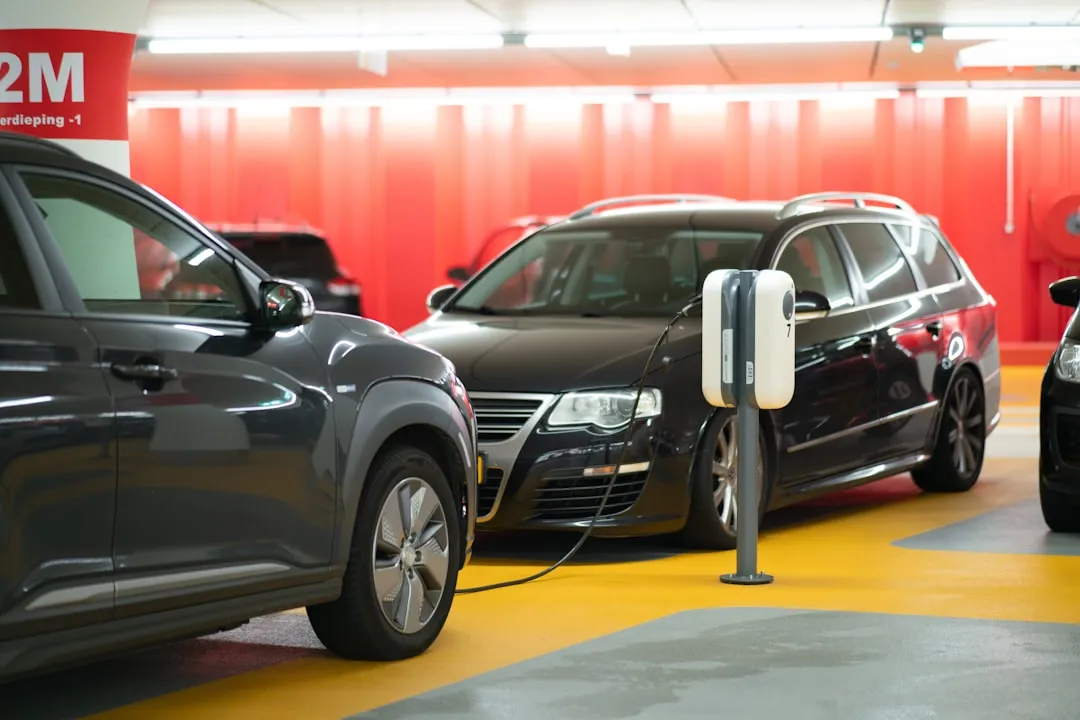
On 1 November 2019, Airports Company South Africa (ACSA) and BMW Group South Africa made history by launching the first electric vehicle charging stations at African airports. The rollout covered OR Tambo International in Johannesburg, Cape Town International, and King Shaka International in Durban, a genuinely significant milestone for the country.
Nearly seven years later, those same five ChargeNow stations remain the documented baseline for airport EV charging in South Africa. No public announcement of a capacity upgrade or change of operator at these three airports has been published as of June 2026. That is worth sitting with for a moment: South Africa’s busiest airports collectively offer AC charging for a maximum of 10 cars simultaneously, installed under a partnership that took approximately 24 months from contract to commissioning.
What is actually installed and where
| Airport | Stations | Simultaneous capacity | Location | Charger type |
|---|---|---|---|---|
| O.R. Tambo International (Johannesburg) | 2 | 4 cars | Parkade 2 South, Level 2 | BMW ChargeNow AC 22 kW Type 2 |
| Cape Town International | 2 | 4 cars | Ground floor, Parkade 1 | BMW ChargeNow AC 22 kW Type 2 |
| King Shaka International (Durban) | 1 | 2 cars | Level 0, Multi-Storey Parkade | BMW ChargeNow AC 22 kW Type 2 |
ACSA covered all electricity costs at these stations for the first 12 months from launch. After that initial period, no official per-kWh tariff has been published by ACSA or BMW. The stations operate on the BMW ChargeNow/GridCars network, and current pricing, if any applies, must be verified in the GridCars ChargePocket app before you plug in. As of 2026, OR Tambo and King Shaka are reported among South Africa’s free public charging locations, though that status is not guaranteed by any published tariff schedule.
For King Shaka in particular, the nearest alternatives outside the airport parkade include a BMW charger on King Shaka Drive in Tongaat (approximately 1.71 km away), a GridCars station at Blackburn (approximately 8.20 km away), and a GridCars unit on Leo Boyd Highway in Ballito (approximately 8.79 km away), thin coverage for a major international airport.
What the tariffs actually look like in 2025
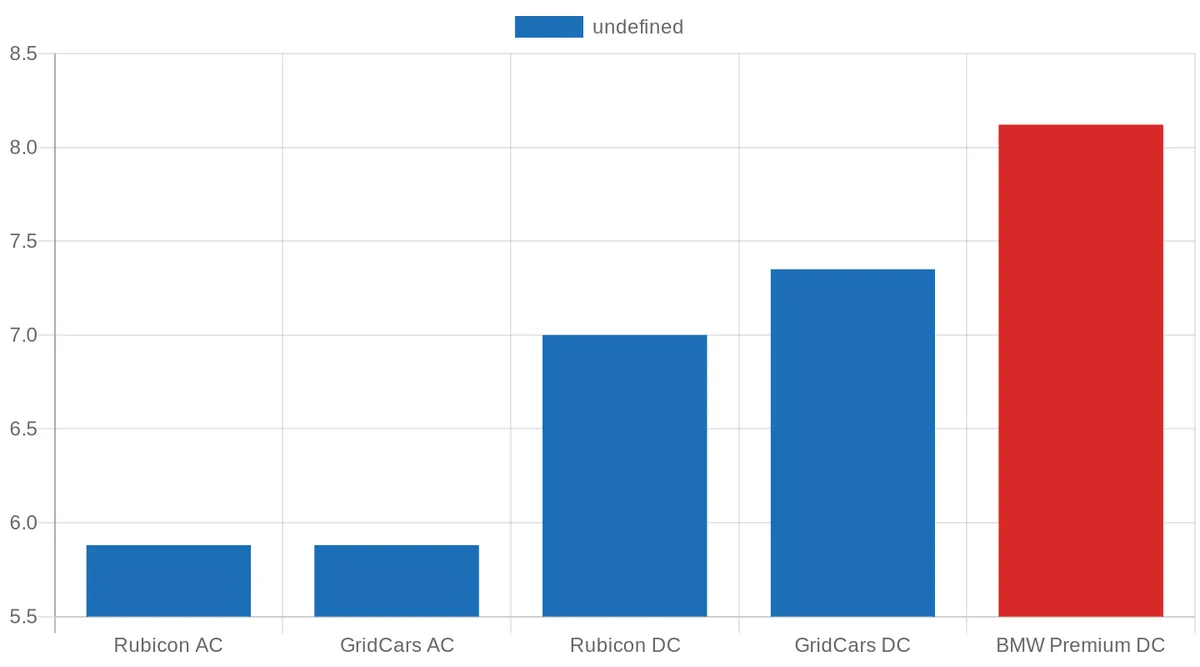
If you are arriving at a South African airport, renting an EV, or collecting a colleague in an EV, understanding the public charging tariff structure matters. As of August 2025, the nationally applicable eMSP rates were:
- AC charging (Rubicon eMSP and GridCars eMSP): R5.88/kWh
- DC fast charging (Rubicon eMSP customers): R7.00/kWh
- DC fast charging (GridCars eMSP customers): R7.35/kWh
GridCars typically adds approximately 15% as an eMSP margin on top of Rubicon’s wholesale CPO tariff before billing the driver. At specific sites such as AIDC-EC stations in the Eastern Cape, GridCars eMSP customers pay R8.24/kWh for DC charging. At certain BMW DC fast charging stations, rates reach R8.12/kWh, with BMW Menlyn reportedly charging R11.76/kWh at its premium site.
To put this in perspective: charging a 60 kWh battery costs R352.80 at the standard public AC rate versus R441.00 at the standard GridCars DC rate. Compare that to home charging in Durban at approximately R3.20/kWh (eThekwini residential) or off-peak Eskom Homeflex at R1.45-R2.25/kWh, and the cost premium of public airport charging becomes very clear. Verify current rates in the ChargePocket or Rubicon app, tariffs change and these figures are August 2025 benchmarks.
Calculate real charging costs at airports and public sites
The uptime problem: what the data actually shows
No South African airport operator, ACSA, BMW, or GridCars, has published uptime percentages, fault rates, or payment failure rates for the OR Tambo, Cape Town, or King Shaka airport charger sites. This absence of disclosure is itself a data point worth noting for any organisation planning a managed charging deployment.
The broader public network picture is instructive. A MyBroadband Facebook EV owners poll found 46% of respondents reported unresolved GridCars charger problems, 31% experienced problems that were eventually fixed, and only 23% reported smooth experiences. Named GridCars sites confirmed as long-term offline include Alzu near Emalahleni and Mooirivier Mall in Potchefstroom. A widespread network glitch in early May 2026 exacerbated frustrations across multiple platforms.
One ChargePocket App Store reviewer captured the core frustration plainly: “Now arriving at charge points I get errors not recognising charging points anymore, charge function not working anymore and forcing you to pay with your own bank card anyway, what’s worse there is no refund.” That review speaks to the payment-failure problem that has no published remediation rate from any airport operator in South Africa.
Load-shedding compounds the issue across the entire public network. When the grid goes down, grid-dependent chargers go with it unless the site has battery backup or solar PV islanding capability. ACSA’s own R21.7 billion infrastructure programme (2025-2027), which includes phased UPS replacement at all nine ACSA airports, creates the electrical backbone that could underpin more resilient charging, but EV charging is conspicuously absent from the programme’s stated scope as reported by Global Transport News Network.
Contrast this with what a managed private network can achieve. WattSpot (a joint venture of Aeversa and Valternative Energy), operating South Africa’s first dedicated fleet charging network across three Gauteng sites, recorded 18,884 charging sessions dispensing 205,845 kWh between December 2025 and February 2026, with uptime sustained above 98.5% via real-time monitoring and WhatsApp-based technical support. That is the benchmark a properly managed airport or park-and-ride facility should be targeting, and it is achievable, but only with the right architecture, SLA-backed contracts, and ECSA-registered installation.
Solar, load-shedding resilience and what is coming next
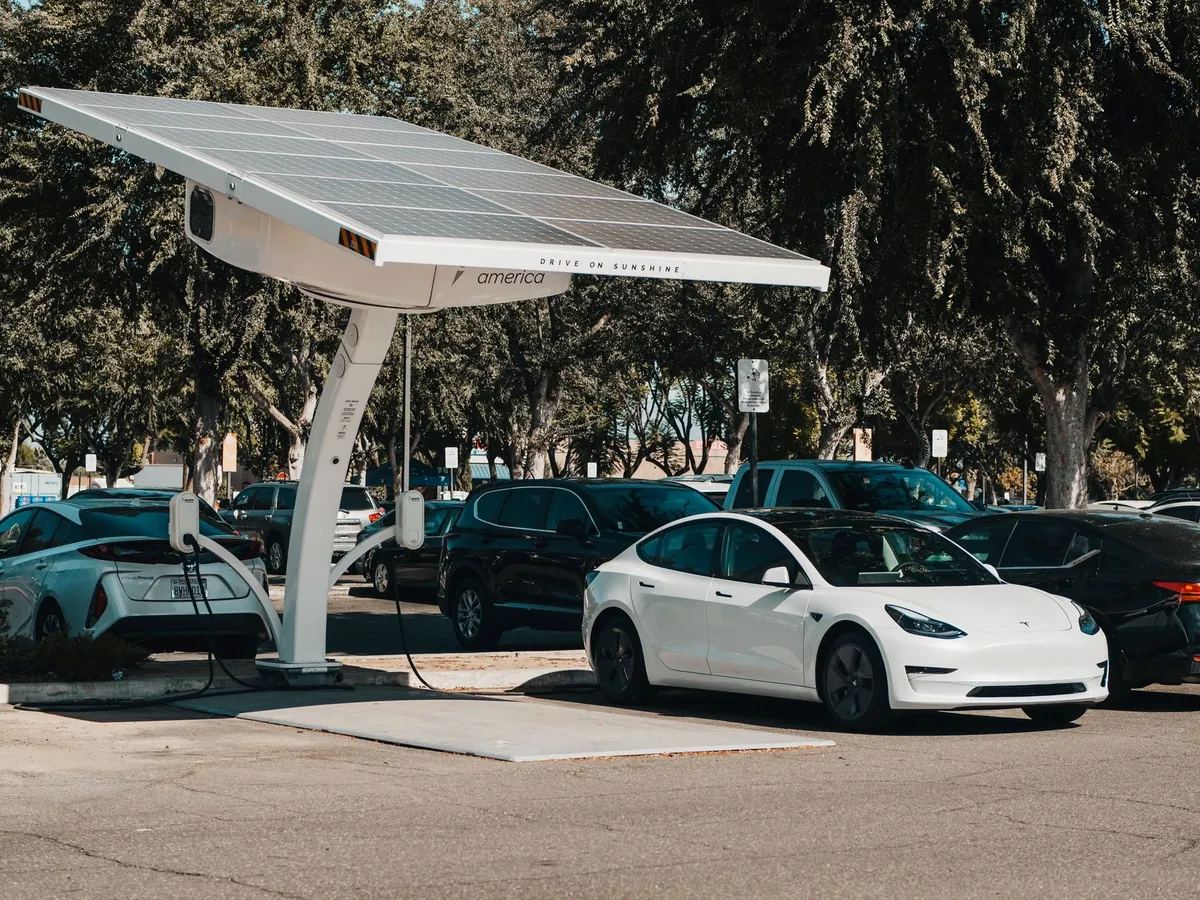
ACSA issued a tender (ref: COR7739/2025/RFP, closing 17 March 2025) for solar PV plants totalling 9.5 MW across three airports: OR Tambo International (5,000 kW, with provision for future battery backup), King Shaka International, and Cape Town International (2,500 kW). As reported by PV Magazine, this on-site renewable base could underpin future high-power EV charging in airport parkades without requiring costly new grid connections, and would provide the load-shedding resilience that grid-only charger installations simply cannot guarantee.
Elsewhere in the national network, the proof of concept for off-grid resilience is already live. Zero Carbon Charge (CHARGE) launched South Africa’s first off-grid EV charging network on the N3 corridor in 2026, powered by solar PV, battery storage, and renewable-compatible backup generators, immune to load-shedding. The first off-grid site opened in Wolmaransstad in late 2024 with six DC fast chargers and two AC chargers. This model, solar generation plus battery storage plus managed DC dispensing, is directly applicable to the large roof and canopy areas available at airport parkades.
On the hardware side, BYD announced plans to install 200-300 public charging stations across South Africa by end-2026, including 1 MW ultra-fast ‘Flash’ chargers. Some of these sites will incorporate on-site solar panels to enable deployment outside main urban centres and reduce Eskom grid dependency. Construction of the first megawatt-level chargers was scheduled to begin in April or May 2026, a scale shift that will raise the bar for power management and load balancing at high-dwell public sites such as airports and park-and-ride facilities.
Meanwhile, GridCars outlined its 2026 roadmap of ultra-fast liquid-cooled chargers, predictive maintenance platforms, and real-time station availability tools. In October 2025, Solareff divested from GridCars; in January 2026, a new high-net-worth investor acquired a 75% shareholding through Energex. Whether ownership and capital changes translate into meaningfully better uptime at airport and park-and-ride sites remains to be seen.
The compliance and cost framework for a managed airport charging deployment
Any organisation, ACSA, a parking concession operator, or a third-party investor, looking to scale airport EV charging in South Africa must navigate a non-negotiable compliance framework before a single charger goes live.
- SANS 10142-1 Edition 3.2 (published 12 August 2024) is the mandatory wiring code for all low-voltage electrical installations, including EV charging infrastructure. No installation can receive an electrical CoC without adherence.
- SANS 62196-2 mandates Type 2 AC connectors for all public AC charging in South Africa.
- SANS 62196-3 mandates CCS2 or CHAdeMO DC connectors for public DC fast charging.
- ECSA-registered installers are required under the Occupational Health and Safety Act No. 85 of 1993, Clause 6(1) of the Electrical Installation Regulations. Unregistered electrical contractors face conviction, a fine, or up to 12 months imprisonment, plus R200 per day for each day the offence continues.
- An electrical Certificate of Compliance (CoC) must be issued for every installation, this is the document that protects the site owner legally and is required by any insurer.
On the cost side, installing a single public EV charging station in South Africa can cost between R500,000 and R2 million, according to panellists at Enlit Africa 2025 in Cape Town. Entry-level 47 kW DC stations start from around R400,000 and rise to R1.25 million. A dual-gun 60 kW DC site, all-in, costs approximately R650,000, and then carries ongoing demand charges and operations costs on top of capital expenditure. Eskom’s Megaflex network demand charge runs at R52.65/kVA/month in the high-demand season and R26.29/kVA/month in the low-demand season (FY26/27 tariff schedule), billed whether or not anyone plugs in. Factor in Eskom’s 8.76% tariff increase from 1 April 2026 and 9.01% from 1 July 2026 and the economics of under-utilised chargers deteriorate quickly.
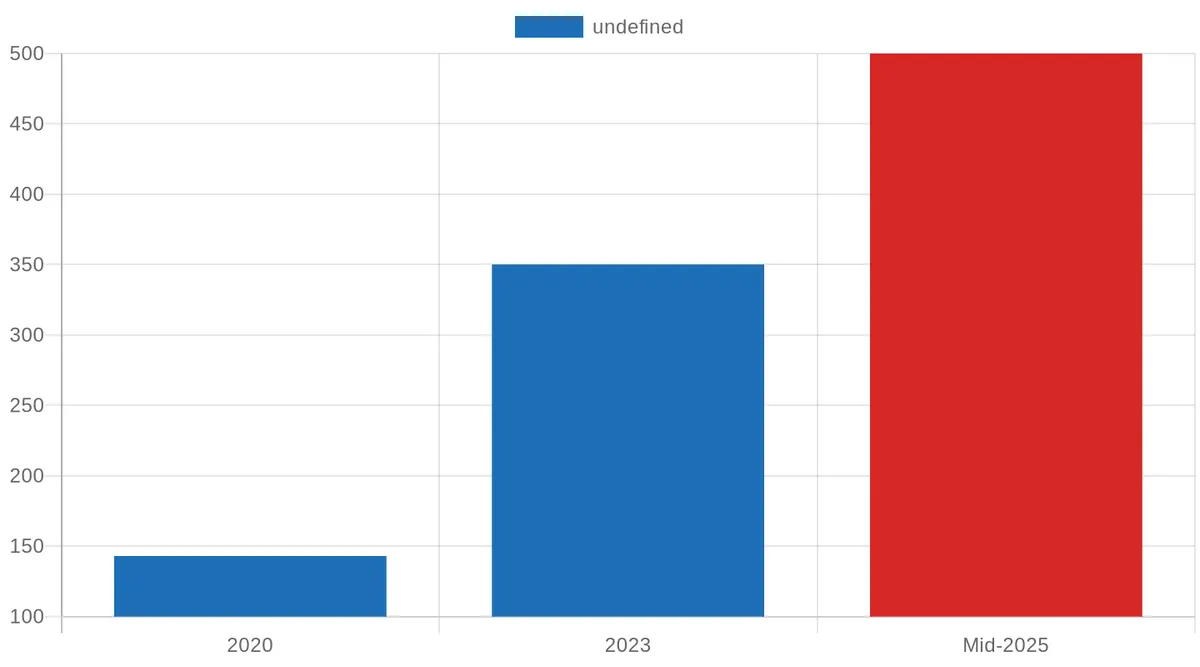
GridCars director Winstone Jordaan has been frank about the viability challenge: at current SA EV fleet sizes of an estimated 7,000-10,000 vehicles as of end-2025, there is no straightforward business case for public charging infrastructure. The sector needs approximately 100,000 EVs on South African roads before operators see real profitability. But demand is accelerating, Naamsa recorded 544 BEVs in Q1 2026, more than double Q1 2025, and April 2026 set a new monthly record of 403 units. Autotrader reported a 220% increase in EV searches between March 2025 and March 2026. Airports, high-footfall, high-dwell, high-visibility, are exactly where that growing fleet will most visibly need reliable charging.
Chargify’s strategy already prioritises airports and shopping malls as priority locations, targeting metropolitan areas before extending its network to smaller towns across South Africa. The window for ACSA and its commercial partners to set the standard, rather than cede it to a network operator, is open but not indefinitely.
If your organisation is evaluating a managed airport or park-and-ride charging programme, the conversation starts with a proper site assessment: grid capacity at the parkade DB board, available roof area for solar, dwell-time data to match charger power levels to vehicle turnover, and a billing model that complies with South Africa’s electricity resale regulations. That is exactly the kind of structured, compliance-first scoping we do. Request a B2B proposal and we will put a fixed-scope assessment in front of you.
Frequently asked questions
Which South African airports have EV charging?
As of June 2026, the only documented public EV charging at South African airports is at OR Tambo International (2 stations, 4 bays in Parkade 2 South, Level 2), Cape Town International (2 stations, 4 bays on the ground floor of Parkade 1), and King Shaka International (1 station, 2 bays on Level 0 of the Multi-Storey Parkade). All are BMW ChargeNow AC 22 kW Type 2 units installed in November 2019 and operated via the GridCars backend network.
Is EV charging at South African airports free?
ACSA covered electricity costs for the first 12 months from the November 2019 launch. Since then, no official tariff has been published. As of 2026, OR Tambo and King Shaka are reported among free public charging locations, but this is unconfirmed by any published schedule. Verify current status in the GridCars ChargePocket app before you plug in.
What is the uptime like at airport EV chargers in South Africa?
No airport operator has published uptime statistics for South African airport EV chargers. Across the broader GridCars public network, a MyBroadband Facebook EV owners poll found only 23% of respondents reported consistently smooth experiences. Load-shedding and ageing hardware are the two primary structural causes of public charger unavailability nationally.
What standards apply to a commercial EV charger installation at an airport?
Any commercial installation must comply with SANS 10142-1 (the mandatory wiring code), SANS 62196-2 (AC Type 2 connectors), and SANS 62196-3 (DC CCS2/CHAdeMO connectors). An electrical CoC must be issued by an ECSA-registered installer. Operating without registration is a criminal offence under the Occupational Health and Safety Act.
What would it cost to install a managed EV charging hub at a South African airport parkade?
A single DC fast charger installation ranges from R400,000 to over R2 million depending on power level and site conditions, based on figures reported at Enlit Africa 2025. A dual-gun 60 kW DC site runs approximately R650,000 all-in, with ongoing Eskom demand charges of R26, R53/kVA/month regardless of utilisation. Solar integration adds capital cost but reduces both grid dependency and long-run operating cost, a critical consideration given load-shedding’s impact on charger uptime.
Plan EV charging for South Africa’s airports and travel hubs
The Commercial Site Builder is free, with no obligation to proceed.
Plan airport charging →WhatsApp us
CoC-certified installers, nationwide