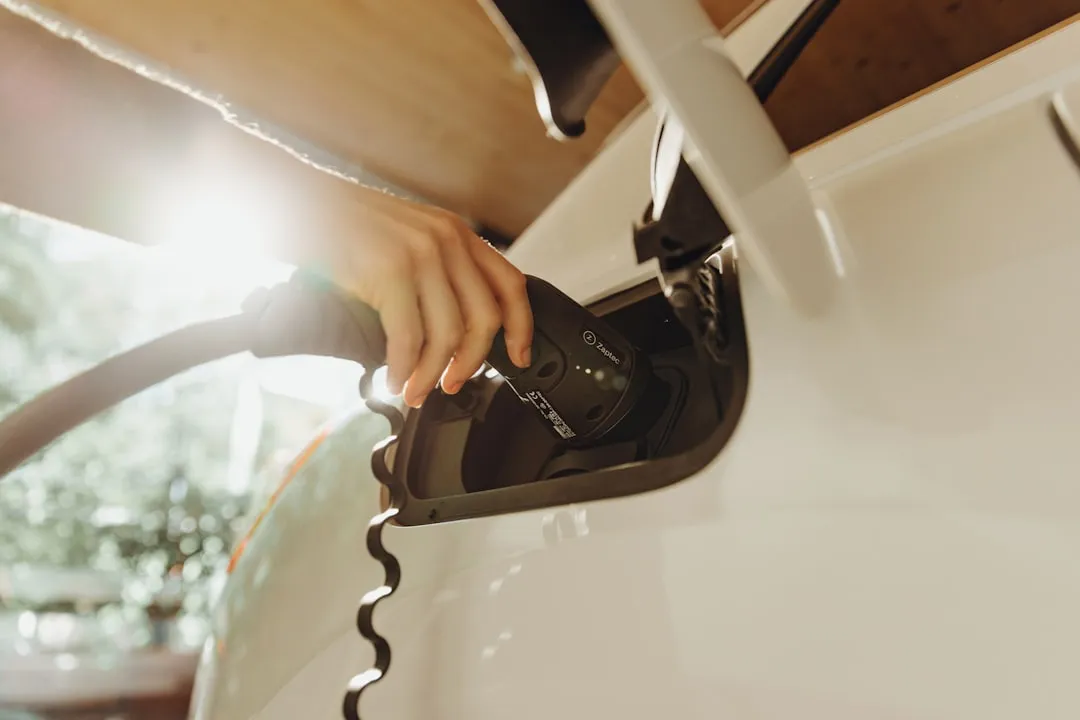
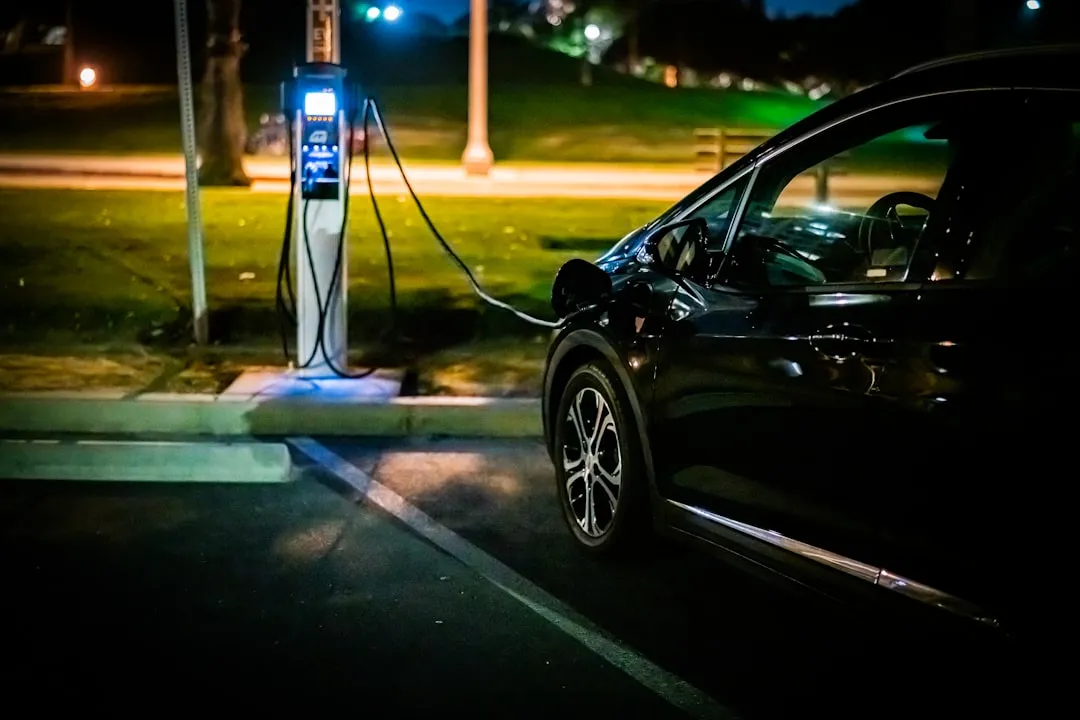
- The C10 REEV has a 28.4 kWh LFP battery (IOL Motoring) and a 6.6 kW single-phase onboard AC charger, full charge takes approximately 5 hours at home (Stellantis Media).
- At South Africa’s blended residential tariff of R3.30-R4.20/kWh (EnergyBee), a full charge costs R94-R119. Monthly electricity added to your bill depends entirely on how many kilometres you drive in EV mode.
- A 7 kW single-phase wallbox is the right match for this car. Three-phase 11 kW or 22 kW chargers deliver no faster AC charging to the C10 REEV (Ampere Point).
- Fully installed, a 7 kW single-phase wallbox costs R14,000-R26,000 in South Africa, including the unit, labour, wiring and Certificate of Compliance (ChargePoint SA).
- Installation takes 4-8 hours on site; the full quote-to-CoC timeline is 7-14 days for a freestanding home, and 2-6 weeks longer if body-corporate approval is needed.
- Hidden costs, DB board upgrades, earth-stake work, cable runs beyond 25 m, Type A RCD, can add R3,000-R12,000 to a basic quote if your home pre-dates 2000 or has a long cable run to the garage.
- Even a 2-hour load-shedding interruption mid-charge rarely matters if you start charging soon after arriving home (Lowvelder).
Why home charging defines the C10 REEV ownership experience
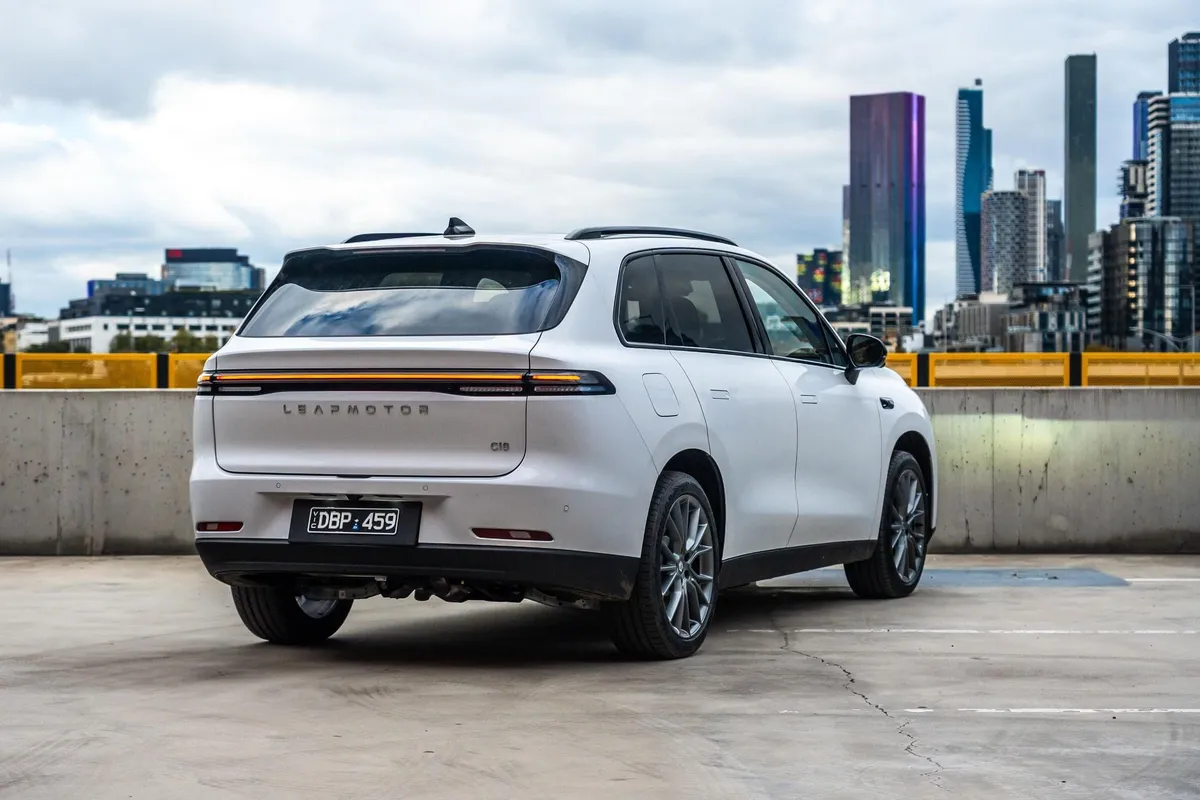
The Leapmotor C10 REEV launched in South Africa on 15 October 2024 (Wikipedia / Stellantis Media) and is sold here exclusively in the range-extended electric version, in Style (R759,900) and Design (R799,900) trims. Its 1.0-litre petrol generator means you are never stranded on a long trip, but for everyday use, the economics only stack up properly if you charge at home.
“If you’re keen on an EV but couldn’t be bothered with hunting for functional charging points, Leapmotor’s C10 REEV may be just the ticket… For a South African household with home charging, predictable daily routes, and a second car for longer trips, it is finally a rational choice on the numbers alone. That is new.”
Thinking about a home charger?Get a fixed-price installation quote — a few quick questions and we’ll send your cost, with no surprises on the day.Get my fixed-price quote →AutoTrader SA first-drive reviewer
That “rational choice on the numbers” depends on understanding what home charging actually costs, what equipment you need, and where the installation bill can surprise you. This guide answers all three questions using verified South African data.
The C10 REEV charging spec: what you are actually working with
Before you price a wallbox, you need to understand the car’s hardware ceiling. The C10 REEV carries a 28.4 kWh lithium iron phosphate (LFP) battery (IOL Motoring) and an onboard AC charger rated at 6.6 kW single-phase maximum (Cars.co.za). That is the hard limit. No matter how powerful the wallbox you install, the car will only draw up to 6.6 kW through its AC port.
On DC, the story is different: the C10 REEV accepts up to 65 kW of DC fast charging, reaching 20%, 80% state of charge in approximately 30 minutes (Cars.co.za). That is useful for road trips but irrelevant at home, where you will use AC.
At 6.6 kW, a full charge from near-empty takes approximately 5 hours (Stellantis Media / AutoTrader SA). In practice, most owners plug in at 20%, 30% and top up overnight, so the car is always full by morning.
“Most owners will charge at home using the onboard 6.6kW AC charger, which takes about 5 hours for a full charge.”
AutoTrader SA, first-drive review of the Leapmotor C10 REEV
One international owner on the Leapmotor forum confirmed real-world compatibility:
“at home, using a 7.2 kW WallBox, I’ve been able to charge at 6.76 kW without any problems.”
Leapmotor C10 owner, leapmotorforum.com
What you actually pay per charge and per month
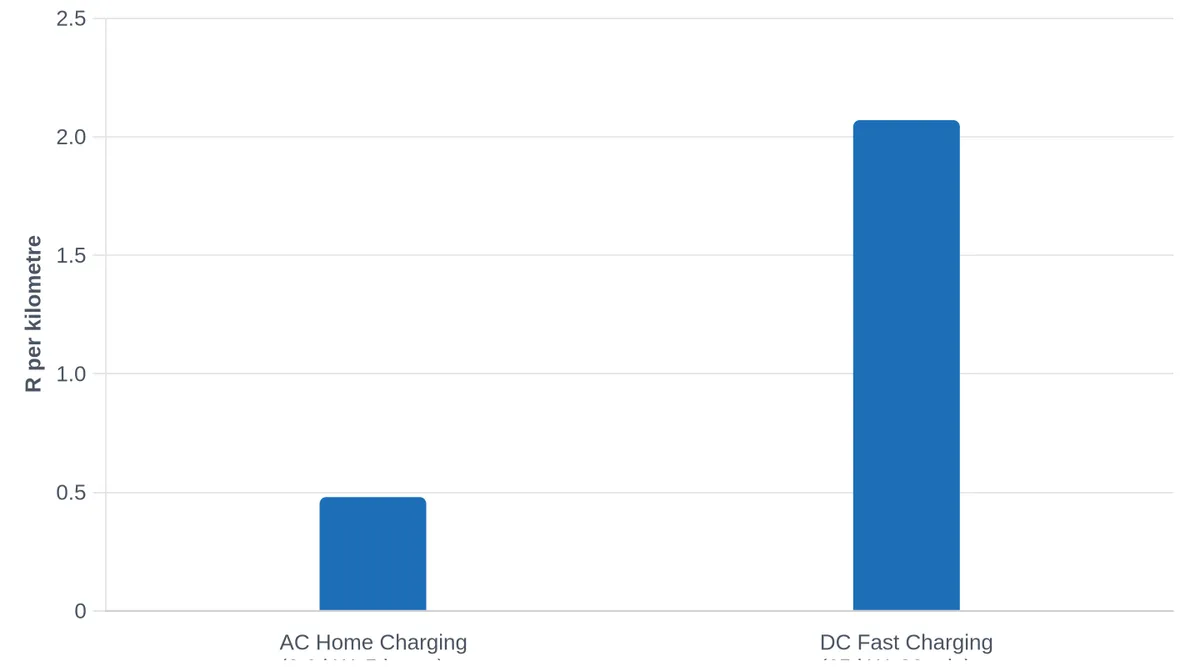
South Africa’s blended residential electricity tariff sits at R3.30-R4.20/kWh in 2026 (EnergyBee). eThekwini residential customers pay approximately R3.20/kWh (Home Calc Hub). The Eskom-approved increase of 8.76% from 1 April 2026 (Lithium Batteries South Africa) is already baked into these figures; a further 9.01% increase takes effect from 1 July 2026 (Eskom 2026/27 tariff schedule), so plan for modest upward drift through the year.
Adding 10-15% for typical AC Level 2 charging losses (Speak EV / InsideEVs), you need roughly 31-33 kWh drawn from the wall to deliver 28.4 kWh to the battery.
| Scenario | kWh drawn from wall | Cost at R3.30/kWh | Cost at R4.20/kWh |
|---|---|---|---|
| Full charge (28.4 kWh battery, ~12% losses) | ~32 kWh | R106 | R134 |
| Top-up from 30% (charge ~20 kWh usable) | ~22.5 kWh | R74 | R95 |
| Monthly: 1,000 km all-EV (14.5 kWh/100 km real-world) | ~163 kWh | R538 | R685 |
| Monthly: 1,500 km all-EV | ~244 kWh | R805 | R1,025 |
The 14.5 kWh/100 km figure comes from a professional tester’s real-world data (Carscoops). Highway driving at 90 km/h produces approximately 13.5 kWh/100 km according to owner feedback, which lowers your monthly bill further.
“I ended my two weeks with the C10 REEV averaging 14.5 kWh/100 km, while fuel consumption sat at 6.1 l/100 km (38.5 US mpg).”
Carscoops reviewer, extended real-world test
Cost of ownership: EV mode vs petrol mode
The C10 REEV’s WLTP electric-only range is 145 km per charge (Stellantis Media / IOL Motoring). South African daily commutes average well under 60 km, so most owners complete their weekday driving entirely on battery and only touch the petrol generator on weekends or long trips.
| Mode | Consumption | Cost per 100 km | Cost per km |
|---|---|---|---|
| EV mode (home tariff R3.30/kWh, 12% losses) | ~16.2 kWh wall | R53 | R0.53 |
| EV mode (home tariff R4.20/kWh, 12% losses) | ~16.2 kWh wall | R68 | R0.68 |
| Fuel/Power+ mode (6.0 L/100 km at R23/litre) | 6.0 L/100 km | R138 | R1.38 |
| Fuel/Power+ mode (8.0 L/100 km at R23/litre) | 8.0 L/100 km | R184 | R1.84 |
| Comparable petrol SUV (10 L/100 km at R23/litre) | 10 L/100 km | R230 | R2.30 |
The real-world fuel consumption of 6.0-8.0 L/100 km in Fuel and Power+ modes (IOL Motoring) translates to R1.61-R2.07/km at approximately R23/litre (AutoTrader SA). That is still competitive with most conventional SUVs, but it is 2.5-3.5 times more expensive than running on home electricity.
“Running costs are low for most users who can charge at home and use EV or EV+ modes for daily driving. The petrol engine becomes your insurance policy for more extended trips rather than your primary power source.”
AutoTrader SA, first-drive review
The arithmetic is clear: maximise EV-mode kilometres by charging at home every night, and the petrol engine earns its keep on the occasional long weekend rather than every Tuesday morning.
Choosing the right wallbox: do not overspend
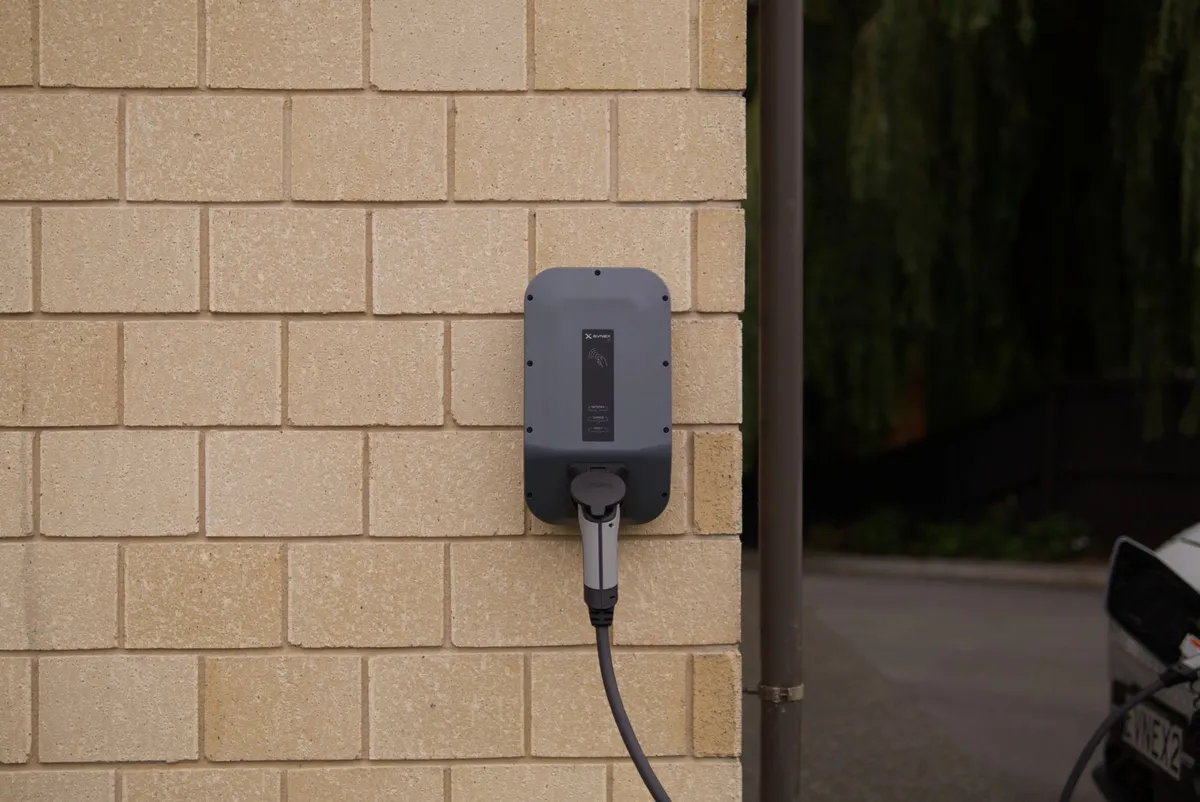
This is where many C10 REEV buyers make a costly mistake. Because the car’s onboard charger is limited to 6.6 kW single-phase, a three-phase 11 kW or 22 kW wallbox adds zero charging speed. The guidance from Ampere Point is direct:
“If you have the C10 REEV, a Q11 or P11 will not charge your car faster than a Q74 or P72. The REEV’s onboard charger is limited to 6.6 kW single-phase. A three-phase 11 kW charger delivers three-phase current that the REEV’s single-phase onboard charger cannot fully process. The car will not be damaged, but you will spend significantly more on equipment that delivers no additional charging speed to your specific vehicle.”
Ampere Point, EV charging guide for the Leapmotor C10
A 7 kW single-phase wallbox is the technically correct and economically rational choice for the C10 REEV. It matches the car’s 6.6 kW limit, delivers a full charge in roughly 5 hours, and costs considerably less to buy and install than a three-phase unit.
The infrastructure point is equally important. About 70% of South African residential properties run on single-phase 60-80 amp supplies (ChargePoint SA), which caps a home charger at around 7 kW anyway. Upgrading to 11 kW requires a new municipal application, a meter replacement and DB board modifications, additional costs that can run into tens of thousands of rands (Cars.co.za) for a charging speed advantage that this specific car cannot use.
“For the vast majority of South Africans, a single-phase 7.4 kW charger offers the best balance of overnight speed without triggering exorbitant municipal infrastructure upgrade fees.”
Cars.co.za, home EV charging cost analysis
Get a free quote for your C10 REEV wallbox install
The ChargePoint SA Caro Plus (CP-AC7): a practical fit for the C10 REEV
For a C10 REEV owner charging at home, the ChargePoint SA Caro Plus (CP-AC7) is the logical starting point. It is a 7 kW single-phase, tethered Type 2 wallbox with a 5-7 m cable, meaning no separate cable to carry or lose. You can start a session via plug, RFID card or the app, useful if you want to schedule charging for off-peak tariff windows. It carries IP65 weatherproofing (rated for outdoor garage walls), and critically, it has a Type A plus 6 mA DC earth-leakage unit built in, satisfying the SANS 10142-1 compliance requirement without needing a separate Type A RCD on your DB board.
Optional dynamic load balancing means the charger automatically reduces its draw if your household approaches its supply limit, relevant if you run a pool pump, air conditioning and a geyser in parallel with charging. Optional PV solar integration lets you direct excess rooftop solar into the car rather than exporting it to the grid at a lower buyback rate.
The Caro Plus is priced from approximately R8,900 per unit (indicative). Installation is quoted per site because cable runs, DB board condition and local authority requirements vary. Total installed cost typically falls in the R14,000-R26,000 range for a straightforward single-phase installation including the CoC (ChargePoint SA). Request a site-specific quote rather than relying on averages.
What installation actually costs: the full picture
The unit price is only one line item. Here is a complete breakdown of what goes into a compliant 7 kW home installation in South Africa.
| Cost item | Typical range | Notes |
|---|---|---|
| 7 kW single-phase wallbox (Type 2) | R9,000-R18,000 | ChargePoint SA |
| Installation labour (cable, breaker, mounting) | R3,500-R9,500 | ChargePoint SA; 4-8 hours on site |
| Certificate of Compliance (CoC) | R500-R1,500 | ChargePoint SA; legally mandatory |
| 6 mm² copper cable (standard run under 25 m) | R45-R85/m | The Handyman Johannesburg |
| Circuit breaker (32 A for 7.4 kW charger) | R800-R1,200 | The Handyman Johannesburg |
| Weatherproof mounting bracket | R1,500-R3,000 | The Handyman Johannesburg |
| Total, straightforward install | R14,000-R26,000 | ChargePoint SA all-in range |
Hidden costs that catch buyers off-guard
Several line items appear only after the electrician does a site assessment. They are not unusual, they are simply invisible until someone looks at your specific property.
- DB board cannot handle a 32 A load: Budget R3,000-R8,000 for a new board or additional circuit breakers (ChargePoint SA).
- Earth-stake resistance above 1 ohm (common in pre-2000 homes): Earth-stake upgrades cost R2,000-R4,000 (ChargePoint SA).
- Full electrical panel upgrade (pre-2000 homes): R15,000-R35,000 if the entire panel needs replacement (The Handyman Johannesburg).
- Cable run beyond 25 m: Add R150-R300/m for thicker cable (6 mm² stepping to 10 mm²) and conduit (ChargePoint SA).
- Type A RCD if not built into the wallbox: SANS 10142-1 Annex N requires a Type A or Type B earth-leakage unit rated for DC residual currents. Standard household earth leakage is not compliant (ChargePoint SA / EVCI.tech). The Caro Plus has this built in, which eliminates one extra line item.
- Surge protection device: SANS 10142 Annex N strongly recommends a surge arrester on the EV circuit; insurers are increasingly requiring it (ChargePoint SA).
“Installing a surge arrester at your distribution board can save your pricey charger from voltage spikes, especially when power comes back after a blackout.”
ChargePoint SA expert advice, topauto.co.za
The legal compliance point is not optional. A valid Certificate of Compliance covering the EV circuit is legally required. Without it, home insurance policies can reject claims for electrical fires, and you cannot legally transfer ownership of the property (ChargePoint SA).
“Without a valid Electrical Certificate of Compliance covering the EV circuit, home insurance policies routinely reject claims for electrical fires or damage. You also cannot transfer ownership of the property.”
Compliance advisory, ChargePoint SA
The installation timeline: what to expect
A site assessment by a qualified electrician typically takes 30-60 minutes (ChargePoint SA) and should happen before any quote is accepted as final. The electrician checks DB board capacity, measures the cable distance to your parking spot, confirms earth-leakage protection and identifies any upgrade requirements.
Physical installation of a straightforward 7 kW single-phase charger takes 4-8 hours on site (ChargePoint SA). Allow 7-14 days from quote acceptance to CoC in hand for a freestanding home (ChargePoint SA). If you live in a sectional-title property, body-corporate approval adds 2-6 weeks to that timeline.
On the body-corporate point: an ordinary resolution (more than 50% of trustees or members, depending on where the charger is located) is sufficient for a charger on common property under the Sectional Titles Schemes Management Act. Vague committee reluctance is not a valid legal reason for refusal. Exclusive-use-area rights under section 27 of the STSMA are real property rights; personal-use permissions under sections 10(7) and (8) are separate and weaker. Know which category your parking bay falls into before the meeting.
Load-shedding and the C10 REEV: a measured view
Home chargers go offline during load-shedding unless you have solar or battery storage behind them (Cars.co.za). That sounds alarming for an EV owner, but the C10 REEV’s 5-hour full-charge time and the typical overnight charging window make it less of a problem than it first appears.
“Even if a two-hour blackout were to interrupt an overnight charging schedule, the battery would likely still be at least very near capacity, if not entirely full, once morning rolls around.”
Lowvelder, citing AutoTrader CEO George Mienie on overnight EV charging strategy
If you plug in at 7 pm and load-shedding runs from midnight to 2 am, the car has typically already absorbed 5 hours of charge before the grid drops. For the C10 REEV’s 28.4 kWh battery, that is more than enough. The REEV format also provides a backstop: if the battery is not full in the morning, the petrol generator can top it up while you drive, an option a pure BEV owner does not have.
For added resilience, a surge arrester on the dedicated EV circuit protects the wallbox when power returns after an outage.
Real owner experiences: what the community says
Beyond the specification sheets, a growing community of C10 REEV owners is building real-world data. A professional reviewer at Carscoops averaged 14.5 kWh/100 km over an extended test. Highway running at a steady 90 km/h produces around 13.5 kWh/100 km according to owner feedback from the Leapmotor community:
“When driving at a steady speed of around 90km/h, the energy consumption is about 13.5kWh per 100km, I’m very satisfied with that.”
C10 owner, Zeexauto owner forum
One area where the forum shows early-owner confusion is energy mode management. A new REEV owner noted:
“I have a Leapmotor C10 REEV car now for a week and already a bit puzzled. It is about the energy modes of the car. I had to drive 120 km, and the battery was charged for 90%. According to the system information this is sufficient for 127 km.”
New Leapmotor C10 REEV owner, leapmotorforum.com
The confusion is understandable: range estimates in EV software are calculated from recent driving style, not a fixed figure. Owners who do mostly city driving will see higher range estimates than those who drove a recent highway stretch. It normalises within a few weeks of use.
On the generator noise that activates when the battery needs topping up while you drive, TopGear South Africa’s reviewer noted it directly: “The Leapmotor C10 could be a fantastic vehicle, but there are aspects such as the engine noise during recharge which still need some refinement.” It is a real characteristic of the REEV layout and worth experiencing on a test drive before buying.
Practical advice before you buy or install
- Get a site assessment first. Do not accept a fixed-price installation quote without an electrician visiting your home. The difference between a straightforward job (R14,000) and one requiring board and earth-stake upgrades (R28,000+) is invisible until someone looks at your DB board and measures the cable run.
- Do not buy a three-phase charger for the C10 REEV. A 7 kW single-phase unit is the correct match. If you plan to buy a different EV in future that accepts 11 kW or 22 kW AC, factor that into the decision, but do not pay for three-phase infrastructure for this car today.
- Use only a registered electrician. SANS 10142-1 Annex N governs EV charger installations in South Africa. Many general electricians are unfamiliar with the DC residual current detection requirements, surge protection rules and cable sizing for a dedicated 32 A EV circuit. Verify that your installer knows these requirements.
- Schedule a CoC before you need it. The CoC is not just a formality, it is your legal and insurance protection. Confirm it is scoped to cover the EV circuit specifically, not just the general installation.
- Consider solar integration. If you already have rooftop solar or plan to install it, a wallbox with PV solar charging capability (such as the Caro Plus) can prioritise excess generation into the car, reducing your effective charging cost below the grid tariff.
Wallbox ROI: when does the investment pay back?
At home tariffs of R3.30-R4.20/kWh versus petrol at approximately R23/litre, driving on electricity costs roughly R0.53-R0.68/km in EV mode against R1.38-R1.84/km in fuel mode, a saving of R0.70-R1.30/km (ChargePoint SA analysis, Carscoops consumption data). Over 1,500 km/month driven in EV mode, that is a monthly saving of R1,050-R1,950 compared to a conventional SUV at 10 L/100 km.
A fully installed 7 kW wallbox at R14,000-R26,000 therefore pays back its installation cost in roughly 10-18 months for an owner charging overnight and maximising EV-mode kilometres (ChargePoint SA). That payback improves further if you pair overnight charging with an off-peak tariff or solar.
“A 7 kW home wallbox costs R14,000-R26,000 installed in South Africa in 2025, and it pays for itself in 10-18 months if you’re charging overnight on Eskom’s Homeflex off-peak rate of R1.45-R2.25 per kWh. That’s five times cheaper than petrol at R25 per litre, and the reason most EV owners who install a wallbox never go back to public charging for daily use.”
ChargePoint SA, home charger economic analysis
A final caution on installer quality: a local EV owner described what happens when installation goes wrong and the difference a specialist makes: “My charger stopped working 8 months after installation. The electrician who installed it said ‘not my problem, call the manufacturer.’ ChargePoint SA diagnosed the issue remotely, came out the next day, fixed it in 30 minutes. They also noticed my solar wasn’t configured properly and fixed that too, now I’m saving an extra R300/month. This is why you use specialists.” That R300/month additional solar saving alone recovers the cost of doing it right.
Ready to know exactly what a compliant 7 kW installation will cost at your property? Get a free installation quote from ChargePoint SA, ECSA-registered installers, SANS 10142-1 compliant wiring, and a scoped CoC included.
Calculate the real monthly cost to charge your C10 REEV
Enter your tariff and km driven in EV mode — takes under a minute.
Calculate my charging cost →WhatsApp us
CoC-certified installers, nationwide
Photo: Bing