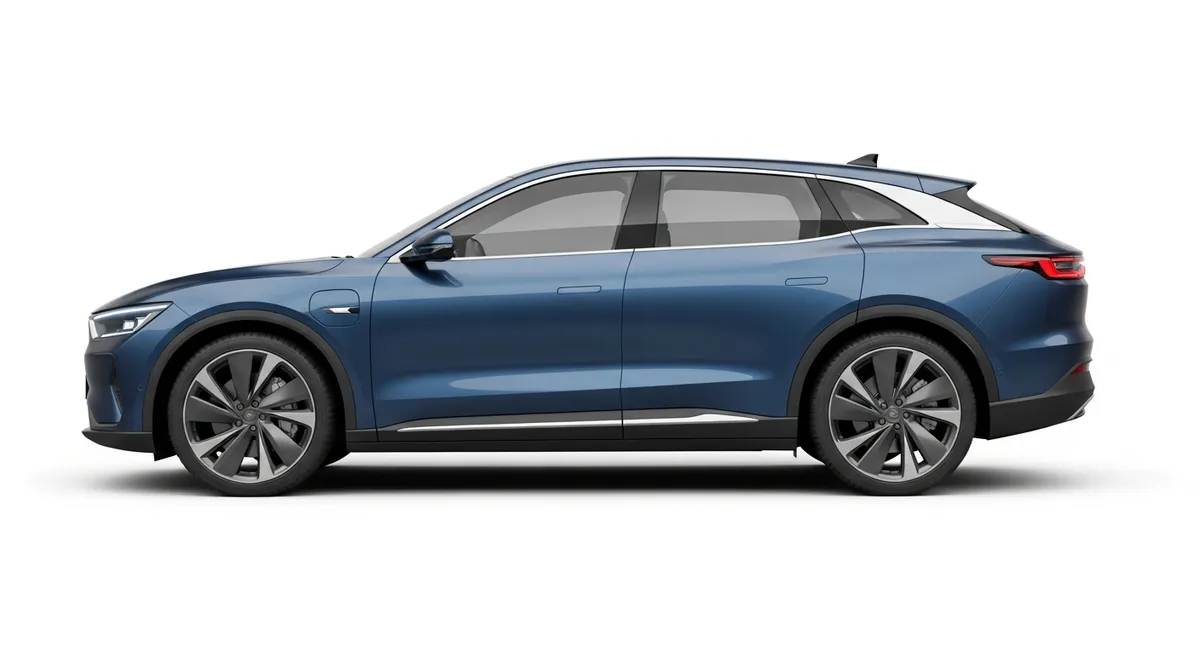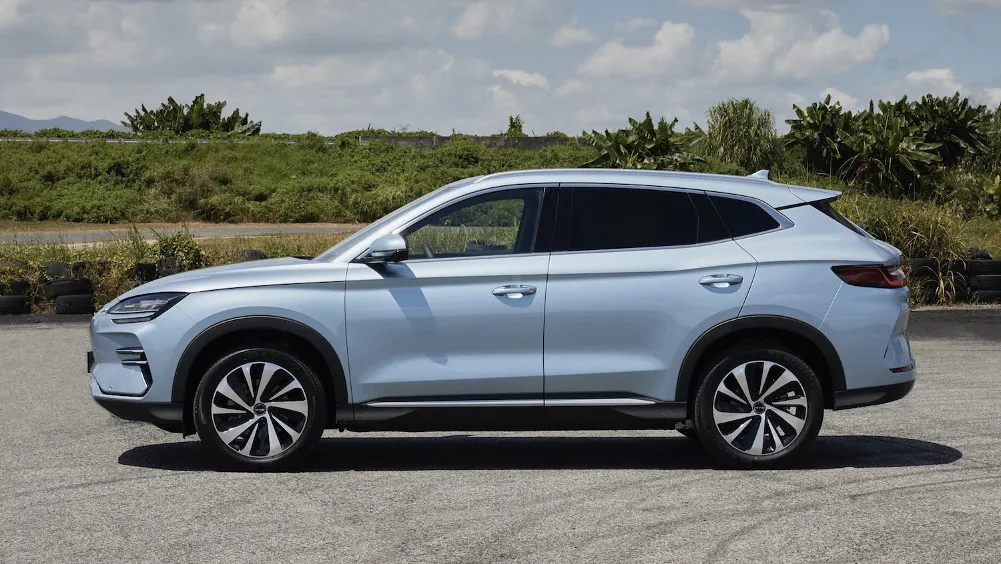

When BYD launched the Sealion 5 PHEV at R499,900 in December 2025, it became South Africa’s most affordable plug-in hybrid SUV — and immediately undercut the Toyota RAV4 2.0 GX by R90,000. For families weighing the BYD Sealion 5 PHEV vs Toyota RAV4 2.0 GX decision, both are compact SUVs built for five, both promise low running costs, but one plugs in, one fills up at the pump, and the maths changes everything.
This guide breaks down the real cost of ownership over five years, monthly fuel budgets at 1,500 km driven, charging realities under load-shedding, and who each vehicle suits best in 2026. No fluff — just the numbers SA buyers need.
TL;DR
- The BYD Sealion 5 PHEV costs R90,000 less upfront than the RAV4 2.0 GX (R499,900 vs R589,900), and saves roughly R1,800/month in fuel if you charge at home and drive 1,500 km.
- Over five years, the Sealion 5 PHEV delivers estimated savings of R198,000 (fuel + purchase price delta), assuming 80% electric driving and current Eskom tariffs.
- The RAV4 2.0 GX offers proven Toyota reliability, a denser service network (250+ dealers vs BYD’s 35), and zero dependence on Eskom — critical if you can’t install a home charger or face frequent load-shedding.
- Both vehicles qualify for the 150% NEV production tax incentive framework (live since 1 March 2026), but only the Sealion 5 PHEV benefits directly through lower retail pricing enabled by local assembly plans.
Price comparison: upfront cost and what you get
The sticker shock works in BYD’s favour. Here’s how the two line up at retail:
| Model | Price (ZAR) | Powertrain | Warranty | Service plan |
|---|---|---|---|---|
| BYD Sealion 5 PHEV | R499,900 | 1.5T petrol + electric motor, plug-in hybrid | 6 years / 150,000 km | 6 years / 150,000 km |
| Toyota RAV4 2.0 GX CVT | R589,900 | 2.0L petrol, CVT, front-wheel drive | 3 years / 100,000 km | Included maintenance plan |
The BYD undercuts the Toyota by R90,000 and doubles the warranty coverage. Toyota’s service plan details vary by dealer, but the brand’s 250+ SA dealerships mean you’ll find a workshop in every town. BYD, by contrast, is targeting 35 SA dealerships by Q1 2026, with plans to reach 60–70 by year-end.
What the pricing tells us
BYD’s aggressive pricing reflects two realities: Chinese OEMs are flooding the SA market to gain share (BYD jumped from 4% to 35% of Africa’s EV market between 2023 and 2025), and the 150% production tax incentive that took effect 1 March 2026 is designed to attract exactly this kind of local assembly. Toyota’s pricing reflects decades of brand equity and a proven resale curve — RAV4s hold value better than any Chinese brand in SA’s used market, at least for now.
Range, efficiency, and real-world fuel costs
Here’s where plug-in hybrids get interesting. The Sealion 5 PHEV can run 80–100 km on battery alone (BYD claims 100 km NEDC, expect 80 km in real SA traffic), then switch to petrol for longer trips. The RAV4 2.0 GX burns petrol from the moment you turn the key.
| Metric | BYD Sealion 5 PHEV | Toyota RAV4 2.0 GX |
|---|---|---|
| Combined range | 850 km (80 km EV + 770 km petrol) | ~650 km (55L tank, 8.5 L/100 km claimed) |
| Electric consumption | 2.0 kWh/100 km (claimed, battery mode) | N/A |
| Petrol consumption | ~5.5 L/100 km (hybrid mode, battery depleted) | 8.5 L/100 km (claimed, expect 9.5 L/100 km real-world) |
| Battery capacity | Plug-in hybrid system | N/A |
Monthly running costs at 1,500 km
Assume you drive 1,500 km per month — a typical Joburg-to-Pretoria commuter plus weekend errands. We’ll model two scenarios for the Sealion 5: 80% electric driving (you charge nightly at home) and 50% electric (you rely more on petrol).
Electricity cost: Eskom’s 2026/27 residential tariffs range from R2.80–R3.50/kWh across tier-1 metros after the 8.76% NERSA-approved hike effective April 2026. We’ll use R3.00/kWh as a mid-range illustrative figure for this comparison.
Petrol cost: Inland 95 octane typically ranges R22–R25/L in 2026. We’ll use R24.50/L as an illustrative mid-range figure.
| Scenario | BYD Sealion 5 PHEV (80% EV) | BYD Sealion 5 PHEV (50% EV) | Toyota RAV4 2.0 GX |
|---|---|---|---|
| Electric km driven | 1,200 km | 750 km | 0 km |
| Petrol km driven | 300 km | 750 km | 1,500 km |
| Electricity cost | R72 (24 kWh × R3.00) | R45 (15 kWh × R3.00) | R0 |
| Petrol cost | R404 (16.5L × R24.50) | R1,010 (41.25L × R24.50) | R3,491 (142.5L × R24.50) |
| Total monthly fuel | R476 | R1,055 | R3,491 |
Even in the 50% electric scenario, the Sealion 5 PHEV saves R2,436/month versus the RAV4. At 80% electric, you pocket R3,015/month — R36,180 per year. That’s a Cape Town–Durban flight for the family, every single year, funded by fuel savings alone.
Five-year total cost of ownership
Purchase price is one thing. Fuel, maintenance, insurance, and depreciation tell the full story. Here’s the five-year picture, assuming 90,000 km driven (1,500 km/month × 60 months).
| Cost category | BYD Sealion 5 PHEV (80% EV) | Toyota RAV4 2.0 GX |
|---|---|---|
| Purchase price | R499,900 | R589,900 |
| Fuel (5 years) | R28,560 | R209,460 |
| Service & maintenance | R0 (plan included) | R18,000 (estimated post-plan services) |
| Insurance (estimated) | R84,000 (R1,400/month) | R90,000 (R1,500/month) |
| Depreciation (40% over 5 years)* | R199,960 | R235,960 |
| Total cost of ownership | R812,420 | R1,143,320 |
| Sealion 5 PHEV savings | R330,900 | |
*Depreciation assumes 40% residual loss over five years for both vehicles — a conservative estimate given Toyota’s proven resale strength and BYD’s unproven SA used-market performance. Actual BYD depreciation may be higher; the first Sealion 5 PHEVs won’t hit the used market until 2027.
The R90,000 upfront saving grows to R330,900 over five years if you charge at home and drive mostly electric. Even if depreciation hits the BYD harder than modelled (Chinese brands are unproven in SA’s used market), the fuel delta alone covers substantial risk.
The Eskom wildcard
Electricity tariffs are climbing. NERSA approved 8.76% for 2026/27, but analysts warn a pending R76-billion recalculation could push the real hike to 10.5%. If tariffs hit R3.30/kWh by 2027, your monthly Sealion 5 charging cost climbs from R72 to R79 — still R3,412/month cheaper than filling the RAV4. The PHEV’s fuel advantage survives even aggressive tariff scenarios.
Charging at home: 7.4 kW vs 11 kW vs 22 kW — which fits the Sealion 5 PHEV?
The Sealion 5 PHEV’s plug-in hybrid system is designed for overnight AC charging. Based on typical PHEV charging profiles, here’s how different home charger capacities perform:
- 7.4 kW charger: Full charge in 2.5–3 hours — ideal for overnight top-ups and the most cost-effective option at R18,000–R25,000 installed.
- 11 kW charger: Faster charging (under 2 hours), but costs R28,000–R35,000 installed. Worth considering if you plan to upgrade to a full BEV later.
- 22 kW charger: Overkill for a PHEV. Installation costs jump to R35,000–R45,000, and the Sealion 5’s onboard charger won’t utilise the full capacity.
For the Sealion 5 PHEV, a 7.4 kW single-phase charger is the sweet spot. It’ll top up the battery overnight (even if you arrive home at 30% charge), costs half what an 11 kW unit does, and works on most SA residential electrical panels without upgrades. If your municipality requires a compliance certificate (most metros do), budget an extra R3,500 for the Certificate of Compliance.
Load-shedding and solar pairing
Load-shedding remains a fact of SA life in 2026, though Stage 2–3 is now the norm rather than Stage 4–6. If you charge overnight and Eskom cuts power, you wake up to a half-charged battery — and the Sealion 5 reverts to petrol mode. Two workarounds:
- Solar + battery: A 5 kWh home battery (R60,000–R80,000 installed) can charge the Sealion 5 during the day from rooftop solar, then top it up at night even during load-shedding. Payback period: ~4 years if you’re also offsetting household consumption.
- Public DC charging: BYD is rolling out 200–300 Flash charging stations by end-2026, targeting 1,000 kW speeds. A 30-minute top-up at a Flash station gives you 80 km of electric range — enough for a week of suburban driving. GridCars and Rubicon also operate 650 public chargers across 445 sites, though 300 km gaps persist on the N1 and N2.
Service network and dealer reality
Toyota’s service network is unmatched: 250+ dealers, parts availability in every town, and mechanics who’ve worked on RAV4s since the nameplate launched in 1994. BYD’s network, by contrast, is new. The brand sold 589 units in March 2026 (its first official Naamsa report), with expansion plans targeting 60–70 dealerships by year-end. That’s rapid growth, but it means:
- If you live in Polokwane, Nelspruit, or George, your nearest BYD dealer may be 200 km away.
- Parts lead times are longer (3–6 weeks for non-service items vs Toyota’s 48-hour turnaround).
- Resale values are unproven — the first Sealion 5 PHEVs won’t hit the used market until 2027, so depreciation curves are guesswork.
BYD’s six-year / 150,000 km service plan is industry-leading and covers all scheduled maintenance. Toyota’s plan coverage varies by model and dealer — check specific terms when purchasing. The BYD plan offers double the coverage period, but you’re betting the dealer network matures as promised.
SA-specific considerations: who each vehicle suits
Buy the BYD Sealion 5 PHEV if you:
- Own a home with off-street parking and can install a 7.4 kW charger (R18,000–R25,000).
- Drive predictable daily routes under 80 km (school run, office commute, errands) — you’ll run 80%+ electric.
- Live within 50 km of a BYD dealer (check the dealer locator at bydauto.co.za).
- Want the lowest five-year cost of ownership and don’t mind being an early adopter.
- Have solar panels or plan to install them — pairing rooftop solar with the Sealion 5 turns your daily fuel cost into near-zero.
Buy the Toyota RAV4 2.0 GX if you:
- Rent, live in a complex without charger infrastructure, or can’t install a home charger.
- Drive irregular long distances (500+ km weekend trips) and don’t want to plan around charging stops.
- Prioritise resale value and proven reliability over monthly fuel savings.
- Live in a rural area or small town where BYD’s dealer network hasn’t reached yet.
- Face frequent Stage 4+ load-shedding and lack solar backup — the RAV4’s independence from Eskom is its superpower.
The honest verdict
The BYD Sealion 5 PHEV is the smarter financial choice for 80% of urban SA families. You save R90,000 upfront, R3,000/month in fuel, and R330,000+ over five years — enough to fund a second car or a university semester. The six-year warranty and service plan are industry-leading, and the 850 km combined range means you’re never stranded.
But the Toyota RAV4 2.0 GX wins on peace of mind. Its service network is everywhere, its resale value is proven, and it asks nothing of Eskom. If you can’t install a charger, drive unpredictable routes, or live beyond BYD’s dealer footprint, the RAV4’s R90,000 premium buys you a decade of worry-free ownership.
The real question isn’t “which is better?” — it’s “can you plug in at home?” If yes, buy the BYD. If no, buy the Toyota. The maths is that simple.
Ready to charge smarter?
Thinking about making the switch to a plug-in hybrid? ChargePoint SA installs home EV chargers across South Africa — from 7.4 kW single-phase units (perfect for the Sealion 5 PHEV) to 22 kW three-phase setups for future-proofing. We handle the full process: site assessment, municipal approvals, electrical compliance, and installation. Book a free site assessment and we’ll calculate your exact charging costs, recommend the right hardware, and get you plugged in within two weeks. No jargon, no surprises — just clean energy and lower running costs.