

South Africa’s plug-in vehicle market just hit a milestone most analysts didn’t see coming: Q1 2026 PHEV sales surged 430% year-on-year to 1,277 units, while battery-electric vehicles (BEVs) rose a comparatively modest 97% to 544 units. If you’re shopping for an electrified vehicle in 2026, the numbers tell a clear story: South Africans are voting with their wallets for plug-in hybrids over pure EVs—and the gap is widening.
This isn’t a blip. The IEA’s Global EV Outlook 2026 reveals PHEVs made up over 70% of SA’s 2025 EV sales—an inversion of the global trend, where pure EVs typically dominate. The reasons are deeply local: range anxiety on long tar roads between cities, load-shedding’s lingering shadow over home-charging confidence, and a charging network that’s grown 122% since 2022 but still leaves gaps on key routes. Add Chinese automakers slashing PHEV prices below R500,000, and you have a market that’s rewriting the rulebook.
TL;DR
- Q1 2026 PHEV sales jumped 430% YoY to 1,277 units, while BEVs rose 97% to 544 units—PHEVs now dominate SA’s electrified market.
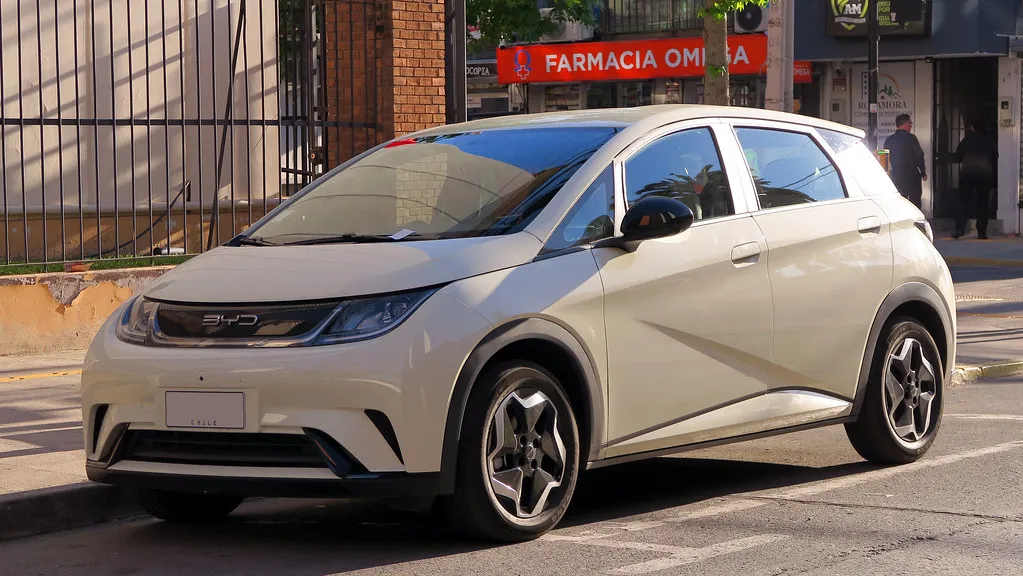
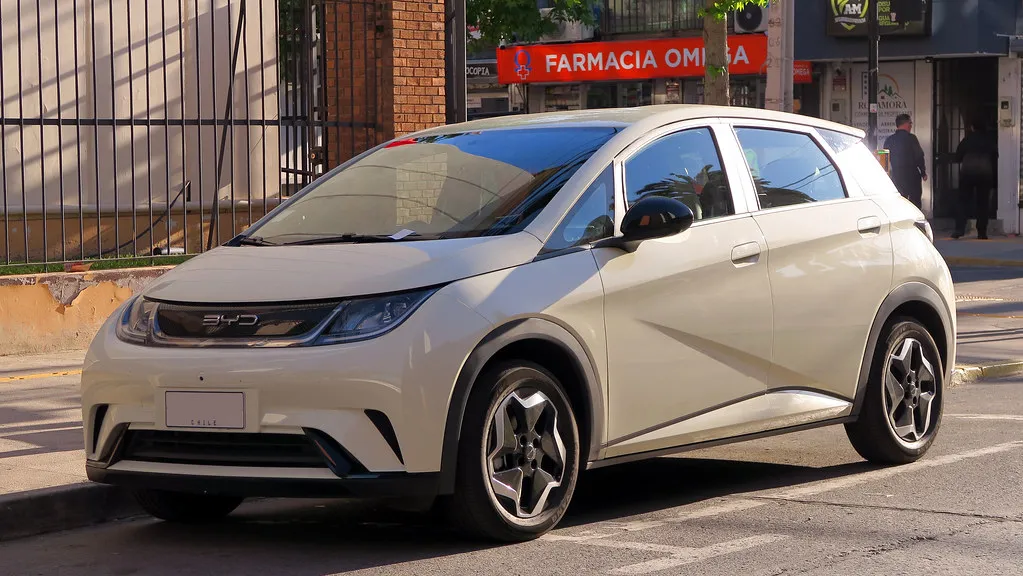
- Chinese brands broke the R500k barrier—the BYD Sealion 5 Comfort starts at R499,900, making plug-in hybrids accessible to mainstream buyers.
- Over 70% of SA’s EV sales in 2025 were PHEVs, a global outlier driven by range anxiety, patchy charging infrastructure, and the petrol-price safety net.
- The 1 March 2026 NEV manufacturing tax incentive (150% deduction) aims to attract Chinese automakers and pivot SA’s export-focused auto industry toward electrification.
What happened: the PHEV surge in numbers
In the first quarter of 2026, South Africa sold 1,277 plug-in hybrids—a 430% increase over Q1 2025. Battery-electric vehicles, by contrast, grew 97% to 544 units. Traditional self-charging hybrids (HEVs) actually fell 7%, signalling that SA buyers now favour vehicles with a plug over those without.
The full-year 2025 picture is even starker. PHEVs jumped 280% to 2,808 units, while BEV sales fell 13.4% to 1,088 units. Total new-energy vehicle (NEV) sales—BEVs, PHEVs, and HEVs combined—grew 7.1% to 16,716 units, but the PHEV category carried the growth.
| Vehicle Type | Q1 2026 Sales | YoY Growth | 2025 Full-Year Sales | YoY Growth (2024→2025) |
|---|---|---|---|---|
| PHEVs | 1,277 | +430% | 2,808 | +280% |
| BEVs | 544 | +97% | 1,088 | −13.4% |
| HEVs (self-charging) | — | −7% | — | — |
| Total NEVs | — | — | 16,716 | +7.1% |
Chinese brands dominate the PHEV leaderboard. The Haval H6 PHEV led 2025 sales with 448 units, followed by Chery, GWM, Jaecoo, and Omoda models filling the top five. The European premium players—BMW, Volvo, Lexus—still hold a slice of the market, but the volume is shifting east.
Why PHEVs are winning in South Africa
Range anxiety on long-distance routes
South Africa’s geography is unforgiving for pure EVs. Johannesburg to Durban is 570 km; Cape Town to Port Elizabeth is 770 km. Even a generous 400 km WLTP range shrinks under load, highway speeds, and winter cold. PHEVs hedge the bet: run electric around town, switch to petrol for the N3 or N1.
The IEA Global EV Outlook 2026 explicitly cites range anxiety and patchy charging infrastructure as the twin drivers of SA’s PHEV preference. South Africa had over 500 public charging stations by mid-2025, maintaining a 1:7 EV-to-charger ratio (better than the global 1:10 benchmark), but the network still leaves gaps on secondary routes and in rural provinces.

Chinese brands broke the R500,000 barrier
Until 2025, PHEVs in South Africa started well over R1 million. Then BYD, Chery, GWM, and Haval arrived with sub-R600k models. In February 2026, BYD launched the Sealion 5 Comfort at R499,900—the first PHEV to crack the half-million mark. With a 12.96 kWh battery, 50 km electric range, and 1.4 ℓ/100 km fuel consumption (battery charged), it undercuts the premium Europeans by R300,000 or more.
Cars.co.za’s February 2026 roundup of the seven most affordable PHEVs shows Chinese brands occupying six of the seven slots. The outlier? The Volvo XC90 Recharge at R1,825,300—a different market segment entirely.
Petrol prices haven’t tipped the scale for BEVs
Record petrol prices—R28.06/ℓ from 3 June 2026—are pushing buyers to reconsider electrification, but not necessarily toward pure EVs. A PHEV offers immediate petrol savings on the daily commute (charge at home for R3.00–R4.00/kWh) while retaining the option to fill up at any petrol station when the battery runs dry. BEVs demand commitment: home charging infrastructure, route planning, and acceptance that some trips require a DC fast-charge stop at R7.00–R7.35/kWh.
What the stakeholders are saying
Government: technology-neutral transition
Naamsa (the National Association of Automobile Manufacturers of South Africa) stresses that SA’s transition framework must remain technology-neutral, recognising BEVs, PHEVs, and HEVs equally. The 150% tax incentive for NEV manufacturing, which went live on 1 March 2026, applies to all three categories—a deliberate choice to let the market decide.
The incentive aims to attract Chinese automakers and pivot SA’s export-focused auto industry toward electrification. Chery has already committed to acquiring Nissan’s Rosslyn plant; BMW started PHEV production at Rosslyn in October 2024 with the X3 30e xDrive, which offers 81–90 km WLTP range and 1.1 ℓ/100 km combined fuel consumption.
Automakers: doubling down on PHEVs
BYD’s messaging is blunt. Announcing the Sealion 5, the brand stated: “We believe South African families shouldn’t have to choose between cutting-edge efficiency, premium features and financial peace of mind. The Sealion 5 delivers all three.” The subtext: PHEVs are the pragmatic choice for a market where infrastructure lags demand.
GWM, meanwhile, is hedging with both PHEVs and traditional hybrids. The P500 HEV (a parallel hybrid bakkie, not a plug-in) launched in August 2024 at R999,900 for the 2.0T HEV Ultra Luxury trim, targeting buyers who want efficiency without the plug-in commitment.
Charging-network operators: planning for dual demand
GridCars operates 445 public charging sites (650 chargers, 1,200+ connectors) as of January 2026, representing roughly 60% of SA’s public capacity. Rubicon’s network handled 21,606 transactions in 2025, dispensing 625 MWh—up 159% from 2024. Both operators report that PHEV owners use public charging far less frequently than BEV drivers, but the infrastructure must serve both.
In June 2026, CHARGE (Zero Carbon Charge) launched SA’s first off-grid EV charging network with a R100-million investment from the Development Bank of Southern Africa, deploying solar-powered stations on the N1 and N3 that can charge up to eight EVs simultaneously. Off-grid charging addresses the lingering load-shedding anxiety—even if Eskom’s reliability has improved in 2026.

What this means for SA EV buyers
PHEVs make sense if you…
- Drive mixed urban/highway routes: 50–90 km electric range covers most daily commutes; petrol handles weekend trips to the coast.
- Lack home-charging certainty: If you rent, live in a complex with no charger policy, or face municipal electricity reliability issues, a PHEV gives you a petrol escape hatch.
- Want to test electrification without full commitment: PHEVs are training wheels for the EV transition—charge when convenient, fill up when not.
BEVs still win if you…
- Have reliable home charging: Home charging at R3.00–R4.00/kWh beats petrol on cost per kilometre, and you wake up to a full battery every morning.
- Drive predictable routes within 200 km of home: A 400 km WLTP BEV covers most daily use cases without public charging.
- Prioritise zero tailpipe emissions: PHEVs still burn petrol; BEVs don’t. If your electricity comes from solar or wind, a BEV’s carbon footprint is near-zero.
The hidden cost: PHEV charging discipline
Here’s the catch: a PHEV only delivers its claimed 1.1–1.4 ℓ/100 km fuel consumption if you charge it. Run it on petrol alone, and it’s a heavy, inefficient hybrid. The BYD Sealion 5’s fuel consumption jumps to 5.2 ℓ/100 km average if the battery isn’t regularly charged. That discipline—plugging in nightly—is non-negotiable for ROI.
What’s next: three things to watch in the coming months
1. Will the NEV tax incentive attract more Chinese OEMs?
The 150% manufacturing tax deduction is designed to lure brands like BYD, Chery, and GWM into local assembly. Chery’s Rosslyn acquisition is the first domino. If two or three more Chinese brands follow, SA could see PHEV prices drop another R50,000–R100,000 by 2027 as import duties (currently 25% on EVs vs 18% on ICE) are bypassed.
2. How fast will the charging network fill the gaps?
GridCars, Rubicon, and CHARGE are all expanding, but the Eastern Cape, Northern Cape, and Limpopo remain underserved. Rubicon added 11 new stations in the Eastern Cape between January and February 2026, nine of them DC-capable, through a partnership with the Automotive Industry Development Centre. If that pace continues, the “patchy infrastructure” argument weakens by year-end.
3. Will BEV prices fall enough to challenge PHEVs?
Chinese BEV pricing is already aggressive globally. If SA’s 25% import duty on EVs is reduced (a policy discussion for 2027), or if local BEV assembly begins, the cost gap between a R500k PHEV and a R600k BEV could narrow to the point where buyers choose the simpler, lower-maintenance BEV. But that’s a 2027–2028 story, not a 2026 one.
Ready to charge smarter?
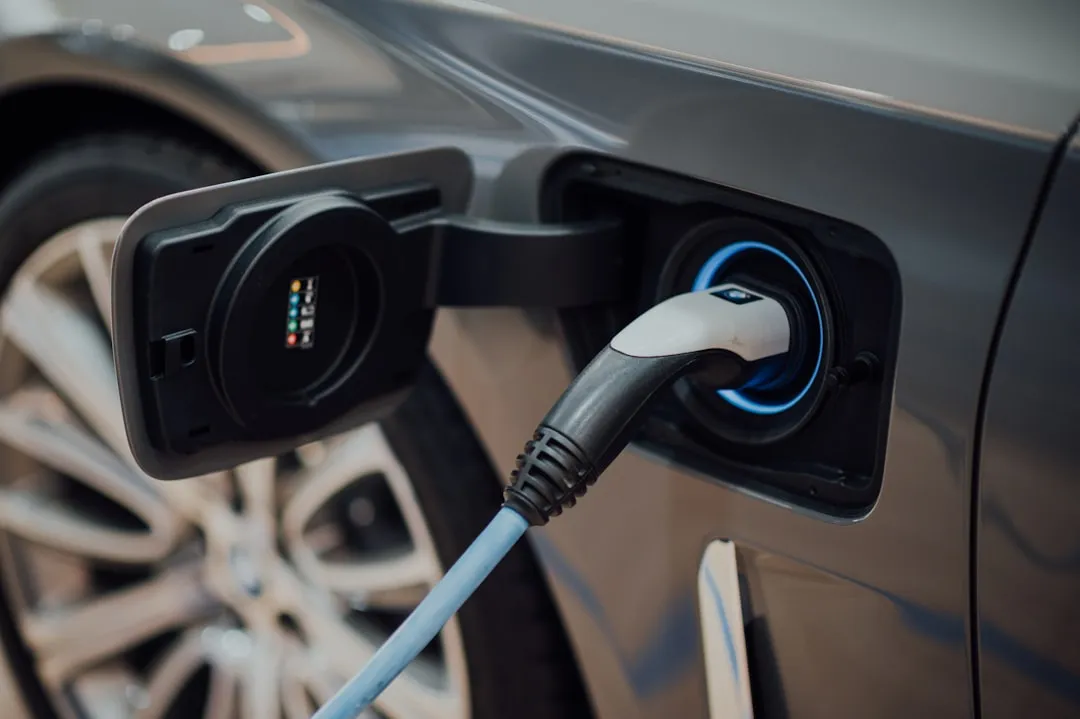
Whether you’re eyeing the BYD Sealion 5 or the BMW X3 30e, one thing is certain: a PHEV only saves money if you charge it. That means home charging infrastructure—a 7.4 kW or 11 kW wall-box, a dedicated circuit, and a plan for your municipal electricity tariff.
ChargePoint SA has installed home chargers for PHEV and BEV owners across Gauteng, Western Cape, and KZN since 2020. We’ll assess your electrical panel, recommend the right charger for your vehicle, handle the CoC, and get you plugged in—usually within a week. Get a free site assessment and quote today, and make sure your new PHEV actually delivers those 1.4 ℓ/100 km savings.
Image credits
“The Joule of South Africa” by afromusing (CC BY 2.0, via flickr) · “Green Machine” by jurvetson (CC BY 2.0, via flickr) · “BMW i3 Side On Doors Open Car Leasing Made Simple” by Carleasingmadesimpletm (CC BY 2.0, via flickr)