Key points
- The BYD Sealion 5 Comfort (R499,900) is the first PHEV in South Africa to retail under R500,000. Every PHEV in the market before it cost more than R600,000.
- The Toyota RAV4 PHEV starts at R1,043,900, a R474,000 premium over the Sealion 5 Dynamic (R569,900). The Sealion 5 uses a 12.96 kWh Blade LFP battery for approximately 52 km of electric-only range (WLTP).
- The Toyota RAV4 PHEV carries a 25.4 kWh battery and 142 km of electric range, nearly three times the Sealion 5’s EV capability, but at more than double the price.
- BYD’s dealer network stood at approximately 18 stores at the Sealion 5 launch, with plans to expand to 30-35 stores by 2026. Toyota has a national network orders of magnitude larger.
- V2L (Vehicle-to-Load) is standard on both Sealion 5 variants, the car can power household appliances during load-shedding.
Why the Sealion 5 matters: context beyond the price tag
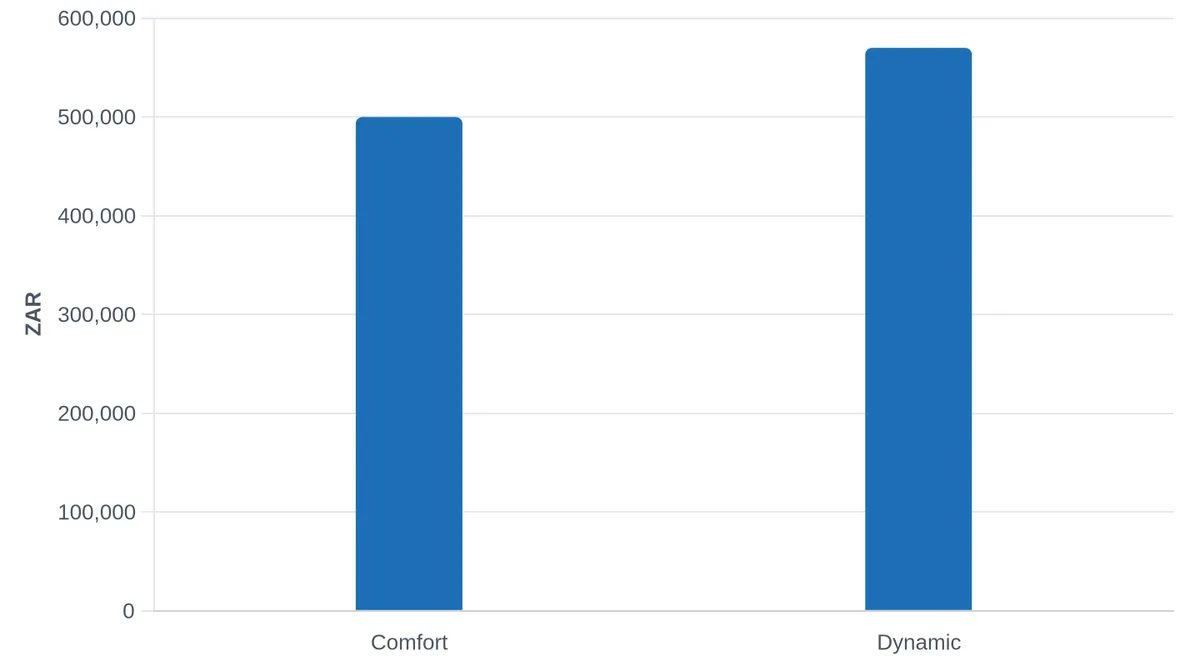
South Africa’s new-vehicle market watched plug-in hybrid prices hover above R600,000 for years. The Chery Tiggo 7 CSH PHEV starts just under R600,000, the Geely E5 EM-i Aspire at R599,999, and BYD’s own Sealion 6 PHEV Comfort sits at R639,900. Against that backdrop, the Sealion 5 Comfort at R499,900 is a genuine market event, not a marketing exercise.
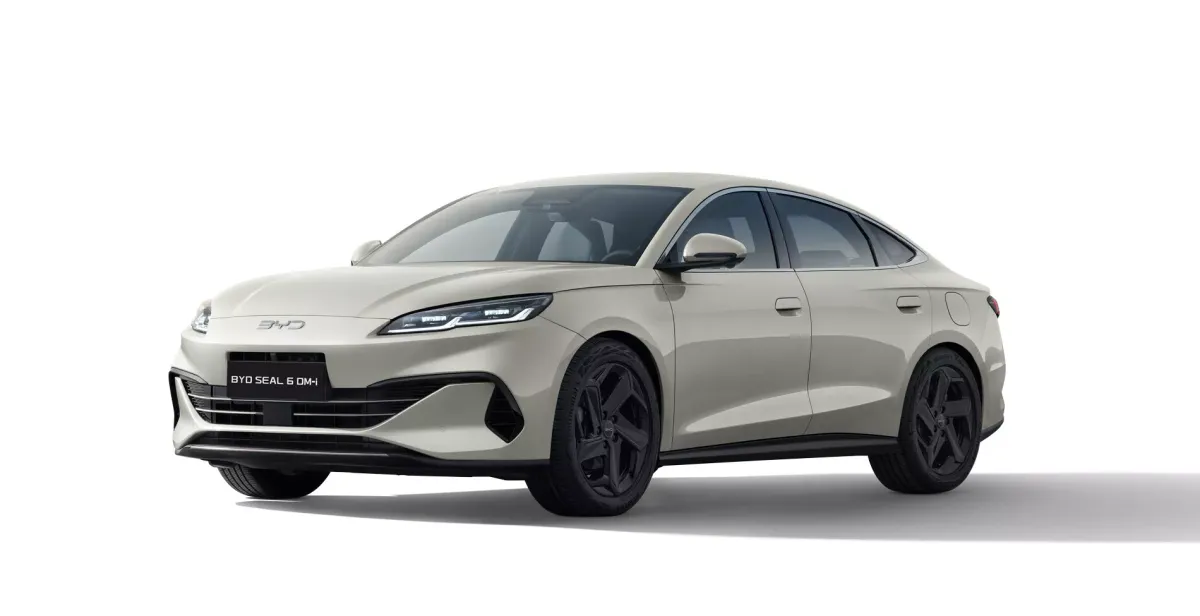
According to TechCentral, every PHEV in South Africa cost more than R600,000 before the Sealion 5 arrived. BYD’s DM-i (Dual-Mode Intelligent) platform puts the electric motor in the primary driving role and uses the petrol engine mainly as a generator and range extender, it is electric-first, not a traditional hybrid with a small motor bolted onto a petrol car. That architecture is what makes the pricing possible.
New Energy Vehicles (EVs plus hybrids) made up 2.4% of new vehicle registrations in Q1 2025, with traditional hybrids leading at 2,970 units, up 15% year-on-year. PHEV sales in South Africa then rose 681% between January and May 2026 compared to the same period in 2025, according to The South African. The Sealion 5 is aimed squarely at buyers sitting on the fence between a self-charging hybrid and a full EV, people who want real electric commuting but are not ready to commit to a charger-only lifestyle.
Plug-in hybrids already accounted for over 70% of South Africa’s 3,800 NEV sales in 2025, an inversion of the global trend where battery-electric vehicles dominate. South African buyers’ preference for long-distance capability and load-shedding resilience drives that split, and the Sealion 5 was designed with both concerns in mind.
Specs that matter in South Africa’s conditions
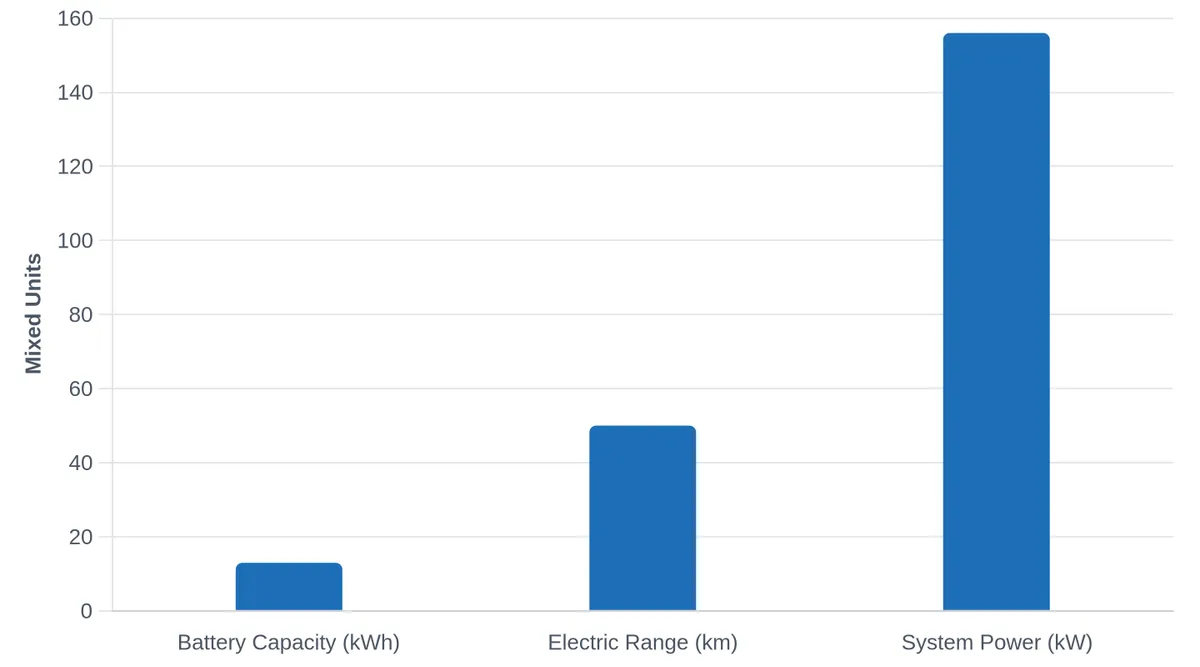
The Sealion 5 DM-i pairs a 1.5-litre naturally-aspirated petrol engine with an electric motor for 156 kW of combined system power. The 12.96 kWh Blade LFP (Lithium Iron Phosphate) battery delivers approximately 52 km of pure electric range, confirmed during the South African media launch route. BYD claims a combined fuel consumption of 2.1 L/100 km when the battery is charged, and 5.2 L/100 km when running on petrol alone. The total combined range on a full charge and full tank is over 1,000 km.
Real-world testing with a depleted battery tells a more nuanced story. An Australian journalist testing the same DM-i drivetrain recorded 8.1 L/100 km on country roads without recharging, a notable gap from the manufacturer’s claim. A French press test found roughly 6.5 L/100 km with an empty battery. The lesson for SA owners is straightforward: keep the battery charged and you benefit from the PHEV’s full efficiency advantage. Rarely charging it turns the Sealion 5 into a slightly inefficient petrol SUV.
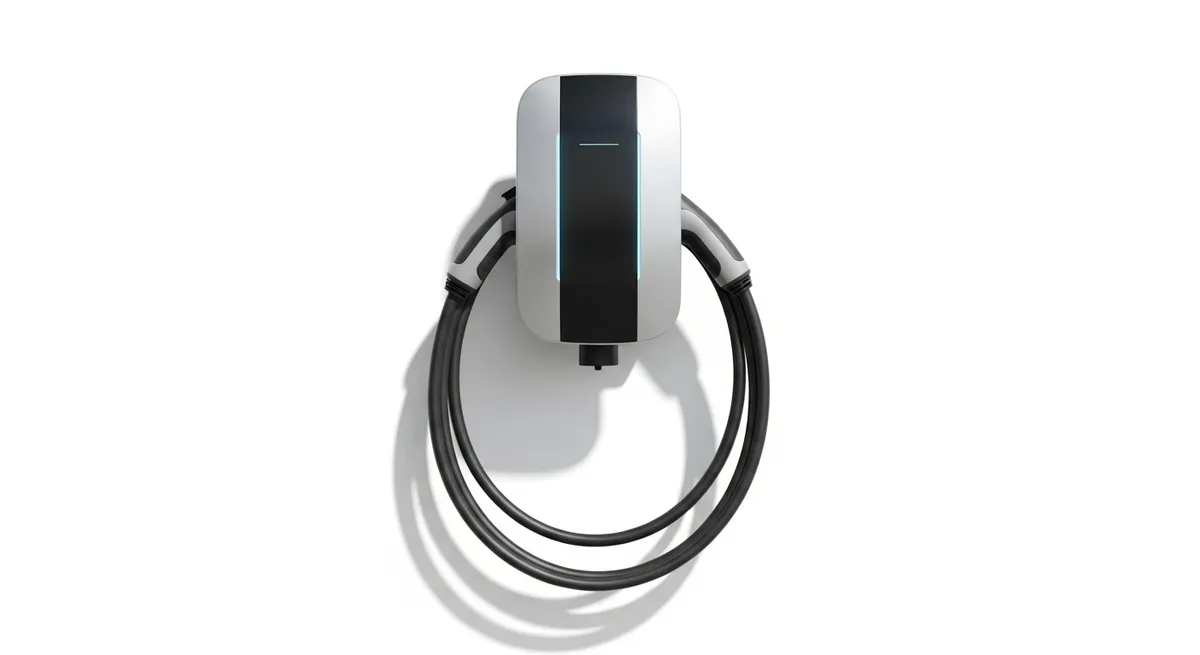
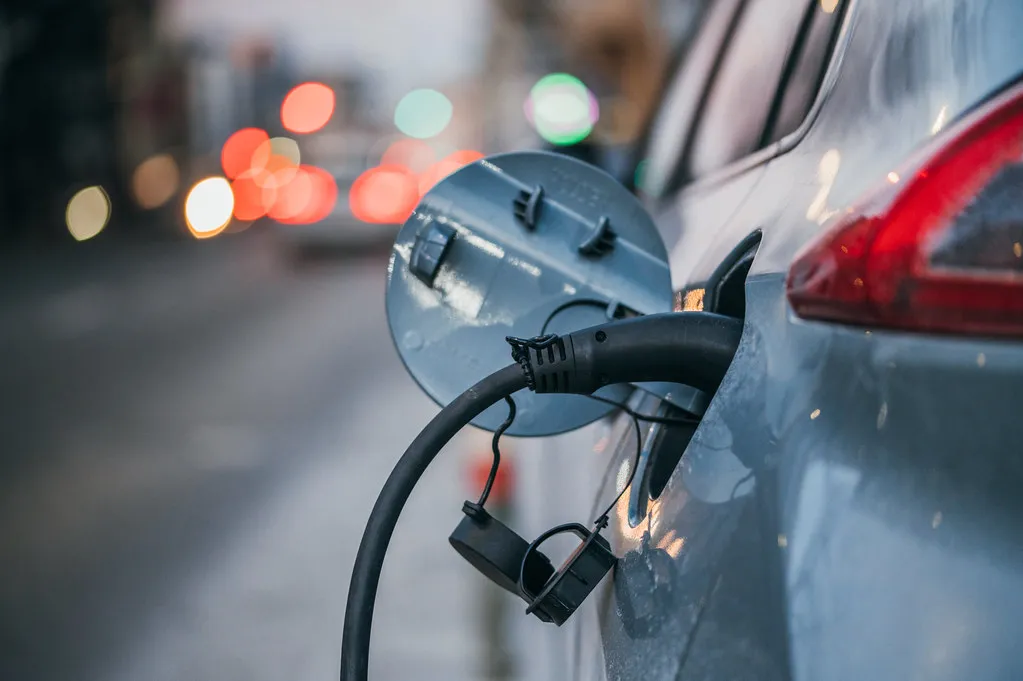
On charging: the Sealion 5’s onboard charger is capped at 3.3 kW AC, and DC fast charging is not available on this model. A dedicated wallbox charger will deliver 3.3 kW effective charge rate, the car throttles any faster supply from the wall, taking approximately five hours to fill the 12.96 kWh battery from empty. BYD includes a 3.5 kW wallbox charger in the purchase price for South African buyers, according to TechCentral. A standard domestic socket will also work overnight, though ChargePoint SA classifies daily socket charging as a genuine fire and electrical-compliance risk, a dedicated wallbox is the right solution for regular use.
The body is 4,738 mm long, 1,860 mm wide and 1,710 mm tall on a 2,712 mm wheelbase, a genuine mid-size SUV footprint. Boot space is 463 litres standard, expanding to a claimed 1,410 litres with seats folded. The 12.8-inch touchscreen is standard across both variants.
How charging costs stack up in practice
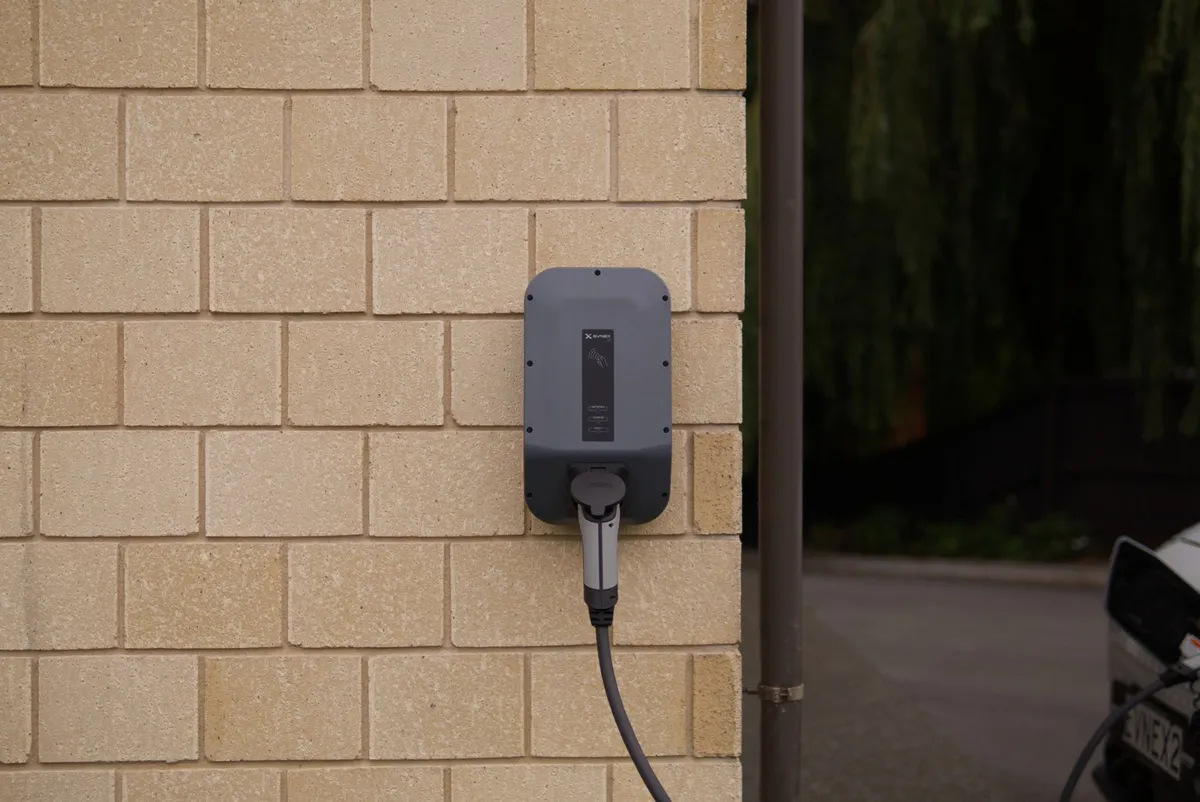
On Eskom Homeflex off-peak rates (from R1.45/kWh), filling the Sealion 5’s 12.96 kWh battery costs roughly R19. That covers 52 km of electric-only driving. At the April 2026 petrol price of R23.36/L, covering the same 52 km on petrol at 5.2 L/100 km would cost around R63. The saving per charge cycle is meaningful, especially if you commute within the electric range daily.
South Africa’s average one-way commute is 22 km, which means most daily return trips fall entirely within the Sealion 5’s electric range. If you charge at home every night, you could realistically drive Monday to Friday without burning a drop of petrol. The petrol engine handles load trips, highway runs, and load-shedding days when overnight charging was interrupted.
A properly installed home wallbox costs R14,000-R26,000 fully installed including a Certificate of Compliance (CoC). Get a free installation quote to confirm the exact cost for your property, DB board capacity, cable run length, and single-phase or three-phase supply all affect the final figure. The wallbox pays for itself within 10-18 months through overnight off-peak charging savings versus petrol, based on typical SA driving patterns.
Load-shedding is a real consideration. EV chargers stop working when the grid goes down unless paired with a solar and battery inverter system. The Sealion 5’s petrol engine is the backup when charging is unavailable, which is precisely why PHEVs have resonated more than full EVs in South Africa’s current grid environment. If you add rooftop solar, a 10 kW array on a sunny Gauteng day can generate enough surplus to cover the Sealion 5’s battery multiple times over after home consumption is accounted for.
BYD Sealion 5 vs the Toyota alternatives: a direct comparison
Toyota currently holds 67% market share in South Africa’s hybrid and plug-in hybrid segment. The Corolla Cross is the volume leader, it was the country’s second best-selling passenger vehicle in 2024 with nearly 22,000 units registered. But the Corolla Cross Hybrid is a self-charging HEV: it has no plug-in port and cannot be charged from an external power source. That is a meaningful distinction. The Sealion 5 gives you 52 km of wall-socket-rechargeable electric range; the Corolla Cross Hybrid gives you none.
The only Toyota PHEV available locally is the RAV4 PHEV at R1,043,900, directly challenged by BYD’s pricing strategy. The RAV4 PHEV’s 25.4 kWh battery and 142 km electric range are genuinely impressive and suit buyers doing longer daily distances. But at R474,000 more than the Sealion 5 Dynamic, it is in a different financial bracket entirely.
| Model | Price (VAT incl.) | Battery | Electric range (WLTP) | System power | Vehicle warranty | Battery warranty |
|---|---|---|---|---|---|---|
| BYD Sealion 5 Comfort | R499,900 | 12.96 kWh LFP | ~52 km | 156 kW | 5yr/100,000 km | 8yr/200,000 km |
| BYD Sealion 5 Dynamic | R569,900 | 12.96 kWh LFP | ~52 km | 156 kW | 5yr/100,000 km | 8yr/200,000 km |
| Chery Tiggo 7 CSH PHEV | ~R600,000 | 93 km | 265 kW | |||
| Geely E5 EM-i Aspire | R599,999 | |||||
| Toyota Corolla Cross 1.8 HEV XS | R494,400 | No plug-in | 0 km (HEV only) | 3yr/100,000 km | 8yr/195,000 km | |
| Toyota RAV4 2.5 PHEV | R1,043,900 | 25.4 kWh | 142 km | 242 kW | 3yr/100,000 km | 8yr/160,000 km |
The Corolla Cross 1.8 HEV XS at R494,400 is the Sealion 5’s closest price match in the market. Its claimed fuel consumption of 4.3 L/100 km (real-world AutoTrader testing: ~5.6 L/100 km in mixed Gauteng driving) is competitive. But it cannot be plugged in. If your goal is reducing petrol spend on a predictable daily commute, the Sealion 5’s electric-first drivetrain has a structural advantage that the self-charging hybrid cannot replicate.
See what Sealion 5 charging costs you monthly at home
Warranty, service, and the network question
BYD’s warranty package on the Sealion 5 is strong by any measure: 5-year/100,000 km vehicle warranty, 8-year/200,000 km battery warranty with a minimum 70% state-of-health guarantee, and a 4-year/60,000 km service plan. Toyota’s RAV4 PHEV offers 3 years/100,000 km on the vehicle and 8 years/160,000 km on the battery, with a 6-service/90,000 km service plan. On paper, BYD’s vehicle warranty is meaningfully longer.
The practical concern for many buyers is the service network. BYD’s dealer count stood at approximately 18 stores at the Sealion 5 launch in December 2025, with plans to expand to 30-35 stores by 2026. Coverage is concentrated in Gauteng, Western Cape, and KwaZulu-Natal, with gaps in Limpopo, Mpumalanga, the Eastern Cape, Free State, and Northern Cape. BYD’s authorised warranty service partners include Stallion Group and CFAO Motors. Toyota’s national network is orders of magnitude larger and geographically comprehensive, this remains one of the most legitimate reasons to hesitate on a BYD purchase if you live outside a major metro.
BYD’s global reliability data offers some reassurance: software updates account for over 60% of service visits, tyre replacements around 22%, and cabin filter replacements around 18%. The Sealion 5’s electric-first drivetrain has fewer wear components than a conventional petrol engine, which generally means fewer unplanned workshop visits over a five-year ownership period.
Charging infrastructure: BYD’s network ambitions and what exists today

South Africa currently has approximately 445 public charging sites with around 650 chargers and 1,200+ connectors, according to ChargePoint SA’s 2026 guide. GridCars operates around 60% of that capacity. Public DC fast charging costs R7.00-R7.50 per kWh; home charging costs R3.00-R4.00 per kWh. The gap makes home charging the economically dominant option for anyone with a driveway.
BYD announced plans to deploy 200-300 Flash charging stations across South Africa by end of 2026, including ultra-fast 1,000 kW chargers, starting from April 2026. As of mid-2026, none of the BYD-branded stations had been completed, though the rollout plan includes initial placement at dealerships followed by national highway corridors. The Sealion 5’s 3.3 kW AC onboard charger cap means it cannot benefit from DC fast charging infrastructure regardless, this car is designed to charge at home overnight, not to top up quickly on a road trip DC charger. For longer journeys beyond the combined range, the petrol engine provides the range extender function.
The V2L (Vehicle-to-Load) function standard on both Sealion 5 variants is particularly relevant in South Africa. During load-shedding, the car can power household appliances directly from its battery, a meaningful resilience feature that no conventional hybrid offers.
The broader PHEV market momentum
The Sealion 5 did not arrive in isolation. PHEV sales surged in South Africa with Volkswagen entering the segment alongside multiple Chinese manufacturers. Chinese brands captured 19% of SA vehicle sales in Q1 2026 with 75% year-on-year growth, while consumer preference for hybrid vehicles surged to 39%, according to Xinhua. The Jetour T-Series PHEV, starting at R689,900, sold over 4,500 units in its first six months on sale. Toyota, meanwhile, confirmed its first battery-electric vehicles for 2026 at prices starting above R1.1 million, reinforcing how wide the price gap between BYD and the incumbent remains.
BYD became South Africa’s second best-selling NEV brand in the first five months of 2026, selling 2,011 vehicles, and was the number-one selling EV brand by Q4 2025. That sales velocity is partly a function of the Sealion 5’s price point removing the biggest single barrier to PHEV consideration in the mainstream market.
Who should buy the Sealion 5, and who should wait
The Sealion 5 makes most sense if you: commute 40-100 km per day and can charge at home overnight; live in Gauteng, Cape Town, or Durban where BYD service infrastructure exists; plan to keep the car for at least five years to realise the running-cost advantage; and value load-shedding resilience from V2L and the petrol backstop.
It is a harder sell if you: live in a rural area or province outside BYD’s current service footprint; regularly drive long-distance highway routes where a larger PHEV battery or full EV would be more efficient; or require towing capacity above what a 1.5-litre-based system can reasonably support.
For buyers in that second group, the Toyota RAV4 PHEV’s larger battery and established national service network justify the premium, if the budget allows. For the majority of suburban buyers making a daily commute in a major metro, the Sealion 5’s maths is difficult to argue against.
If you are buying the Sealion 5, or any PHEV, a certified home wallbox installation is the step that unlocks the car’s full value. Without it, you are leaving the most cost-effective charging option unused. Get a free installation quote from ChargePoint SA: SANS 10142-1 certified installation, electrical CoC, and ECSA-registered installers, billed as a single contract.
Frequently asked questions
Does the BYD Sealion 5 come with a home charger?
Yes. BYD includes a 3.5 kW wallbox charger in the South African purchase price, according to TechCentral’s launch report. The car’s onboard charger is capped at 3.3 kW AC, so this wallbox is well matched to the hardware. DC fast charging is not available on the Sealion 5 DM-i.
What is the real-world electric range in South Africa?
Approximately 52 km was confirmed during the South African media launch drive. In Highveld winter conditions, expect closer to 35-44 km due to cold-weather range reduction. The average SA one-way commute is 22 km, so most daily return trips remain within the electric range year-round.
How does the Sealion 5 handle load-shedding?
The petrol engine means load-shedding does not strand you. The V2L function also lets the car power household appliances directly from the battery during an outage. If you have solar and a compatible inverter, ChargePoint SA can integrate your wallbox to maintain overnight charging even when the grid is down.
Is BYD’s warranty comparable to Toyota’s?
The Sealion 5’s 5-year/100,000 km vehicle warranty is longer than Toyota’s standard 3-year/100,000 km cover. The battery warranties are broadly comparable, BYD offers 8 years/200,000 km; Toyota’s RAV4 PHEV offers 8 years/160,000 km. BYD’s service network is still far smaller than Toyota’s nationally.
Which is better: the Sealion 5 Comfort or Dynamic?
The Dynamic adds heated and ventilated front seats, a 360-degree camera with parking sensors, a panoramic sunroof, wireless smartphone charging, auto open/close tailgate, and electrically folding mirrors, for a R70,000 premium over the Comfort. Drivetrain, battery, and warranty are identical across both variants.
Compare the Sealion 5 PHEV with every EV in South Africa
Explore specs, pricing, and range side-by-side to find your best fit.
CoC-certified installers, nationwide
Image: BYD