As u/ApprehensiveSize7662 put it on r/electricvehicles: “Now, the rugged-looking J5 EV has surpassed 2,000 orders at its aggressive $36,990 driveaway launch price … According to Omoda Jaecoo, the latest extension of the very attractive driveaway price could help more Australians get behind the wheel of an affordable family electric SUV, ‘amid the current fuel price pressures’.” That same fuel-price pressure is hitting South African drivers hard in 2026 — and it’s forcing a lot of us to reconsider what we drive.
The Jaecoo J5 EV arrives in Q3 2026 with a 58.9 kWh battery, 402 km WLTP range, and a price tag expected around R650,000. Meanwhile, the Haval Jolion 1.5T Luxury sits at R489,900 and has been one of South Africa’s best-selling compact SUVs — 13,607 units sold in 2025 alone, up 47.7% year-on-year. Both are Chinese-built, both target families who want space and tech without premium badges. But which one makes more financial sense over five years of ownership? We’ve crunched the numbers using real Eskom tariffs, current petrol prices, and verified OEM specs.

TL;DR
- The J5 EV costs R160,100 more upfront (R650k vs R489.9k) but saves roughly R2,800/month in fuel at 1,500 km/month.
- Over five years, the EV’s lower running costs offset most of the price gap — you’ll spend about R168,000 less on energy than petrol.
- Home charging at off-peak rates (R2.50–R3.00/kWh) is the key: public DC fast charging at R7.00/kWh erases much of the saving.
- The Jolion suits buyers who can’t install a home charger, do regular 400+ km trips without planning stops, or want immediate nationwide service access.
Price comparison: what you’ll pay at the dealership
Let’s start with the sticker shock. The Jaecoo J5 EV hasn’t been officially priced yet — CAR Magazine confirms it will “top the J5 range” when it lands in Q3 2026. Based on the petrol J5 Vortex at R379,900 and the Australian J5 EV pricing (AUD 36,990 driveaway, roughly R450k before our 25% import duty and VAT), we estimate R650,000 for the local EV.
The Haval Jolion 1.5T Luxury (the mid-spec petrol model most buyers actually choose) retails at R489,900 according to AutoCity GWM’s 2026 pricing. That’s a R160,100 gap in favour of the petrol car — enough to buy a 7.4 kW home charger, solar panels, and still have change left over.
| Model | Retail Price (ZAR) | Warranty | Service Plan |
|---|---|---|---|
| Jaecoo J5 EV | R650,000 (est.) | 10 years / 1,000,000 km | 5 years / 100,000 km |
| Haval Jolion 1.5T Luxury | R489,900 | 5 years / 150,000 km | 5 years / 100,000 km |
Both brands throw in long warranties and service plans — Jaecoo’s 10-year / 1-million-km cover is the headline grabber, though it’s tied to servicing at approved dealers. The Jolion’s 5-year plan is industry-standard but proven — GWM’s service network is well-established across South Africa.
Range, efficiency, and real-world driving
Jaecoo J5 EV: 402 km and some planning
The J5 EV packs a 58.9 kWh battery and a 155 kW motor (that’s 211 PS), delivering 402 km WLTP range according to CAR Magazine’s Q3 2026 confirmation. WLTP is optimistic — expect 320–350 km in mixed SA driving, less if you’re doing 120 km/h on the N1 with the aircon on full blast. Efficiency is estimated at 16.5 kWh/100 km based on the battery size and range.
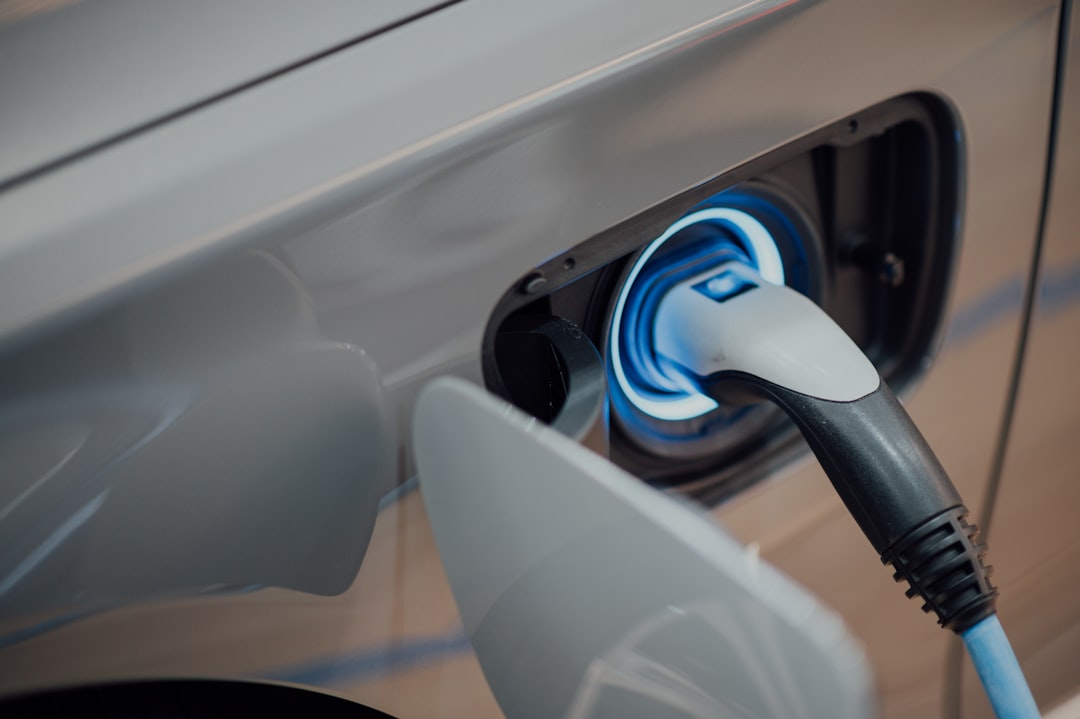
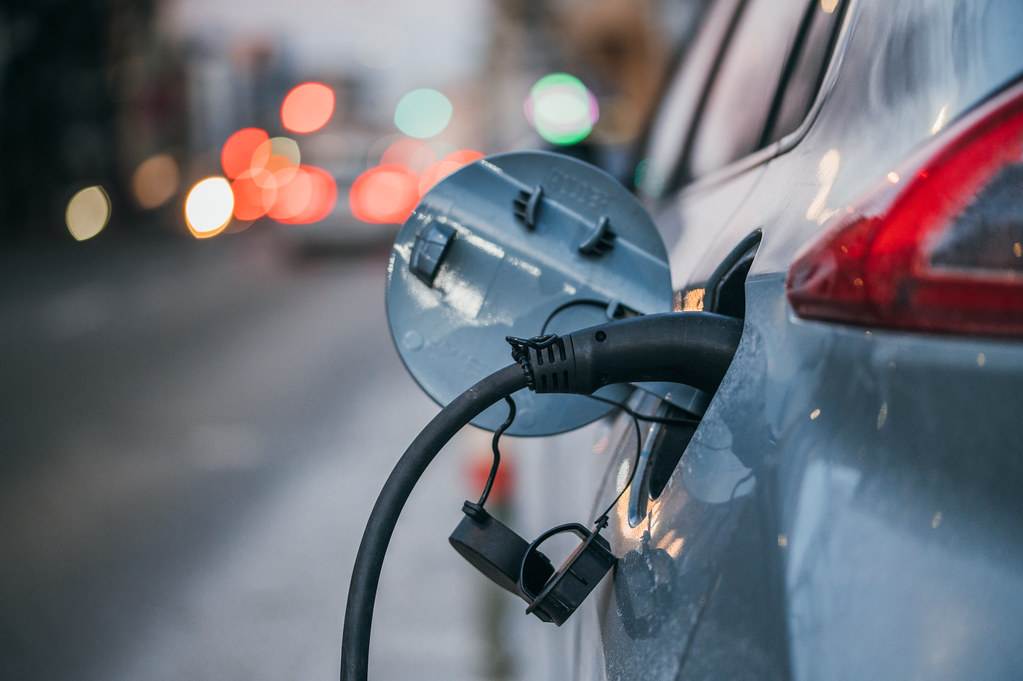
Charging: the J5 EV supports DC fast charging (specs not yet confirmed, but Chinese-market models take 30–80% in around 30 minutes at 80 kW). At home on a 7.4 kW AC charger, you’re looking at roughly 8 hours for a full top-up. An 11 kW charger cuts that to 5.5 hours, and a 22 kW unit would theoretically halve it again — but the car’s onboard AC charger likely maxes out at 11 kW, so anything beyond that is wasted.

Haval Jolion 1.5T Luxury: 650 km and no range anxiety
The Jolion runs a 1.5-litre turbocharged four-cylinder making 105 kW and 210 Nm, mated to a 7-speed dual-clutch transmission. Official fuel consumption is 7.8 l/100 km according to AutoCity GWM, though forum users on 4x4community.co.za report real-world figures of 6.5–7.2 l/100 km on highway commutes and 8–9 l/100 km in stop-start traffic.
With a 55-litre tank, you’re looking at roughly 650–700 km range per fill-up — enough to drive Johannesburg to Durban without stopping. Refuelling takes four minutes at any petrol station. No planning, no apps, no “is that charger working?” anxiety.
Running costs: the monthly fuel bill that changes everything
This is where the EV starts clawing back that R160k price gap. Let’s assume 1,500 km per month — a typical Gauteng commute plus weekend errands.
Jaecoo J5 EV: R620/month (home charging)
At 16.5 kWh/100 km, you’ll use 247.5 kWh/month. Charging at home on Eskom’s off-peak tariff (roughly R2.50/kWh in most metros as of mid-2026, after the 8.76% FY2027 increase), that’s R619 per month. If you’re on City of Cape Town’s HomeLight tariff, it’s similar.
Public DC fast charging? At R7.00/kWh (GridCars’ rate), the same 247.5 kWh costs R1,733/month — suddenly the EV advantage shrinks fast. This is why a home charger isn’t optional; it’s the entire business case.
Haval Jolion 1.5T: R2,925/month (petrol)
At 7.8 l/100 km, you’ll burn 117 litres/month. Petrol inland is hovering around R25/litre in mid-2026 (it spiked to R26.39 in April, then eased slightly). That’s R2,925 per month. Coastal petrol is R1–R1.50 cheaper, so Cape Town drivers pay closer to R2,750.
Monthly saving with the EV: R2,306 (or R27,672 per year) if you charge at home. Over five years, that’s R138,360 — almost enough to close the purchase-price gap on its own.
| Cost Item | Jaecoo J5 EV | Haval Jolion 1.5T |
|---|---|---|
| Monthly fuel/energy (1,500 km) | R619 (home) / R1,733 (public DC) | R2,925 |
| Annual fuel/energy | R7,428 / R20,796 | R35,100 |
| 5-year fuel/energy total | R37,140 / R103,980 | R175,500 |
Five-year total cost of ownership
Let’s add it all up: purchase price, fuel, insurance, maintenance, and depreciation. We’re assuming 90,000 km over five years (1,500 km/month), both cars serviced on schedule, and insurance at 5% of purchase price annually (a rough but fair proxy).
| Cost Item | Jaecoo J5 EV | Haval Jolion 1.5T |
|---|---|---|
| Purchase price | R650,000 | R489,900 |
| Fuel/energy (5 years) | R37,140 | R175,500 |
| Insurance (5 years, 5% p.a.) | R162,500 | R122,475 |
| Maintenance (5 years) | R15,000 (est., tyres + brake fluid) | R35,000 (est., oil + filters + plugs) |
| Home charger install (once-off) | R25,000 (7.4 kW) | R0 |
| Total 5-year cost | R889,640 | R822,875 |
| Resale value (est. 50% / 55%) | -R325,000 | -R269,445 |
| Net cost after resale | R564,640 | R553,430 |
The EV ends up costing R11,210 more over five years — essentially a wash when you factor in the uncertainty around petrol prices (one R3/litre spike and the EV wins outright) and EV resale values (still a question mark in SA). If you can charge at work for free or have solar panels at home, the EV pulls ahead decisively.
Charging at home: 7.4 kW vs 11 kW vs 22 kW — which one for the J5 EV?
The J5 EV’s onboard AC charger specs aren’t confirmed yet, but most Chinese EVs in this class support 11 kW AC charging. That means:
- 7.4 kW charger: Full charge in ~8 hours. Fine if you plug in overnight. Cost: R20,000–R25,000 installed. This is the sweet spot for most households.
- 11 kW charger: Full charge in ~5.5 hours. Requires three-phase power (many SA homes don’t have it; adding a phase costs R15,000–R30,000). Charger itself: R25,000–R35,000 installed. Worth it if you do two daily commutes or want flexibility.
- 22 kW charger: Wasted unless the car supports it (unlikely). Save your money.
Our advice: start with a 7.4 kW single-phase charger. If you later discover you need faster top-ups, upgrade to 11 kW — but most J5 EV owners won’t. As one forum user on 4x4community.co.za noted about the petrol J5: “I keep cars very long term and that 10 year thing is a big selling point to me.” If you’re planning to keep the EV a decade, a quality 7.4 kW charger will serve you just fine.
South Africa–specific realities: load-shedding, solar, and service networks
Load-shedding and home charging
Load-shedding hasn’t disappeared in 2026 — it’s just less frequent. If you’re on a Stage 2 schedule, you’ll lose 4–6 hours of charging time per day during rotations. Solution: charge during off-peak windows (23:00–06:00 on most Eskom schedules) when load-shedding is rare, or add a small battery to bridge the gap. A 5 kWh home battery costs R40,000–R60,000 and can keep your charger running through a 2.5-hour blackout.
Solar pairing: the ultimate cost hack
If you already have rooftop solar, the J5 EV’s energy cost drops to near-zero for daytime top-ups. A 5 kW solar array generates roughly 20–25 kWh per day in Gauteng (more in the Cape). That’s enough to cover 120–150 km of EV driving per day, effectively free. Payback on a R120,000 solar system improves dramatically when you’re offsetting both household consumption and EV charging.
Service and charging networks
Haval has 48 dealers across South Africa as of 2026 — you’re never more than 100 km from a service centre in major metros. Jaecoo (part of the Chery group) is newer: around 20 dealers nationally, concentrated in Gauteng, Western Cape, and KZN. Parts availability is good (Chery’s been here since 2021), but if you’re in Upington or Tzaneen, you’ll wait longer for a technician.
Public EV charging: GridCars operates ~450 stations (650 chargers total), Rubicon has 103 public sites, and BYD plans to add 200–300 flash-charging stations by end-2026. The N3 Johannesburg–Durban corridor now has solar-powered off-grid stations courtesy of Zero Carbon Charge. It’s workable, but you’ll plan routes around chargers — not the other way around.
The honest verdict: who should buy which?
Buy the Jaecoo J5 EV if you:
- Have off-street parking and can install a home charger (this is non-negotiable)
- Drive predictable daily routes under 300 km — school runs, commutes, weekend trips to Hartbeespoort
- Already have solar panels or plan to add them
- Want to lock in low running costs regardless of what happens to petrol prices
- Value the 10-year warranty and can live with a smaller service network
Buy the Haval Jolion 1.5T Luxury if you:
- Park on the street or in a complex without charging infrastructure
- Regularly drive 400+ km in a day (farm visits, sales routes, family in the Free State)
- Need immediate nationwide service access — GWM’s 48 dealers vs Jaecoo’s 20
- Prefer a proven platform (13,607 units sold in 2025) over a first-generation EV
- Can’t front the extra R160k, even if it pays back over time
As u/Many_Initiative6473 put it on r/electricvehicles after a year with an EV: “Charging has been easy for my use case, though it does require more planning than gas. Two of the best upgrades I’ve made were adding a home 120V charger and buying a charging-station adapter, both made daily ownership significantly more convenient.” That’s the EV ownership reality — it works brilliantly if your infrastructure matches your driving, and it’s frustrating if it doesn’t.
Ready to charge smarter?
If the Jaecoo J5 EV makes sense for your driving patterns and you’re ready to install a home charger, ChargePoint SA offers free site assessments across Gauteng, Western Cape, and KZN. We’ll evaluate your electrical setup, recommend the right charger size (7.4 kW or 11 kW), provide a fixed-price quote, and handle the full installation — usually within two weeks of order. Whether you’re buying the J5 EV in Q3 2026 or just future-proofing your home for the next wave of EVs, getting the charging infrastructure right is half the battle.
And if you’re still on the fence? Run the numbers for your own driving. Take your monthly km, multiply by 0.165 kWh (EV) or 0.078 litres (petrol), then multiply by your local electricity and fuel rates. The answer will tell you which way to jump — and it might surprise you.
Image credits
“Jaecoo J5 EV” by Automotive Rhythms is licensed under CC BY-NC-ND 2.0 · “2024 Haval Jolion” by Automotive Rhythms is licensed under CC BY-NC-ND 2.0
Continue Reading